amarchinthevines

Learning about wine, vines and vignerons whilst living in the Languedoc


2 Comments

2025 – Part 1

Jeff’s cork from 2024, says it all – Share with joy

Character. That’s what I enjoy in a wine. Whether it be natural, organic or conventional I want a wine that tells me a story and shows character. That could be the character of the grape, the winemaker, the place – preferably more than one of those. We have all had wines, often by the glass, which taste ok but could be anything – identifiable by only the most brilliant blind taster. Supermarkets sell these by the thousand. Nor do I want a wine recognisable by its faults, whether mousiness, cork taint or bad decisions by winemakers such as too much oak.

So, when I looked back through photos of the bottles I had enjoyed this year it was character that influenced my pick of wines which made most impact and which I enjoyed the most.

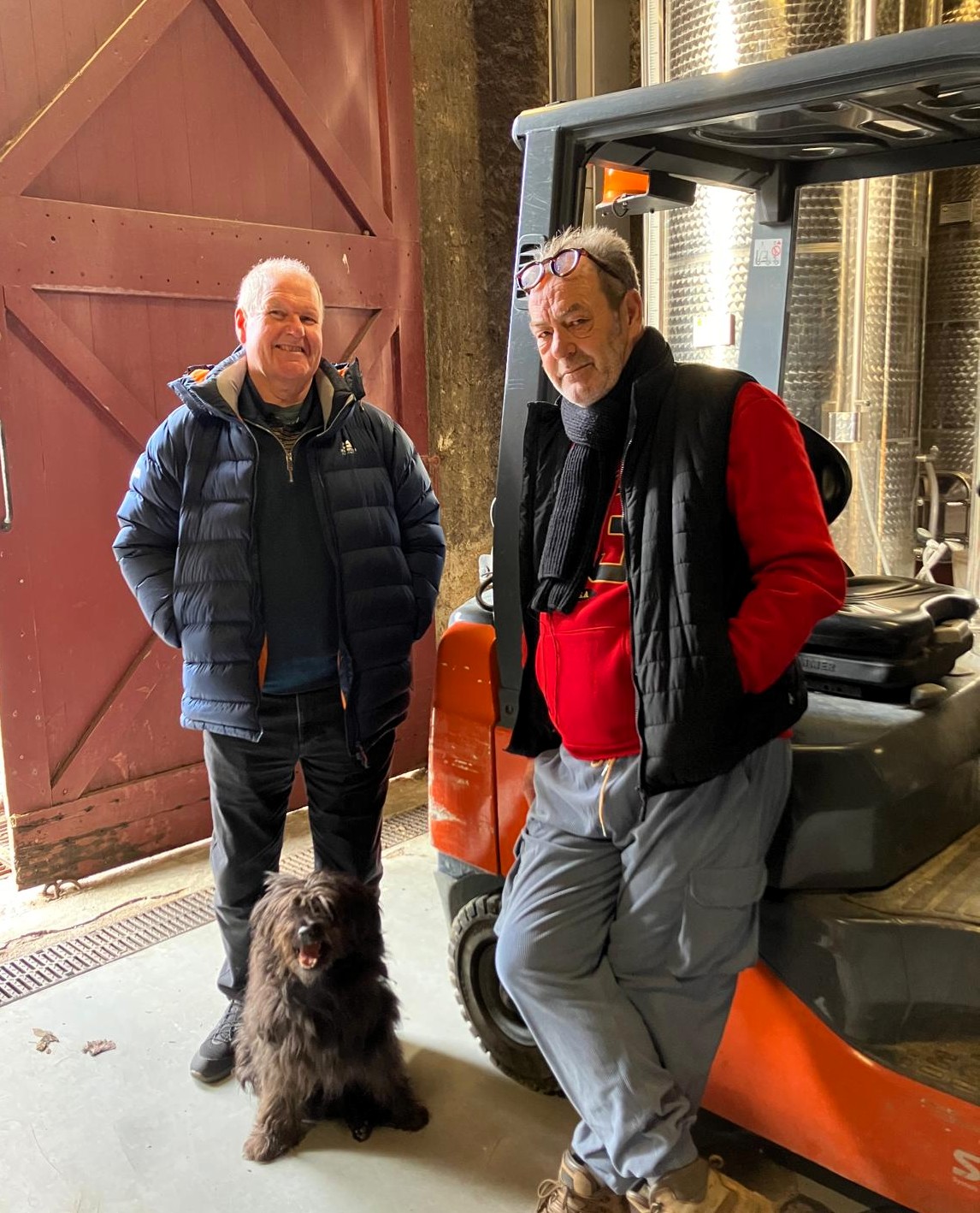
English (and Welsh) wines made a big impression on me in 2025. I have enjoyed a fair number in the past from producers such as Davenport and Westwell but this year I was able to enjoy more examples and I think that the quality is rising at a serious pace. My favourite bottle is one I have described here a number of times, Mountain People‘s TAM 2023, a Chardonnay made in Wales by the excellent David Morris. Actually produced from grapes grown in Somerset this would easily rival many a top Jura wine. I had a few bottles through the year including this one shared with Jeff Coutelou (background left) who liked it a lot.

Westwell sold a really lovely wine called A Little Bit, 2023, which I really enjoyed. Made from the third pressing of Pinot Noir and Meunier grapes and therefore the press had to be firm making the juice too tannic and coloured for sparkling wine. yet, it made a light but fruity rosé/red with a nice grip. A triumph of getting the most from your grapes. Blackbook winery is based in Battersea, London and makes grapes from within two hours of its base. I could choose a number of their wines but Pinot Meunier 2022 was my favourite. Nicely judged skin contact gave a lovely colour and mouthfeel as well as stone fruit flavours.

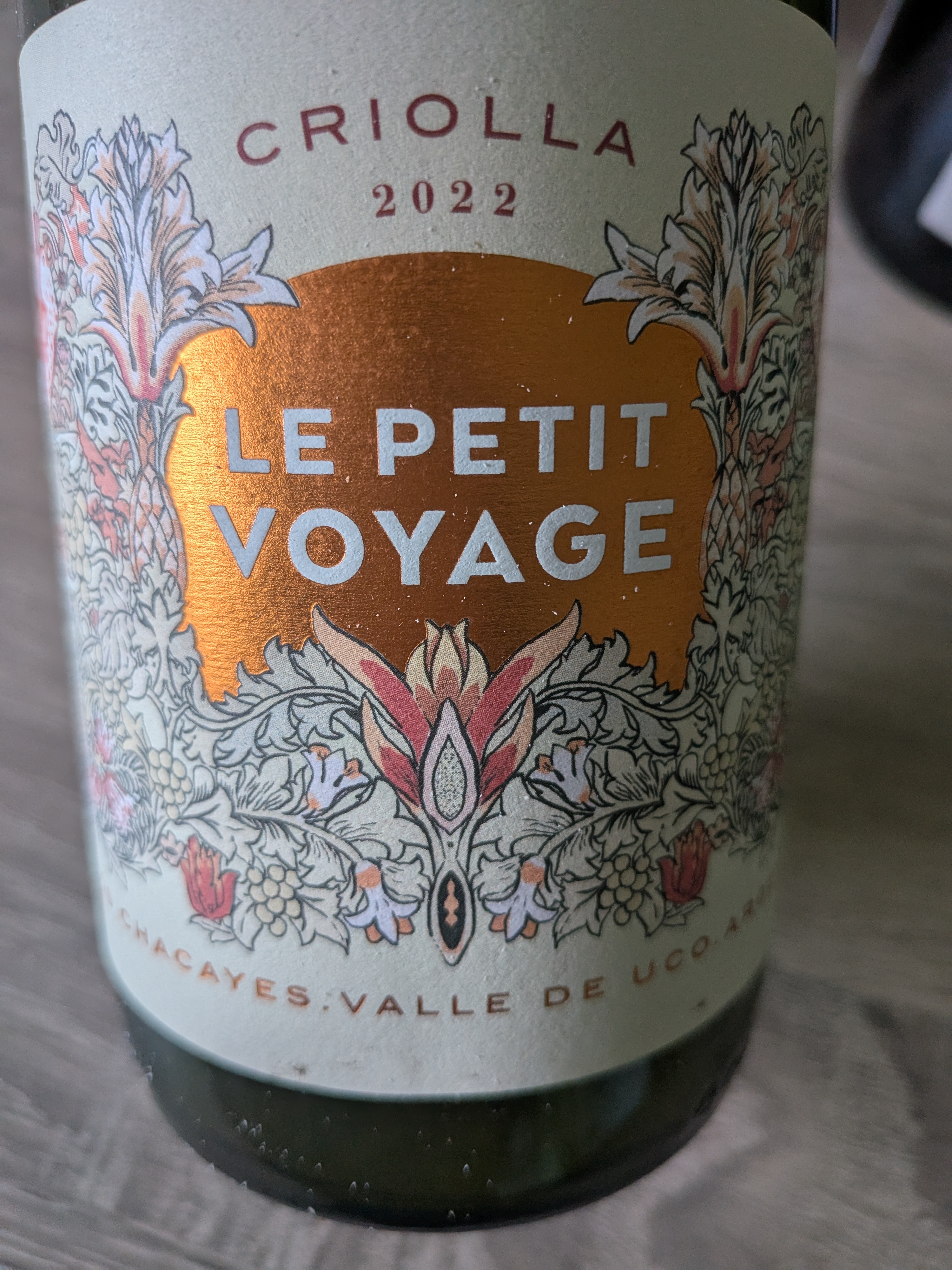
The New World continues to produce some great wines, South America included. I bought a bottle of Le Petit Voyage Criolla 2020 on a quick visit to a wine bar in Durham on a whim. It turned out to have bags of fresh red fruit flavour, a real treat from Argentina’s Uco Valley. A nice discovery. I enjoyed a few wines from Chile’s A Los Vinateros Bravos but especially the Pais Granitico 2022, nice acidity balanced by cherry fruit flavours. Both of these wines tell the story of early colonial vines imported into the continent by the Spanish but finding a home there which brings out a real sense of place, grape and enjoyment too!

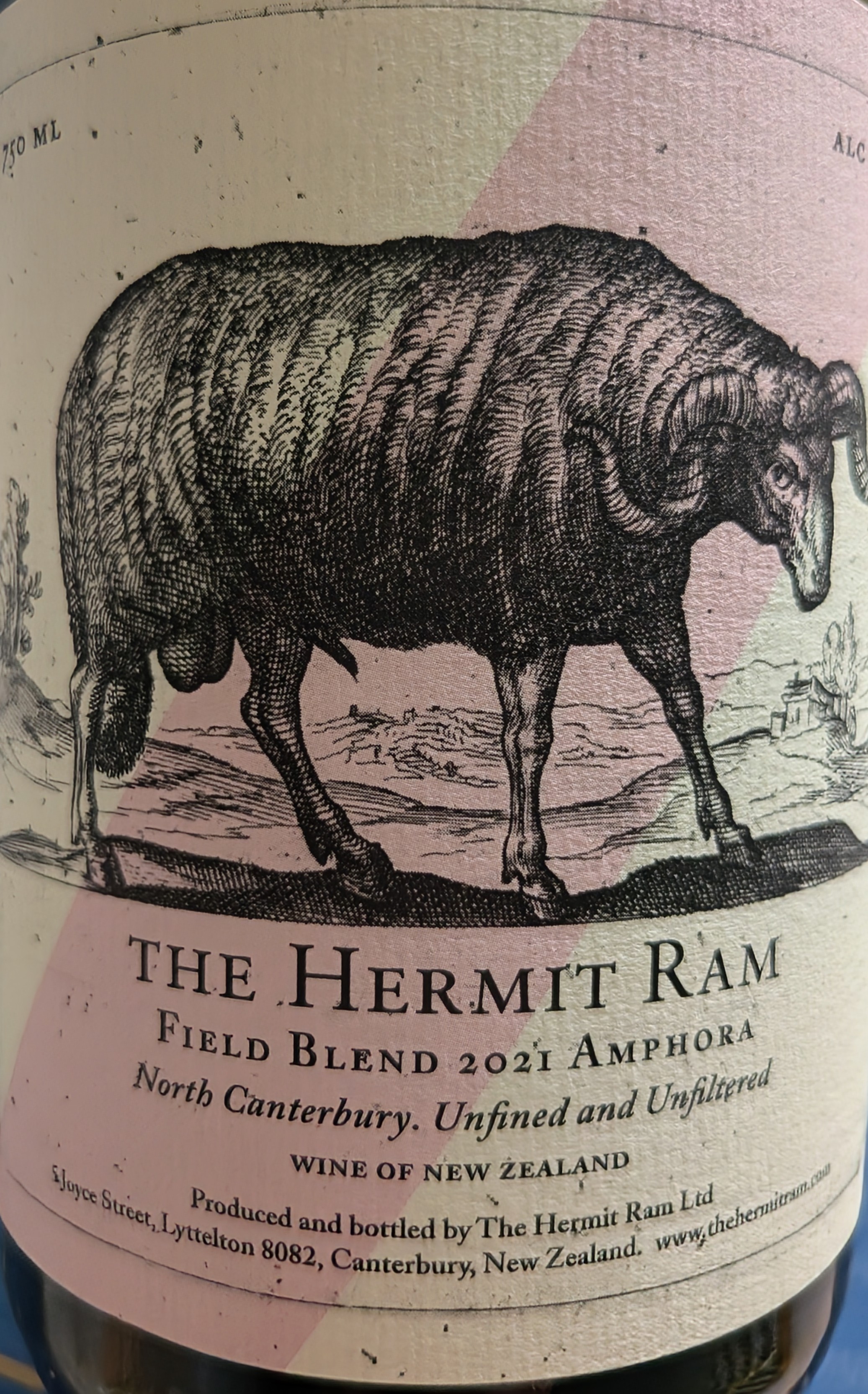
Three wines from Australia and New Zealand complete this first section of my 2025 selections. I do think that Canterbury producer Hermit Ram‘s Theo Coles is one of the best winemakers around and any bottle of his is memorable but the Field Blend Amphora 2021 was particularly so. Riesling, Pinot Noir, Chardonnay, Cabernet Sauvignon and Gewurztraminer make for an unusual combination but the fruit of the red grapes is lifted by the freshness of the whites making for joyful aroma and flavour. The amphora gives texture to the mix too so that those flavours lingered long in the mouth.

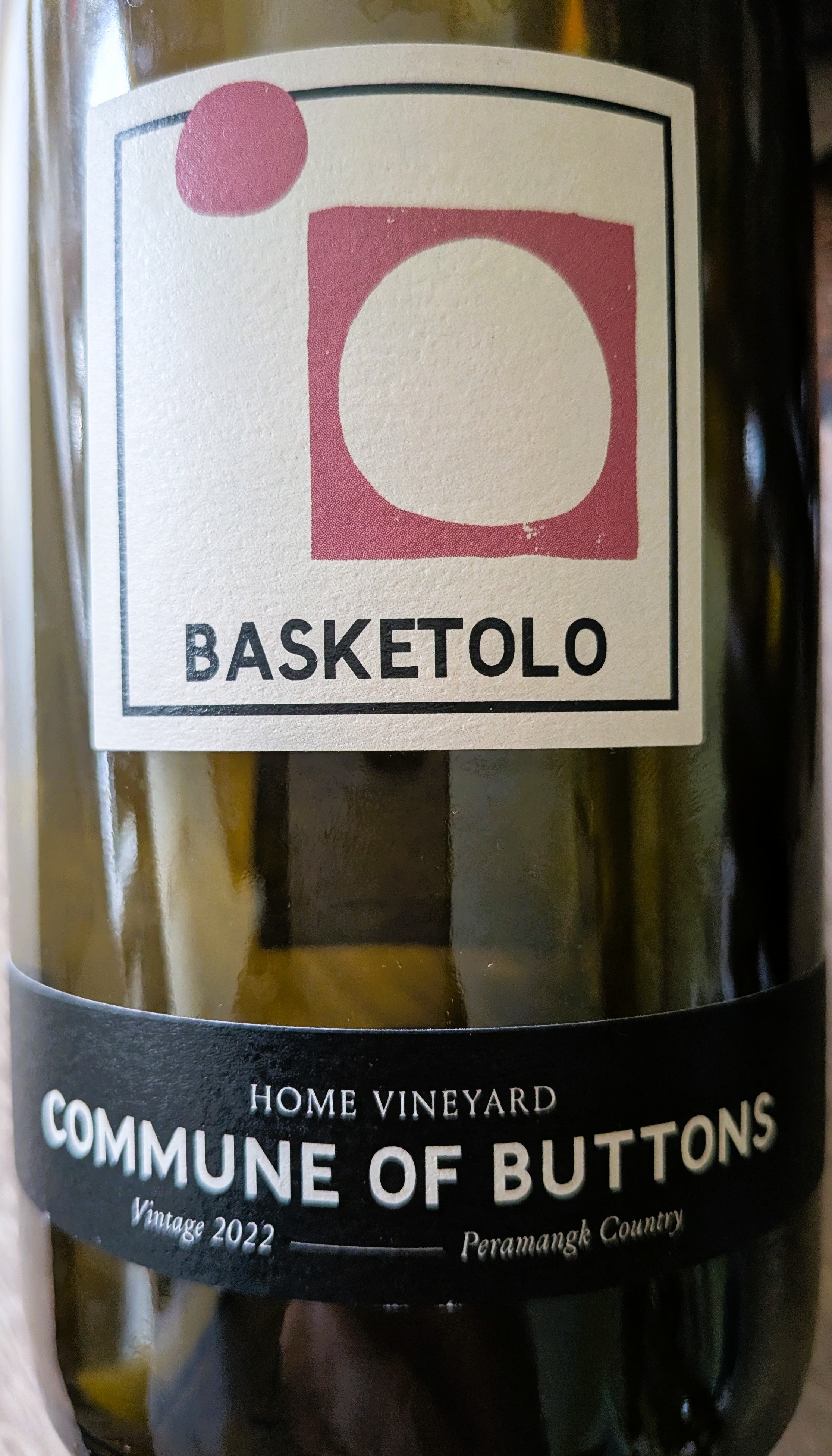
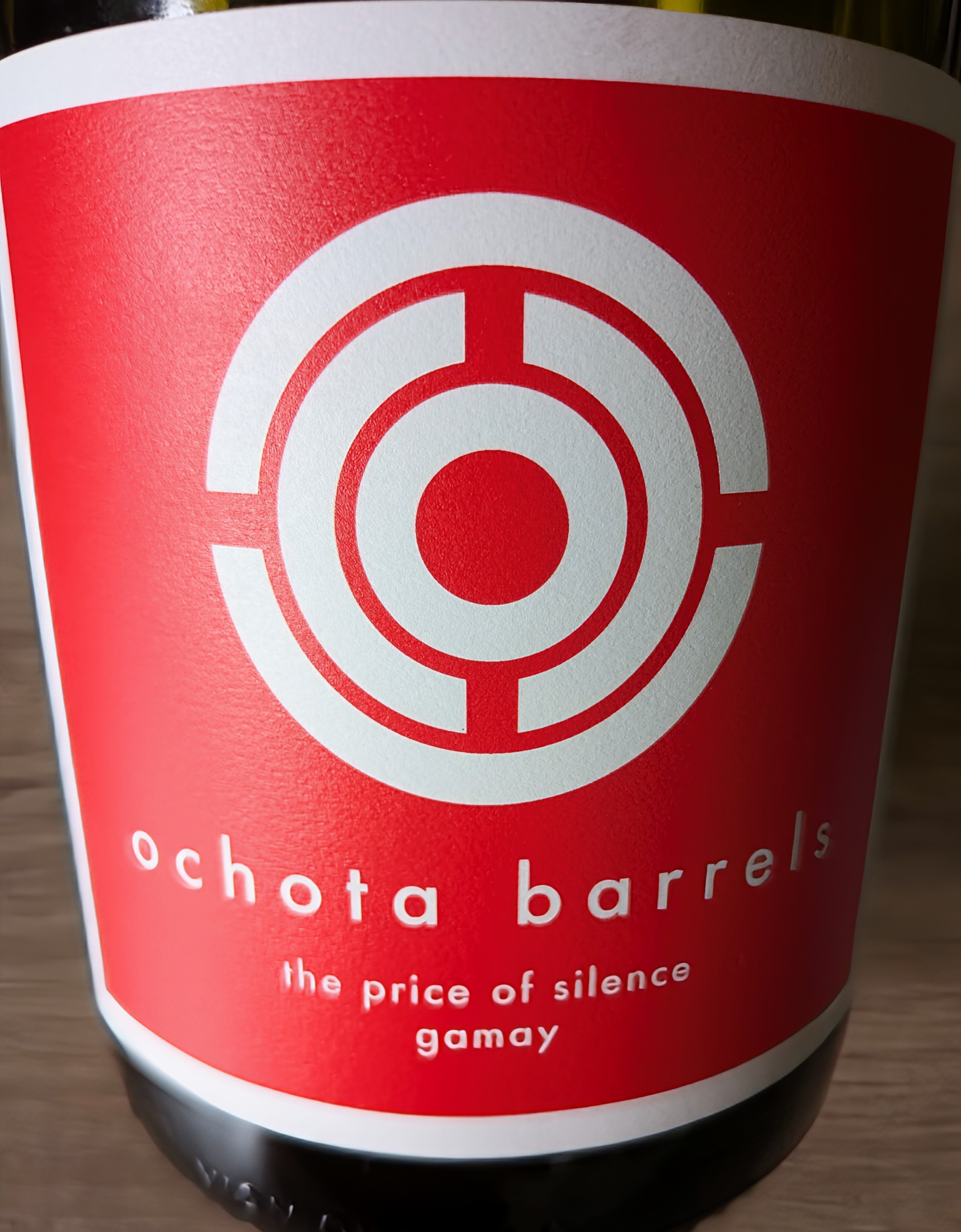
Ochota Barrels is another excellent source from Down Under. Amber Ochota has continued the fine work of her husband Taras after his tragically early death and I thoroughly enjoyed The Price of Silence Gamay 2023 with its fruitiness and spice highlighting the pleasures of the grape. Also from the Adelaide Hills region came Commune of Buttons‘ Basketolo 2022 made from Nebbiolo and again so full of that grape’s character with its fresh acidity and bite as well as generous red fruits, a lovely food wine.

Wines from around the world rather than mainland Europe but it is to there I shall turn in my next article.


Leave a comment

Vendanges 25 – Good Vibrations

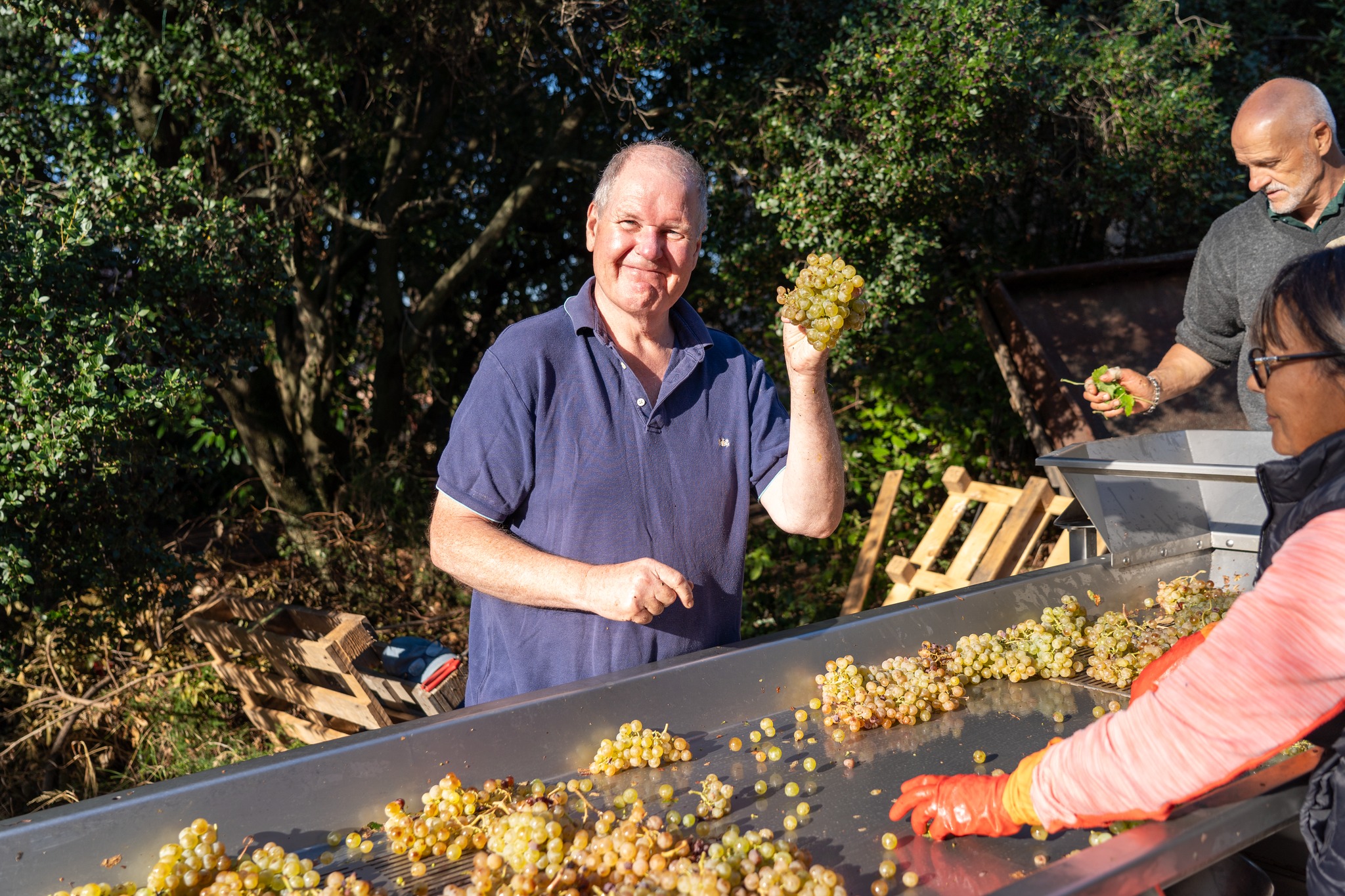
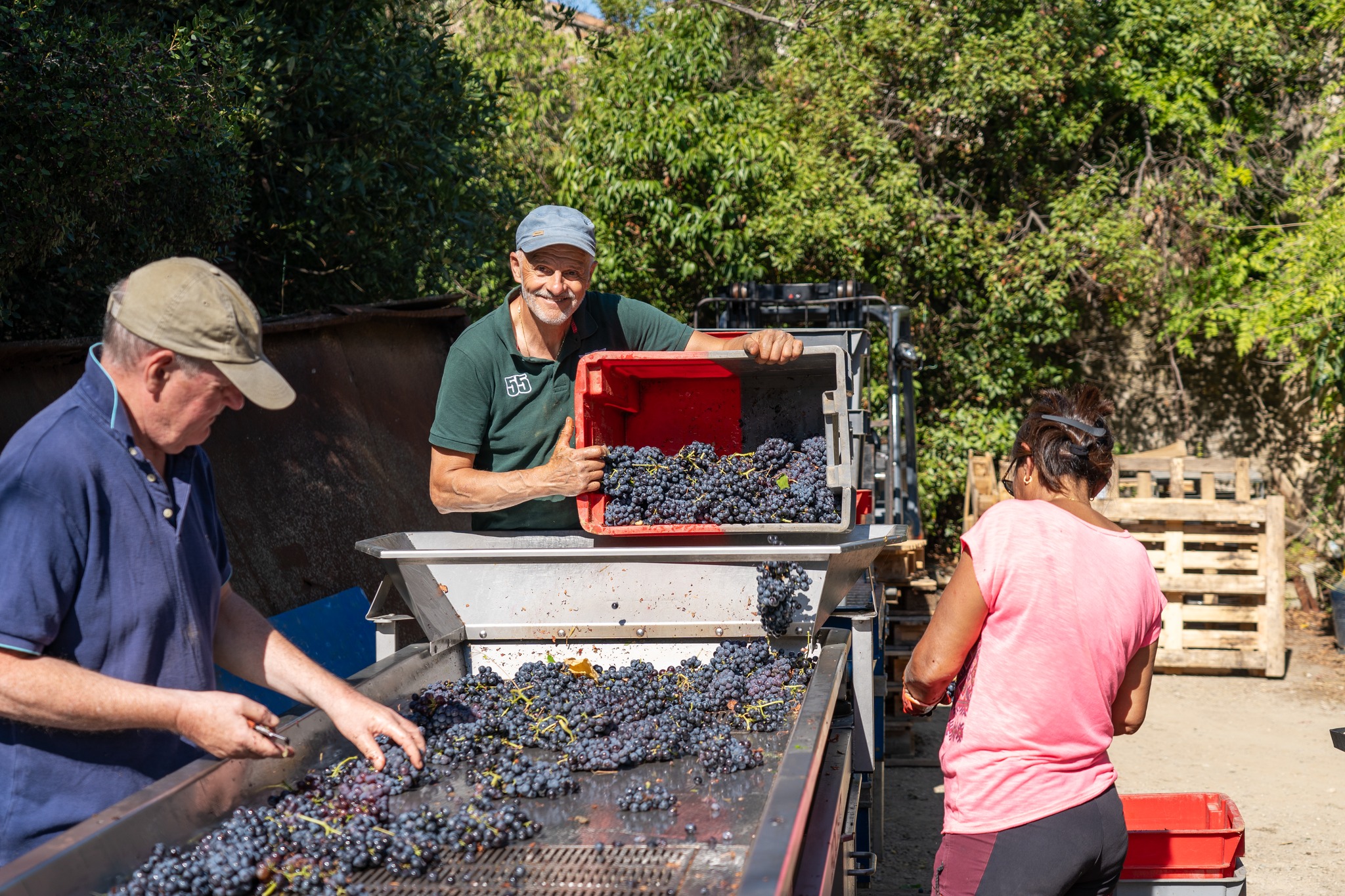
Myself, Jean Jacques and Marie at the sorting table (photo by Flora Rey)

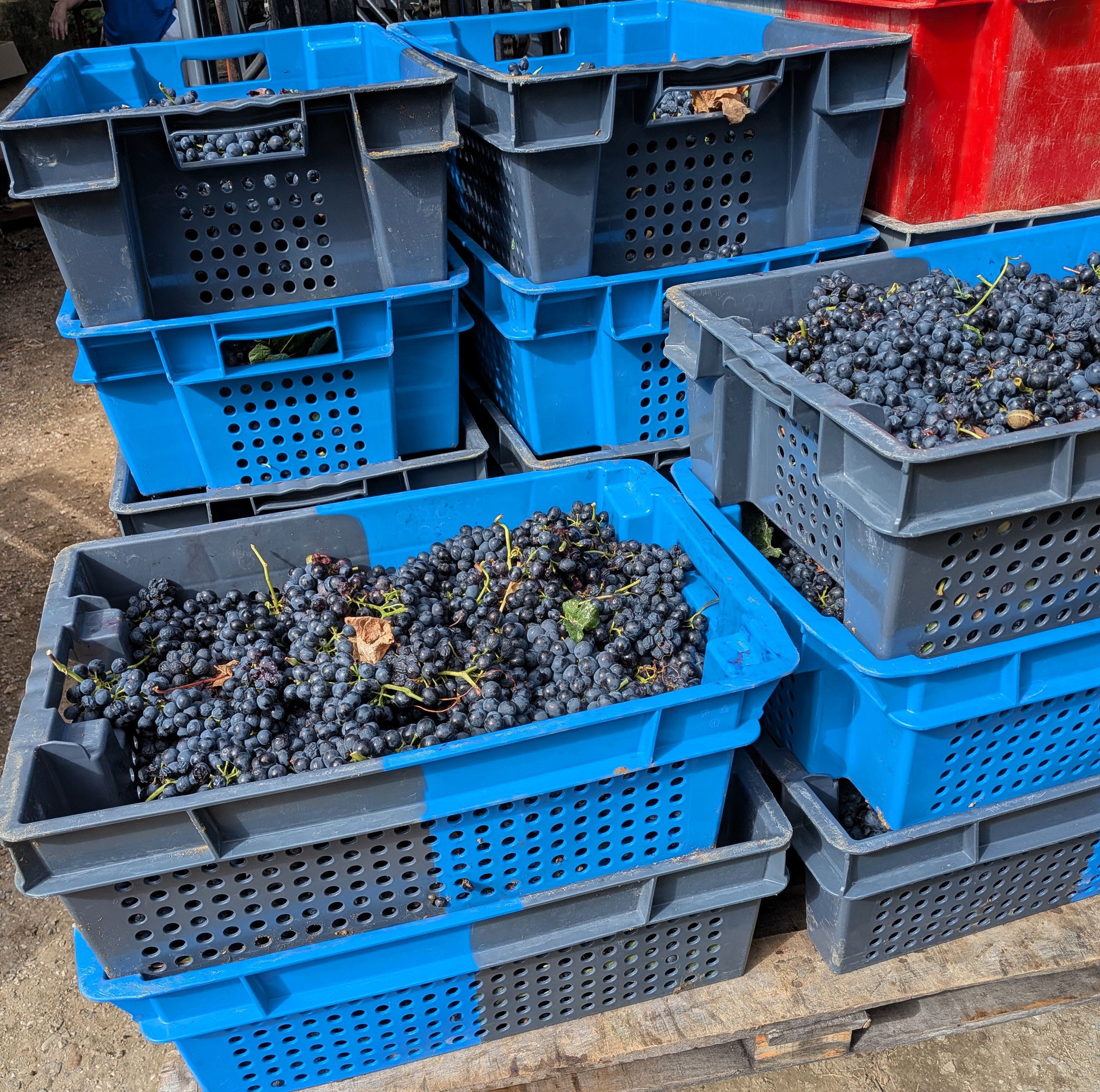
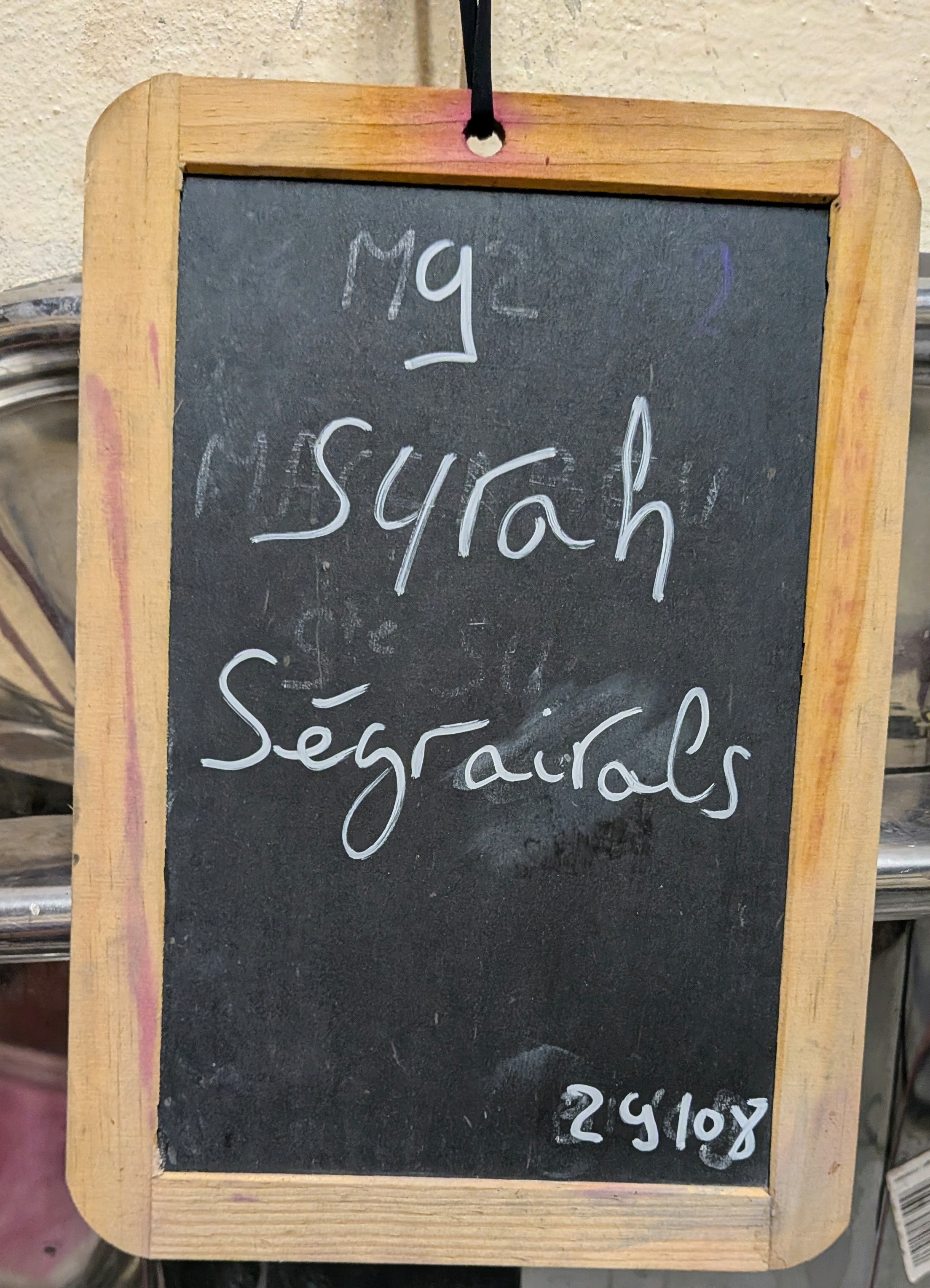
Wednesday September 3rd and the team had been busy with Cinsault, one of my favourite grapes. It is very juicy and generous. Perhaps too much at times as it can turn from full and ripe to rotten and overripe in a day. Jeff has a lot of Cinsault mainly in Segrairals, the one nearest the village. This is partly because it makes it easier to transport the grapes quickly to the sorting table and into the vat. It is used for 5SO which is called 5SO Simple in most years and 5SO Formidable in the best vintages. 2024 was Formidable and it has quickly sold out, a light, fruity wine giving lots of pleasure. It also goes into Le Vin Des Amis and lifts the more serious, darker Syrah and Grenache.

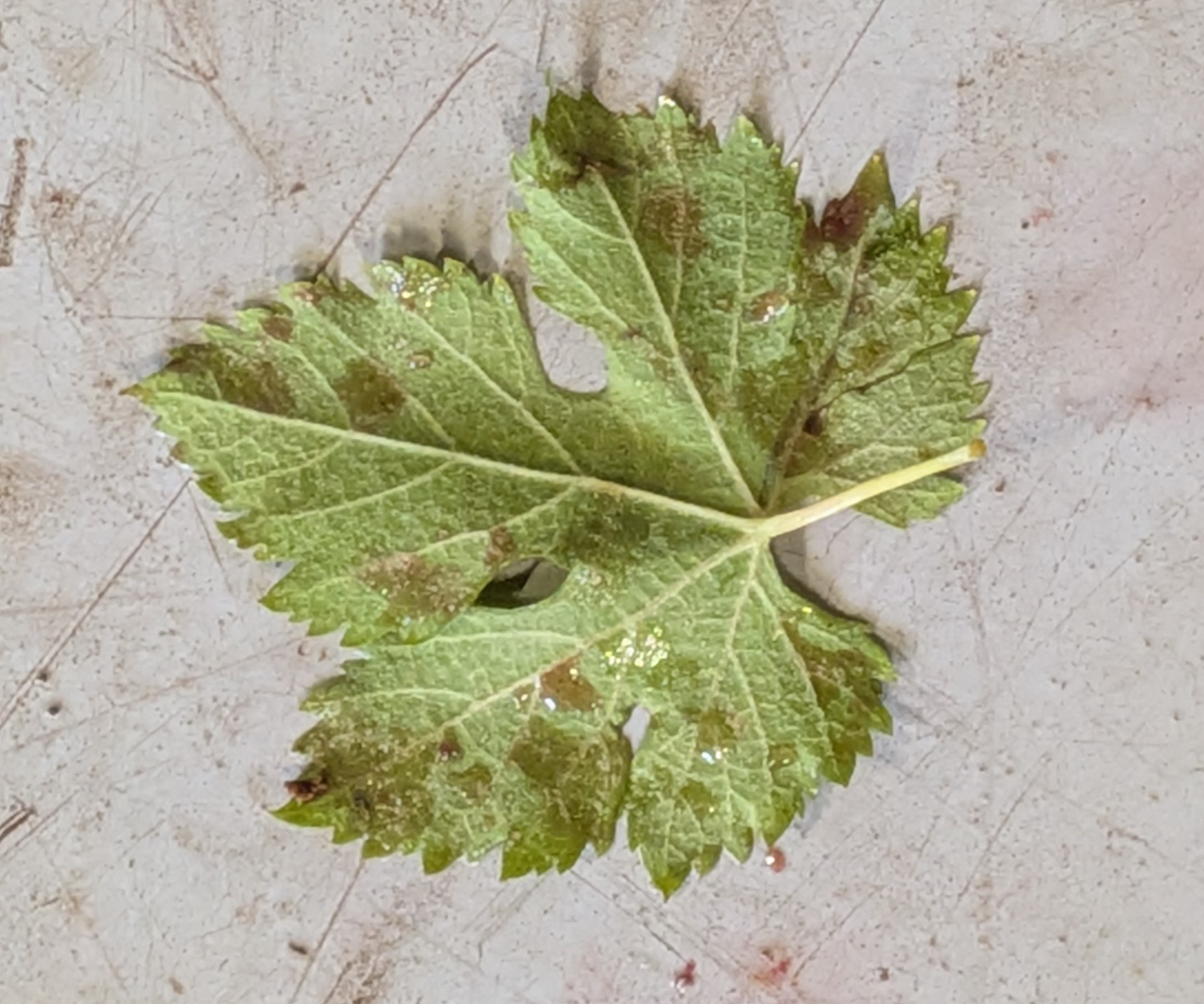
I love Cinsault leaves, big, open and generous like the wines

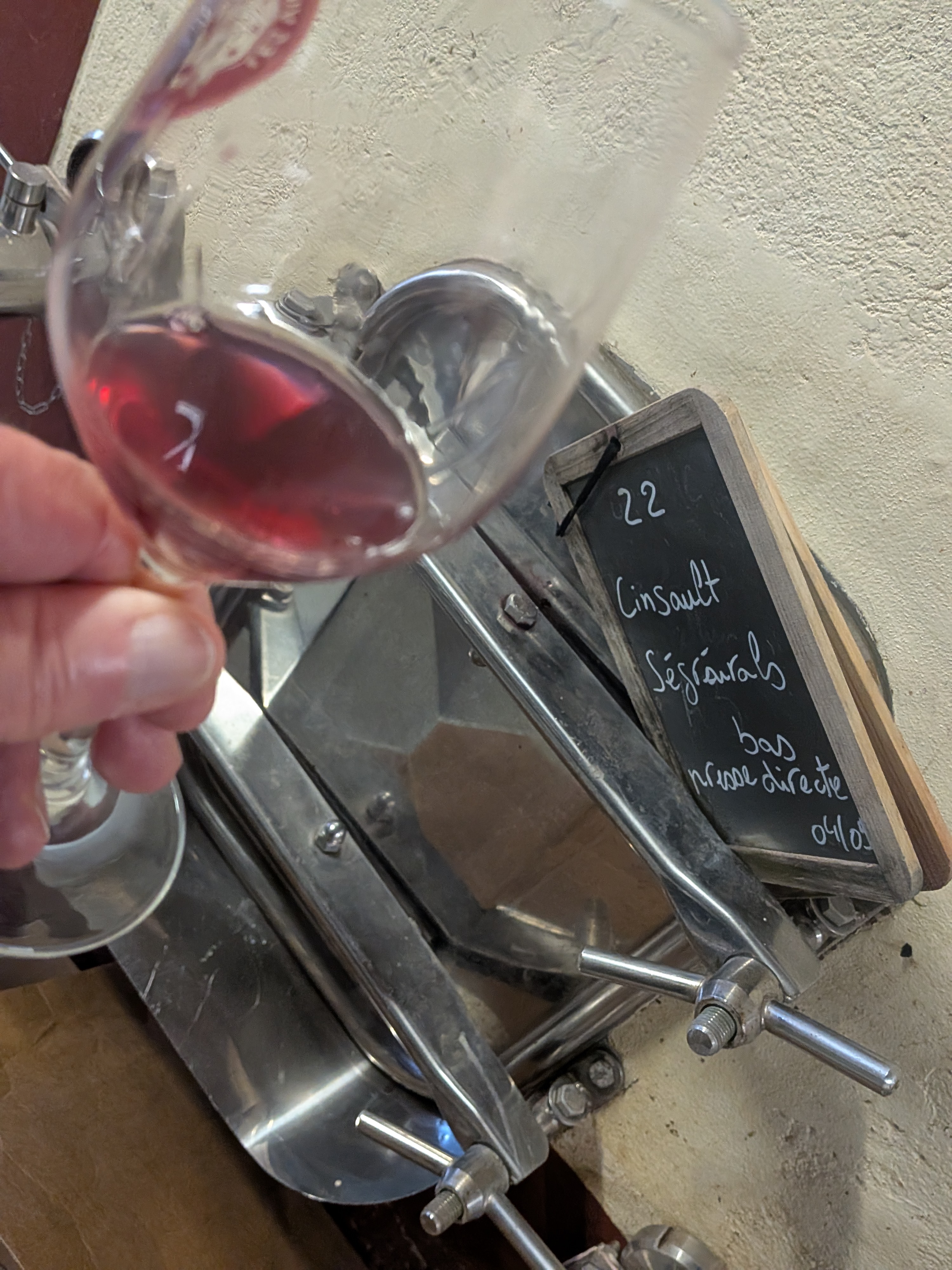
On Thursday, when I returned to work there was still some of the Cinsault to process and Jeff is pleased with a good crop which gives him plenty of winemaking options. It is interesting how a vineyard can be divided into parts which produce different results from the same grape. The extreme version of this is the bewildering confusion of Bourgogne vineyards with almost every row of vines named and vinified separately. Whilst certainly not comparing Segrairals Cinsault to a fiercely expensive Chambertin Grand Cru, the principle still applies. There are a couple of rows within the vineyard where the soil, shadows from trees, drainage etc make a difference. The first cases which returned to the cellar that morning were poorer quality Cinsault and Jeff wanted to ensure it was kept separate from the high quality which goes into the cuvées named above. So, it was pressed direct, getting the juice away from any fragile, poorer quality skins and stalks. That juice can then be used to make something lighter, perhaps a rosé, still decent quality just not benefitting from further contact with that grape must.

Some of the more fragile Cinsault

And then it was on to the fine looking Grenache from La Garrigue which had soaked up the sunshine and heat of the summer in keeping with its Spanish origins. There’s not much to add to that, it really was good quality and will be the backbone of some seriously good bottles, perhaps Grenache Mise De Printemps which is terrific in 2024 and is moving towards the top of my list of favourite Coutelou wines.

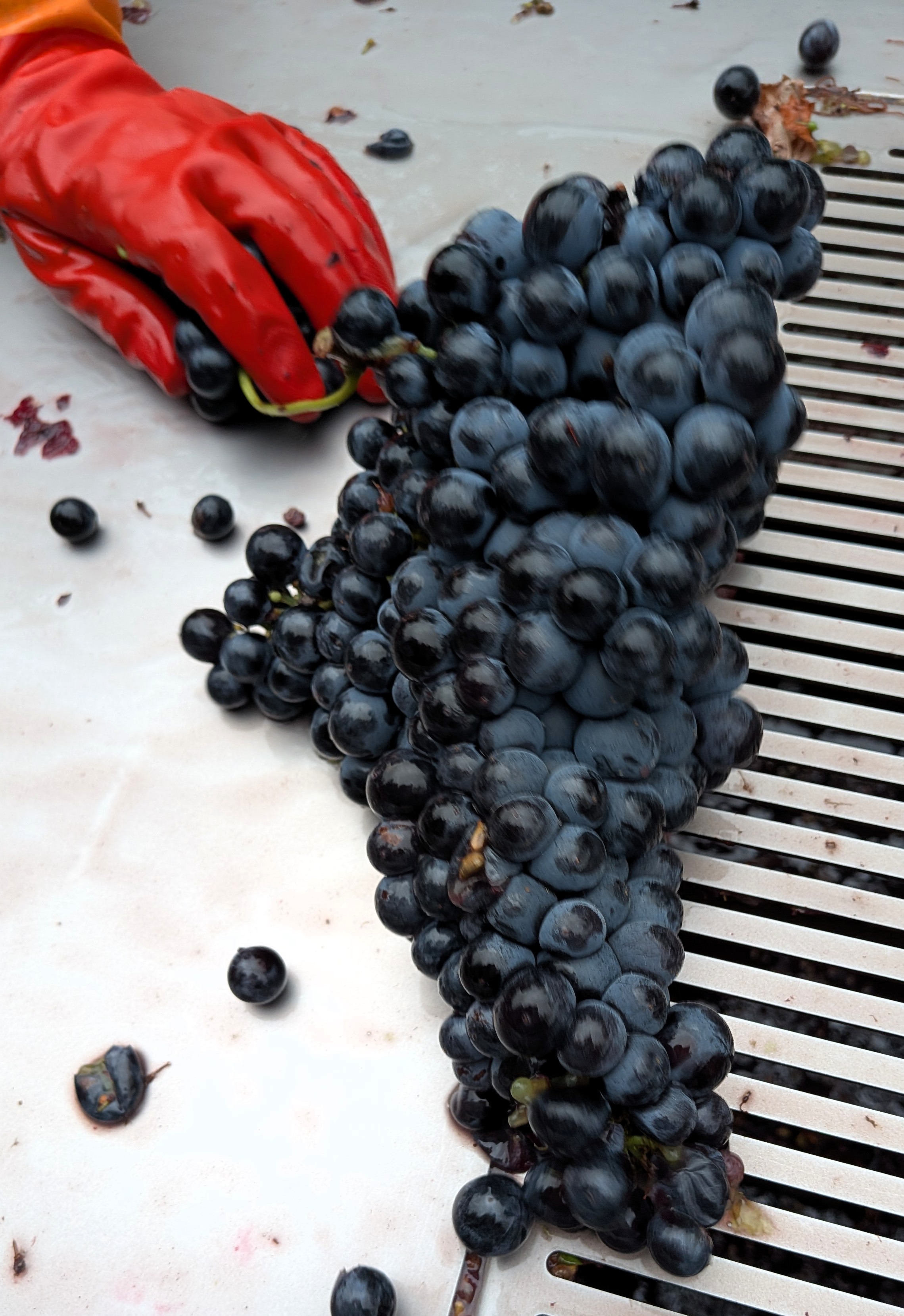
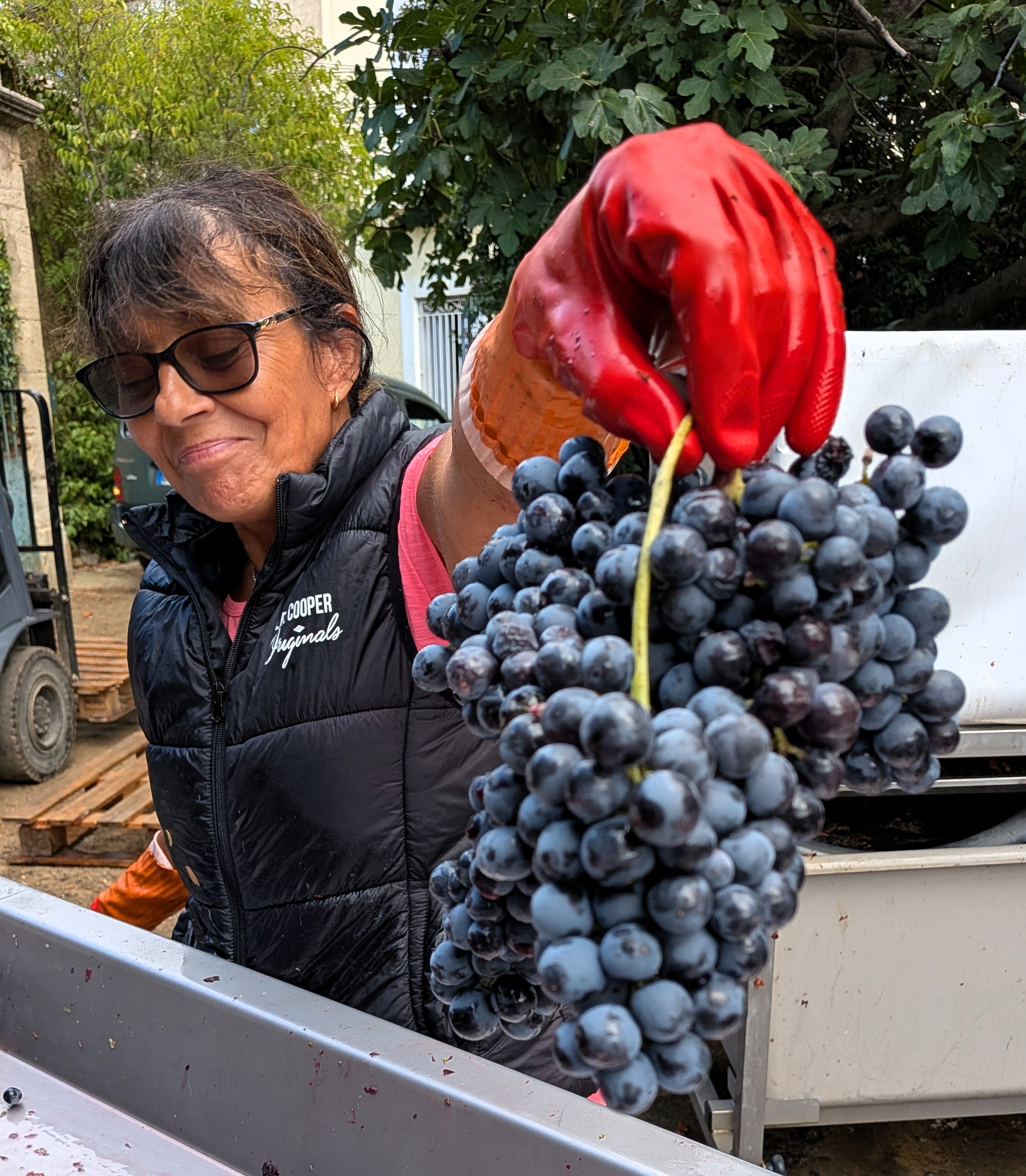
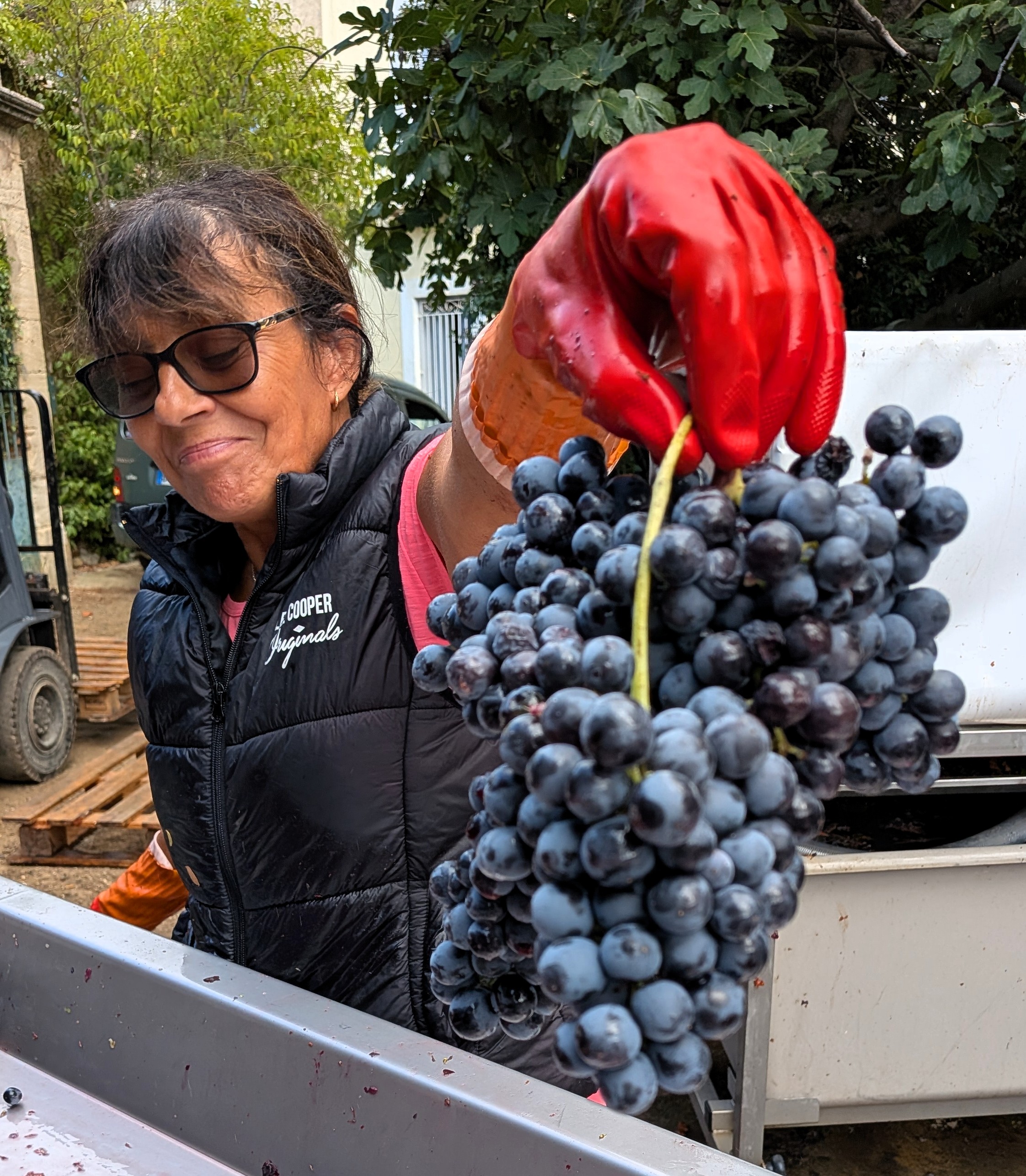
Mari and a very big Grenache bunch
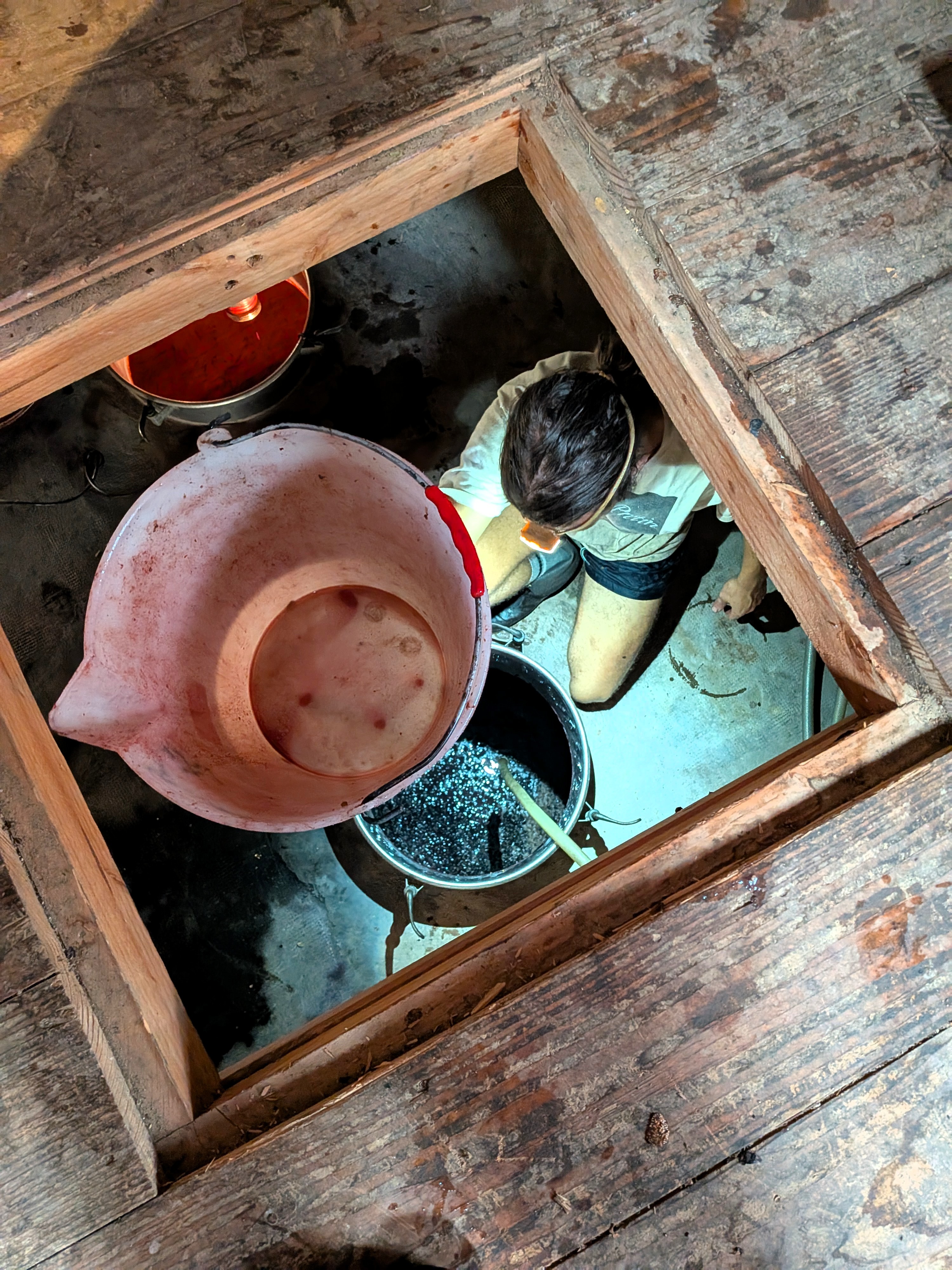
Fill up the tank! Pierre checking the level

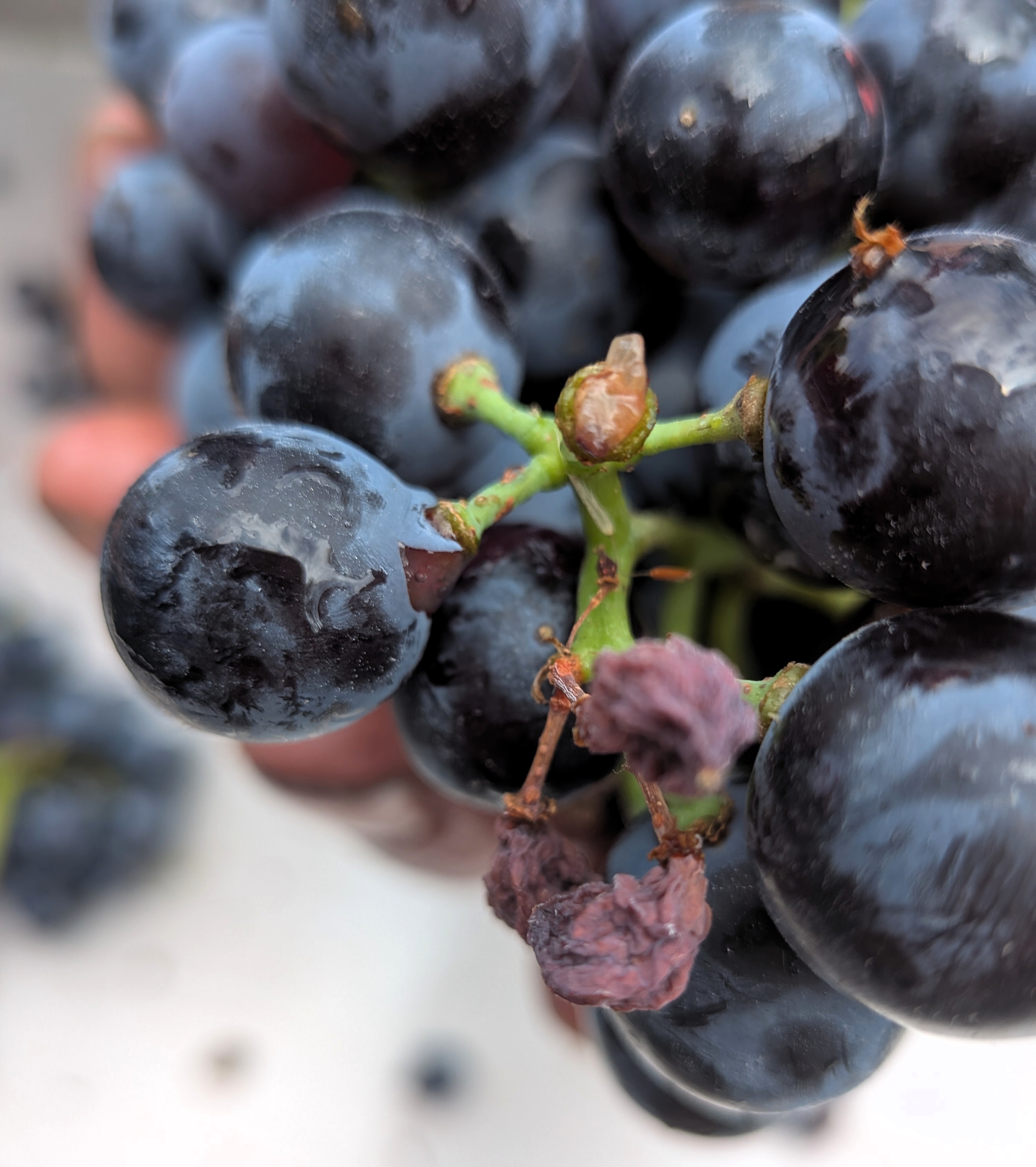
We worked through a lot of grapes that afternoon. One noteworthy point was the effects of downy mildew. Most noticeable on leaves with yellow and brown patches the disease also has an effect on the bunches too sometimes, drying out the budding berries or causing them to abort. So, there are bunches with a completely dried out stalk or large gaps between grapes as you can see in the photos.

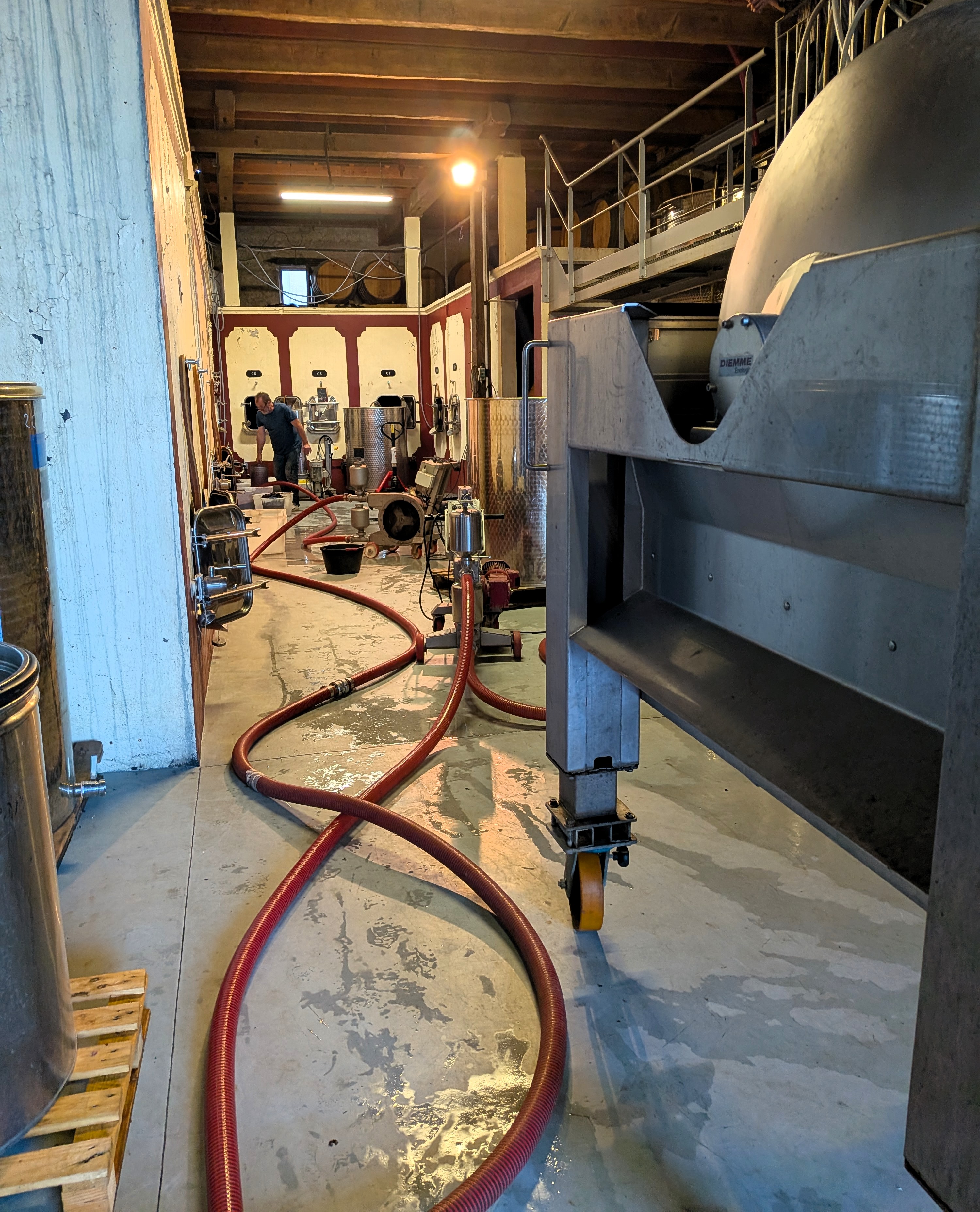
Friday was given over to all the cellar work, most of the harvest is done and the young wines in tank need to be cared for. Removing the juice from the must is the main task and, unfortunately, one of the pumps had taken the opportunity to break down and repairs would take a few days so Jeff used the remaining two for the cellar. The wine can remain on skins and flesh for a long time if you want to, for example an orange wine has white grapes on their skins for even a year in Georgia and other countries. Most wines though are given a few days to extract flavours, tannins and strength and then removed as the must can become a source of spoiling bacteria or over extract the tannins and dry out the taste. With Gils, Flora, Boris and the excellent Pièr in harness there were enough hands without mine that day. The good news was that the analyses of the wines were coming back with encouraging figures for alcohol, acidity and health.

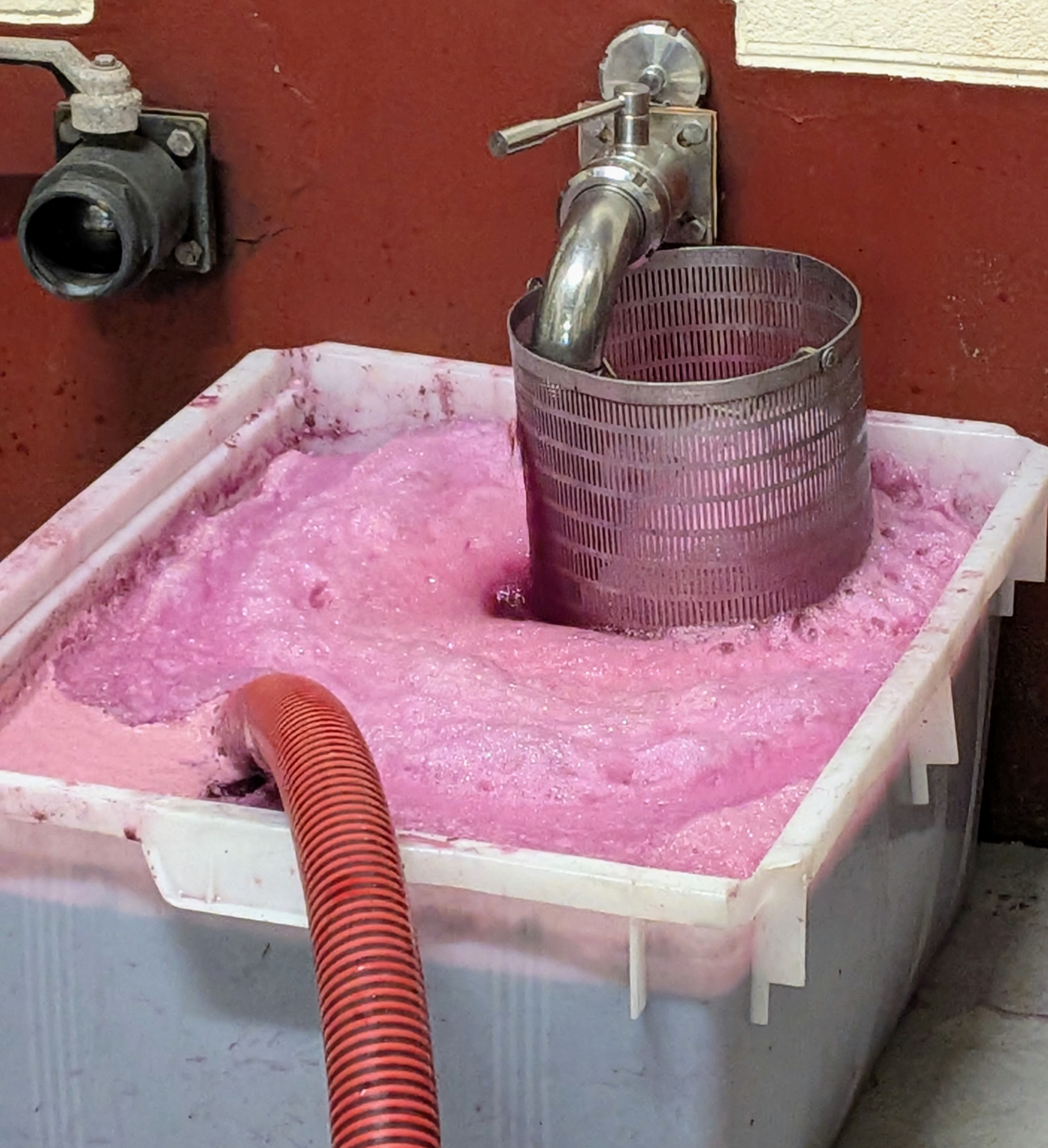
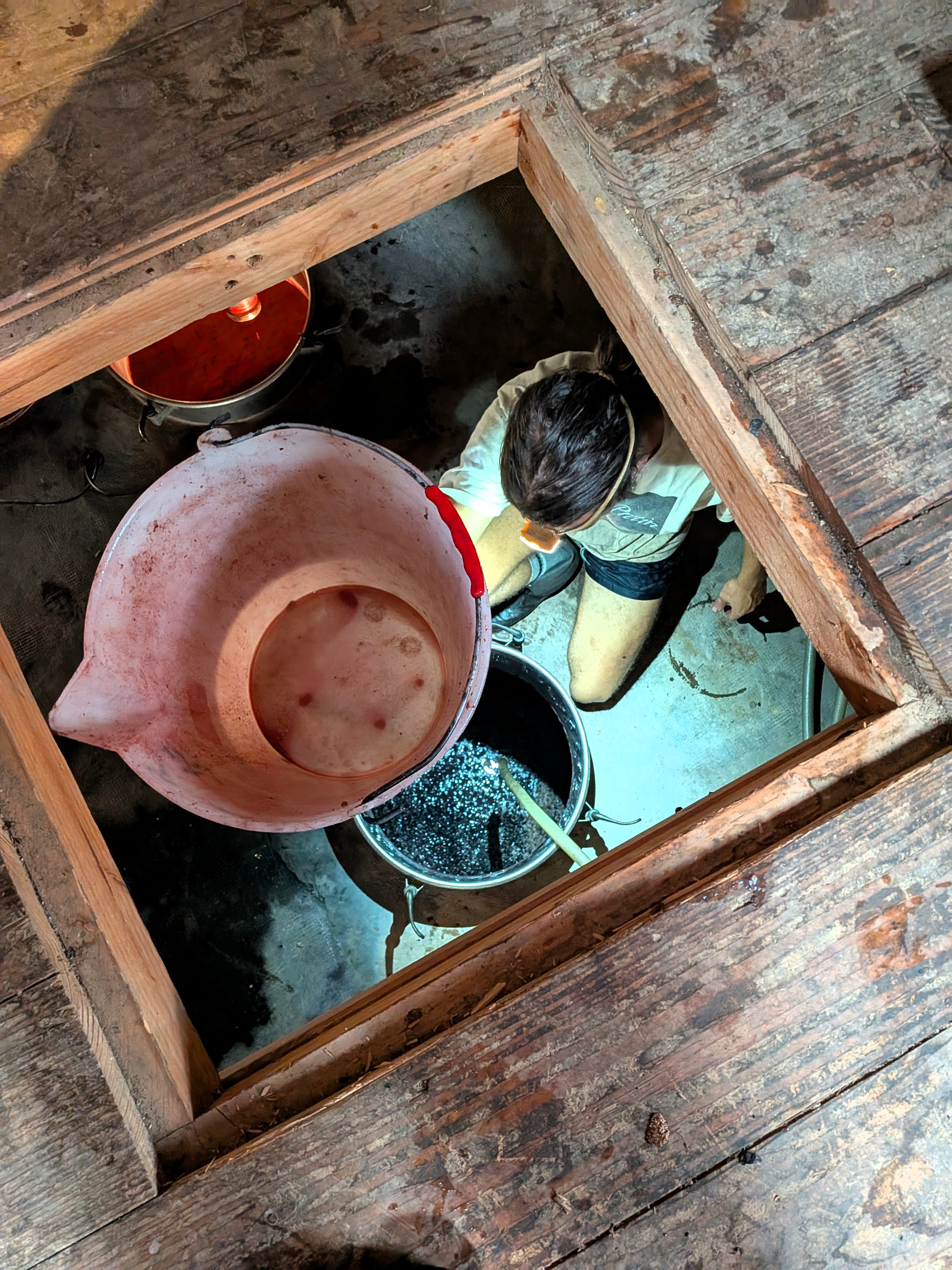
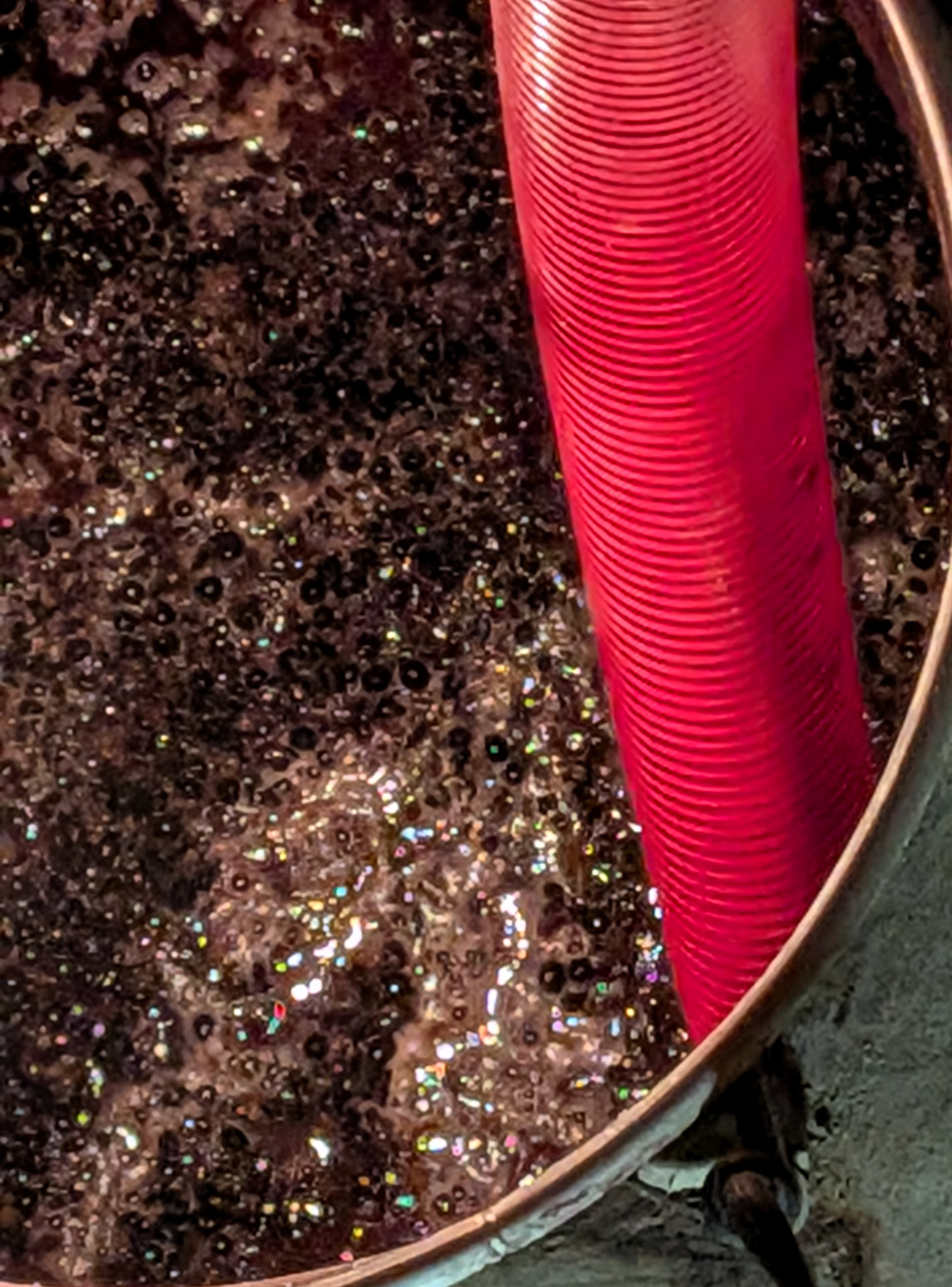
Lovely, fermenting juice left whilst the lower juice and lees are extracted right

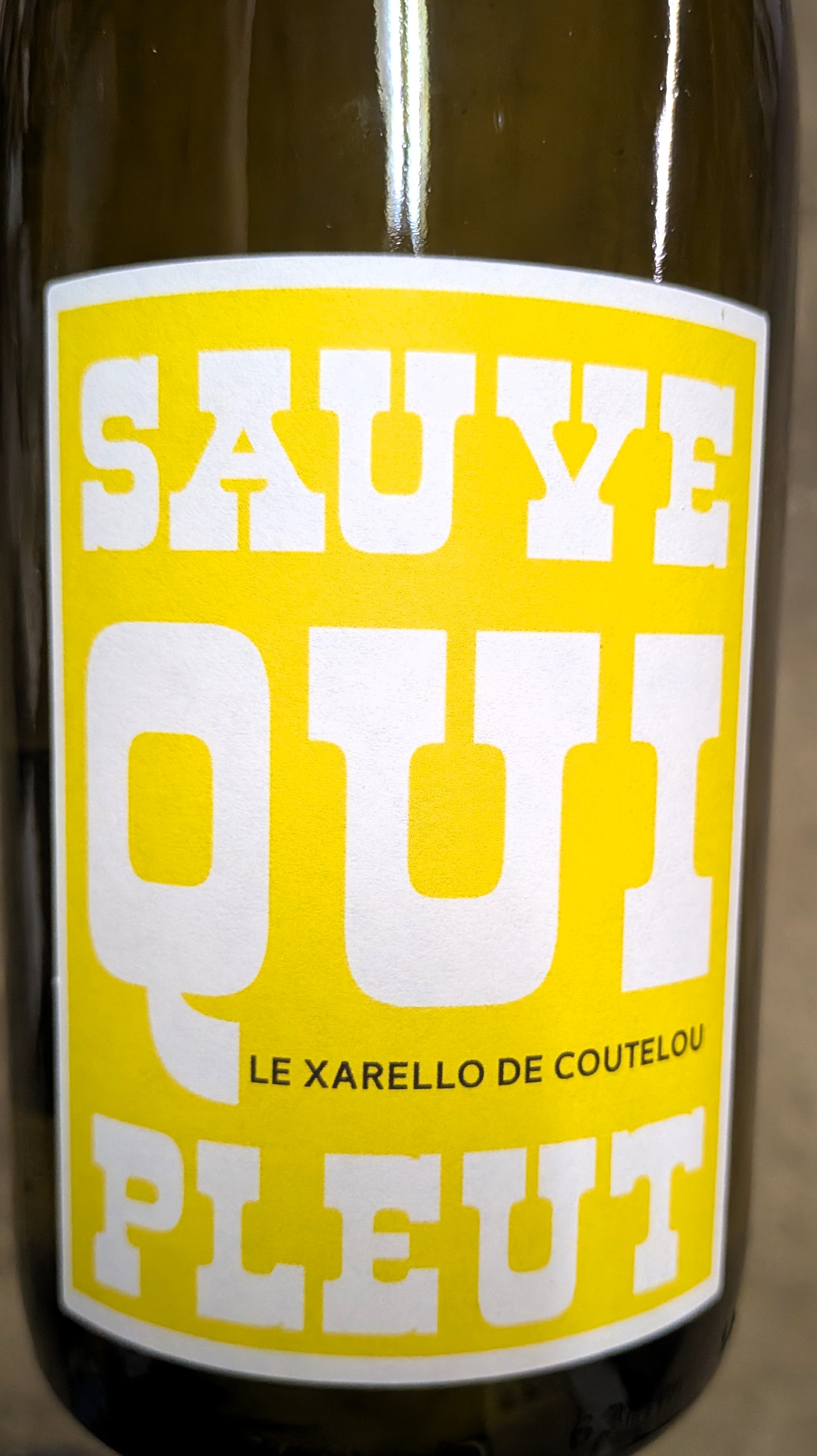
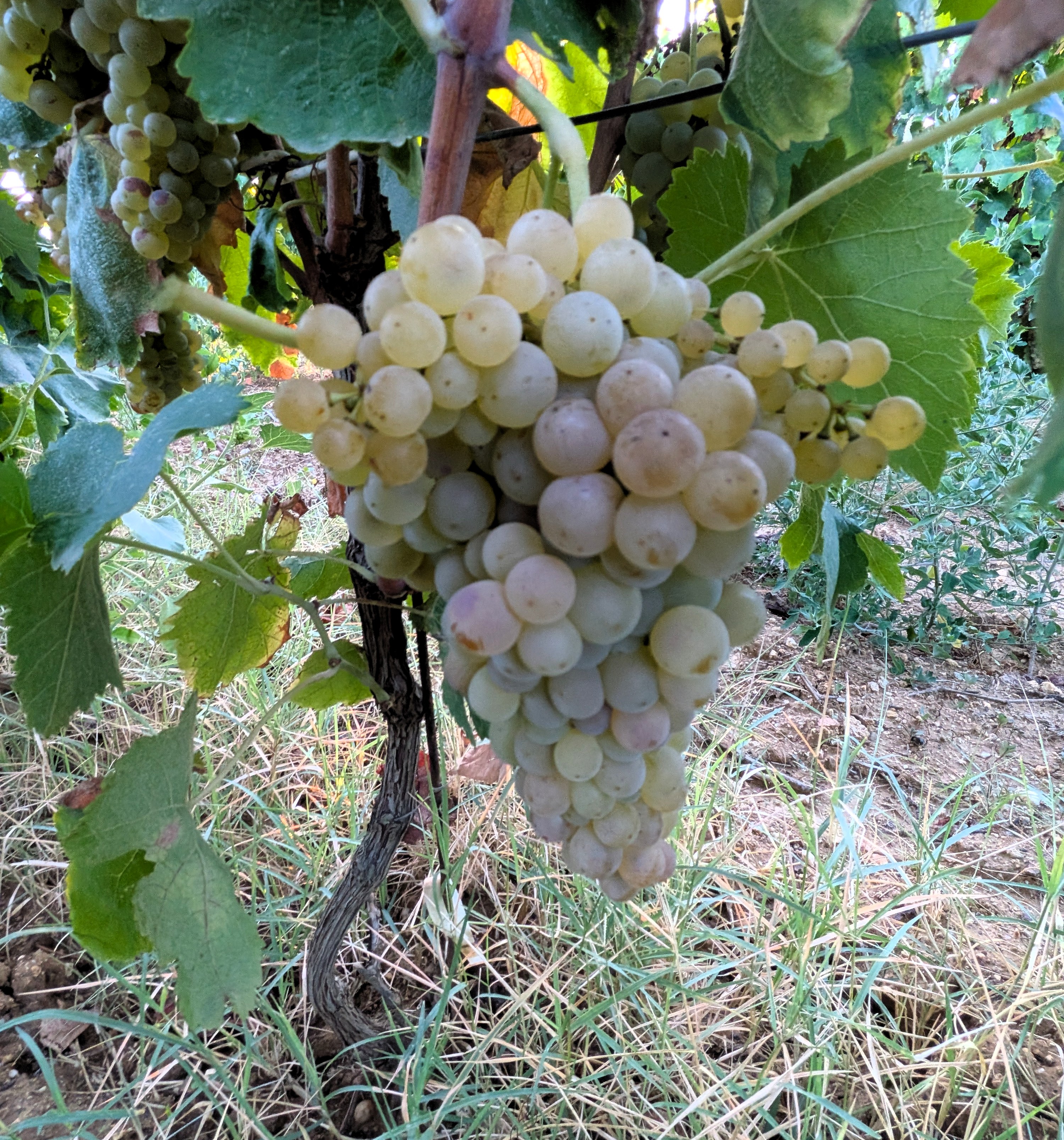
Onto Saturday and a harvest I had been anticipating. Four or five years back Jeff planted Xarel-lo in a parcel at the top end of Peilhan next to the wildlife reservoir. It has been a conscious decision on his part to plant Spanish varieties given how the climate has changed in the last few years. From the outset these young vines were in great shape and produced their first wine in 2024, a refreshing, dry white called Sauve Qui Pleut, a pun on the French expression for ‘save what you can’ and rain, which is fairly self explanatory. As the vines age they will add more character to the wine, it is a variety which I enjoy from so many Catalonia producers.

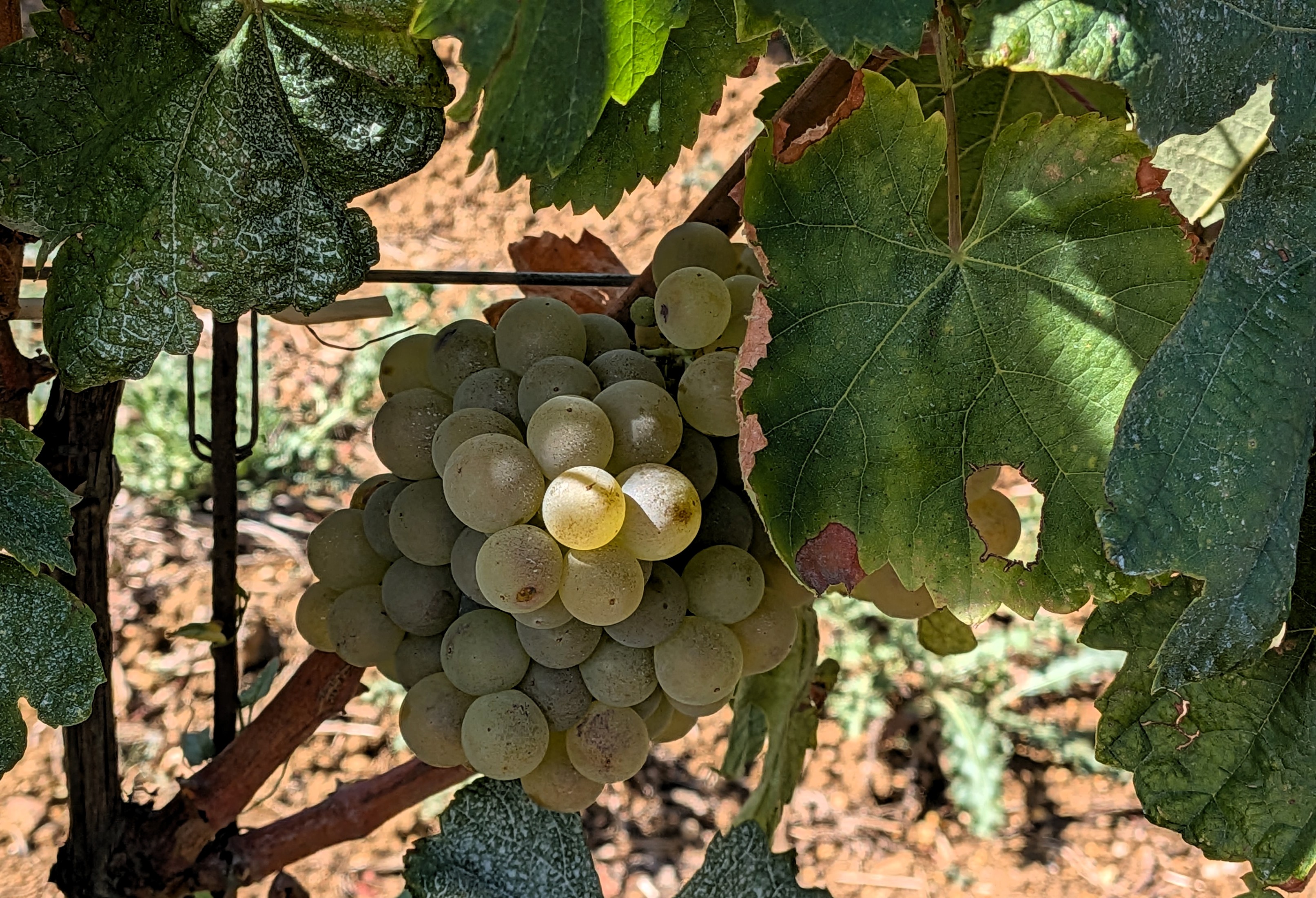
Xarel-lo before harvest

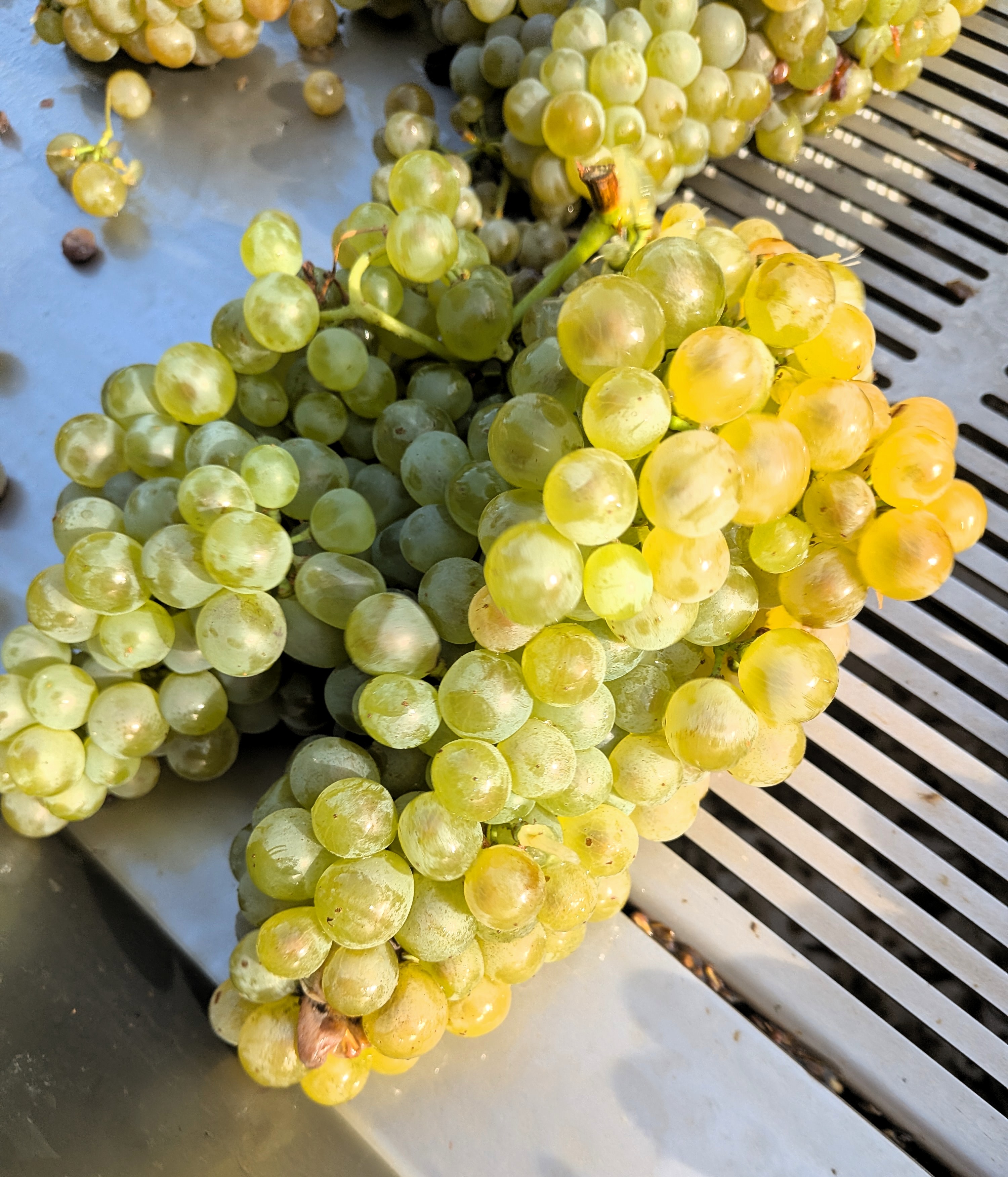
The Xarel-lo was sent to sorting table and then into tank to spend some time on skins, I look forward to the results. Other white varieties were being picked and sent straight to press. Carignan Blanc and Terret Blanc, also from Peilhan, were both looking healthy. Another small tank to give Jeff choices. And then a full afternoon with the rest of the Grenache from La Garrigue.

Xarel-lo
Carignan Blanc, Terret Blanc

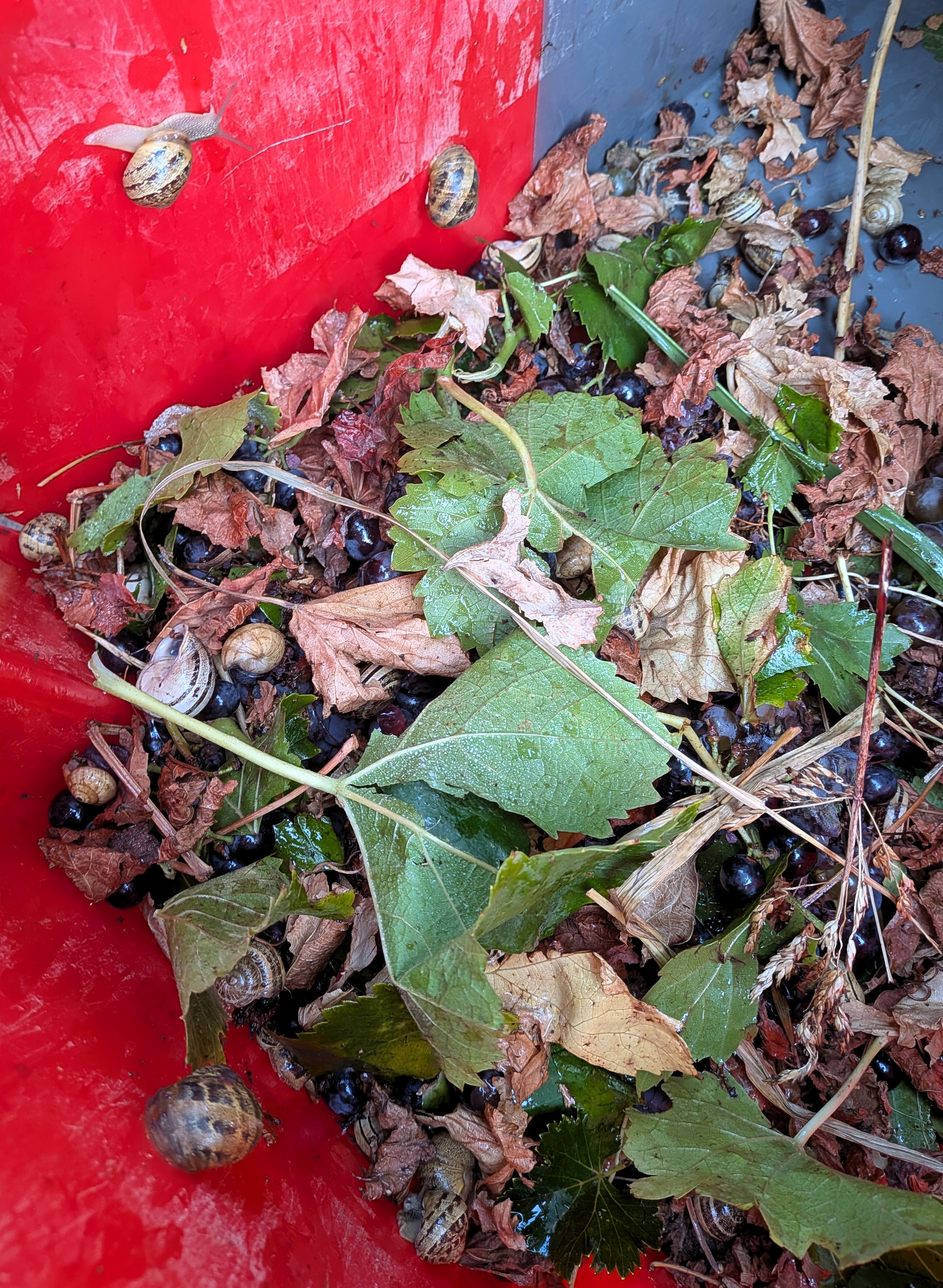
Working on the sorting table you get used to the noises it makes. As it vibrates to separate leaves and other extraneous material a steady rhythm occurs. Occasionally that it broken by a rattling noise and we know to seek out snails. As 2025 has been so dry and hot the snails have sought out moisture and bunches of grapes offer exactly that. La Garrigue must have seemed like an oasis to them, there were hundreds, hiding inside bunches, clinging to their juicy berry.

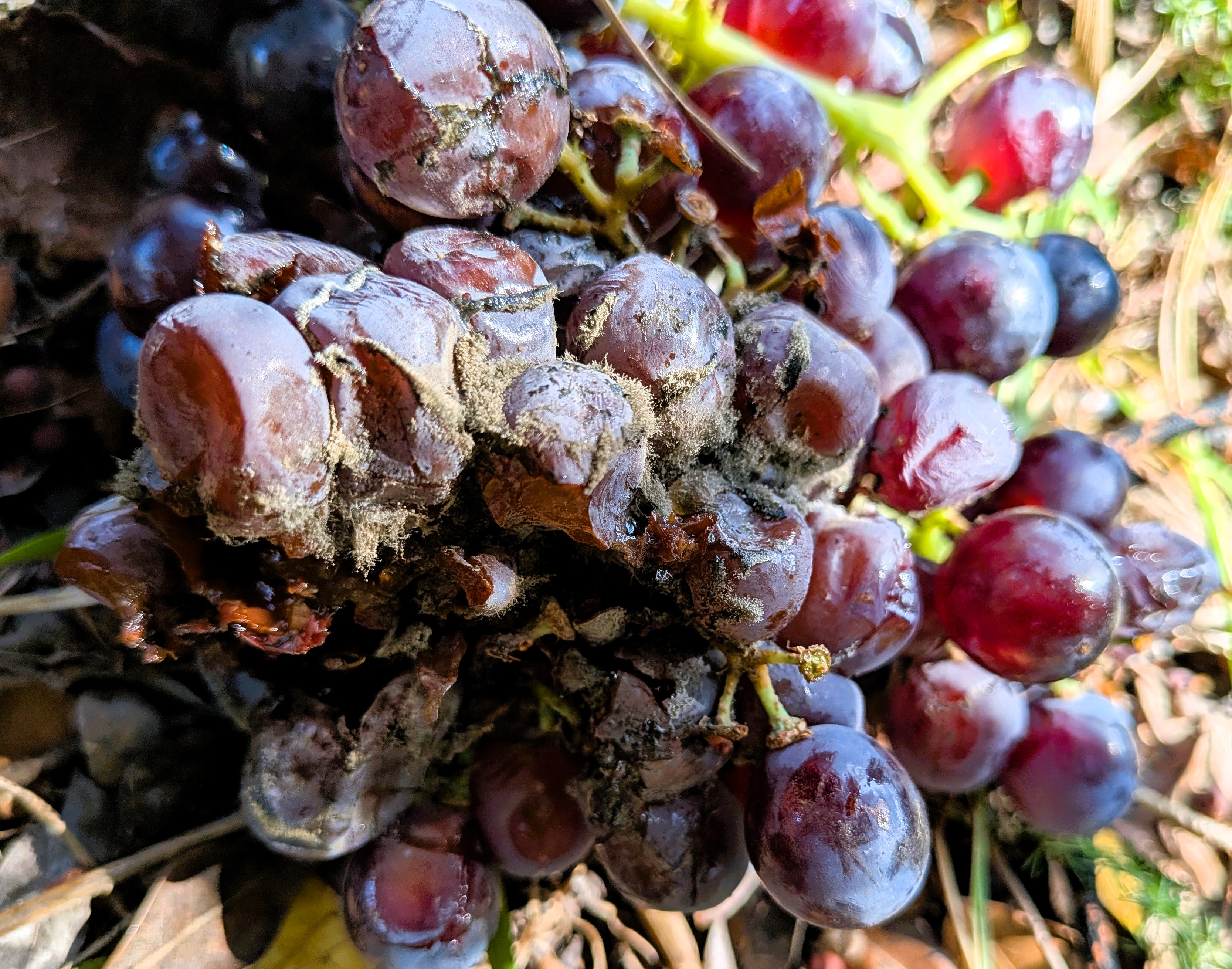
The powdery, rotten mess caused by ver de la grappe

Unlike the Tuesday there was not much damage caused by ver de la grappe but this bunch shows the damage to a bunch which it causes. Fortunately, we are an experienced team on the sorting table and if you break open a bunch, especially when it looks tightly packed, any damage can be found. Alternatively you use fingers to fell inside the bunch and if the grapes feel squishy or powdery then you break up the bunch. It is done off the table so that any rot does not get mixed in with the good fruit.

So vibrations from the table and good vibrations from the analyses and Jeff himself. We look set for a good vintage despite the tricky conditions which this, and almost every year, threw up. There should be some top wines to look forward to, Wouldn’t It Be Nice?

An experienced and fun team (photo by Flora Rey)

Flora, Jeff’s niece takes some fabulous photos, you can seek them out on her Facebook and Instagram page, it’s well worth a look.


Leave a comment

Vendanges 25 – Get Back

Time to get back to work. A thunderstorm overnight meant there was no picking on Monday September 1st and so I turned up on Tuesday ready for action. I popped over to Sainte Suzanne first as the newish parcel of whites, Maccabeu and Clairette were the focus for the day. On a clear morning with the sun not long risen it was fresh after the rain, a good time to be back. The vines showed ravages from mildew with the brown spots of the disease but the grapes were in good nick.

Clairette with mildew marks on leaves
Maccabeu

Into the cellar and the Maccabeu was beginning to arrive, pressed directly. Pièr, this year’s stagiaire, was the one loading the grapes into the press. He’s a bright, enthusiastic lad from the Anjou and has experience in the work, he is the son of Jean Christophe Garnier, so it’s a real help to Jeff to be able to leave him to do tasks along with Flora in the cellar.

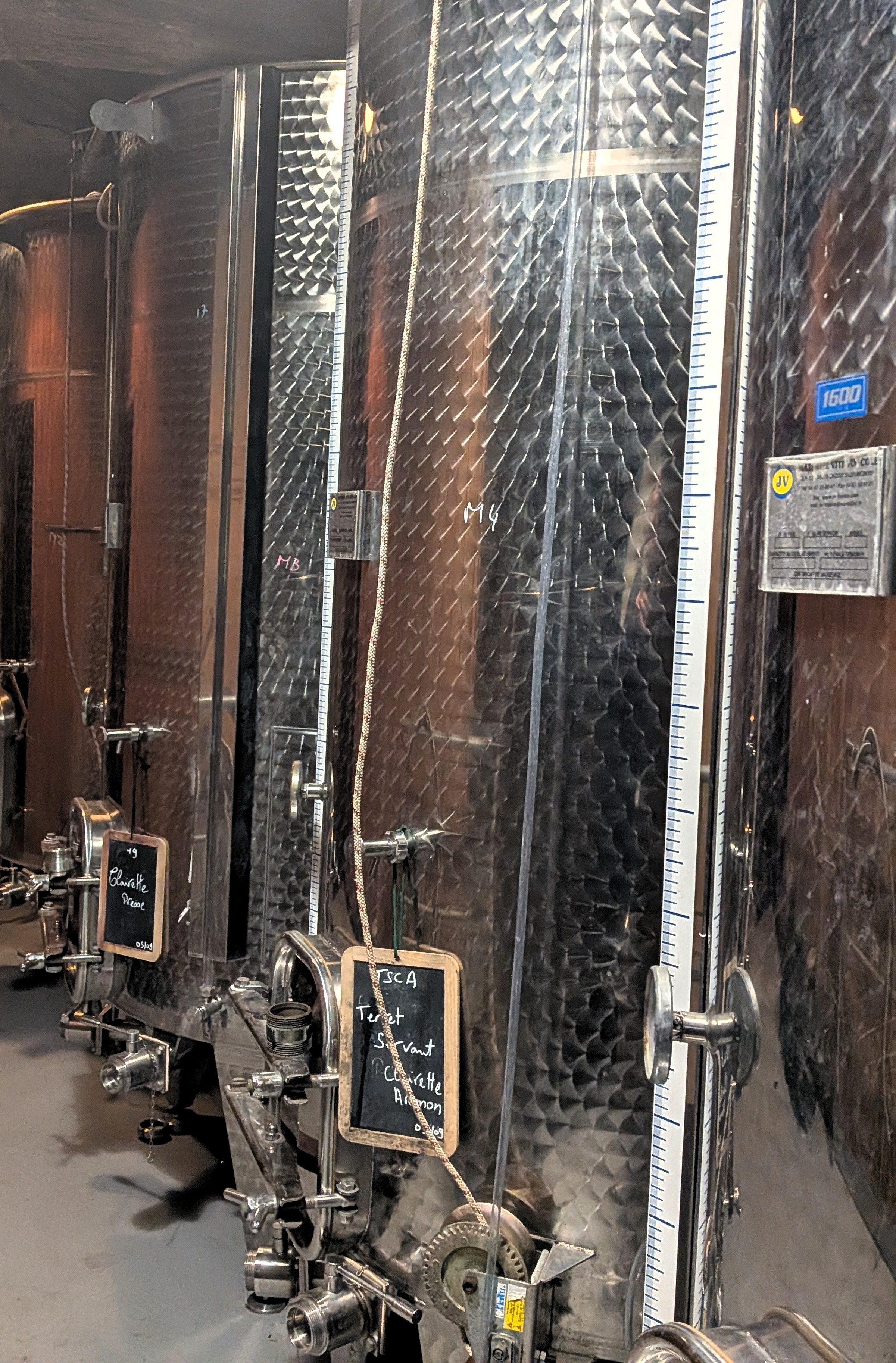
A busy cellar, the Maccabeu in press and remontages

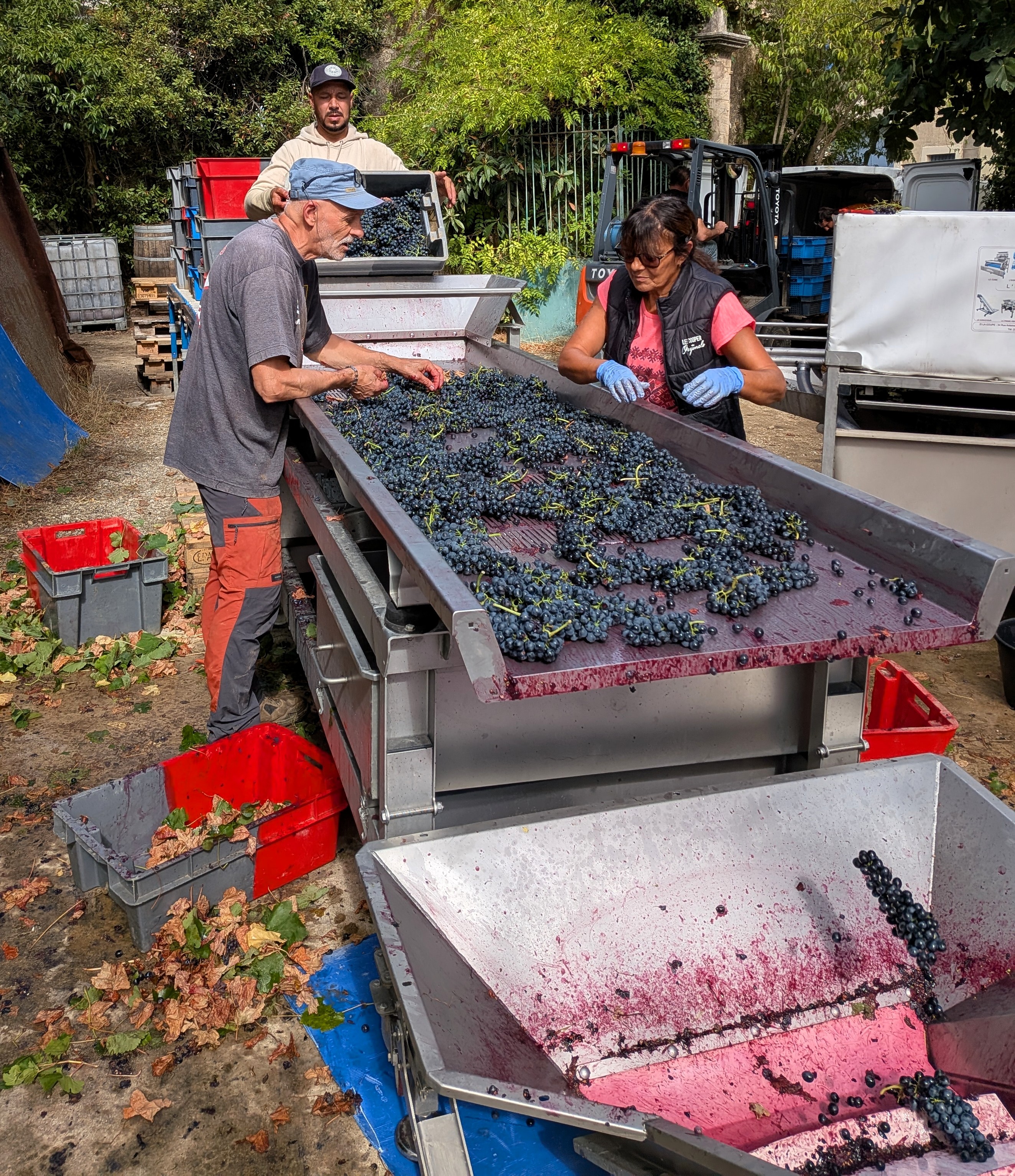
From there upstairs into the courtyard of the house leading into the upper cellar where the sorting table has been positioned since 2020 when being outside was a healthy option for all. It works very well, there is more space for everyone there and in the cellar itself. Plus the fresh air and dappled sunshine make it a pleasant place to be. Alongside me on the table were Boris, who has been coming to help Jeff for many years now, Mari from the village and Jean-Jacques from nearby Bédarieux. These two have worked together before in wine, with Didier Barral for example. So we form an experienced team and they are good company as we chat over the course of the day.

Jean-Jacques,me, Boris and Jeff (left to right) (photo by Flora Rey)

The Clairette was in good order other than a few dried stems from mildew and the morning passed swiftly. The Clairette from Segrairals also arrived including the attractive pink Clairette Rose which brightens the mix. These grapes have been making the eponymous cuvée for the last few years and it has become one of my favourite bottles from Jeff, the Clairette has a lovely freshness but a bitter note too to add a touch of grown up complexity. A year or two in bottle is recommended, at least to my taste.

It was a hot day and my body was aching after my first day. I have chosen to just work some days this year, I am now officially a pensioner! Wednesday went ahead without me at the winery and Jeff told me that evening there’d been one calamity (not because I wasn’t there I hasten to add). One of the pumps had broken down and couldn’t be repaired for a few days therefore he was having to redraft plans. The day was given to the Cinsault from Segrairals, now one of the biggest crops of all and the source of fruit for cuvées 5SO and Vin Des Amis.

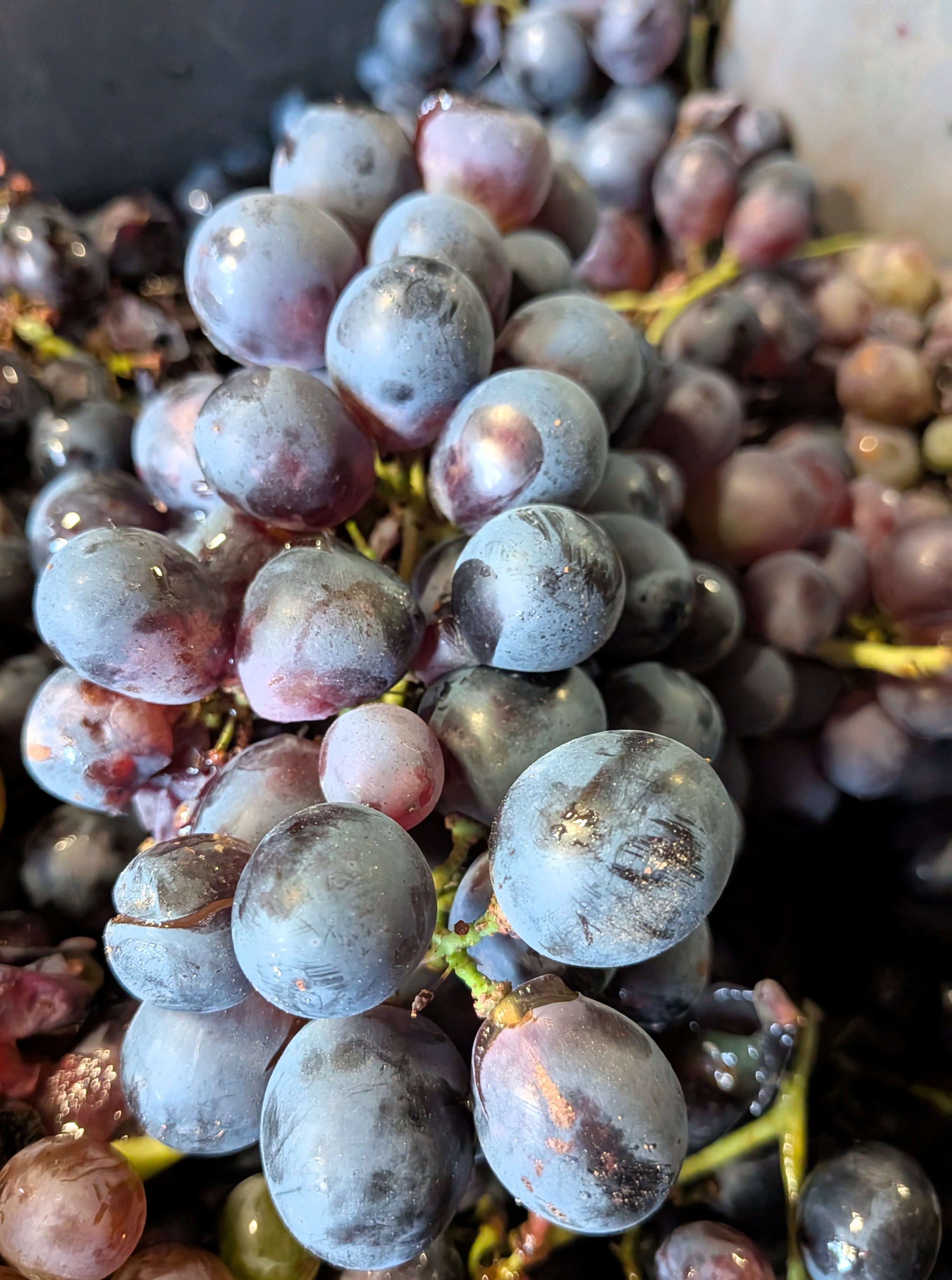
Some of the fragile Cinsault
Big, juicy Cinsault

I returned on Thursday and again the early grapes were going directly into press. This was still the Cinsault but from a part of the vineyard which had suffered a little so the grapes were fragile and Jeff wanted to extract the juice without the skins. When that couple of rows had gone into the press the rest of the Cinsault was taken back to sorting table for fermentation on skins.

Mari showing some of the Cinsault

Cinsault is so generous, the big open leaves seem to hint at the friendly fruitiness of the juice, the typically big sized grapes almost bursting through the thin skins. It has to be picked at the right moment or it will cross over into over ripe and flabby. These bunches were good sized and healthy. Well the vast majority. Frustratingly some of the bigger, tighter packed bunches have to be checked carefully, breaking them open because ver de la grappe, the grape moth larva loves these bunches. The moth lays its eggs in the young bunch and the larva eat their way through the centre leaving a powdery black mess. Not what you want in your wine. Careful selection, in the vineyard and sorting table, is needed to ensure only good grapes go into the tank.

I have highlighted an area damaged by ver de la grappe

The afternoon brought a change of grape variety, Grenache from La Garrigue. I had noted the bunches when touring the vineyards last week and they arrived in good order. Hardly any ver de la grappe thankfully, the major issue was effects from mildew. The leaf marking is unsightly but not serious however, when the mildew affects the bunches it dries out the fruit causing buds not to develop into grapes and leaving gaps on the stalks or hard, dried grains.

Fortunately the vast majority of bunches were in very good condition and the tanks began to fill with Pièr keeping a close watch. After that, everyone’s full effort is given to cleaning the equipment thoroughly, none spared in ensuring that cleanliness rules so that we make wine in healthy, optimal conditions. This is essential for any winemaking but particularly when no chemical additions are made to the wine, the wine has to look after itself.

Pièr checking the level in tank
Boris and Flora cleaning

Two good days of work, encouraging signs from the grapes and the infant wines. It was a pleasure to be back even if I am not as involved as previous years. And all supervised by another old chap.


1 Comment

Vendanges 25 – The show goes on

With or without you. A bad year for me with bereavements and serious operations for family and friends and then, to crown it, a car accident prevented us from getting out to the Languedoc for the start of vendanges as intended. To continue the metaphor, an annus horribilis.

Grenache, La Garrigue
Xarel-lo, Peilhan

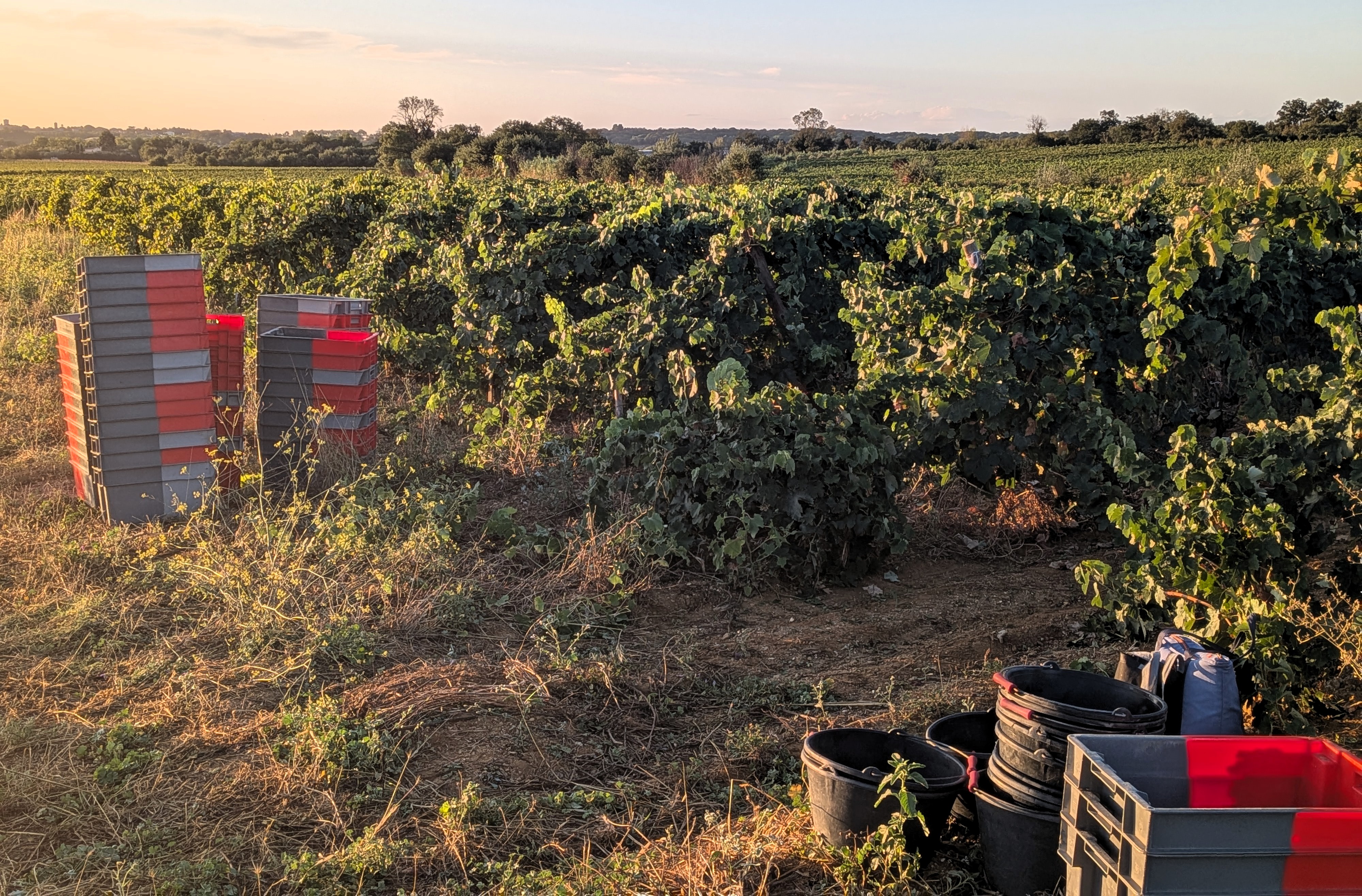
Was it a tale of woe for Jeff Coutelou? Well, no. Abundant rain in Spring went a long way to restoring the water table but that was followed by extreme heat for a long period over the summer. Rain and heat bring disease and downy mildew in particular. Temperatures over 40c which endured for a significant time also stress the vines and cause then to go into survival mode rather than ripening fruit. Nonetheless Jeff told me that he was reasonably content with how things were looking as vendanges loomed close. The start date was August 26th which is in line with recent vintages. Sadly, that accident meant that I would not be part of the team for the first week as I’d hoped.
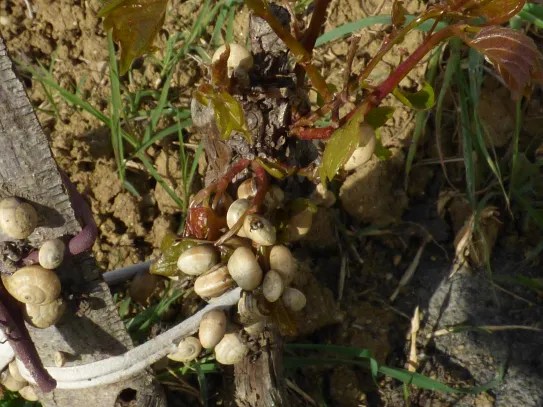
Snails in Flower Power 2016

Upon arrival I did a tour of the vines and received quite a surprise. I knew that Jeff had given up on Flower Power vineyard (Font D’Oulette) the imaginative field co-plantation of over 20 grape varieties. Sadly, after a promising start and favourable reviews in magazines the Flower Power project was fatally damaged back in 2016 when snails ravaged the vineyard. The vines never properly recovered from that episode. I recall spending a whole day collecting snails from the vines and still they came! Recent harvests had seen tiny quantities from the parcel, a few cases and Jeff finally lost patience. So the vines were grubbed up, that I expected.

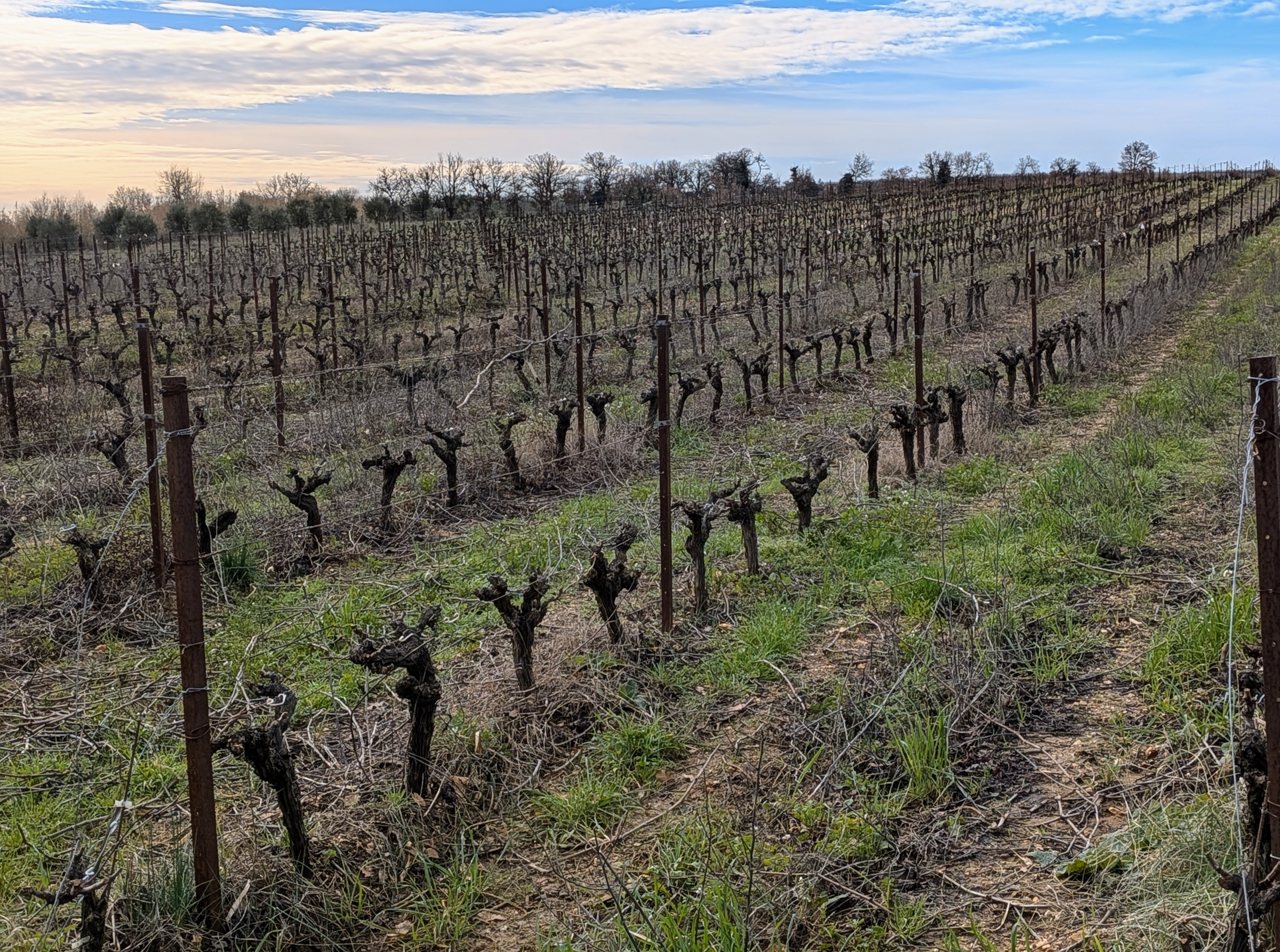
What I didn’t know was that Jeff had also decided to pull up (arrachage) other parcels too. The original red grape section of Peilhan with varieties such as Carignan and the rare Castets were gone. The area above it was planted in 2015 with a range of unusual, local varieties such as Piquepoul Gris and Noir, Terret Gris and Noir and Monastrell. They are now producing good quantities of interesting wine and the new Xarel-lo parcel made its first wines last year too from Peilhan. Add on the two year old plantation of Parellada, Malvasia de Sitges and Maccabeu and the vineyard will actually be producing greater quantities than before but I was sad to see Castets disappear.
Reds gone from Peilhan
New plantation of Peilhan

Disease, particularly in the trunks of the vines, was the main reasoning for pulling out that red section and also for grubbing out the old Mourvedre vines in Segrairals vineyard. In truth I never liked the grapes much from there, a small amount of rain would often send them over the edge to rot. And then..

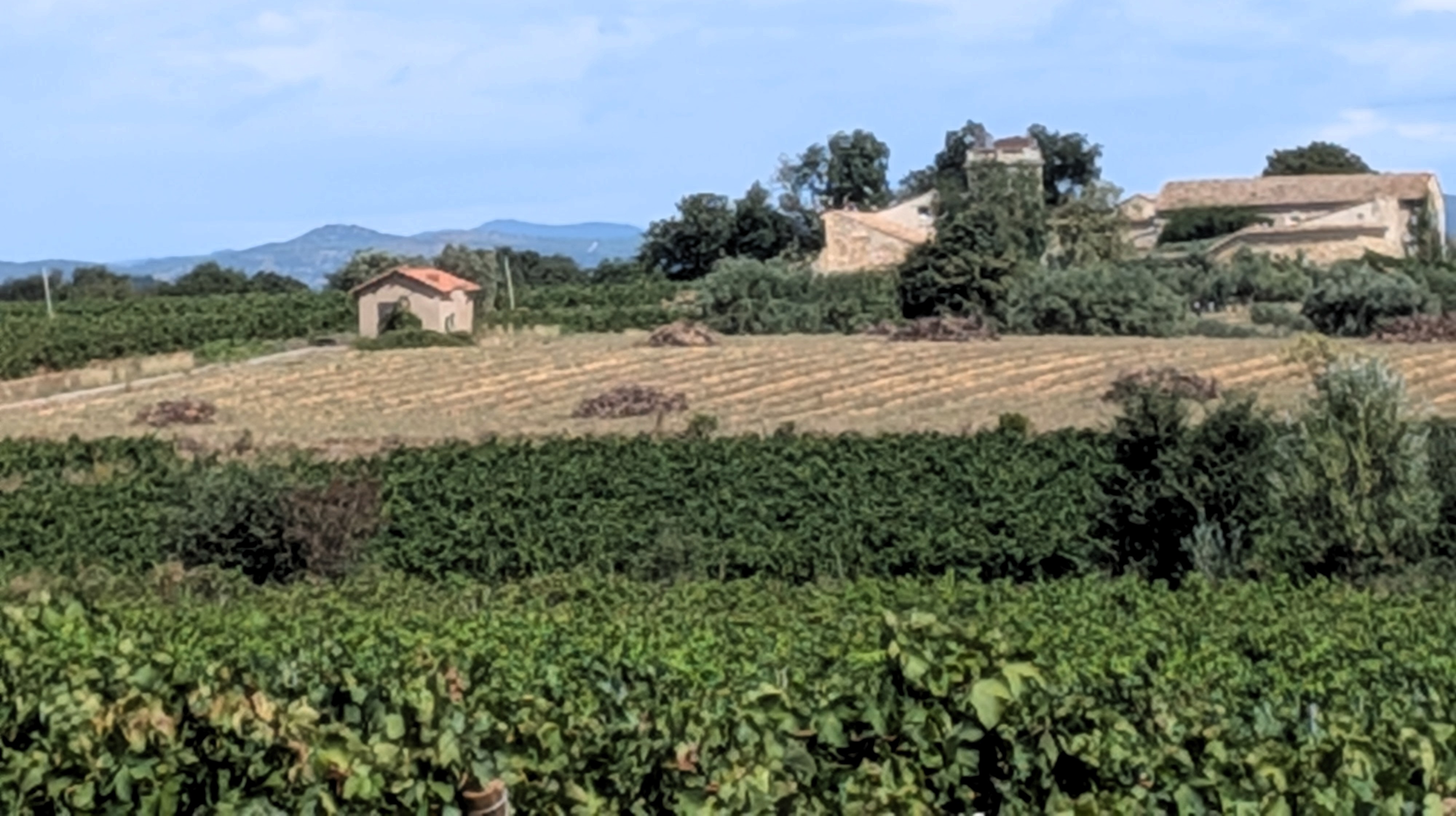
Sainte Suzanne is a vineyard I always liked a lot. It was where I did a lot of my early picking back in 2014 and 2015 and the Syrah and Grenache were usually the source of Vin des Amis, the cuvée which first hooked me to Jeff’s wines. Standing on top of the ridge in La Garrigue you get a good view across to Ste. Suzanne and I was astonished to see that the original parcel is empty too!

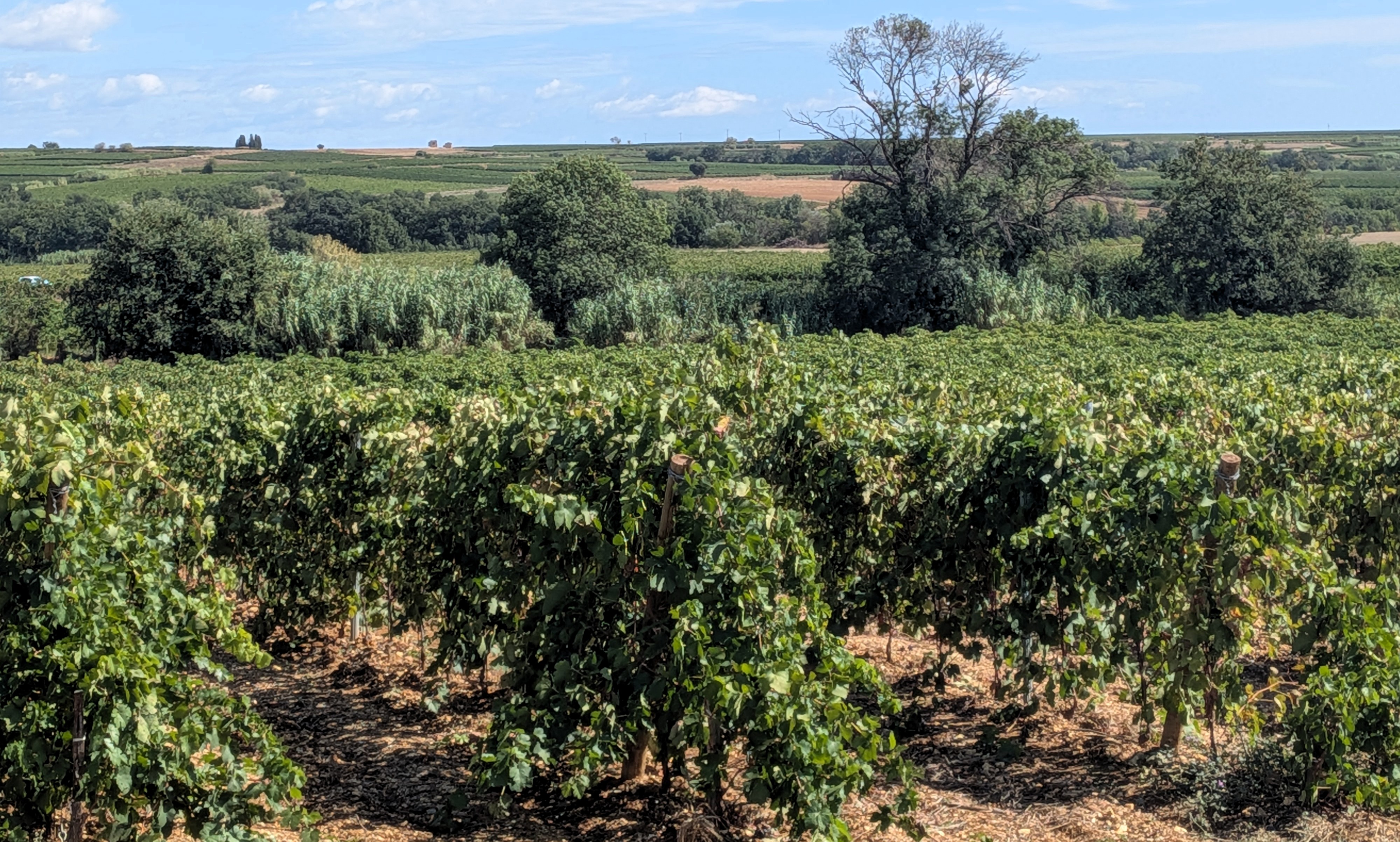
The view from La Garrigue to Ste. Suzanne

The newer white parcel of Clairette and Maccabeu is in fine form but the big empty space made me sad. Jeff told me that the Grenache vines were starting to develop too much wood disease and the Syrah had become problematic. I knew of the latter, Syrah tends to be the first variety to ripen for us and Jeff has found it gets too ripe too soon in that parcel which has a south facing slope. Contrasting with the Syrah of La Garrigue which was deliberately planted on a north facing slope.

There will be a significant change to white grape production from red as a result of all these changes, with the plantations in the main three vineyard of Peilhan, Segrairals and Sainte Suzanne. Much has changed in my 12 year of vendanges here.

The new Syrah vines at La Garrigue, north facing

As for the vines still there. Mildew was evident in the leaves but I have to say I was pleased to see that there were a lot of very healthy looking bunches with good sized grapes. In the first few days the team had been flat out. The pickers arrived, fifteen rather than the usual eight! They made short shrift of much of the crop in the first few days and it was the team in the cellar which had to try to keep up, working until 7pm on the first day for example. I regretted missing out and offering a helping hand.

Syrah from Segrairals and in tank (right)

Then I was due to start today Monday September 1st, only for a thunderstorm to cancel picking. Damp grapes and very muddy soils do not make for good winemaking. It was time to press the first of the red grapes, the whites already harvested were pressed quickly. Fair to say that fermentations have started well as you can see in the video.

So, much of the harvest is in. Still plenty for me to help out with in coming days. Congrats to the team who have been busy as you can see below.


1 Comment

Soaked 3

It’s always good to support local businesses and events and two years ago Ouseburn (Newcastle) restaurant The Cook House organised ‘Soaked’ a wine tasting featuring organic, biodynamic and natural wines. It was fun and successful so, happily, has become an annual event, sold out this year and I was delighted to attend.

Some of the wines were familiar to me from previous tastings and from purchases. Tastings can be crowded and too many wines can blur clear thinking and not just because of alcohol. I try different strategies, sometimes white wines first followed by red for example. Today I cherry picked wines and gave myself around 100 minutes before a tired palate and more people at tables make tasting more difficult. I thought this worked well, here are wines I enjoyed.

Wein Goutte 2nd left, Lafitte on right

Sager and Wine showed a very interesting German wine from hybrid grapes, Muscaris and Johanniter mixed with the more familiar Muller-Thurgau and Bacchus. Such hybrids are starting to have an impact on more wines. The intriguingly named ‘What Time Is Too Late To Go To Bed’ 2023 by Wein Goutte showed good yellow, dry fruit and nice freshness. Lafitte is a very reliable producer of quality bottles in the Jurancon region, one of my favourites and their Loin D’Oeil 22 was fun, apple and pear flavours.

Progression Wines is a relatively new company established by Sean Evans, better known as The Geordie Wine Guide. He has used his contacts to import a range of interesting wines from France, some by new producers to me and some very difficult to source so hats off to Sean. I enjoyed Chateau Payral’s Bise 22, a blend of Muscadelle and Semillon, classic to the Bergerac region but skin contact and showing a nice grip as well as the aromatic fruit. Very good too was a Loire Cabernet Franc, Nuage 23 by Domaine 7 in the Anjou. Fresh, light with cherry fruit and a hint of the classic green pepper which boosted the palate, just the right amount. Perhaps best of all though were the two 2022 wines from Jura producer, Domaine De L’Aigle À Deux Têtes, located near such unicorn Jura names as Gavenat, Labet and Kagami. I liked the ouillé style Savagnin but best of all was the Poulsard, full of red fruit but complex and structured. Possibly wine of the day and hats off to Sean for getting hold of this.

Wanderlust Wines offered the rival for my wine of the day choice, the very fine Sugrue, Bee Tree Blanc De Noirs NV. I have heard a lot about the skills of Dermot and Ana Sugrue, many rate him as one of the very best winemakers in England and this wine proved those recommendations to be accurate. The Pinot Noir and Pinot Meunier grapes were showing lovely bright red fruit aromas and flavours but a fresh acidity and salinity kept it clean and me wanting more. Good too was the PN23 Rosé from Tillingham, peachy and refreshing PetNat. The Sicilian Zibbibo, ‘Bello Mio’ 22 from Fondo Antico was lovely too. Zibbibo is the local name for Muscat D’Alexandrie, a grape I know well at Jeff Coutelou’s, and it was very skilfully made with the aromatics and richness controlled to a dry, clean wine with distinct peachy notes.

Wanderlust range with Tillingham’s PN Rosé easy to spot

Dynamic Vines is very familiar to me not least from their own London tasting event. They feature many, excellent producers and I liked the very salty, mineral IGP Pella ‘Roditis’ 2022 from Ktimas Ligas. Cloudy in appearance but pure and clean, don’t be deterred by appearances.

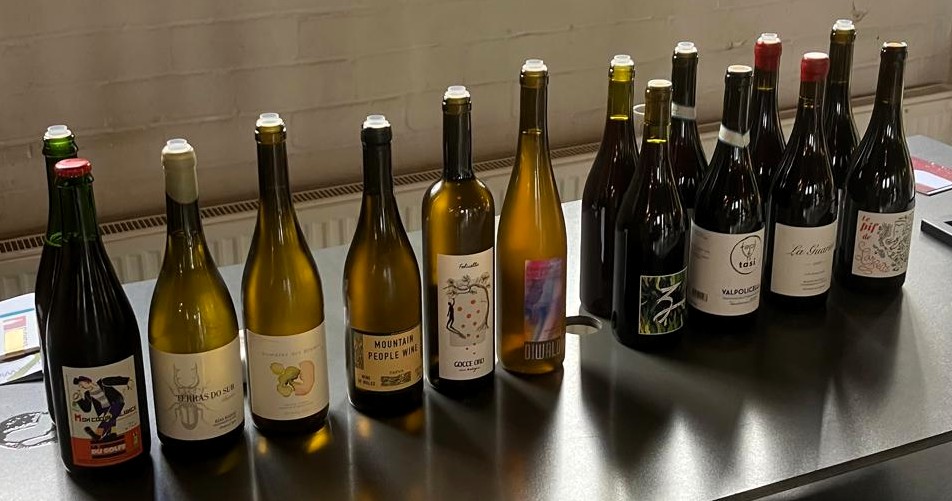
Element Wines hosted the tasting in Edinburgh I attended this Spring and I bought some of their wines afterwards. New today was a very pleasing Albarino, Terras Do Sur 2023 from Galicia on a windy site which helps to keep the freshness, much more complex than most Albarinos. I associate Valpolicella with fairly rustic, quite heavy house wines in Italian restaurants but Valpolicella, Tasi, 2024 showed much more subtlety with light red fruits and some complexity.

Otros Vinos specialise in Spanish wines and I enjoyed a good few including interesting examples of Xarel-lo and Macabeu, definitely a list to peruse. Favourites though included a fascinating Doris, Vinos Ambiz, 2024. Made from Chasselas, unusually, in the Sierra de Gredos of central Spain, this was a touch wild, light orange from maceration with lots of herby refreshing notes. La Mulassa O La Barraca De L’Avi, La Salada 23 was Garnatxa Blanca from Penedes made in amphora. This showed skill in blending one vineyard of young, 5 year old vines with another of 90 year old vines to make a balanced, complex white.

Les Caves De Pyrene will be familiar to most UK wine drinkers focused on quality. I knew some of the wines, indeed I’d just bought some of them the week before! New to me was another hit from the excellent Testalonga, El Bandito Lords Of Dogtown Chenin 23. Good texture and Chenin flavours, what’s not to like? I have been trying a number of Argentine wines recently and I liked the fresh, clean Paraje, Cara Sur 22, based on 8 red varieties grown pergola style and irrigated by meltwater from Andean glaciers. L’Apostrophe, Rosé Varois 24 from Les Terres Promises was a big hit with my wife attracted by its light, fresh red fruit character.

Central Wines specialise in bottles from European nations outside of the traditional wine producers. Polish, Belgian and Slovakian wines to the fore as well as bottles from Georgia and England. Chardonnay, Niemczanska 22 from Silesia was light, nutty from light oak usage and refreshing. Riesling, Papillon 19 shows great Riesling character, dry and aromatic. Best of all was the Polish Hople Bora 18 made from Cabernet Sauvignon and the hybrid Regent. At first it highlights the Cabernet character with currant and red fruits but the Regent lifts it with acidity and freshness. (My own Regent vine has flourished this year, so maybe Consett can follow the Polish example!).

A tasting with plenty of variety and new wines to me. Well organised with plenty of room to enjoy the wines despite being a sell out. Long may Soaked thrive.


2 Comments

A UK summer from around the world

Regular readers will know that Jeff Coutelou’s wines are my favourites, for personal and vinous reasons. The last article described some of those wines as well as others from my homeland. In the last few weeks I have enjoyed wines from other parts of France and the rest of the world.

Nicolas Carmarans has been the source of excellent examples from the emerging wine region of the Aveyron in the northern Languedoc / Central Massif. The two bottles I opened were both based on the Fer Servadou grape, most famously grown in the Marcillac AOC, further west towards Bordeaux. Good examples from there produce a peppery, light red with a nice fresh tannic grip. the bell pepper notes may come from its genetic connections to Cabernet Franc and Carmenere. Carmarans (curious tie in of names) is a former Parisian wine bar owner who turned to wine making in the Aveyron, not far from where the famous Laguiole cutlery is made. Altitude and cooler climate gives his wines a lovely freshness and lighter profile whilst still carrying serious flavour and complexity. The Mauvais Temps 19 and Maximus 18 were both showing the benefits of time in bottle, delicious with food and on their own.

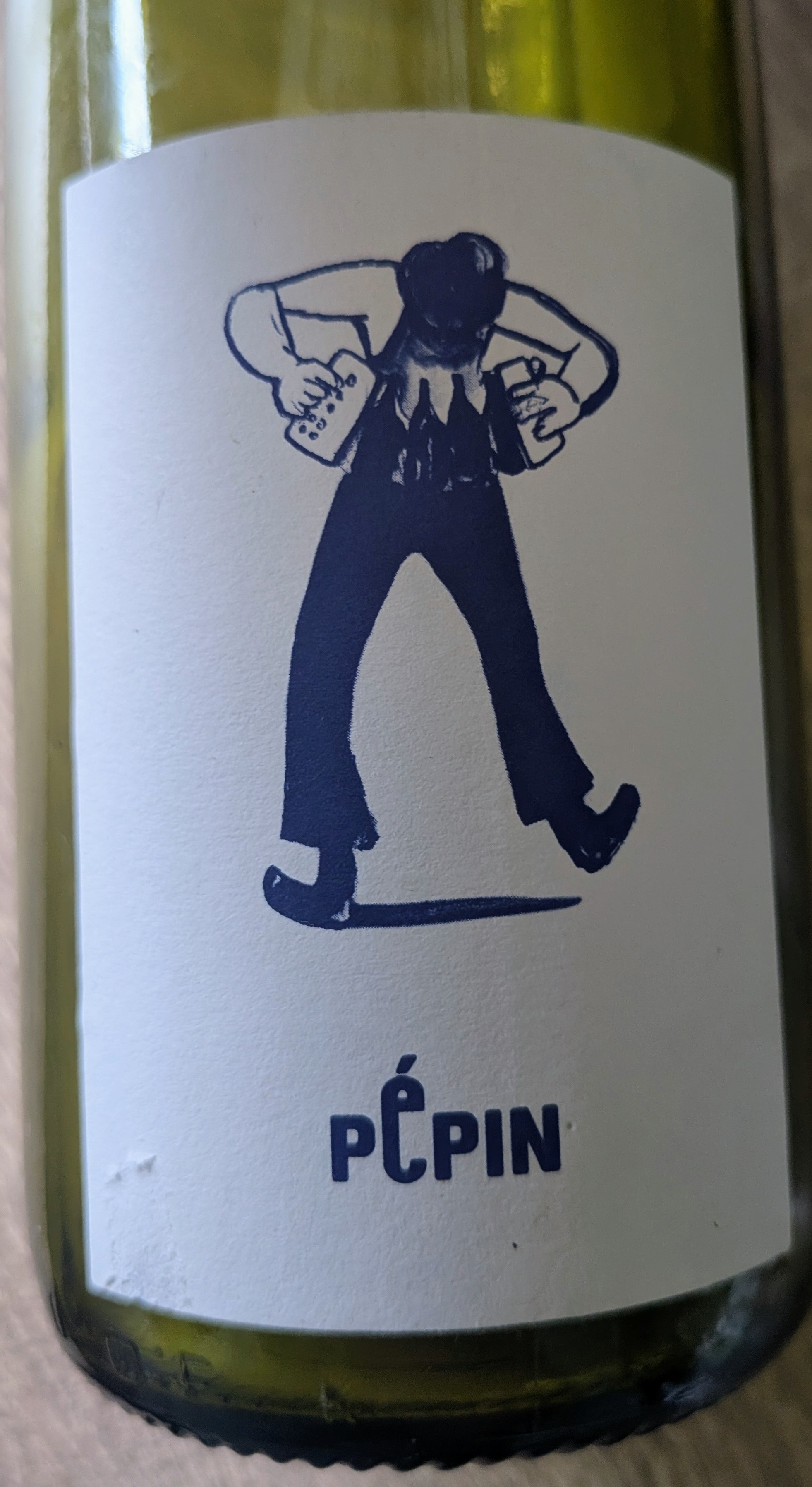
Still in France, no idea where I purchased Céline 2020 from Charlotte et Cyril Delval. They are a young Belgian couple based in Poligny in the Jura and I know little more. Searches don’t seem to uncover many more wines which is a shame as this macerated Pinot Gris was very enjoyable. Light red from the grape’s pink skins it had nice tannins whilst still showing red fruit flavours. Only downside was the very heavy bottle. If anyone knows anymore about them, drop a comment. More Pinot Gris, along with Muscat, Klavner, Sylvaner, Riesling and Auxerrois – of course it’s Alsace. Achillee Pépin is a non vintage collaboration of friends who grow grapes organically and make a lovely fresh orange wine from their shared work, nice aromatics and fruit.

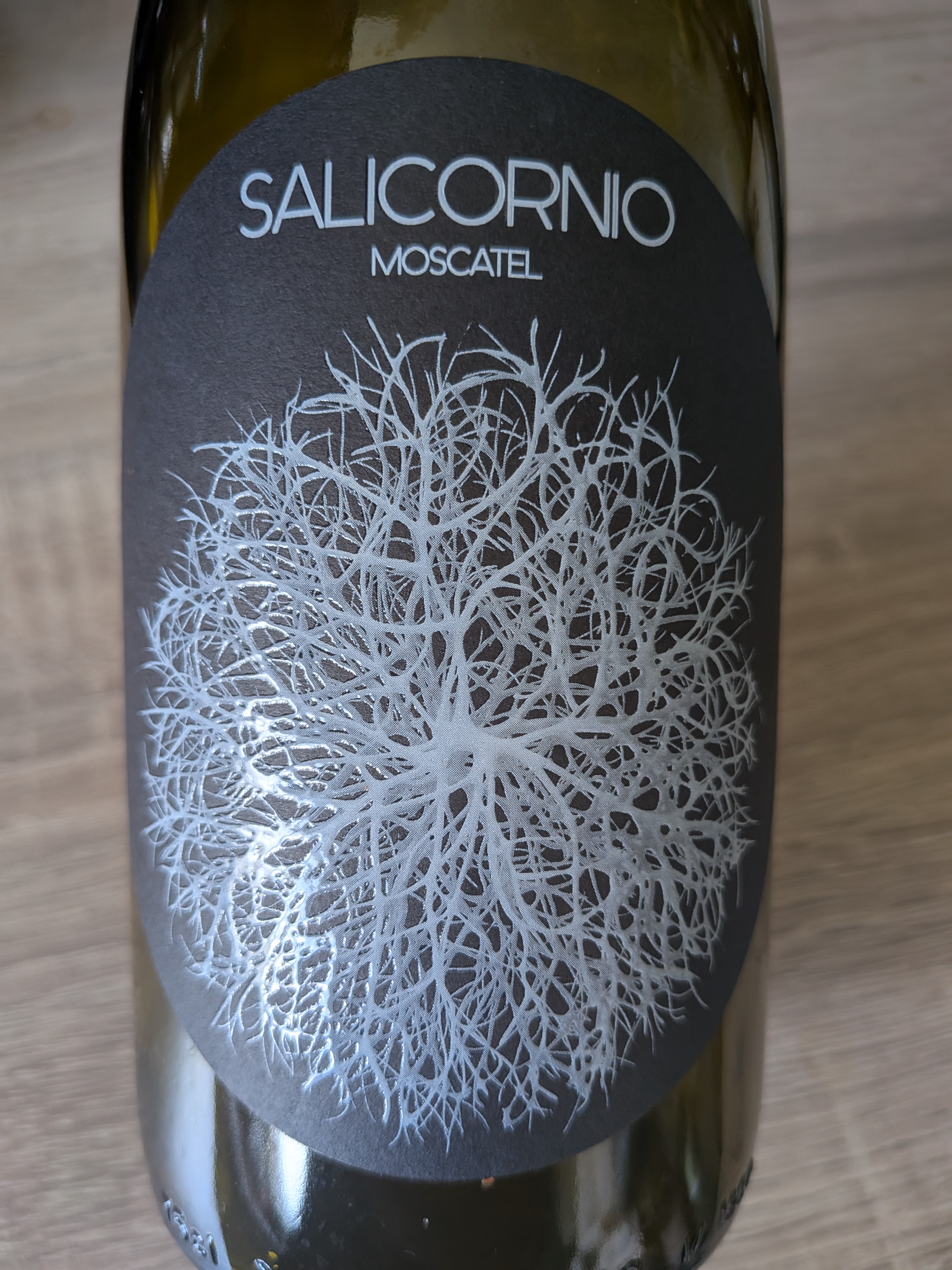
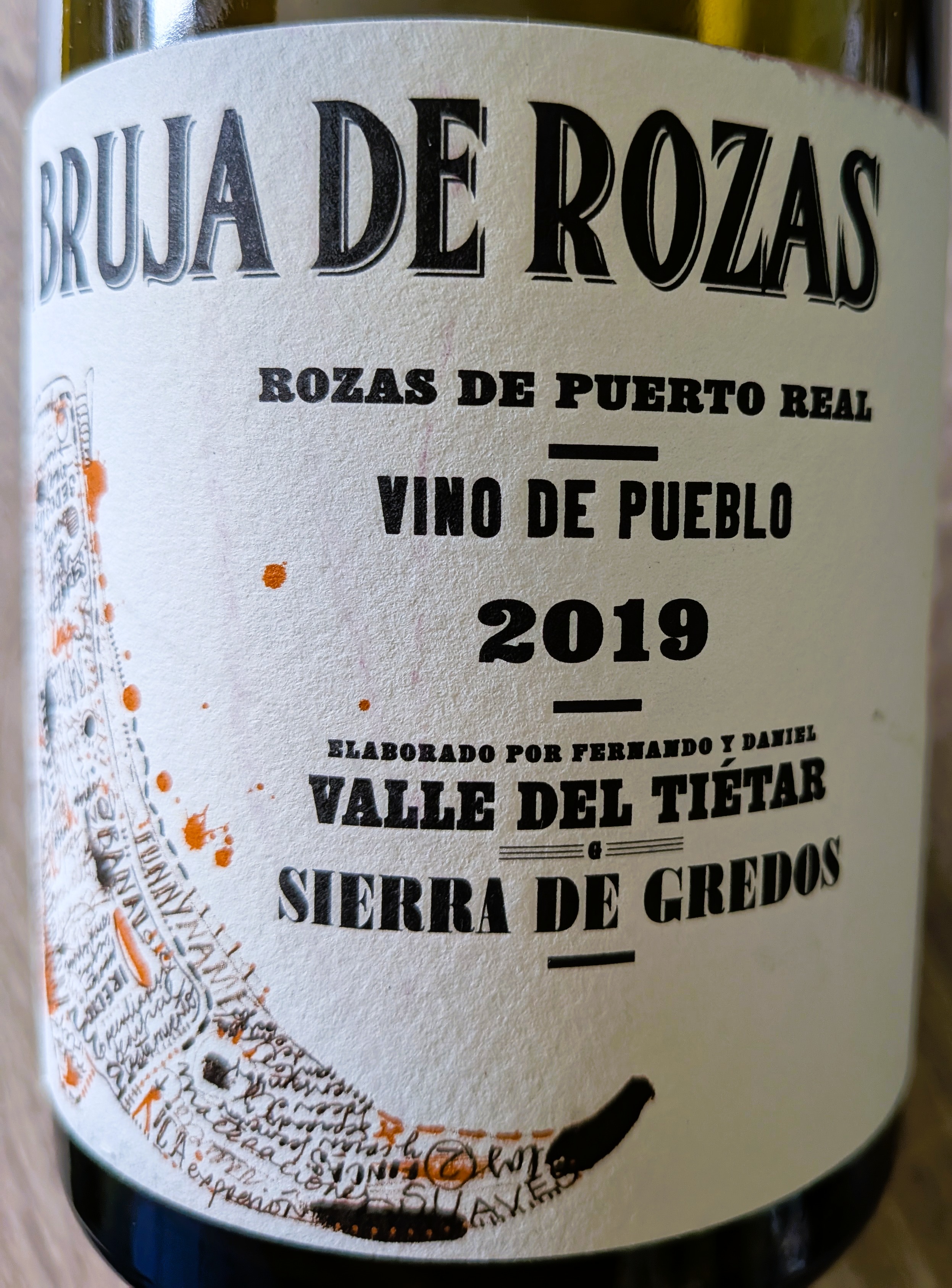
Another orange wine and, another example of why I like them based on aromatic grapes, this time a bottle from Spain. Casa Balaguer in the Valencia region makes Salicornio 23 from Moscatel grapes, a variety of Muscat. The grapes spend 6 months in old concrete tanks and produce a fragrant orange blossom aroma with lovely yellow fruit flavours and dusty tannins. One of the tastiest orange wines for some time. Commando G is a well known producer from the Sierra De Gredos mountains near Madrid. Their speciality is Garnacha and the 900m of altitude, as with Carmarans, mean that there is a freshness to the wine despite its proximity to a very hot climate. Bruja De Rozas 19 was very Pinot like in its aromas and flavours, almost meaty notes and saline too. Again bottle ageing proved a success, the tannins were soft and supportive. Lovely.

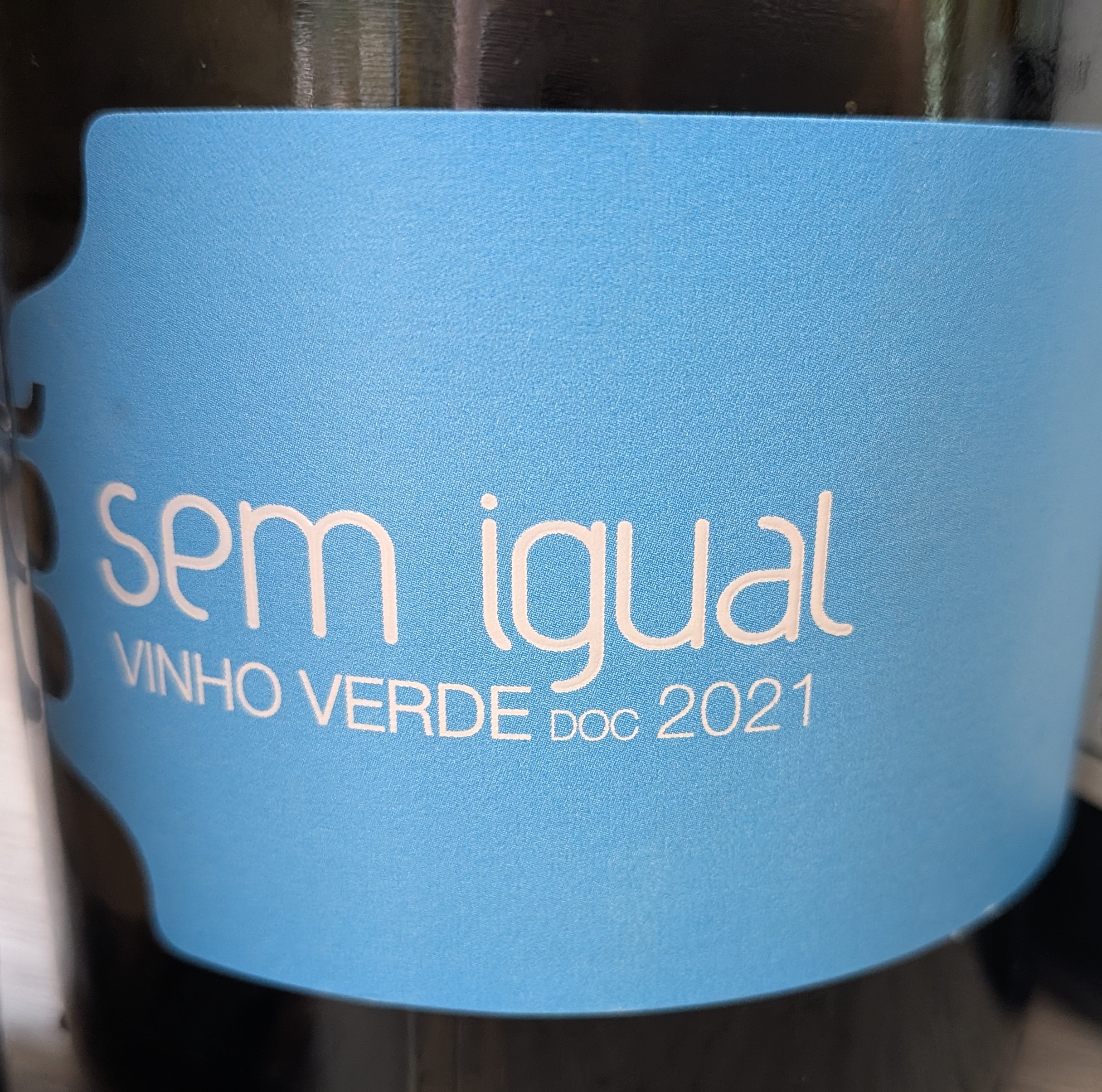
Still in the Iberian Peninsula but from Portugal two wines from Sem Igual which I tasted back at the Edinburgh tasting in Spring. I bought a few of thee white and red Vinho Verde and would like some more., they are right up my street. The white Vinho Verde 21 used Arinto and Azal grapes to produce a fresh, citrus and yellow fruit profile, simply delicious. The Tinto Vinho Verde 21 is made from Touriga Nacional and Baga grapes and is light, full of raspberry and red cherry fruit and freshness, lip smacking and yet full. These two have definitely made the shortlist for my wines of the year.

Finally to Australia and three excellent wines, two from my favourite region of the Adelaide Hills. Ochota Barrels was the project of Taras Ochota before his tragically early death and it is his wife Amber who has continued his fine work. Out Of My Head 23 (named after a song by a local Adelaide group), is pure Grenache and fizzes with energy. Very unlike the Commander G version it is lighter and fresher still. I sometimes read about wines described as having tension and this is definitely one. Acidity, fruit, tannins merge seamlessly but then one pops up its head for a time to dominate before settling back down. Quite something.

Jasper and Sophie Button run Commune Of Buttons in the Hills and I was fortunate to meet them back in 2018 when visiting the area for the first time. Influenced by the remarkable Anton van Klopper Jasper has quickly established himself as one of the country’s best winemakers. Gloria Pinot Noir 21 was everything I had hoped for. Generous but not over ripe fruit, aromatic and fresh – a classic example of top Pinot Noir, not much gets better in a bottle than that.

Talking of top Ozzie producers, Luke Lambert. I heard so much praise for his wines that I almost wanted to dislike them but I remember drinking one in Sydney in 2018 and it was terrific. Syrah 22 from the Yarra Valley was too. It’s Syrah not Shiraz, fresh, fruit but just ripe not overdone. Lovely acidity, opening up in glass from first glass to last a few hours later. My advice , don’t be daft like me, leave it for a couple of years no matter how delicious it is now.

My friend David Crossley has an excellent website called wideworldofwine and I hope that I have emulated his spirit and shown that I am not single minded in my wine drinking. There are fabulous wines being made around the globe from producers growing vines with care and attention to the environment. Support them please.


2 Comments

A UK summer with thoughts of Puimisson

Summer so far has been home based, though plans are to head to Puimisson towards the end of August and a few days of harvest with Jeff Coutelou. In the meantime a number of bottles have been opened and I aim to share some thoughts on the better ones in two parts, the first following the above theme with wines from the UK and Jeff.

I have praised David Morris and his Mountain People wines several times already this year and a bottle of the Bacchus, Parva 23 proved me correct again. We enjoyed a long, dry early summer with some good sunshine and a crisp, dry white wine on a summer’s evening is perfect. Bacchus can produce quite flowery notes, over the top at times, but in David’s sure hands the wine is clean, dry and refreshing with plenty of white fruit aromatics and flavours. Grapes grown and vinified in Monmouthshire.

I listened to the audiobook version of Henry Jeffreys’ Vines In A Cold Climate during the Spring, an entertaining and informative account of English wine and was interested in the story of a couple of wineries buying in grapes and making wines in urban settings. One of those was Blackbook, based in Battersea, South London. It is the winery of Sergio and Lynsey Verrillo. Sergio was US born, then a London based sommelier in Michelin restaurants who moved to wine making via training at Plumpton College in Viticulture and Oenology as well as working experience in many parts of the world with excellent wineries such as De Montille and Ata Rangi. Lynsey has a commercial background, directs the marketing of Blackbook and works in the winery alongside Sergio. Winemaking is based on minimal intervention and low to zero use of sulfites.

I bought a 6 pack of various wines from them and have opened three so far and I am seriously impressed. The first bottle was the 2022 Chardonnay Clayhill Vineyard with fruit sourced from the Crouch Valley in Essex which many believe to be England’s best wine growing region due to its own special climate. I liked it but the oak was a little too dominant for my personal taste, but very Burgundian in style.

Next came the delicious 2022 Sauvignac, again with fruit from the Crouch Valley. Sauvignac is a hybrid grape, made by crossing Sauvignon Blanc and Riesling. Hybrid or PIWI grapes are designed to help cope with climate chaos and the increasing problems of mildew and disease. They are bred to resist such problems. Much of the development work has been in the German speaking world (PIWI is short for “Pilzwiderstandsfähige Reben” – fungus resistant grape varieties). Sauvignac is one such grape bred in Switzerland. I loved this wine, it had the fruit of a Riesling and the fresh acidity of Sauvignon Blanc, a winning combination for a white wine which I like.

A recent episode of the excellent Just Another Wine Podcast with Emily Harman, Doug Wregg and Jamie Goode is worth a listen on the subject of PIWI and climate related issues.

opened a red next and I must admit to not expecting a great deal from an English grown red wine. I should have known better. The 2022 Pinot Noir Clayhill Vineyard was lovely. Light and fruity yet with good length and complexity, the last glass was still developing and changing after 3 hours of the wine being uncorked. The fruit was obviously very high in quality and congratulations to grower Dale Symons and Sergio for the quality and careful handling. England’s wine future is highly promising in such hands. I look forward to my other Blackbook bottles.

As well as the evening of Vin Des Amis which I described last time I have opened a few of Jeff’s wines, if I can’t be there I can always be reminded of it! I had unearthed a 2016 bottling of 7, Rue De La Pompe a Syrah / Grenache blend. This was in fine condition, still full of black fruit notes and fresh without being acidic. The sort of wine to share with friends and chat around. L’Oublié 2019 was one of the nicest examples of this cuvée I have tasted. Made from a number of varieties in a number of different vintages with grapes uncovered in old barrels. Dark, brooding with leathery notes and dried fruits. On to one of the newest Coutelou wines, 2024 5SO. Pure Cinsault of course and lovely light red wine, full of cherry and raspberry fruit notes, clean and summer wine par excellence. Jeff even changed the name to Formidable!


Leave a comment

Wine with friends

As summer progresses and events tie us to home in the UK it seemed a good time to have an event to remember with happiness. So, what better way than a wine tasting I am sure you would agree. And what better wine to focus upon than Le Vin Des Amis of Jeff Coutelou. This is perhaps his most famous cuvée, alongside Classe, and its very name suggested a gathering of friends. It was also the very first Coutelou wine which I ever tasted, back in 2011.

I have a space to store my bottles which is dark and has a steady temperature at around 16c on the north facing wall of the house. Therefore, I am fortunate to be able to keep bottles successfully in good condition over a period of time. Looking in there I found several vintages of Vin Des Amis so a vertical tasting was on the menu.

We actually started with a bottle of the new 2024 vintage of Jeff’s Clairette a wine which has established itself quickly as one of his best. The Clairette grape, native of the Languedoc of course, has a lovely tangy bitter twist to the white fruit flavours, a twist which piques the appetite for another sip. The 24 is youthful and fresh of course but full of flavour, possibly the best example of this cuvée so far.

Onto the main event. We started with the 2013, my last bottle. The cork was still good and the wine was in good condition though showing its age, primary fruits had gone and it was like drinking an elderly Bordeaux, with autumnal notes and colours. Of course this should have been drunk before now to enjoy the Syrah and Grenache fruits but there was still plenty to interest and admire, the wine was healthy.

On to the next vintage a reminder for me as 2014 was the first vendanges which I experienced at Jeff’s. I say experienced as I can’t say I was much help though I learned a great deal which, hopefully, I have used in the many harvests since. The 14 was much more alive with fruit. Yes it showed age and that dried fig note which comes along but there was still blackcurrant and cherry to my taste.

The 2015 really sang on the evening, bursting with life and energy, red and black fruit notes in aroma and flavour. This became my second favourite bottle of the evening, the combination of that Coutelou fruit and the passing of time brought a thoughtful and enjoyable complexity. The 2017 was good and reflected the shift in assemblage which Jeff made for LVDA from that vintage. Previously Syrah and Grenache from the Sainte Suzanne vineyard dominated the blend with a little Cinsault from Segrairals vineyard to add fruitiness. From 2017 the Cinsault proportion has been increased and becomes the main partner. The 17 bottle was indeed fruitier, possibly because it is more youthful of course. It lacked the complexity and substance of 15 but was charming and a favourite of a few of our guests.

Syrah in Sainte Suzanne

2020 was a vintage to forget in so many ways, not that I have anything to forget as pandemic regulations meant I could play no part in it. The wines though have emerged very well indeed and LVDA 20 was a classic bottling of the cuvée, fruity and with depth, just very good to drink. 2022 was my favourite bottle of the evening, the wine is bursting with flavour and energy. If I was to ask for a bottle to typify Jeff Coutelou wines this could well be it. There’s a fresh acidity to lift the black and red fruits, it is aromatic and just so very drinkable. There was a quietness when people had their first taste, the wine was making people think about it and appreciate it. Jeff said in 2022 that the fruit was the healthiest he could recall and that seems to be showing in the glass. I anticipate keenly the 24s whose grapes were exceptional.

The last bottle was the 2023, the most recent vintage and still very youthful, the acidity still quite high and needs time in bottle or carafe. The colour is a bright purple, so different to the burgundy, brownish tinges of the 14 and 15. The fruit is upfront. It’s a grand bottle to open, though I’d wait a year, and it suffered a little from following the excellent 22. However, it is very good, have no fear.

Since I first got to know Jeff and we became friends he always imparted the belief that wine is made for sharing. To open bottles with friends and share enjoyment is one of life’s great pleasures. An evening with good friends and some of Jeff’s great wines, what could be better? Other than having him there to share too of course!


2 Comments

Spring vines and wines

My vines are thriving after a very warm Spring (until the last couple of weeks) though Jeff Coutelou played a part from a distance.

One of the photos on a previous post prompted Jeff to message me to say that he could see mildew developing. If you look at the developing grapes you can see a white filament. I acted quickly to get some of the ‘Bordeaux mix’ with sulphur and copper to spray them and this helped to stave off the disease in the main though the dreaded brown, dried patches did appear in the days after Jeff’s message. I removed the affected parts of the leaves too and, touchwood, all has gone well since even though we have had a much more humid period of weather. So, as ever, thank you Jeff.

The bordeaux mix left some little dark brown spots on the leaves which wash off in the rain but you might notice in the photos. I don’t want to add too much of the spray as copper is damaging for the soil and the life within it. The soil is undoubtedly too rich for vines really as they are developing lots of leaves which I don’t really want as yet, I’d rather they concentrated on strengthening and thickening. I am removing most of the new growth and buds to achieve that. The bunch on the Regent vine is developing, opening up and starting to resemble grapes more. The Regent is ungrafted and I wonder if that is why it is developing quicker than the grafted Bacchus vine. It’s been interesting to watch them and that was the main purpose of acquiring the vines so job done.

To bottles and wines. We spent a lovely week in Ireland and I can confirm that Guinness is so much better there than anywhere else! Of the wines tried there a couple of bottles stood out, both organic but not natural. The nicest bottle of Quincy that I can remember was Domaine Mardon Cuvée St. Edme 2022, full of flavour, good acidity and a Sauvignon Blanc of real depth. Camin Larredya La Part Davane 2022 was a really enjoyable Jurancon, one of my favourite sources of white wine. The classic citrus notes and white fruit with the barest hint of sweetness, excellent. The wine is fruity and rich yet fresh with a distinct lime note.

My other favourite white wines both came from Mountain People, produced in Wales by David Morris which I described in my article on a tasting in Edinburgh. His Bacchus wine, Gwin Pobl Y Mynnd Parva 23 was lovely. I like Bacchus as a grape, hence my choice of vine above. It can, however, be a bit blousy and flowery but David has made a refreshing wine with lovely fruit but always dry and clean. Even better was the wine I so loved at that tasting, his Chardonnay TAM 2023. The label on this bottle was different to the one at Edinburgh but the wine is the same. I am not a great fan of oak in wine flavours but David masters it here with the barrels certainly noticeable but underlying the clean white fruit, almost fino like in some ways but certainly like a top Jura Chardonnay.

I enjoy different ways of tasting wines and comparisons of the same wine or grape. I bought wine from one of the more celebrated Provence producers, Chateau d’Estoublon from my friend Leon Stolarski many years ago and decided to open the two I had left, 2005 and 2006. Made from Syrah, Mourvedre and Cabernet Sauvignon it is a big, powerful wine needing time. The 05 was a bit past its best but still showed dark fruits though mainly more autumnal, tertiary notes. The 06 was much more youthful and showed the real dark fruit profile, still with light tannins. Perhaps this was vintage, perhaps just the condition of two bottles but an interesting evening.

Three interesting reds. An article by Jamie Goode on the Itata region of Chile prompted me to try the Pais Granitico 2021 from A Los Vinateros Bravos. I like Pais as a grape, one of those which produces lighter, fresher wines mainly. Formerly it was made for cheap, local wines but producers have realised that it can make quality wines and this was one. A great wine for midweek with light, red fruits and nice freshness. The Morgon 2019 was from my favourite Beaujolais producer, Guy Breton. Classic Beaujolais red fruit but with added power, typical from the Morgon cru but not to be underrated as just typical, there was a lot of class. Best of all though was another Gamay, this time from Ochota Barrels, The Price Of Silence 2022. This was made after the sad, early death of Taras Ochota but shows the great work he put into his wines and the skill of his wife Amber and friends who continued his passion in the Basket range of Adelaide Hills. More fruity than the Morgon and unmistakably Australian in style but lovely depth and length, an excellent wine.

Finally, back to Jeff. I opened a bottle of Classe 2017. This was always one of my favourite bottles from any vintage of Coutelou. Mainly Grenache and Syrah with a 10% dash of Mourvedre, it has aged beautifully with the acidity calmed down and the fruit thriving, red and dark fruits with really smooth tannins supproting them still. On top form, fortunately I have a couple of bottles left.

Some difficult times on a personal level have made it difficult to focus on writing so apologies for the lack of articles recently.


Leave a comment

Spring and Spain

I am proudly a francophile and French wines are dearest to me. Of course I like wines from many other places but my wine collection is dominated by French wines as is my list of favourite wines which I post every December. This last few weeks though have been dominated by a series of very good wines from Spain which I wanted to share.

At the Element event in Edinburgh which I described last time I mentioned wines from Abeica and Jose Gil and, happily, I have hit a very strong streak of bottles since. Two came from the 4 Manos team who produce their wines in the Sierra de Gredos, 80km west of Madrid. These mountains offer the altitude (750m-1000m) necessary to temper the heat of central Spain. The eponymous four monkeys are friends who came together to share their passion for organic viticulture, local grapes and minimalist winemaking techniques. I opened two bottles recently. GR-10 Tinto is a blend of Syrah, Cariñena and Garnacha. It is their basic red wine and whilst not complex the 2018 is full of pleasure with fruits and a little texture and plenty of light, refreshing notes. Cien Lanzas Cenicientos is mainly Garnacha with small additions of Cariñena and Garnacha Blanca. Aged in old barrels for a year there is more weight and concentration in this 2020 bottle than the GR-10 but the same drinkability and freshness, a really good wine.

In the aforementioned list of wines of the year was a superb Garancha Blanca from Edetària in the Terra Alta region. I opened one of their lower priced Garnacha Blanca wines, Via Edetana 2023, and it was a real delight. There was that lovely white fruit flavour but with a creaminess and great freshness, perhaps from the 50% of grapes maintained on lees before joining the other half aged in barrel. I’d happily have this as my house wine!

Mencia is a red grape , possibly a clone from Cabernet Franc, which is becoming increasingly appreciated for its freshness and fruit. Grown mainly in North West Spain and Portugal this particular version is made by Telmo Rodriguez who has made wines across Spain, helping to boost the reputation of those wines. Gaba Mencia 2020 has lovely fresh fruit with breezy acidity, like biting into fresh rhubarb. Proximity to the Atlantic has clearly left a mark on the nature of the wine. I have had a few very nice Mencia bottles, such as Veronica Ortega’s, but this one was possibly my favourite.

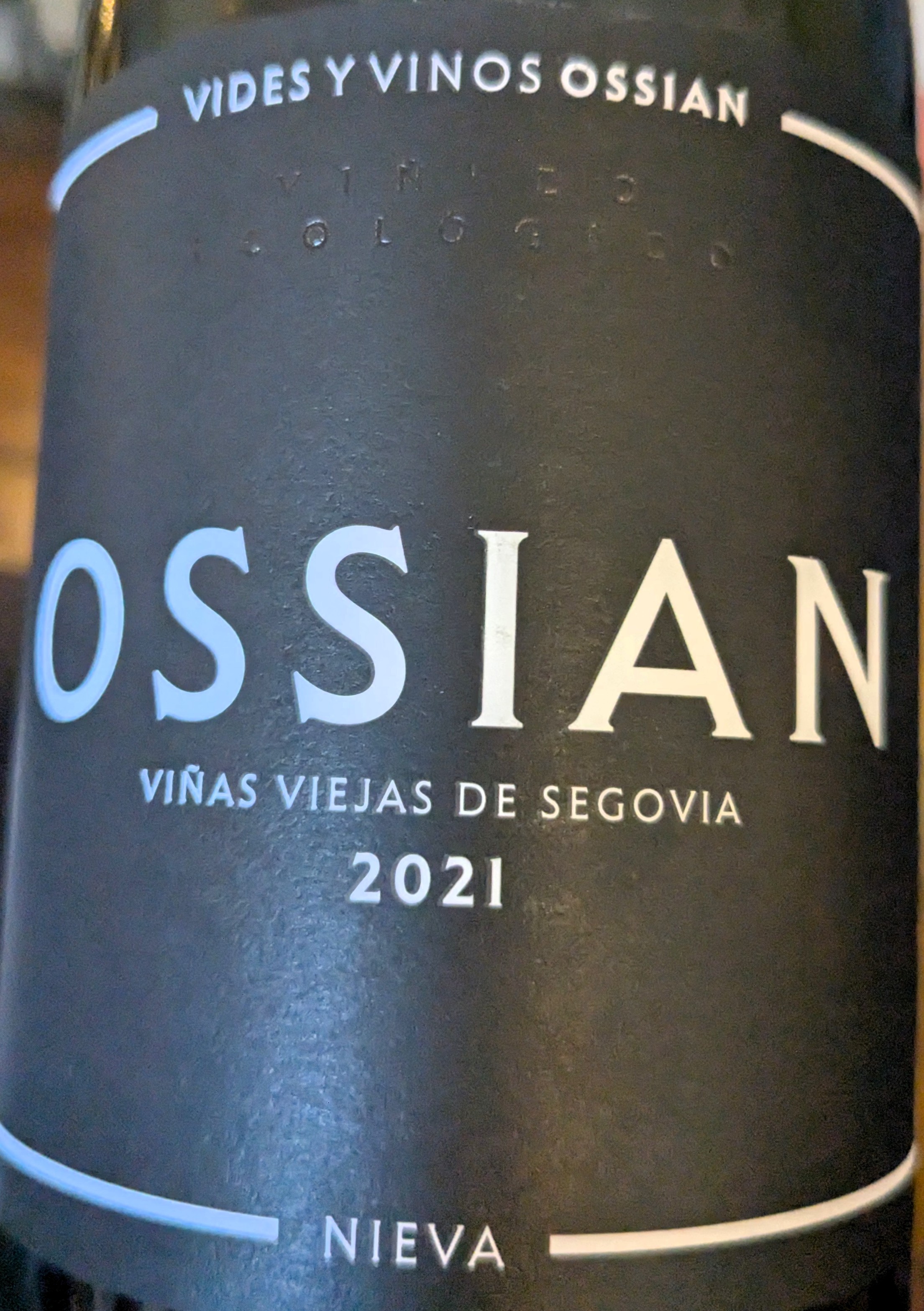
My favourite wine though has been Ossian Segovia 2021 from Nieva in Segovia, north west from Madrid. This is made from Verdejo grapes, not a variety to usually get the pulse racing to be honest. The vines for this though are pre-phylloxera and ungrafted because the soil is full of sand which has protected the vines from the louse which brings the disease. The vines are at almost 1000m altitude and have to endure extremes of temperature, down to -15c in winter and well over 30c in summer. The 2021 followed a winter which had seen several weeks of minus temperatures. This gives the Verdejo grown in these terraced vineyards a unique character. Aged in old barrels and on lees for 9 months the wine is organic and minimal sulphites are added. The colour is golden, there are fresh, white fruit and citrus aromas with long, clean flavours of those white fruits and a slight nuttiness. This is complex, drinkable and delicious.

From bold Garnacha, deep Monastrell and Cariñena, to fresh Albarino and Godello as well as these lovely Garnacha Blanca and Verdejo. Spain is rapidly taking up a bigger proportion of my favourite wines. Deservedly so.

Meanwhile I have been working with the vines I received a few weeks ago. I have planted them and the recent sunny, dry weather has helped them to become established. I have been a bit surprised at how soon they budded and developed leaves, fortunately there has been no frost risk as they would have been vulnerable. I have removed side shoots to help build up the trunk before I train them next year.

Consett’s climate is certainly different to Spain’s, hopefully my vines can eventually highlight the adaptability of vitis vinifera.