amarchinthevines

Learning about wine, vines and vignerons whilst living in the Languedoc


8 Comments

Is it natural?

facebook_1477124843243

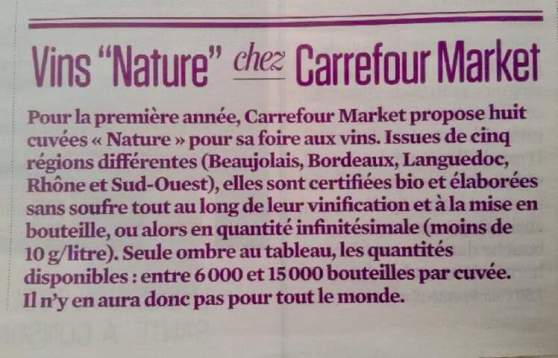
Autumn is the time of  the Foire Aux Vins in France, supermarkets and other large stores discounting their wines. One advert stood out and that was Carrefour’s, offering 10 wines which they called «Nature». Interesting to see that they feel there is a demand for such wines (something UK supermarkets clearly don’t see) and that natural wines have a market. However, on closer examination it turned out that the ten wines on offer were «Nature» only in the sense that they were «sans sulfites ajoutés» (no added SO2). Only three of the ten were produced organically, so are they truly natural wines?

There are, of course, some pedantics (including one well known British wine writer on Twitter on Nov 7th) who would argue that no wine is natural, that it does not make itself. The word natural has indeed become something of a millstone around the bottle neck. So, what do we understand by the term?

rage

One definition which carries some weight is that of Doug Wregg, a director of the UK’s biggest natural wine importer Les Caves De Pyrene:
1. Vineyards farmed organically or biodynamically (with or without certification)
2. Hand-harvested fruit
3. Fermentation with indigenous yeasts
4. No enzymes
5. No additives (like acid, tannin, colouring) other than SO2, used in moderation if at all
6. Light or no filtration
7. Preferably no fining
8. Preferably no new oak

The RAW Wine Fair of Isabelle Legeron adds two other qualifications, a limit of 70mg/l of added sulphites and “no heavy manipulation” such as micro oxygenation or flash pasteurisation.                                                                                                                  (see more here)

I think those definitions hit the main points though perhaps are a little too broad themselves, points 6-8 are especially vague and Legeron’s 70mg/l seems very high. They would, however, exclude the Carrefour wines which have seen flash pasteurisation.

At Mas Coutelou Jeff adds nothing to the wines, does not filter or fine and the only oak used is from old barrels. There are NO added sulphites. Is he an extremist? Are his wines unclean or unstable? The answer to both is no.  They are sent in bottle around the world, to Japan, Australia and all parts of Europe. And then there is the USA.

The Americans have much tighter rules and restrictions for their certification. Wines which are classed as organic have to be recognised as such by regulating bodies such as Ecocert. In addition, in the USA, organic wines must be sulphite free. Wines which have sulphites added can be described as grown with organic grapes but not organic. (see more here)

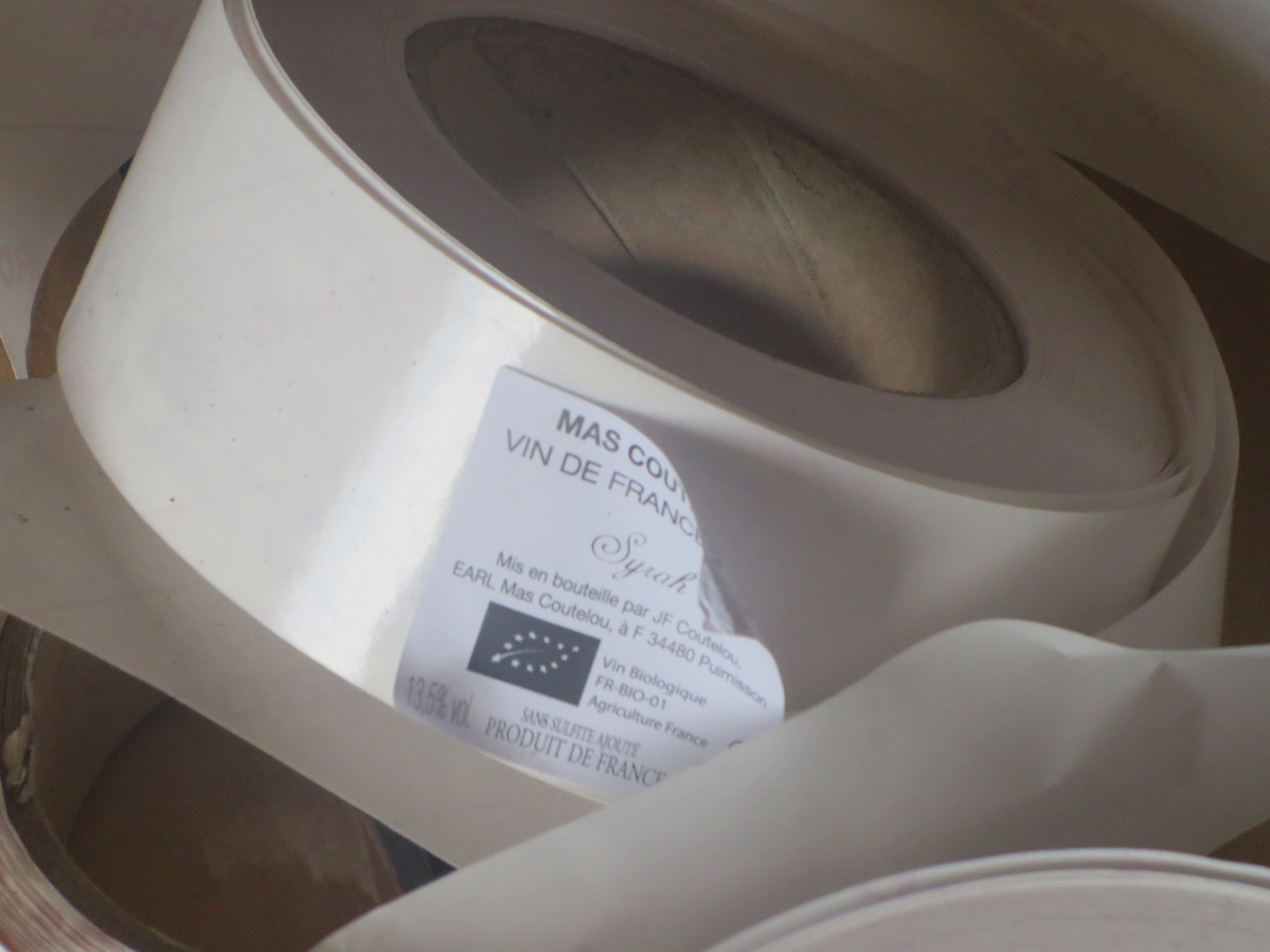
Jeff’s wines can be classified as organic in the USA, the back labels from two cuvées are shown here. In effect they are being identified as natural wines by the USA. This is not a costly process, Jeff’s importer, Camille Riviėre, pays a fee of around $250 to be able to use the title “organic wine”.

Other people have started to campaign for certification of natural wines to help consumers make informed choices of just how “natural” are the wines they drink. Writers such as Antonin Iommi-Amunategui have set out the arguments for such certification however many are still reluctant to head down that route. Some, for example, fear that rules and regulations fly in the face of the outsider role and rebellious reputation of natural producers.

antonin

Antonin with his manifesto for natural wine including regulation

In my opinion perhaps the time has come for certification. Consumers should be able to buy with confidence. Look at this article from the newspaper “Liberation” describing some of the many processes and additives which can legitimately be put into wines.

vins-chimiques

Should the consumer not be more protected? I do understand the desire of winemakers to be left free to make wine in the manner they choose but standards need to be established.

100-organic-wine-usa

The US Department of Agriculture shows the way, natural wine must be organic and then interfered with as little as possible. The SO2 regulation there deters some producers from organics as they feel it is not worth their while to be organic at all if they intend to add sulphites thus preventing their wines from being classed as organic. Some, like Jeff, might insist upon that restriction, others would be more liberal. In addition, Wregg’s list forms the basis for rules, if tightened up a little.

Natural wine is often completely dismissed by some on the experience of one or two bottles not being correct, a level of criticism not applied to more conventional wines. Not all natural wines are good, I personally like some more than others. In my view, it does need to be clear about what it is and that certain standards are being met, otherwise it risks being an easy target for many, however unfairly. And wines which are not natural (as most would understand the term) will continue to be sold as the same as those of Jeff, Barral, Texier, Foillard and many others.

Further reading

Le Figaro

Vincent Pousson


4 Comments

Becoming naturalised

flags

En français

I have spent most of the last 25 months living in the Languedoc and as that period draws to an end I have begun to feel naturalised: my French has started to adopt a local accent such as ‘veng’ for ‘vin’; I tut at anybody and everybody; I rush for a jumper if the temperature dips below 20°C; I even went to a rugby match!

We are searching for a house to move more definitively to the area, it is where I feel happy, healthy and home. Sadly, when I look back across the Channel I see little to make me feel at home there. Brexit has seen a fall in the £ of more than 20% in less than four months. There has been a startling increase in racist and homophobic attacks. The government (with an unelected Prime Minister) is hell bent on going it alone, prepared to do without the EU single market even if it means damaging the economy. Companies such as Nissan have warned they will leave the UK if that is the case yet the government ploughs on determinedly. The 48% who voted to Remain in the EU are ignored, reviled and, today, told that they should be silenced.

2016-10-12

Mrs. May told her Party, “If you believe you’re a citizen of the world, you’re a citizen of nowhere. You don’t understand what the very word ‘citizenship’ means.”

Worrying times. Is it any wonder that I, proud to be a citizen of the world, feel more naturalised here in the Hérault? Though Robert Ménard, the far right mayor of Béziers, is doing his best to out do May’s government by opposing the housing of immigrants relocated from Calais to the town. He sanctioned this poster for example:


As for wine?

After a few tranquil months natural wine has again become the focus of attacks and disparaging remarks by those who seem threatened by it.

In France, Michel Bettane, elder statesman of wine critics, accused natural wine drinkers of being ‘peu democratique’ in their words and ways. No great surprise from a man whose connections make him part of the wine establishment.

In the UK one of the most respected and established of wine merchants, The Wine Society, published this statement from one of their senior buyers.

img_20161009_085649

“Prone to spoilage, high proportion not particularly pleasant to drink, rarely demonstrate varietal character or sense of place.” A damning list. And I am a member of this co-operative group!

Again I feel alienated from mainstream opinion. Sykes is talking complete rubbish and dismisses great wines and talented winemakers with generalisations and prejudice.

I don’t always agree with Alice Feiring, one of natural wine’s more celebrated advocates. However, in a recent article she stated that she cannot support faulty winemaking and those who seem to favour it as an expression of their anti-establishment credentials. I agree. Wine must be drinkable, must be pleasurable, must, above all, be interesting. I could name dozens of natural wine producers who make great wine, it just happens to be natural wine. Are Barral, Foillard, Métras, Coutelou, Occhipinti, Radikon, Ganévat etc making wines as Bettane or Sykes describe?

casa-pardet

Tasting Casa Pardet in 2015, a moment when wine stops you in your tracks and makes you say, wow

I have tasted many natural wines which sing of their cépage and origins, wines from France, Italy, Spain, South Africa, Australia. They tell a tale of their producer and their terroir. They are interesting, some stop you in your tracks and make you reflect on their beauty. Rather those than the very many dull, monotonous wines which taste the same as everybody else’s from Otago to Oregon.

I do enjoy conventional wines, I really like some of them. However, I often find more excitement and interest in the many, well-made natural wines.

Long live freedom of movement, long live the Languedoc and long live great wine.

I am becoming naturalised.


138da189-1095-4227-969a-8356828039df

Mas Coutelou Roberta 2003, fresh as a daisy in 2016. Take note Mr. Sykes


Leave a comment

Natural terroir

P1010223

En français

The choice of my recent wine of the week, Olivier Leflaive’s Burgundy Oncle Vincent 2012, made me think about how wines change. When I used to regularly visit Leflaive and Burgundy in the 1990s the style of wine was very oak influenced, a response to the New World oaked wines and to the influence of Parker / Rolland in Bordeaux. The wines smelled of vanilla and tasted of wood. Subtlety was often lost, especially on the lower ranked wines. Happily those days are in the past (though I still come across some very heavily oaked wines even in the Languedoc) and this bottle was zesty and fresh with a little oak adding creaminess.

onc-1

Similarly if I choose to drink a Riesling from Alsace I can find two wines from grapes grown side by side in the same vineyard which will taste very different. One producer might prefer a lean, dry style of wine whilst his/her neighbour makes wine in a rounder style with more residual sugar. The same can be said of wines from any region of course. So where does that leave the notion of terroir?

Terroir is that elusive term which describes soil, micro-climate, slope etc. Effectively it means the location, the ‘in situ’ of the wine. However, some will also add the influence of the local culture upon the winemaking in the concept of terroir, Alsace with its traditional residual sweetness for example. However, different winemakers choose different methods and styles according to not just local tradition but outside influences, wines tasted, travels etc.

yellow tail

Amongst those influences has been the growth of the natural wine movement. I have read and heard numerous accounts by natural winemakers of how they came to choose this philosophy for their métier. Most include their discovery of a natural wine which made them tear up the rulebook and decide that this was the style of wine which they wanted to make because of their freshness, drinkability and flavours. A typical account can be found here.

Yet those who still find fault with natural wines are wont to declare that natural wines mask the flavour of grape and place because they often taste of natural wine and nothing else. Take this remark by Rosemary George*, English wine journalist and Languedoc resident, “if there is one thing that I reproach natural wines, it is that they all, irrespective of provenance, have a tendency to a similarity of style.  The best have that delicious mouth-watering freshness, but that somehow seems to mask their origins.”

geology

You will not be surprised to read that I disagree. I do accept that some, less well made natural wines do have aromas and flavours which resemble each other regardless of origin. However, I think in the vast majority of cases that natural winemaking has progressed and reflect their terroir and grape(s) much better than most conventional wines. How can it be otherwise? If a winemaker adds enzymes, artificial yeasts and SO2 how can than not be adding an extraneous element to the flavour of the wine which is nothing to do with the place? If you add oak chips or staves does that make the wine more Burgundy, Bordeaux or Barossa? Or does it simple meet the established concept of what a wine from those areas ought to taste like?

Winemakers will often aim for a flavour, they want their wine to be the same year after year. That is how the big companies retail Yellow Tail, Blossom Hill etc, the customer expects a certain flavour if wine and that is what they will be given. Like Coca Cola. This does not reflect terroir or vintage at all and, to be fair, the big companies would not claim otherwise. However, I do get the impression that many smaller winemakers follow a similar recipe.

A recent visit to a wine fair in Vouvray was a very disheartening experience. I tasted wine after wine which lacked character but did taste very much like the next sec or demi-sec from the next producer. The conformity was alarming. There was a Vouvray style common to most producers but it was bland and dull. There were one or two exceptions where a winemaker had taken deliberate steps to change their winemaking and vineyards, D’Orfeuilles for example.

P1010117

Healthy wines come from healthy soils including microbial life as here at Mas Coutelou’s Rome vineyard

So give me a wine of character. Give me a wine with nothing added where the vineyards’ health is reflected in the grape juice which makes the wine. Give me that grape juice with nothing extraneous added,  natural yeasts for example. Let that wine be carefully nurtured and not messed around with, no added flavourings. If it is aged in barrel then I would expect it to reflect that influence but not be dominated by it. I want to drink wines which reflect the vitality of healthy grapes in healthy vineyards. The wines will alter from year to year because nature alters from year to year. That is terroir and why natural wine reflects terroir in as pure a state as possible.

*(To be fair to Rosemary she does like some natural wines and it was her writing that first introduced me to Jeff Coutelou so I have much to thank her for.)


6 Comments

Young, gifted and natural

In March and April I was able to visit a number of wine tastings with the emphasis on natural wines, in Bédarieux, Arles and London. The latter, Real Wine Fair, I wrote about recently and also featured organic and biodynamic wines. One of the features of all three events, upon reflection, was the rise of a number of talented younger vignerons. Now, that should be no surprise, there have always been a number of young vignerons attached to the natural wine scene. Indeed there is a youthful core to the crowds who attend though, again noticeable, the age profile of attendees this year seemed to me to be much higher.

The buzz around natural wines has certainly created interest in the whole world of wine and been an entry point to many younger people who like the ideas and principles of many vignerons who seek to make wine with as little intervention as possible in the vineyard and cellar. It has struck a chord with many. As natural wines have become more widespread, vignerons more experienced in making wines without a safety net then their appeal has broadened. Many wine enthusiasts were put off by the (in my view false) reputation that natural wines were often faulty and wrong. I do believe that winemaking has improved and that consumers have more confidence in the wines, hence the arrival of a broader cross section of clients. As an older wine enthusiast myself I welcome the fact that I am, usually, not the oldest person in the room.


In the three salons there were many familiar faces, vignerons whose wines I have tasted, drunk and bought many times. Others whose wines are not for me. I shall return to these people in the next article. Many moons ago I likened the natural wine movement to punk rock in that it was creating an alternative scene and would introduce change on the whole industry. Just as punk was followed by a new wave of music, artists such as Joy Division, Talking Heads, Blondie and Elvis Costello who were influenced by punk but channelled its energy in a different way, I believe that there is a new wave of younger winemakers in the natural movement who are building on the work of the pioneers, the punk winemakers. Some for better, some for worse.

Here are some of those winemakers from the salons whom I would heartily recommend as vignerons to follow, whose wines I would gladly drink.

IMG_3790

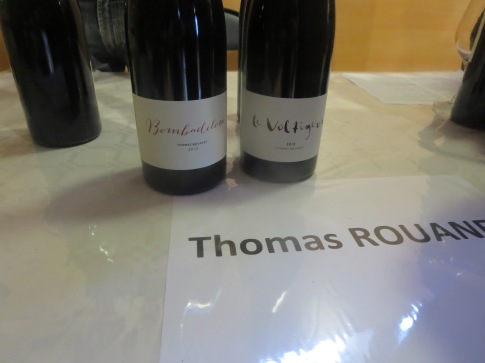
Thomas Rouanet from the St Chinian area I met at Bédarieux and enjoyed his wines especially the pure Carignan of ‘Le Voltigeur’ 14 with lovely fruit and freshness. I look forward to trying more from him.

Bastien Baillet has a 2ha domaine called La Bancale in the Fenouillèdes area of Roussillon. I gather he has been working with Jean Louis Tribouley, a very good producer himself of course. I very much enjoyed his ‘En Carême’ a Carignan based wine with plenty of red fruits and a nice balanced finish.

IMG_3827

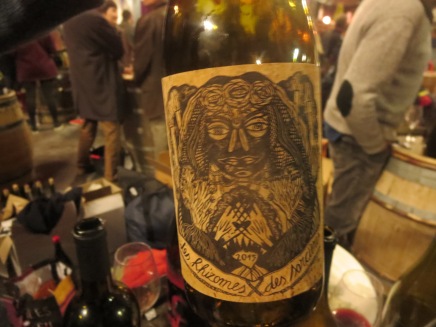
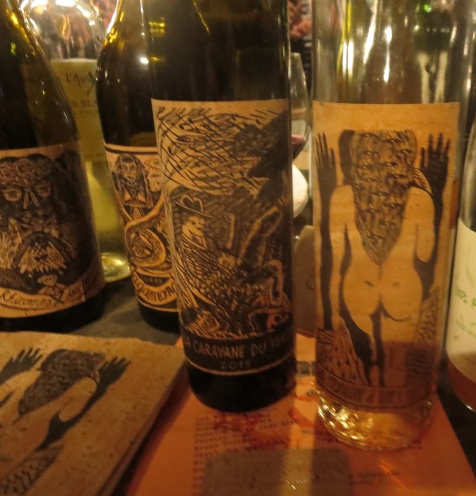
La Cave Des Nomades is also in Roussillon but this time in one of my favourite French towns, Banyuls sur Mer. Run by a young Portuguese and Polish couple their wines were without any question one of the big hits of La Remise. I tasted them on the Sunday and by the evening word was out just how good they were. On Monday I saw a number of prominent cavistes at the stand. With only 3ha their wines will run out quickly I am sure. José and Paulina’s domaine is part of the excellent 9 Caves project in Banyuls. A lovely range including an excellent vin doux naturel, my favourites were a very deep, balanced and fresh Grenache Noir 15 and a beautiful Grenache Gris 15 called ‘Les Rhizomes des Sorcières’, real depth of fruit with a delicious, clean finish. Fascinating labels too, one of my favourite range of wines this year.

IMG_3828

John Almansa runs Zou Mai in the Gard. He has worked with the excellent Philippe Pibarot and so, like Bastien Baillet above, he has learned about winemaking from a good teacher. Surely this must be a huge help. His first wine is a Cinsault and it was a very drinkable, fruity wine with a clean finish.

IMG_3845

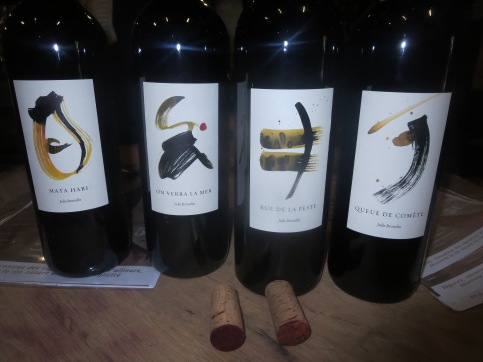
Julie Brosselin used to work with another domaine in Montpeyroux but has now struck out on her own. A number of people told me to go taste her wines, including excellent judges such as sommelier Sandra Martinez, and I am glad that they did so. Her white wine ‘Mata Hari’ was good and also the unusual combination of Cinsault and Mourvèdre in ‘Queue de Comète, full of juicy fruit. As a new domaine these were both 2015s and will improve still further.

Thierry Alexandre has been working with Les Miquettes in the Ardèche and has now produced wines of his own from just 1ha of vines. His Pet Sec (Marsanne/Roussanne) 15 was one of the best PetNats on offer at La Remise, fresh pears, clean and round. He showed the 14 and 15 St Joseph and they were both good, the 14 more rounded of course but both with good fruit and a round but clear finish, classic Syrah.

Most links I can find to Samuel Boulay say he is a Loire producer but the address given at La Remise was for Ardèche. A good Viognier/Marsanne was deliciously fresh and a Grenache / Merlot blend was very good, lots of round fruits and a fresh aftertaste.

Most of these winemakers were in a group of young producers invited by La Remise, an idea which I find encouraging and supportive. More salons should follow. From last year’s group a number returned as part of the main salon in 2016.

IMG_3821

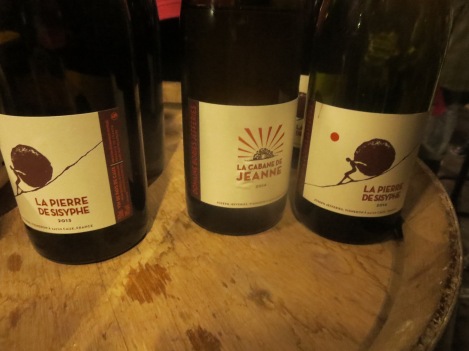
Firstly, Christelle Duffours of Mas Troqué, whose wines from Aspiran in the Languedoc are really starting to express themselves very well, improving all the time. Equally so Joe Jefferies of Bories Jefferies in Caux whose wines sell out quickly. I know Joe and so declare a partisanship, but I can honestly say that his white Pierre De Sisyphe (mostly Terret) is one of the best natural white wines I know. The reds are very good too.

One other domaine from that group in 2015 was L’Ostal from near Cahors. I wrote about them then and again after Labande De Latour in November. It was great to hear from Louis and Charlotte Pérot that they are doing well and that a 3* Michelin restaurant has taken their wine. I am not surprised. They are extremely talented winemakers as well as lovely people. Their wines are very drinkable, even young, and yet retain the spine of Malbec and Cahors which is traditionally a tough wine. Wines such as ‘Anselme’ and ‘Zamble’ are of high quality but there is always a refreshing lick of acidity which makes them so good to drink.

On my return from Arles I was talking to Jeff Coutelou about the wines I had tasted and he told me that he was very impressed by L’Ostal and that it is rare to find such talented winemakers as Louis and Charlotte. That was good to hear, as it meant I wasn’t mistaken in my praise for them but in particular it was good for the Pérots.

These are all skilled winemakers, I would happily drink their wines anytime. I do hope that I don’t patronise them by calling them young winemakers as though that makes them lesser producers. With more experience they will surely be looking to improve their wines still further and in their hands the future of natural wine looks healthy and successful.


3 Comments

What happens after harvest?

IMG_2956

The immediate period after harvest could easily be perceived as a time to relax a little. The hard work of picking, transporting, sorting, crushing and pressing grapes is done. The remontages, délestages, pigeages are memories. The wines quietly ferment in cuve, gently moving to their magical transformation into wine.

IMG_2582

Cuves now containing wines such as Syrah and Flambadou

Sadly, that is not the case. The work continues apace, there is no time to relax just yet. The wines are in a delicate stage, fermentation is a violent chemical reaction and lots could go wrong. Therefore, they are checked frequently and analyses are sent away to ensure that everything is proceeding as it should. This is the top of the sheet which comes back from the analysis laboratory.

analyses 2

For each sample you receive information about the amount of residual sugar, alcohol, volatile acidity, the pH of the wine and the amount of Sulphur Dioxide (SO2) in total and free in the wine. SO2 is the controversial additive which most winemakers add to their wines to stabilise it and to provide elements of prevention against oxidation. Natural winemakers, such as Jeff Coutelou, are against using SO2 as they want wines as natural as they can be without additions.

SO2 is a natural product of grapes and winemaking so there will always be a small amount of SO2 in any wine. It combines with the chemicals of wine and so most is absorbed (bound). The rest which is free is what conventional producers use as an anti-oxidative and anti-bacterial agent in the wine. They might add sulphur at various points of the winemaking process but most likely at crushing, fermentation and bottling.

EU regulations limit the amount of sulphur as you can see in the table below. Red wines produce their own natural anti-oxidants so less SO2 is allowed. Sweet wines contain more sugar which binds SO2 so more is added so that free SO2 can work. Levels of permitted SO2 rise according to the type of sweet wine. The figures are all mg per litre.

Organic regulators allow less SO2 to be used as you can see, indeed some organic bodies such as Demeter have even more strict limits than those below.

Natural wine guidelines are exactly that, guidelines. There are no official rules for natural producers as there are no rules for any aspect of natural wines. The figures in the table are those suggested by AVN one of the groups which some producers have established.

Type of wine

EU

Organic rules (Demeter)

Natural guidelines

Red

160

100 (70)

30

White, rosé

210

150 (90)

40

Sweet

200+

170+ (80+)

40

Some natural wine makers have gone further and eschew any use of added SO2. Jeff is one of those producers.

analyses3

I have chosen not to identify the figures for the analyses of particular wines he received on October 15th from which the heading is shown above, as they are not mine to share. I can say that the highest SO2 figure is 10mg/l and that is for one cuve only. Fifteen of the nineteen wines analysed contained 3 mg/l or less. In other words every cuve has negligible levels of free SO2, humans cannot taste it at less than 11mg/l in water let alone wine. No sulphites are added. Mas Coutelou wines are natural wines but also very healthy wines. The analyses showed they are all 13.5% to 15% in alcohol and volatile acidity is well under the guidelines, one or two cuves were a little elevated but that is normal during fermentation.

IMG_2132

Cement tanks including one which contains Flower Power
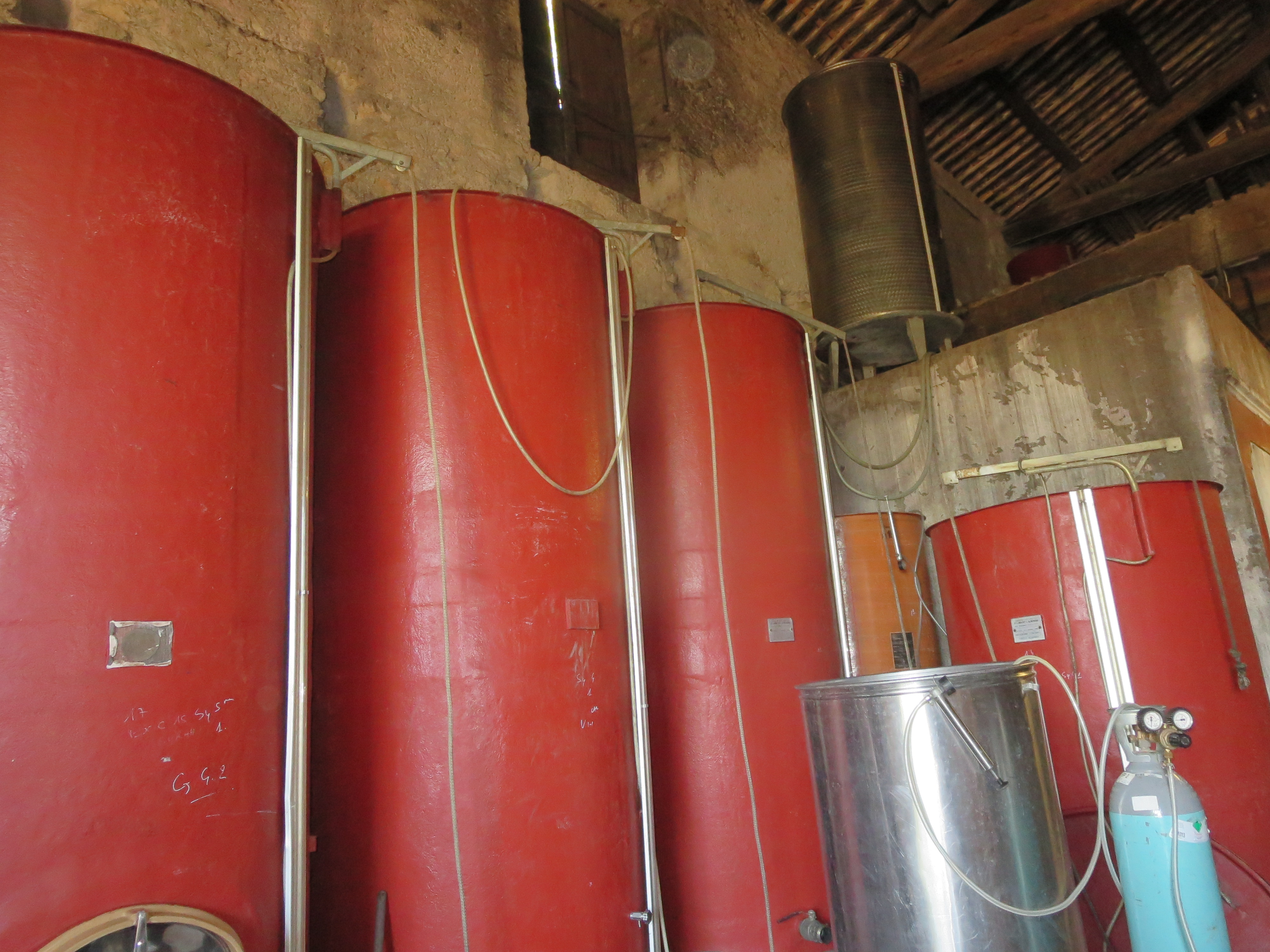
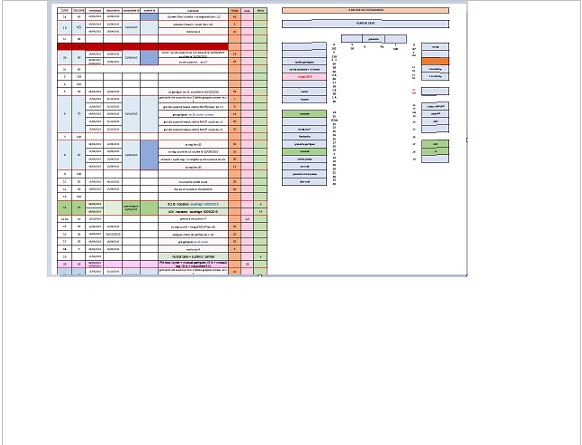
So the wines are progressing well, it looks like a very good vintage. They have been put into the cuves appropriate for them to spend the winter. Jeff produces a plan to show where they all are.

illegible cave plan

On the left is a spreadsheet showing each cuve, how much wine is in it, when it was harvested, when it was moved, when assembled with other wines, date of sous-tirage, the wine and grapes, and quantities for red, rosé and white. I have made it a little hazy so as not to spoil the surprises which the patron will unleash in the next few months.

headings2

To the right is a map of the cellar showing where the wines are.

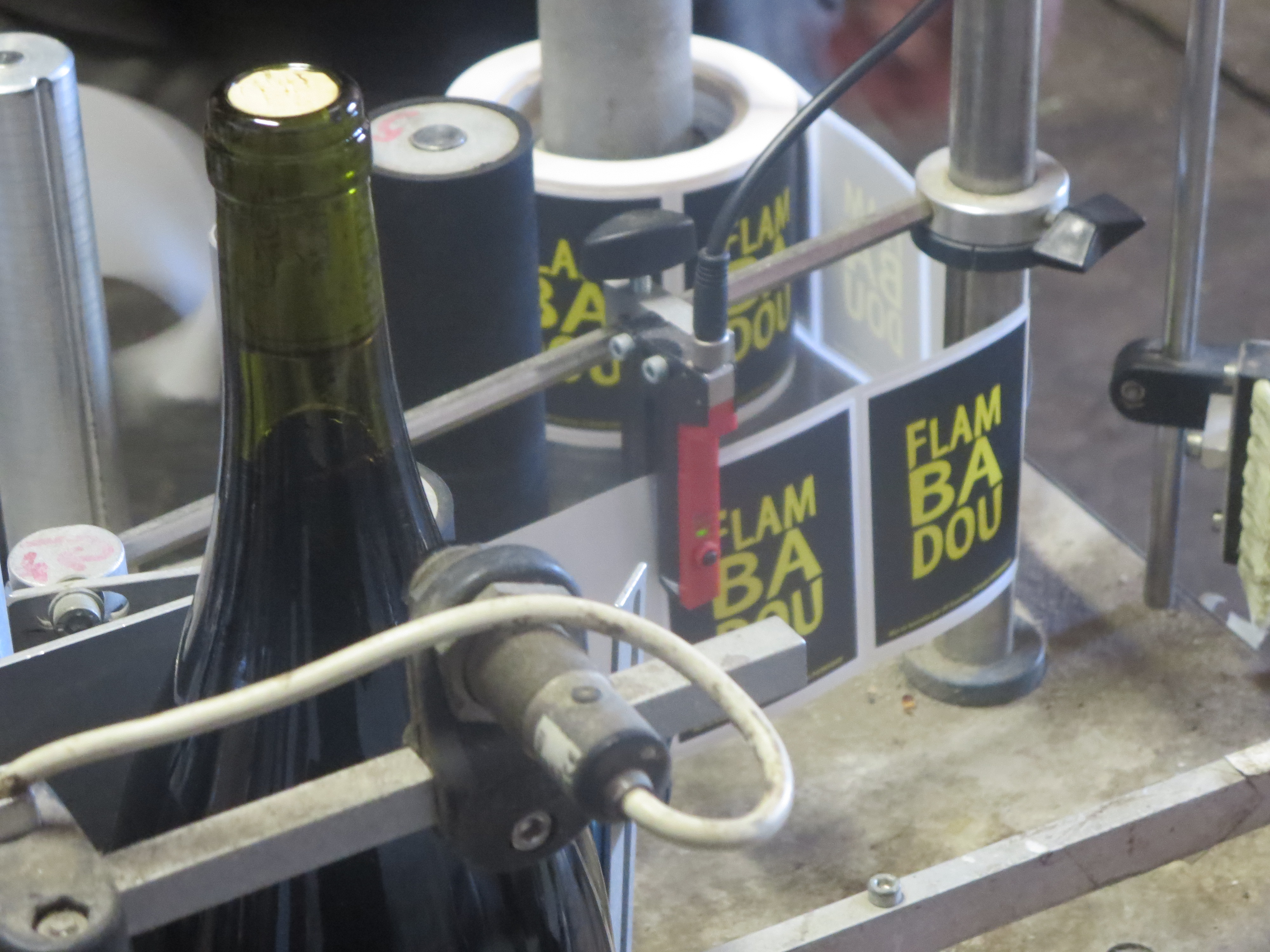
Jeff has also been receiving plenty of phone calls. It is now several months since wines left Puimisson to head to cavistes and merchants in France, Europe, the USA, Asia and Australia. Now stocks are low there is a demand for wines to be sent to them. Therefore, the 2014s which were bottles earlier this year are now being furnished with their labels and capsules and then packaged into boxes. Different regions, eg the EU, UK and USA, all have different requirements even for this packaging so even this job is not as simple as it may seem. For more on the process and a video I took last year see here.

IMG_2957

IMG_2958


IMG_2960

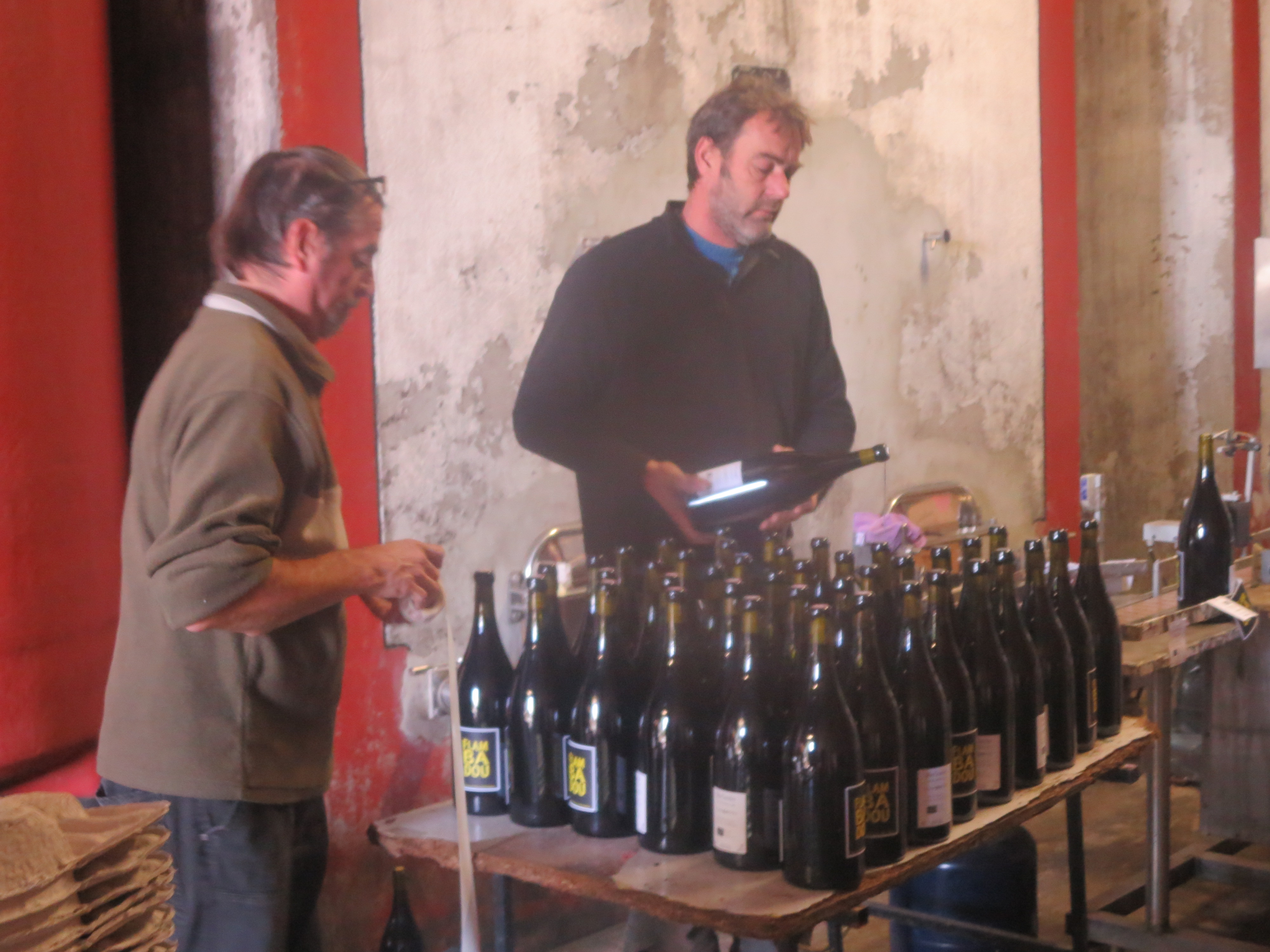
Thursday October 22nd was a day for preparing magnums and for some markets these are sealed with wax. Appropriately Flambadou, named after a barbecue implement, was therefore held over the flames of the gas burner which heated the wax.

IMG_2961

IMG_2964

                Jeff and Michel, waxing lyrical

On Friday Jeff was due to head north on the long drive to Nancy and a wine salon. We are entering the season for these events and that means more journeys, more selling and more work. The vendanges may be over, the work certainly is not.

Well for almost everyone.

IMG_2966


5 Comments

The Joe Strummer of wine?

wpid-screenshot_2015-04-21-07-36-11.jpg

Interesting article in The Guardian this week about natural wine and its development. I think David Williams has it about right. There is a spirit of punk about the natural wine movement. As someone who lived through the punk music scene of 77 and saw all the top punk bands, other than the Sex Pistols sadly, I can see the parallels. The reaction against convention and the big business aspects, the desire for something more straightforward and honest, no more overblown music / wine. Maybe that is why natural wines appeal to me, that link to the music of my past and the similar philosophy. Though I can’t spike my hair anymore.

The unconventional signage of domaine names

The unconventional signage of domaine names

Have a look at this poster for La Remise, a natural wine salon in Arles in March which I described on the Tastings page.

wpid-screenshot_2015-04-20-22-14-06.jpg

 Remind you of anything? This?

wpid-collage_20150420223047166.jpg

David points out that many people have a real antipathy towards natural wines just as many people did towards punk. Never mind that you haven’t experienced it just criticise because it’s new and it doesn’t fit convention. Or because you missed its start so don’t want to be seen as a latecomer. Utter boll**** as the album says.

He is right too that not everything is good. I saw and heard and bought some absolute rubbish in punk music. For every New Rose there was a Generation X song. Or Plastic Bertrand! I have tasted some of the ‘bacterial murk’ in natural wines and many that I would never want to taste again. But there was New Rose and Anarchy and White Riot and Blank Generation. And there is Barral and Fahl and Pardet and Foillard and Métras and ….

However punk had a long lasting influence in the way that music was made from grunge to thrash metal to rap. And the way that music is made, the independent labels etc and the publish it yourself attitude we see online these days. It makes people think and question the way they do things. Many winemakers are rethinking their approaches to sulphur even if they don’t want to eliminate their use. So too natural producers often forego the big labels and go their own way, Vin de France rather than AOP for example. And look at some of these:

wpid-20150330143635.jpg wpid-20150330131330.jpg

Punk was a reaction to triple albums of mind numbing drum solos performed by posing, preposterous public schoolboys. Natural wines are a reaction to overextracted, 200% oaked, jammy Parkerised gloop. Instead of twiddling the knobs on the mixing desk or reverse osmosis machine let the music or the grape speak for itself.

Perhaps too press reaction is coloured by its loss of control? No longer the arbiters of taste and what is good. Instead fanzines for punk and now blogs for music and wine are the, apologies for this, grapevine.  Fewer free tours to Bordeaux, Beaune or Buenos Aires can make those journalists turn sour.

Many natural winemakers will fall away, as did punk bands. Some will shine then fade quickly. Others will live long or develop. A new wave. But natural wine is here to stay as Williams says. The movement is widespread in the heartlands of France, Italy and Spain. People do like the freshness and vibrancy. Yes there is an annoying trendiness but as that settles we are left with some great wines which will endure.

A magnum of Classe

A magnum of Classe

The article recommends Classe of Jeff Coutelou and it is a great wine. This is a wine that should definitely stay and not go. This is wine made by a free thinker and a creative artist. Joe Strummer’s songs led The Clash from punk fringe to recognition as top class. Oh and notice anything?

Joe Strummer

IMG_0249

Joe, I mean Jeff

Now then who’s the Johnny Rotten?


1 Comment

Mas Sibert, Fos

Version francaise

IMG_0652

Simon Bertschinger explaining his wines and sharing his passion for them

It’s always good to discover new wine domaines in the area and Mas Sibert was recommended to me by Dominic George at Le Wine Shop in Pézenas, well worth a visit in itself incidentally.

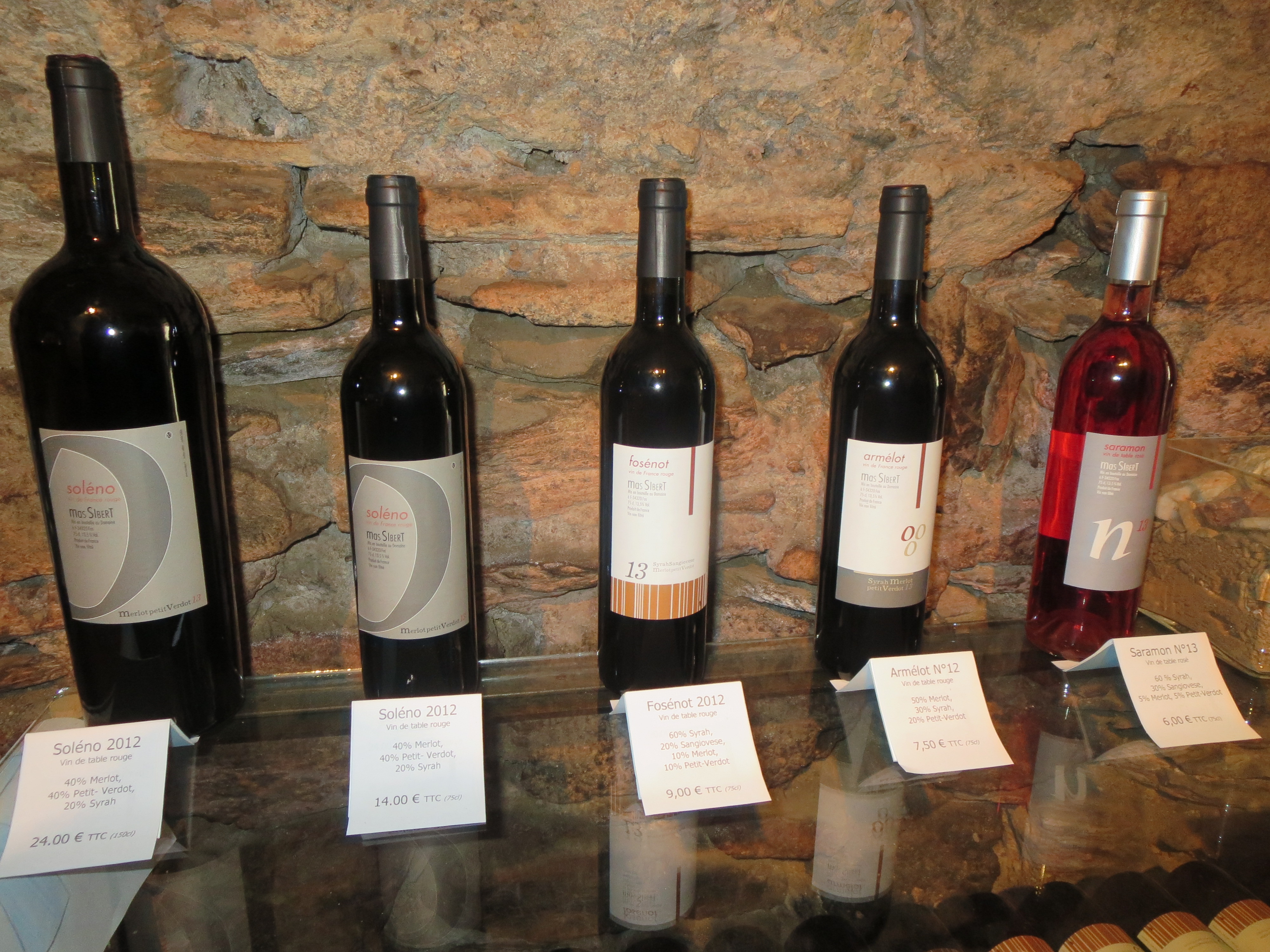
Mas Sibert is in Fos, a 3 ha domaine run by Simon Bertschinger and Sara Frémine. They produce natural wines (with tiny amounts of SO2 added before bottling) with clear freshness, terroir and complexity. They are clean, well made and use unusual grapes for the region such as Merlot, Petit Verdot and Sangiovese, hence they are bottled as Vin De France.

IMG_0658

The wines, the rosé is already sold out

They also have a bread oven and in summer they make bread and pizzas on Sundays, something I shall definitely be looking to profit from. A domaine to follow as Simon’s work in the vineyards will continue to enrich the wines. He is looking to plant new white grapes (from older cépages) and they will take time to come on stream but I look forward to trying them. Simon used the word ‘passion’ many times in describing his work and wines and it shows in the glass. He is also realistic, has not tried to overmake the wines but lets the terroir and it’s grapes speak for themselves. He has built the cave so that gravity helps the movement of the wine during production rather than pumping.

IMG_0650

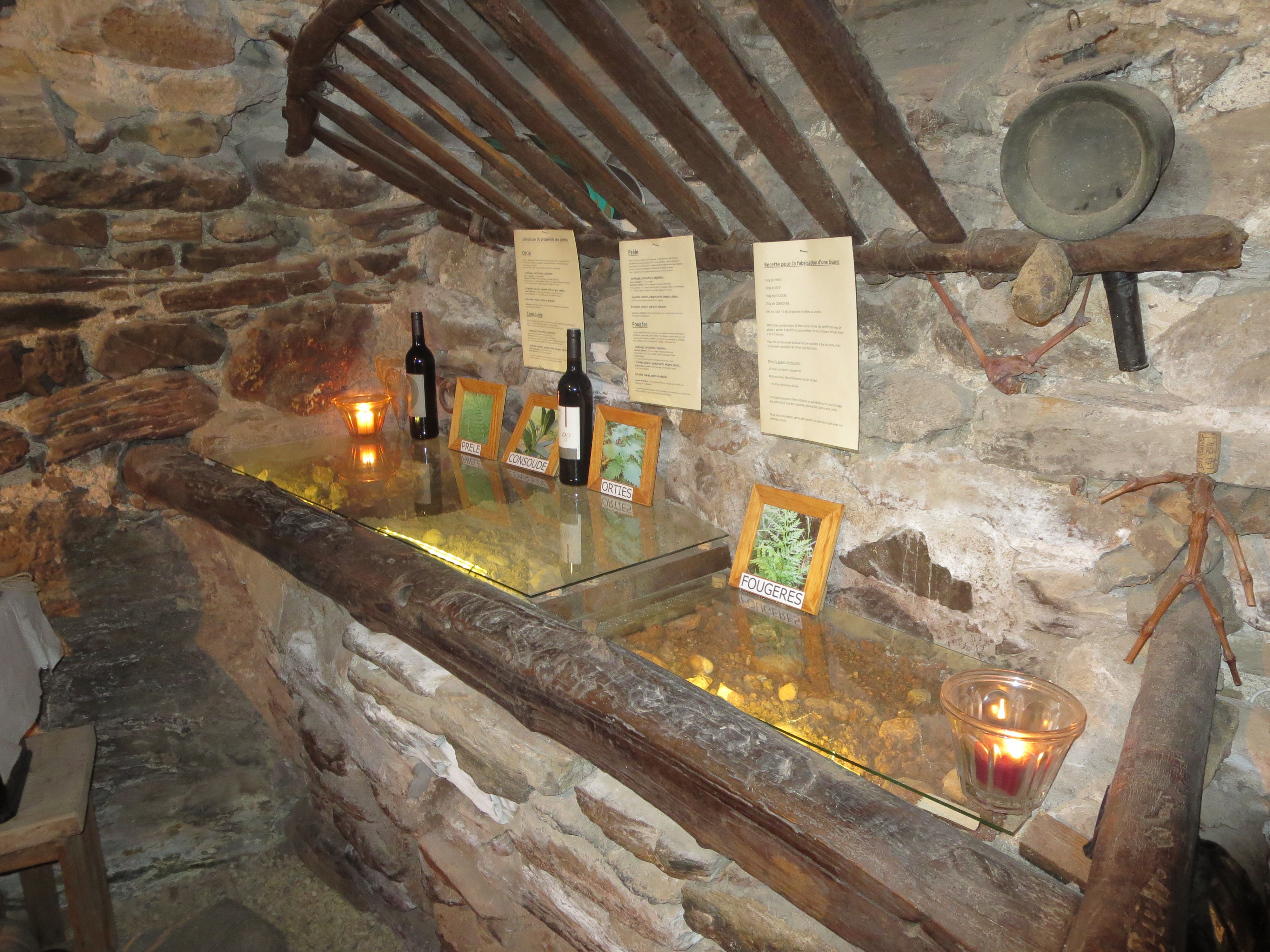
A very interesting display in the cave showing the soils and natural treatments using plant teas eg nettles, horse tail and ferns

IMG_0662

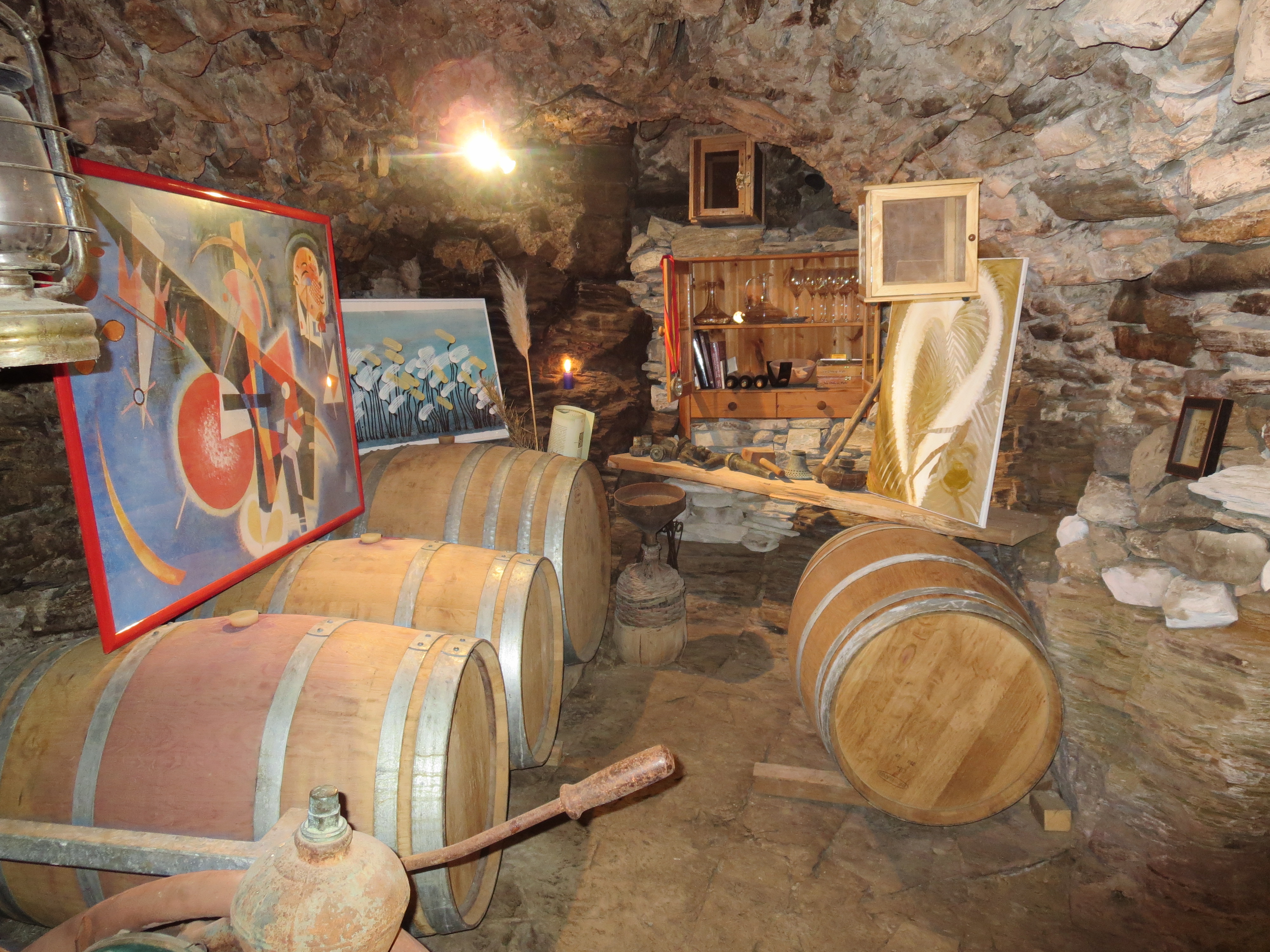
The barrels used for Soléno have been used for 4 or 5 wines before so are used for a little oxidation and complexity rather than oak flavours

I tasted 3 reds:

Armélot 2013 Merlot, Syrah, Petit Verdot – Clean, fresh, rich and smooth but the Syrah adds nice spicy notes.

Fosénot 2013 Syrah, Sangiovese, Merlot, Petit Verdot – The Syrah shines with clear fruit but it is the Sangiovese which adds the interesting acidity and fresh cherry flavours. Very good, my personal favourite.

Soléno 2013 Merlot, Petit Verdot, Syrah. More Petit Verdot here than Armélot, the Bordeaux varieties get some oak ageing in old barrels for complexity. It had a light colour and structure but carries a real weight. Good and will develop with time.

Did I like them? Well I bought some so yes I did!

IMG_0654

It actually snowed in Fos, hence the coat. I enjoyed talking with Simon as well as tasting his wines


2 Comments

Skull crusher

IMG_0251

Jeff (Jean Francois if you want to be formal) Coutelou is passionate about nature, about plants and trees as well as vines. He sees his job very much as making the best from nature whilst doing as much as possible to protect and enhance it. Mas Coutelou has been organic since 1987, long before it became fashionable. Jeff has now gone further and has been making natural wines for a number of years, the first small tests in 2003. Natural wines are wines which have minimal chemical or mechanical intervention. To prevent or combat diseases only natural products are allowed to be used. Equally, in the cellar minimal intervention is required for example in using, for example, only natural yeasts. The wine which results is the natural result and product of the grapes. There are bad natural wines for sure but winemakers such as Jeff pour huge efforts into their vineyards to make sure that the grapes are as healthy as nature allows and, in cellar, hygiene and close supervision ensure that quality prevails and top quality wine is produced. Moreover, in recent years he has gone further and has used no added sulphur. This is usually used by vignerons to fight the risk of oxidation and help preserve the wine. Many people don’t like sulphur in wines, some are sensitive to its effects. It is a risk not to add it but Jeff has been able to avoid it for the last few years.

My first visit to Mas Coutelou many years ago included a tour of the vineyards in Jeff’s van with my wife sat on a concrete block in the back and Héro, Jeff’s previous dog, keeping her company. As we travelled around and stopped to look at vines and grapes what shone out was Jeff’s passion for the land, the vines and the olive and fig trees which he has planted to ensure polyculture and a varied landscape.  At one point he stopped the van and pointed to two sets of vines. To the left was a neighbour’s vines, They looked beautiful; vivid brown soil with bright green vines in straight rows, all cut to the same shape and size, all neat and tidy. So beautiful that a film company was actually filming with them as a background. But Jeff asked us to look closer. There was no life in the vines or the soil, it was devoid of insects, butterflies, herbs, nothing. Next to these vines were Jeff’s. They looked, to my untrained eyes, much more messy – the vines weren’t regular, there was grass and herbs and flowers between the rows. But they were absolutely teeming with life, insects, butterflies and, as if on cue, partridges running through them. And it’s that life which emerges in the wines. As soon as I tasted them I was blown away by their vivacity. powerful fruit and flavour. These are not just in your face wines though. They have complexity and age very well. I have tasted some from 2001 which are still drinking well and show no sign of being tired. Jeff opened a Flambadou (100% Carignan) from 2007 at lunch last week which was still bright, lively but deep and with layers of flavour. I find it hard to not drink these wines young because they are so delicious young. Vin Des Amis I have usually drunk in the first few months after purchase. Yet a 2010 magnum tasted on Saturday was still full of that freshness but also with more complex flavours. A lesson for me that I must put some bottles away.

As part of his determination to look after his land and plants (of all kinds) Jeff is interested in preserving wine varieties. He is one of only two vignerons in the world to have a variety called Castets (Break your head, or skull crusher as I have liberally translated. In fact it is named after the man who developed and spread the variety). (The other is Chateau Simone in Palette neat Aix-en-Provence).

Jeff with some Casse Tete grapes

Jeff with some Casse Tete grapes

There are only a few rows of the grapes and not enough to vinify separately so they are being blended with Carignan. Can’t wait to taste the results.

Casse Tete being prepared for pressing by Michael, a fellow Liverpool fan and genuine Scouser

Castets being prepared for pressing by Michael, a fellow Liverpool fan and genuine top class Scouser

Casse tetes in tank, the skins, pips etc on top of the wine

Castets in tank, the skins, pips etc on top of the wine


The chapeau is really tough and so Tina has to really force it down into the juice (pigeage)

The chapeau is really tough and so Tina has to really force it down into the juice (pigeage)


My wife, Pat, clearly liked the Casse Tetes

My wife, Pat, clearly liked the Castets!!