On March 11th I posted about the threat to some of the vineyards of Mas Coutelou. A neighbouring village drew up plans to install wind turbines across the lower end of the community, which happened to run across some of Jeff’s vineyards, Peilhan and Rec d’Oulette, as well as altering the nature of the whole area.
A thousand readers responded to the blog and many of Jeff’s friends rallied to his cause by signing the petition and sending messages of support. I was at the cellar when the lady who organised the online petition called to thank Jeff for mobilising support, it did make a difference.
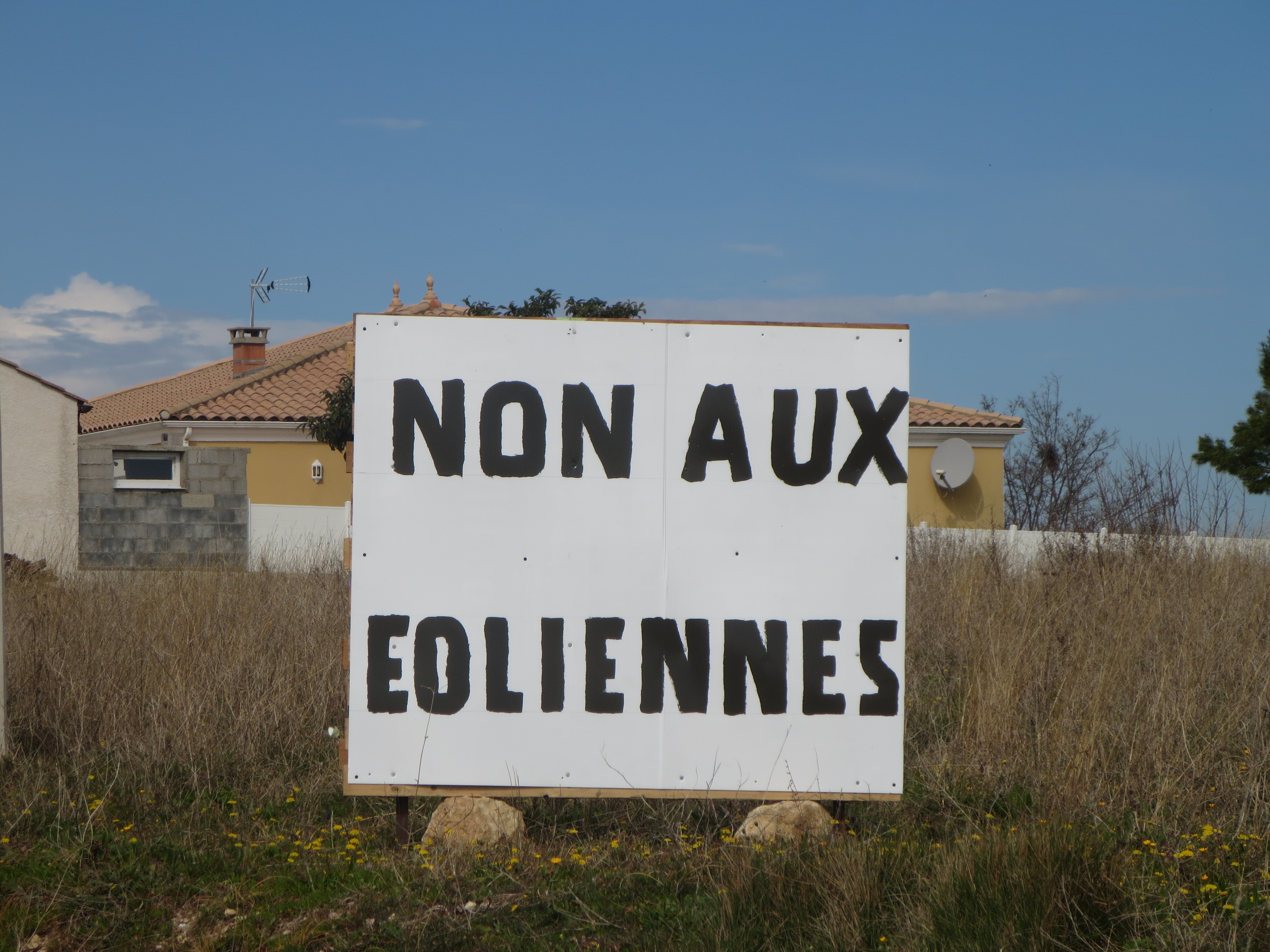
The local campaign was undoubtedly helped by the timing of departmental elections across France so pressure was put on local candidates to oppose the plans. The mayor of the local village was standing in those elections and he announced his opposition to the turbines. The council then went further and passed a motion stopping their development in future.
Clearly this is great news for everyone in the locality, especially Puimisson. It is, for this blog, the best possible news for Mas Coutelou and all of us who love the wines and the man behind them. The plans he has for Peilhan in particular can now move ahead with a renewed confidence, the new plantation of old cépages has a brighter future. We are all boosted.
So thank you to everyone who read, supported and signed. Your actions counted.
Since moving down to Margon it has been evident to me that many of my favourite bottles have been based around Carignan. A variety which received so much scorn for many years is now fighting back. The excellent wine writer Michel Smith has been in the vanguard by writing a series of articles called Carignan Story on the les5duvin blog, championing the variety and the people who produce great bottles of it. Moreover he is producing some himself in the Roussillon. (The blog is a must follow incidentally).
I shall start with Mas Coutelou this time as Flambadou is the star of the 2013 vintage at the domaine and is a wine which ages brilliantly as a memorable 2007 testified during a vendange lunchtime. If you opened the link to Michel’s Carignan Story you will have already seen his support for this wine too.
Jeff himself rates Cyril Fahl’s Clos du Rouge Gorge as one of the outstanding Carignan wines and based on my tasting in November (see Day 5) I would not argue. Domaine d’Aupilhac in Montperoux is another which has championed Carignan, blended in some cuvées or on its own in Le Cargnan which is a lovely wine showing the leathery, dark fruit flavours of the grape.
I must mention the wine ‘Les vignes qu’on abat’ of Domaine La Marféeproduced in Murviel lès Montpellier, a deep, dark joyful wine which needs a little patience in cellaring.
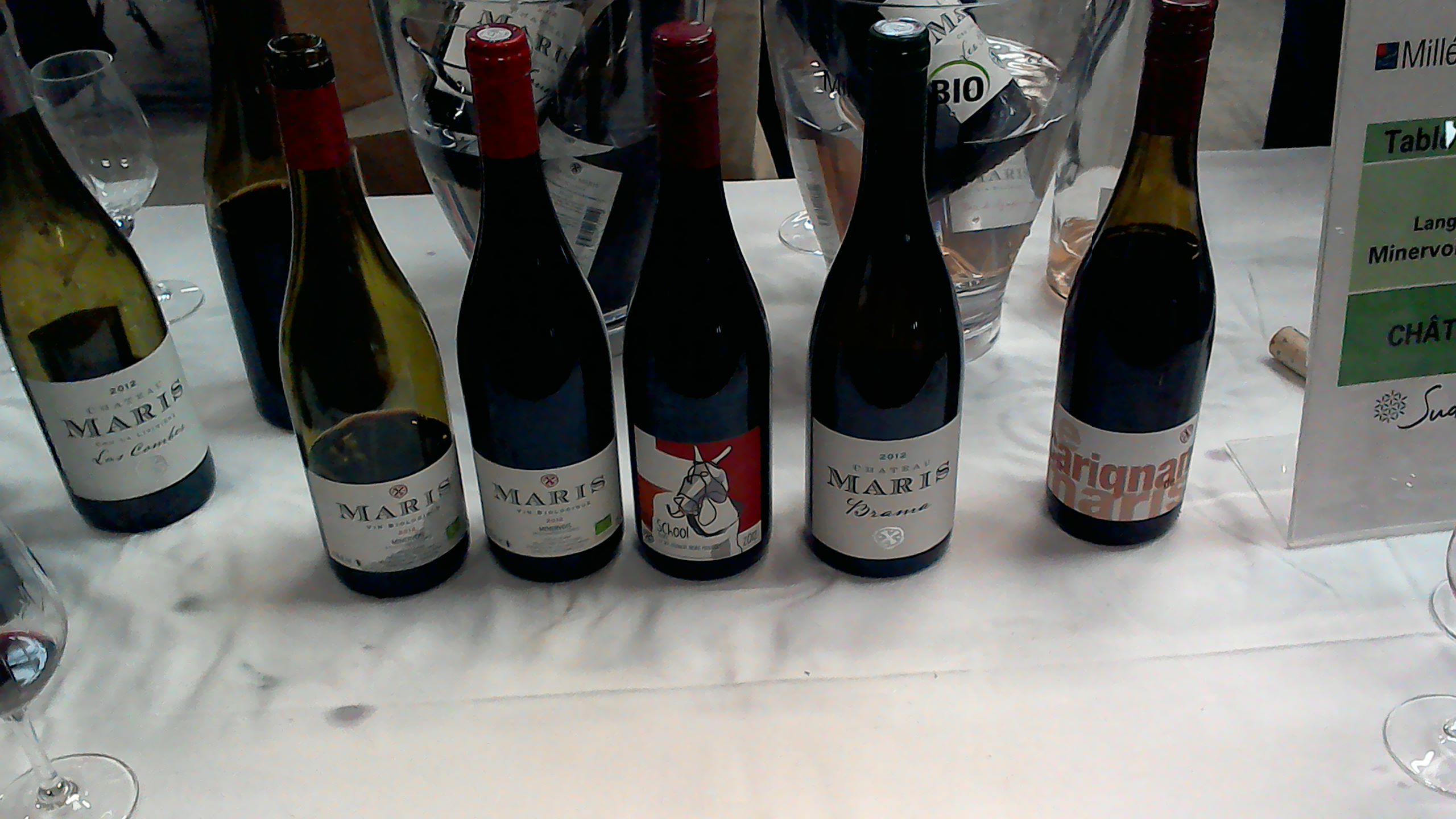
Other lovely Carignan bottles tasted include Cébene‘s Belle Lurette and Treloar‘s Le Maudit, plus the cuvées Les Premiers Pas and Fontanilles from Les 2 Anes. Domaine Sainte Croix (see Corbieres, Day 3) produces a couple of Carignan – led wines Magneric and Le Carignan, both express the wild garrigue of the Corbieres hillsides, lovely wines. In the Minervois, Chateau Maris also produces lovely Carignans such as Anciens and (again) Le Carignan.
Finally, I should mention a domaine close to me in Gabian, Cadablès run by Bernard Isarn is starting to produce some really good wines not least the Carignan led Champ de Pierres.
These are all wines I would heartily recommend, but that’s not the end of the story.
Carignan Blanc is fairly unsual in the region but two of my favourite white wines come from this grape and both from Caux where we started. Mas Gabriel‘s Clos Des Papillons is dry, fruity and clean, with a rich texture that fills the mouth, simply delicious. Le Conte De Floris produces Lune Blanche which is just as good and I was happy to find some bottles in the wine bar in Pézenas recently. So Carignan, red and white, is a variety to investigate. Dare I mention that Jeff produces another very good example of Carignan Blanc? Well I did leave him out of my 7Cs so I think it’s only fair.
So those are my 7Cs, villages, areas and grapes which are all a source of great wine pleasure. I could have added more with St Chinian as just one example. Proof that Languedoc Roussillon is a region of great variety, a region of great excitement as winemakers rediscover and redevelop the character of wine in this fabulous part of France. Any feedback is always welcome.
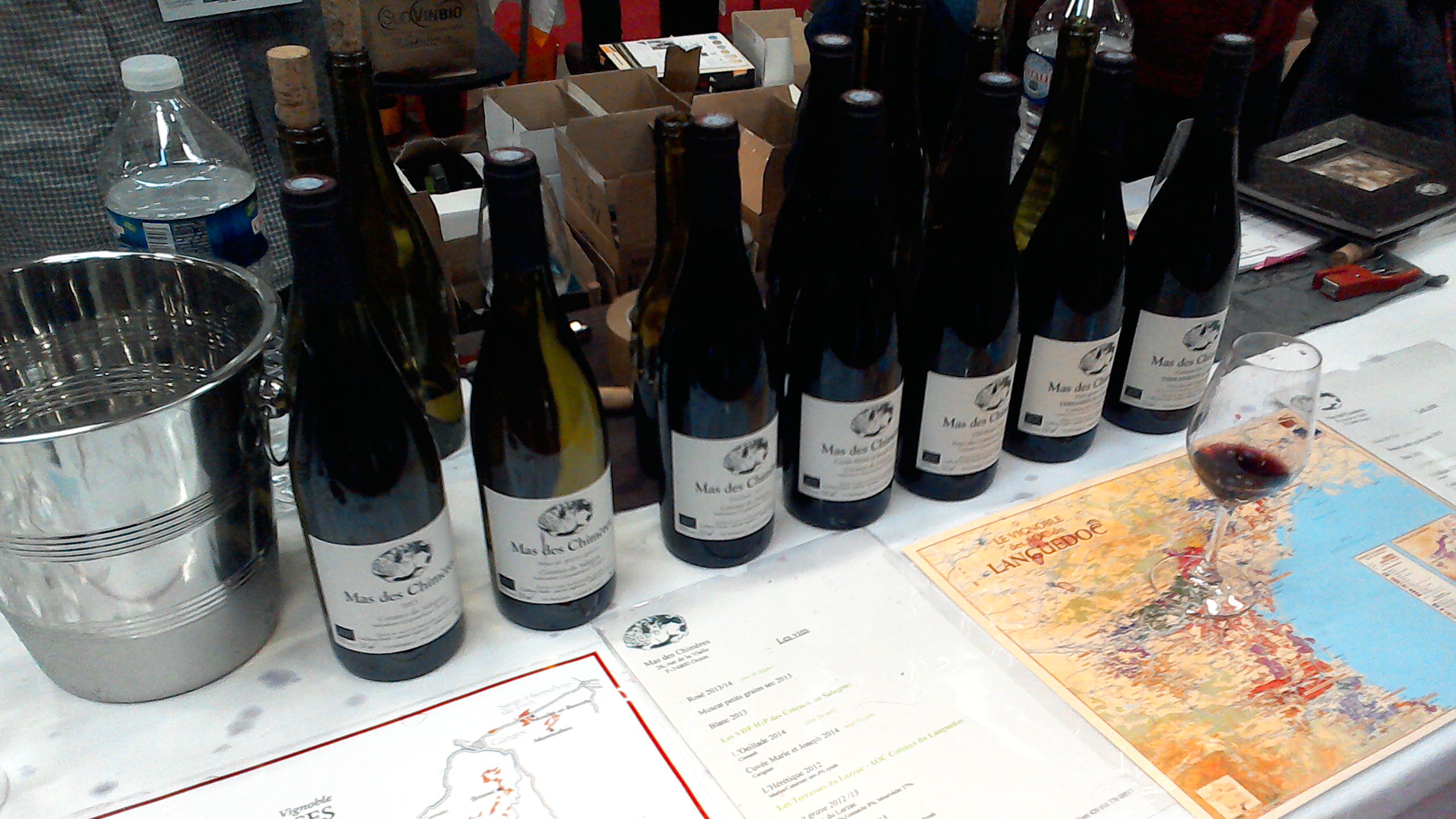
Four or five years ago I drank a bottle of ‘L’Oeillade’ of Mas Des Chimeres, a domaine near Lac Salagou. Oeillade is a local name for Cinsault (possibly a forerunner of Cinsault) and the wine is a light, dangerously gluggable red which was an excellent wine for the summer when I drank it. That makes the wine sound simple but it has complexity too. Incidentally, I tasted the Chimeres range at Millésime Bio and enjoyed them a great deal. Look out for Domaine La Fontude in the same area which is also making lovely wines including Cinsault.
Mas De Chimeres range including L’Oeillade
That Cinsault wine surprised me as I associated the grape with rosé wines and indeed that is how most winemakers use it in the region. However, since then I have come across more red Cinsault bottles which have excited me. Les Chemins De Traverse is produced by La Baronne in Corbieres (see Day 3) whilst L’Oiselet is a lovely wine made by Yannick Pelletier in the St Chinian area. Incidentally all of Yannick’s wines are absolutely terrific. Truly a viticulteur to look out for and buy if possible, you would not regret it. Just today (March 30th) I also tasted a really good Cinsault from Julien Peyras called ‘Gourmandise’, part of another excellent range of wines, again look out for him.
All of these Cinsaults are deceptively easy to drink but have complexity too.
I must also add two Cinsaults produced by Mas Coutelou. 5SO is a light version ready for drinking and delicious it is too, including the newly bottled 2014 which I can confirm is excellent.
Then there is Copains a Cinsault which is again apparently easy to drink but carries real weight and will be at its best in years to come, and if you think I might be being biased read this review from the excellent blog by David Farge (Abistodenas).
Cinsault is a variety enjoying a renaissance as winemakers realise its potential and vinify it to be something more than just a quaffing wine. There is room for both types of wine so give them a go.
The traditional image of a vineyard is that of one big parcel of vines surrounding a chateau as in Bordeaux, with its smart house and cellar buildings for making and storing wine. However, that is not the reality for most vineyard owners. Jeff Coutelou has his home and his cellars in the centre of Puimisson in the Hérault, surrounded by a childrens’ nursery, houses and work buildings. The vineyard itself surrounds the village but comes in a number of small parcels rather than one big vineyard. Each brings its own characteristics in terms of soil, surroundings and exposure to the elements, ie its own terroir. The parcels have been accumulated over the years by Jeff’s grandfather, father and himself. In the satellite photograph below you will see the parcels and how they relate to the village. Vineyards are shown in green, olive groves in red.
(Photo taken from Rapport Biodiversité d’Exploitation Mas Coutelou produced by Agrifaune)
There are about 17.5 hectares (43 acres) of land though olive trees occupy about 2.5ha (6.7 acres) and well over 1 ha (3 acres) is fallow land or has other trees, hedges and plants. The soil is virtually all clay and limestone. As you may be able to see in the satellite photograph much of the land to the south of Puimisson is vineyard, to the point of monoculture. Jeff wants to use his land to produce biodiversity so olives, figs, roses and hedges help to create little oases of wildlife. More details are outlined at the end of this post.
Segrairals and Caraillet (6.8ha, 5.7 under vines)
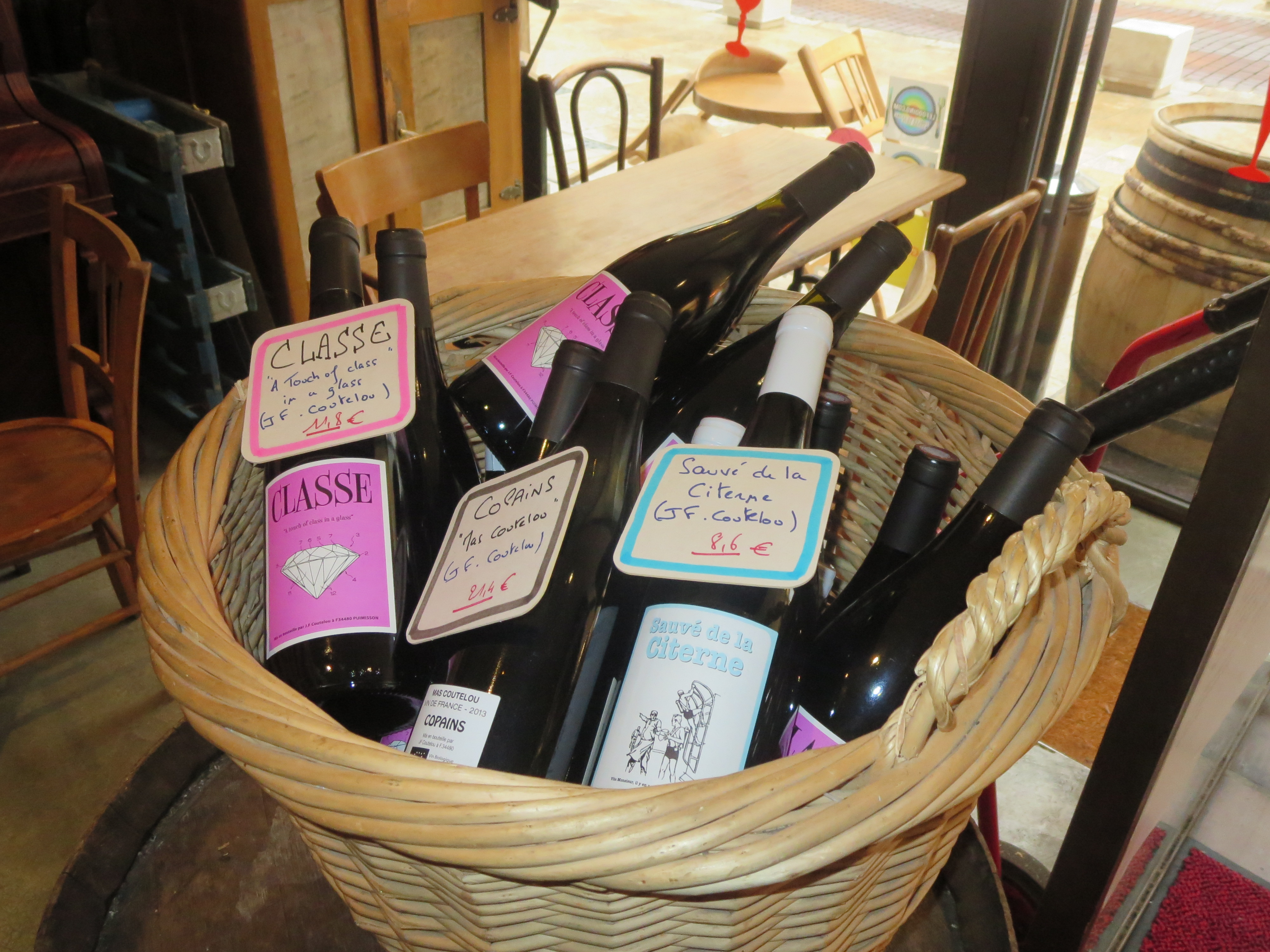
This is the biggest of the parcels and the only one situated to the north of the village and closest to it. Surrounded by the village and a couple of roads it is well protected by trees and hedges, including figs and olives. A variety of grapes are planted with the oldest being some Syrah planted in 1993, Cabernet Sauvignon planted 1998 and younger plantings of Mourvedre, Syrah and especially Cinsault. The Syrah goes into bottles such as Classe and 7, Rue De La Pompe. Mourvedre goes into Sauvé De La Citerne and the Cinsault into 5SO. The Cabernet grapes will be used for blending in various cuvées or sold to the UK to make the new London Cru Cabernet Sauvignon, a project run by Roberson in London.
Main body of Syrah and Cabernet grapes
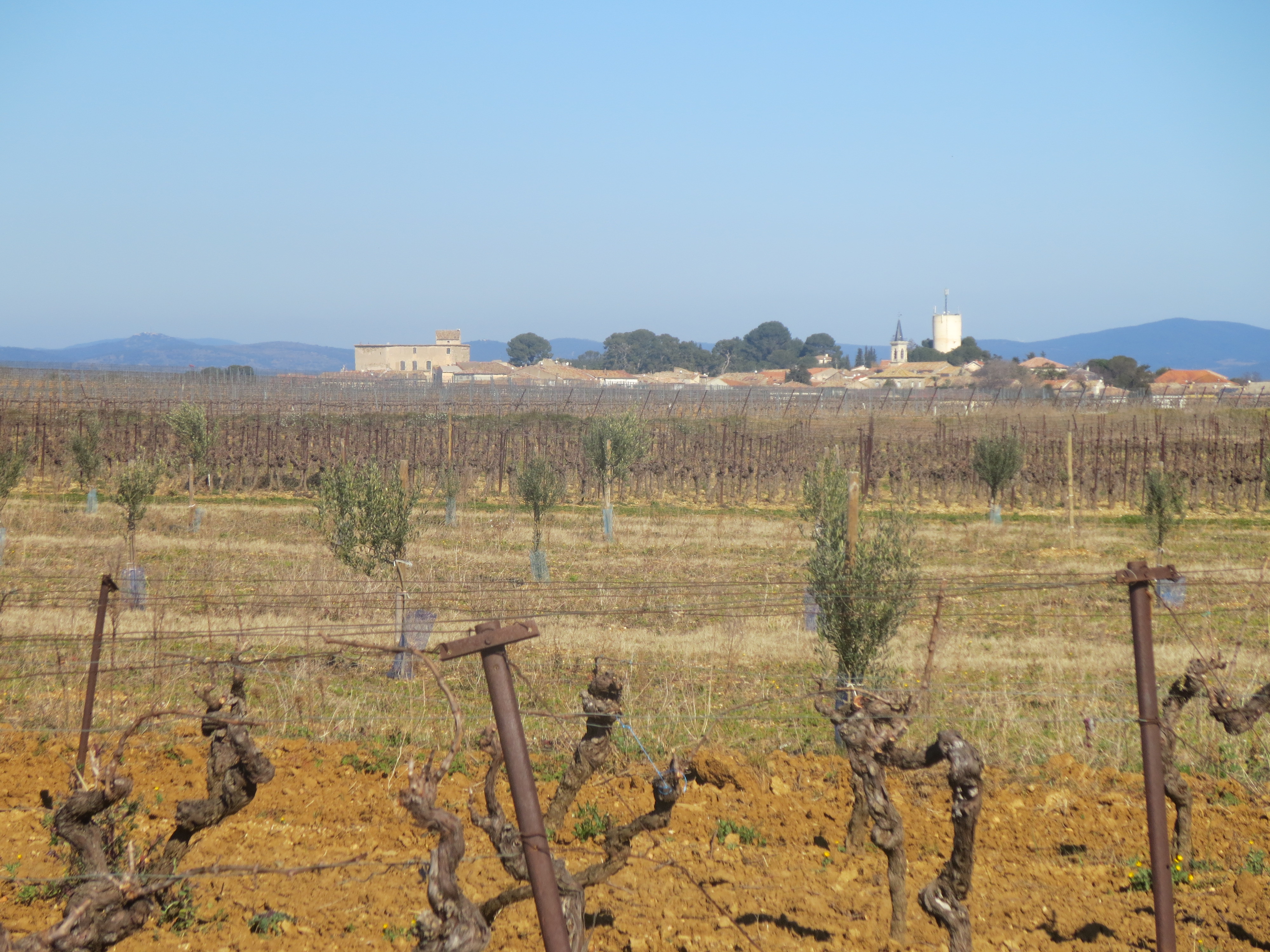
Planted olive trees in the foreground with some younger Cinsault and Syrah vines in the background
La Prairie (0.5ha)
To the west of Puimisson La Prairie is an olive grove in a very pleasant area with an official ecology walk going past it. No vineyard planted.
Mountains seen from La Prairie
Prairie olive plantation
Le Colombié (0.6ha)
Just at the southern tip of the village Le Colombié is planted entirely with Merlot vines. These will produce grapes used to blend for cuvées prepared for restaurants, bag in box etc. Merlot is not a typical Languedoc variety, these were planted in 1999.
Le Colombié – Merlot vines
Rome (0.7ha)
Possibly my personal favourite vineyard of them all. It is quite isolated even though there are other vineyards around. Isolated, because there is a wood which shelters it. The gobelet Cinsault vines date back to 1966 and 1975 and go into the Copains or,in some years, Vin Des Amis or Classe. These old vines are also surrounded with young olive trees and the parcel is an attractive and quiet haven. There is also a planting of some 20 different varieties of grapes including various types of Muscat which are used in a solera system. This was started many years ago by Jeff’s grandfather and ever since wines have been used to top up the old barrels to make Vieux Grenache and Vieux Muscat. Sensational wines. The added benefit is that because there are so many different types of vine they cross pollinate and this adds an extra layer of complexity to the Cinsault in the Rome vineyard.
All vines lead to Rome
Gobelet Cinsault vines, olive trees and the surrounding woods
Metaierie (2.3ha)
The parcel which was the basis of my post One Day Like This when we harvested the last grapes of 2014, some Grenache. There are a few older Merlot vines (to be replaced in 2015) but the parcel is mainly the home of Grenache and Syrah grapes which are used to make the ever popular Vin Des Amis.
Smaller Metaierie parcel
Main Metaierie vineyard, home of Vin Des Amis
La Garrigue (1.8ha)
Described in some detail in the post Working In The Vineyards (January). Made up of three sections: some younger Syrah facing north for freshness, a section of Grenache facing south, as it likes the heat and some 20 year old Sauvignon Blanc vines too. The Sauvignon is used to make the white blend PM or other white cuvées, the Syrah goes into my favourite La Vigne Haute and the Grenache is used to make Classe along with the Syrah from Segrairals.
Grenache
Sauvignon Blanc
La Grangette (0.5ha)
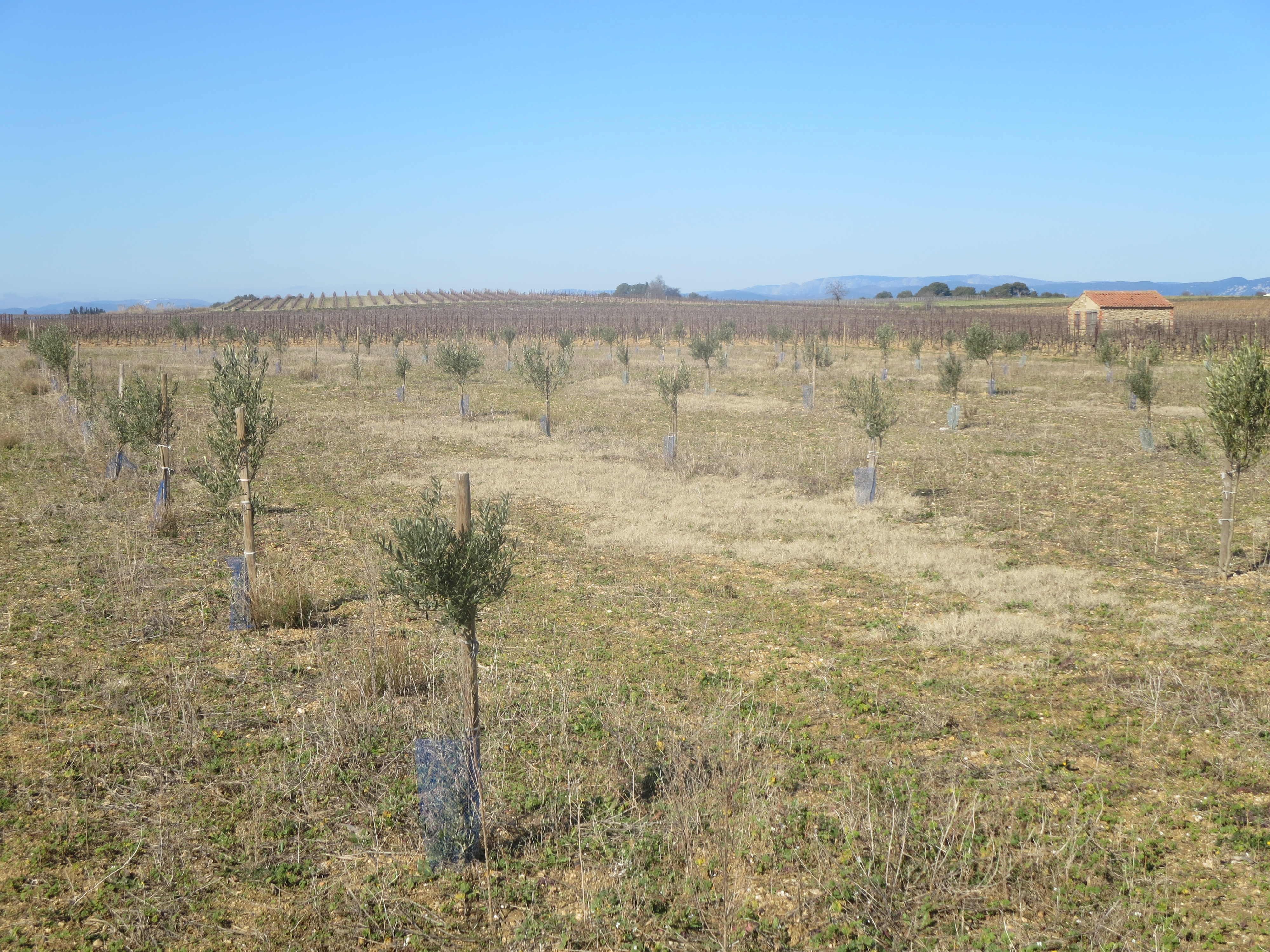
A parcel of half a hectare (just over an acre) surrounded by vines, Jeff decided that it is compromised in terms of quality grapes so he planted 112 olive trees in 2011 to provide contrast to the fairly barren land and vines surrounding Grangette.
Rec D’Oulette (1ha plus a smaller, separate parcel of 0.3ha)
Actually made up of two parcels of land. This has seen a lot of work in recent years as Jeff has tried to diversify it. The central block is half a hectare of 30 year old Carignan, used in making Flambadou, a wine which is really improving and was one of the stars of 2013. Surrounding these vines Jeff has planted half a hectare of olive trees to keep them away from the chemicals of neighbouring vineyards. The second part of Rec resembles Grangette as an isolated small parcel and again Jeff has planted olive trees to diversify as it is too small and isolated in its organic nature for grapes.
Carignan vines for Flambadou
Font D’Oulette (0.65ha)
A parcel where Jeff has worked hard in recent years. More olive trees planted in 2011 as were those in the small section of Rec. In addition he has grafted an older variety Aramon into the vineyard covering over half a hectare. These grapes will be used to create new cuvées and the first blend of grapes produced in 2014 is highly promising tasted from tank.
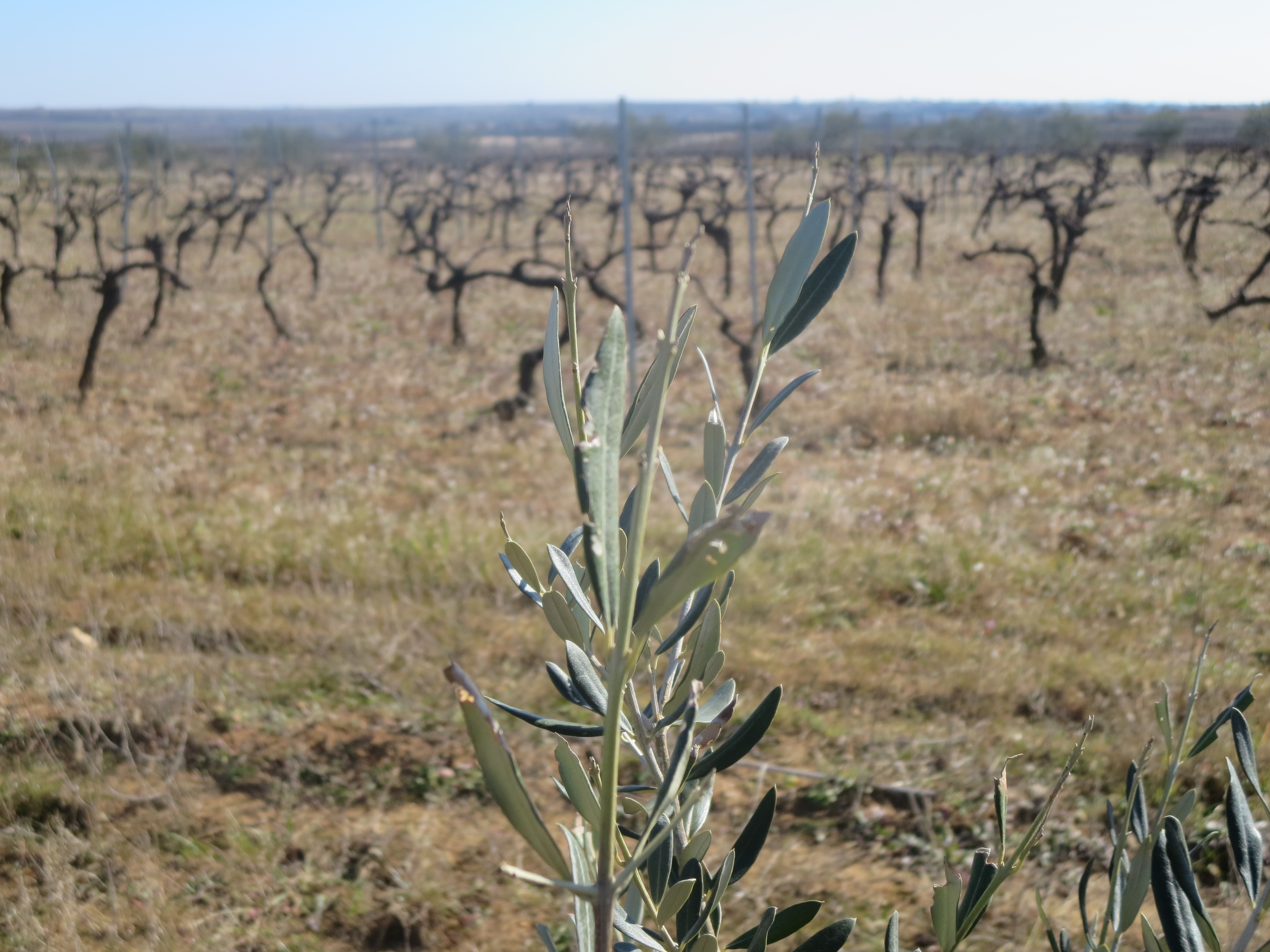
Olive trees to protect the new Aramon vines
Aramon vines
Les Roques (1ha, not on satellite photo)
One hectare of land to the south east of the village heading into Lieuran-les-Béziers, this was the vineyard I showed after the storms of November 28th 2014 when it was flooded. In fact the vines have been grubbed up and there is a programme in place to plant trees and to provide a barrier to the Libron river in case it should flood gain.
Les Roques shortly after the November storms
Peilhan (2.2ha)
An attractive vineyard nicely protected. About a hectare is planted with white grape varieties, including a section of Carignan Blanc which has been used to make a cuvée all on its own. Maccabeu, Grenache Gris and different types of Muscat make up the other white varieties and these are usually picked, assembled and vinified together as part of the PM white blend. This also the home of the Castets vines I have written about a lot, one of only two Castets vineyards in France. More Carignan vines are joined by another interesting grape variety, Clairette Musquée which was blended with the Aramon from Font D’Oulette last year. This is the vineyard where a recent plantation took place to bring back older varieties to the area. Terret Blanc, Riveyrenc Gris and Piquepoul Gris were planted along with Terret Noir, Morastel and Riveyrenc Noir. picked, assembled and vinified together as part of the PM white blend. This also the home of the Castets vines I have written about a lot, one of only two Castets vineyards in France. More Carignan vines are joined by another interesting grape variety, Clairette Musquée which was blended with the Aramon from Font D’Oulette last year. This is the vineyard where a recent plantation took place to bring back older varieties to the area. Terret Blanc, Riveyrenc Gris and Piquepoul Gris were planted along with Terret Noir, Morastel and Riveyrenc Noir.
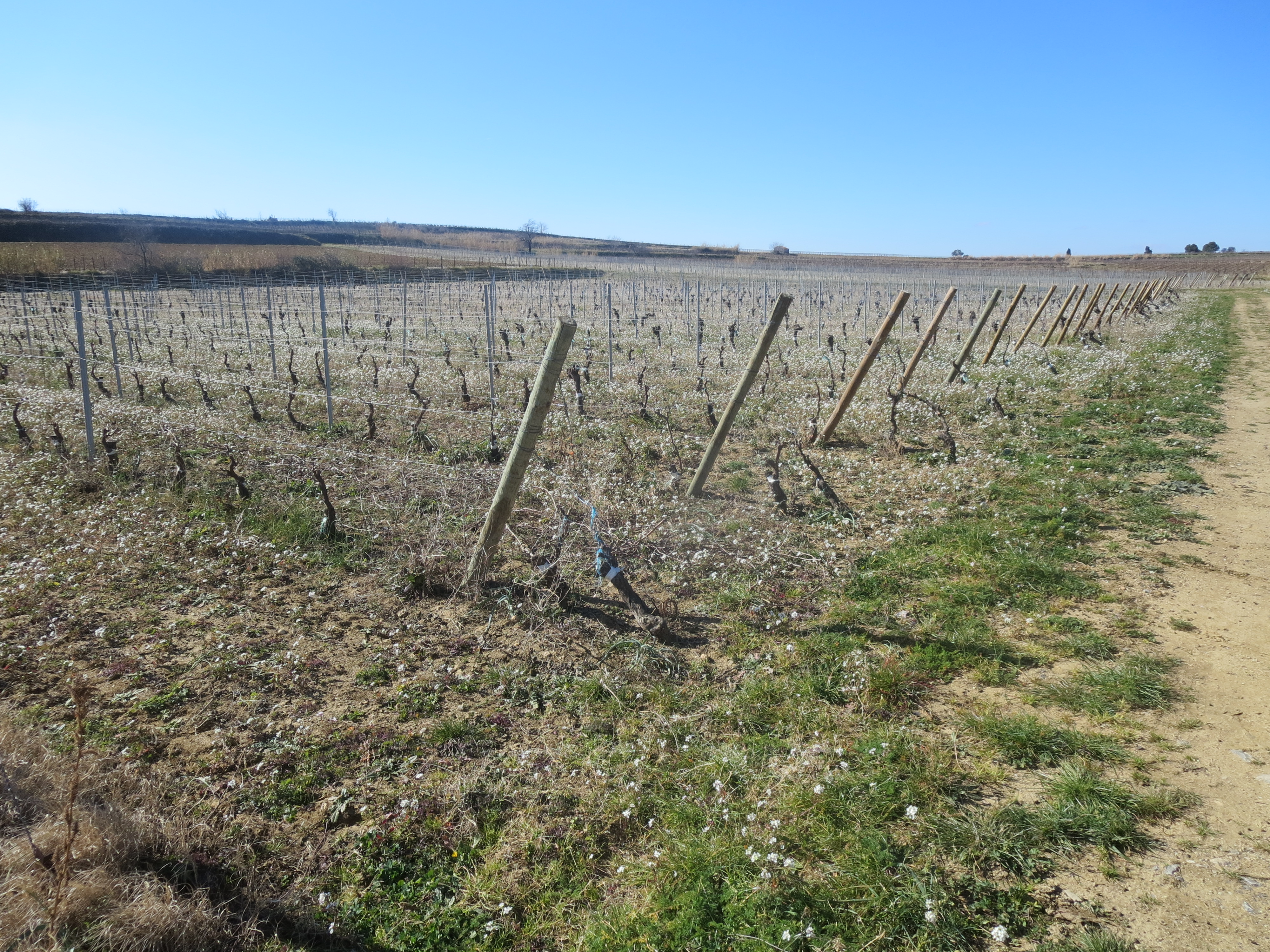
Main parcel with white vines, Castets, Carignan and Clairette Musquée
Planting the new parcel of Peilhan
The domaine
Overall Syrah is the predominant grape variety making up around one third of production, although 2014 saw a big reduction in the harvest due to the dry spring and early summer. Red grapes dominate with well over 90% of production.
Jeff and his Castets
(L-R) Vin Des Amis, 7 Rue De La Pompe, Paf
Organic since 1987, no synthetic chemical products have been used on the soils for over 25 years now. No artificial yeasts are added in the winemaking process, the grapes produce healthy yeasts themselves to stimulate fermentation. Grapes also naturally produce tiny quantities of sulphites but Jeff has been experimenting with using no added sulphur since 2003 and has successfully completed the last three harvests without adding any sulphur to the wines. This dedication to producing wines which are as natural as possible, made with as little intervention as possible means that Jeff is restless in seeking to improve the quality of his soils and in protecting them from the non-organic practices of neighbouring vineyards. He has also brought in Agrifaune to put together a project to plant over I kilometre of hedges. These will help to prevent soil erosion, protect Coutelou vines from surrounding vineyards and also provide shelter to wildlife which in turn will help to protect the vines, for example by eating damaging insects. Trees such as oak, laurel and elder are being planted along with plants such as agrypis and wild rose. Around the vineyards wider borders of grasses and wild plants are being allowed to grow even if that means that vines have to be scrubbed up. Similarly ditches and fallow land will be used to encourage biodiversity. So in an area of monoculture these oases of biodiversity and wildlife will help to enrich nature, the vineyards and, ultimately, the wines.
In my last blog entry I wrote about the planting of a new vineyard with a range of old varieties of vine. The parcel of land is part of the Peilhan vineyard and sad to say it is under threat together with the vineyard (Rec D’Oulette) which provides the Carignan grapes for the Flambadou cuvée, one of the most highly rated bottles of Mas Coutelou.
The threat comes from a plan by the company Quadran to plant 6 or 7 wind turbines on the plain behind the commune of Corneilhan. Ironically the village of Corneilhan will profit from the plan but is on the other side of a small hill from where the turbines will be situated, therefore the impact upon Corneilhan will be minimal unlike that upon neighbouring villages such as Pailhes and Puimisson whose residents will have to look at the turbines every day. Planning restrictions means that the turbines would have to be built on a stretch of land running across the area where Peilhan and RecD’Oulette are to be found.
Some neighbouring viticulteurs might be tempted to have a turbine on their land as they will receive a payment of 3000€ per megawatt per year created as compensation for not being able to produce wine from their vineyard. Jeff, and others, will not do so but the turbines will have a significant effect on the climate and terroir of his vineyards, if the project comes to fruition. Air turbulence, noise and the movement of the turbines will clearly alter growing conditions such as temperature and humidity but there are other consequences. Jeff has been working to provide biodiversity in the form of hedges, trees and plant life which shelter birds, bats and insects that provide a means of controlling vine pests such as ver de grappe and wasps. This helps to prevent the use of chemical pesticides and thus helps the environment. The presence of these ‘environmentally friendly’ turbines will undoubtedly upset the healthy ecosystem provided by these birds, bats and insects.
Puimisson from Peilhan, how much would wind turbines dominate this landscape!!
Trees and plants border the vineyard
Olive trees in Rec D’Oulette
However, Jeff’s main concern is simply for the visual and auditory impact upon the area as a whole rather than just his personal loss. The area will be completely changed by the project and it does seem strange that they would build wind farms on agriculturally useful land rather than unproductive land elsewhere. It is ironic that so called green energy threatens the local environment. Without mentioning the threat to tourism which is economically important in the area.
In any case the best renewable energy is the one you don’t consume!
To show support for the people of the area as well as the vineyards you can sign this epetition now. I shall, of course, update with further news.
It was the 30th January and having promised to write about vineyard work in each month of the year, I felt that a deadline was looming! After tasting wines in Montpellier for a few days it was definitely time to get back to the vineyard the key component of those wines. Jeff took me to the vineyard called La Garrigue which is to the south east of Puimisson, home of Mas Coutelou. It is one of around a dozen parcels of land which Jeff owns, though some are home to olive and fig trees as well as hedgerows and other methods of reintroducing biodiversity into a district which has become one large vineyard. I shall be writing soon about the various parcels and Jeff’s work to safeguard and boost the local environment and biodiversity.
La Garrigue is rather like a small pyramid in form with a peak in the middle and vines around the sides.
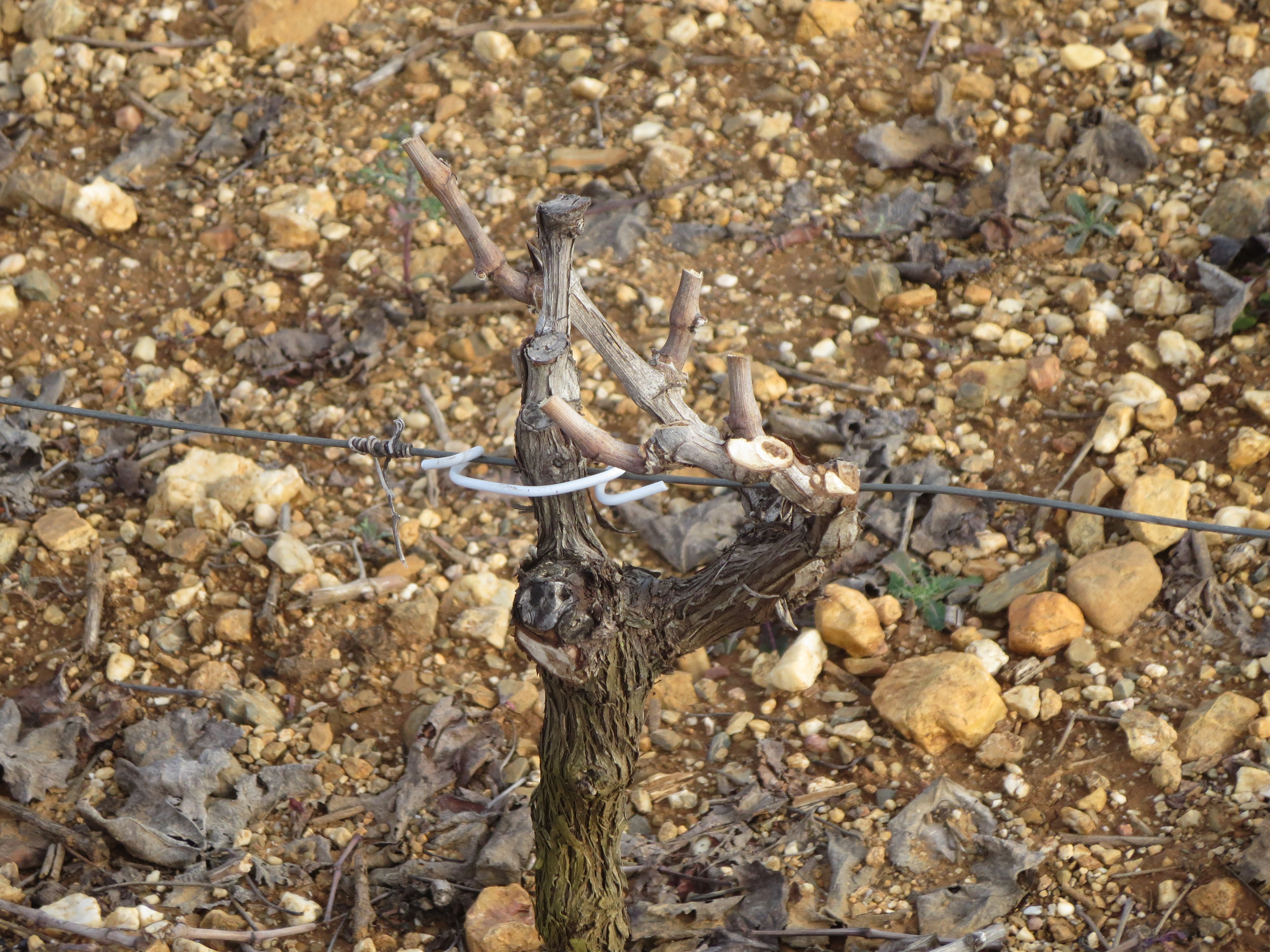
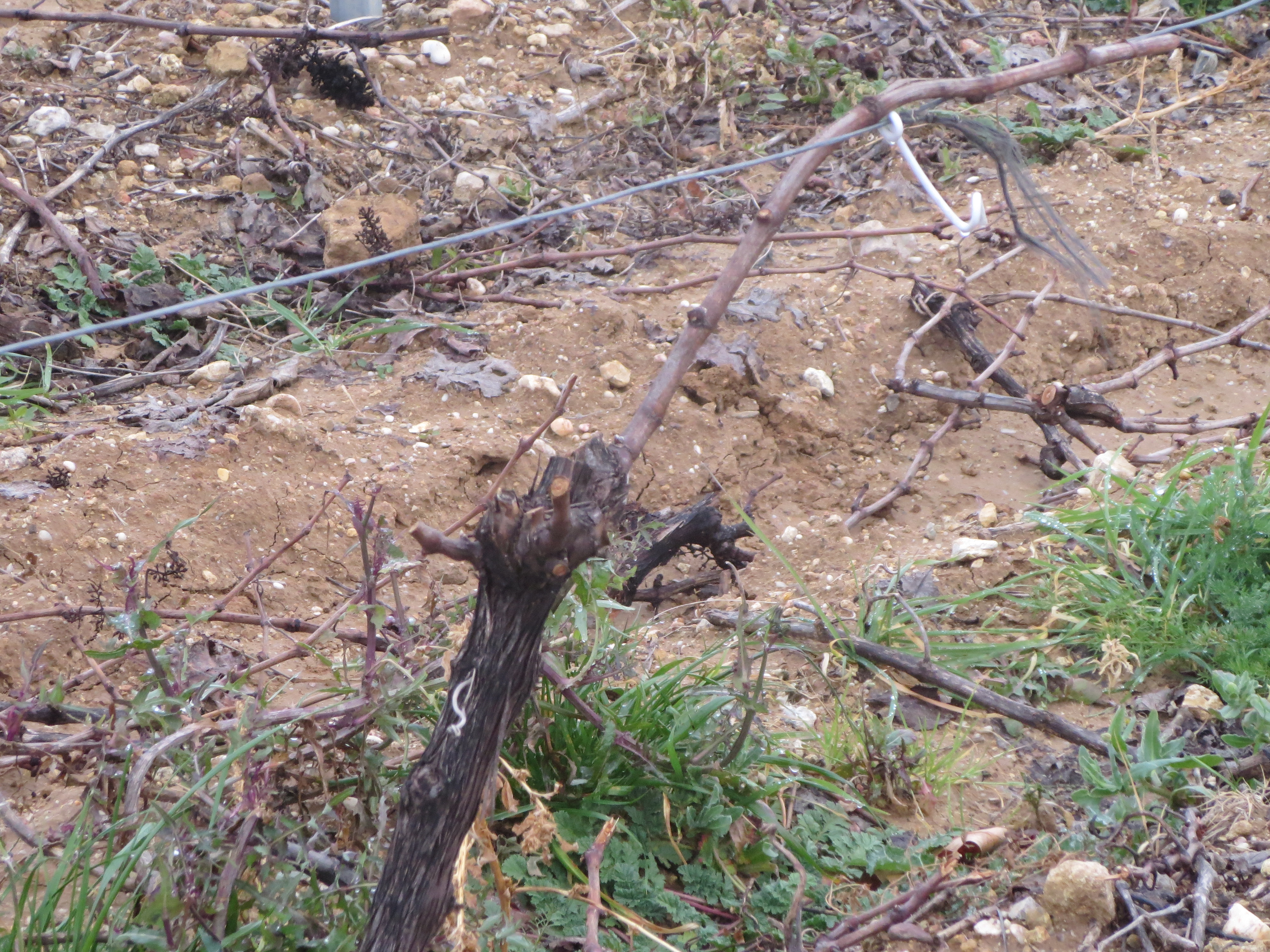
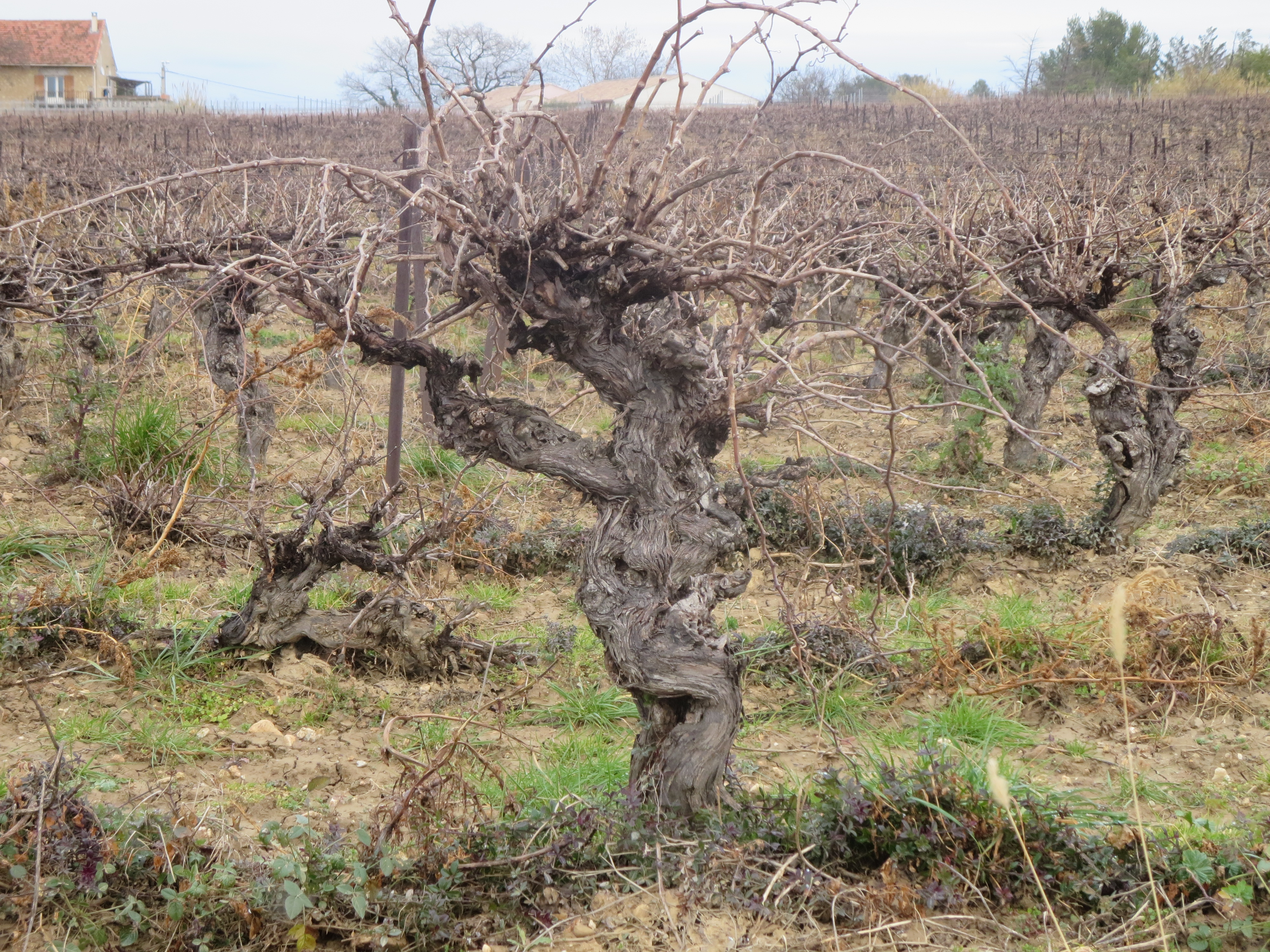
Facing north is a parcel of Syrah planted in 2006, so the vines are still young. They face north so that the freshness and spiciness of the grape variety are preserved rather than being overcooked. They are also planted in rows facing north to south so that the wind blows down the rows, helping to prevent disease and to dry the grapes after rain. Carole was busy pruning this area and the preferred method is the gobelet style. This is the traditional and most natural way of growing vines in the Languedoc and Jeff has preferred to use this method for his vines for a number of years and so these Syrah vines are grown using gobelet.
Syrah vine pruned in the gobelet style
However, as you will see in the video, Carole studies each vine carefully and if she feels it would benefit from a different style she will prune in the more suitable way. This may be because the vine canes are growing too vigorously between the rows of vines and need shaping along the rows. As these are young vines they are being supported by wire trellising. In this case a cordon de royat system might be used.
Syrah vine pruned in cordon rather than the gobelet style which most of the Syrah vines are. It was felt its needs suited cordon better
Facing south is a parcel of Grenache vines. This is a variety which welcomes heat and is grown through Spain and around the Mediterranean. It adds spice and complexity to wines and, facing south, the sunshine brings out these characteristics. In this parcel cordon de royat is used as the pruning method. This was the system used when the Grenache vines were planted back in 2000 and so they continue to be grown in that style as it is not advisable or even possible to change them to gobelet now. The Grenache is usually used in the popular cuvee Classe.
Grenache vines,cordon pruning
A magnum of Classe
To the easterly side of La Garrigue is a block of Sauvignon Blanc. This is not a variety often grown in the Languedoc as it gives green, fresh almost acidic notes in its wines and the region is often too hot for it to show those qualities. Facing east, however, means that the sun hits the grapes in the morning so does not overheat or over ripen them, preserving the freshness of the fruit. In this parcel guyot is the preferred system of pruning. This system allows more air to circulate around the grapes and as the white grapes are more fragile guyot training helps to protect their health. The white grapes are usually used in the white blend, PM.
Sauvignon Blanc vines pruned in guyot style up the wire trellising
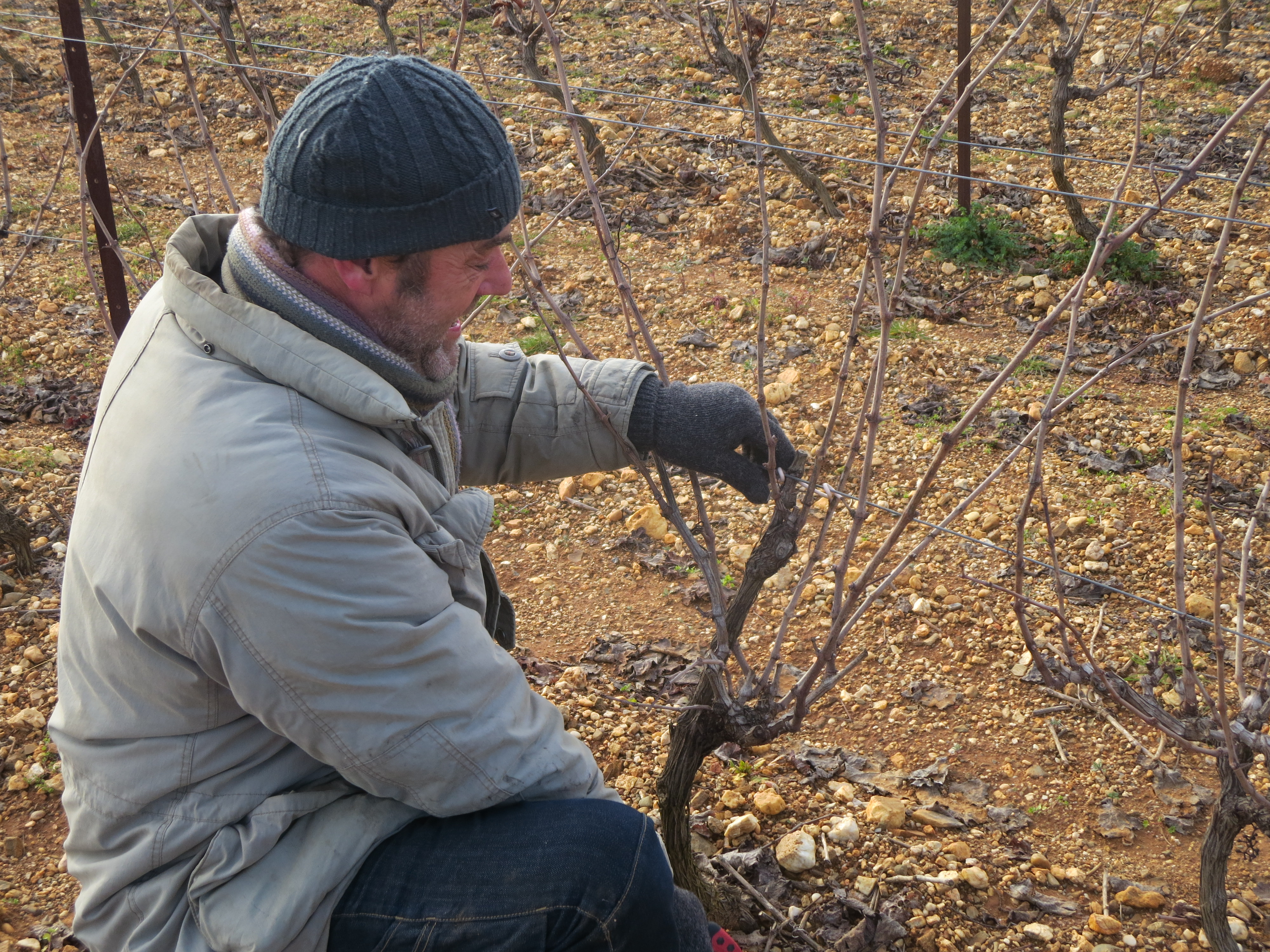
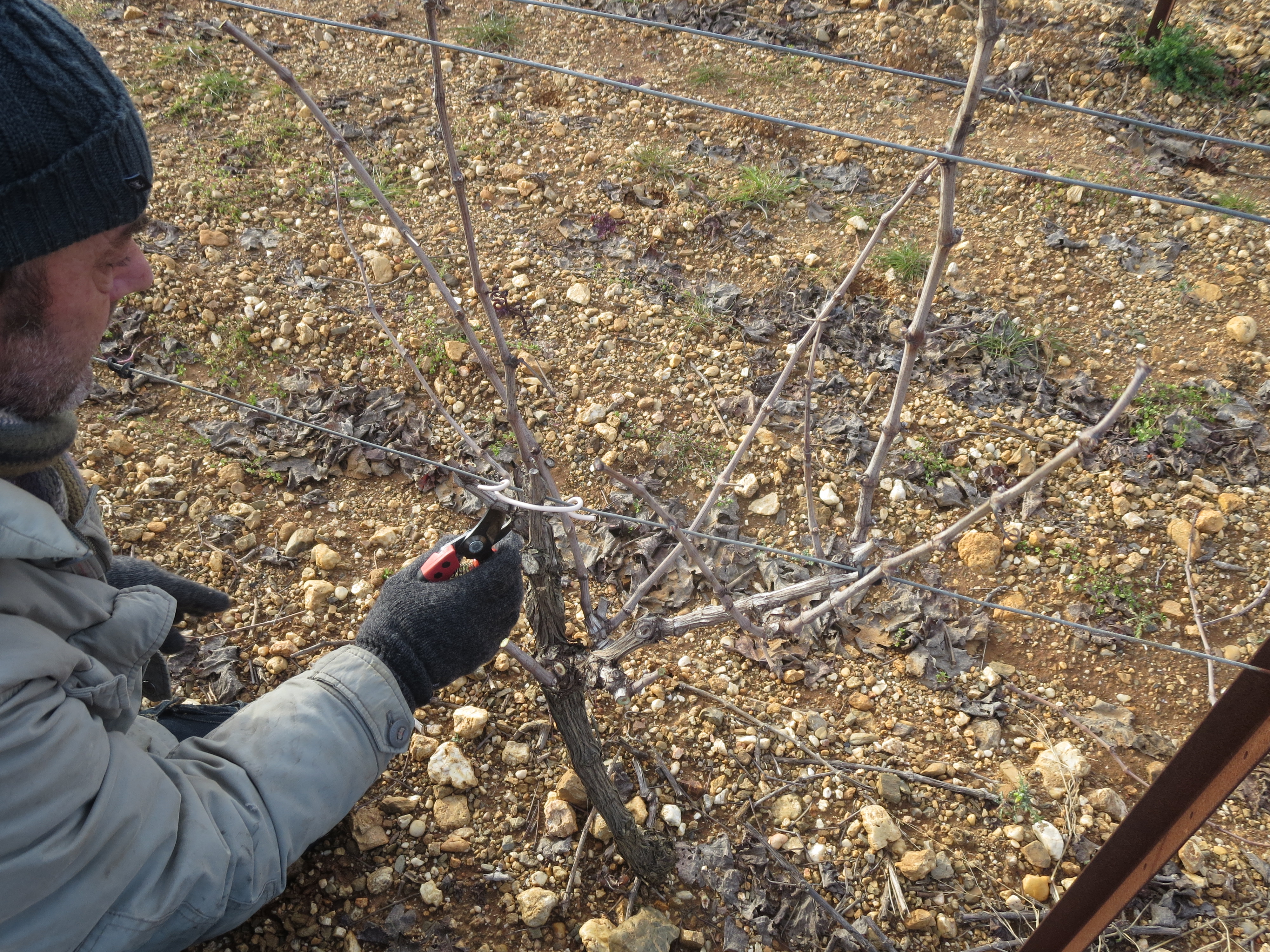
What struck me most, other than a bitingly cold, northerly wind, was how carefully Carole and Jeff study each vine to ensure that it is given a pruning which suits its needs. Direction, quality of the wood, crowding are all considered before they decide what to cut and at what length the remaining cane should be left. Some canes were cut very short, others had 8 to 10 eyes which will produce bunches of grapes. It depended upon the capability of the vine to bear such fruit. It is this care and attention which characterises the work of the skilled artisanal vineyard worker and winemaker.
Jeff studying a Syrah vine
First cuts
Getting to the heart of the vine
The finished vine
I would compare this with a machine I watched around Margon which cut the vines to the same shape and size regardless of their health and
needs. The cutting was fast and much easier work but the pruning was brutal and imprecise with no regard for the individual vines. For vignerons producing cheap, bulk wines I can understand their actions.However, it confirmed in my mind that artisanal vignerons are the ones producing the wines I want to drink
Machine pruning vines, the yellow arm contains the blades
Pruning is not glamorous. But is a vital part of the winemaking year, preparing the vines for when they reawaken in spring and enabling them to produce the right quantity of healthy grapes which in turn will produce great wine.
Back in Margon after a few weeks back in the UK, it was good to see family and friends again over Christmas. It was good to hear of many of them enjoying Mas Coutelou wines with their Christmas meals.
Santa was generous so I have new books to read. Hopefully I shall learn something to help brighten and enlighten this blog.
Jeff assured me that last week the temperature in the Languedoc reached 20C and he was working in the vineyards in shirtsleeves. Sadly, no sign of that this week.
The vines are resting through the winter weather as you can see in these photos taken in Aloxe Corton on Sunday morning. Burgundy, of course, is much further north than Margon.
As we went for a walk in the vines (as opposed to a march in the vines) the pruning work I described in December showed clearly. Below are examples of all 3 types of pruning I described then.
Guyot trained vines. The long right branch attached to the wire will provide grapes in 2015. The cut branch will provide fruit in 2016.
I came across these cordon trained vines which are clearly older and very sturdy. They will need further pruning!
And finally we saw this really wizzened and elderly vine growing in classic Languedoc gobelet style.
So the vines are resting but I know that work for the vigneron is continuing. More pruning, assembling the wines from last year’s harvest and more vineyard work which I shall report back upon later in the week.
Mas Coutelou has been organic since 1987, recognised as number 670 in the whole of France, i.e. the 670th of any type of organic production not just wines. Therefore, Jeff’s father, Jean-Claude, was one of the pioneers of the need to practise more sustainable agriculture and winemaking. Carrying the label ‘agriculture biologique’ is important to many customers who now choose to buy organic products, it is also important to a domaine which has such a rich history of organic viticulture and has now gone further by producing natural wines.
On Thursday Jeff was visited by the inspector for organic winemakers in the Hérault. Despite the long history of organic Mas Coutelou the domaine is checked each year by ecocert to ensure that it is sticking to organic practice. The inspection lasted 3 hours with 2 hours in the office going through paperwork to ensure that all activities are compatible with organics. It was gruelling and Jeff had to have proof and paperwork to support his claims. New parcels of vines, treatments in established vineyards, what grapes went into which cuves and which bottles – all were checked. Calendars of treatments (using organic materials such as nettle manure) for each of the last 3 vintages, analyses of the wines to ensure there are no outlawed chemicals, quantity of production – all were checked. Jeff produced spreadsheets to show how a wine was pressed, put in tank, vinified and then bottled. Satellite maps and images were used to identify vineyards and verify the production matched the origin.
A visit to the cellars to check that bottles matched the production and that tanks were in order and that labels gave accurate information was followed to one of the vineyards which was checked against the satellite photo to ensure that it matched production figures and was in good health. This really was a thorough test.
Happily Jeff emerged with flying colours and because he does not filter his wines and since he has not added sulphur to the wines he is actually entitled to higher than the normal award of organic status. So the story of Mas Coutelou from father to son continues.
The amount of paperwork and IT work in producing spreadsheets etc was stunning. This adds many, many hours to what we wine drinkers imagine is the workload of the vine grower and wine maker. So when you see this label on a bottle (or indeed any food or drink) please spare a moment to think of all the hard work which has gone into your glass (or plate) to ensure that it is of the highest quality.
Ernest Hemingway had a theory that writing the simple story whilst not explaining deeper themes would help the reader understand the story . Instead they would implicitly see the bigger picture and work things out for themselves. This was the Iceberg Theory (or my interpretation of it!).
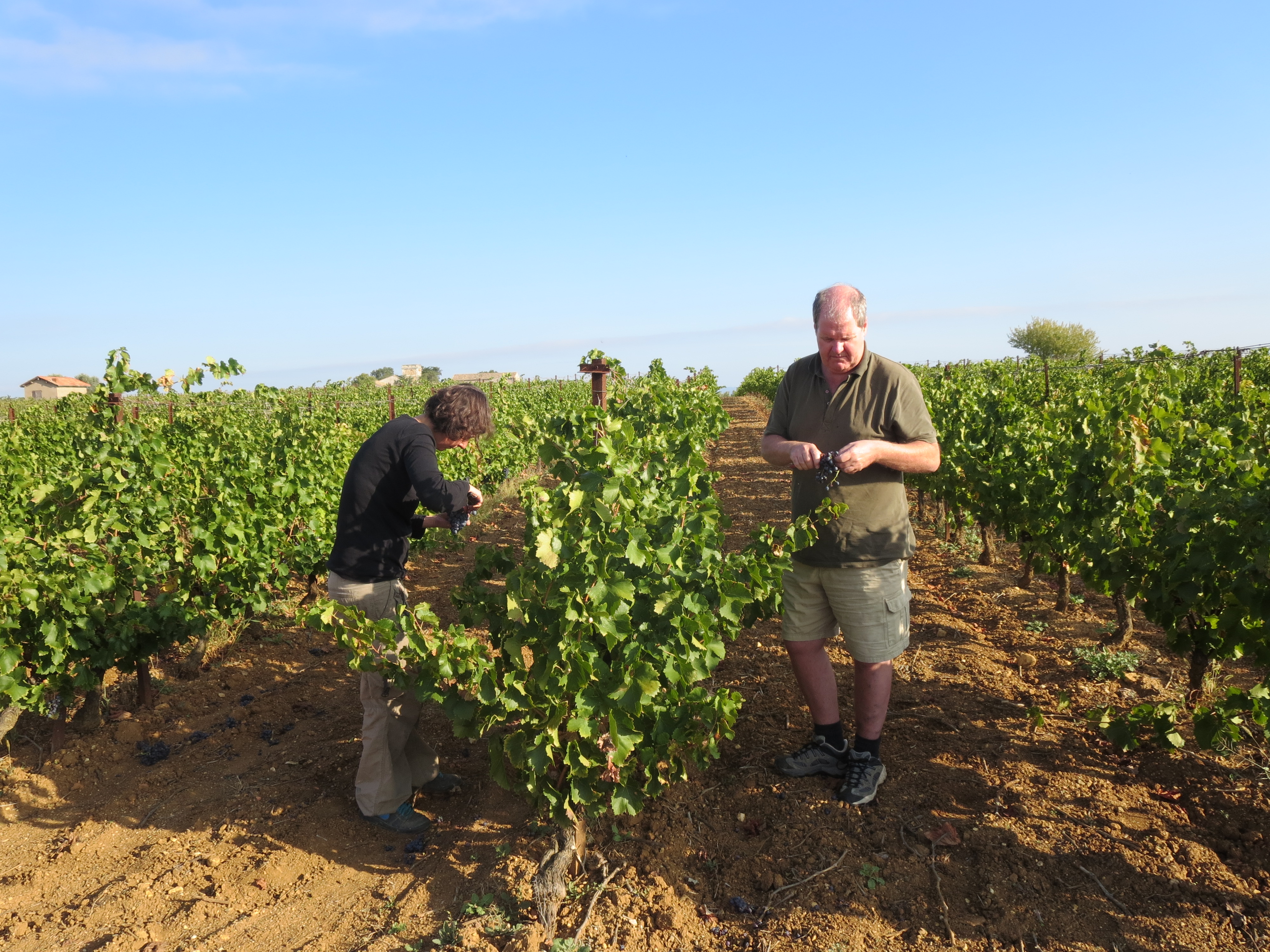
Making wine has some parallels. The wine that is drunk is the final product but not the whole story. And what makes the wine great is what is missing. You might remember that in the vineyard Jeff insisted that pickers should eliminate any grapes of poor quality, they were left behind on the ground and even cut out of bunches. Remember that Jeff and Michel have already spent many hours in the vineyard making sure that the vines produce top quality grapes. This involves, for example, pruning and cutting off bunches of grapes if the vines are too productive, as this would produce more dilute wines.
Grapes left behind
Cutting poor quality grapes out of bunches
Then in the cellar the grapes were sorted carefully to make sure that any inferior quality grapes that were missed by the pickers were removed before they were put into vats. This is called triage.
Triage
Therefore, Jeff can be confident that only healthy, top quality grapes are used to make his wines. This allows him to avoid chemical interference in his winemaking and to fulfill the grapes’ natural potential.
The last few weeks have seen a further stage of taking things out. After the vineyard management, after the careful harvesting, after the triage.
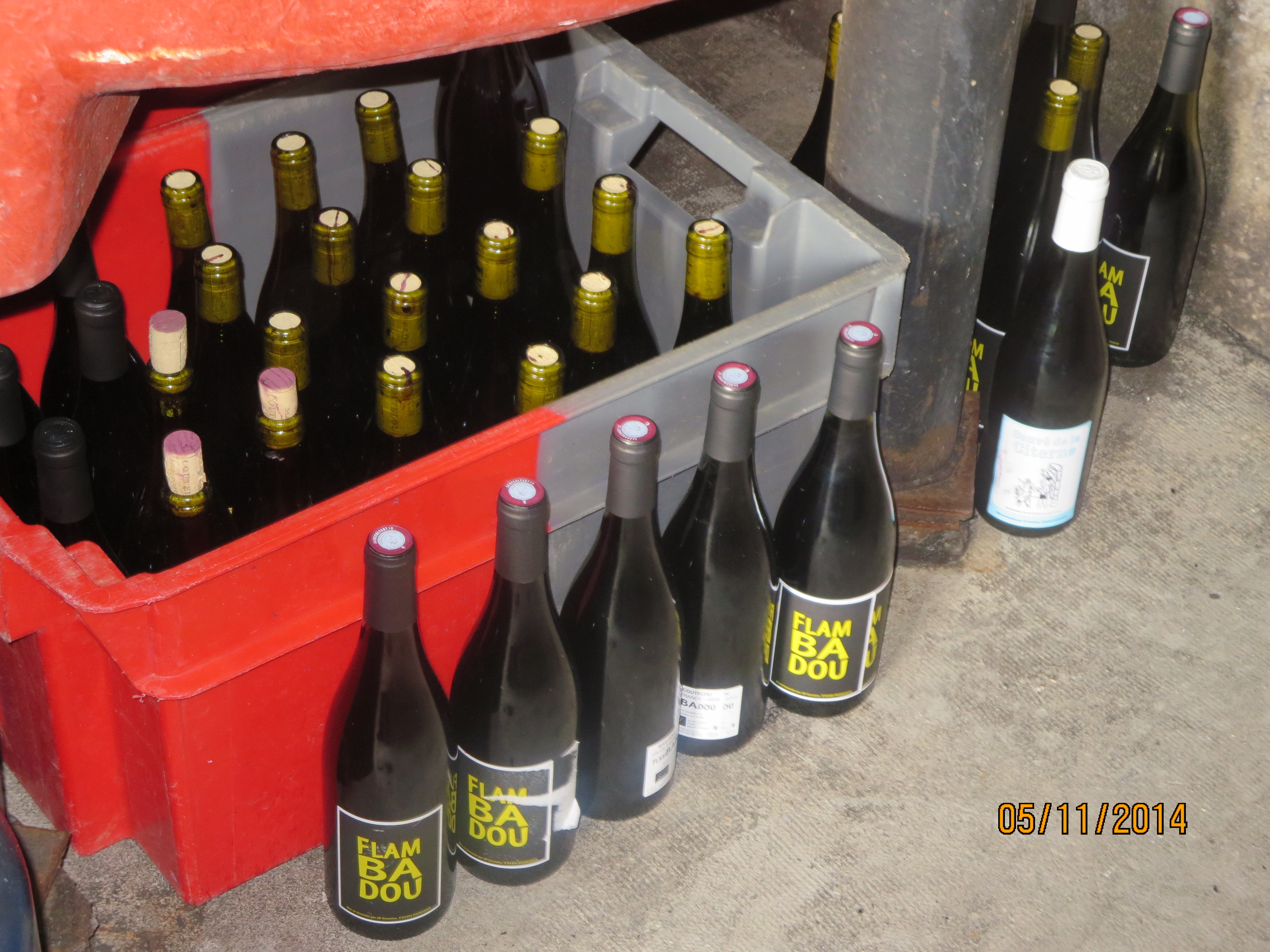
Bottles that are good but not good enough
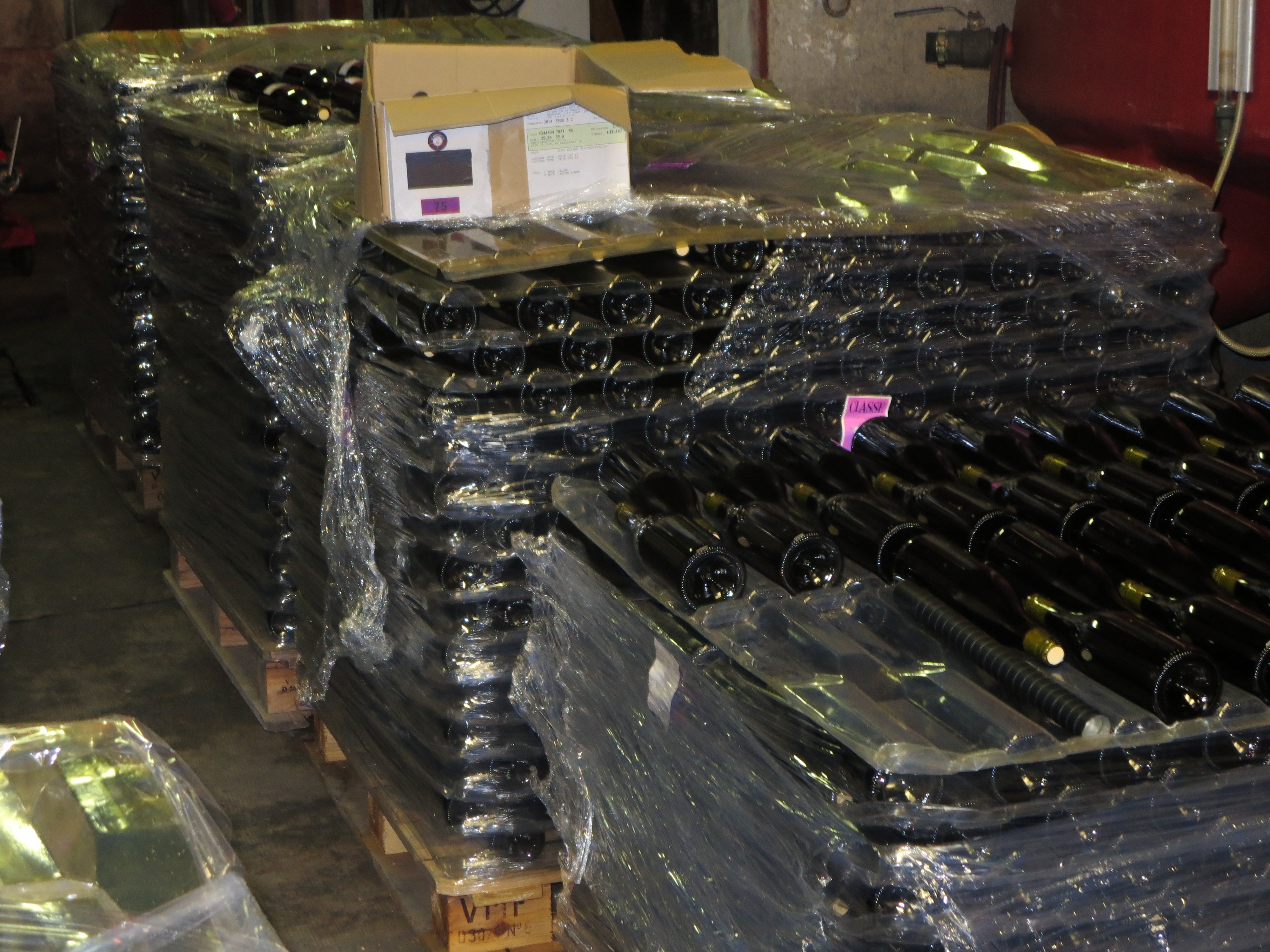
As the wines settle in their cuves, fermenting and working their magic the cellars have been busy with packing pallets of wine to send to merchants around France, the UK, USA and many parts of Europe and the Far East. Today I took the photo above. As every bottle is dressed (habillée) with capsule and labels it is checked for any sign of damage, eg small holes in the cork or slight leakage. These bottles are removed and can be used for wine tasting for visitors to the cellar in the next few weeks. Therefore, what reaches the buyer and the drinker should be of top quality and wines which they can trust to be of the high standard expected from Mas Coutelou. They do not have to worry about all the work that has gone on to ensure their satisfaction and delight, though maybe now they know a little more about it.
The iceberg theory in practice. Cheers Papa Hemingway!
No you haven’t missed Parts 1 & 2! It is widely acknowledged that the work of a vigneron involves three locations; the vineyard, the cellar and the office. The first two parts are the most well known of course and what people like me think of first when we think about the ‘glamorous’ lifestyle of winemakers. However, if you don’t sell the wine and get it delivered safely to merchants, restaurants etc then it is pointless trying to make wine.
Now that harvest is done and the wines are stored in tanks, either fermenting or maturing, the more mundane, but equally important, aspect of a winemaker’s job comes to the fore. Wines have to be bottled, packaged, sent to market and, above all, sold. Jeff said to me that this was not especially interesting but, for me, it was.
Bottles waiting to be packaged
Classe bottles waiting
Jeff has built a strong demand for his wines both in France and abroad. Our recent visit to Paris and the fact that his wines are sold out there proved the case. Visitors to the cellars call on a regular basis looking for wine, merchants phone wanting to place orders – his mobile phone is never far from Jeff’s ear.
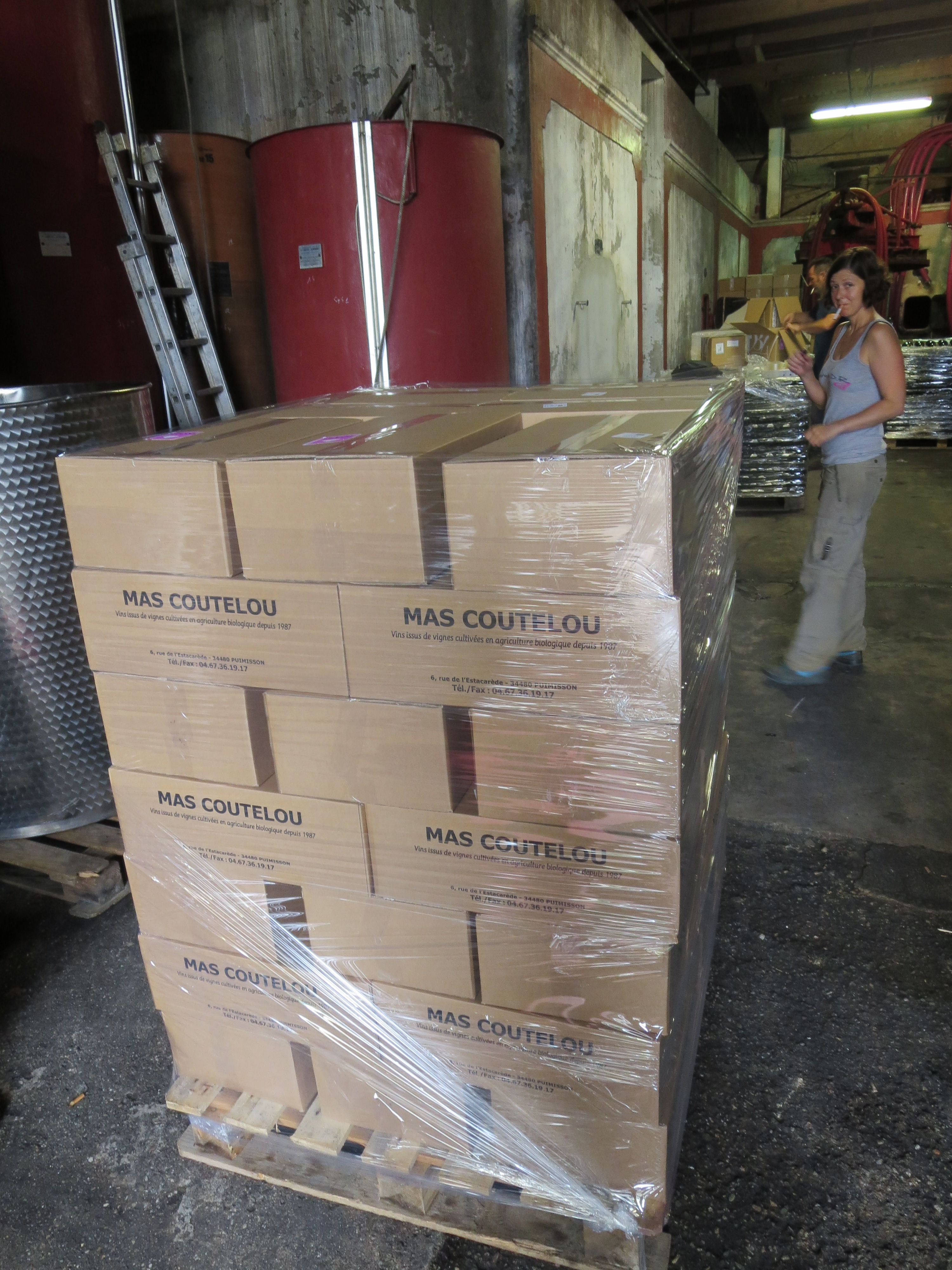
On Friday last week a new ‘toy’ arrived to help the packaging. It seals the cardboard cartons and prints the name of the wine on the side, speeding up the packaging process. Nonetheless teamwork and humour keep that process very human.
The job is hard, repetitive, physical work. In the video you will see Jeff at one point to place 4 bottles in the box at a time, routines and practice are everything. But without the boxes of wine the rest of the business cannot happen. It is less attractive but it is as important as harvesting or winemaking.
Two new wine treats came to the fore this week. Firstly, a slightly sparkling white wine, blanc frisant made from Macabeu and Grenache Gris. Secondly a cuvée made for the first time since 2003, Copains, made mostly from Cinsault but with Grenache and Syrah grapes vinified all together – truly delicious with the latter grapes adding body and depth to the Cinsault and giving the bottle longevity I would think.
Parts 1 & 2 of winemaking are still very strong, Part 3 too and I shall investigate more about commercial decisions in future.
Ready to go
Icare remains underwhelmed by the new packaging machine





























 amarchinthevines