amarchinthevines

Learning about wine, vines and vignerons whilst living in the Languedoc


Leave a comment

Vendanges Diaries (3)

IMG_2297

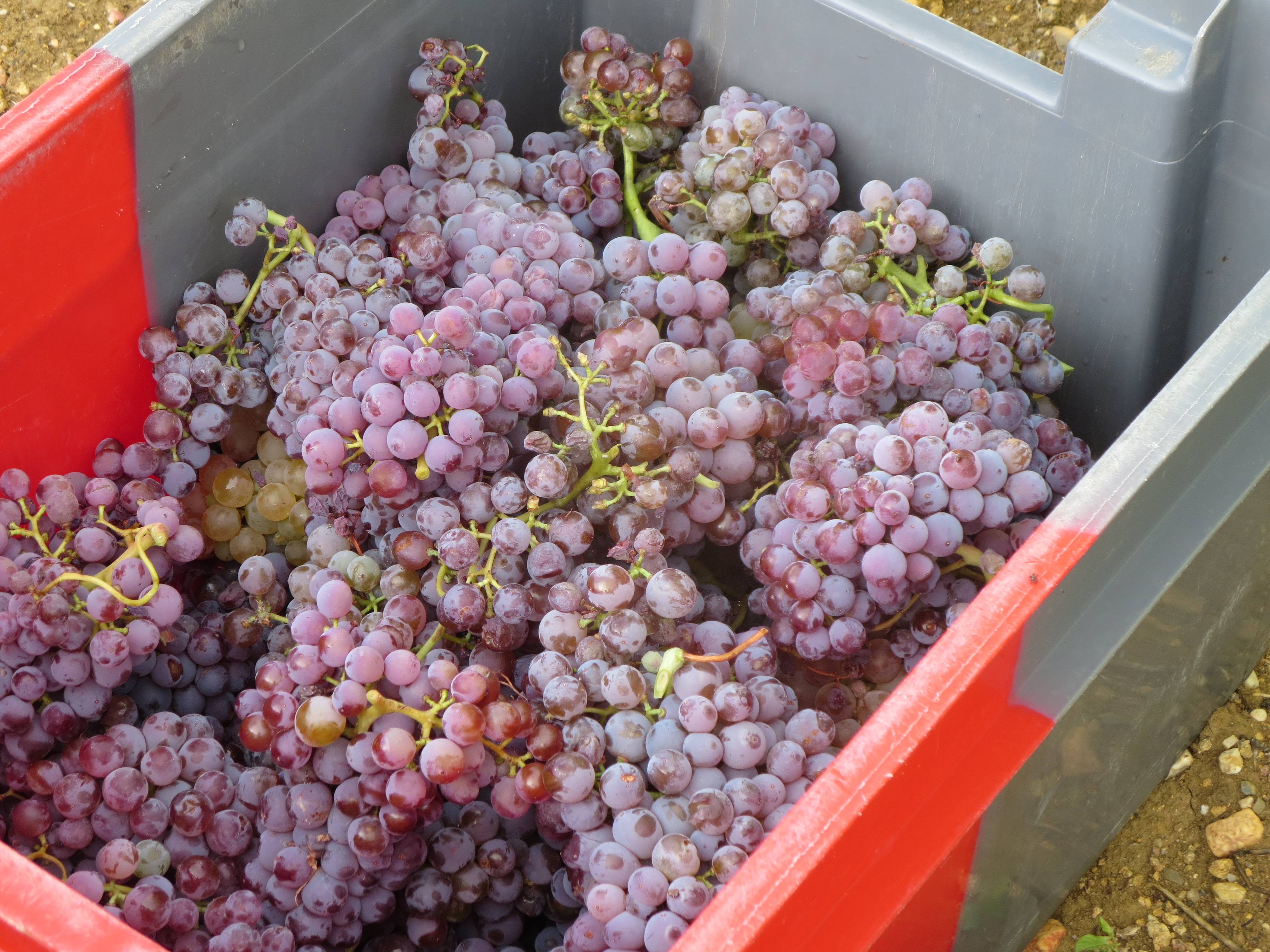
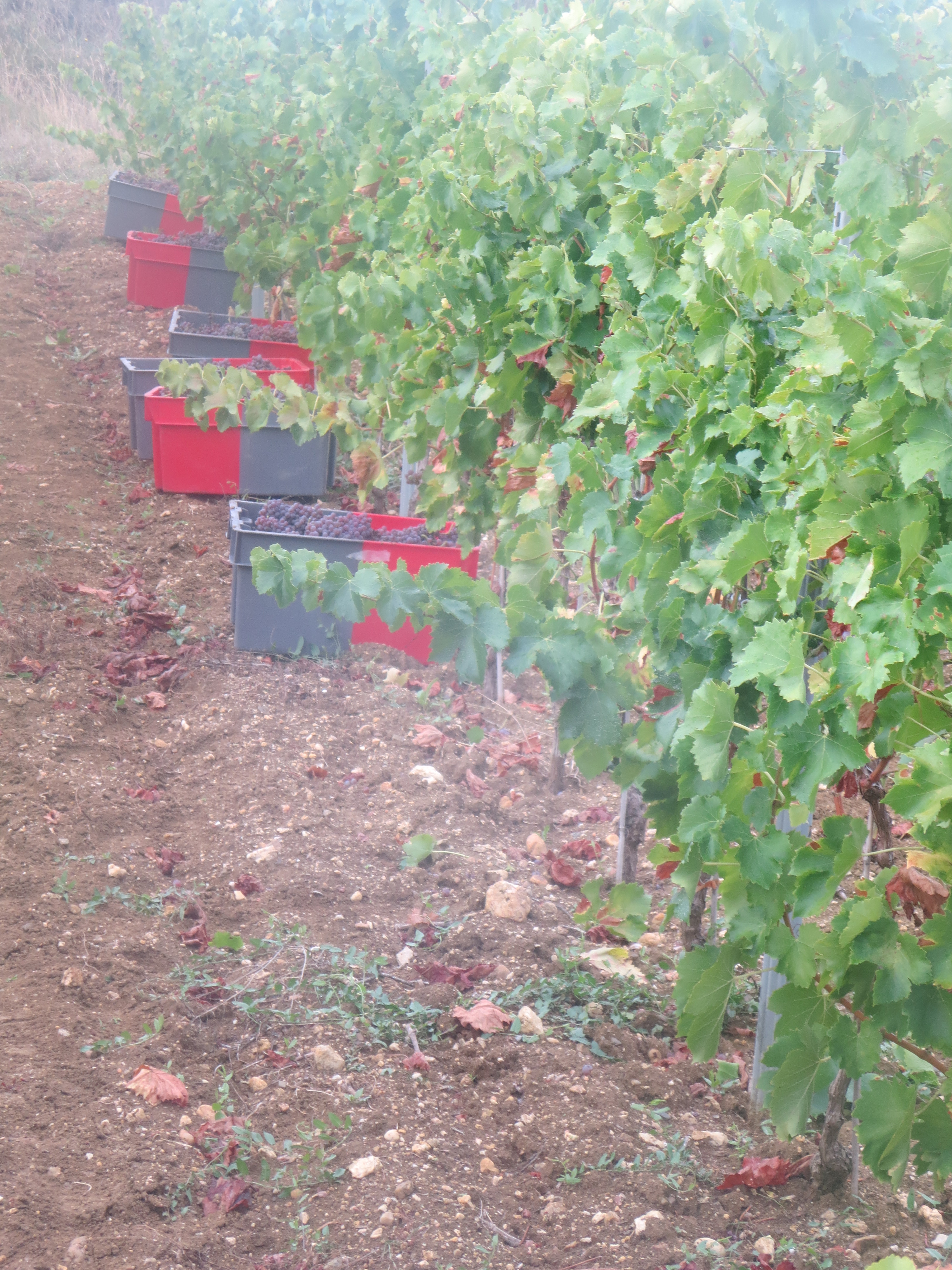
Grenache Gris waiting to be collected

Version française

September 3rd began with further picking at the southern quarter of the vineyards of Mas Coutelou, Peilhan and Font D’Oulette, followed by an afternoon of picking in the northern end in Segrairals.

Untitled

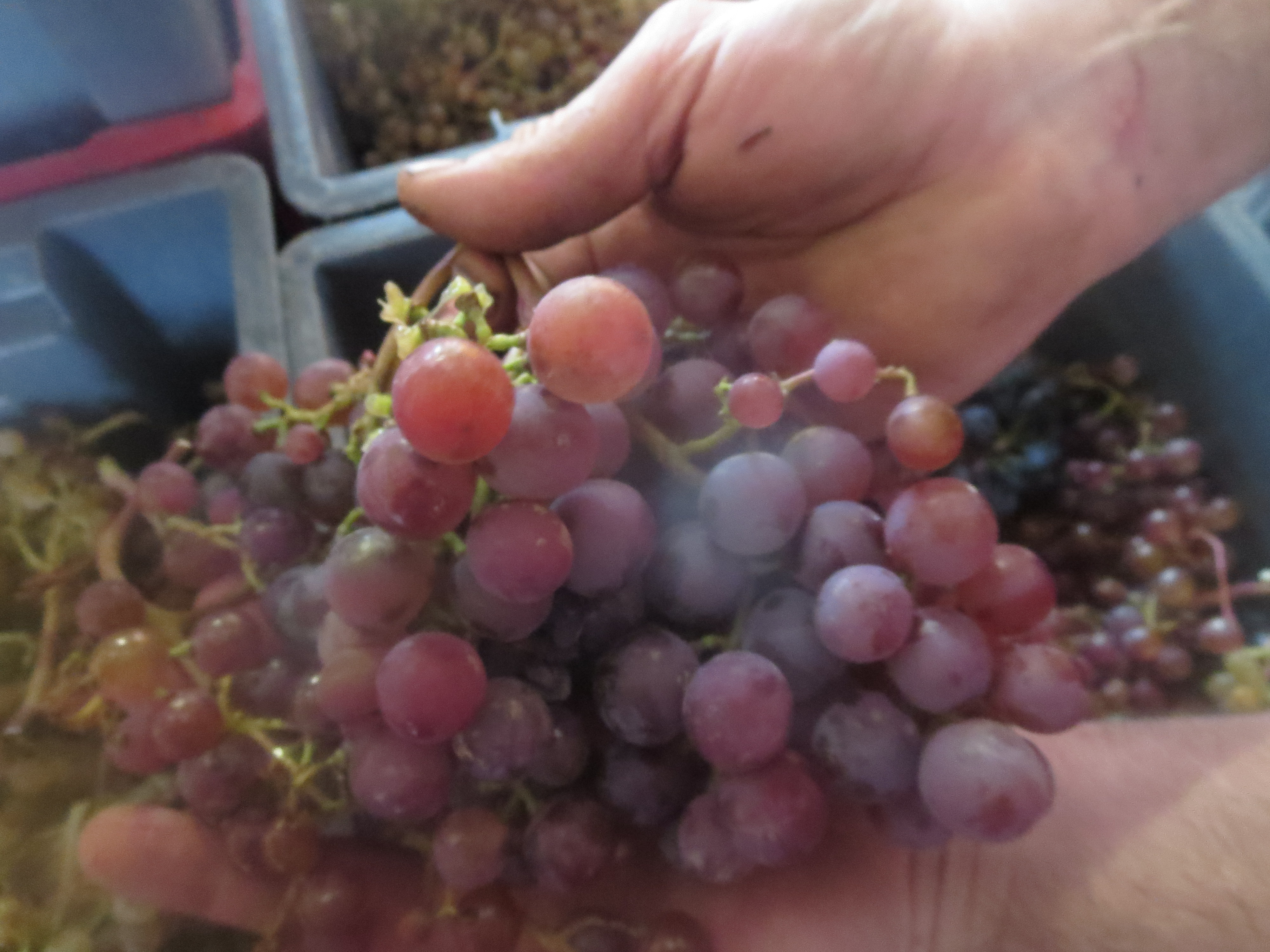
Peilhan and Font D’Oulette are both complanted, ie they have lots of different grape varieties being grown and often in the same rows. However it was the Grenache Gris in Peilhan which was being picked first to provide the juice for a rosé wine. Grenache Gris is, in my opinion, one of the most interesting cépages in the Languedoc Roussillon providing many of its best white wines. It also has a grey, pink skin which can provide a little colour to the wine if the juice is allowed to stay in contact with those skins for a few hours. In this case it would provide a very pale rosé wine, I heard the style described recently as a gris de gris. How this turns out we shall see, it could yet make a white wine.

IMG_2295

Cameron loading the press with the Grenache Gris

Error
This video doesn’t exist

When the Grenache Gris was through the press it was time to bring in the grapes from Font D’Oulette. This has a whole variety of cépages from the traditional Aramon Noir to the more unusual Oeillade Muscat, Clairette Blanche and Aramon Gris along with many others.
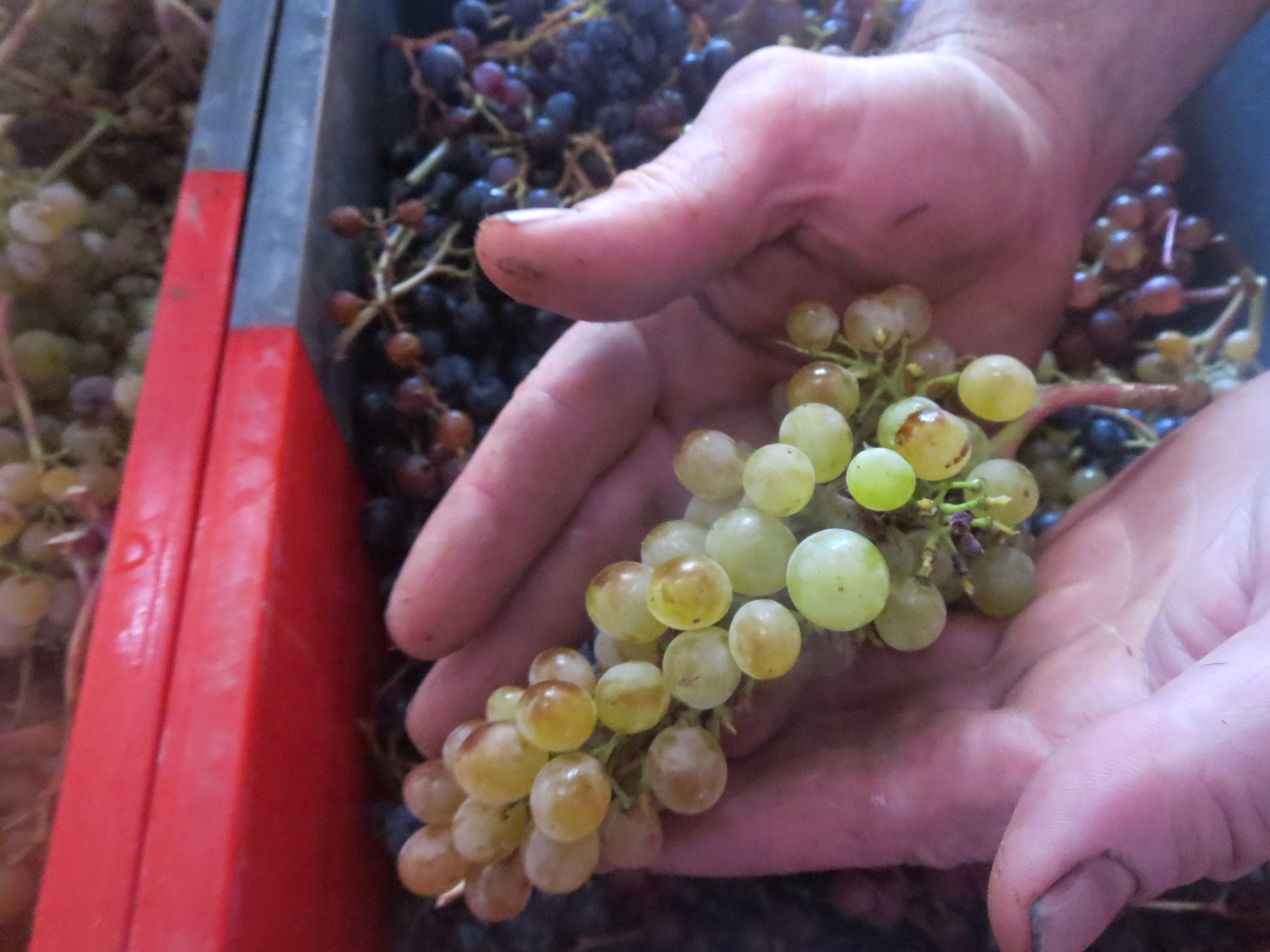
Clairette Blanche

          Clairette Blanche

Clairette Musquée

         Clairette Musquée

IMG_2305

                Aramon Gris

Oeillade Muscat

                   Oeillade Muscat

Oeillade Noir

              Oeillade Noir

This assemblage will be added to some Cinsault (perhaps from Rome vineyard, perhaps not) to make Flower Power which was made for the first time in 2014 and has proved to be a big success. Indeed we shared a magnum on Friday at lunch and it was excellent, starting to really open up.

Syrah from Segrairals

                 Syrah from Segrairals

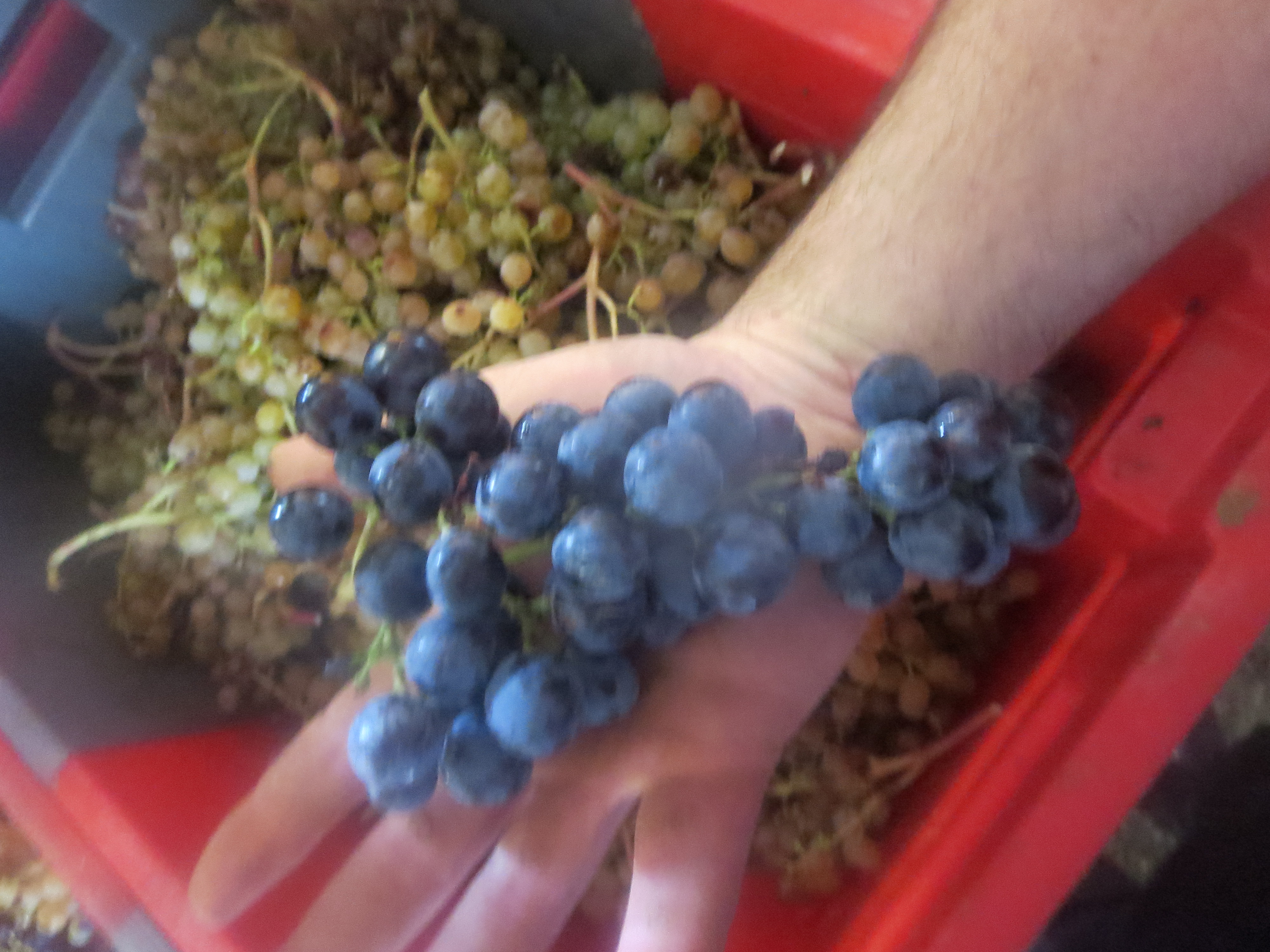
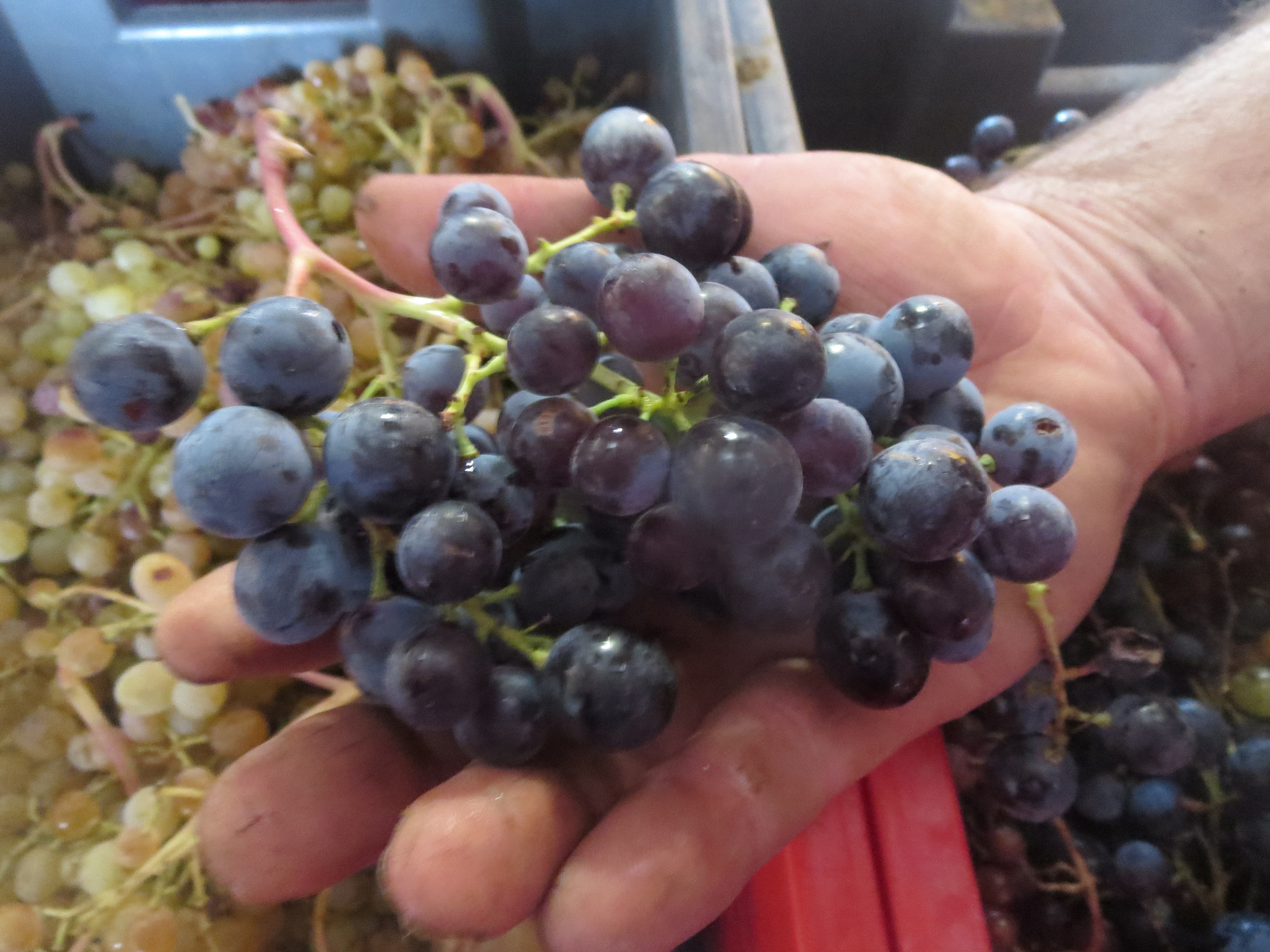
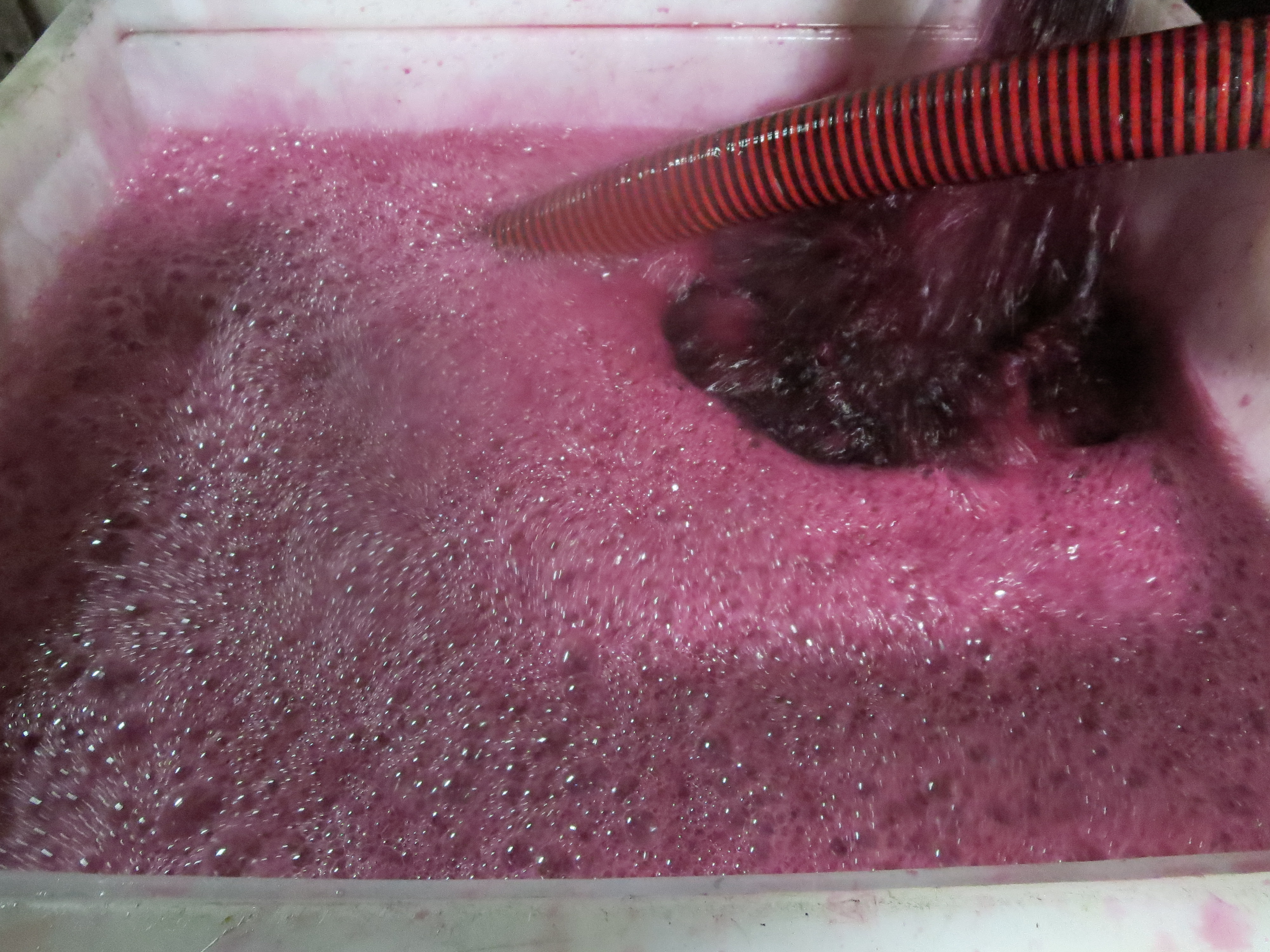
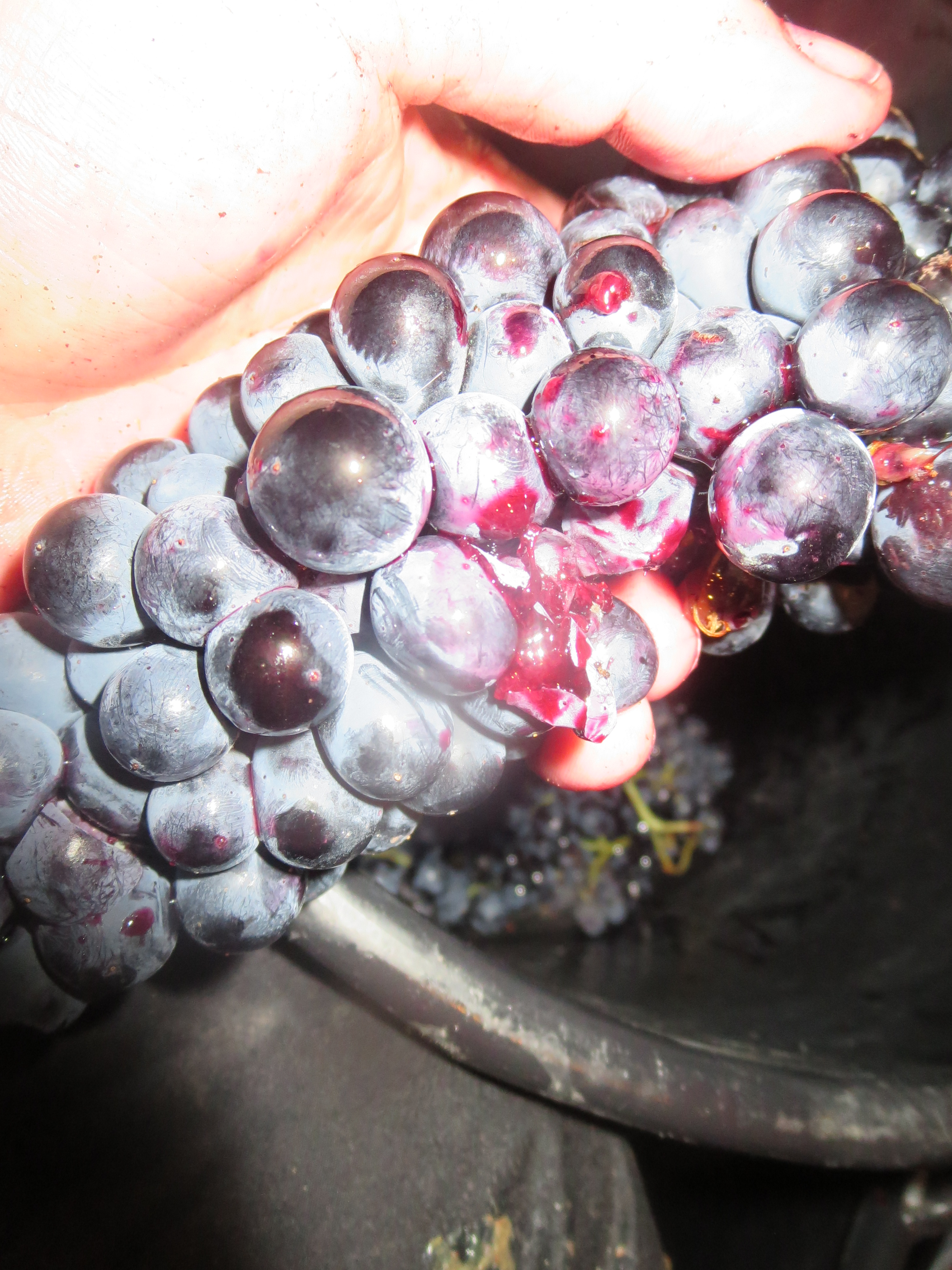
Then onto Syrah, some lovely bunches from Segriarals and Caraillet, the biggest of the Coutelou vineyards. The rich juice provided plenty of colour as you might see!

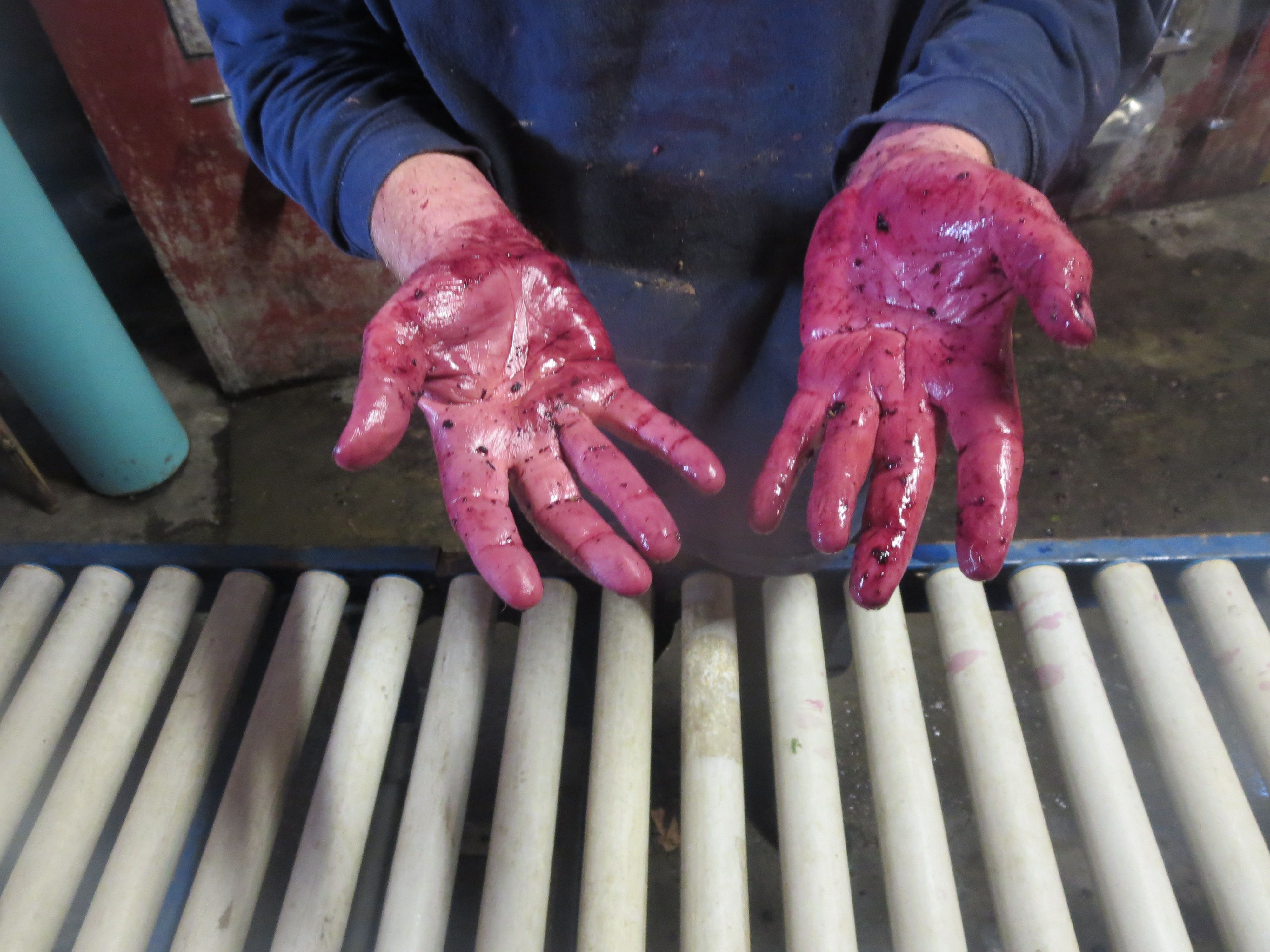
IMG_2313

IMG_2312

And then, of course….

IMG_2315

 Cameron and Michel are becoming a true double act

This was a long day, we finished around 7.15 pm, the day starts at 7.30am. I slept well that night.

September 4th brought a whole day of Syrah grapes from Segrairals and Caraillet again. It was also the last day we had the superb Carole with us for the harvest as she heads to Champagne for picking there. Carole is a true expert in all aspects of the vineyard and cellar and she is always willing to teach and to share, she will be a big miss.

IMG_2321

Boxes of Syrah waiting for destemming on Friday (Sept. 4th)

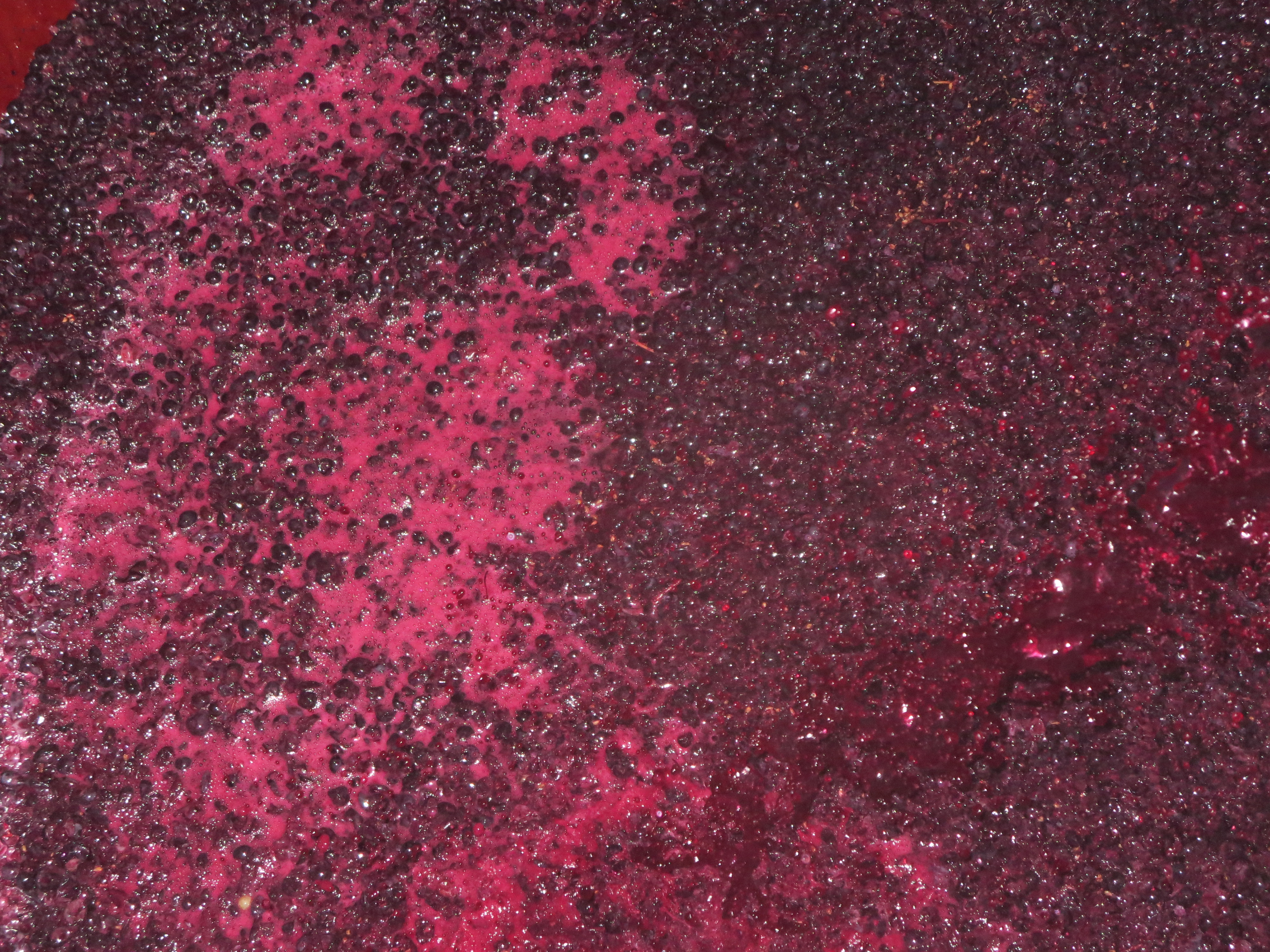
Whilst we worked on the sorting of the Syrah Jeff and Cameron set about testing and remontage (pumping over the grapes already in the tanks).
IMG_2324

          Remontage of Flower Power grapes

We also tasted samples from the various tanks. The Syrah shows real fruit and is already developing different characteristics. Segrairals was gaining weight and power, Sainte Suzanne much more floral and elegant. The white juice from the complanted Peilhan, still in contact with skins, is beginning to ferment quickly as the yeasts get to work, perhaps because the yeasts are on those skins.  It is a treat to watch the development of these wines from infancy as they take their first steps towards the final wine.

And of course….

IMG_2320

We finished around 6.15 and then went to Jeff’s for a special treat to send off Carole in some style. Oysters and mussels together with some Chardonnay from the brilliant Spanish domaine, Casa Pardet, lovely. Even the sky responded.

IMG_2330

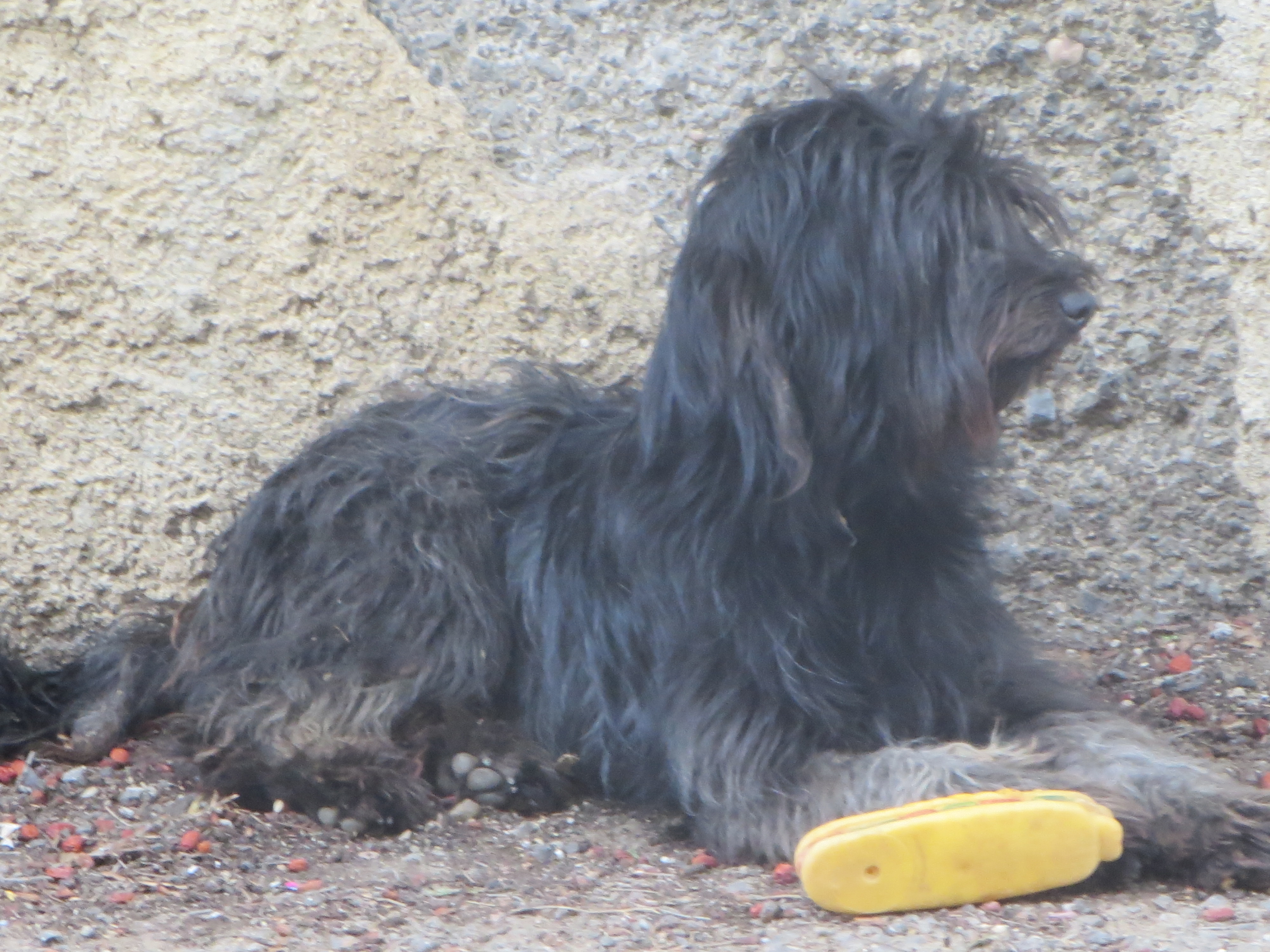
Meanwhile Icare fans, your hero was guarding his favourite toy, a plastic, squeaky sandwich. And sleeping, it is fun to watch him as he dreams because his tail wags furiously.
IMG_2328

Saturday September 5th was a day off for me but not for the rest as they continued to process the Syrah form Segrairals, I did say it is a big parcel. The Grenache and Cinsault are still not quite ready and they will dictate when the team can start to harvest them but that will not be before Tuesday. The weather forecast is good for next week so conditions should be right.

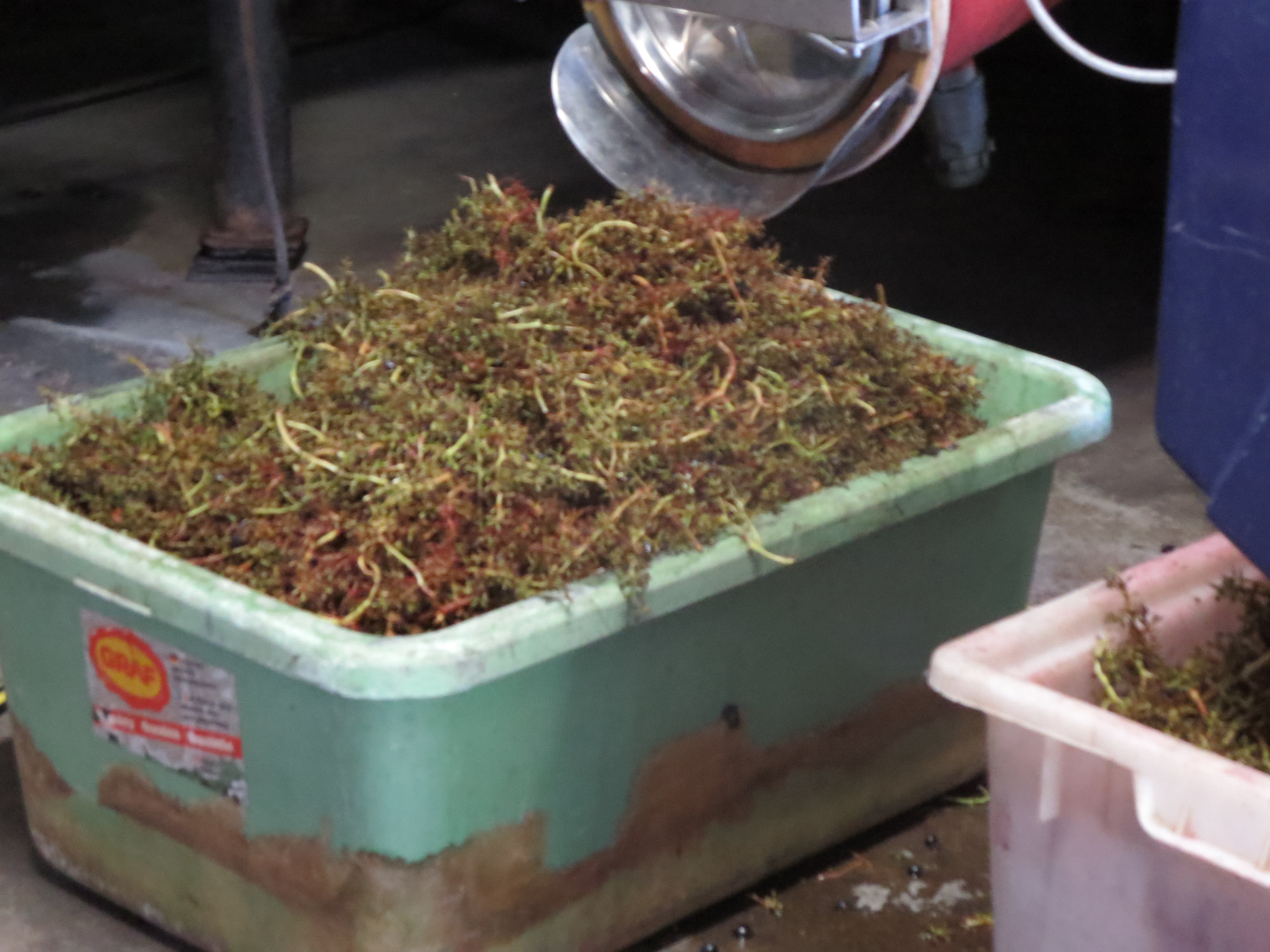
I did call round however and the work had certainly been going on as you can see from the bacs of the stalks (rafle) .
IMG_2332

And of course….

IMG_2333

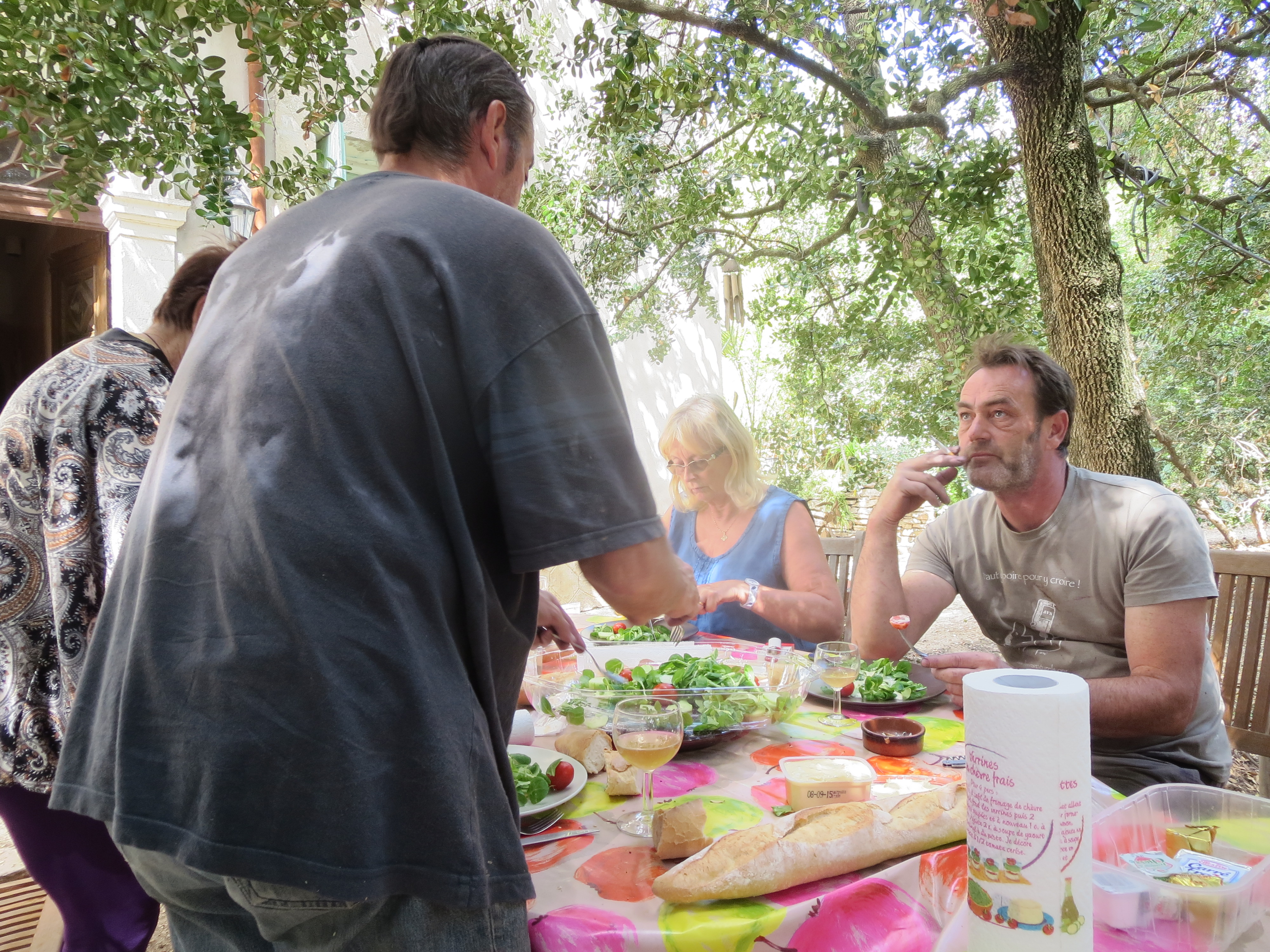
I did manage to sneak into lunch however. These are a highlight of the harvest season, with food prepared by Marie France from Puimisson and bottles opened including a terrific bottle of Castets, that rare grape I have described before. We sit at a big table int he garden of Jeff’s father, right next to the cellar.

Sunday will be a day of rest except for Jeff and Cameron who will do a round of the tanks to check on their progress and carry out more remontage. There is already a lot for Jeff to be thinking about, which wines are where, how are they progressing, have the remontages been done, are the analyses done. Plus all the options about which grapes to blend, what cuvées to make and, for example, whether the Grenache Gris will be white or rosé. Then off to the vineyards to check on the grapes and their readiness for harvest. Pressure, worries, and hard work – spare a thought for the vigneron.
IMG_2334

Even during lunch Jeff is up and down checking on things in the cellar

4 Comments

Vendanges Diaries (2)

IMG_2233

Version française

Aug 30th was a Sunday so no picking but Jeff was still in the cellar working. The early wines needed to be checked and moved as necessary.

Monday 31st dawned cloudy again and it was time to tackle the biggest of the vineyards at Mas Coutelou, Segrairals. The Syrah was ready to be picked and Jeff had decided to use carbonic maceration to ferment the grapes which are probably not of the same top quality as those from La Garrigue or Sainte Suzanne which were picked last week.

Grapes which are pressed like those described last week ferment in tank as yeasts react with the juice to change the sugar to ethanol, ie alcohol. The yeasts are natural from the skins of the grapes and the atmosphere of the cellar. In the case of Mas Coutelou and many artisanal winemakers this is the case though other winemakers will buy yeasts some of which are designed to add particular flavours to the wine. None of that in Puimisson, these are natural wines.

IMG_2232

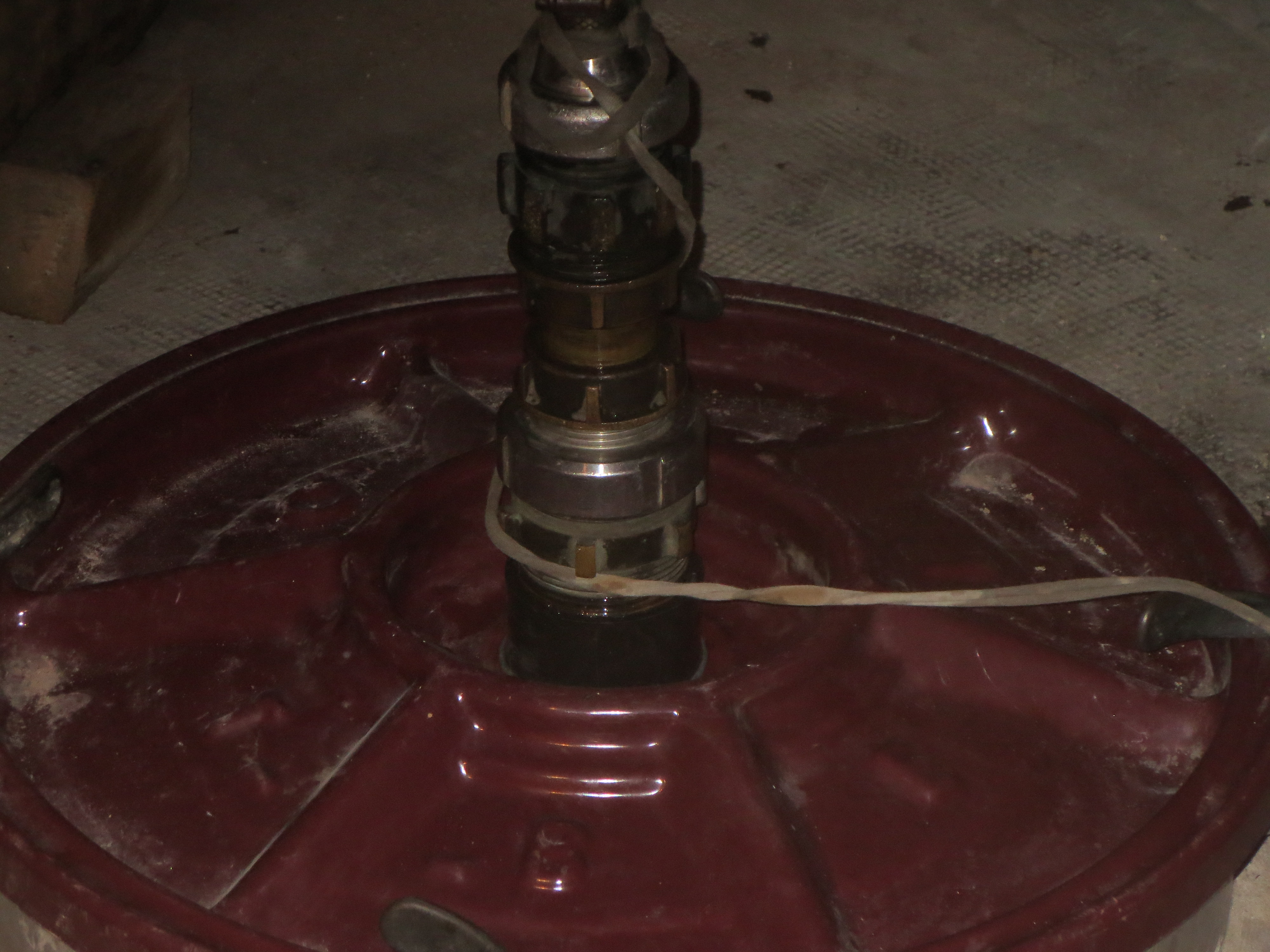
        Carbon dioxide pumped into the tank

Carbonic maceration means that the whole bunches go into the tanks, grapes and stalks alike. The tank is filled with carbon dioxide which permeates the grape skins and starts the fermentation within the cells of the berry. Some of the berries at the bottom of the tank will be crushed by the weight of the grapes and so there will be some conventional fermentation too.

IMG_2245

Whole bunches in the tank

All the grapes are given a light crushing later by which time ethanol will have formed inside the skins and so the resultant juice is ready made wine. The result is often more fruity and juicy wine.

IMG_2239

Grapes arrive through the little back door above the cement tanks

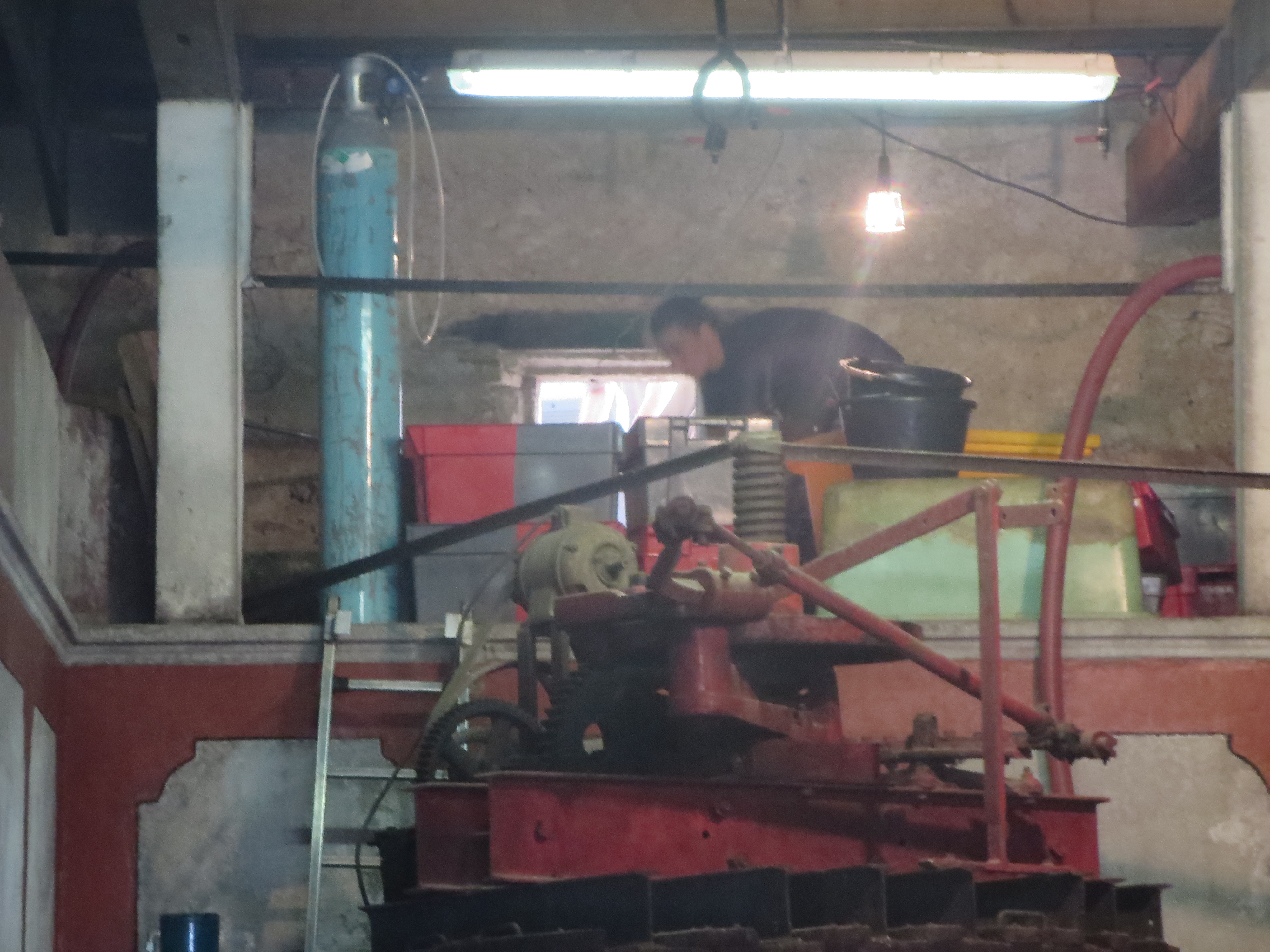
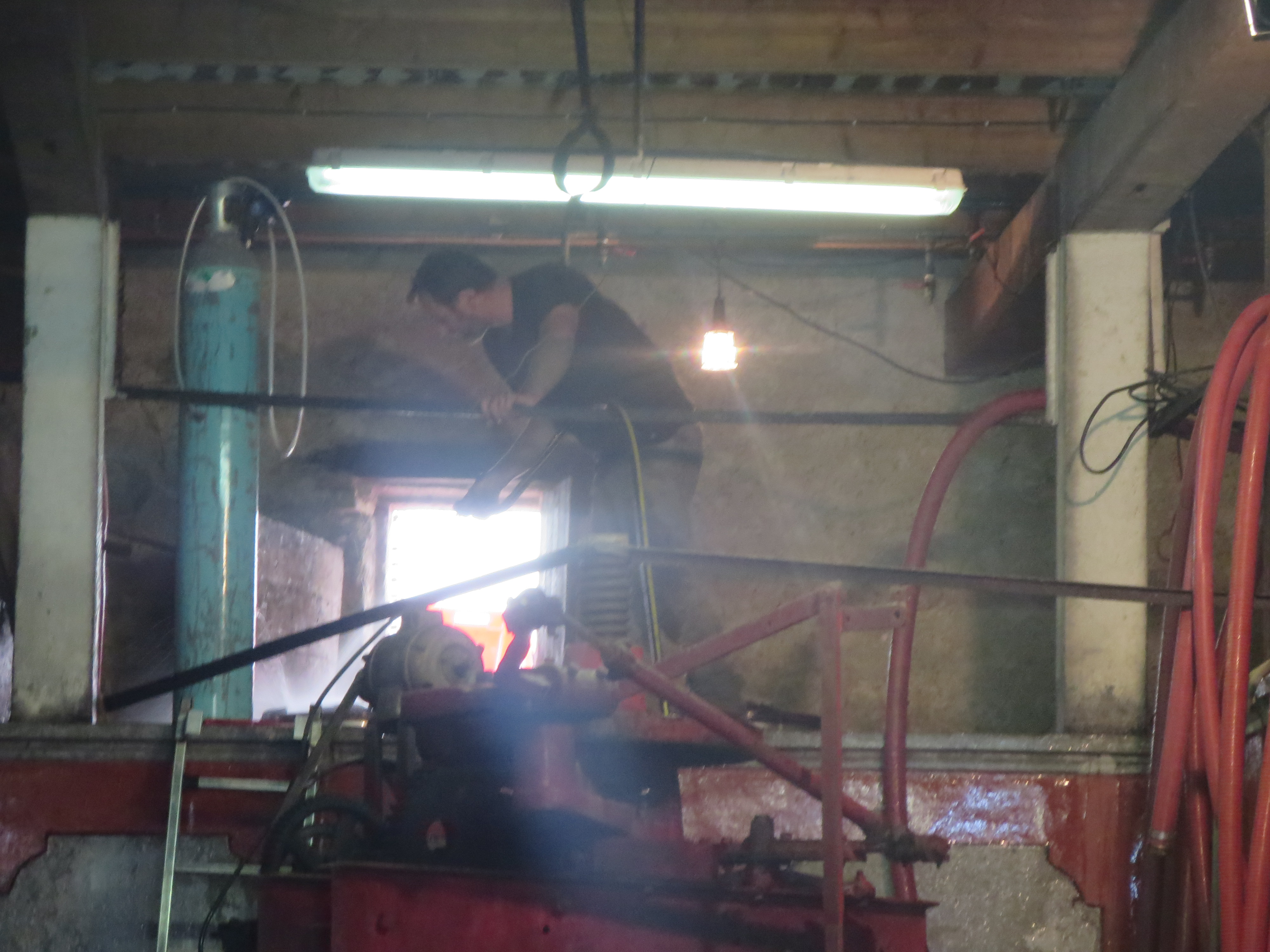
To achieve this the tanks are filled from above so we worked in the space above the cement tank with the grapes arriving at the back door which is a level higher than the front door. The space is smaller and the heat from the grapes was high. It was hard work, believe me. Sorting still had to be done before the grapes could go into the tank, quality comes first.

IMG_2243

                 Some of the rejected bits

IMG_2246

 The pipe carries the CO2 into the tank

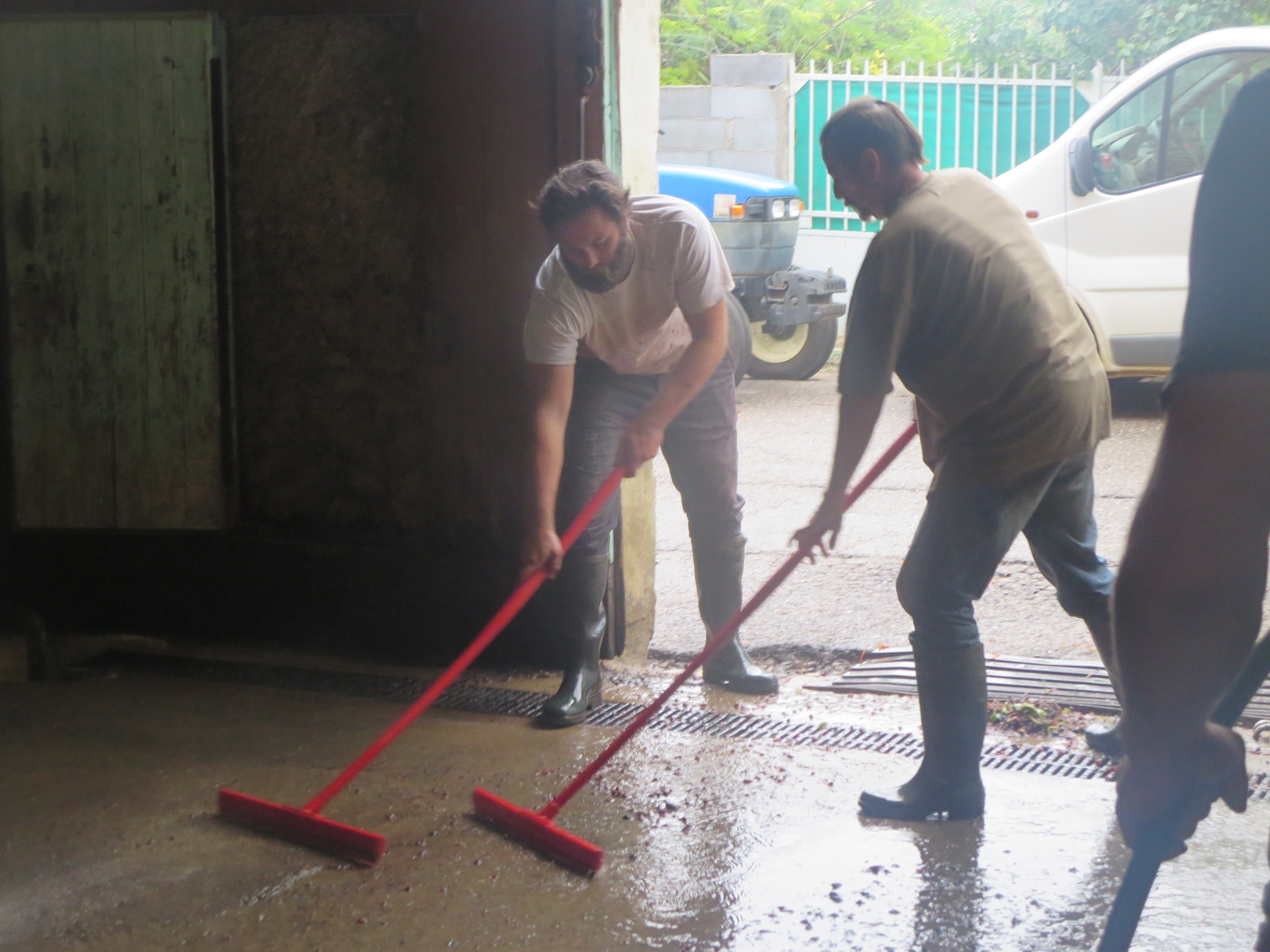
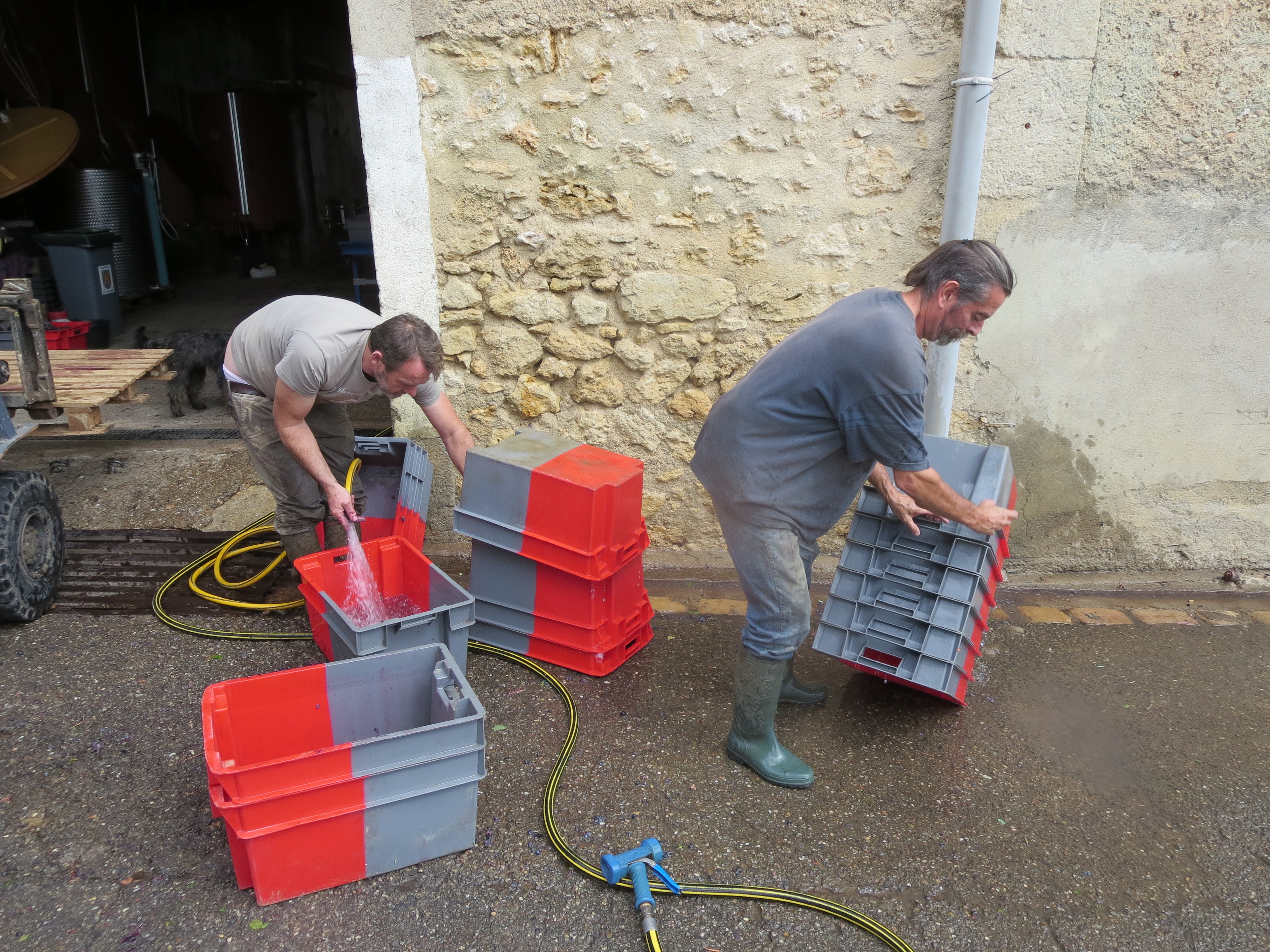
And after 9 hours of back breaking lifting, carrying and sifting it was, as ever, time to clean everything from top of the cellar to bottom as we see here with Jeff and Michel.

IMG_2248

IMG_2251

IMG_2247

        One visitor from the vineyard

IMG_2242

The boss letting us know we should get a move on

The night of the 31st brought a big storm with lots of rain, not the ideal conditions for harvest at all. Rain can cause rot and problems. However, it could have been much worse as news arrived of huge damage caused by hail in the Chablis region. For all the forecasts of how the harvest might turn out it is only when the grapes are safely in the tank that a vigneron can be assured of the quality of wine they might make. Commiserations to the Chablis producers.

September 1st was a quiet day as the rains from the storms meant the grapes were too wet to harvest. In the cellar more checking and remontage, the process of pumping the wine over the cap of skins and must. Further analysis of the wines showed that the yeasts are acting quickly and the fermentation is progressing very well.

IMG_2262

      Hard work!

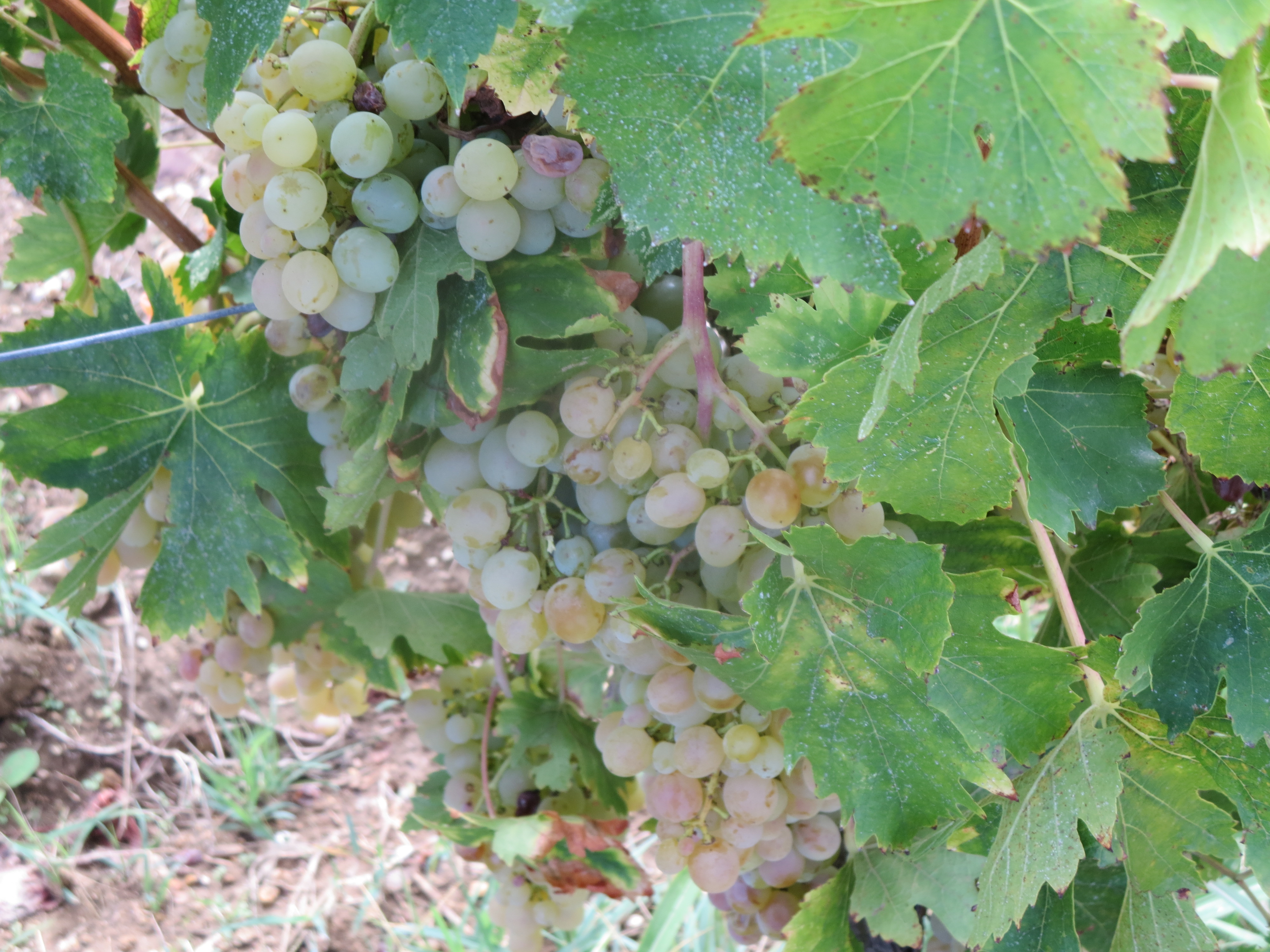
Today, September 2nd, the remaining white grapes, Grenache Blanc, from La Garrigue. Then on to Peilhan to gather some of the white grapes there, Maccabeu, Grenache Gris, Carignan blanc and Clairette Musquée.

Grenache Gris

                                  Grenache Gris

Carignan Blanc

                                  Clairette Musquée

IMG_2260

      Michel

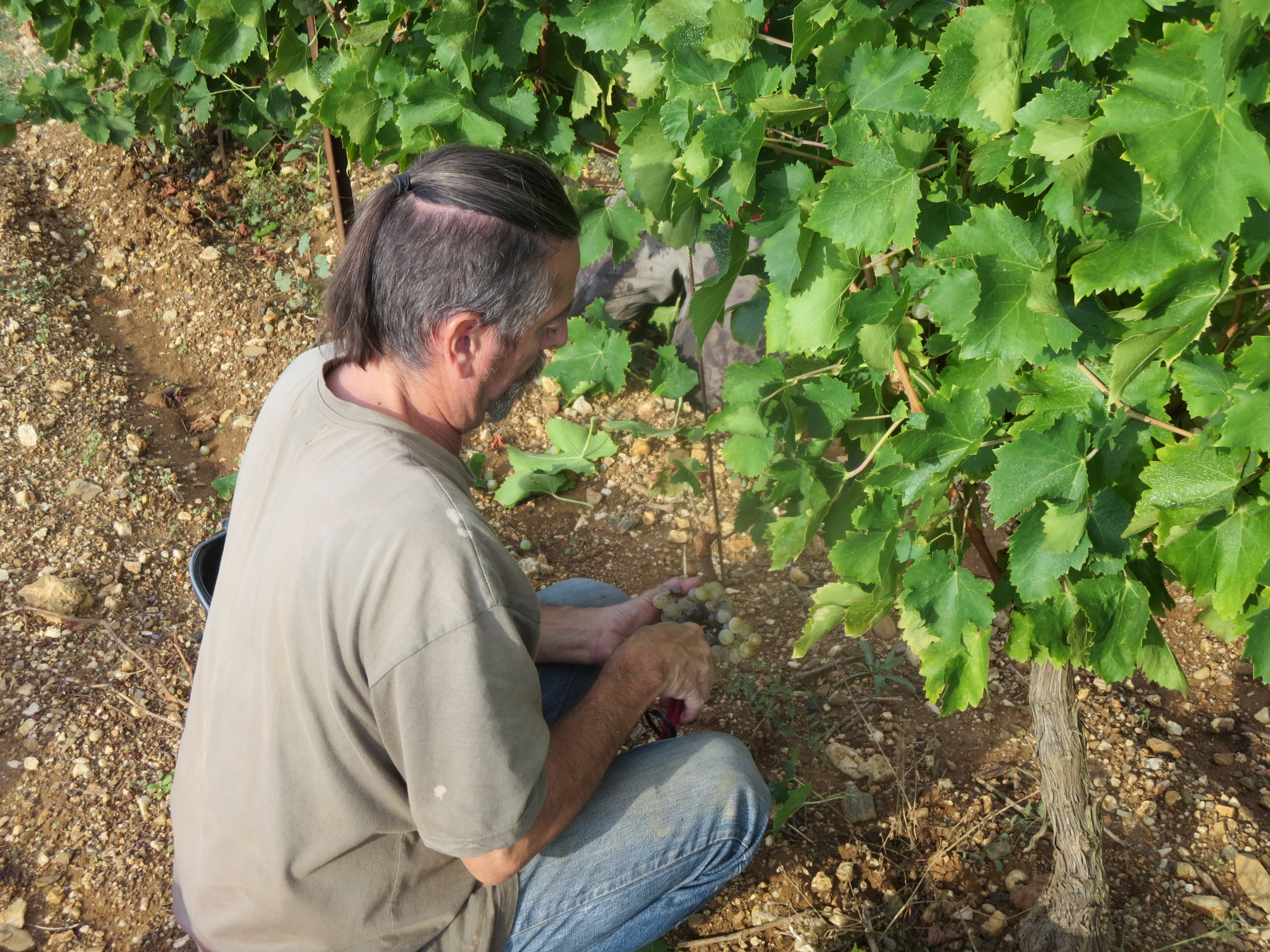
The core team of Jeff, Carole, Michel, Cameron and myself were joined by Matthieu who has worked the harvest before here. There were some lovely bunches though the wet weather has caused some rot inside some of them, Careful sorting took place in the vineyard to take only the best grapes which tasted really sweet and juicy, the Clairette was especially tasty.

IMG_2267

Cameron especially pleased with this bunch of Clairette

The white grapes were taken back to the cellar and placed in tank after being destemmed. It is possible that Jeff will make his first orange wine with them. An orange wine is a white wine made like a red wine, ir the wine is fermented on the skins thus extracting more colour, texture and flavour from them and giving the wine an orange tint. However, analysis and the next few days will be needed before the final decision is made.
Whites

In tank and the future might be orange

In the afternoon, Matthieu, Jeff and myself did more remontage of the Syrah grapes harvested in the last week, which is already tasting well, with very healthy technical analysis and beautiful aromas. And, then, as ever, the cleaning.

IMG_2277

              Matthieu carrying out remontage

IMG_2283

  Remontage, the juice flows over the cap of must

Syrah from Ste Suzanne

    Beautiful colour of the Syrah from Ste Suzanne

IMG_2269


3 Comments

Old vines, new vineyard

Version francaise

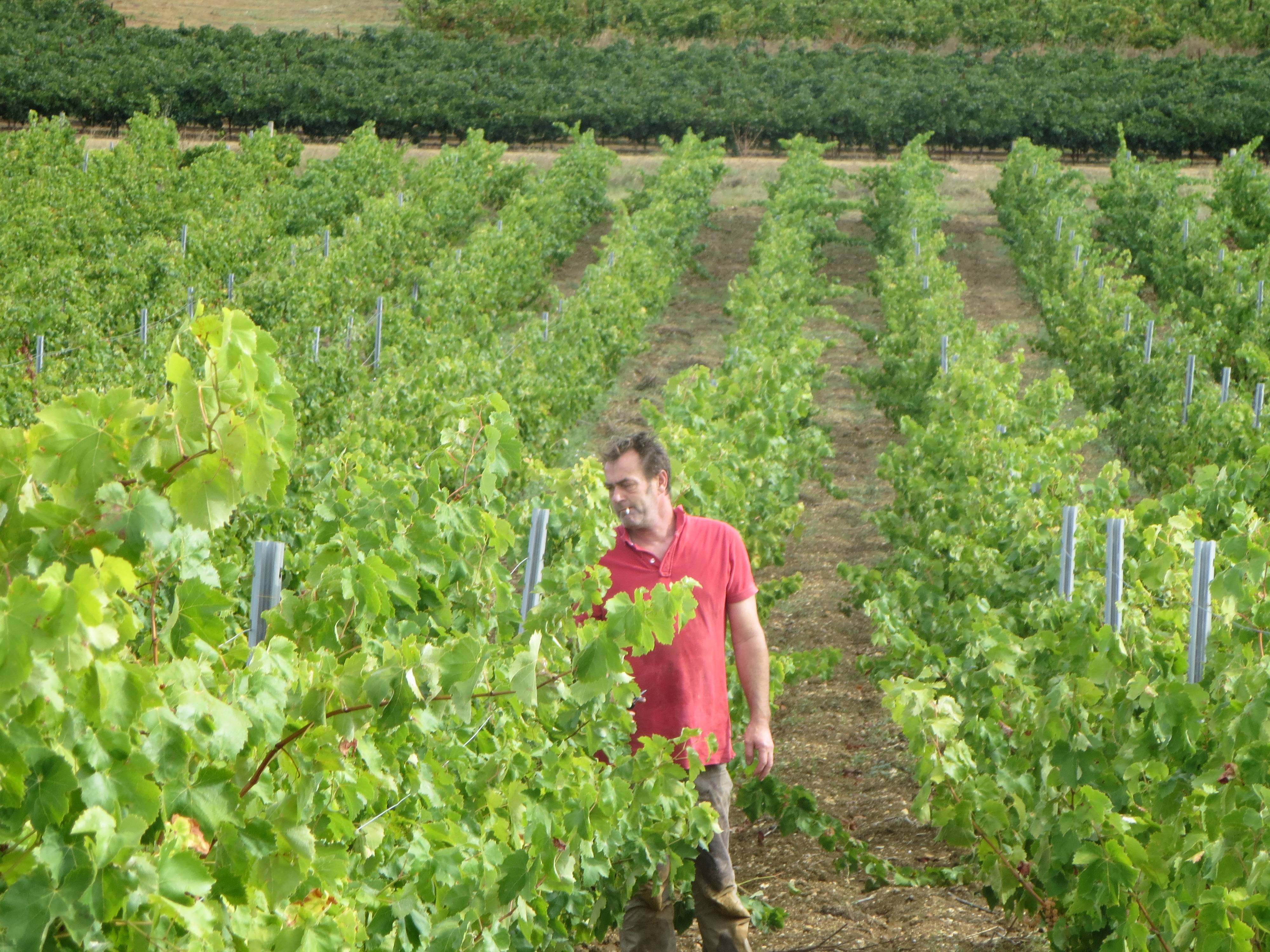
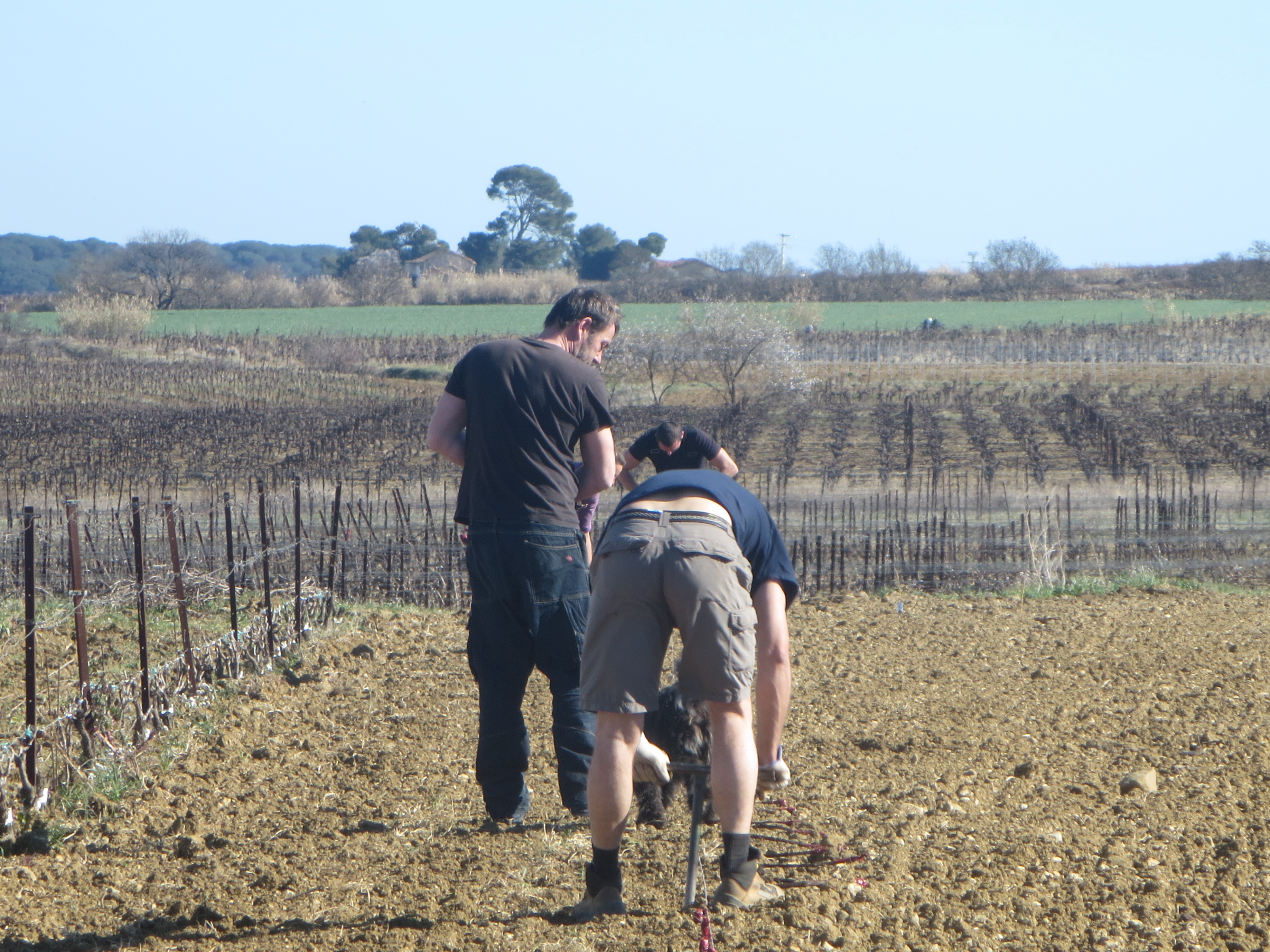
Friday March 6th brought a hot sunny afternoon and the birth of a new vineyard at Mas Coutelou. Well, a new section of vineyard at least. Peilhan is the most southerly of Jeff’s parcels and already contains a variety of grape varieties ranging from Carignan planted in 1992 to fairly new white grapevines such as Maccabeu, Grenache Gris, and Carignan Blanc. However, also planted are some rarer old varities such as Clairette Muquée and the Castets which I have so praised before.

IMG_0775

Peilhan

If you look in the photo towards the top you will see a sloping area of land just beyond the planted vines and it was this section which, after lying fallow for many years, was to be planted. I have highlighted it below.

peilhan highlightedBeing Jeff Coutelou though this would not be a simple planting of Grenache, Syrah or Mourvedre but instead he wants to increase the diversity of vines in the vineyard and contribute to the movement of restoring old Languedoc vines to a prominent role in  the region. So 24 rows of vines would be planted, almost 2,500 plants of 6 cépages ;

  • Terret Blanc 1 row
  • Piquepoul Gris 6 rows
  • Riveyrenc Gris 2 rows
  • Riveyrenc Noir 6 rows
  • Terret Noir 3 rows
  • Morastel 6 rows

They would be planted as a mix to help resist disease as well as diversity.

IMG_0885

Piquepoul Gris vine

IMG_0882

The plants are laid out ready, roots in water. Renaud, Michel, Carole and Jeff lead the way. Jeff, as usual, is on the phone as someone wants some wine!


IMG_0892

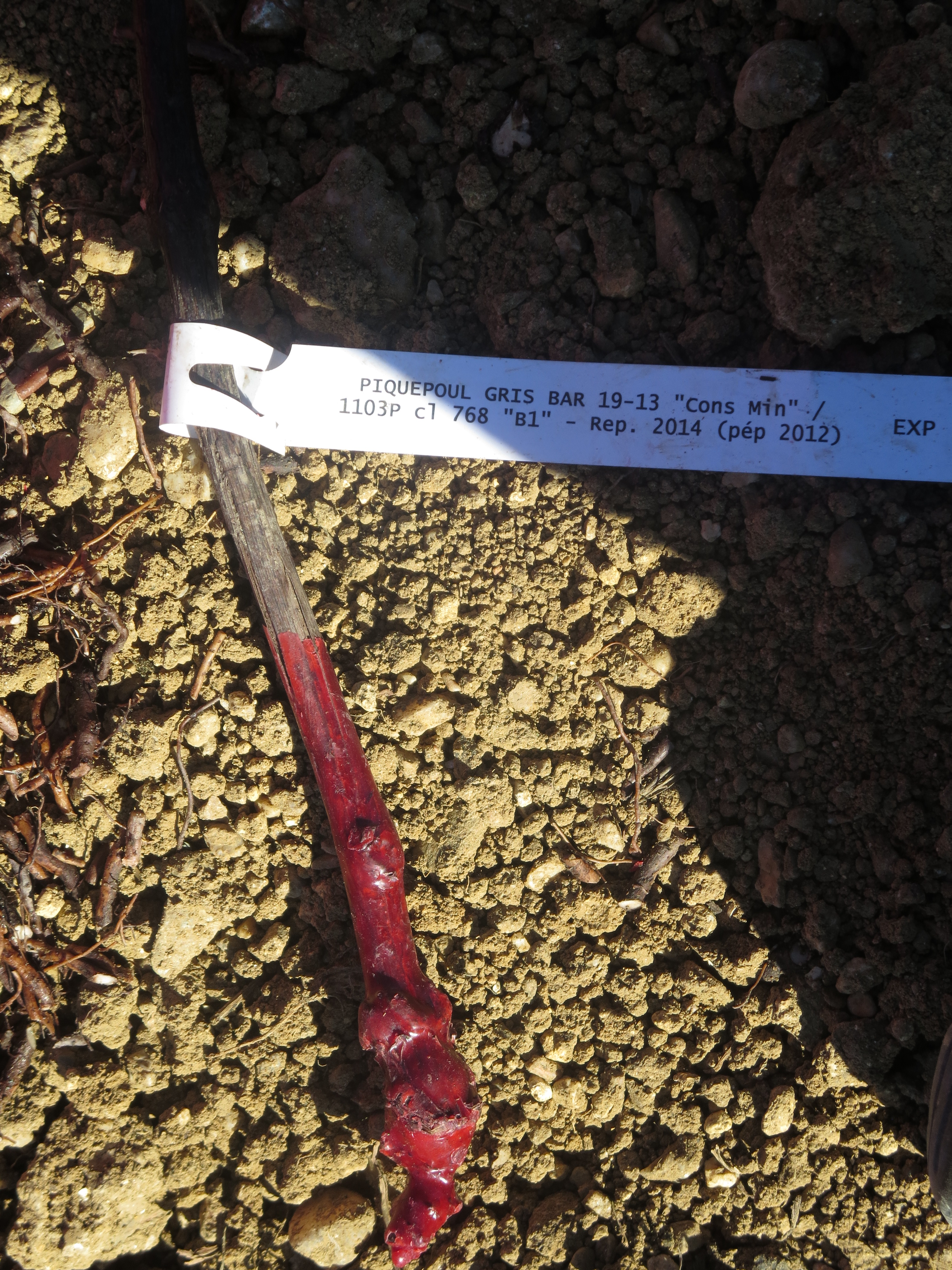
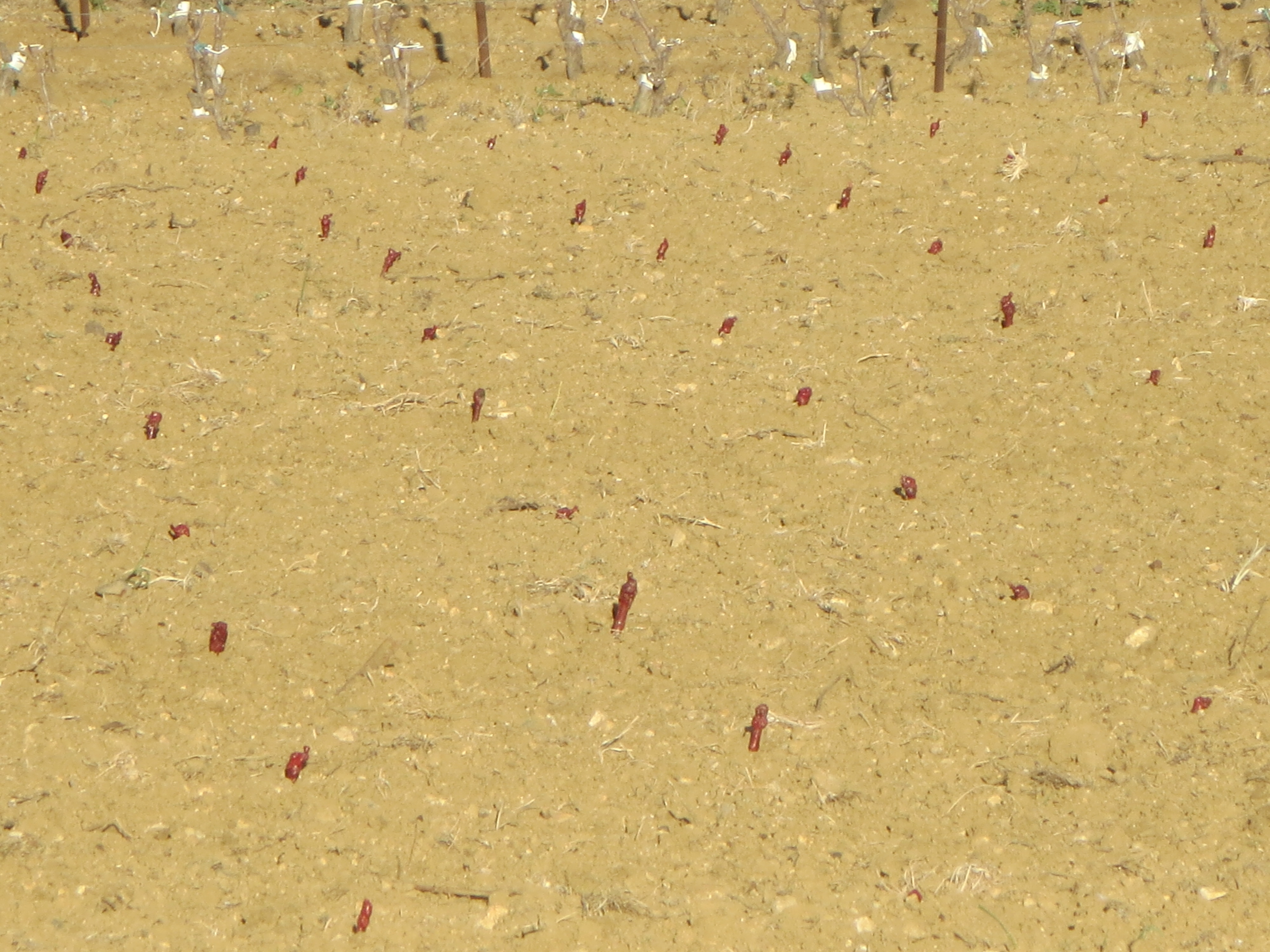
The vines came from a trusted supplier in Carcassonne and resembled large matchsticks. The vine foot is an American rootstock, the only ones capable of resisting the phylloxera beetle which almost wiped out French vineyards in the 19thC. The plant is grafted onto this root stock and then covered with the red wax to protect the grafting stopping air getting between the plant and the root stock. The wax will fall away naturally in the next few days. As you can see they arrived with long roots and we had to cut these down to make them easier to plant.

IMG_0883

Jeff had hired two expert plantsmen to lead the way, the two to the right in the photo above. They demonstrated how short the roots should be and left Renaud, Michel and myself to carry on whilst Jeff and Carole (in the photo) went to help the planting.

IMG_0884

The field was marked out to show where the vines would be planted. Each variety was to be planted at different intervals according to its specific needs, some need wider planting such as the Piquepoul Gris, others should be planted more densely such as the Terret Noir. The spaced to the right of the rope will be planted with hedges, including rose trees. These will provide shelter for birds and bats, natural predators of damaging insects and vers de grappe (worms) as well as providing a natural boundary to the parcel.

IMG_0891Wire cables ran along where each row was to be planted, in the photo you will see a blue mark where the vine was to be planted. The two experts did the planting with Jeff and Carole (later Michel) dropping the vine  for them to plant.

IMG_0887

This video shows just how fast they work, on a hot day it very impressive. There was a welcome beer break (with English beers from County Durham no less!) but the work continued solidly for 4 hours.

IMG_0894

New vineyard takes shape

IMG_0902

Icare supervised, of course


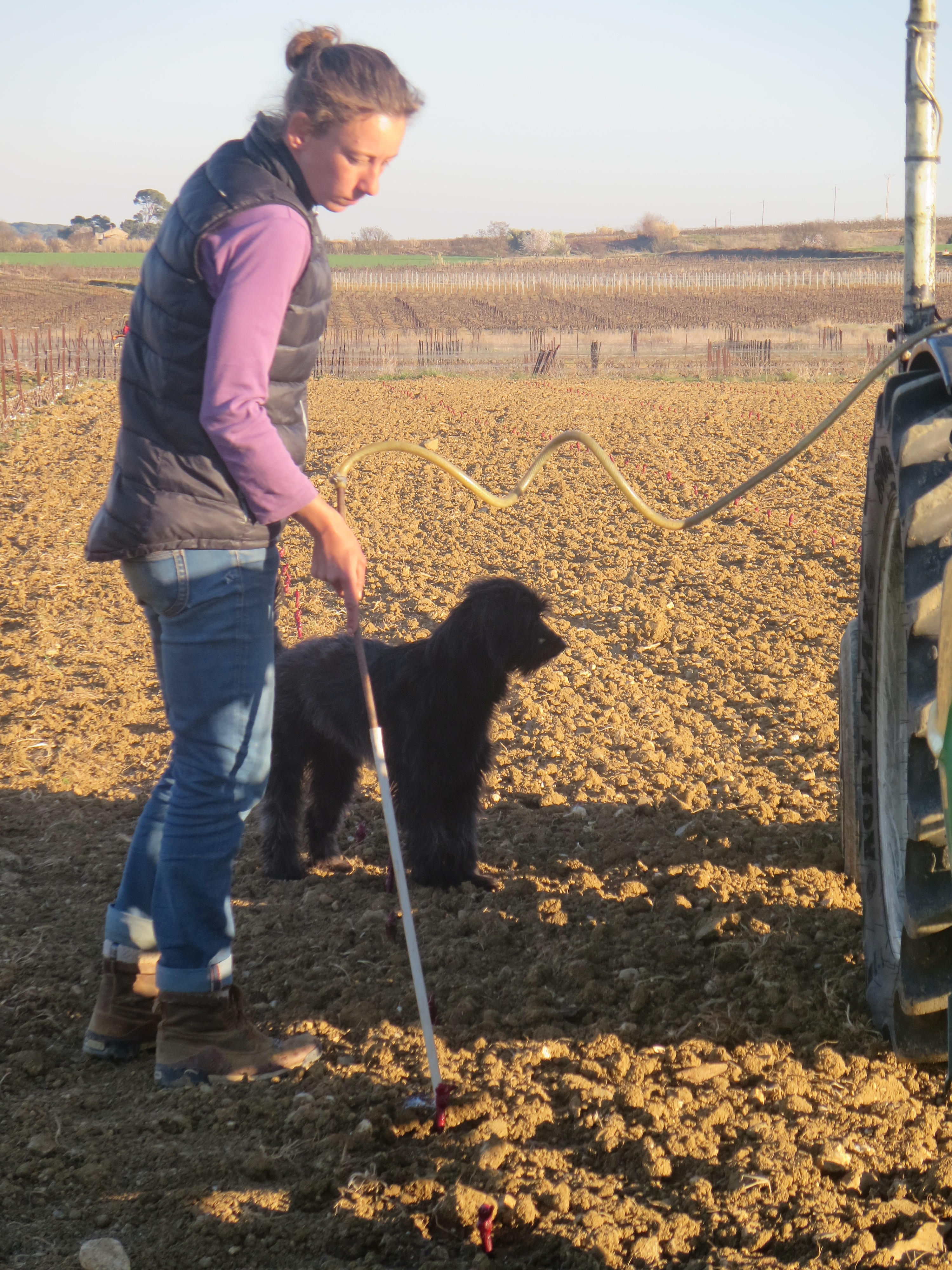
The new plants need water of course so Jeff and Carole set to work. 1500 litres were used for 2 rows of vines!


IMG_0900

IMG_0899


IMG_0898

Jeff asked me at the end of the day what my thoughts were about the planting, how I felt about it. I had to think about it for a while. It had seemed like hard work but it was with a real sense of being present at a new beginning. The vines have a 99%+ survival rate and they will in a few years be producing white and red wine of great quality. And I was there for the birth of this project, a privilege. It was impossible not to feel excitement about what was to come and to wonder at how these small sticks would become beautiful vines. And to feel proud that Jeff is willing to plant something which reaches back into the past as well as providing for the future. Let’s hope we are here to enjoy the wine in a few years.

As if to crown my day of feeling close to nature I was able to take these photos of bees on the rocket flowers in the main parcel at Peilhan. This is one corner of the Languedoc where nature still rules, with a little help.

IMG_0880 IMG_0879


3 Comments

Latour-De-France – Portes Ouvertes

When Jeff suggested that I should attend Latour De France I was rather surprised as I was unaware of his love of cycling. A quick correction of gender and I was patiently told that it was a village in the Pyrenées Orientales where 12 of 13 winemakers are organic producers and several make natural wines. An opportunity not to be missed. Combined with visits to one of my favourite French villages, Banyuls, and also to Collioure this made for a great weekend.

Saturday by the coast proved to be a lovely, sunny day – unbelievably warm for November.

Vineyards in Banyuls stretching down to the Mediterranean Sea

Vineyards in Banyuls stretching down to the Mediterranean Sea

IMG_0433

Collioure


Sunday was cooler and grey but a great day for wine tasting. We arrived before the start of the event and the car park was already pretty full. Despite this the crowds were never too large and there was every opportunity to get round the various caves without much hassle. Each of the village organic producers had their cellar open and each also contained invitees from Roussillon but also from Fitou and Burgundy. This spread out the crowds as we walked through the streets between caves. In addition to the wines there were street entertainers and various food outlets including, to my delight, a vegetarian outlet. So, all in all, a very well organised event catering for everyone (sorry about the pun).

I am not a professional wine journalist and I am not great at writing tasting notes so I won’t! Instead I offer overall impressions and suggest some of my favourites from the 120 or so wines which I tasted (it was hard but someone has to do it on your behalf dear reader).

What struck me most was how much I enjoyed the white wines, I had expected the reds to be the outstanding wines, and some were, but the whites were much more consistent and interesting overall. One Carignan Blanc stood out (Clos Du Rouge Gorge, Cyril Fahl of whom more later) but what emerged was the splendour of Grenache Gris. Often combined with  Maccabeu it was Grenache Gris which provided a series of fresh, deep, long lasting and flavourful wines with hints of minerality, sweetness and fruits of all kinds depending on the producer. Excellent examples from Padié (very expensive though), Calimas, Tribouley, Rivaton and  Deux Chateau. There was also a very nice Maccabeu based white from Troullier. I would happily seek out and drink any of these and would advise anyone to do so.

There were also a few strange white wines ranging from cloudy and sulphury to the downright sharp and tooth decaying.

Talking with Nikolaus Bantlin of Les Enfants Sauvages

Talking with Nikolaus Bantlin of Les Enfants Sauvages

There were some excellent red wines on offer.

Cyril Fahl (Clos Du Rouge Gorge) produces a high class range of (quite expensive) wines based mainly on Carignan and Grenache. Tasting Cyril’s wines proved that his reputation and garnered praise were well merited, his Carignan based wines were delicious, nothing more to add to that. Top winemaker.

As with Grenache Gris in the white wines there was an outstanding red grape which stood out in many of the top wines and it was, as with Cyril, the Carignan. Time and again the wines with fruit, flavour and long finish were based around Carignan or had a large proportion of it in the assemblage. Not long ago Carignan was being grubbed up around the region and dismissed as a variety of little potential. La Bande de Latour showed how nonsensical that was. Carignan is a great and noble variety, again seek it out from good producers.

Other favourite reds which I tasted came from Domaine du Possible (C’est Pas La Mer A Boire), Opi D’Aqui (from Clermont L’Hérault) and Maramuta.

The problem with a number of red wines, in my view, was the use of oak. This may be a personal thing as I really do not like obvious oaky flavours. It can add complexity and structure to wines when used carefully but a lot of winemakers seem to rush to use barrels so that they can be seen as ‘serious’ winemakers. And add many euros to the price of their ‘special’ cuvées. Sadly I felt a number of wines were spoiled by injudicious use of oak. The wines appeared thin and dry with their fruit stripped out.

I would like to mention 3 other winemakers whose bottles I enjoyed.

Les Enfants Sauvages is the wine domaine of Nikolaus and Carolin Bantlin, a German couple based in Fitou. I enjoyed talking to Nikolaus and warmed to his passion for his wines and I could understand that passion when I tasted them. I liked all of the wines, white and red, but especially Roi Des Lézards, which is, you guessed it, 100% Carignan. I would definitely like to visit the Domaine in future.

The range of Les Enfants Sauvages

The range of Les Enfants Sauvages

Domaine De La Chappe is a Burgundy domaine run by Vincent Thomas a young winemaker who has built on the work of his father and used natural methods as well as biodynamic practices. He is based in Tonnerre and offered Bourgogne Pinot Noir and Petit Chablis amongst other wines. The prices were very reasonable for Burgundy, around the 10-12€ mark. The wines were far more rewarding than many Burgundies I have tasted at much higher prices. I would love to try these wines again when I have more time to devote to them. You can read more about Vincent from an article on the very good louisdressner website.

Listening to Vincent Thomas of Domaine De La Chappe

Listening to Vincent Thomas of Domaine De La Chappe

Saskia van der Horst runs Les Arabesques in Montner not far from Latour. She was a sommelier in London at Gordon Ramsay’s restaurant at Claridge’s and also ran a wine bar there. She returned to France to make wine rather than just sell it and drink it. These were amongst my favourite wines of the day, all 3 were rich, full and refreshing. What amazed me was that these were Saskia’s first wines, the 2013 vintage was her first. Saskia can certainly be proud as her wines were as high in quality as most of those I tasted at Latour.

It was a great day. I liked the way the event was run, I loved the focus of organic and natural wines and the enthusiasm of the winemakers for their work and their wines. I tasted some excellent wines and discovered plenty of new winemakers whose work I look forward to sampling in future.


1 Comment

Being a vigneron – Part 3

No you haven’t missed Parts 1 & 2! It is widely acknowledged that the work of a vigneron involves three locations; the vineyard, the cellar and the office. The first two parts are the most well known of course and what people like me think of first when we think about the ‘glamorous’ lifestyle of winemakers. However, if you don’t sell the wine and get it delivered safely to merchants, restaurants etc then it is pointless trying to make wine.
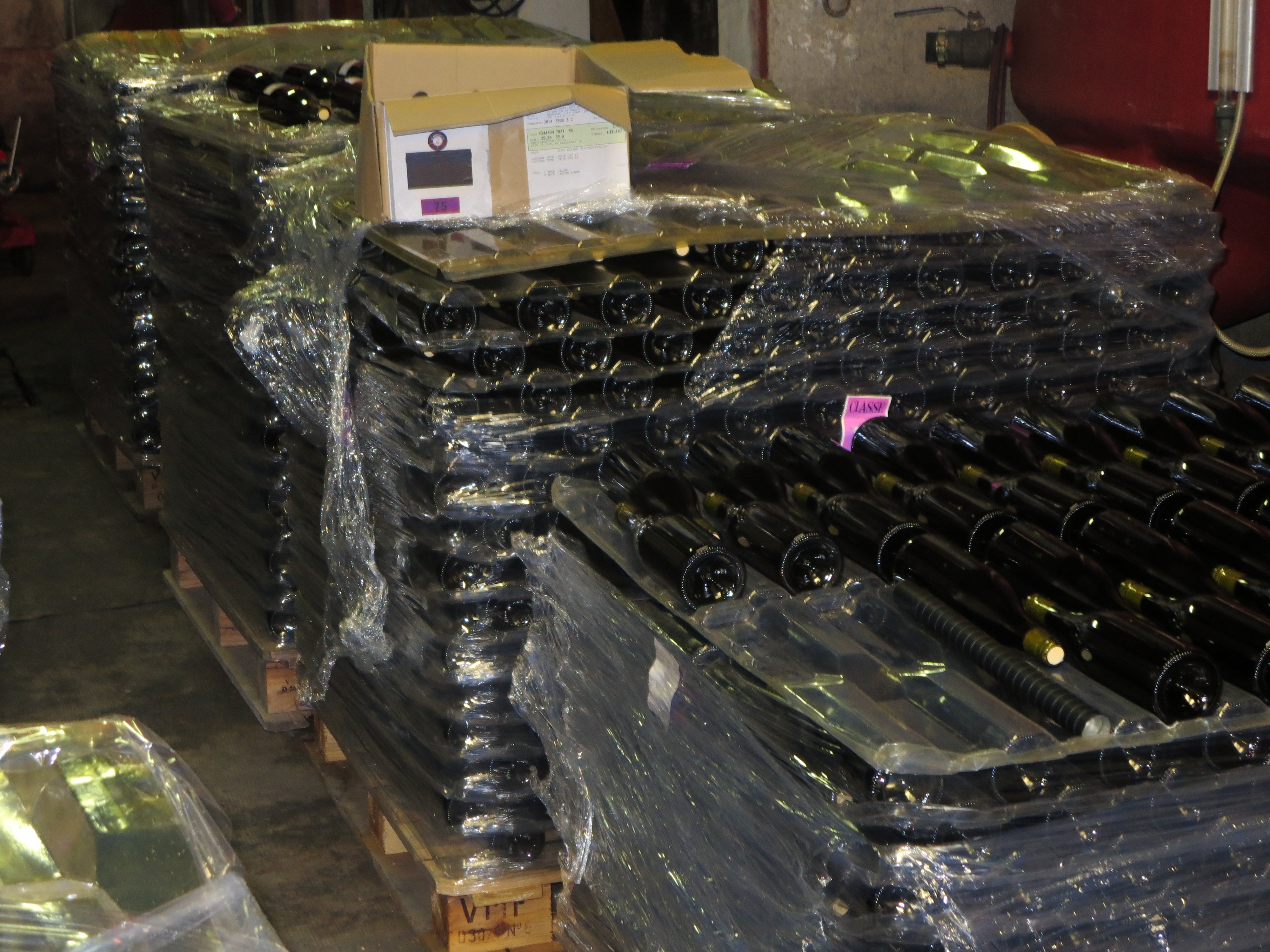
Now that harvest is done and the wines are stored in tanks, either fermenting or maturing, the more mundane, but equally important, aspect of a winemaker’s job comes to the fore. Wines have to be bottled, packaged, sent to market and, above all, sold. Jeff said to me that this was not especially interesting but, for me, it was.

IMG_0289

Bottles waiting to be packaged

Classe bottles waiting

Classe bottles waiting

Jeff has built a strong demand for his wines both in France and abroad. Our recent visit to Paris and the fact that his wines are sold out there proved the case. Visitors to the cellars call on a regular basis looking for wine, merchants phone wanting to place orders – his mobile phone is never far from Jeff’s ear.

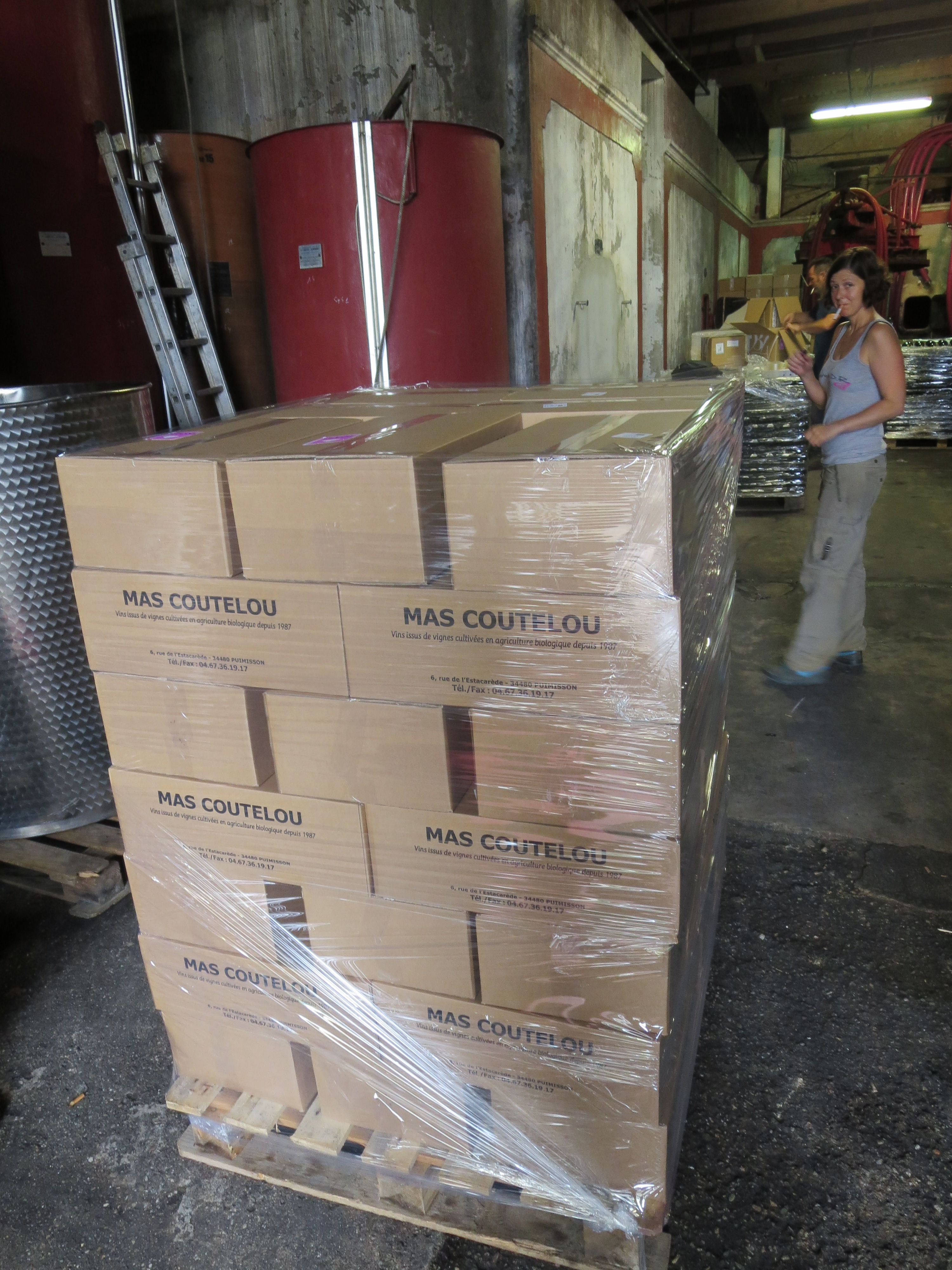
On Friday last week a new ‘toy’ arrived to help the packaging. It seals the cardboard cartons and prints the name of the wine on the side, speeding up the packaging process. Nonetheless teamwork and humour keep that process very human.

The job is hard, repetitive, physical work. In the video you will see Jeff at one point to place 4 bottles in the box at a time, routines and practice are everything. But without the boxes of wine the rest of the business cannot happen. It is less attractive but it is as important as harvesting or winemaking.

Two new wine treats came to the fore this week. Firstly, a slightly sparkling white wine, blanc frisant made from Macabeu and Grenache Gris. Secondly a cuvée made for the first time since 2003, Copains, made mostly from Cinsault but with Grenache and Syrah grapes vinified all together – truly delicious with the latter grapes adding body and depth to the Cinsault and giving the bottle longevity I would think.

Parts 1 & 2 of winemaking are still very strong, Part 3 too and I shall investigate more about commercial decisions in future.


Ready to go

Ready to go

Icare remains underwhelmed by the new packaging machine

Icare remains underwhelmed by the new packaging machine