amarchinthevines

Learning about wine, vines and vignerons whilst living in the Languedoc


2 Comments

A UK summer with thoughts of Puimisson

Summer so far has been home based, though plans are to head to Puimisson towards the end of August and a few days of harvest with Jeff Coutelou. In the meantime a number of bottles have been opened and I aim to share some thoughts on the better ones in two parts, the first following the above theme with wines from the UK and Jeff.

I have praised David Morris and his Mountain People wines several times already this year and a bottle of the Bacchus, Parva 23 proved me correct again. We enjoyed a long, dry early summer with some good sunshine and a crisp, dry white wine on a summer’s evening is perfect. Bacchus can produce quite flowery notes, over the top at times, but in David’s sure hands the wine is clean, dry and refreshing with plenty of white fruit aromatics and flavours. Grapes grown and vinified in Monmouthshire.

I listened to the audiobook version of Henry Jeffreys’ Vines In A Cold Climate during the Spring, an entertaining and informative account of English wine and was interested in the story of a couple of wineries buying in grapes and making wines in urban settings. One of those was Blackbook, based in Battersea, South London. It is the winery of Sergio and Lynsey Verrillo. Sergio was US born, then a London based sommelier in Michelin restaurants who moved to wine making via training at Plumpton College in Viticulture and Oenology as well as working experience in many parts of the world with excellent wineries such as De Montille and Ata Rangi. Lynsey has a commercial background, directs the marketing of Blackbook and works in the winery alongside Sergio. Winemaking is based on minimal intervention and low to zero use of sulfites.
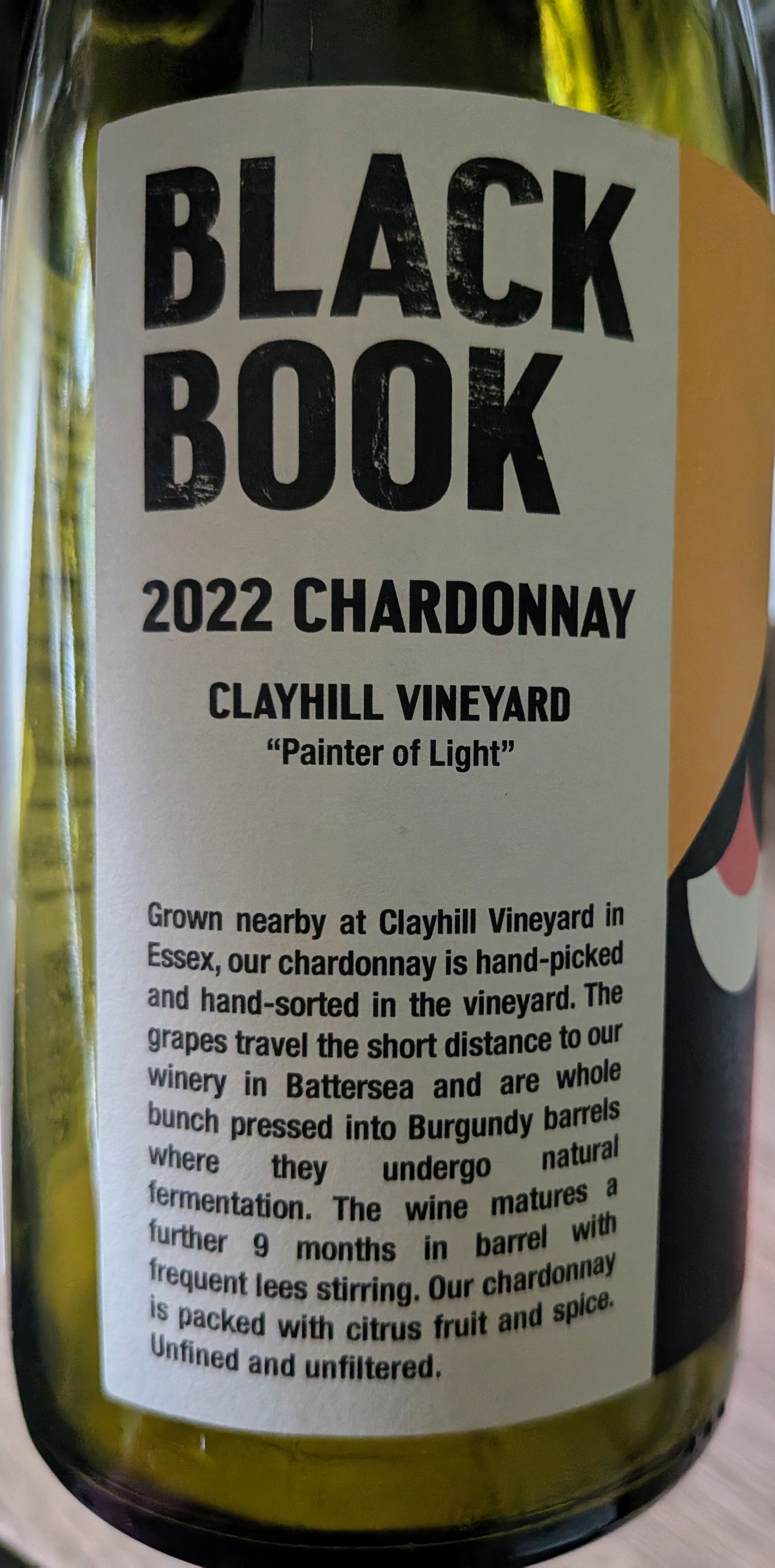
I bought a 6 pack of various wines from them and have opened three so far and I am seriously impressed. The first bottle was the 2022 Chardonnay Clayhill Vineyard with fruit sourced from the Crouch Valley in Essex which many believe to be England’s best wine growing region due to its own special climate. I liked it but the oak was a little too dominant for my personal taste, but very Burgundian in style.
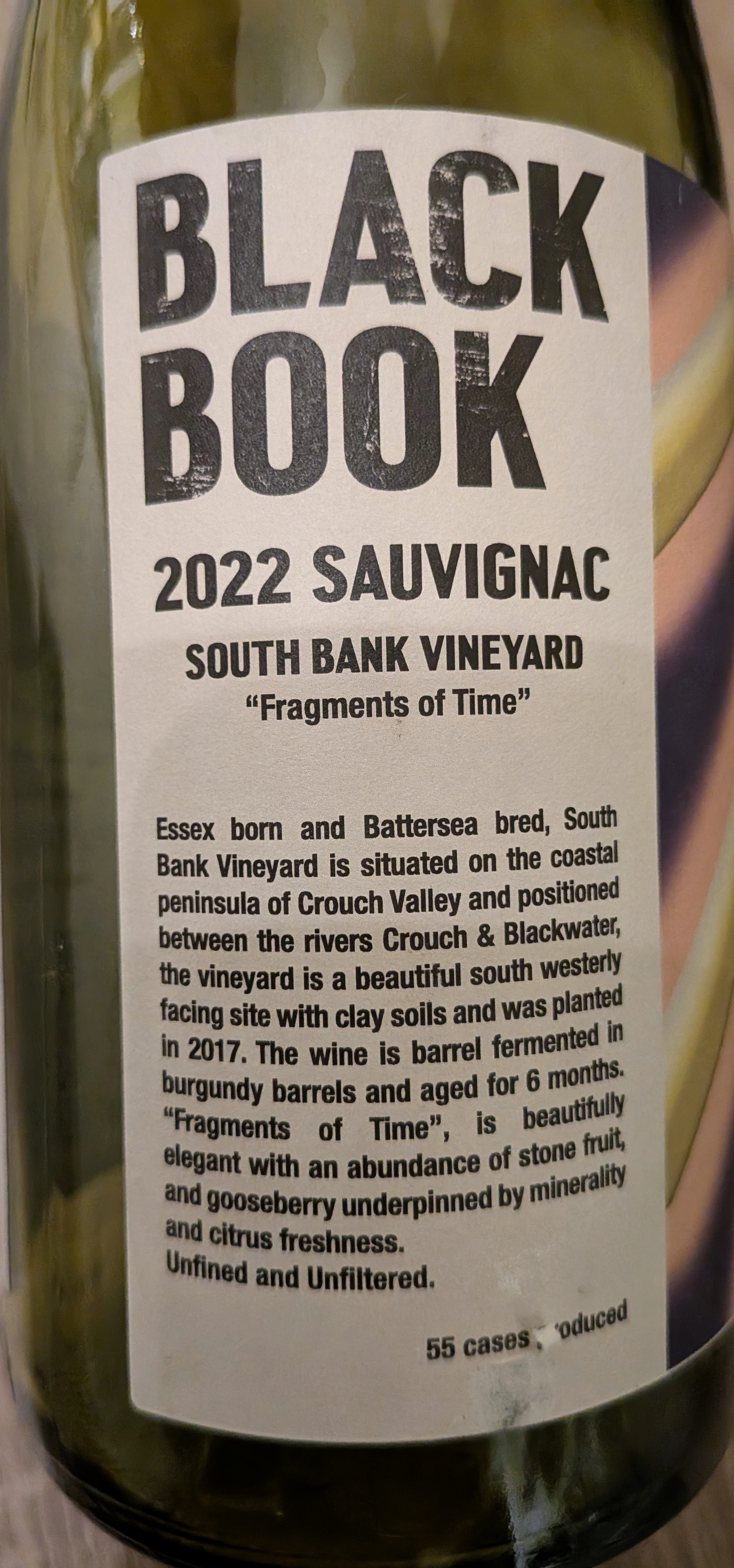
Next came the delicious 2022 Sauvignac, again with fruit from the Crouch Valley. Sauvignac is a hybrid grape, made by crossing Sauvignon Blanc and Riesling. Hybrid or PIWI grapes are designed to help cope with climate chaos and the increasing problems of mildew and disease. They are bred to resist such problems. Much of the development work has been in the German speaking world (PIWI is short for “Pilzwiderstandsfähige Reben” – fungus resistant grape varieties). Sauvignac is one such grape bred in Switzerland. I loved this wine, it had the fruit of a Riesling and the fresh acidity of Sauvignon Blanc, a winning combination for a white wine which I like.

A recent episode of the excellent Just Another Wine Podcast with Emily Harman, Doug Wregg and Jamie Goode is worth a listen on the subject of PIWI and climate related issues.

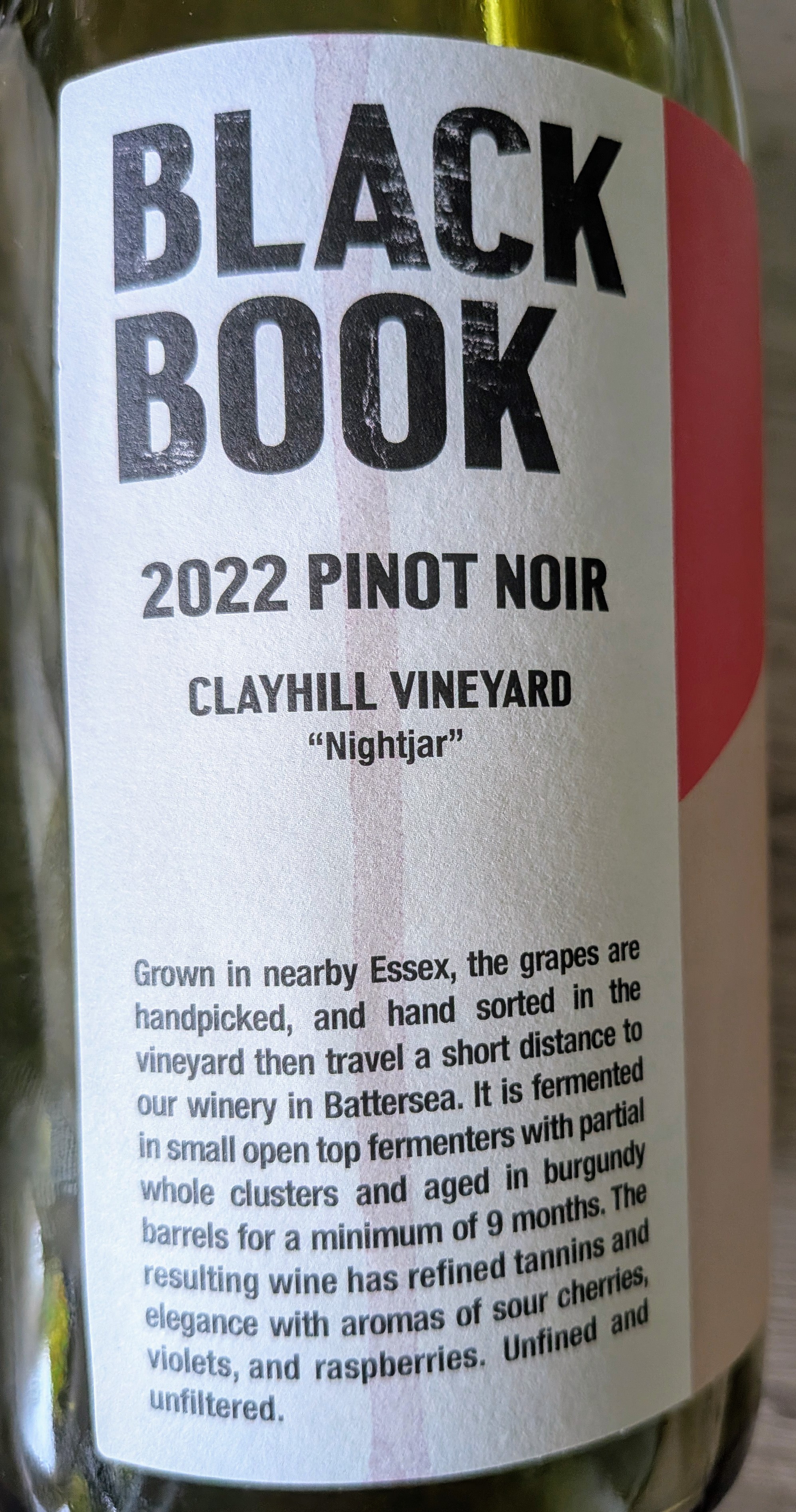
opened a red next and I must admit to not expecting a great deal from an English grown red wine. I should have known better. The 2022 Pinot Noir Clayhill Vineyard was lovely. Light and fruity yet with good length and complexity, the last glass was still developing and changing after 3 hours of the wine being uncorked. The fruit was obviously very high in quality and congratulations to grower Dale Symons and Sergio for the quality and careful handling. England’s wine future is highly promising in such hands. I look forward to my other Blackbook bottles.

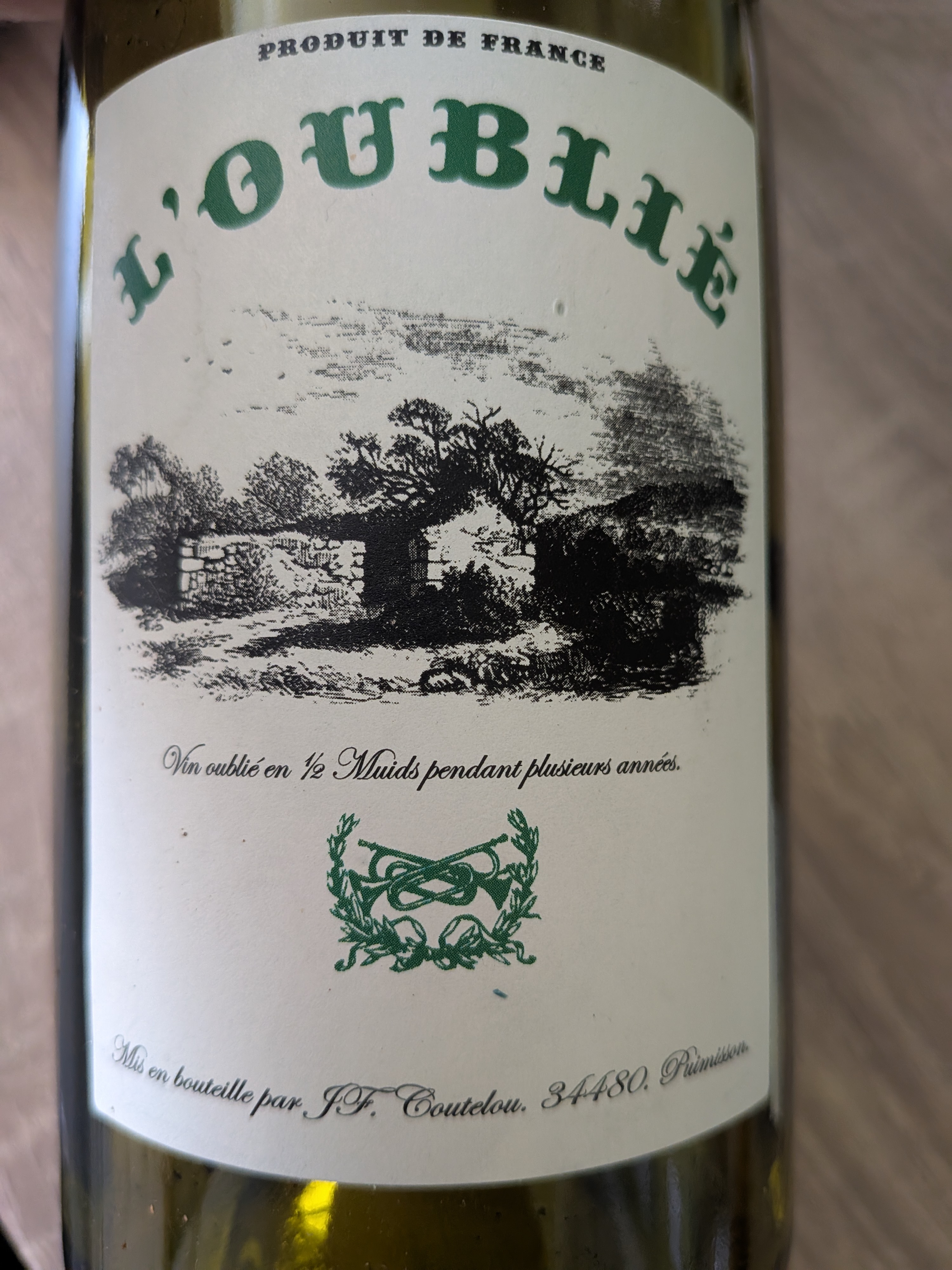
As well as the evening of Vin Des Amis which I described last time I have opened a few of Jeff’s wines, if I can’t be there I can always be reminded of it! I had unearthed a 2016 bottling of 7, Rue De La Pompe a Syrah / Grenache blend. This was in fine condition, still full of black fruit notes and fresh without being acidic. The sort of wine to share with friends and chat around. L’Oublié 2019 was one of the nicest examples of this cuvée I have tasted. Made from a number of varieties in a number of different vintages with grapes uncovered in old barrels. Dark, brooding with leathery notes and dried fruits. On to one of the newest Coutelou wines, 2024 5SO. Pure Cinsault of course and lovely light red wine, full of cherry and raspberry fruit notes, clean and summer wine par excellence. Jeff even changed the name to Formidable!
Leave a comment

Spring and Spain

I am proudly a francophile and French wines are dearest to me. Of course I like wines from many other places but my wine collection is dominated by French wines as is my list of favourite wines which I post every December. This last few weeks though have been dominated by a series of very good wines from Spain which I wanted to share.

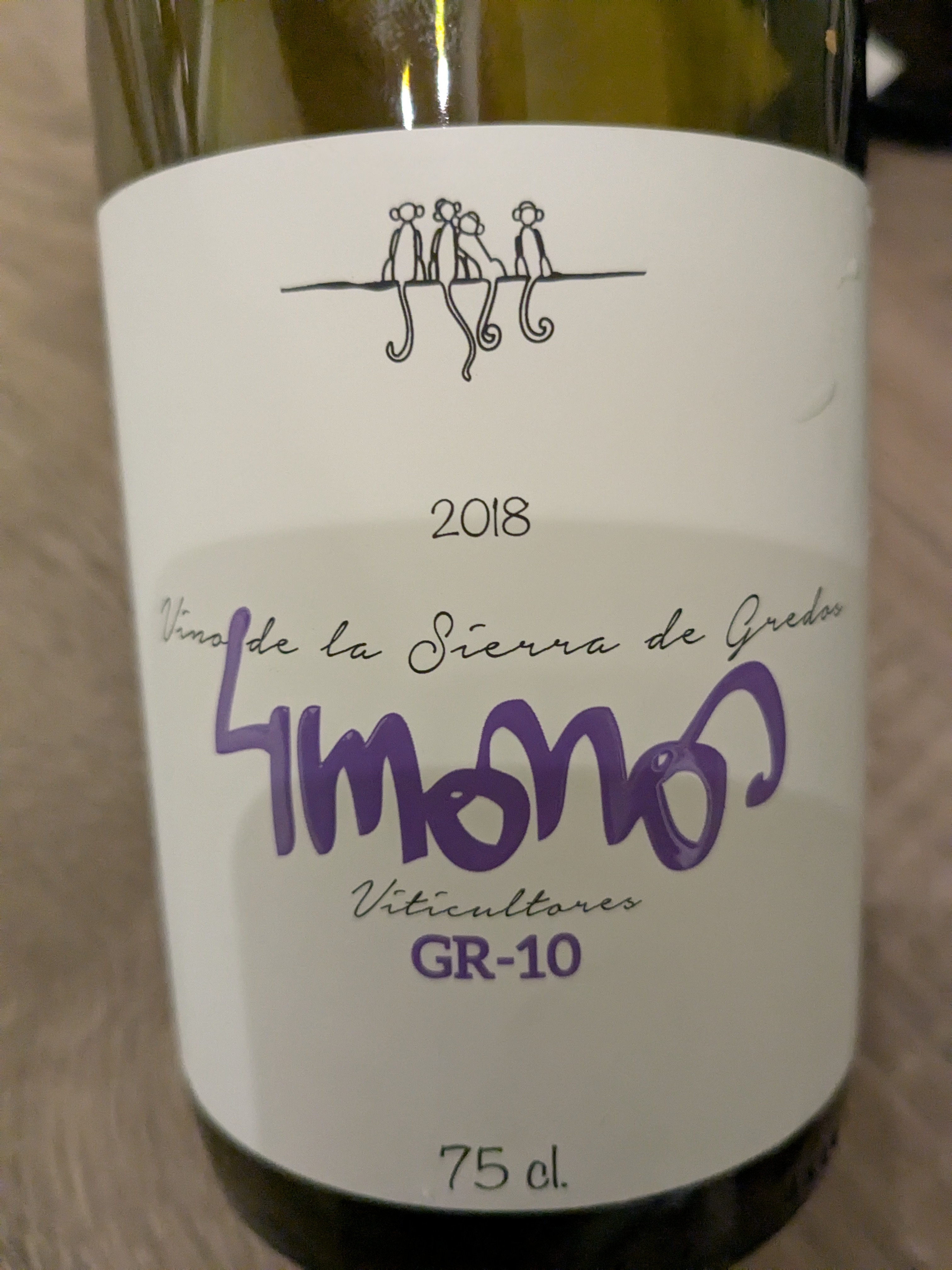
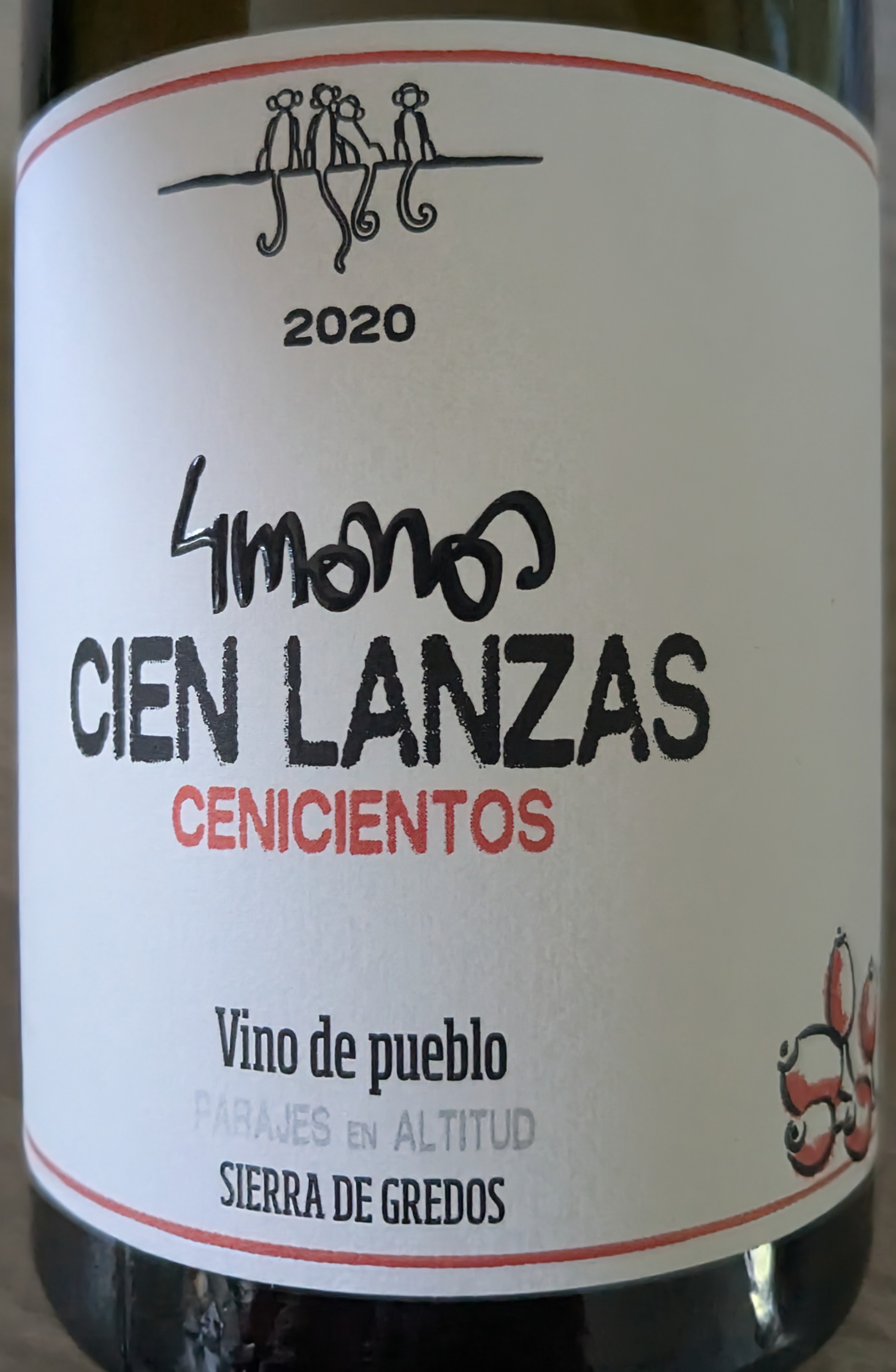
At the Element event in Edinburgh which I described last time I mentioned wines from Abeica and Jose Gil and, happily, I have hit a very strong streak of bottles since. Two came from the 4 Manos team who produce their wines in the Sierra de Gredos, 80km west of Madrid. These mountains offer the altitude (750m-1000m) necessary to temper the heat of central Spain. The eponymous four monkeys are friends who came together to share their passion for organic viticulture, local grapes and minimalist winemaking techniques. I opened two bottles recently. GR-10 Tinto is a blend of Syrah, Cariñena and Garnacha. It is their basic red wine and whilst not complex the 2018 is full of pleasure with fruits and a little texture and plenty of light, refreshing notes. Cien Lanzas Cenicientos is mainly Garnacha with small additions of Cariñena and Garnacha Blanca. Aged in old barrels for a year there is more weight and concentration in this 2020 bottle than the GR-10 but the same drinkability and freshness, a really good wine.

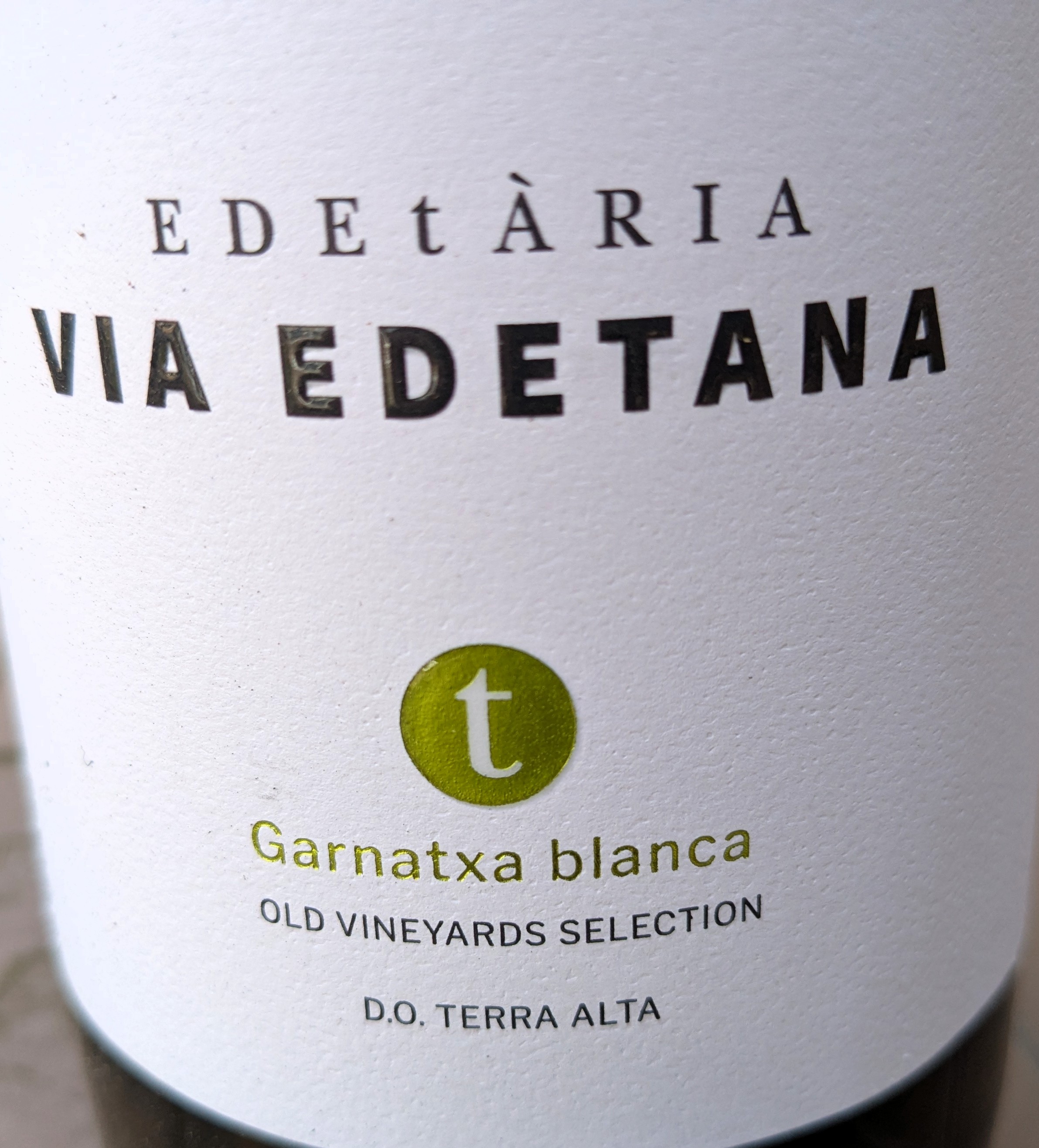
In the aforementioned list of wines of the year was a superb Garancha Blanca from Edetària in the Terra Alta region. I opened one of their lower priced Garnacha Blanca wines, Via Edetana 2023, and it was a real delight. There was that lovely white fruit flavour but with a creaminess and great freshness, perhaps from the 50% of grapes maintained on lees before joining the other half aged in barrel. I’d happily have this as my house wine!

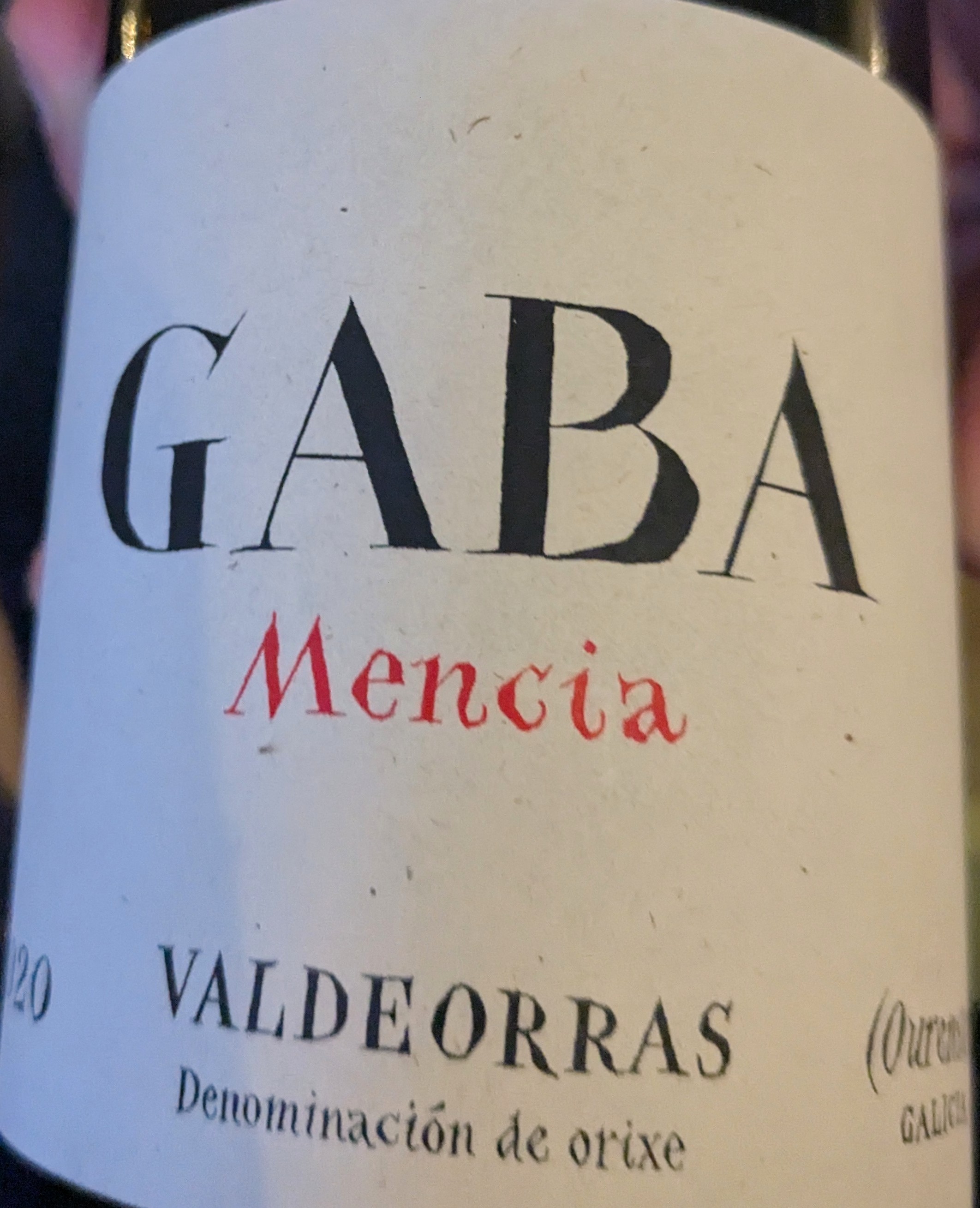
Mencia is a red grape , possibly a clone from Cabernet Franc, which is becoming increasingly appreciated for its freshness and fruit. Grown mainly in North West Spain and Portugal this particular version is made by Telmo Rodriguez who has made wines across Spain, helping to boost the reputation of those wines. Gaba Mencia 2020 has lovely fresh fruit with breezy acidity, like biting into fresh rhubarb. Proximity to the Atlantic has clearly left a mark on the nature of the wine. I have had a few very nice Mencia bottles, such as Veronica Ortega’s, but this one was possibly my favourite.

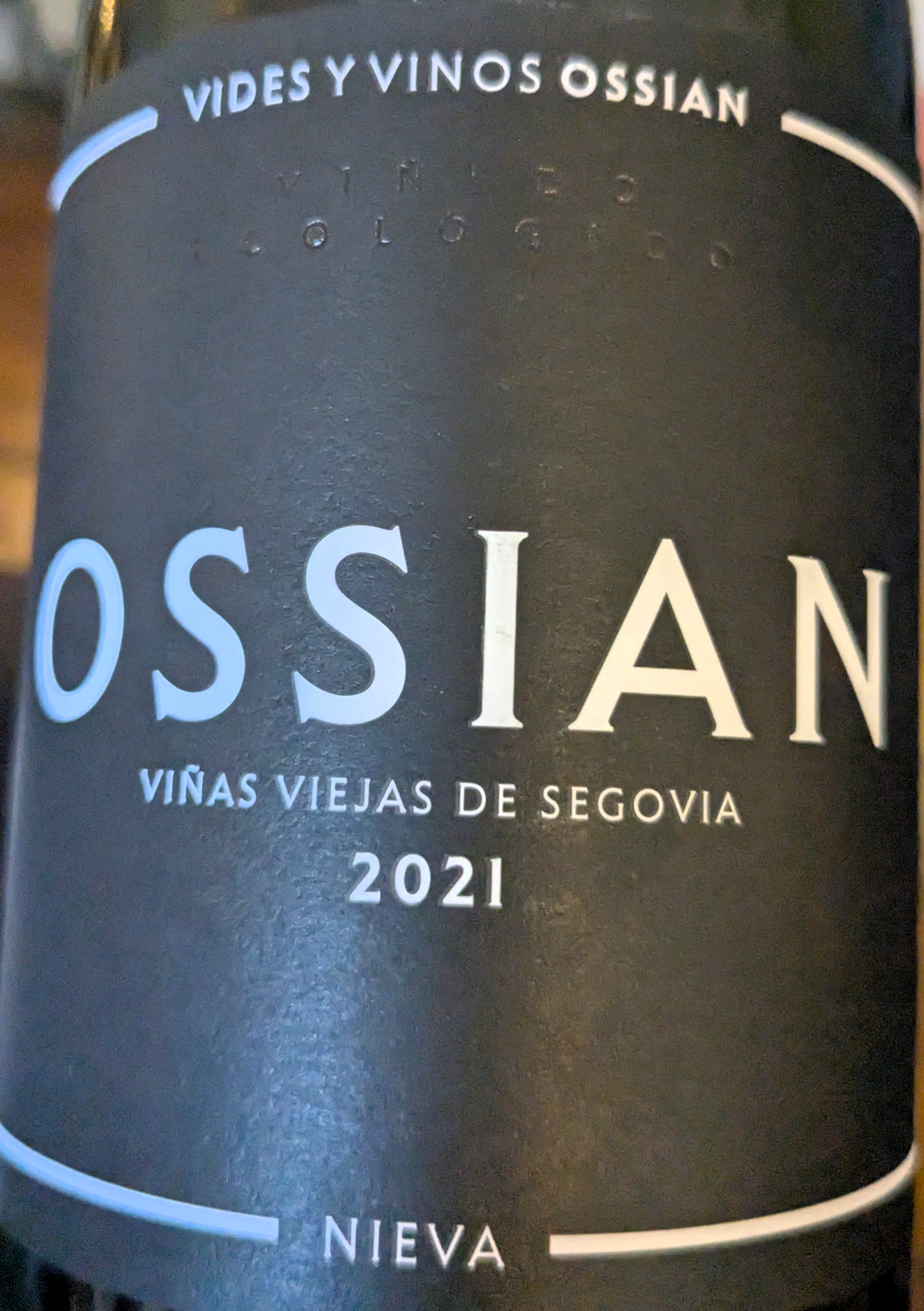
My favourite wine though has been Ossian Segovia 2021 from Nieva in Segovia, north west from Madrid. This is made from Verdejo grapes, not a variety to usually get the pulse racing to be honest. The vines for this though are pre-phylloxera and ungrafted because the soil is full of sand which has protected the vines from the louse which brings the disease. The vines are at almost 1000m altitude and have to endure extremes of temperature, down to -15c in winter and well over 30c in summer. The 2021 followed a winter which had seen several weeks of minus temperatures. This gives the Verdejo grown in these terraced vineyards a unique character. Aged in old barrels and on lees for 9 months the wine is organic and minimal sulphites are added. The colour is golden, there are fresh, white fruit and citrus aromas with long, clean flavours of those white fruits and a slight nuttiness. This is complex, drinkable and delicious.

From bold Garnacha, deep Monastrell and Cariñena, to fresh Albarino and Godello as well as these lovely Garnacha Blanca and Verdejo. Spain is rapidly taking up a bigger proportion of my favourite wines. Deservedly so.

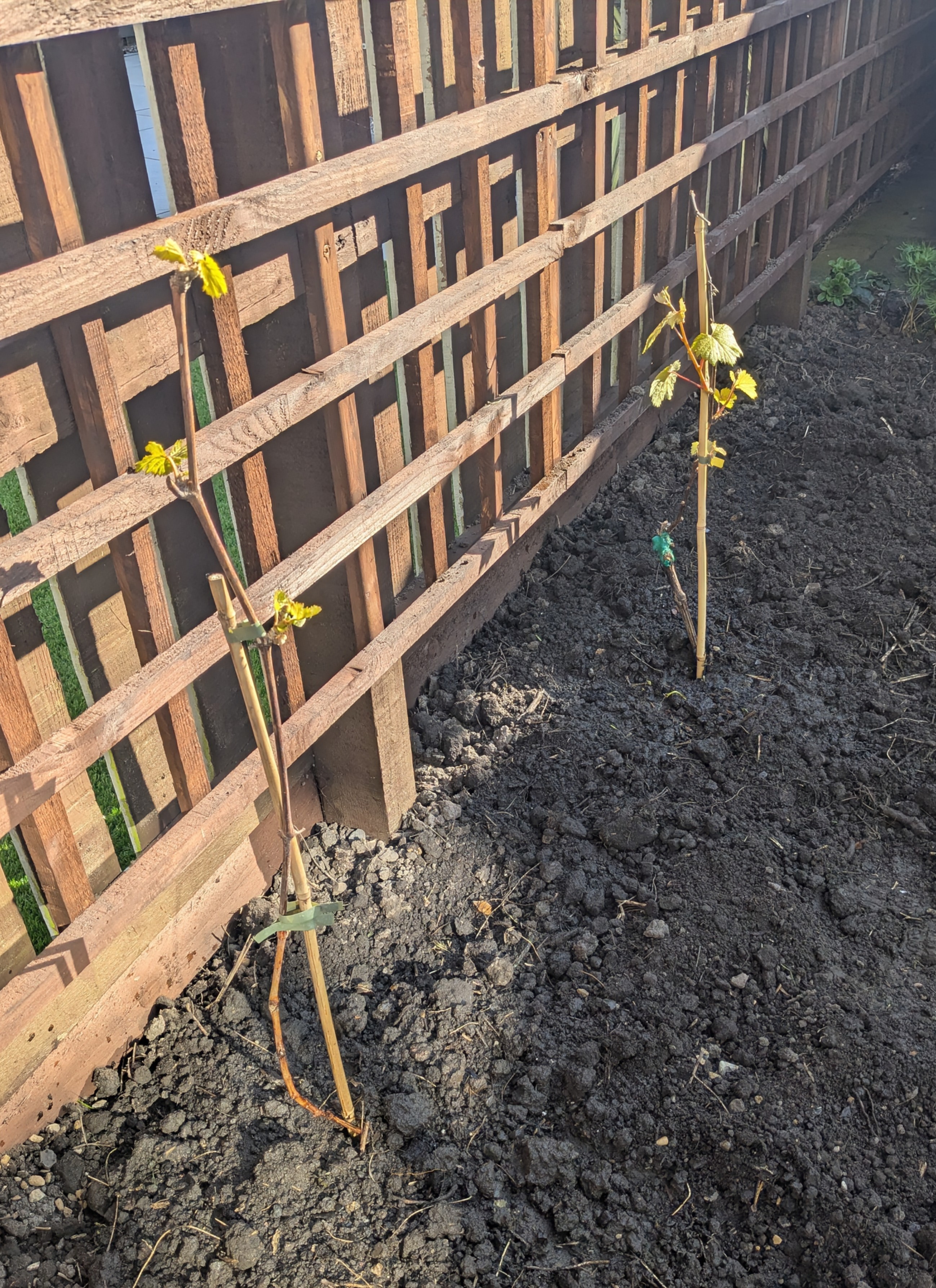
Meanwhile I have been working with the vines I received a few weeks ago. I have planted them and the recent sunny, dry weather has helped them to become established. I have been a bit surprised at how soon they budded and developed leaves, fortunately there has been no frost risk as they would have been vulnerable. I have removed side shoots to help build up the trunk before I train them next year.

Consett’s climate is certainly different to Spain’s, hopefully my vines can eventually highlight the adaptability of vitis vinifera.


Leave a comment

Odds and bin ends

Not a busy time on the wine front but the first tasting of the year for me is approaching and I have been busy reading about the world of wine, drinking some good bottles and I’m about to become a viticulteur. In the North East of England, so don’t expect to find anything on the shelves of your local merchant. (More on that micro venture soon).

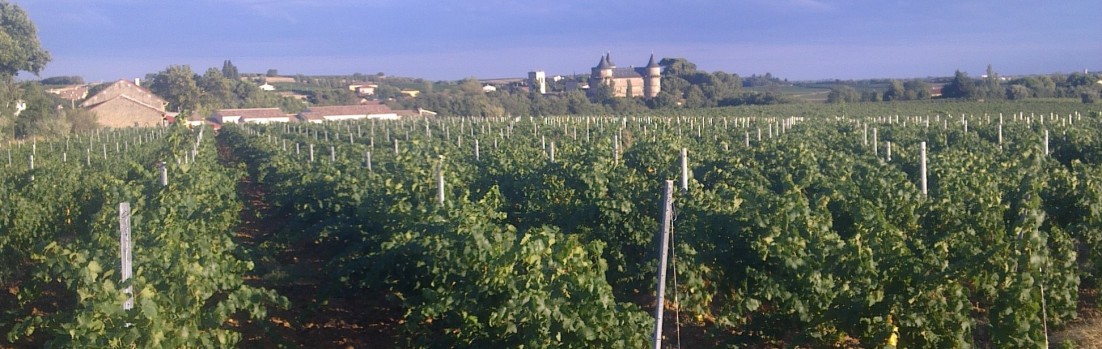
Jeff reports that all is well so far in the Languedoc. As with all my winemaking friends in the region pruning has been the principal activity. They have had some cold weather which helps the vines to rest and prepare themselves for the seasons ahead and, hopefully, kills off some diseases and bugs. He has been busy bottling, racking and blending as his Instagram and Youtube channels affirm. Meanwhile in the Adelaide Hills James Madden of Scintilla Wines tells me that vendanges is under way, slowly at first due to great heat. The cycle of viticulture shown across the world.

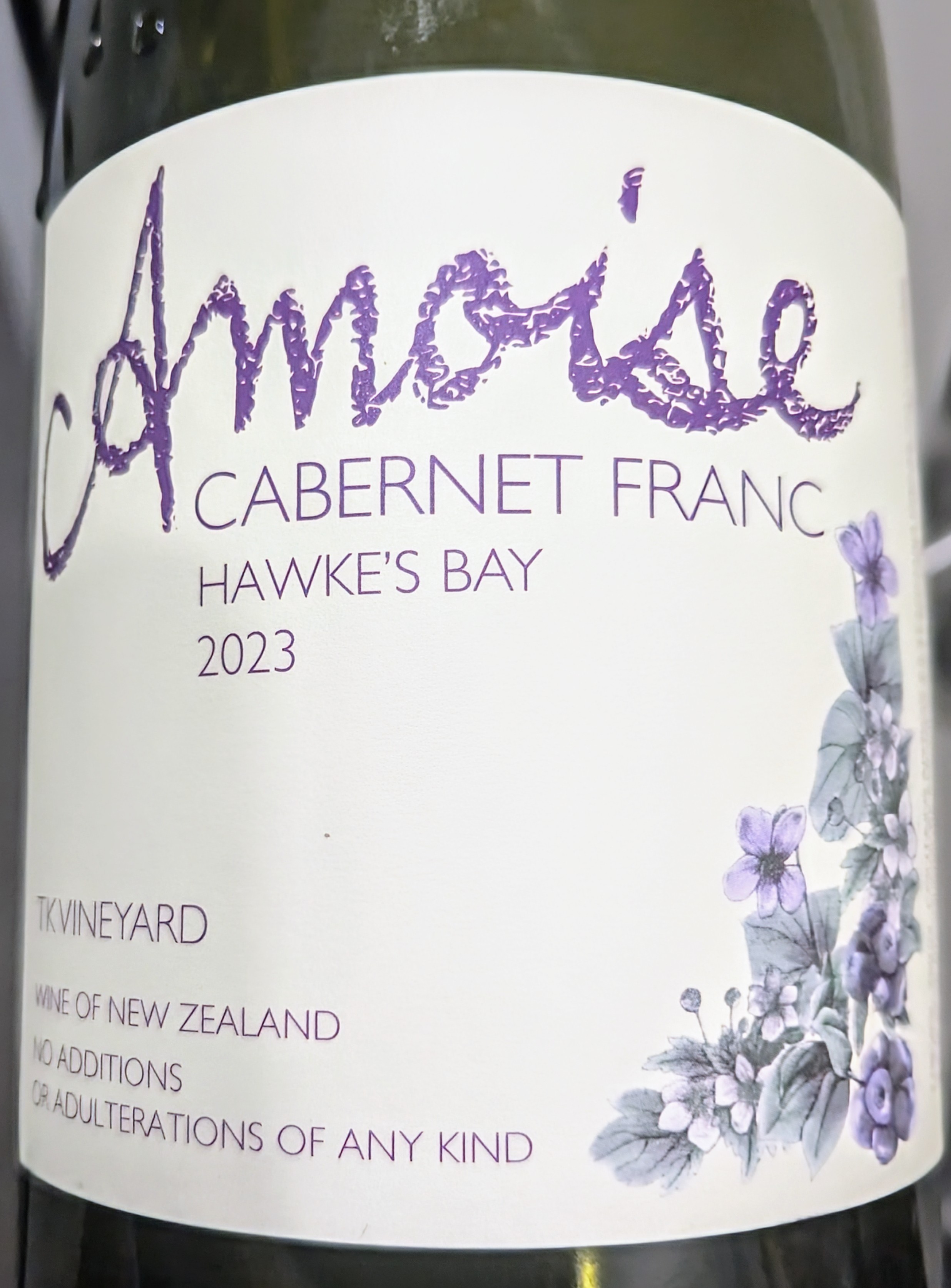
It was a real pleasure to see Jamie Goode posting about Amoise Wines who I highlighted on my visit to New Zealand last November and chose as one of my favourite wines of the year. It is good to see a young winemaker quickly earning such acclaim. I do hope that they are soon imported into the UK.

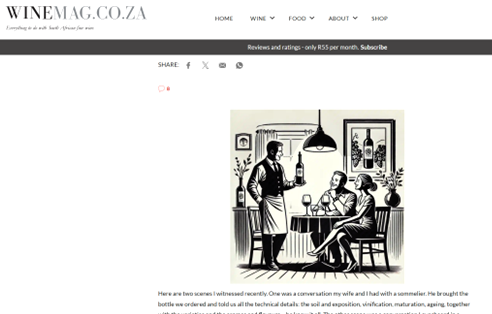
A couple of articles have grabbed my attention and I thought worth passing on. The first was from South African Winemag.co.za, written by Dariusz Galasiński. I think it includes a number of salient points about wine appreciation and the wider public based on an experience in a restaurant. He argues convincingly that while wine enthusiasts are captivated by details of vineyard and cellar practices, the average consumer sees them as mere background noise, adding little or nothing to their enjoyment of wine. Instead, Galasiński suggests, “Wine in a restaurant is not about technicalities, it is about stories.”

I think he makes a valid case. When I meet with winemakers, at their cellar or at a tasting, I am fascinated by the technical information, and how they approach the task of making the best wine possible from their grapes. However, I am aware that I am a wine snob and, with experience of working in the vines and more than ten harvests, I have an insight and interest not shared by most. Even then I love to hear their own story and that of the bottles they make, why they make it and its character. It brings the wine to life and personalises it, I have a connection between it and the winemaker which I will recall when I drink it later.

When I have led tastings I do pass on details of the wines, the grape varieties and some winemaking notes which make the wine interesting. I have tried to add some narrative of the vigneron and wine but, after reading Galasiński’s article I think I need to relate even more of the story.

The second article was by my friend Aaron Ayscough on his blog / website Not Drinking Poison. Aaron runs an occasional series called Droplets in which he comments about various events, articles and happenings from the world of wine. It’s fair to say that Aaron takes no prisoners with his views, he is a purist regarding natural wine and how it should be made and that he can upset other wine commentators as a consequence. In the most recent article Aaron wrote about the fall in sales of wine in general and natural wine in particular. The latest manifestation was some poor attendances at recent salons in the Loire. The reaction on Instagram and Bluesky was swift, with traditional commentators, such as a couple of older male Masters of Wine, seizing the opportunity to express their biases and generalizations about natural wine.

Though I don’t always agree with Aaron and so consider some of his views extreme I did feel the criticism was way over the top. Natural wine sales are stalled but then so are wine sales and per capita consumption in general. It is not a sign of people rejecting natural wines more a commentary on the world economy and the growth of an anti-alcohol lobby. There are more and more natural producers around the world, competition which impacts on some producers’ sales. Salons are a barometer of interest and sales but I do believe that Aaron is correct, there are just so many salons now that it is impossible for cavistes to attend them all. Even the winter Loire salons saw new events cropping up into what is a packed period of time. I do agree that consumers want wines to be drinkable and enjoyable and that faulty wines should not be available but, then, I have opened many a faulty bottle of conventional wine over the years. I had hoped such sniping was a thing of the past and that the benefits of the natural movement were clear, many conventional producers have cut back on sulfites and additives for example.

One interesting quote in the Droplets article was from American buyer Joshua Eubank of Percy Selections, “I’m still a believer in wine salon culture,” he says. “But I had a finite number of days to be away from my family and chose to prioritize one-on-one time with our growers.”

That ties in nicely with the Galasiński article. Knowing the winemaker and their story is the way forward to combat the pressure on sales. I hope that articles on this site about Jeff, James, Steeve and others are part of that storytelling. And that there will be more to come.