
It was an honour to be asked back on Friday June 7th to Snod’s Edge Village Hall to lead a third wine tasting event there. When we started to plan back in March we had in mind that an event in early June would happen in warm, summer conditions, I recall saying that we might need plenty of ice and ice buckets. Well, the Spring and early Summer of 2024 have proved to be wet, cool and grey. Nonetheless, with a little imagination and plenty of enthusiasm the summer theme led to an enjoyable event with some interesting wines and discoveries. Bear in mind that this is a fund raising event and I stick to a budget for the wines, an average of £10 or less per bottle. The wines should also be readily available.
Whilst looking into the story of the eight wines I wanted to explore three themes; what to look for in a summer wine, trends in wine and buying wisely. The committee had suggested a tasting of rosé wines and though I broadened that out to include white, orange, red and sparkling wines I did select three rosés. Rather than the usual format of starting with lighter wines, eg white, and moving through to more structured red wines I decided to leave the rosé wines until the end with a sparkling wine to restart the tasting after a half time break. I think this worked well, especially given the final rosé wine, of which more soon.
I have copied up my notes, so if the writing looks a little ungrammatical please excuse me on this occasion. Feedback on the wines at the event are shown in italics.

Wine 1 – English White 2023 – Wine Society £9.95
Made by Three Choirs vineyard on the borders of Gloucestershire, Herefordshire and Worcestershire, the second largest in England (after Denbies) and one of the oldest, started in the 1970s.
A wine for aperitif though it is dry and would go with cheeses, seafood and goat’s cheese for example.It is aromatic; white flowers, hedgerows and gooseberries ; it is dry, not stone dry but good acidity ; it is light; 11% alc and should be drunk within 2 years.
Grapes not given but likely to include Bacchus, Madeleine, Reichensteiner, Siegerrebe (both crosses of Madeleine, latter with Gewurz) and Orion a hybrid grape (a crossing of vitis vinifera and other types of vitis eg rupestris and riparia). Hybrid grapes are becoming more important due to their ability to resist disease and cope with climate change, even Champagne has begun to experiment with hybrid grapes.
The Wine Society, £40 to join but £20 off first order, co-operative principles so prices low eg no tax rise after last Budget, events, information for wines, range, returns, free delivery no matter how small the order.
Unfortunately, I served this a little too chilled so the aromatics lost some of their exuberance and the flavours were subdued. The wine was given a positive reception but was one of the least popular, unjustly in my opinion as I have enjoyed this wine before and it’s very good. Lesson learned, don’t overchill!


Wine 2 – Tbilvino Qvevri 2021 – M&S £10
Aperitif but also spicy and with some tannins so would match spicy food, Chinese, Thai or even Indian
Georgia, Kakheti (east of Tbilisi) where they have made wine in qvevri for over a thousand years, ie clay pots buried in the ground where the grapes are put to ferment. Can be for shorter or longer periods and that would affect the tannin, colour and flavour. This leaches the colouring pigments from the skins giving it an amber or orange hue, hence the term orange wine. One of the fastest growing trends in wine, sales have doubled in each of the last five years and now available in most supermarkets.
Tbilvino is now a big concern (7.5 million bottles) owned by 2 brothers and modernised in 2006 after the communist days.
Made from Rkatsiteli grapes, the most planted in Georgia, its name means red stem. Late budding and maturing and relatively resistant to mildew. Relatively neutral when conventionally made but qvevri elicits flavours of honey, dried orange peel, spices, apricot and other stone fruits. But also tannins which we can find unusual if not used to orange wine. 12% alc
M&S don’t do discounts like other supermarkets. Sometimes get discount on a case of 6, like Majestic. Most supermarkets and Majestic offer 25% at various times, especially round Bank Holidays so take advantage but make sure you know the price hasn’t been artificially raised beforehand.
Value of the wine in bottles – £5 bottle = 29p, £7.50 = £1.06, £10 = £2.10, £20 = £6.33
Tax hike next February, 50p per bottle over 11.5% abv. so stock up!
Orange wines continue to divide opinion for consumers not used to the style. This bottle is a gentle(ish) introduction to one of my favourite styles of wine but only one person selected it as their favourite on the night though many said they liked it or at least enjoyed trying something different for them.
Wine 3 – Morandé Pais 2019 (Chile) (Majestic) – £8.99
Light red for those who prefer reds, a light chilling will concentrate the fruit flavour. Can match to prawns, salmon, meats and cheese as well as grilling. Raspberry, blackcurrant fruit aromatics and flavours. Still a tannic note and 14% alc. The name One To One because one vine produces one bottle, the average is 1.5 bottles per vine though some commercial wines are based on up to 5 bottles per vine.
Pais was brought to the Americas by Cortes and the conquistadors in the 16thC, known as Criolla grapes. Traditionally made for everyday drinking wine, jug wine and not meant to be complex.
Morandé founded in 1996 but bought older vines including the Pais, 60 year old vines. Carbonic maceration and open wood tanks to soften the wine and bring out the fruit. Based in Maulé Valley, towards cooler south of Chile which will help freshness. Trend for fresher regions – higher altitude wines, eg Alps and Jura in France.
2019 is quite old for such a light wine, look for younger vintages if possible, Majestic are now selling the 2021.
Despite its age the wine tasted well on the night, fresh with a good fruit profile and some tannins. It was a popular wine at the tasting and it’s good to see unusual grapes being given a chance by major UK retailers.


Wine 4 – Santa Tresa Frappato 2022 (Sicily) (Waitrose) – £11.99
Another light red, pale colour, almost rosé like colour. Floral, herbal aromas and red fruits. Red fruit flavours, some sweetness from the fruit but with refreshing acidity to match food though this would serve as an aperitif. Seared tuna, grilled veg or even aperitif. Red fruit, spice a little tannin but light and very drinkable at 13% alc.
Santa Tresa based in South East Sicily, quite low altitude of 24m. Frappato was developed in this region centuries ago and the estate has its own clones. Scientists have found that it is linked to the Sangiovese grape from Chianti. Rina Russa means red sands, the soils in the vineyard. Organic production, irrigated but with their own reservoir and using fertilizers based on their own beans and plants.
Supermarkets sometimes put out new wines and grapes such as the Found at M&S or Loved & Found at Waitrose. Try them.
This proved to be the most successful wine of the first half of the night, appreciated by those preferring red wines and others too. It was showing well with the chilling highlighting the red fruits.
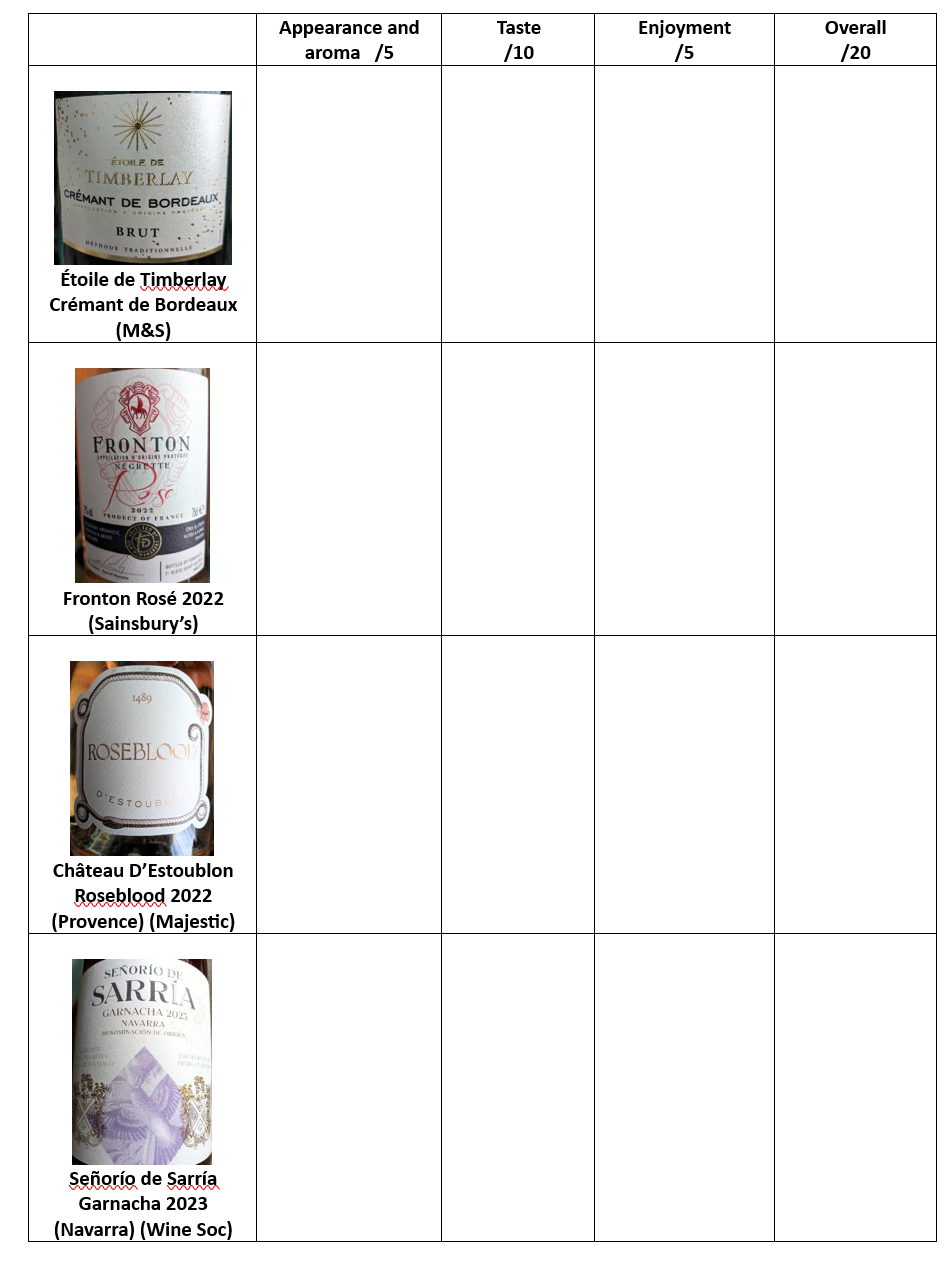
Wine 5 – Étoile de Timberlay Crémant de Bordeaux (M&S) – £10

Sparkling wines for aperitif but also food, fresh for summer dishes such as salads, fish, chicken.
Champagne the obvious choice, Prosecco too. Crémants are traditional French sparkling wines made in the Champagne method, Burgundy, Loire, Jura and others. Bordeaux is a huge area with 7,000 wineries so there are a lot of grapes and wines and the market turned against traditional wines so some producers are looking at other productions. Whites are making a comeback and Crémant too.
This is made from 33% Semillon but also 62% Merlot and a tiny bit of Cabernet Franc, the latter two being red grapes. Wine is taken off the skins straightaway to keep it white, though look out for Rosé Crémant too.
Apple and elderflower aromas? Anise? Lemony freshness? But also yeasty, hazelnut notes. 12% alc.
Yeasty notes come from secondary fermentation in bottle. Add sugar and lees to the wine and leave it in bottle to create bubbles and flavour. The yeast dies as it develops alcohol and the dead yeast cells (called lees) give flavour of bread, brioche to the wine. Prosecco and Asti use other methods so less likely to have this dimension., it’s a matter of choice.
PetNats a new trend where the wine isn’t fined or extra sugar added, it is simply bottled fresh wine so ferments in bottle. Sales have boomed, up 500% in the last two years.
Sparkling wines often on top shelf in supermarkets, be careful, if they are close to lights, light strike can damage wines with UV interacting with phenols in the wine to create sulphurous notes.
This was very successful on the night, refreshing, palette cleansing and plenty of flavour. It may not have been Champagne but at the price it was a good choice and lots of the attendees were saying they’d be seeking it out.
Rosés
THE biggest trend in wine in the last ten years, sales have risen from around 5-6% of all wine sold to 12%
Rosés started in Ancient Greece where they added water to wine and the Phoenician city of Marseilles was the starting point for modern rosé, Provence remains the heart of rosé. There are various styles and myths. Colour does not relate to quality, they can be drunk all year round like white wines, they are not all sweet and bubblegum, they can age and can be quality wines.
Methods of making
- saignée (bleeding) – run juice off red wine early in its fermentation before the skins have given off colour just like we saw with orange wine. (By benefit, the juice on the skins becomes more concentrated)
- direct press – press red grapes and run the juice straight off
- Clarete – a Spanish technique of blending a mix of red and white grapes in tank to produce the desired colour
- Assemblage – blend finished red and white wines (only allowed in Champagne)
Also known as Vin Gris, Rosado or Rosato.

Wine 6 – Fronton Rosé 2022 (Sainsbury’s) – £8
Made in SW France near Toulouse and with a local grape Négrette. This has good colour but not high acidity so good for light reds and rosé. Reviews all suggest this has sweet aromas of Turkish Delight, even Parma violets. However, the flavours are dry, red fruits such as raspberry, cranberry and cherry, sour notes and acidity for freshness, even minty.
The aromatics make it suitable for aperitif (12%alc) but the freshness suggests good match for light grilled foods, vegetables, halloumi perhaps.
Made by the cave cooperative, a source of good value for many supermarkets – some are better than others so try to do some research.
This made a good start to the rosé wines, a classic light but flavoursome wine which would be perfect on a warm summer’s evening in the garden and at a keen price from a region needing support. It has been a successful wine for Sainsbury’s over many vintages and garnered many plaudits in the press.
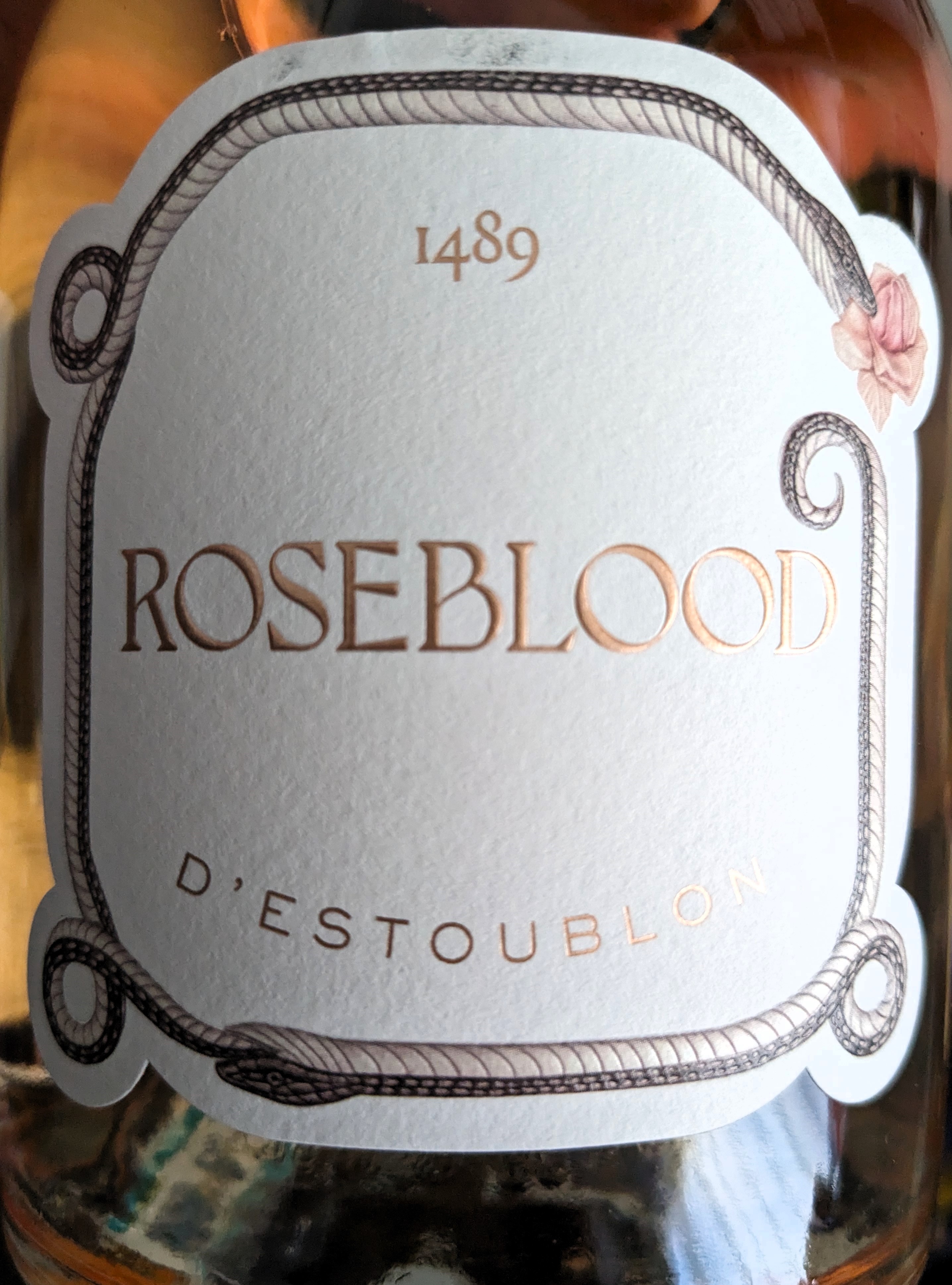
Wine 7 – Château D’Estoublon Roseblood 2022 (Provence) (Majestic) – £21.99
This was an exciting discovery as Majestic had it reduced even from the usual mix 6 discount. Therefore an expensive wine became viable on our budget.
Why exciting? As I said Provence is the heartland of rosé wine and there are some big estates – Esclans with Whispering Angel, Miraval of Brad and Angelina fame, Mirabeau and Estoublon, south of Avignon. A huge estate with olives, vines and a beautiful chateau. The estate is owned by some of France’s elite, including former President Sarkozy and Carla Bruni. They employed the winemaker from Cloudy Bay (Victor Joyeaux) to create it but the owners of Chateau Lafite also own some of the estate so plenty of investment and expertise.
This is the new flagship wine of the latter estate launched in 2020.
Made from Grenache, Cinsault and Tibouren. The latter was a Greek grape imported to Marseilles during its Phoenician time, matching the story of rosé wine I mentioned earlier.
Getting high marks from the likes of Decanter. Colour – pale, the Provencal style of onion skin. Aromas – red berry, fresh fruit leaves. Flavours – delicate apricots, blackcurrant and fresh minerality, 12.5% alc. Made for Mediterranean dishes and aperitif
Celebrity wines – Caveat emptor – they all say they have been involved but at most that usually means they liked the wine made for them. There are exceptions but this is a marketing exercise and you’ll pay more than for the same wine under another name.
Fascinating. This was well made, good freshness and yet fairly neutral in aroma and flavour. There were some in the audience who liked it a lot but just as many preferred the Fronton and certainly the price of the Fronton! Would I pay £21.99? Do you need to ask? It is a much more serious wine, it would certainly age and be a good food wine. Is there a market for such a wine? Is that why it was so discounted?
Wine 8 – Señorío de Sarría Garnacha 2023 (Navarra) (Wine Soc) – £7.95

The colour !!
This is a Rosado from Navarre in NE Spain, next door to Rioja. The area includes the driest area of Europe (Bardenas Reales) and the vineyard is based in the hills and influenced by the maritime winds too. Female winemaker Milagros Rodriguez wants a full coloured wine based on the Garnacha grape (25 year old vines with some aged 60). A 16thC wine domaine which was basically pulled down and restarted in 1953.
In articles on 2024 rosé wines this was selected by Decanter, Independent, GQ, Telegraph and Times as one of the best on the market despite its price.
Aperitif, but with enough body for a variety of foods, cheeses and even spicy food. Strawberry, cherry fruit aromas and flavours and the elongated saignée method gives it tannin to match food. It is bone dry, just 0.5g/l of residual sugar, though this means sugar turned to alcohol at 14% but the wine is very balanced.
Price isn’t everything, read reviews by those whose judgement you trust.
New trends – field blends and the clarete method described before, also known as assemblage or métisse, producing might red or rosé coloured wines.
This was the wine of the night. I thought so and most of the audience shared that view. Yet, it was the cheapest wine of the night. The deep pink / light red colour is attractive, the aromas and flavours are upfront and appealing. Plenty of freshness, tannin to support food but easy drinking too. Terrific winemaking and what a wine. The only negative is the plastic cork, surely we can move on from them these days. Give me this over the Whispering Angels or Rosebloods every time. It was very pleasing to see so many appreciate this wine, well done the domaine, winemaker and Wine Society.
The Rosado was certainly the most popular, followed by the Frappato and Crémant with the other two rosés just behind. Overall, this was a successful evening with a group of people keen to try new styles and explore the stories behind the wines. All we need next time is some warm weather!







 amarchinthevines