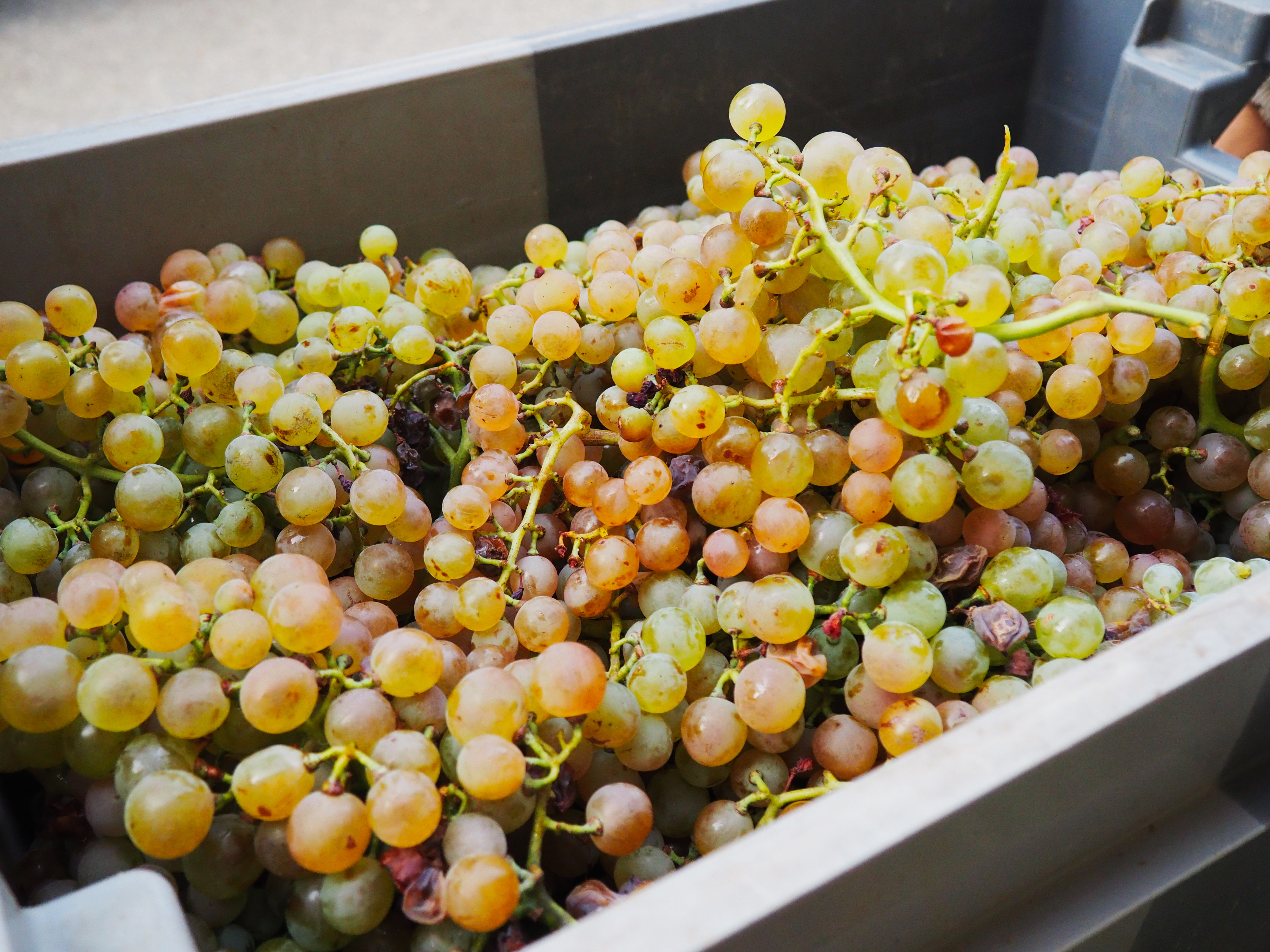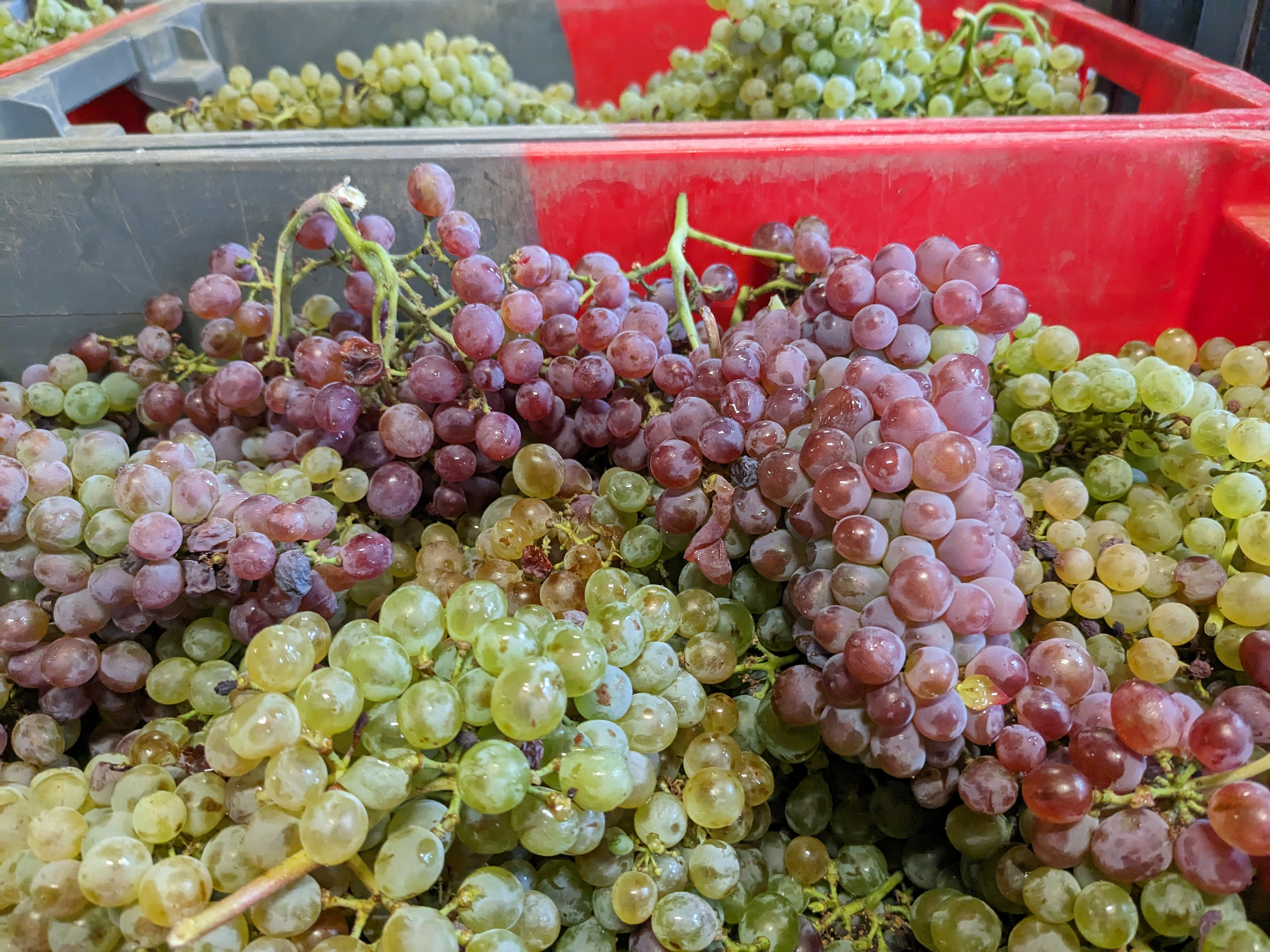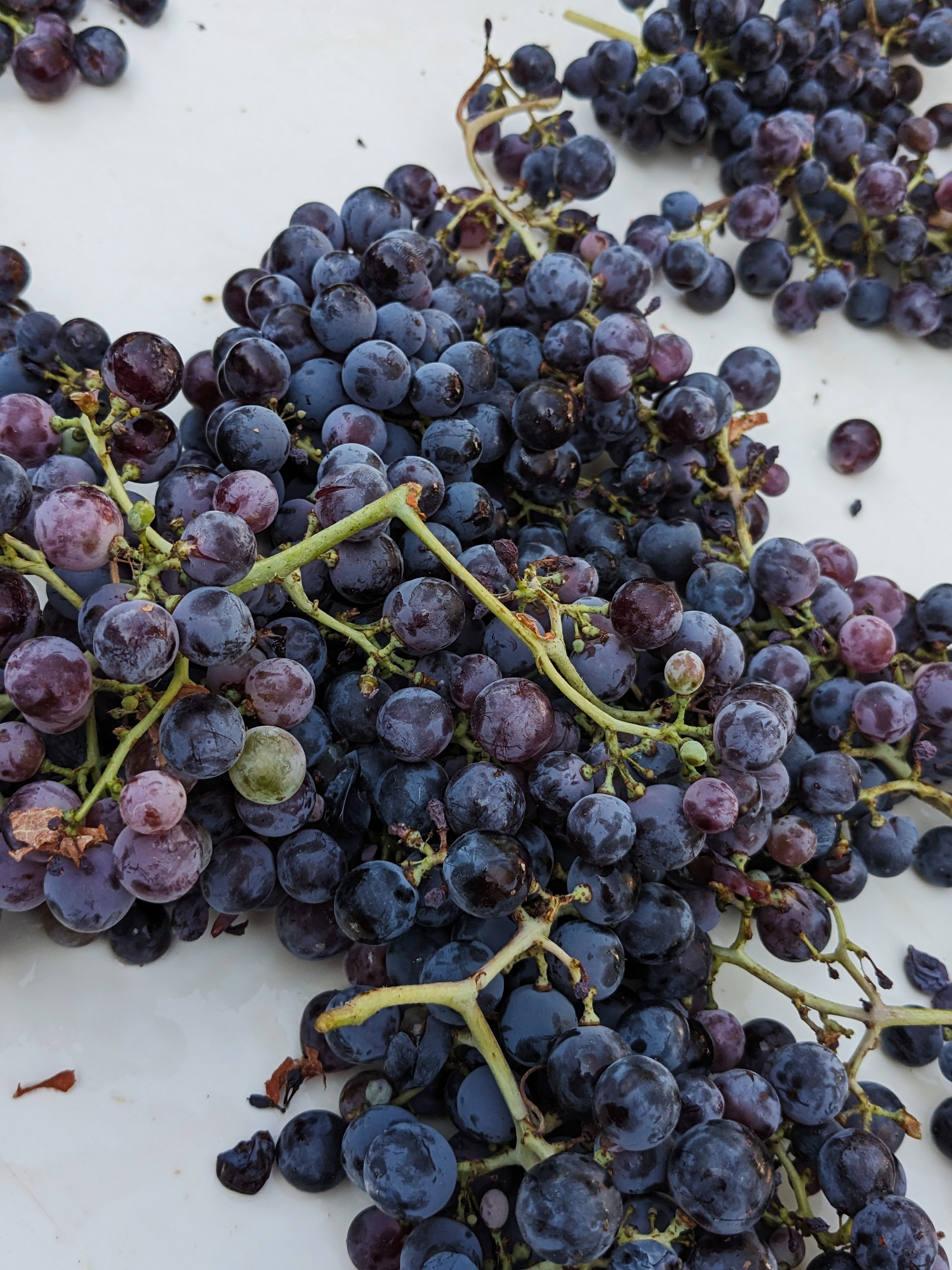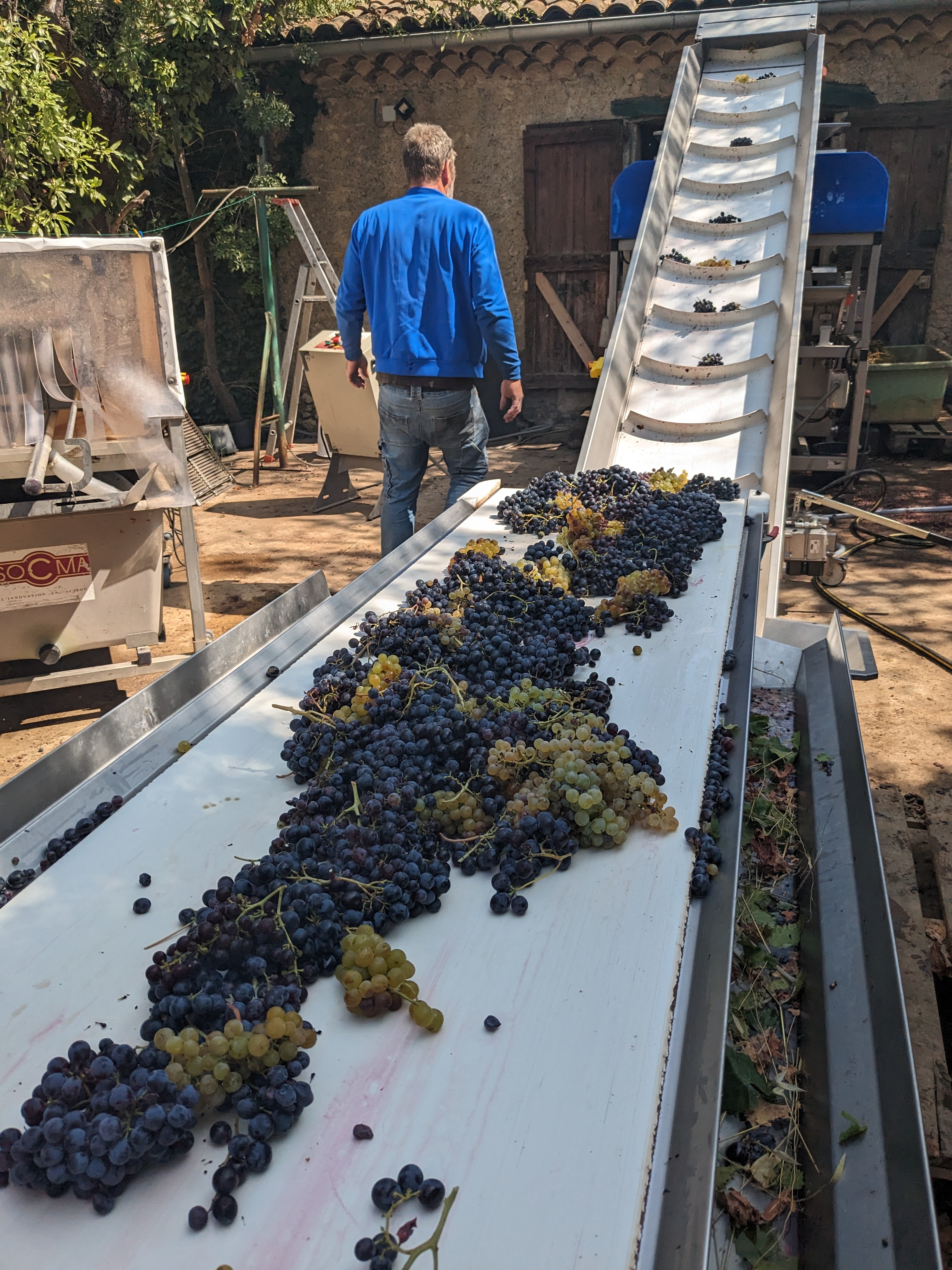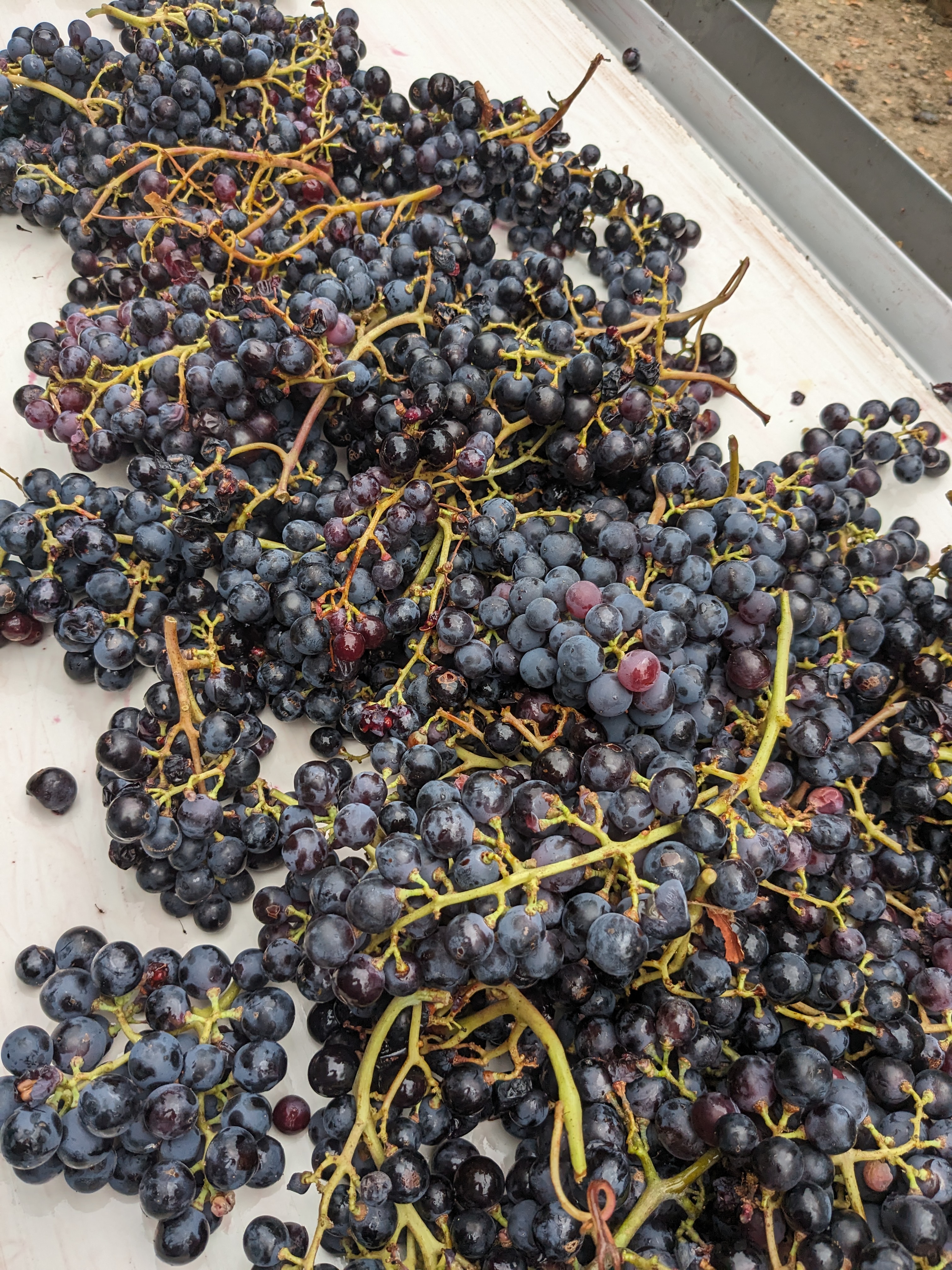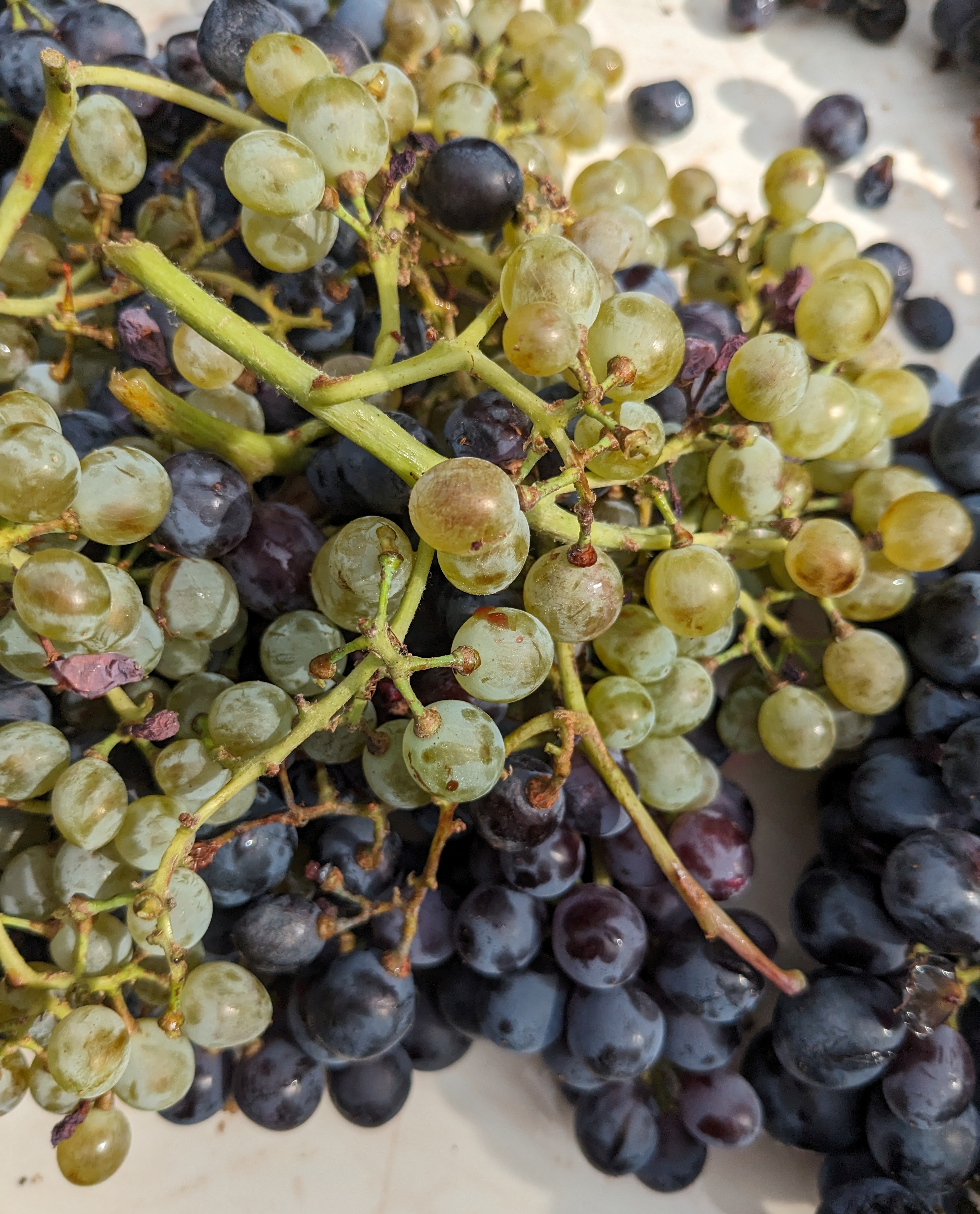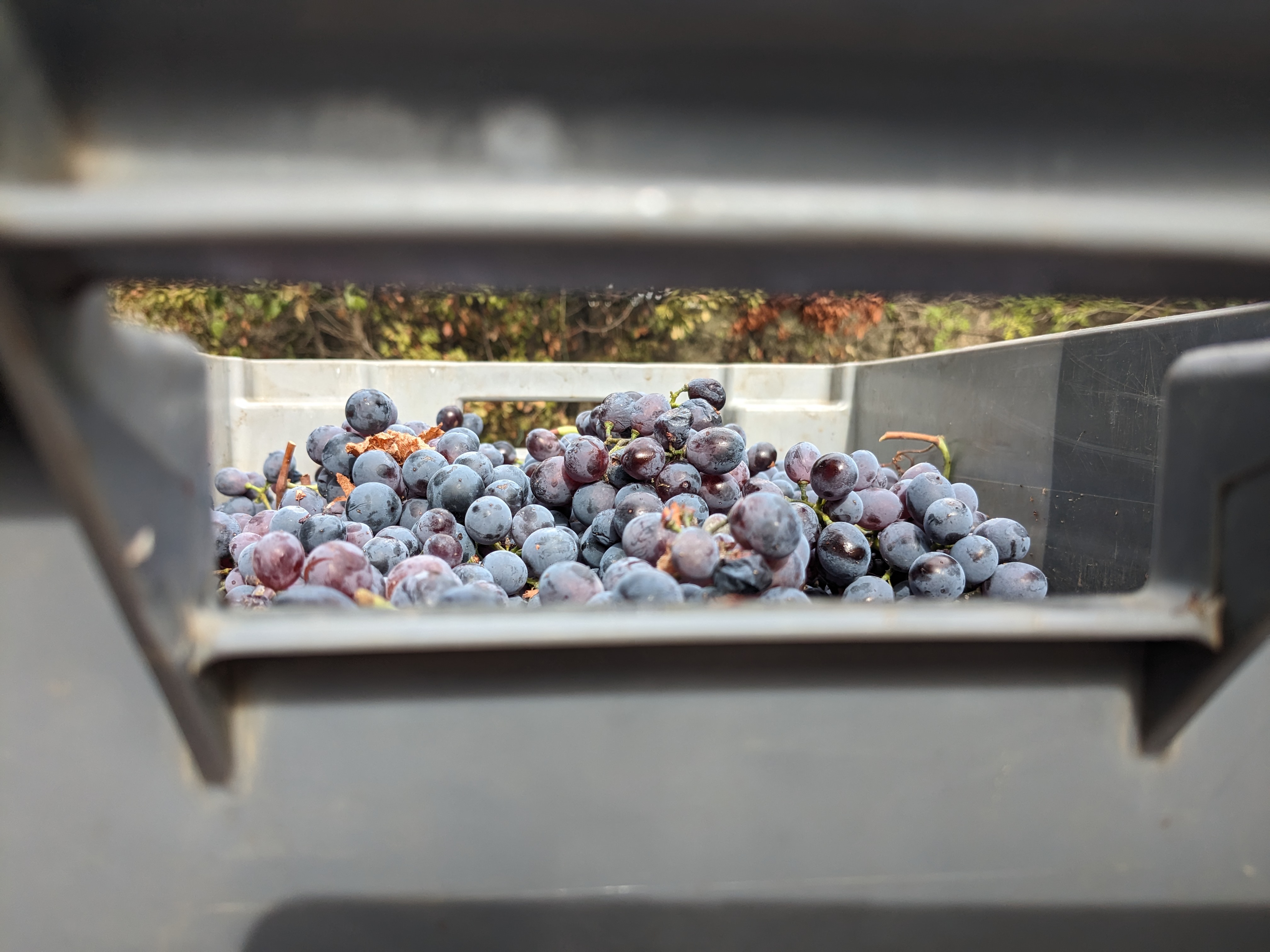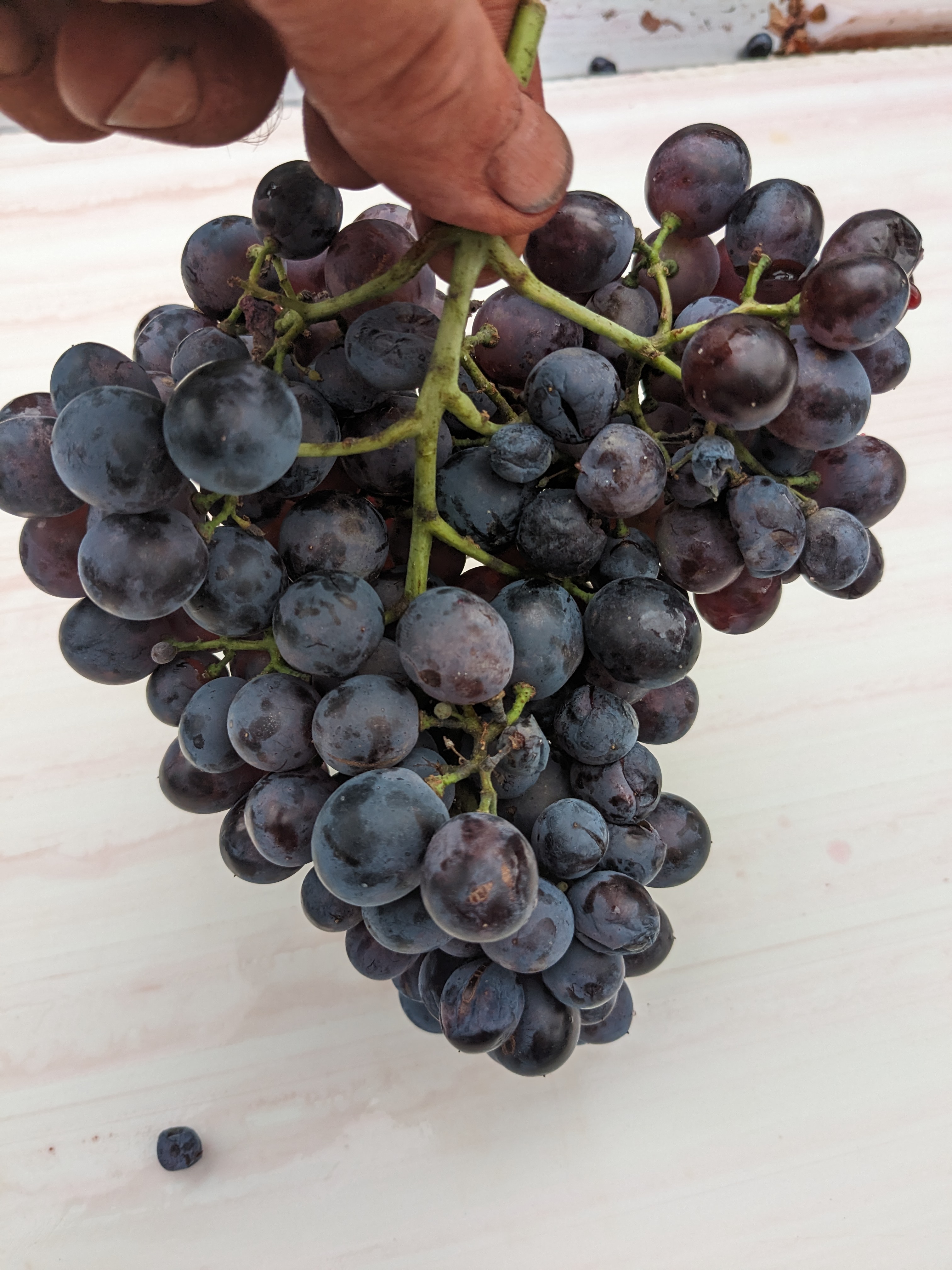
amarchinthevines

Learning about wine, vines and vignerons whilst living in the Languedoc


Leave a comment

An early taste of 23

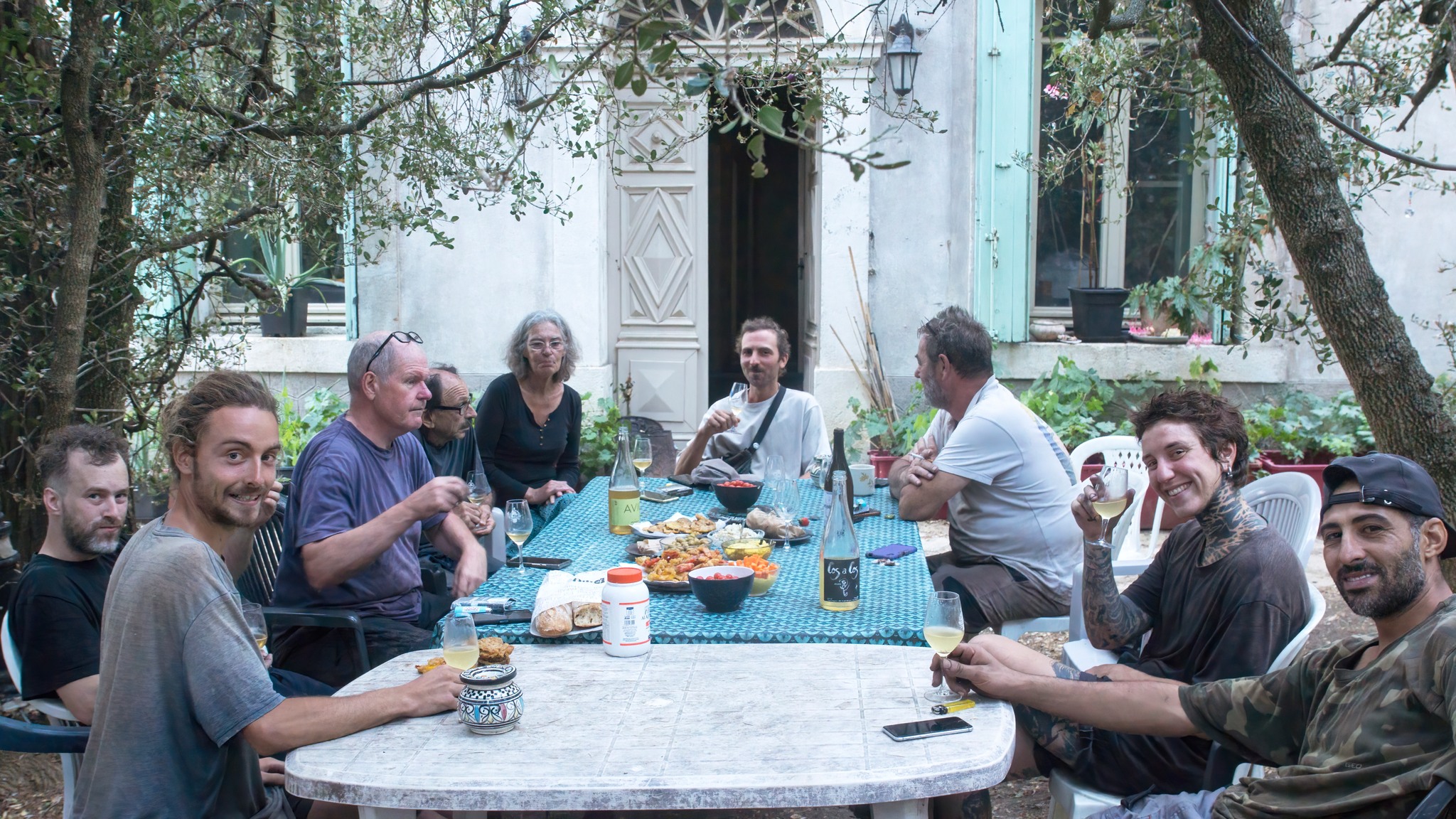
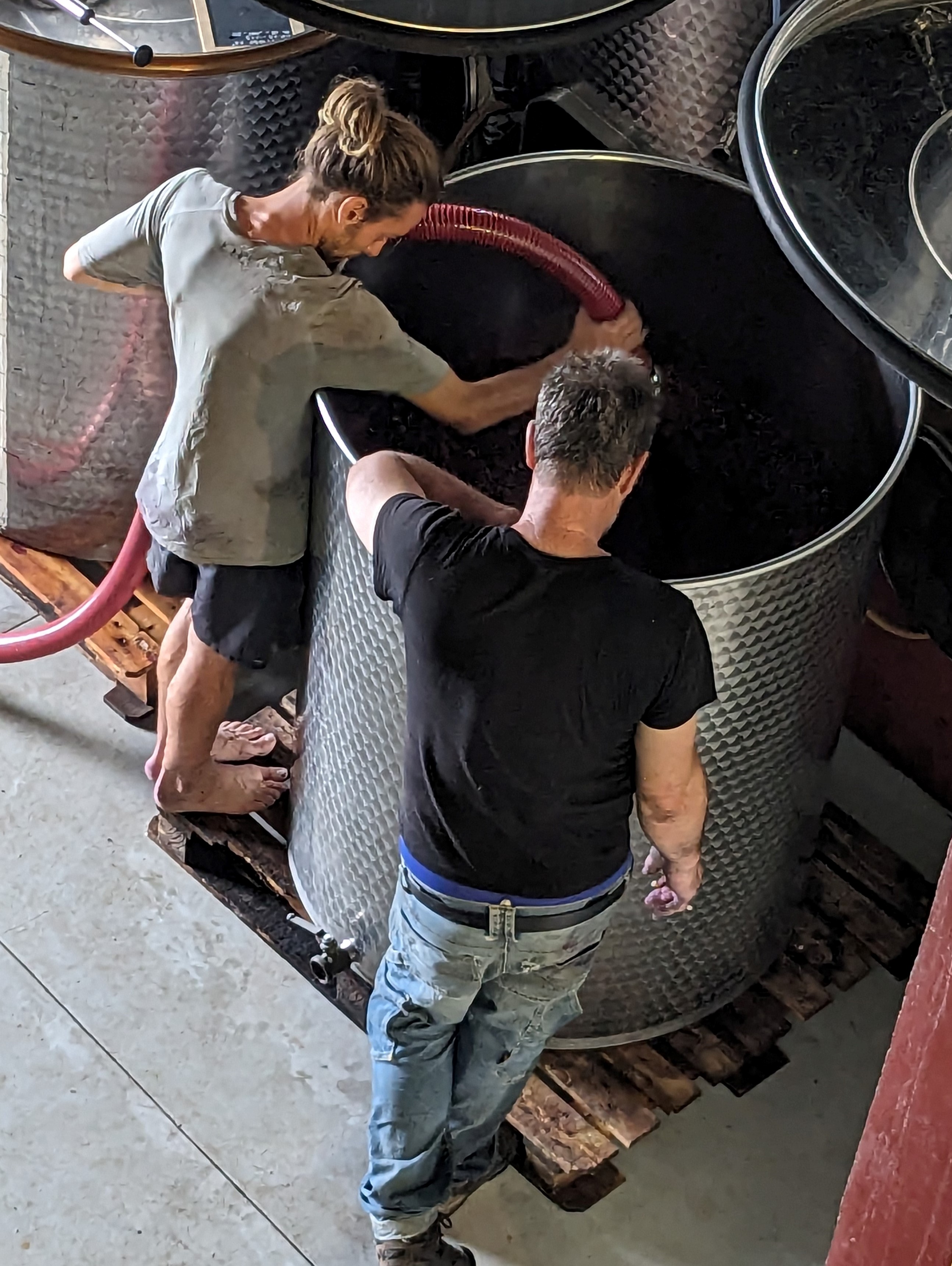
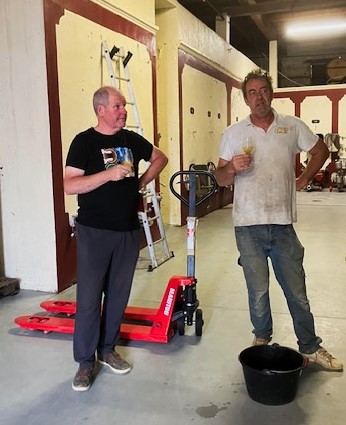
After each harvest it has become almost a tradition that before I head home Jeff Coutelou leads a taste through the wines which are being made from the work we did so recently. As it happened some of the team working with Clos Fantine (and harvest was still going on up in the hills) were coming on the 20th too, so Jeff combined the two events. We went on to taste some older wines from barrel as well as going to the solera to taste a number of the fabulous wines there.

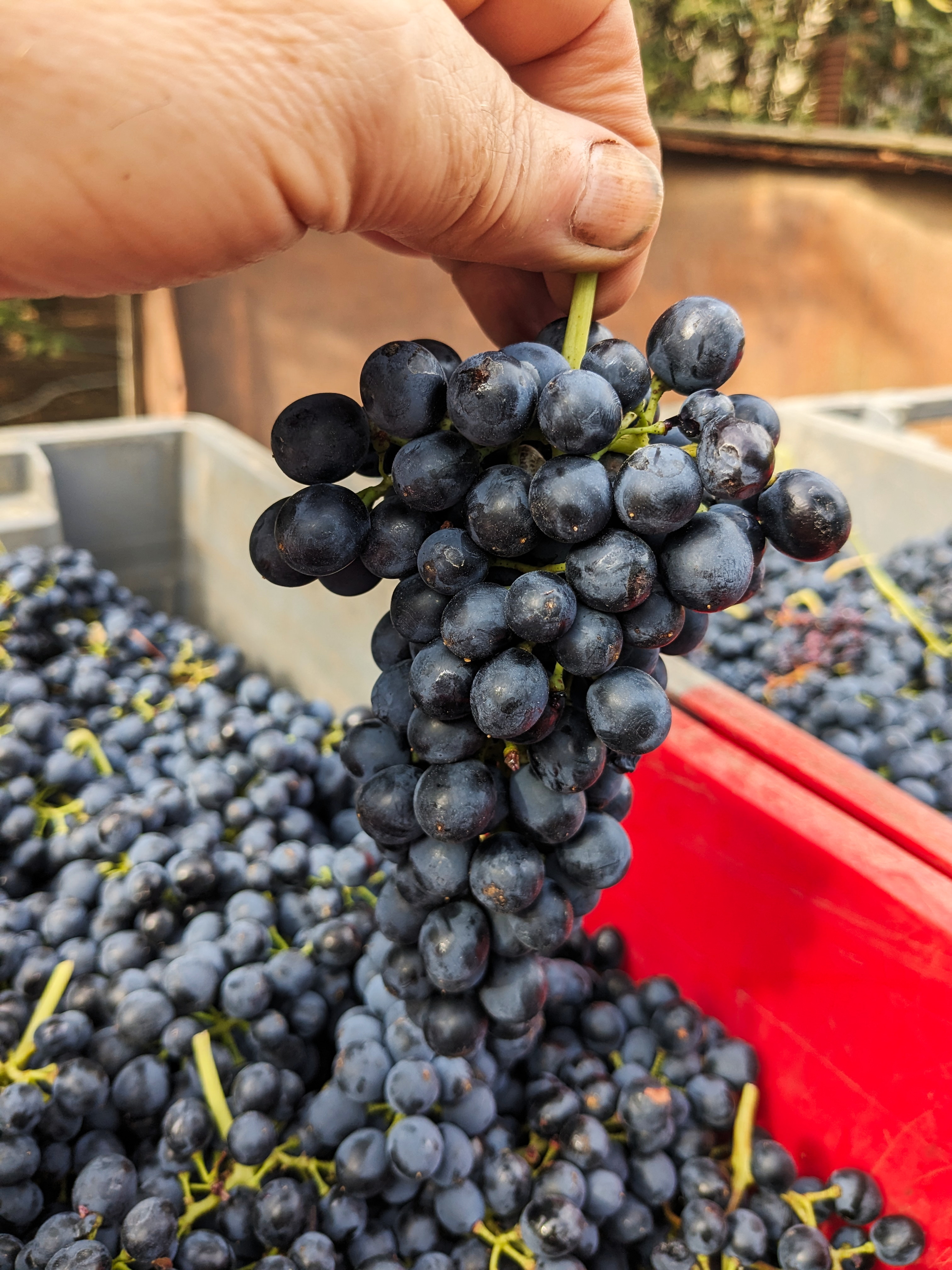
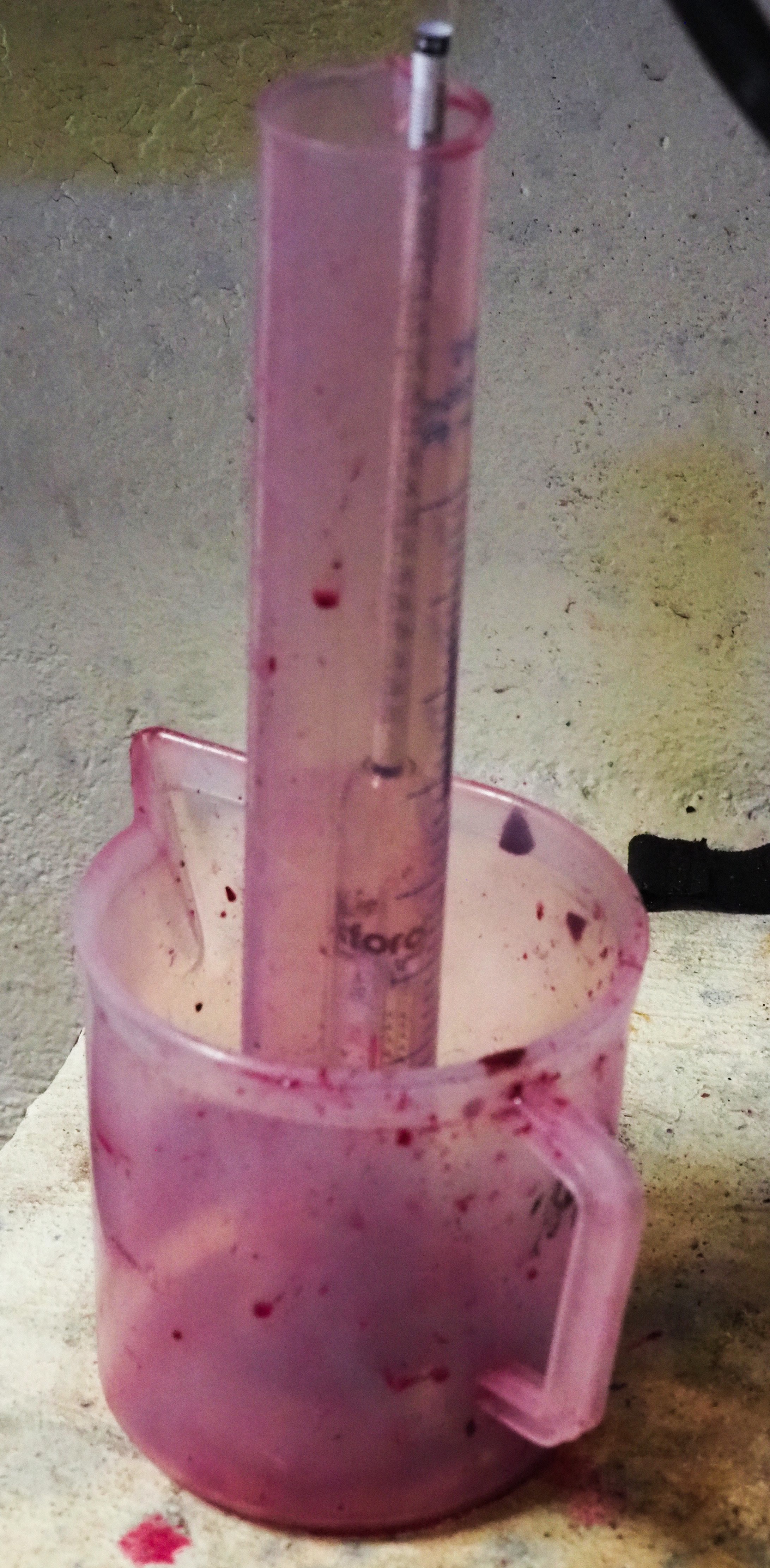
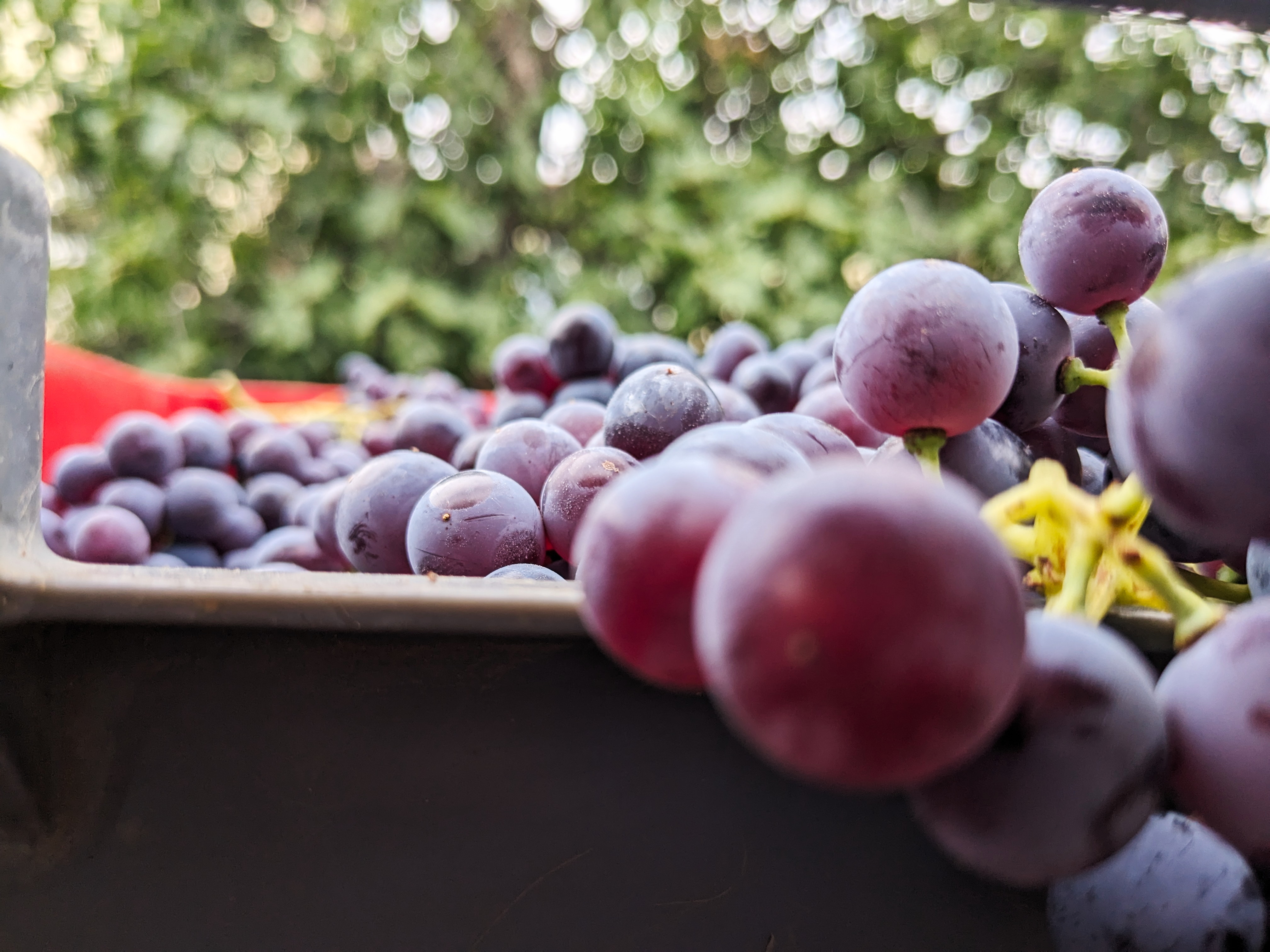
Photos by Flora Rey

However, here are some thoughts in the 23 wines and how they are progressing. It’s always difficult to taste new wines, most were nearing the end of fermentation and most are wines which will be components in final bottlings rather than the end product itself. Rather than run through each of the twenty one wines these are my general thoughts.

It was interesting to hear Jeff say something I have been thinking for a couple of years. White wines are becoming some of the best, most interesting wines which he produces. Though he is best known for the excellent red cuvées such as Classe, Le Vin Des Amis and La Vigne Haute many of my favourite bottles have been white (and orange) wines such as OW, TSCC and Macabeu. I’d have assumed the warmer temperatures of recent years would not be good for white grapes but they have flourished under Jeff’s care. Perhaps the switch to grapes such as Macabeu, Clairette and Servant are helping, more suited to heat and with characteristics such as bitterness which prevent any tiredness in the grapes.

As I said TSCC 21 has been one of my favourite Coutelou wines recently, this time around Jeff has added Aramon Blanc to make TSAC (Terret Blanc, Servant, Aramon Blanc and Clairette), which is progressing nicely. Clairette found the hot vintage difficult and was picked early to maintain those bitter notes and both tanks were doing well, I preferred the one with the addition of Clairette Rose (yes, another new grape) with its liquorice notes. Two cuves of Macabeu are being made, both in concrete egg. The first, from Sainte Suzanne vineyard, had finished fermentation and was lovely with clean, direct white fruits and good grip. The other, from Peilhan, was still fermenting and had sherbety notes and a distinct orange, citrus note, interesting.

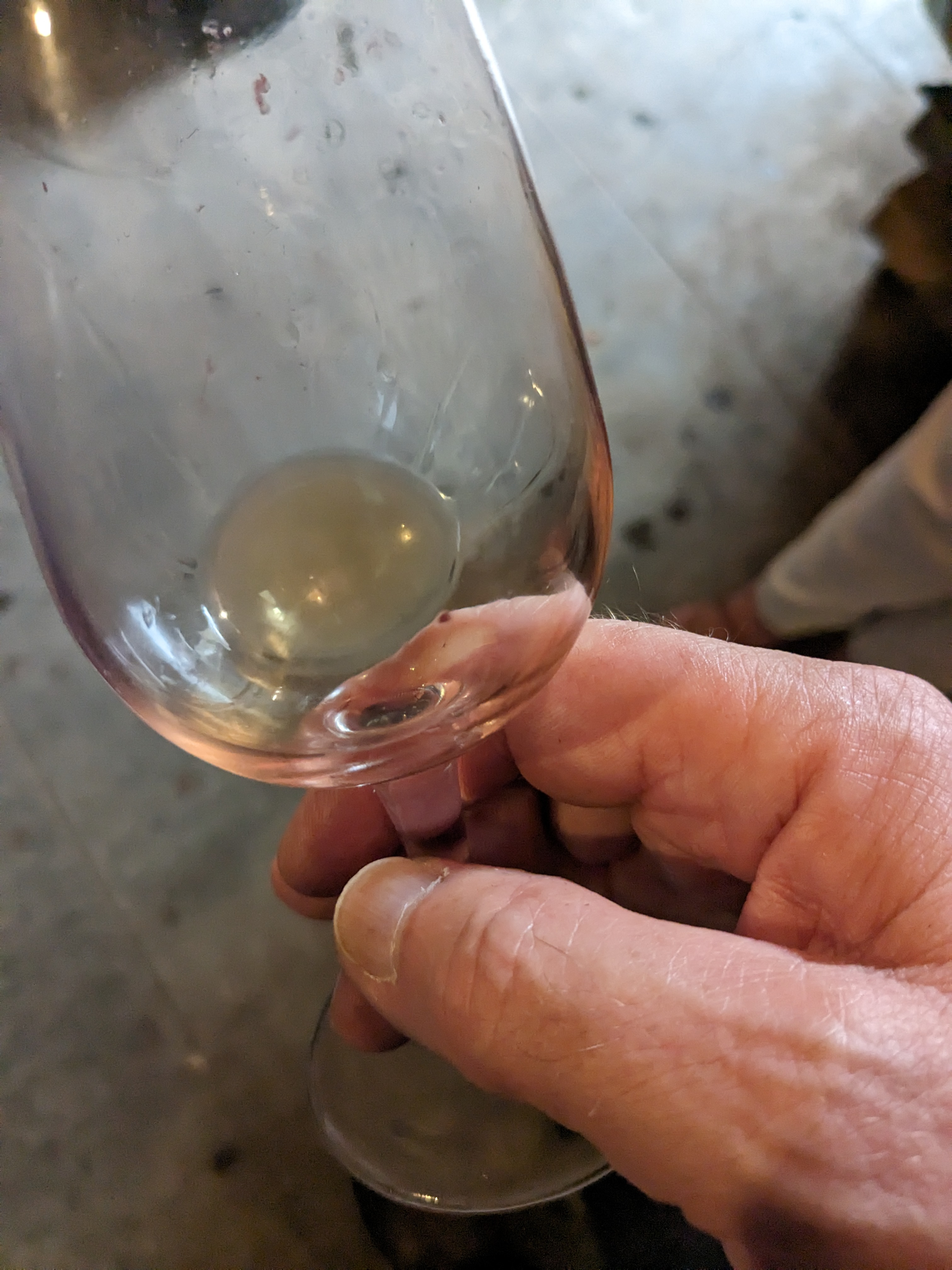
Another interesting wine was Grenache Gris made in amphora. It had grapefruit notes and was very clean but there were also distinct red fruit notes, perhaps from the distinctive pinkish skins – such a fascinating grape. The macerated Muscat d’Alexandrie (probably the future OW) was also worth a mention. Muscat always shows itself in a wine with its exotic, aromatic spiciness. It can have a sweetness, even in dry versions, but the maceration had extracted lots of juice and the skin contact adds texture and slight bitterness. Muscat grapes are usually quite big and have thick skins, the long maceration meant they had released the juice more than a traditional press.

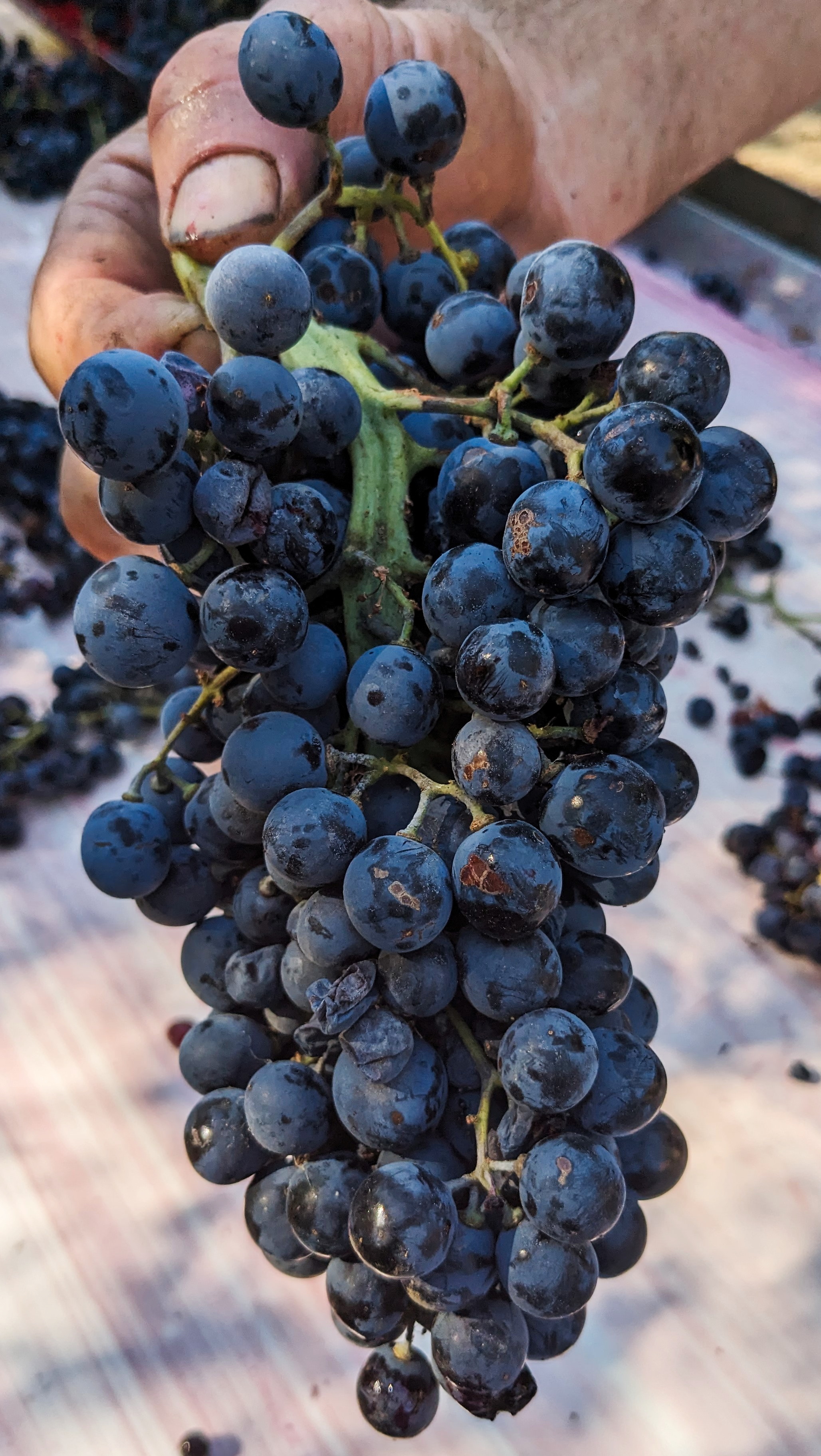
Syrah found the 23 vintage difficult too, the vast majority was picked early and the grapes were very small with less juice than normal. Jeff’s decision to bring in those grapes has paid off in three separate tanks. Segrairals and La Garrigue Syrah was pressed after a short maceration and there is good, rich, red fruit. The whole bunch tank was still fermenting and there was a clear stalk influence with its freshness. No Vigne Haute in 23 though, unfortunately. Cinsault is another major crop for Jeff and it has done well, offering lots of attractive light fruit. I am sure it will be used for blending as well as, maybe, a 5SO. Grenache too has done well and brought lots of red fruit. Mourvedre, not always my favourite, has also brought bright fruit, promising.

Flower Power is one of my favourite Jeff wines with its expansive list of grapes from Font D’Oulette and the Peilhan terrace, over thirty varieties in total. Most surprising was the emergency pick. We harvested Grenache, Morastel, Aramon and Clairette on day one of the harvest as the vines were suffering. Yet, the wine shows no sign of stress and offers dark, rich fruit with good structure. Another example of Jeff’s insight and expertise.

My favourite wine of the whole tasting though was the Carignan from Rec D’Oulette/Chemin De Pailhès which goes to make Flambadou. There were already rich black and red fruit notes, structure and acidity, already very good and one I shall hopefully acquire when it is bottled.

The 23 vintage has tested Jeff sorely, the drought creating stress for him and the vines. He has had to plan carefully whilst also responding day to day to the needs of his vines. This tasting showed his skills as a winemaker faced with those climatic problems and the difficult fermentations that resulted. Whites and reds of promise, decent quantities, 2023 will not be a stellar vintage but there will be plenty of very good wines to enjoy.
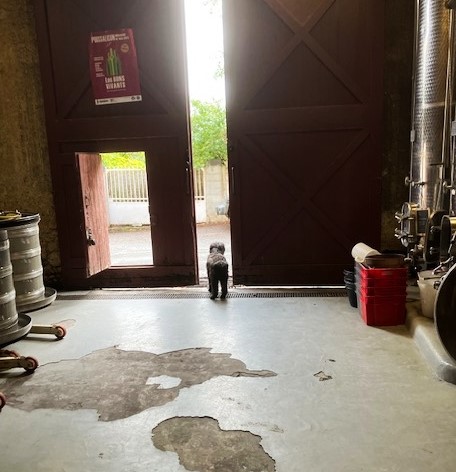
Surveying the 23 harvest (photo by Pat March)


Leave a comment

Sorting through

As it’s been ten years of vendanges with Jeff Coutelou I was thinking about how my role has changed. In 2014, my first harvest, I found myself in a confusion of relentless activity with a background of heavily accented Occitan French coming from different directions of the cellar or vines. Jeff, Carole, Tina and others helped me learn about what was happening. I wanted to help but was aware that I just needed to keep out of the way a lot of the time. I did learn, however, to sort grapes from case into the destemmer and to operate the basket press. Even to distinguish a grau from a saut.

2014

With each year I understood more and more what was going on and became confident of helping rather than just being there. I worked alongside Jeff for three years and spent time getting to know the vines, cellars and most of what goes with winemaking.

By 2017 I could deal confidently with just about any of the jobs which needed to be done. 2020’s covid enforced break and my turning 61 meant that by 2021 I was physically less capable and bigger teams of helpers meant that I didn’t need to do the heavy lifting, especially in the cellar. What I could do though was sorting / tri. Jeff has taught me so much about vines, wines and nature. I can readily recognise diseases on grapes, problems with bunches and so on. So, my role at harvest time has fixed on that ability as well as helping out with other jobs, like picking, when needed.

Fortunately, 2023 saw very few real issues for us to tackle as the grapes arrived at the cellar. The drought meant that downy mildew never really started, it requires more moisture in the soils to take hold. Oidium (powdery mildew) starts later in the season and the thunderstorm of June 29th brought a tiny amount to one or two parcels but much less than most years. Even ver de la grappe seemed to be reduced despite the threat from the cryptoblabes which I have written about before. Snails, however, were everywhere as they climbed the vines to the grapes looking for moisture in the parched vineyards. Dried leaves are inevitable in the cases but, again, there were more than usual as vines had shed leaves early in order to give all available energy to the fruit, their means of reproduction.

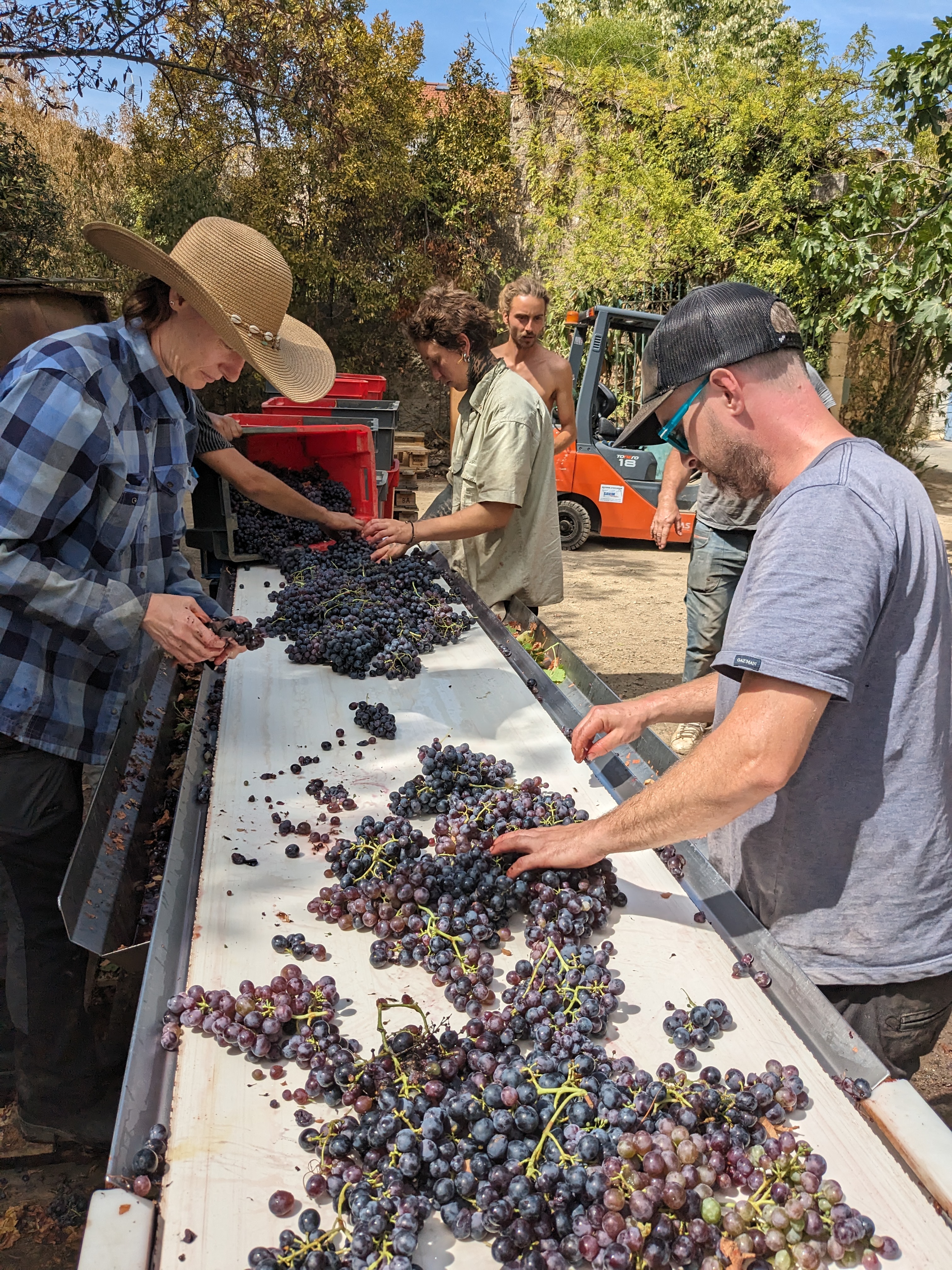
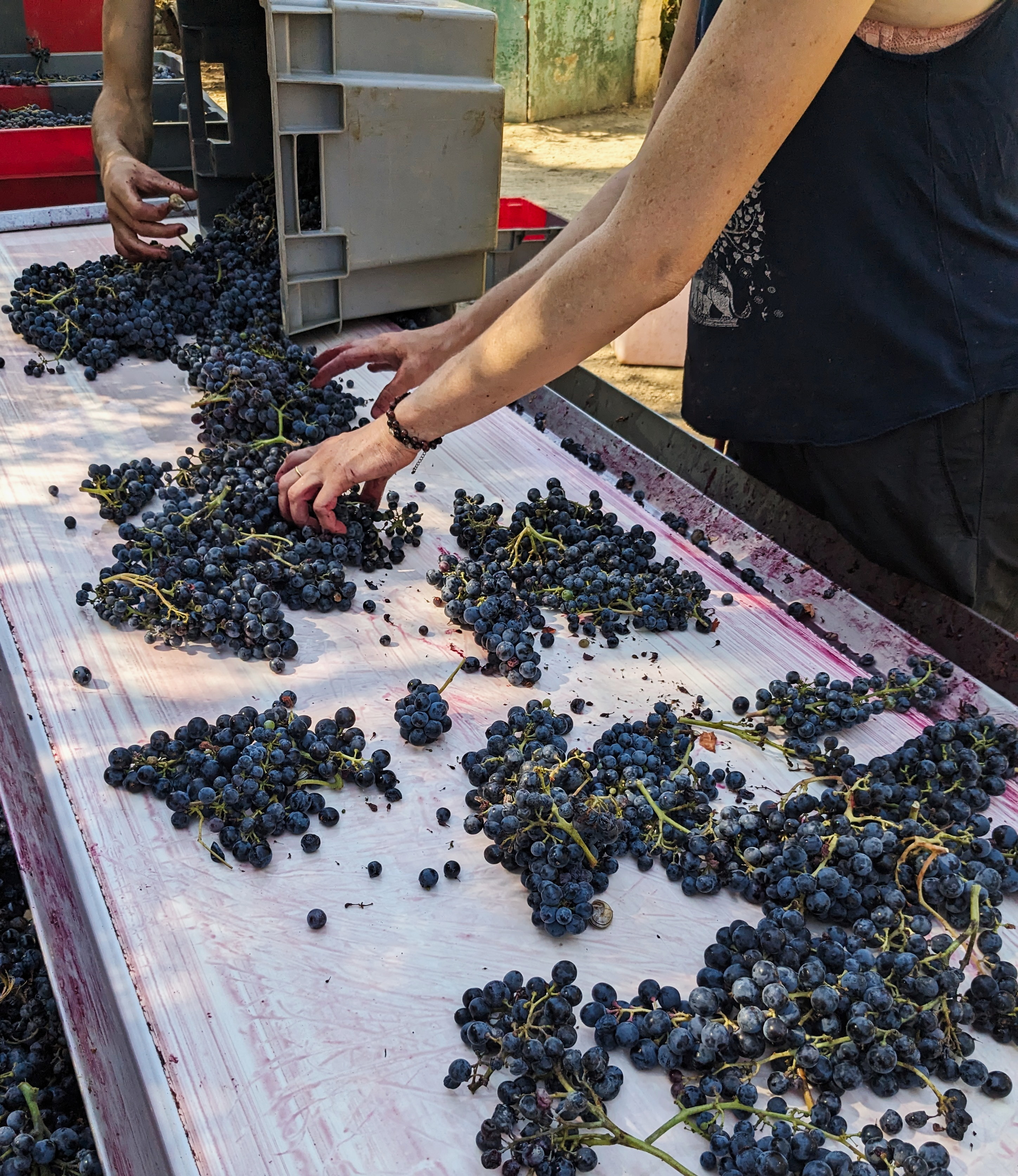
Snails and leaves do not require huge skill to sort out from the grapes on the table. (We only had a sorting table after 2016). However, on September 1st, the last day of picking, there were a couple of issues to sort through and I wanted to explain how you tackle them. The video was made whilst grapes were still coming in so it’s not the best quality, apologies.

How could you tell if you needed to cut out some of the bunch?

Visual clues first, some of the bunches looked a little wet, juice had escaped, a sign of something in the bunch damaging it. Next, touch. If the bunch felt firm then it was likely ok though I would still break open some of the bunches to confirm that all was well. If the bunch felt squishy then it definitely needed closer examination. Finally, smell. Was there a vinegary odour which would indicate the worms had eaten some grapes and juice had flowed inside the bunch causing rot and harmful bacteria to flourish? Fortunately, the latter was not the case at all but there was some careful sorting nonetheless to ensure only good grapes went into tank. If it means rejecting whole bunches even then it has to be done.

Doing this at speed with several tonnes of grapes arriving in a day involves practice and experience to do well. It’s just one, small link of the chain of making wine but Jeff and all good winemakers insist upon careful sorting to avoid, as much as possible, threats to the health of the wine. This may well be my final full vendanges, they have all been memorable for the people I have met, the wines I have contributed towards and the insights into viticulture and nature which Jeff has given me. When I arrived in 2014 I had no idea that I’d still be making great wine ten years later.

2023, photo by Flora Rey


Leave a comment

Water is the driving force of all nature (da Vinci)

Peilhan

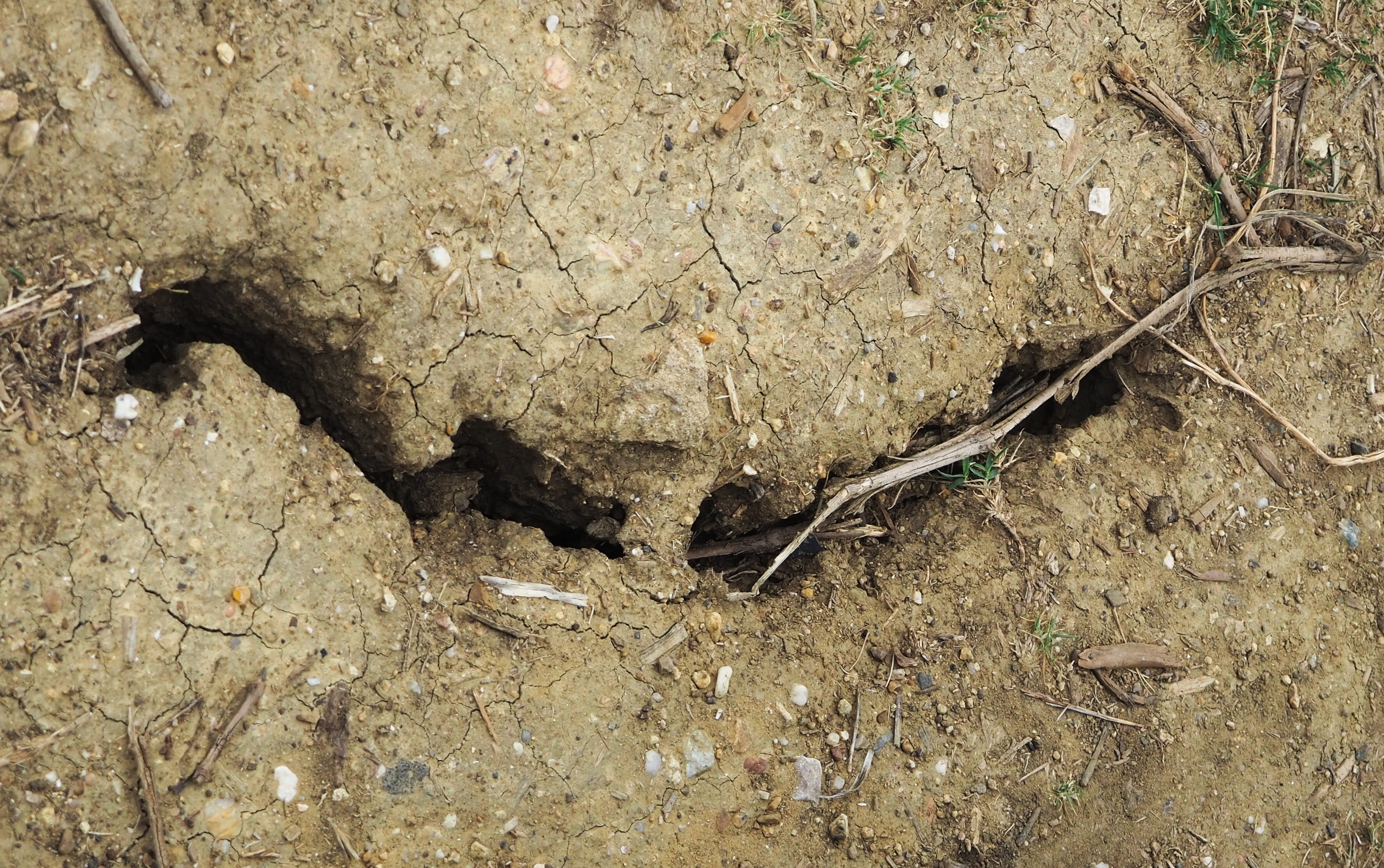
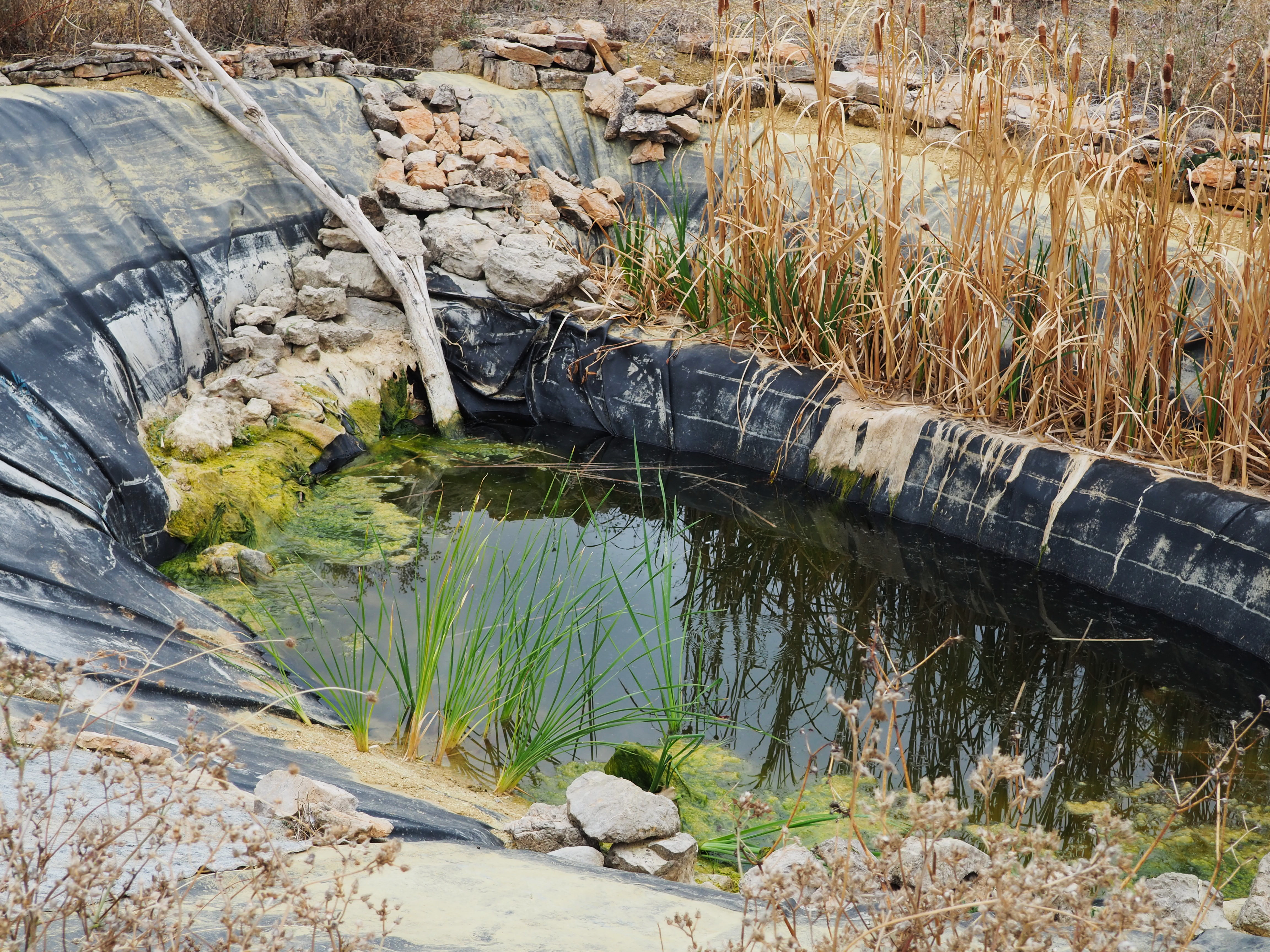
A visit to Peilhan on Tuesday was more evidence of just how dry that part of Puimisson vineyards has been. Cracks in the ground, vines looking tired from battling to produce fruit at risk to their own health. It must be a concern as to how they will respond next year, hopefully the early picking has offered remedial support. Most obviously there was an alarmingly low water level in the new reservoir, Jeff planted bullrushes at a height expected to be fine for them but they have dried out. Ironically, it rained for an hour in the afternoon but much, much more is required for a full recovery.
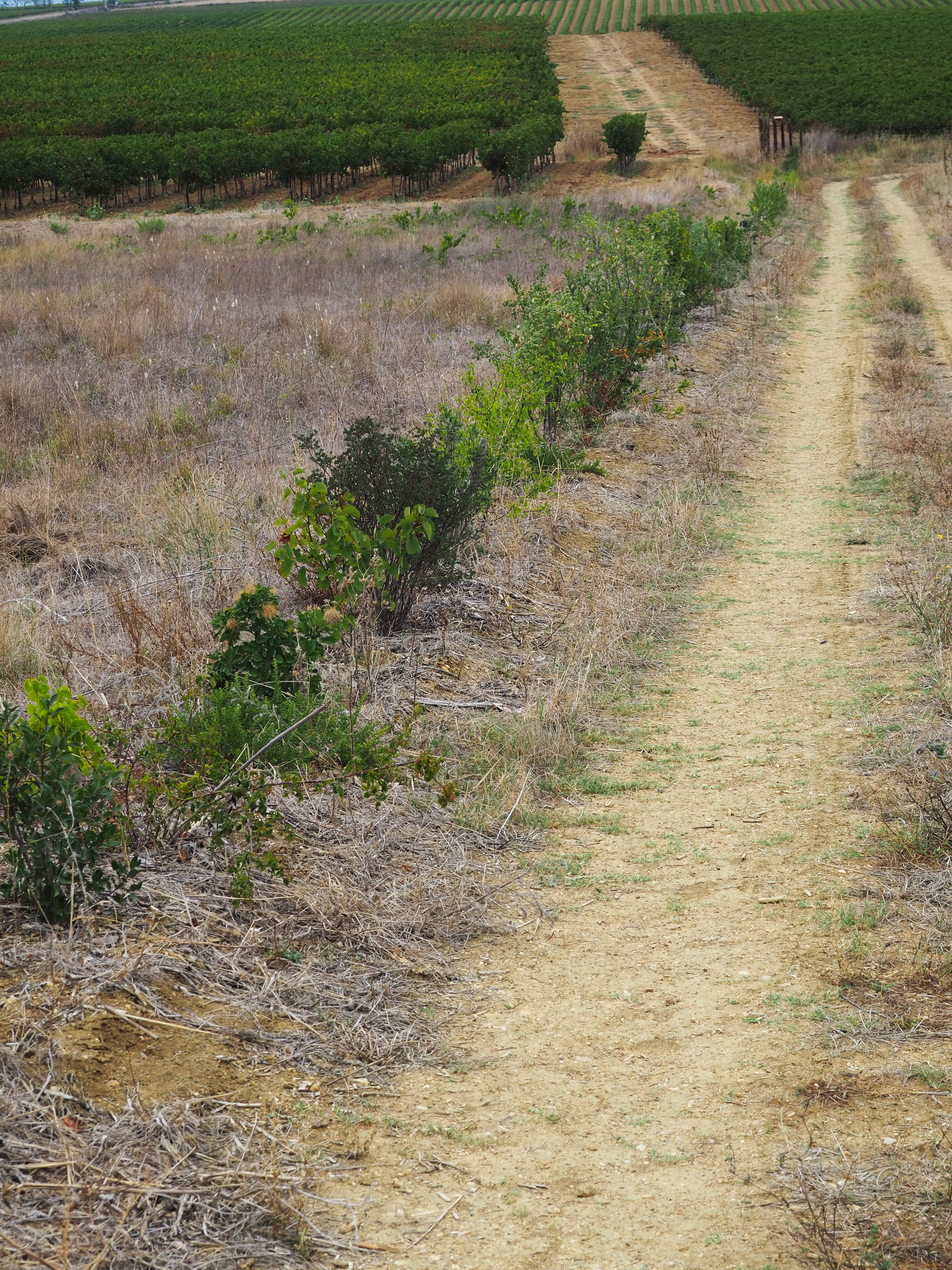
You can see the importance of water in this photo of the shrubs on the side of the new parcel. Jeff has watered these as I described here and they look green and healthy, especially in contrast to the parched vineyards. People often ask me why Jeff doesn’t irrigate the vines like most vignerons in the area. The main reason is principle, not wanting to interfere in nature and produce wines that are artificially boosted. However, have a look too at these photos of a neighbouring vineyard.
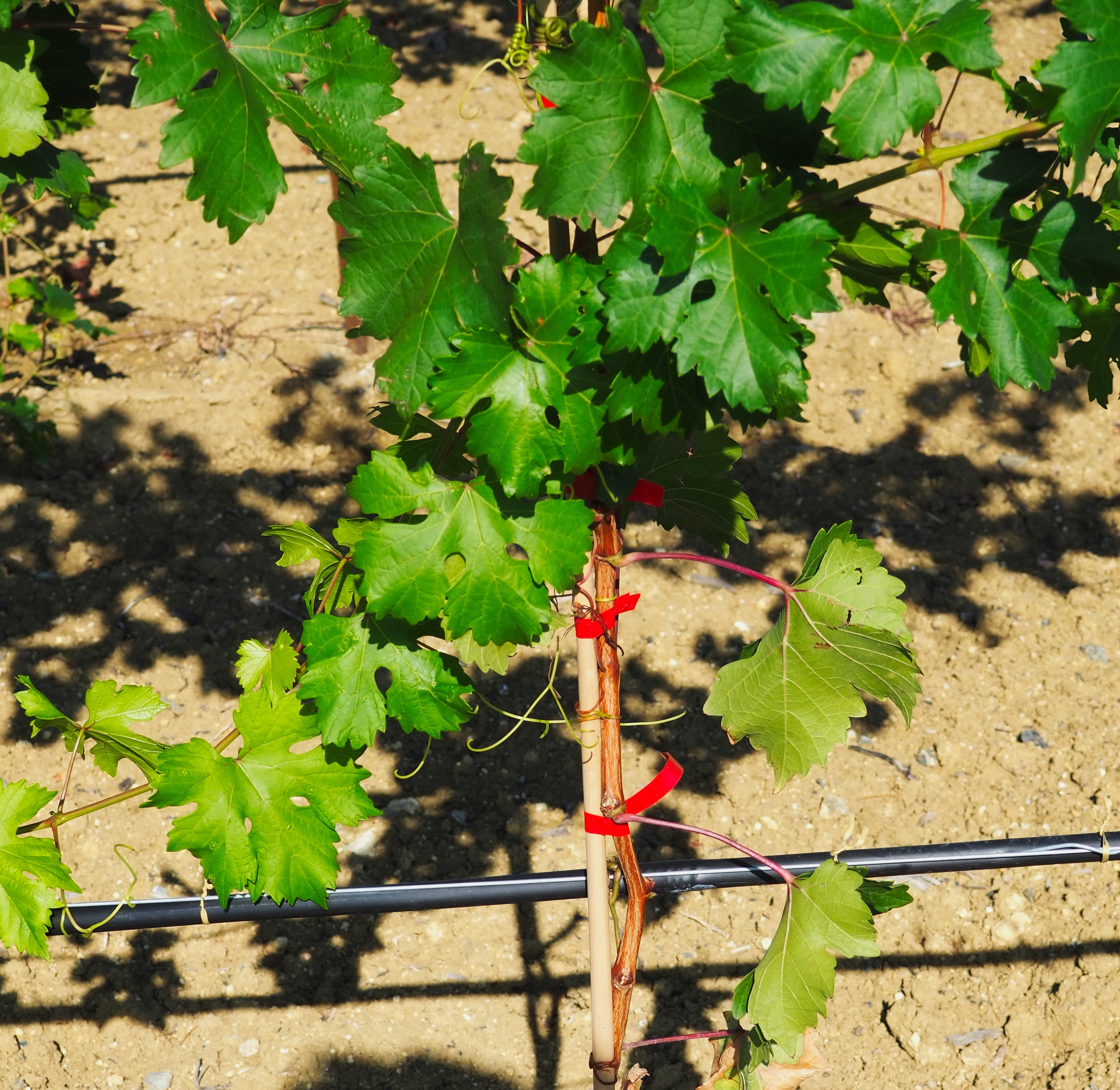
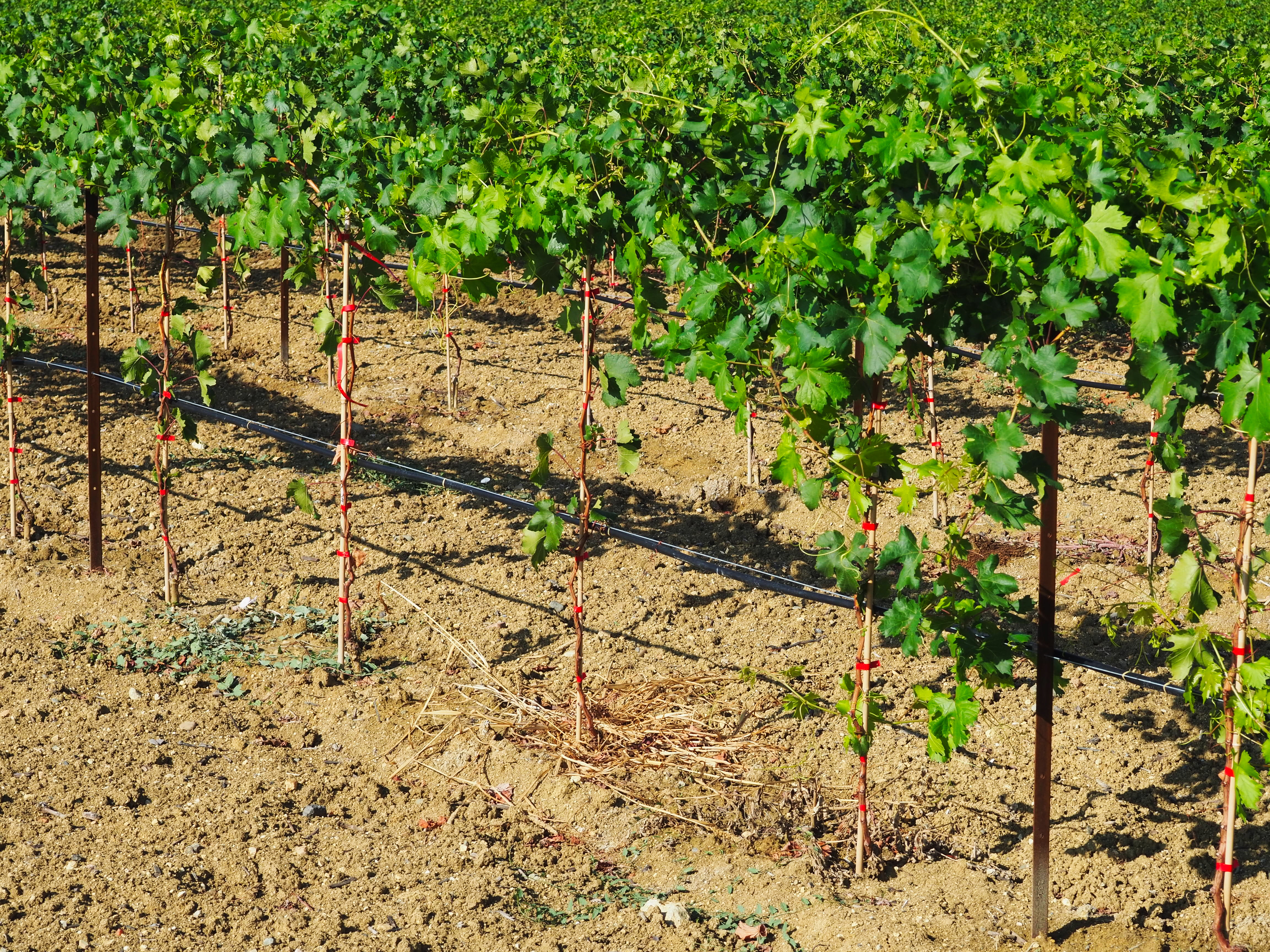
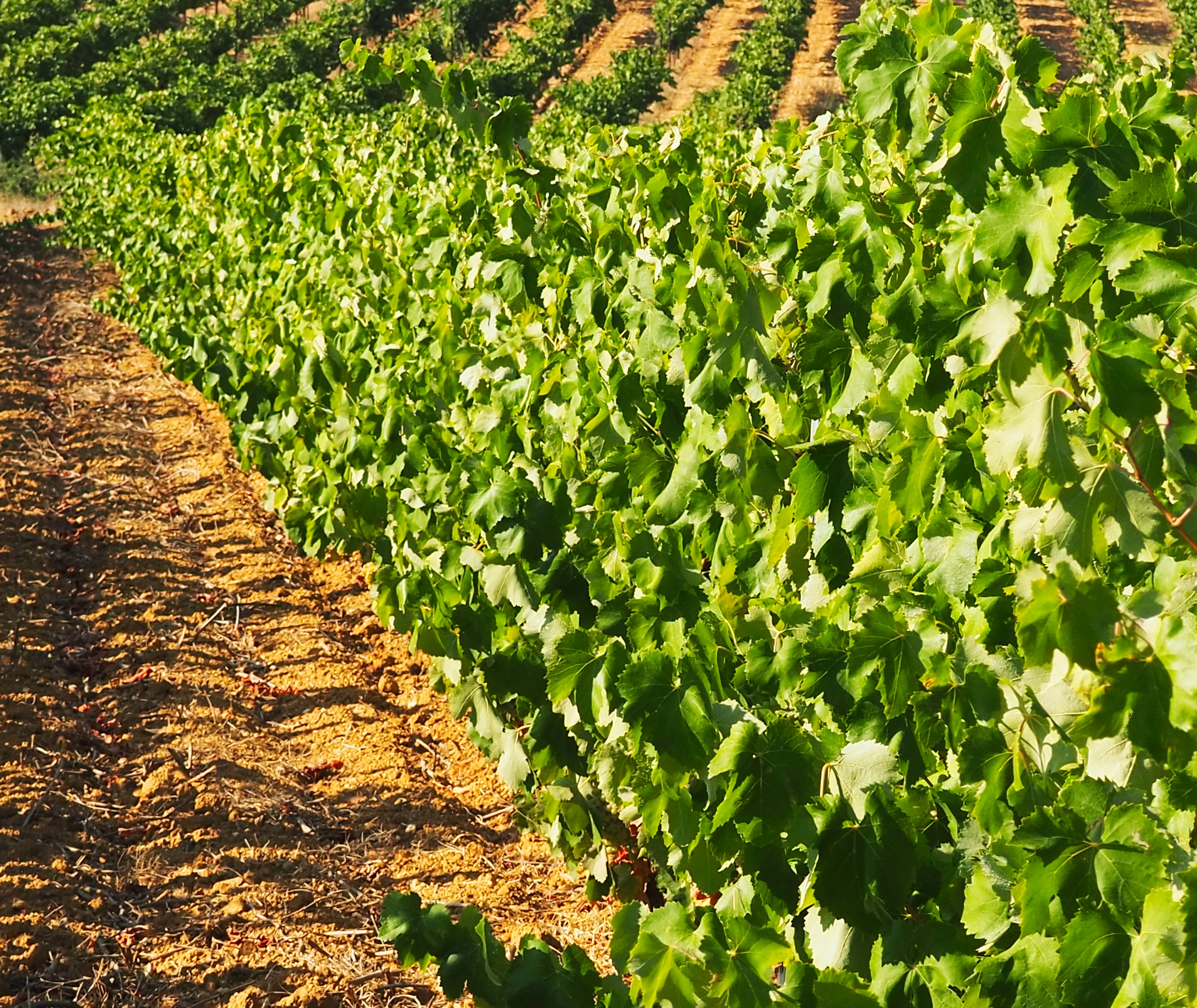
These vines were planted early this year, have been irrigated (note the rubber pipe) and are already 1.5m high and expected to produce usable grapes next year. However, look at the trunks, they are like matchsticks, lacking any real strength or longevity. I doubt they are there for the long term, how sustainable are such practices?

Midi Libre, the local newspaper, ran an article today (Sept. 15th) about a viticulteur in Fitou further west from the Herault in Occitanie. He stated bluntly that with rainfall of 150mm in 17 months his vineyards were officially a desert and they are dying in front of him. Jeff was telling me last night that four of the last ten years have seen such drought conditions now, though this is the worst. Another, 2021, was hit by frost. As da Vinci said we should be very aware of the importance of water for life.
Back in the cellar Jeff was carrying out the last of the main décuvages. This is where the grape juice / wine is run off from the tank leaving the solids behind, pips, skins and stalks. They have to be manually removed from the tank, backbreaking work, and re-pressed to produce more juice, vin de presse which will form around 8% of the final wine if put back with the free juice. The vin de presse is more deeply coloured and tannic so needs to be carefully managed, you wouldn’t want it to dominate the overall wine. Timing the décuvage is an art in itself, too soon and the wine would be very light in colour and flavour, too late and it would risk bacterial damage as well as developing quite strong alcohol notes.

A smaller tank of Macabeu and Clairette was also ready for décuvage. Jeff raised it by forklift and the wine ran off into another tank below, a variation on the modern gravity operated cellars! The wine has fermented nicely, smells and tastes really good and will now be given time to rest. Interestingly, the sludge in the bottom of the tank was also put into a container. It contains active, beneficial bacteria which have helped fermentation. If other white tanks become fermentation stuck, then this could be added to give it a jump start.

Things have settled down now, the big tanks are now wine tanks rather than simply full of grapes, fermentations are ticking along quite nicely, Jeff is more relaxed about them. The 2023 vintage will be unveiling its quality in coming days and weeks.

Hopefully, substantial rain will also arrive soon to ensure the future of winemaking in the area.


1 Comment

Thoughts on Vendanges Coutelou 23

Jeff may have been working with the wines!

An extreme year for weather brought an unusual harvest to Puimisson. Starting on August 21st, finished by September 1st, at least a week earlier than usual. I checked my notes from the last ten years and in 2020 the finish was on the 8th with other years going on until the 21st and 22nd of September.

Drought in Peilhan

The drought of late 2022 and 2023 was certainly the biggest influence on this year’s vendanges. It meant having to pick some grapes early to relieve vines which were literally diverting their last reserves into grapes as part of the reproductive cycle of the plant albeit at risk to their own health and future. It meant that Syrah, one of the cornerstones of Jeff’s vineyards, struggled badly, the grapes were small, the skins and flesh containing far less juice than normal.

Good looking Syrah

It meant altered patterns of microbial nitrogen production in the soils. Studies suggest that the nitrogen stays in the topsoils rather than getting into subsoils where vine roots extend. Lack of nitrogen in the grape must can bring problems for fermentations as it is needed to feed the yeasts carrying them out. If there is not enough nitrogen the fermentation can become stuck leaving it vulnerable to harmful bacteria and volatility.

I know that scenario was causing Jeff a lot of stress and he has had to manage the various tanks carefully to ensure that some grapes with more nitrogen e.g. Grenache, were used to boost those not so rich. Fortunately, he is a very experienced and skilled winemaker, the analyses show that fermentations are now moving, slowly but surely. A wine writer said to me this year that Jeff’s greatest talent is turning grapes from quite unpromising land into something very good, he adds value to the wines by his understanding and handling of the grapes. I think this year will prove that to be a very astute observation.

Vendanges 2023 was also very speedy, the picking team often larger than the usual dozen. The last day when we harvested Muscat, Mourvedre and Carignan was quite an achievement. The one positive side of the drought was the lack of disease so that there was little real trouble in sorting grapes at the cellar, otherwise it would have been impossible to get through so many in one day. The early pick may have helped too. The cryptoblabe/honeydew moth which is ravaging its way across the Mediterranean likes to eat ripe, sugar rich grapes. Perhaps, and it’s only a guess from me, the early harvest meant they never really got to work in damaging the bunches.

Clairette suffering, my photo of the harvest

Whilst I’m throwing out unproven theories, I mentioned grape varieties and their response to drought and heat in an earlier post. Sainte Suzanne has plantings of Syrah next to Grenache and Macabeu next to Clairette, the latter a much younger plantation. The Syrah and Clairette, which is a local grape, both struggled this year at the of the village most affected by drought. The Grenache and Macabeu (aka Viura) fared much better in coping with adverse conditions. They have their origins in Spain and I posed the question to Jeff as to whether they were, therefore, more at home with warming temperatures. He was noncommittal to be fair. Interestingly he has planted a parcel of Catalan grape Xarel-lo in Peilhan, will that reinforce my theory? Time will tell as vintages become warmer.

Xarel-lo plantation

I mentioned in one post that we had filled a 100 hectolitre tank with grapes one day. I’m sure Jeff would love it if that was all wine. I should have added that as much as 30% of that tank is made up of skins, pulp and pips which, even after a second pressing, won’t be making wine. However, better a full tank than low yielding years like 2021.

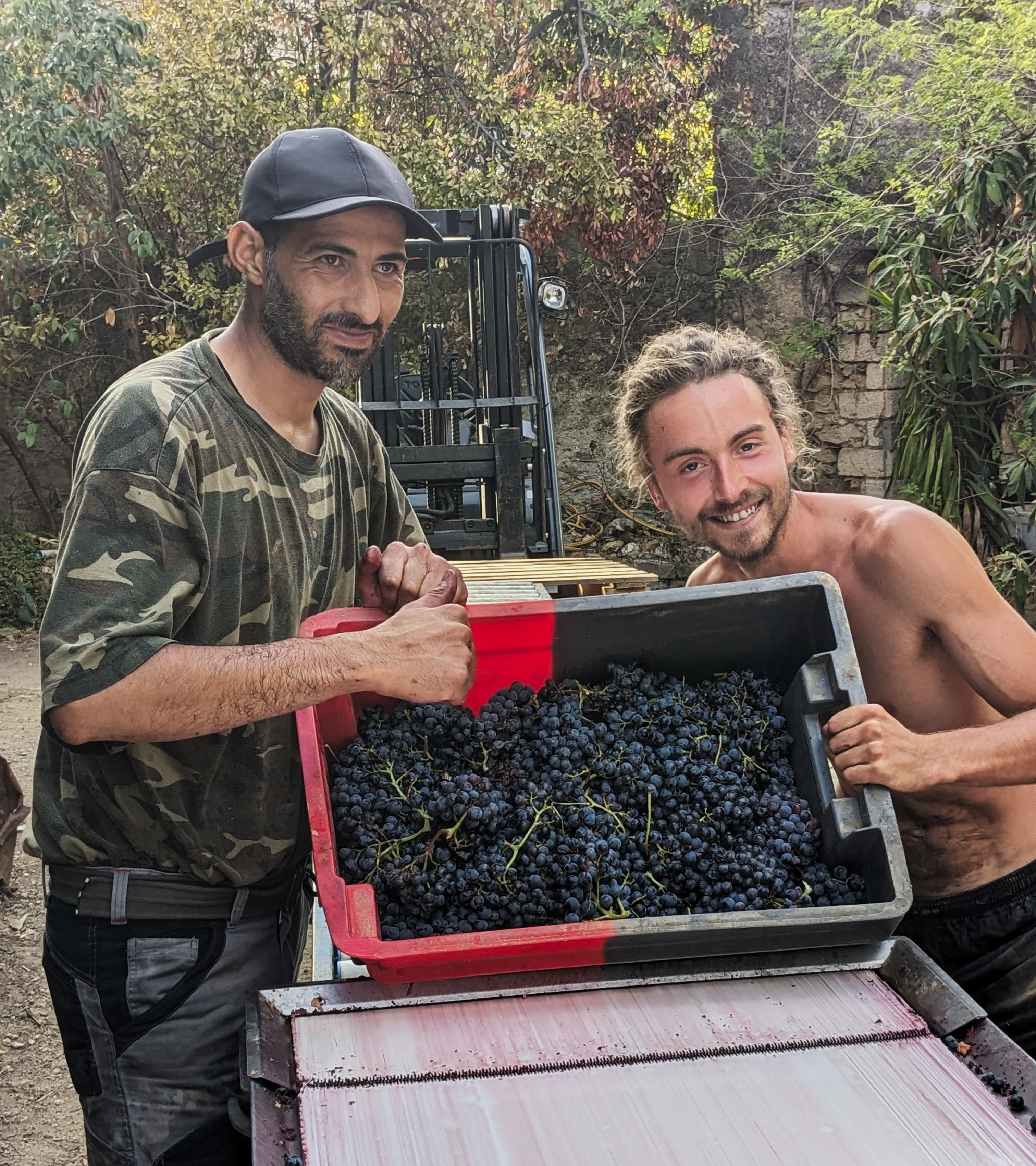
As ever, one of the joys of vendanges is the team I spend time with. Jeff himself, his sister Cathérine and niece Flora, Gilles, Ines, Boris, Mouss, Vincent and Andrew, thank you, it was fun despite the stresses of a difficult year.

L-R – Andrew behind Vincent, me, Cathérine, visitor, Jeff, Ines, Mouss


2 Comments

Vendanges Coutelou 23 – last days

En francais

To prove that I do work! (photo by Flora Rey)

Could we finish before the weekend? Surely not.

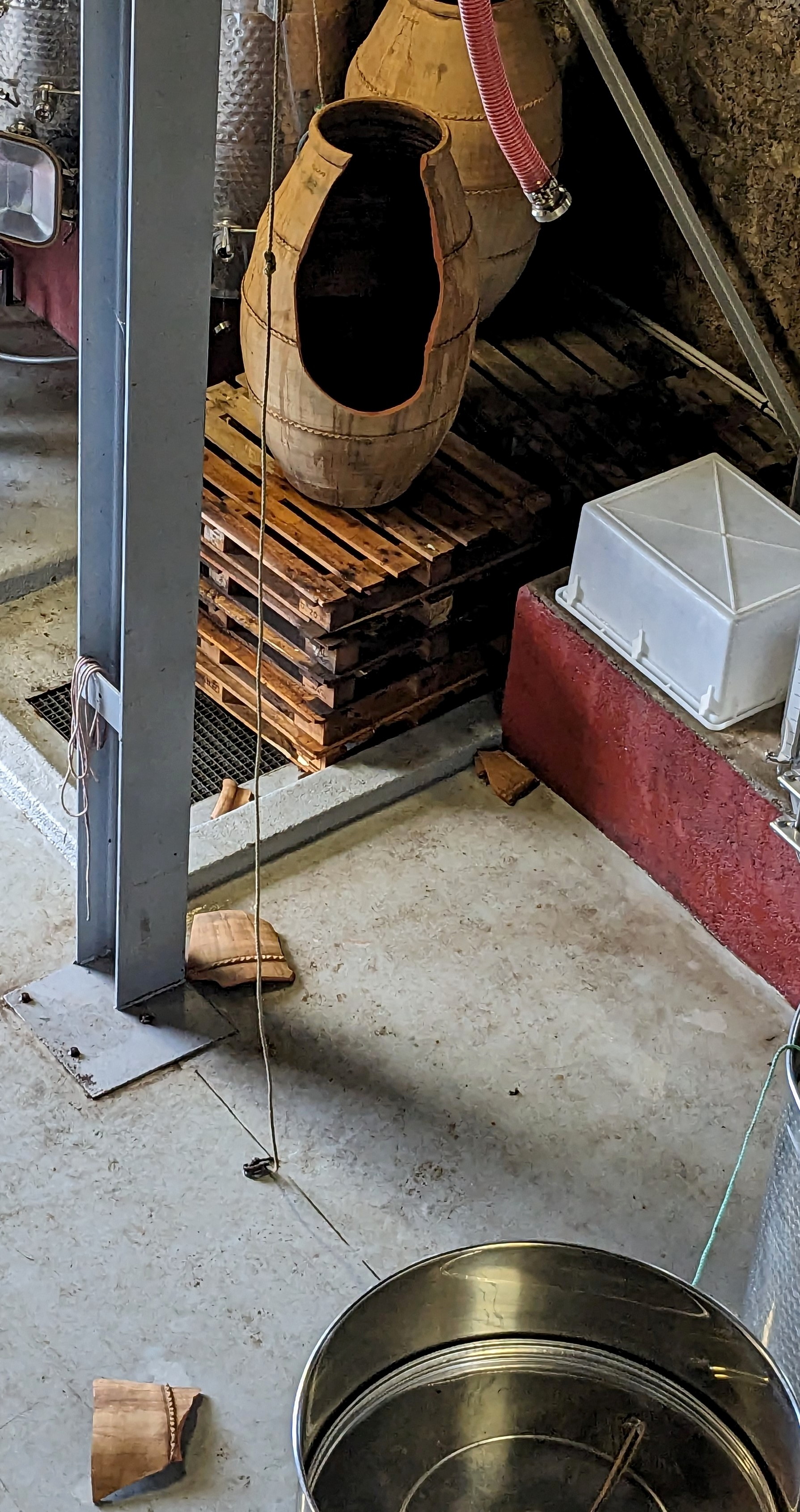
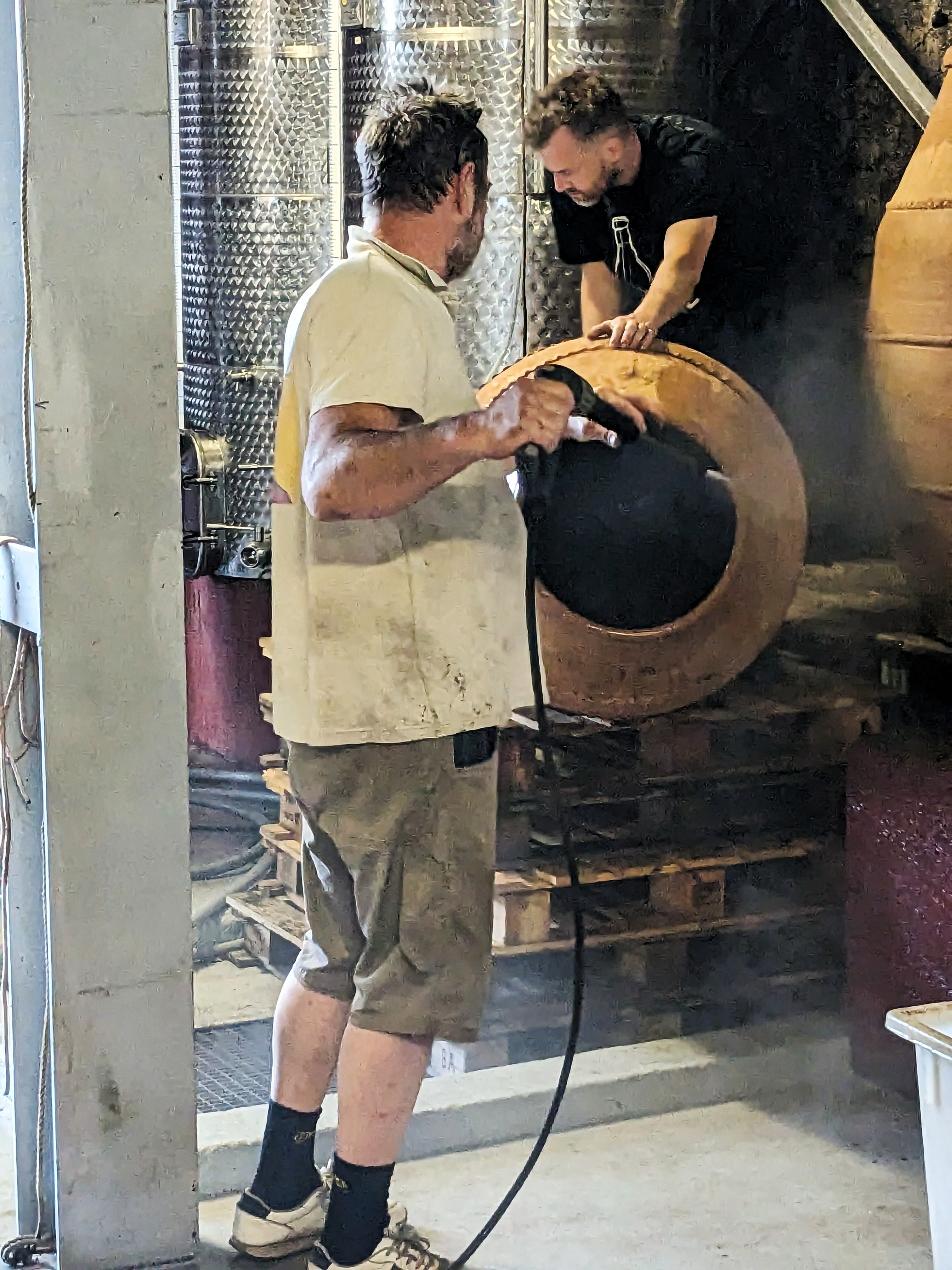
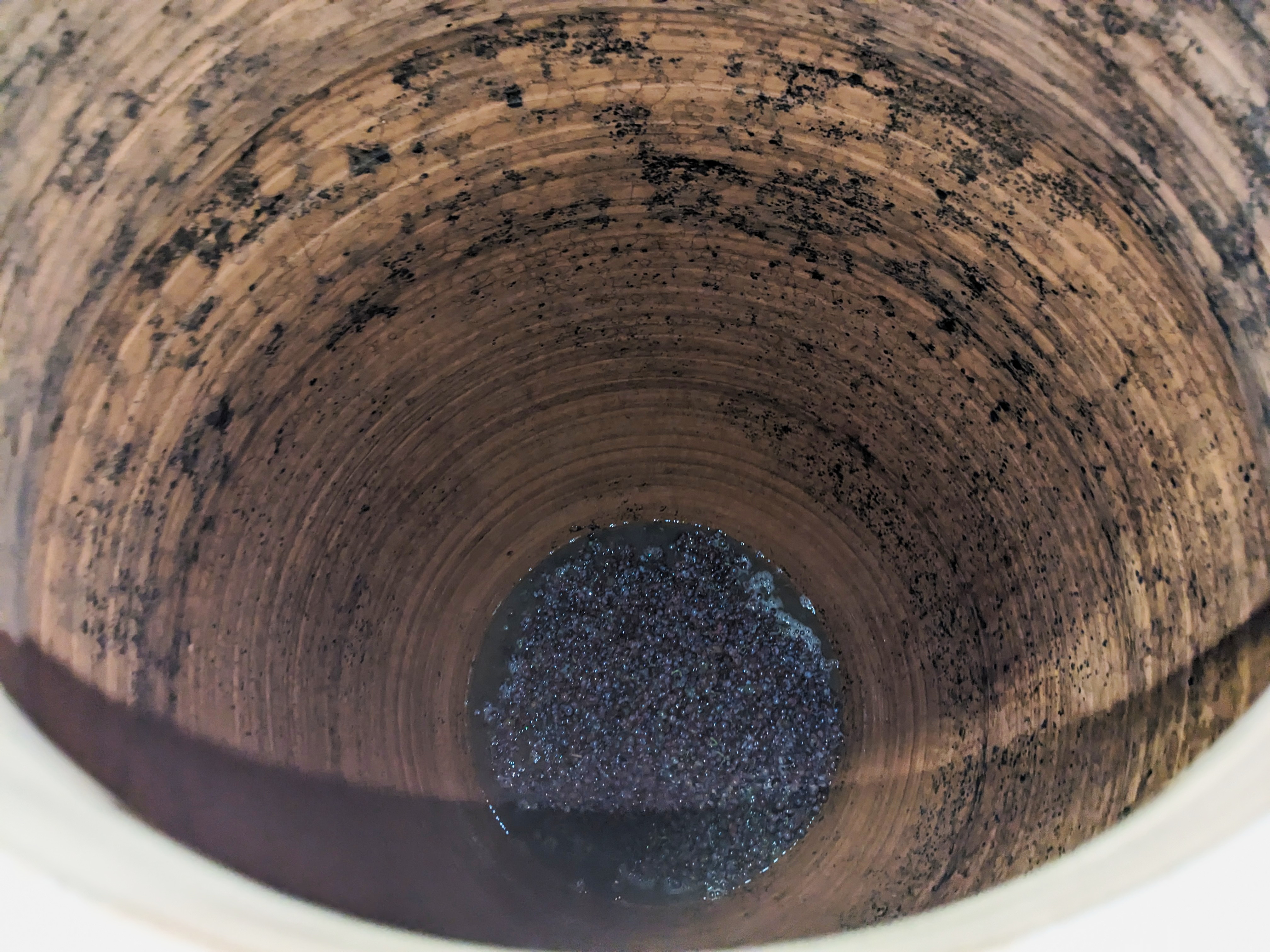
On Thursday, September 31st, a shift in pace occurred, moving from the large production grapes at the sorting table to a significantly more time-consuming task. Amphorae have made a resurgence in the last decade for fermenting grapes. Jeff acquired a couple in 2017 and has since expanded his collection. Regrettably, one of the amphorae burst open last week, likely due to an unnoticed crack, as it was filled with water. The water serves to ensure thorough cleaning of the amphora. One of the new amphorae was still holding remnants of wine from the previous year, with the porous clay retaining some of the juice. Filling the amphora with water, replaced daily, aids in clearing any residue.

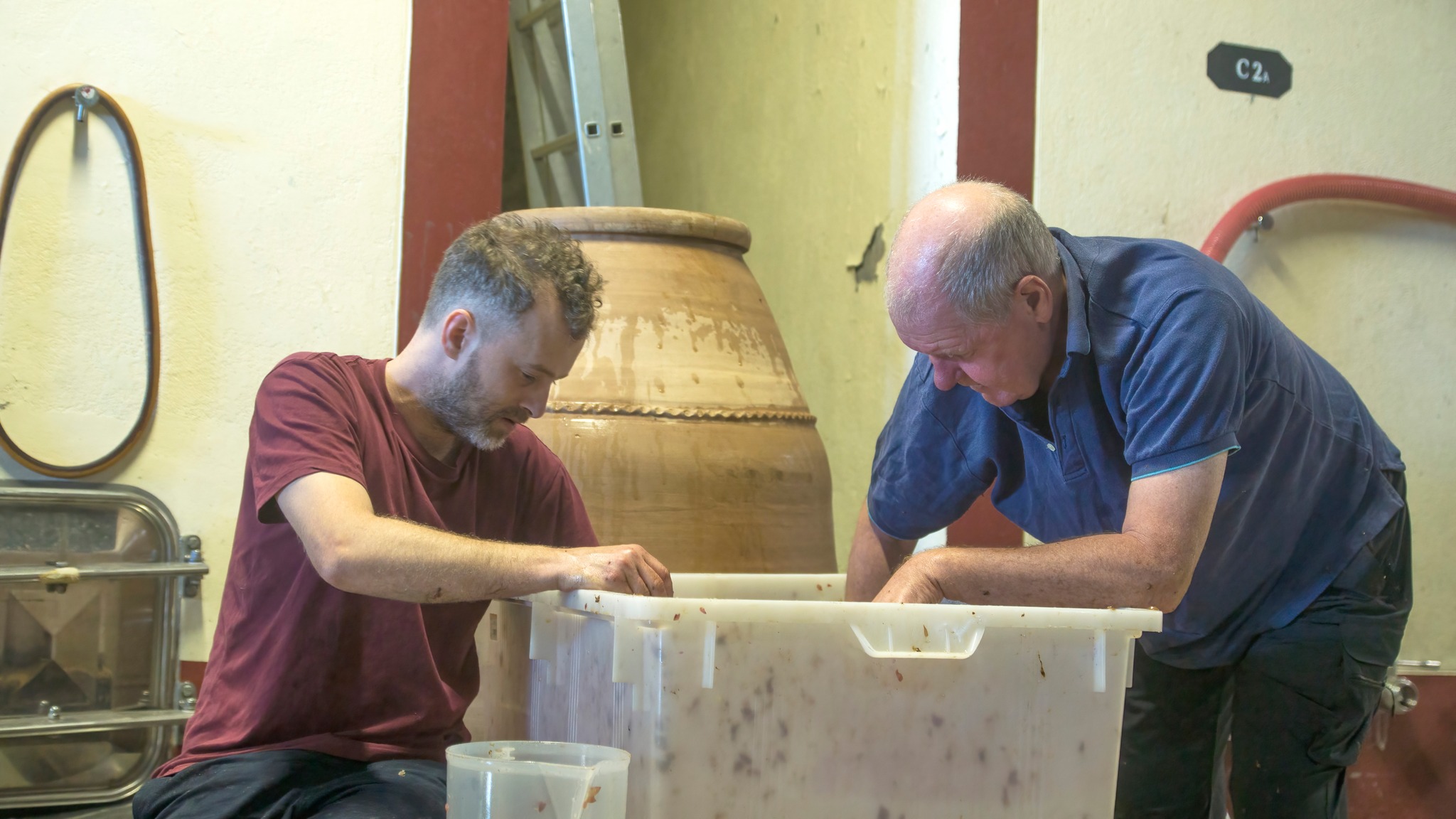
Jeff insists that the grapes entering the amphora be as pure as the clay itself. This meticulous process involves sorting or triage, and indeed, a trio of triages. Today’s selection included Grenache Gris, my favourite grape due to its distinctive colour, and Macabeu.

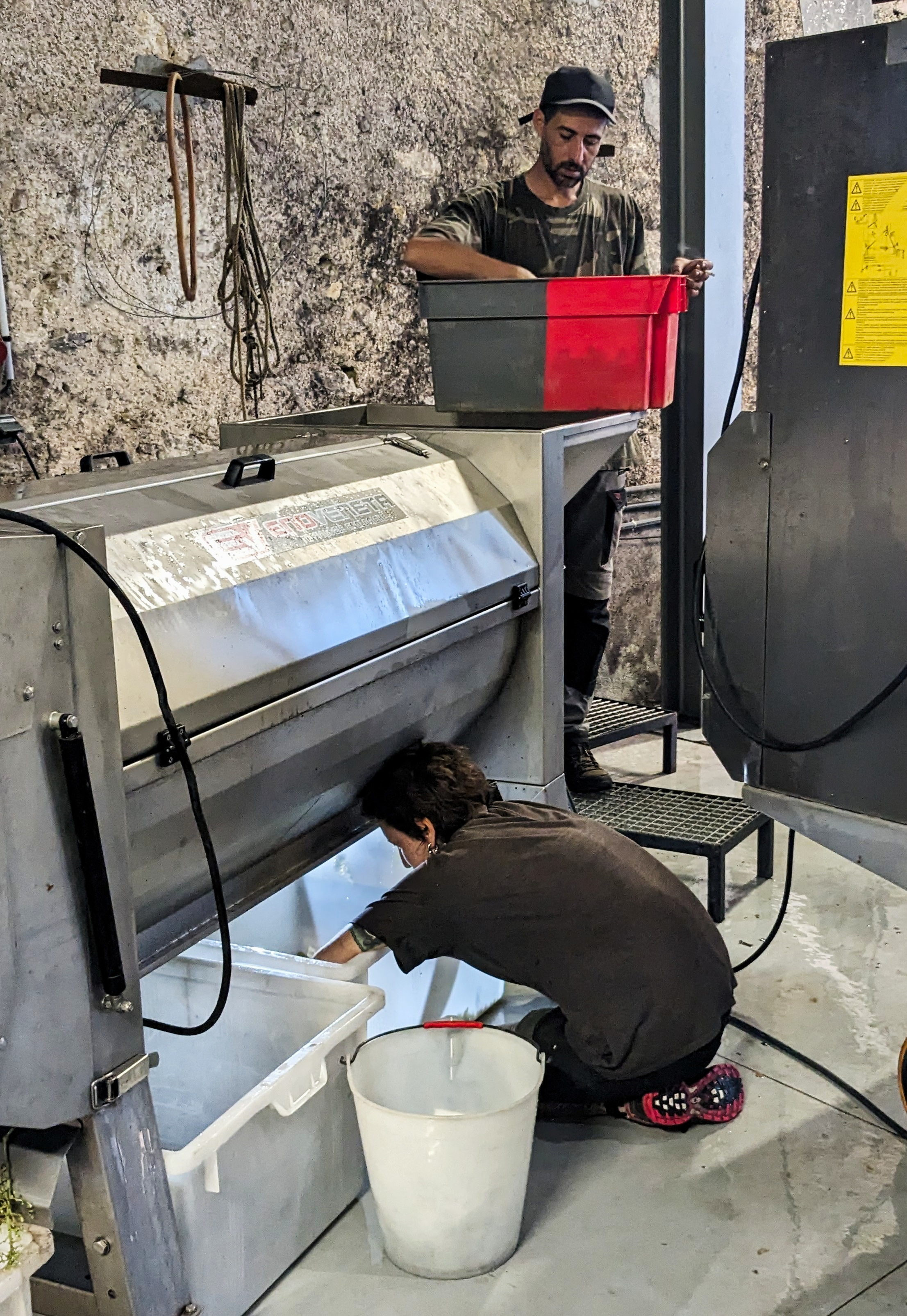
First, the grapes passed through the destemmer after being sorted from their cases. Working beneath the destemmer (érafleur), two of us meticulously removed any bits of stem or leaf that had slipped through. The large container (bac) was then subjected to another round of sorting, with the goal of retaining only pure grapes to place into the amphora. It’s a slow, methodical process. If you wonder why Jeff’s amphora wines might command a higher price, this labour-intensive process is a significant factor.

Meanwhile, the first Carignan of 2023 arrived in the cellars from the Peilhan vineyard, and the team worked tirelessly on two levels of the cellar, the Carignan upstairs and the amphora on the ground floor.

Flora and Carignan

On Friday, another amphora needed filling, this time with Muscat D’Alexandrie, following the same exacting process. However, today saw fifteen dedicated pickers, and they worked relentlessly. After completing the Muscat from Peilhan, they transitioned to Segrairals and the parcel of Mourvedre.

This grape variety is complicated to grow. It has produced some of Jeff’s finest wines in recent years, yet it is notoriously finicky in the vineyard. Mourvedre does not tolerate moisture well and quickly deteriorates when wet. Additionally, the Mourvedre vines at the bottom of Segrairals face a dual threat, as the trees and shrubs in the area have provided shelter to the new wave of grape worms more than anywhere else in Jeff’s vineyards.

As a result, despite the overall health of most of the Mourvedre, it required more extensive sorting than any other grape during the vendanges. I will be posting an article detailing my approach to sorting bunches. Happily, the Mourvedre showed high nitrogen levels in the analysis, suggesting it will ferment well and can serve as a starter for slower tanks. By 3:30 pm, the Mourvedre was processed, and with the abundance of pickers, it was decided to tackle the final grape parcel to complete the harvest.

This last parcel consisted of Carignan from Rec D’Oulette, better known as Chemin De Pailhès. These grapes are destined for Flambadou wine, a regular standout in the Coutelou range. While the bunches and grapes weren’t particularly large, aside from a minor issue with oidium or powdery mildew, the sorting proceeded without problems, and another tank was mostly filled. We completed this task around 6:30 pm, commencing the standard procedure of thorough equipment cleaning. Though not glamorous, this step is essential to prevent spoiled wine. Cleaning is performed both at lunchtime and in the evening, typically when different grape selections begin.

The grapes are safely in, in decent quantities despite the drought. I will soon post an update on their condition, as they should yield excellent wines. Now, it’s up to Jeff to work his magic with what’s in his cellar.

Mouss and Vincent with the last case of 2023 grapes


Leave a comment

Vendanges Coutelou 23 – variety and varieties

En francais

One of the reasons for starting to bring in Cinsault on Saturday had been the weather forecast for Sunday and the predicted rain arrived that morning though only 10mm or so. Cinsault has very thin skins and rain can often cause the grapes to become prone to rot as skins burst with swelling juice. I have spent many days sorting such Cinsault over the last ten years. I was, therefore, a bit concerned on Monday morning when we started up again as the remaining Cinsault was due to arrive at the table. In fact, my worries proved groundless, perhaps the dry year meant the ground soaked up the rain more effectively.

I don’t recall such good quality Cinsault, it might be one of the highlights of the vintage, full of juice and good flavour. It is sometimes used for its own cuvée, 5SO and also for blending as part of Le Vin Des Amis. The only downside was the analysis showing low acidity but that is common with the variety.

The Cinsault comes from the Segrairals vineyard and the pickers moved across that vineyard for the next parcel, more Syrah, such an important part of the Coutelou production. The Syrah was quite small, plenty of flesh in the grapes but not a lot of juice despite the rain. This concentrated material will need blending to add acidity but will definitely add flavour. As the afternoon wore on Grenache arrived from La Garrigue at the other end of the village and proved to be another highlight of the season. Very good quality grapes, good acidity too so this will no doubt be a very useful tank for Jeff to use for blending.

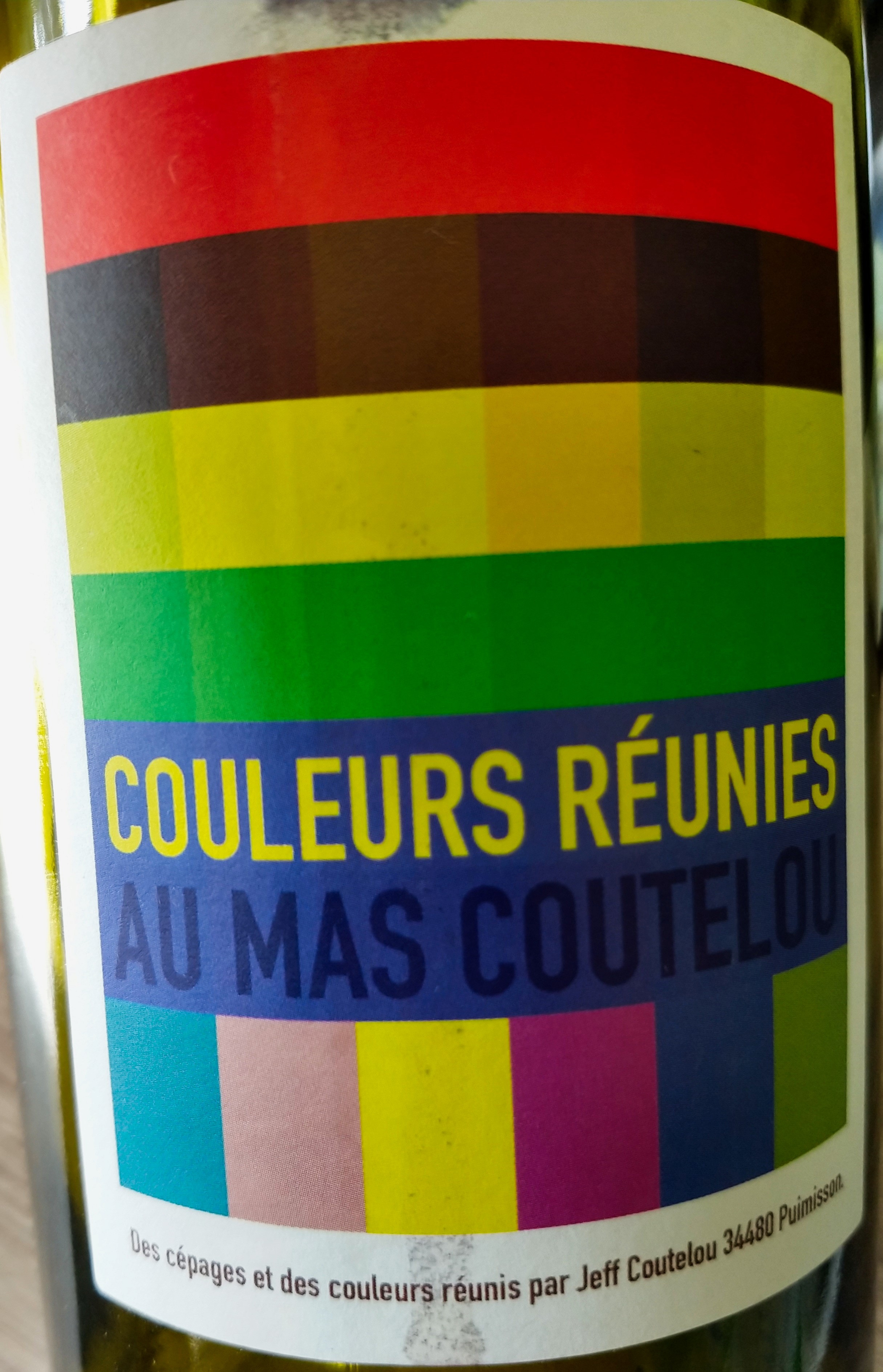
Tuesday the 30th was one of my favourite days of the vendanges, Couleurs Réunies day. This cuvée has been around for the last few years and is made up of many varieties of all colours including from my favourite vineyard, Rome. White grapes such as Servant, Olivette, Aramon Blanc , Terret Blanc, different types of Muscat, Grenache Blanc and Clairette Musquée.

Gris grapes such as Riveyrenc, Grenache, Aramon and Clairette Rose. Red varieties such as Cinsault, Oeillade,Delizia Di Vaprio and Mourvedre. An ampelographer’s dream day, I had great fun looking through the cases, trying to identify them and, very often, being corrected by Jeff!

A good two days, one hundred hectolitre tanks filling up with grapes of good quality. We were steaming ahead, could we finish picking by the weekend?

A long day!


Leave a comment

Vendanges Coutelou 23 – picking up

Vincent and Jeff, remontage

Friday and Saturday were full and busy days, the mechanical problems eased though we were still using the old sorting table. At the end of Thursday the pickers had moved across La Garrigue vineyard to pick the south facing Grenache. Most days the picking team is around 10-12 in size but there were 17 that day so Jeff wanted to use them to the maximum and gather as much as possible. Two hectares were picked that day, around 15-20% of the total vineyards, a lot of fruit. The Grenache was in fine form, good alcohol and acidity levels, probably to be used for blending.

Lovely looking Syrah from Segrairals

Friday and, following on from the last post, more Syrah. This time it was Syrah from Segrairals at the eastern side of the village which had benefited from rain on June 29th. Consequently, the grapes were fuller and, happily, disease free. Good quantities, good quality. There’s not much to add, it was a long day, still hot, not so stifling as previous days and we worked hard and steadily. It was good to be able to keep an eye on how full the tank was getting so that it didn’t overflow, another tank was needed.

Fill it up please

Saturday was more interesting for those, like me, who are interested in different grape varieties. Segrairals was again the focus, another nine hours and more of picking and processing. It’s a large vineyard and has seen a major replanting in recent years. Out went the extensive Cabernet Sauvignon vines and in came varieties such as Mauzac, Clairette, Oeillade, Aramon and many others.

The largest area of the vineyard is Cinsault and it has to be picked at a Goldilocks moment, not too late, not too soon, not too ripe but just right. It can be healthy and very juicy one day and then mushy the next day. Its thin skins make it prone to rot and easy for the cryptoblabes / honeydew moths to access as the bunches and grapes are large with space for the moths to get into to lay eggs. Jeff had noticed that this new variety of grape worm which I wrote about earlier this year was starting to show. They become active when the grapes are ripe with good sugars, exactly the situation in the Cinsault.

Fortunately, Jeff got the decision just right. Whilst there were some affected bunches, we were able to deal with them at the sorting table. The Cinsault was as good quality as I can recall and the size of the bunches and grapes meant that the cases came thick and fast to us from the vineyard. In addition there arrived Mauzac and Aramon Gris, both had to be scrutinised for small amounts of oidium – the first disease of the harvest but, happily, affecting just a tiny percentage of the grapes. Perhaps the most striking grapes though were the Aramon Noir, the stems a nice contrast to the very black grapes in very good health. Aramon, of course, was once widely planted in the region and used for producing huge quantities of low alcohol, cheap wine. The vast majority has been grubbed up but there has been a recent renaissance with producers such as Jeff aiming for low yields of fruity grapes. The blending of these grapes will make Ploutelou, the third vintage of this cuvée, the Coutelou homage to the Jura’s Ploussard, which itself has thin, dark skins producing a lightish, fruity wine. Ploutelou has been a big success and this year’s ought to be very good.

It was a good day, hard work, the team working well together. A new addition was Andrew form Australia. He works for James Madden in the Adelaide Hills at Scintilla Wines. James, of course, came to do harvest with Jeff in 2016 and, so, the link continues. He is an experienced worker and, after mostly getting over his jet lag, he was busy at the sorting table and then doing a remontage as the cellar work builds with increasing amounts of grapes to care for. We were certainly weary by 6pm on Saturday but happy that Jeff has plenty of promising wines ahead.


Leave a comment

Vendanges Coutelou 23 – Syrah, Syrah everywhere

En francais

Wednesday and Thursday saw the harvest and team get in to full swing after the practice run of Monday. Well, that was the plan and it mostly happened like that but technology let us down. Not the end of the world but on days when temperatures reached 42c it was not helpful to have to adapt to unforeseen adversity. Nonetheless, we battled through and filled some large tanks with lots of grapes. Well, Syrah (and a little Clairette). The good news was the return of Boris who has been part of the vendanges for the last five years.

The Clairette was from the parcel at the bottom of Sainte Suzanne which was planted 5 years ago together with Macabeu. I showed a photograph of the Clairette last time and it was clear that these vines were under stress. So, it was picked Wednesday morning, straight into the press and tank. It’s quite low alcohol and acidity so will be used for blending.

Cellar work starts before the first grapes are picked, cleaning tanks thoroughly. And the Morastel needed punching down (pigeage) even after a day.

Then it was on to the Syrah of Sainte Suzanne, usually part of Le Vin Des Amis. Despite being most famous for Rhone wines such as Côte-Rôtie or Barossa Valley Shiraz the experience here in the Languedoc is that Syrah does not like too much sun and heat. Obviously in southern France it is used to both but it’s about balance. The Ste Suzanne grapes were small, lacking moisture of course. Nonetheless they were fine, disease free and at the sorting table we only had to remove snails and leaves.

But, oh that sorting table. A new one had been bought but it wasn’t working properly and we had to do more triage by hand, slowing things down. The engineer arrived, nothing he could do after an hour and the table was shut down altogether. On to sorting from cases for the last hour of Wednesday. 42c weather and the heat from the grapes made for uncomfortable conditions, but I still wouldn’t have swapped for the pickers in the vineyards.

The new sorting table which came and went, twice. And the cube in the background.

On Thursday more Syrah. This time from Segrairals and La Garrigue, the latter grapes being the Syrah used to make La Vigne Haute in the best vintages. Sadly, this is not one of those years for Syrah. A replacement sorting table had now arrived, an older version but still useful. The grapes from La Garrigue may not have been LVH standard but they were higher quality, juicier and healthy.

All went well through the day until near the end (again) another mechanical failure, this time the érafleur, part of the cube which destems and sends the grapes to tank. Fortunately this was fixed by the next day. Meanwhile, the new sorting table was returned. Only to fail again on the trial run. So, back came the replacement again. Fair to say that this was not helping Jeff’s stress levels.

The Syrah has good acidity and alcohol levels but lacks some nitrogen so it has had a struggle to start fermenting. Fortunately some of the grapes from Saturday’s pick (more next time) are quite rich in nitrogen and some of those will kick start the Syrah, hopefully.

Challenging is how I’d describe these two days. The stifling heat, the need to protect vines, the technical problems. But we made it through.


1 Comment

Vendanges Coutelou 23 – c’est parti

En francais

Jeff at work

As the last post described we started vendanges on Monday August 21st, very early in comparison with other years. The day was about getting the fruit from vines stressed by the drought of the last year, mainly to the western side of Puimisson. In some ways this first day was also a trial run for this year’s team. Gilles, Flora and Ines are long term members whilst newcomers so far are Mustapha and Vincent.

Mustapha is Moroccan born and has been part of the picking team in recent years but wanted to learn more about the whole winemaking process. He is a ball of energy, he’ll certainly keep us busy. Vincent is a Québecois now living in France and we shall be joined soon by Andrew from Australia, a friend of James Madden who did harvest with us in 2016 before establishing his own Scintilla Wines in the Adelaide Hills.

The first picking was the Muscat d’Alexandrie of Peilhan vineyard, which has had minimal rain in the last ten months. This was pressed and put into a tank on its own. Next came Morastel from the 2015 plantation on the terrace of Peilhan. This suffered from disease last year and so has struggled with the drought even though other vines on the terrace have been ok.

Castets, with its small berries, was also suffering so it too was picked. The nearby Flower Power vineyard, a field blend of more than 20 varieties, has small gobelet vines and even though it looked better this year than ever before it too needed picking. To add to these grapes, picked early and. therefore, not fully ripe, Jeff added some Grenache from La Garrigue and some Carignan Blanc from Peilhan. This wasn’t fully ripe itself but more than the others, and so, will offer balance in the blend with the other red grapes picked today. Early analysis showed a healthy 13 degrees of alcohol with good acidity to support the nascent wine.

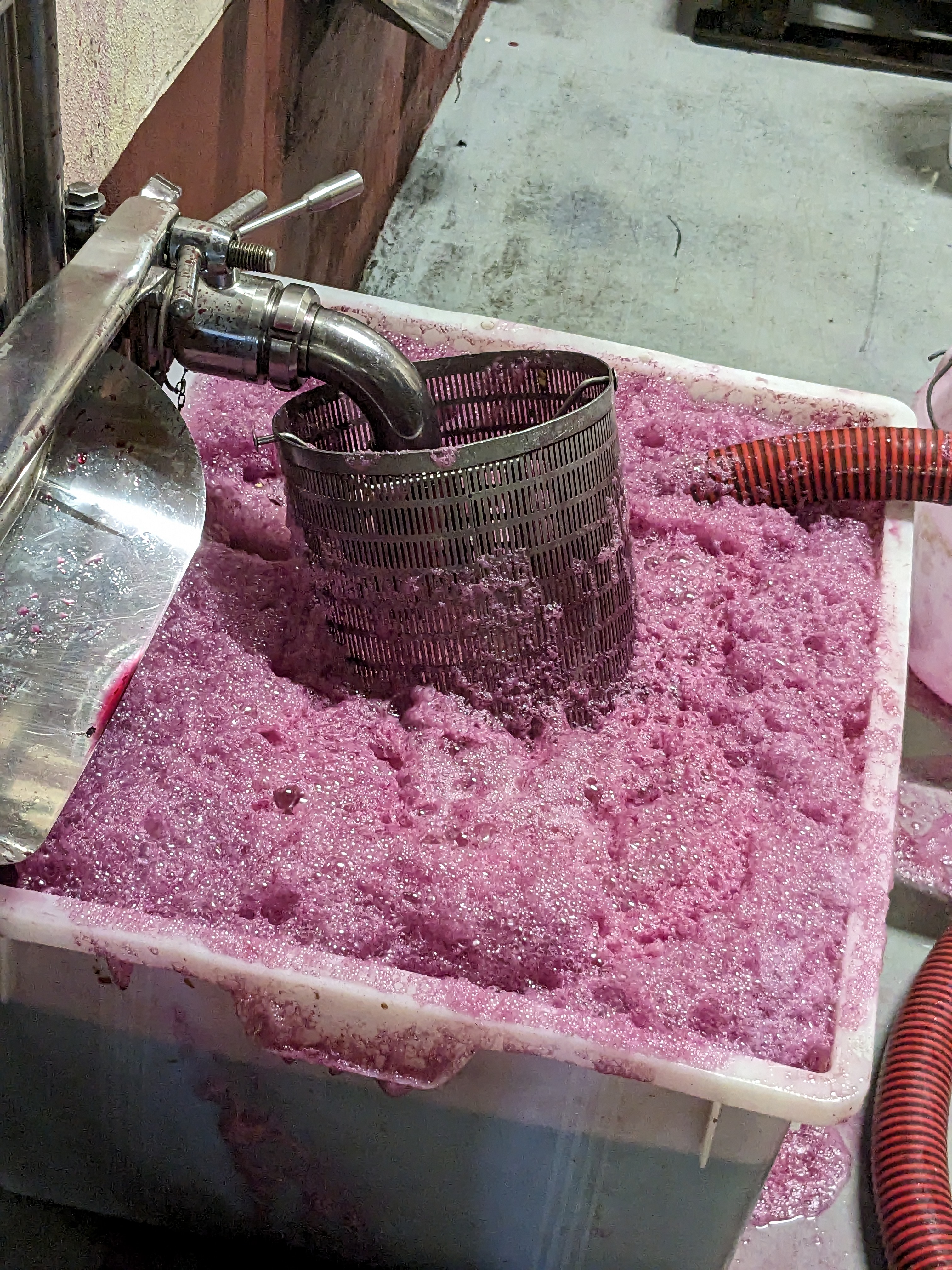
The grapes are very healthy, the drought has at least prevented any mildew or oidium. Sorting the red grapes was straightforward, mainly removing leaves and snails. The snails have clearly been seeking any moisture in the parched landscape and they clung to the grapes in desperation. After destemming the grapes were sorted a second time to remove any stalks or leaves which has made their way through. They were then put into small stainless steel tanks, three were filled and Jeff was reasonably content with the quantity, fairly typical yields despite the small grapes.

So, we’re underway. Tuesday is a day off then we’re back to it for the rest of the week. Monday registered temperatures up to 39c, it is due to be even hotter on Wednesday. Picking takes place only in the early morning in such heat, but even in the cellar we were in need of large quantities of water. Spare a thought for us!

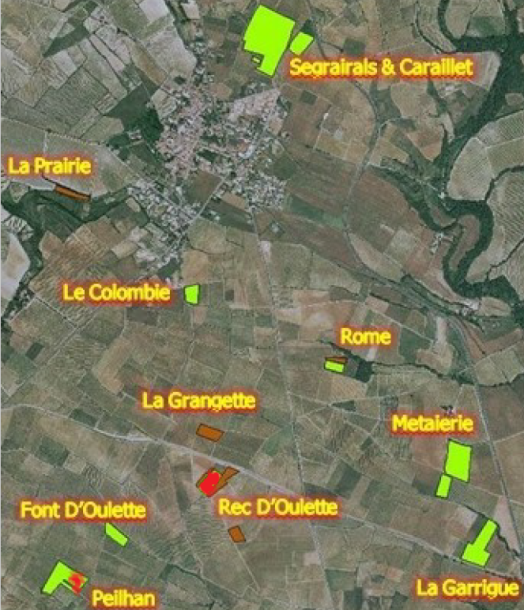
I haven’t updated this satellite map I made in 2016, but it shows you the positions of Peilhan, Font D’Oulette and La Garrigue mentioned in the post and how they are separated from Segrairals at the other end of Puimisson which has 16mm of rain on June 29th whereas those vineyards got nothing


Leave a comment

Vendanges Coutelou 23 – what to expect?

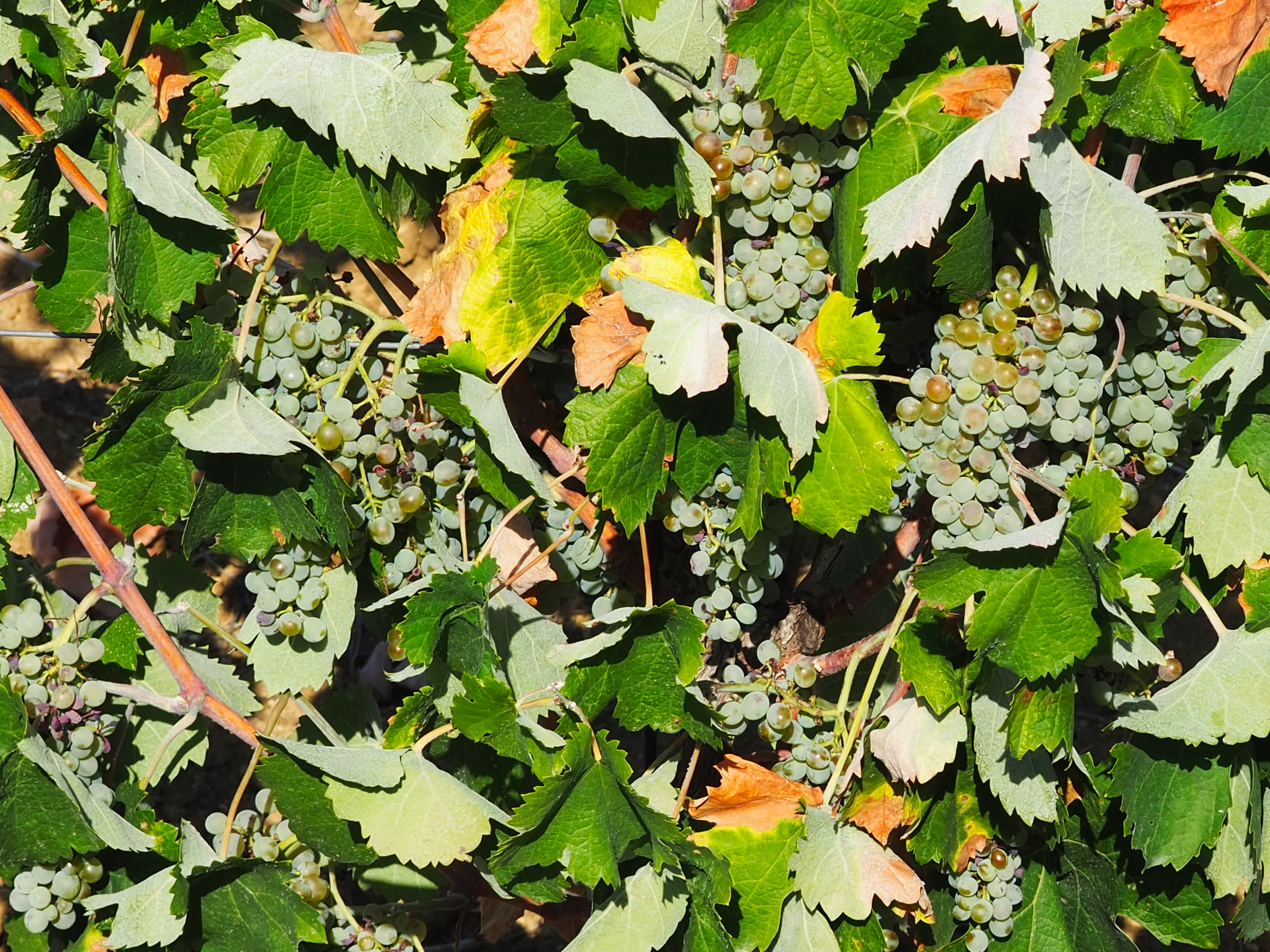
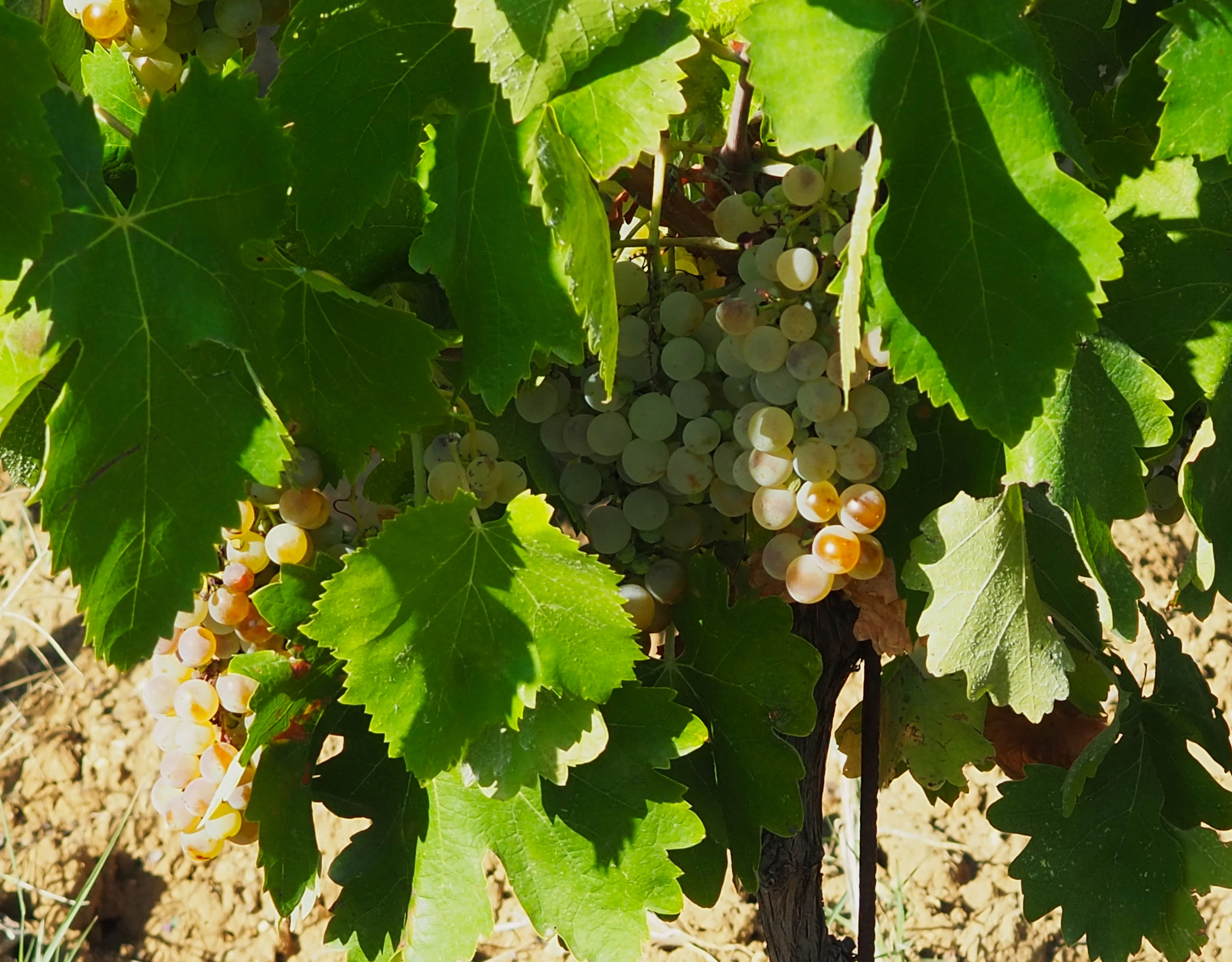
Grenache Gris looking very well

I did a quick tour of the vines this morning, we start harvest tomorrow (Monday 21st). There is a minor emergency with some vines so that we need to pick them before the main harvest starts on Wednesday. The drought which I wrote about in this post has put vines under stress. I also mentioned in the last post that on June 29th when we were all out tasting through Jeff’s 2022 wines there was a storm. In fact, 16mm of rain fell at one end of Puimisson, Segrairals vineyard for example. However, it was so localised that at the other end of the village there was no rain.

The vines in those vineyards are particularly stressed, particularly certain grape varieties, Castets, Morastel and Muscat in Peilhan, the whole of Flower Power (Font D’Oulette) with its 20+ varieties, and the young Clairette in Sainte Suzanne. Even though the grapes aren’t particularly ripe Jeff feels we need to collect them tomorrow so that the vines don’t become any more stressed as that could affect their health next year and even longer.

Vines under water stress first look to grow enough foliage and then to produce and ripen the fruit. This is their means of reproduction and the vine will seek to put every ounce of strength, every drop of water and sap into those aims. Even at risk to their own health. Jeff has to look after those vines and protect them from themselves in effect.

Those vines were the ones I visited this morning. I noticed two things, the size of the vines and the size of their grapes. The vines by now are usually taller than me (1m83 or just about 6ft), these were nowhere near as high, 1.5m maybe, 5ft at most. The grapes are generally smaller, not as juicy as usual. I’m sure Jeff will come up with something to make the most of what these vines have struggled hard to provide, they deserve recognition for their battle.

I mentioned to Jeff another observation. The Syrah of Ste. Suzanne has struggled, the Grenache is fine. The Macabeu there is healthy, the Clairette is in difficulty. Could it be that Spanish varieties have coped better than local, French varieties? He didn’t dismiss my thoughts so it may be worth another look. Remember Jeff planted Xarel-lo recently too, a Catalan grape used to heat. Is there a portent of the future here?

It’s not all doom and gloom though. Jeff was keen to say this morning that he is confident of the rest of the grapes such as the lovely Grenache Gris in the photo as the top of this post. There are plentiful bunches and some are big and bountiful, especially where that rain on the 29th brought relief. He is more confident this year than last, he said, that the harvest will be good. Let the games begin.

Looking good