amarchinthevines

Learning about wine, vines and vignerons whilst living in the Languedoc


Leave a comment

Go Ouest

2. Anjou – Domaine Aux Moines

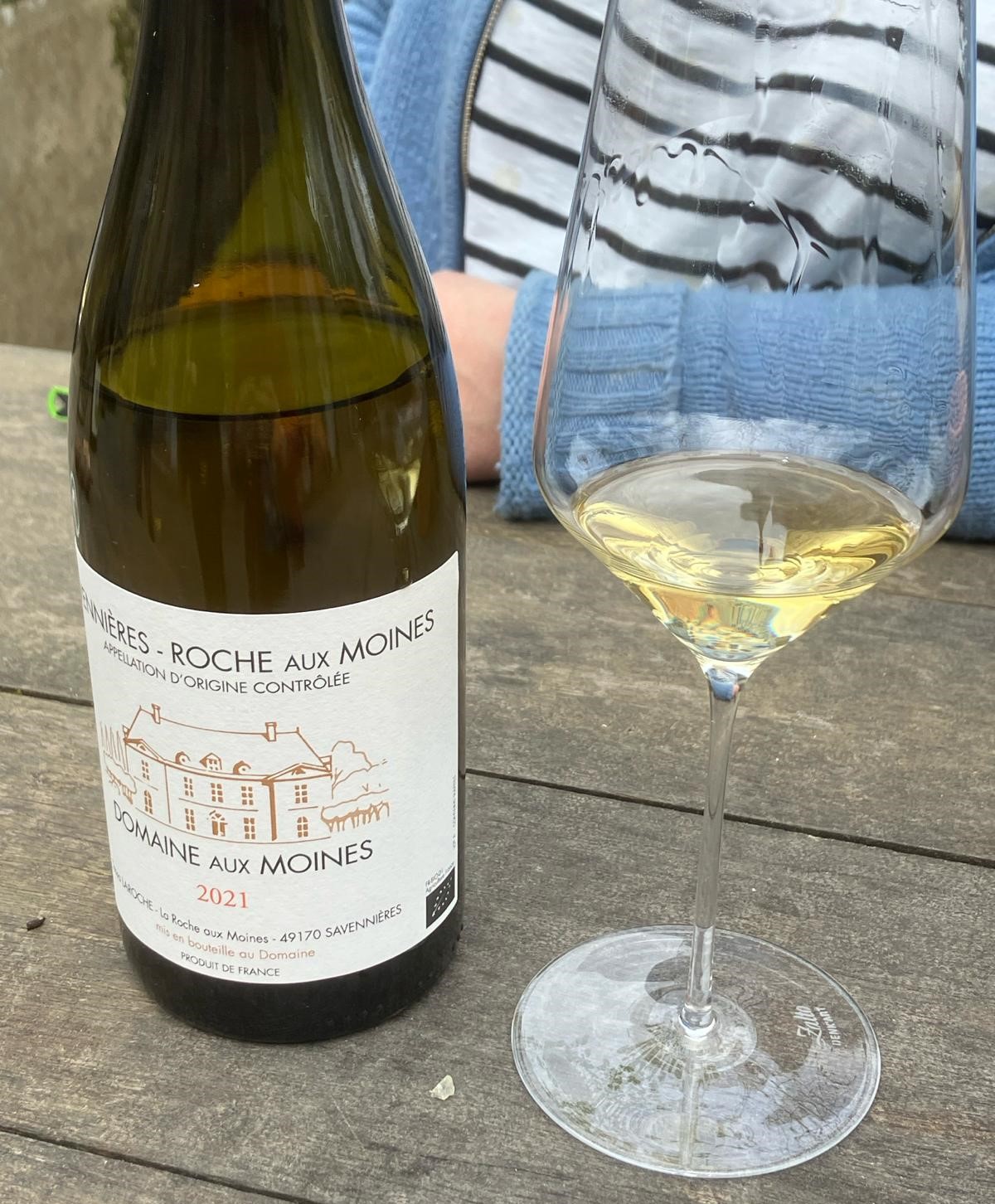
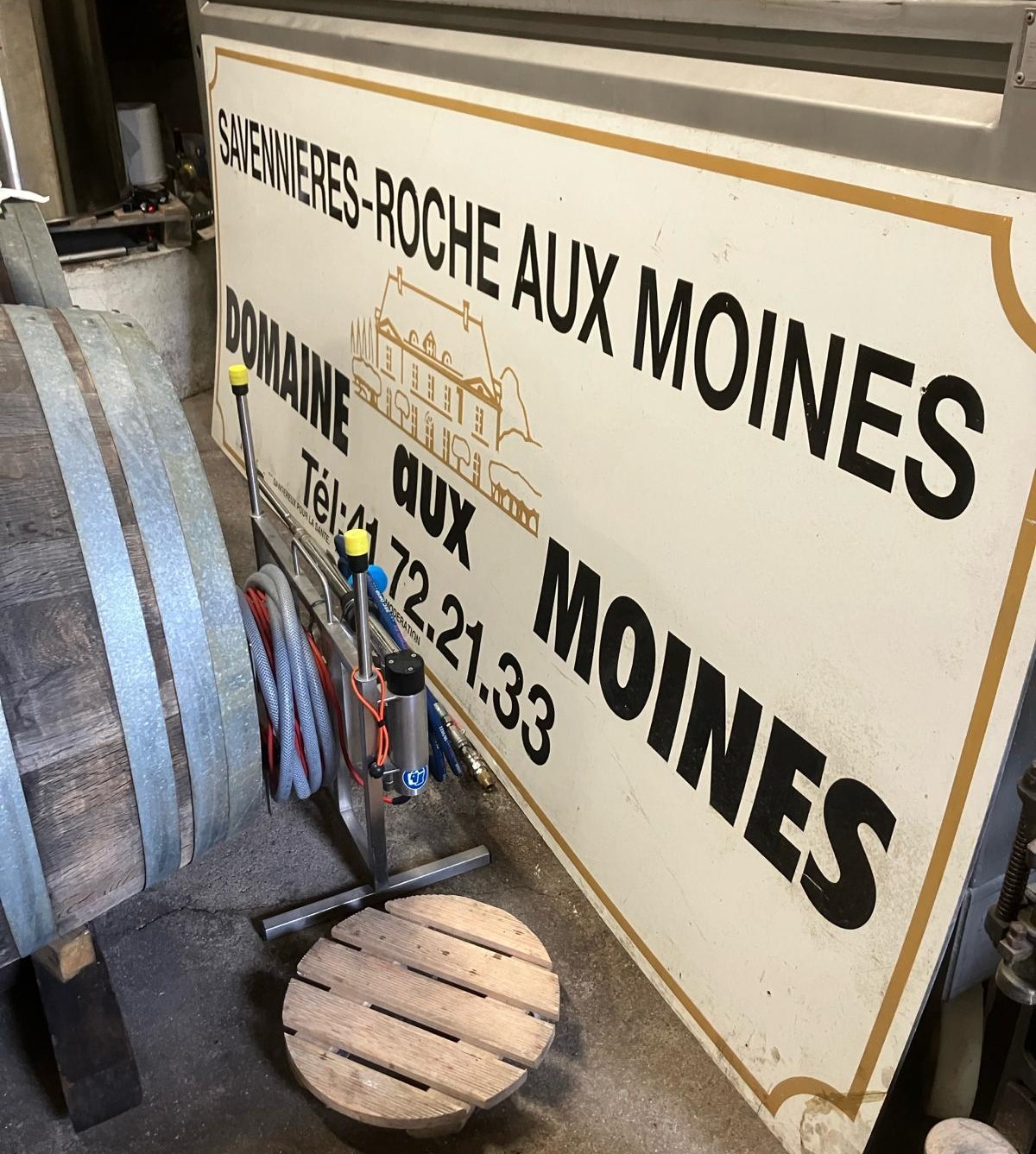
This was a visit I very much wanted to make. In March when I attended tastings in London we went to Noble Rot on Lamb’s Conduit Street and had an excellent meal accompanied by a wine which I predicted might well turn out to be my wine of the year selection. That bottle was 2021 Domaine Aux Moines. Full of Chenin character; clean with fresh apple and white fruits, the slightest hint of honey but finishing with a lick of acidity to refresh the mouth and leave you wanting to start all over again. I must admit that whilst I knew that Domaine Aux Moines was a neighbour of renowned biodynamic pioneer Nicolas Joly I knew very little else about this Savennières producer. However, Jeff Coutelou got in touch to say how much he too loved this wine which I didn’t even know was natural.

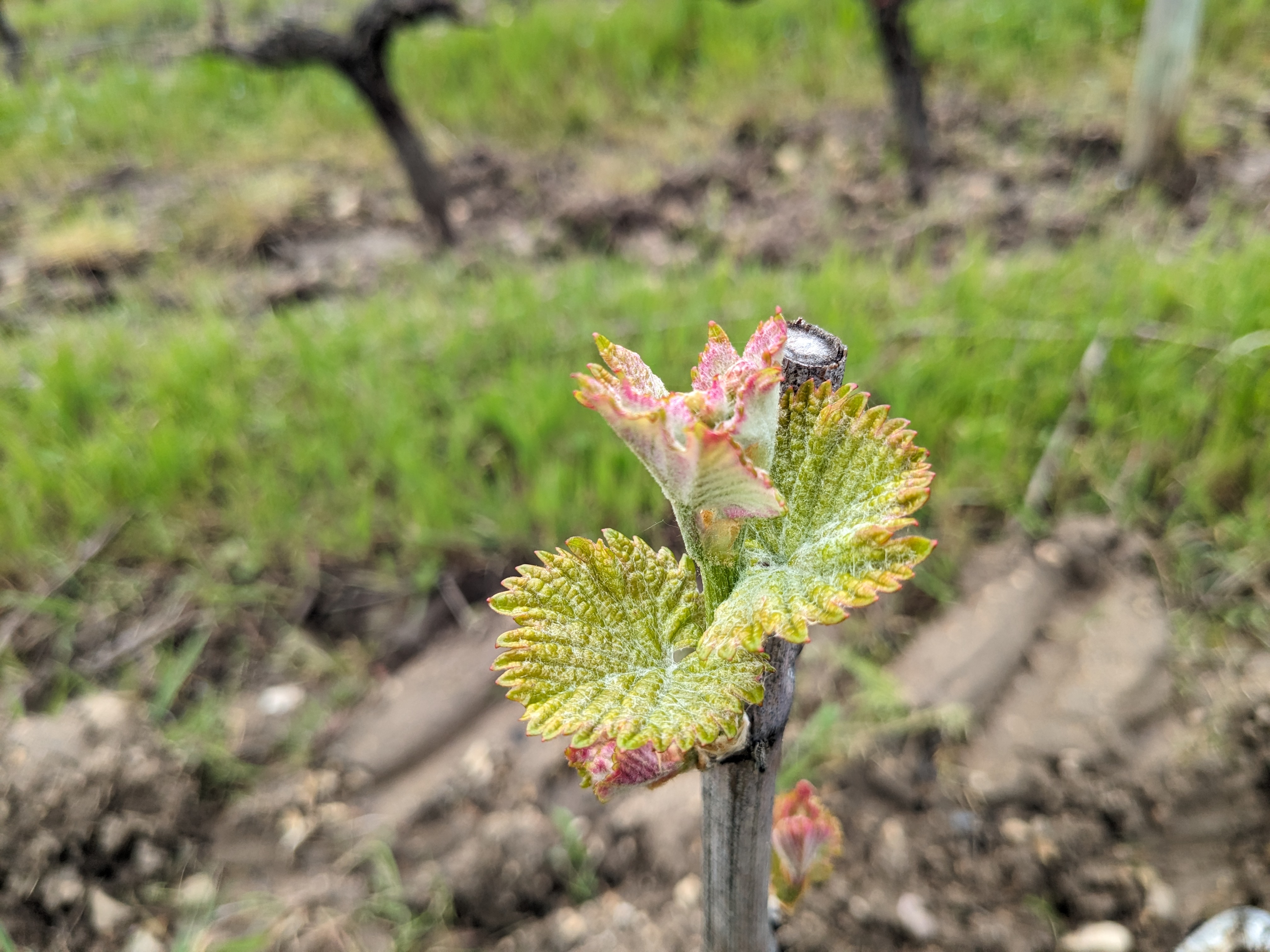
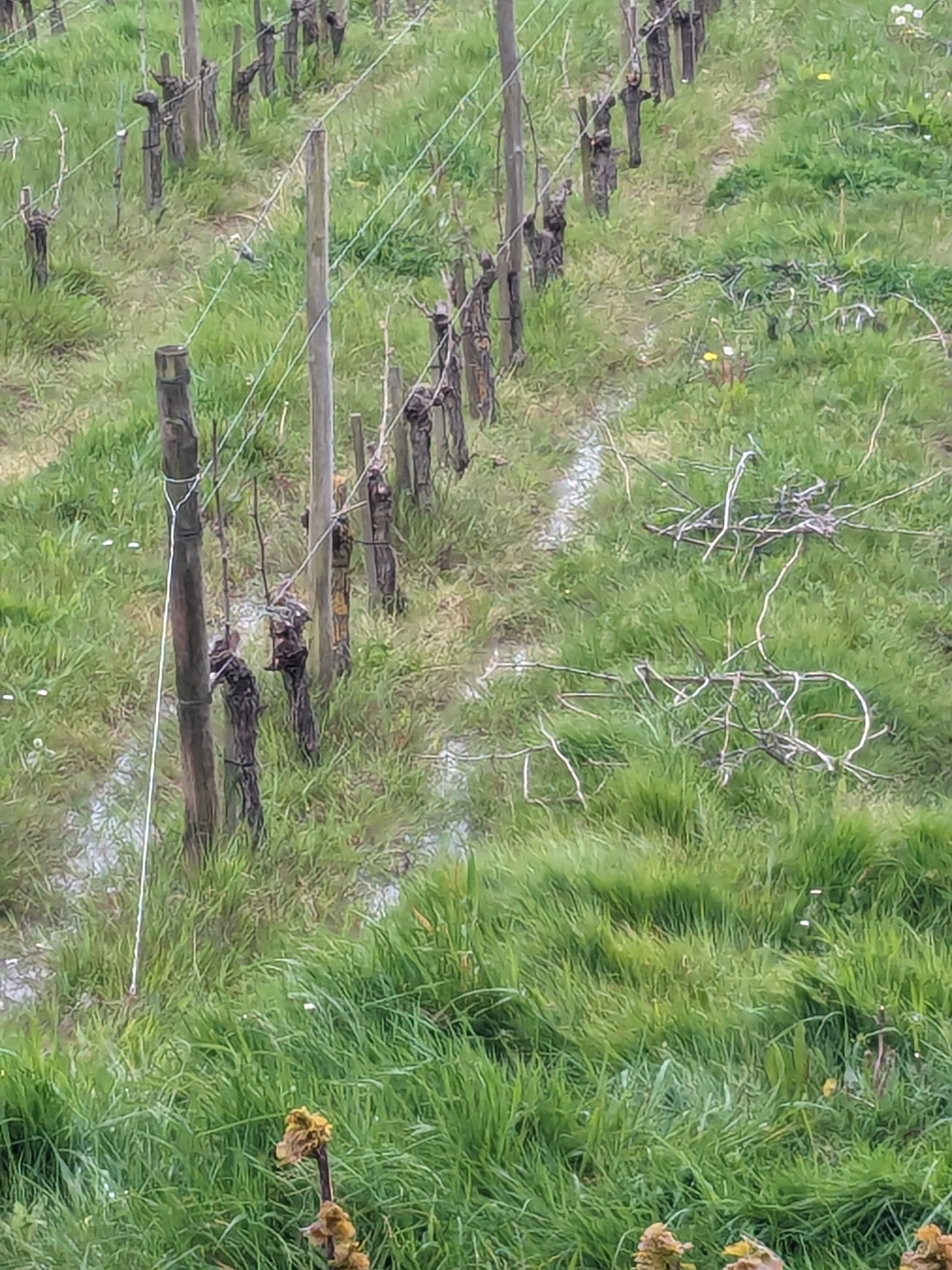
It was a joy, therefore, when I heard that Tessa Laroche would be around for us to visit. The roads around Savennières were affected by the heavy rains and we got there early just in case. A walk around the vineyards revealed just how wet they were underfoot whilst the vines were budding beautifully. As I wrote in my last piece Tessa told me that she couldn’t get any machinery into the vineyards at all, she is trusting in nature to see that they remain in good health.

It is a beautiful estate with a lovely private garden full of roses and peonies and a small clos of vines. There are 12 hectares of Chenin Blanc vines in total but just two wines are made. The grapes from the 2 hectares of young vines (under 10 years old) go into Le Berceau des Fées. Tessa started to produce this in 2013 and the idea was to make a sappy wine for drinking early. For a number of years she then started to add the first and last pressed juice of the main wine to add complexity but in 2023 she decided to go back to her original plan and Le Berceau will only be made from the young vines.

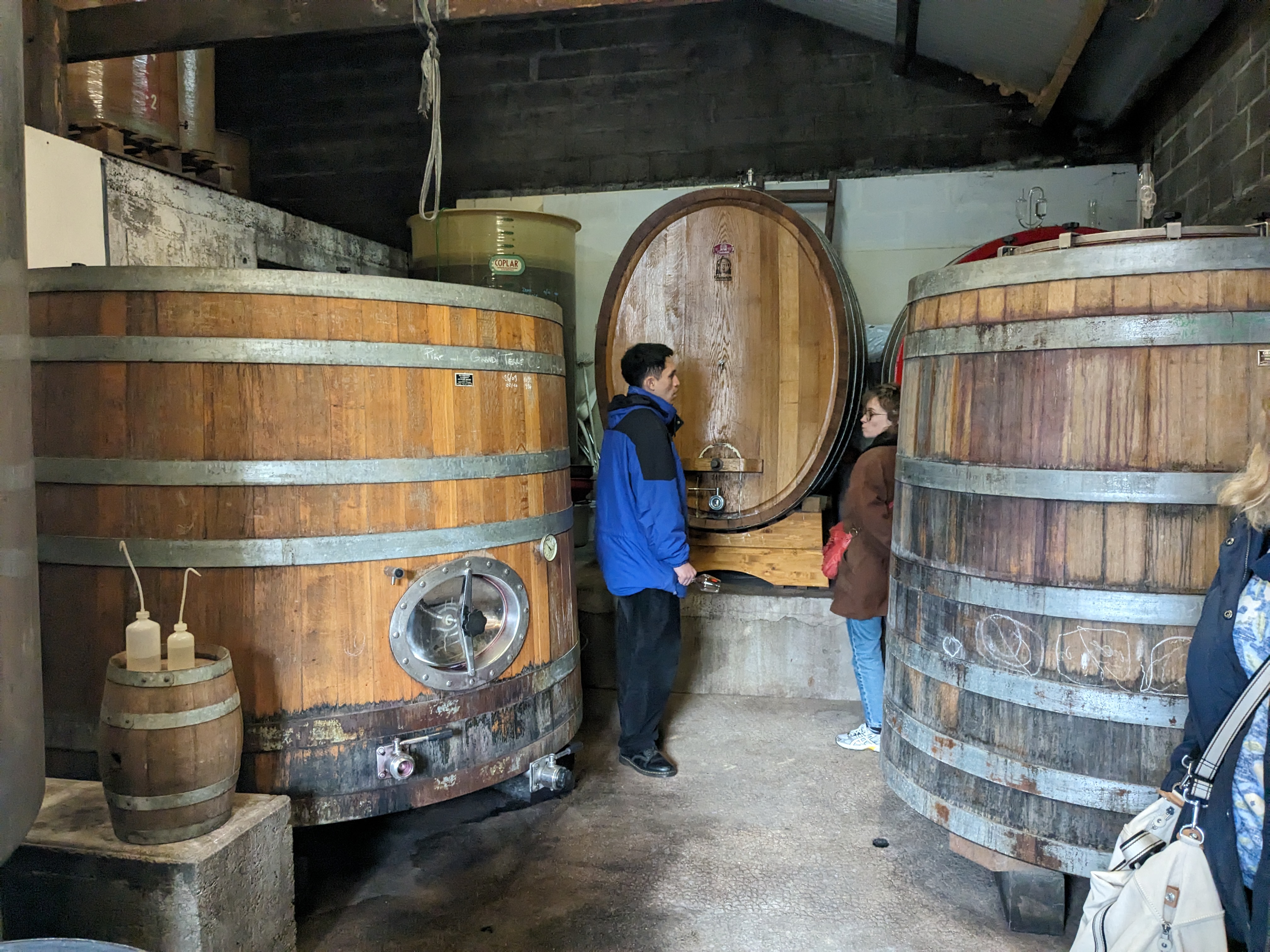
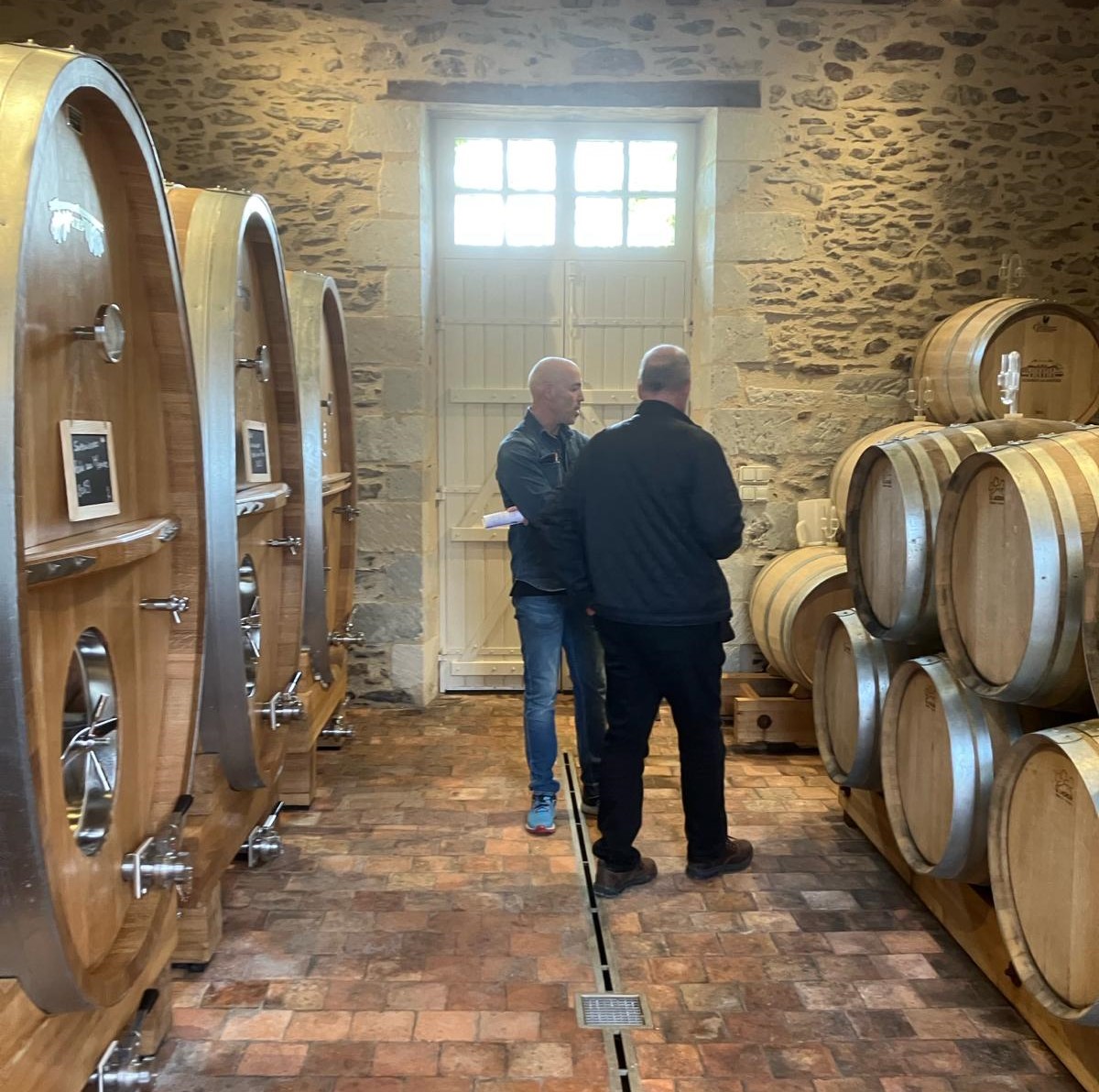
The other vines produce Domaine Aux Moines. The juice is aged in foudres after pressing and then transferred to five stainless steel tanks for assembling before going into barrels to complete their preparation. The cellar is beautiful and work is being done to bring tasting rooms and storage rooms up to date with some beautiful vintage tiles and materials but also very modern technology such as humidity and temperature controls.

Tessa exudes joie de vivre and her enthusiasm and love for her domaine and wines shone out. There is such an obvious connection between great wines and the people who make them, a symbiosis, the wines benefit from the people and the people benefit from the wines. She began the tasting with the current bottles on sale, 2022 Berceau des Fées and 2021 Domaine Aux Moines, the one I loved in Noble Rot. The BdF was very enjoyable, lighter than the main cuvée certainly but round and rich Chenin, pears and some weight. Domaine Aux Moines was just as I recalled, lovely.

Tessa then took us into the cellars. She explained that 23 had been a difficult year as I wrote in my previous post. The vendanges were hit by rain, wind and cold after a bright start, much of the generous crop had to be left on the ground, dispiriting after a lot of promise earlier in the year. Tessa was full of praise for her team for sticking to the discipline of strict quality selection and for keeping up their morale. Much of that she credited to Élise, the young woman who is opening a pizzeria with her Chilean partner whom we had met at Domaine Mosse. It’s a small world.

The 23 Berceau des Fées was much more direct than the 22, lighter but drier and fresher. This was the result of the change in policy Tessa had outlined. I actually preferred this to the 22 despite the vintage suggesting it should be the other way round. The 23 Domaine Aux Moines was maturing in another room where it spends a year in foudre. The row of foudres was impressive and we tasted from a couple of them, one from the start of the harvest, one from later. The early picks were in the middle two foudres in the photo, they tasted very much in line with the 21, concentrated Chenin with its fruit, acidity and slight touch of sweetness. The outer two foudres had the later picked juice and, surprise, I actually preferred it. More concentration still, more directness and less rich. Tessa agreed (she is very polite after all) and credited that to the picking team. Despite having to leave so much fruit on the ground the quantities for 23 were similar to 22 because of the abundant early season.
The 2022 Domaine Aux Moines came from what Tessa believes is her best vintage so far, surpassing even the 2019. Everything went well in the year, the fruit was ripe, fresh and clean. The first and last pressed juice went to Berceau des Fées and the rest was in five stainless steel tanks. We tasted three to see how they differed after the first assemblage from barrel. There were indeed subtle variations, for example one had a more obvious oak influence than the others. Tessa intended to blend these tanks together this week, a job she likes to do on her own with no interruptions. She feels this helps her learn about the wine, be closer to it and assemble the best possible wine. She thinks she will produce it with no sulfites added, as was the case in 2020, a sign of her confidence in the wine. With the whole domaine depending on just two wines she has to be sure that they are absolutely right, if there is any doubt she will add minimal sulfites.

I have been very fortunate to visit many excellent winemakers and taste great wines with them. This was definitely amongst my favourite visits of all. Tessa is such a fun personality but also has a great knowledge which she loves to pass on. Her wines are complex, delicious and as good as any white wines that I know. Merci Tessa.

Leave a comment

Go Ouest

1. Anjou – Domaine Mosse (and guests)

Last year the route south to Puimisson and Jeff Coutelou saw us heading down the eastern side of France with visits in Champagne, the Jura, Burgundy and Beaujolais en route. Logically, therefore, this year we decided to take a couple of weeks travelling down the western side of the Hexagon. This is the side we have travelled in least, it is almost thirty years since being in Bordeaux, where I type this article, with scheduled visits having to be cancelled through illness or pandemic. Oddly, we had never been to Angers at all, a major omission as Anjou is such an important wine region, especially with its burgeoning natural wine scene. Previous visits to the Loire have focussed on central and eastern parts reaching west only as far as Saumur. Since the Loire and Chenin Blanc played a huge part in my wine education this was a shocking gap in my wine journeys, happily now set right but there is much more to discover.

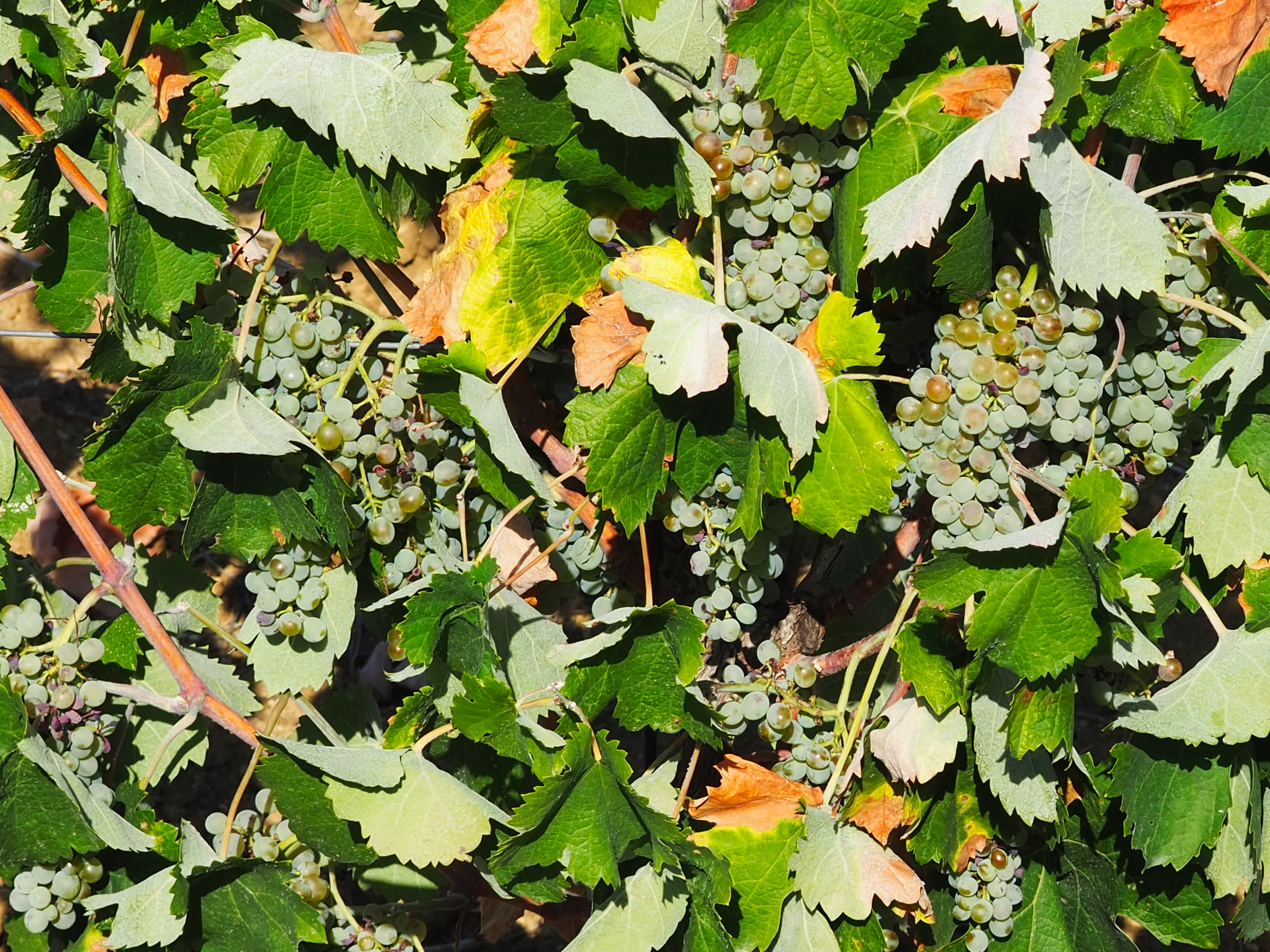
As Spring struggled to emerge through rainclouds, with severe flooding in Anjou, the vines were just starting to bud when we arrived at the start of April. It was interesting to note how many vineyards are now completely grass covered, there was some evidence of herbicide use around the vines but viticulteurs seem to have settled on this practice after so many years of bare soils. Given the rainfall recently this must have helped to prevent erosion. However, Tessa Laroche of Domaine Aux Moines told me that she cannot take any machinery into the vines at all as the ground is so sodden, so far it is very much a vintage dependant on nature to look after the vines.

Water lying around the vines at Dmne. aux Moines

I organised visits to two producers, Domaine Mosse and Domaine Aux Moines itself. I had enjoyed wines from both before and they were both given the thumbs up from Jeff.

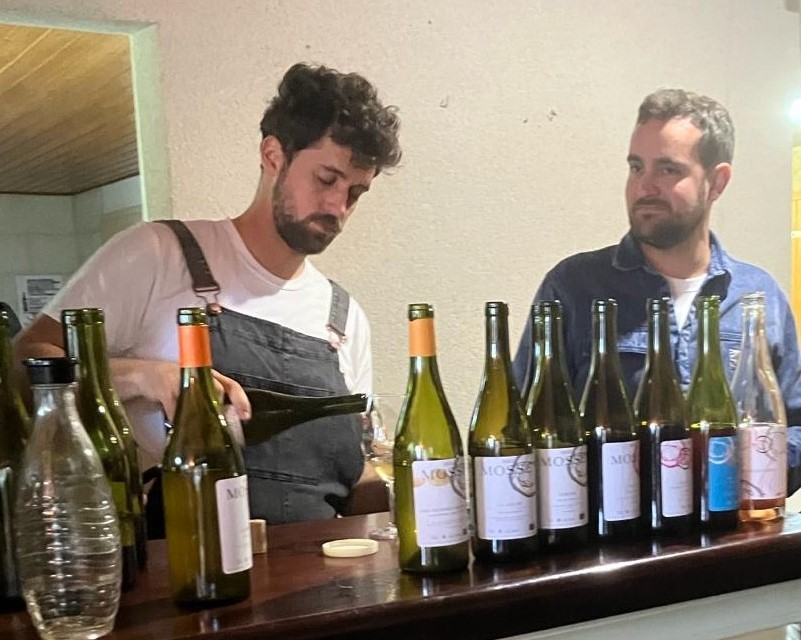
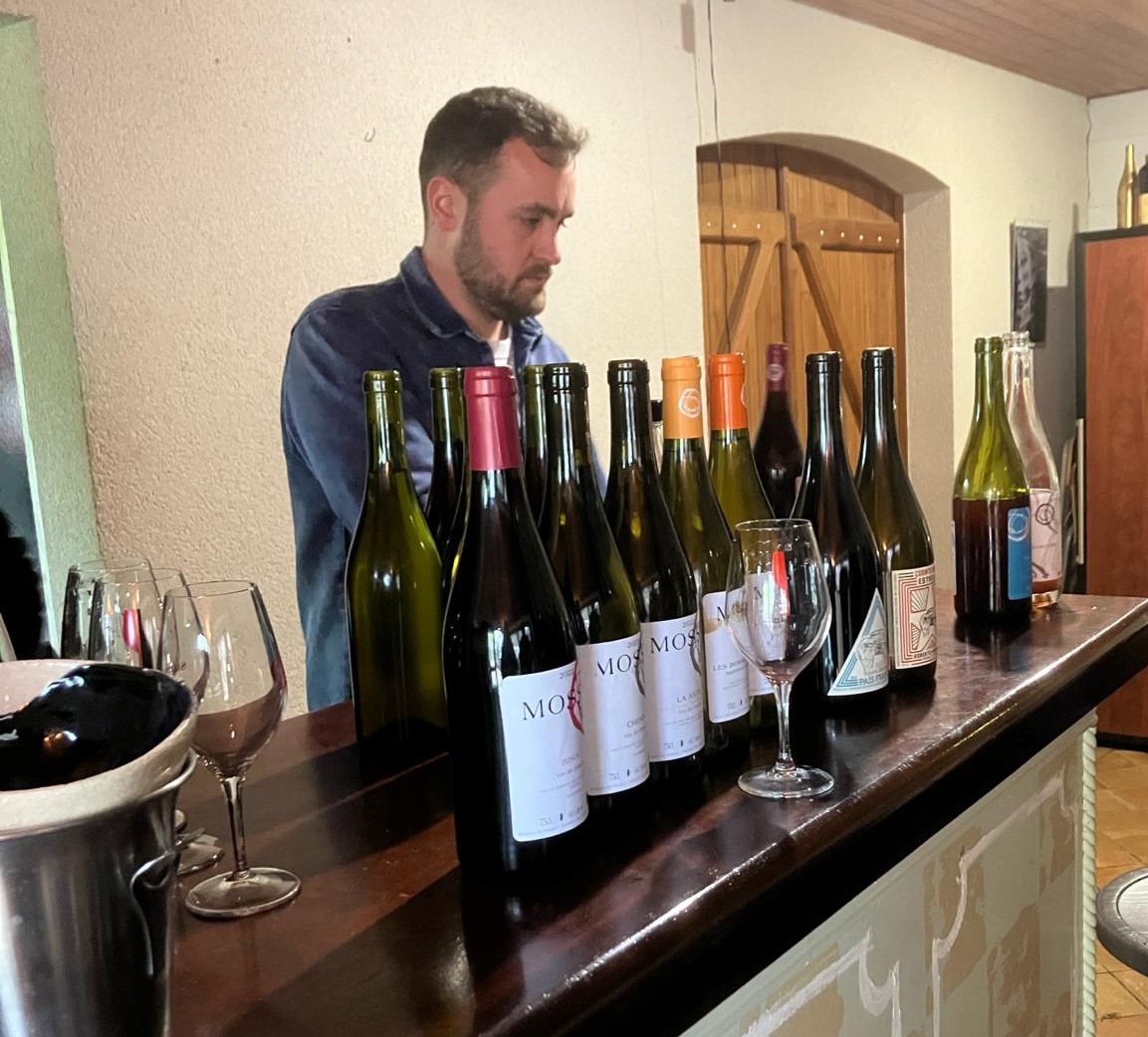
Domaine Mosse is to be found in St. Lambert du Lattay and from our base in Brissac it was an interesting drive through famous wine villages such as Faye d’Anjou. We were greeted by Joseph Mosse who runs the estate with his brother Sylvestre after they took over from their parents. We were joined by a young couple who are opening a pizzeria in Angers and a Japanese couple who run a restaurant in Tokyo, it made for an interesting tasting.

We began with a trip to the barrels of 2023 wines, Joseph revealing that they will be the last wines made in the current cellar as they are having a new one constructed with more space and planned to meet modern winemaking needs. Joseph explained that 23 was a difficult harvest, a view echoed by Tessa Laroche. The year had given abundant fruit with a need to green harvest in July but the harvest went through four seasons in a short time, starting warm and sunny but followed by rain, wind and cold. This resulted in rot and having to leave huge amounts of grapes on the ground. The wines from barrel though tasted well, good clear fruit showing through (the 22s in bottle would later show that some of the 23s maybe lacked the same concentration but then 22 is a very good year). In a rainy harvest it takes courage and a good picking team to make clean wines from grapes touched by rot, well done to Sylvestre and Joseph.

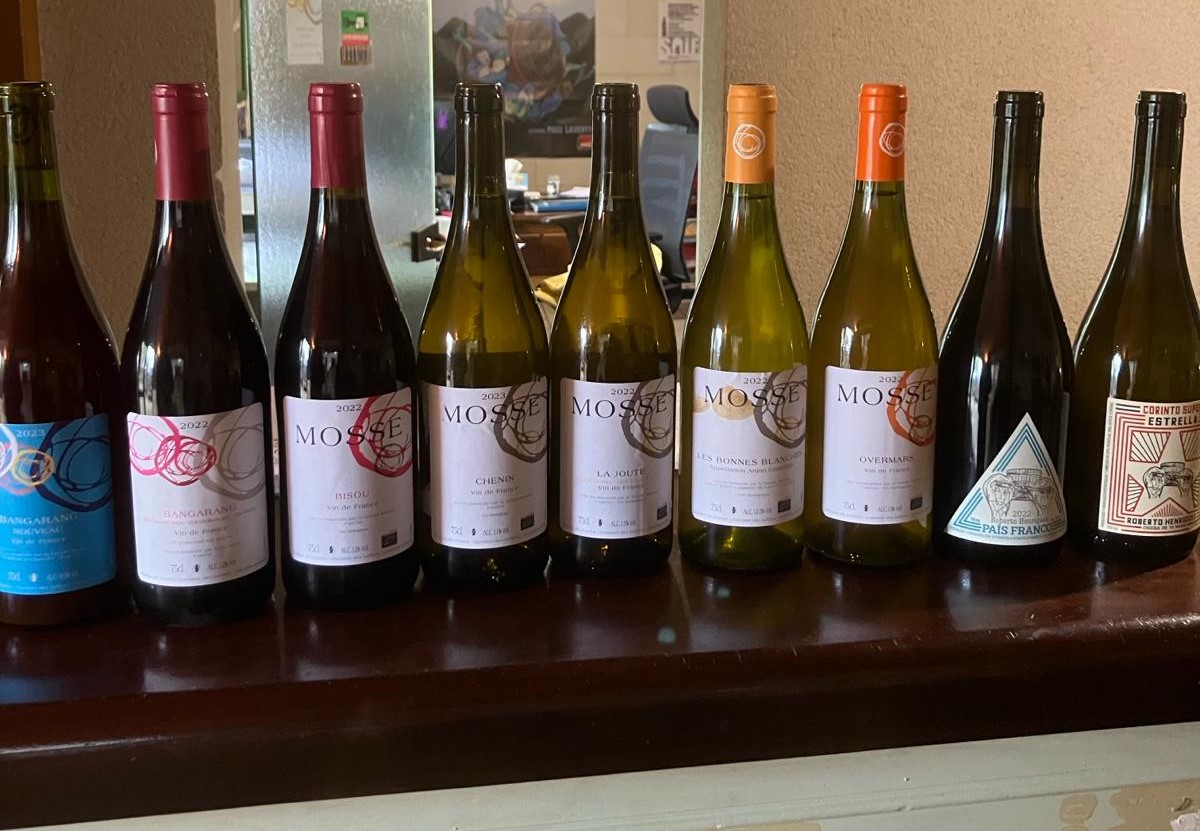
Back in the tasting room and we started with some wines produced by the brothers as négociants, buying grapes from trusted, local vignerons. The PetNat, Mousse À Mousse, and a primeur 23 Bangarang nouveau were both enjoyable and light but the pick was Bangarang 22 with lovely grippy red fruits from Cabernet Franc, Gamay and Grolleau Gris (another new grape to my knowledge but more later).

On to the wines from their own vineyards. Bisou 22 from Grolleau Noir and Gris, Cabernet Franc and Côt/Malbec was very nice, the whole bunch approach bringing fruit to the fore. Chenin 23, the rain vintage bringing a light easy drinking but characterful example of the grape with 11% alcohol. Wines from two single vineyards came next. La Joute 22 is 80% Chenin and 20% Chardonnay, aged in barrique for a year was lovely with rich fruits balanced well by a clean acidity, nice persistence too. Joseph said this was a little mousy at first but by adding the Chardonnay lees the wine sorted itself out and there was nothing to spoil a really good wine. Les Bonnes Blanches 22 from 50 year old Chenin vines on schist soil was dry, clear, vibrant and persistent too, very good.

Tasting Bonnes Blanches and writing notes – life can be hard!

Overmars 22 is their skin contact wine from terraces next to the Layon river which gives the Anjou sweet wines the mists which encourage noble rot. No sign of sweetness here though, the week long maceration with daily punching down producing a textured, grippy characterful wine with clear Chenin notes. I bought all of the wines noted in the last two paragraphs as well as the 22 Bangarang.

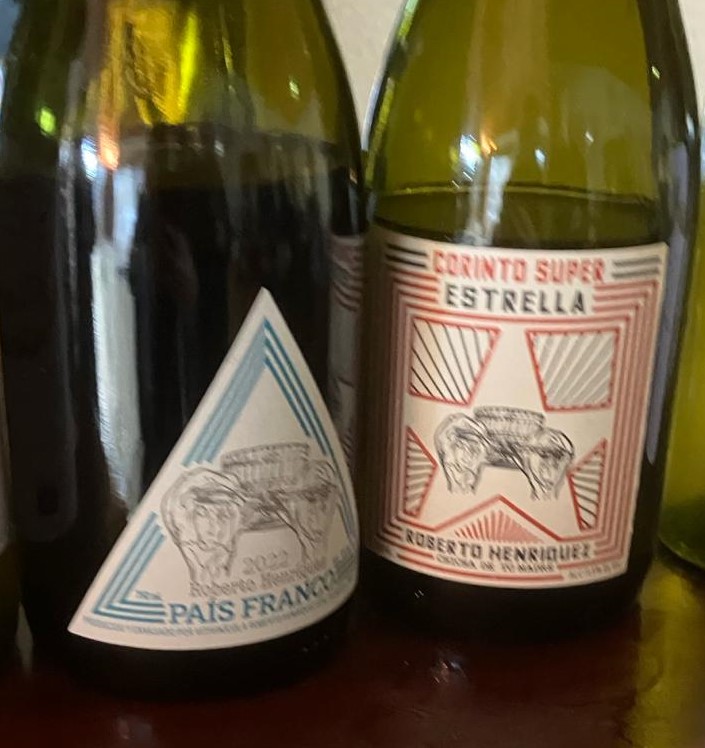
The Mosse brothers are also now importing wines and we tasted two interesting Chilean wines from Roberto Henriquez based in the Bio Bio and Itata area of southern Chile. The twist here was that the young man opening a pizzeria is Chilean, so it was fascinating listening to his thoughts on two very good wines. First was a skin contact Chasselas, Corinto Super Estrella, which started with a real pop of fruit but dissipated a little quickly. The Pais Franco, however, that was very good, full of bright red fruit and spice. It was made from 200 year old vines which pre-date phylloxera, a fascinating wine which I hope to seek out in future. There was also a lovely Austrian wine from Kamptal, a Malinga Rötburger (Zweigelt) from producer Christoph Heiss. Made by carbonic maceration the wine was fresh with spicy red fruit notes, very good.

We were also joined by a young winemaker with his first wines. Timothée Hurez worked and trained with the Mosse family but now has a couple of hectares of his own vines and he showed us a lovely Chenin and two reds which he intends to blend before bottling this week. A good start. One of the things I love most about the natural wine community is how young people learn from skilled winemakers and then go their own way. There are numerous examples with Jeff, such as Steeve Dejardin, Thomas Anglès and James Maddison and Tim will have benefited hugely from his time with such a great family as the Mosses.

An enjoyable visit, with lots of unexpected wines as well as the very good domaine bottles. I like Anjou, I liked Domaine Mosse and recommend them to you. I bought wines, I’m sure you would not regret it if you did. Next stop Domaine aux Moines!


2 Comments

The Rule of Three

3. Basket Press

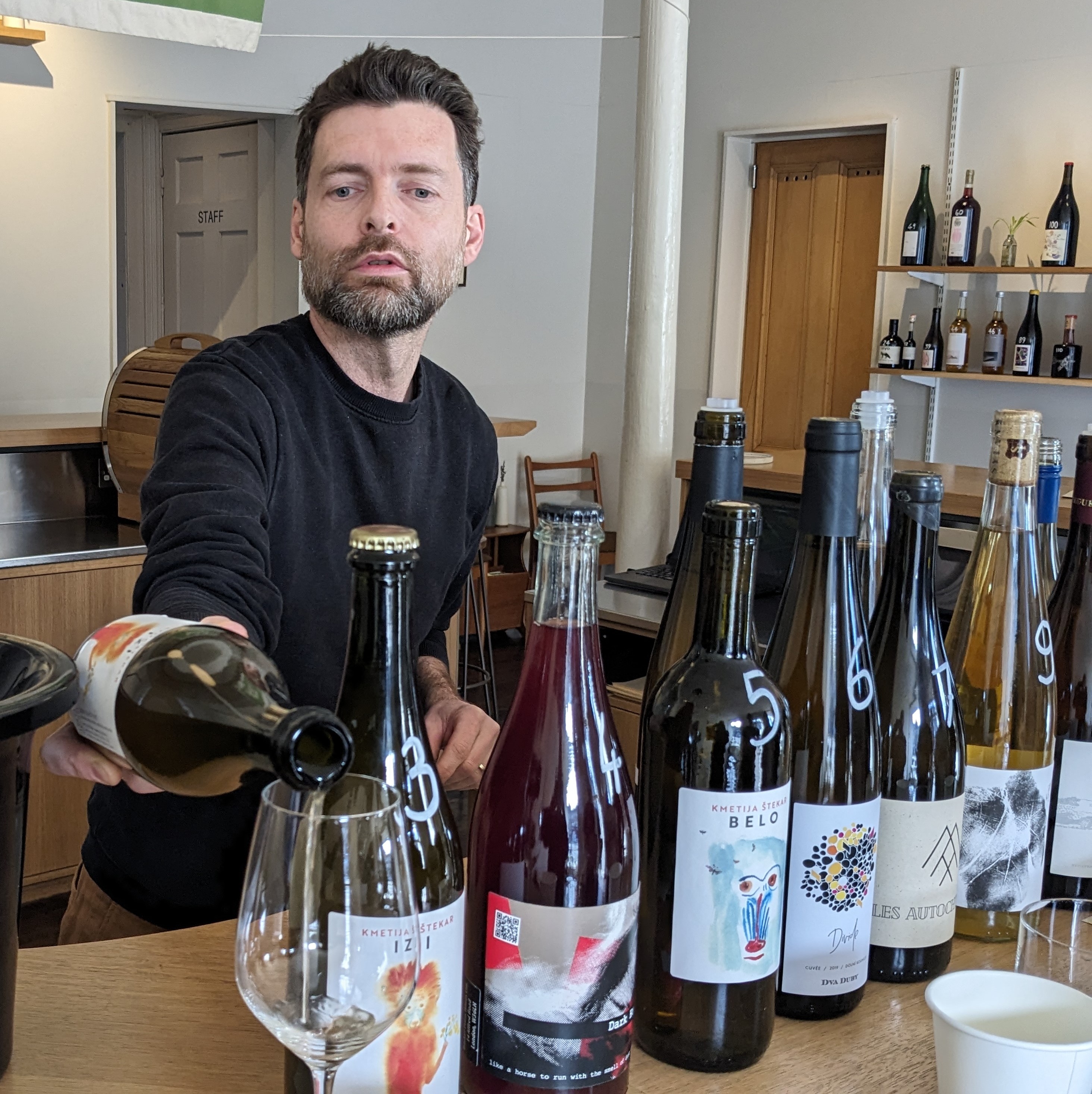
From the capital of England to the capital of Scotland for tasting number three. My very good friend David Crossley invited me up to share a tasting together courtesy of Basket Press, specialists in Central and Eastern European wines and ciders. The tasting took place at Spry on Haddington Place opposite the celebrated Valvona and Crolla and, on a sunny Spring morning, I met David outside. Together with a dozen or so wine professionals we were led through an impressive range of bottles by Jiří, whose knowledge and enthusiasm were inspiring. Thank you for sharing your expertise Jiří.

David has become something of an expert in the wines of central Europe and his excellent writing had inspired me to want to explore more for myself. I will be giving generalised impressions of this most enjoyable event and my favourite wines but I urge you to click on the following link to read David’s more thorough and knowledgeable analysis of the wines and drinks shared that morning.

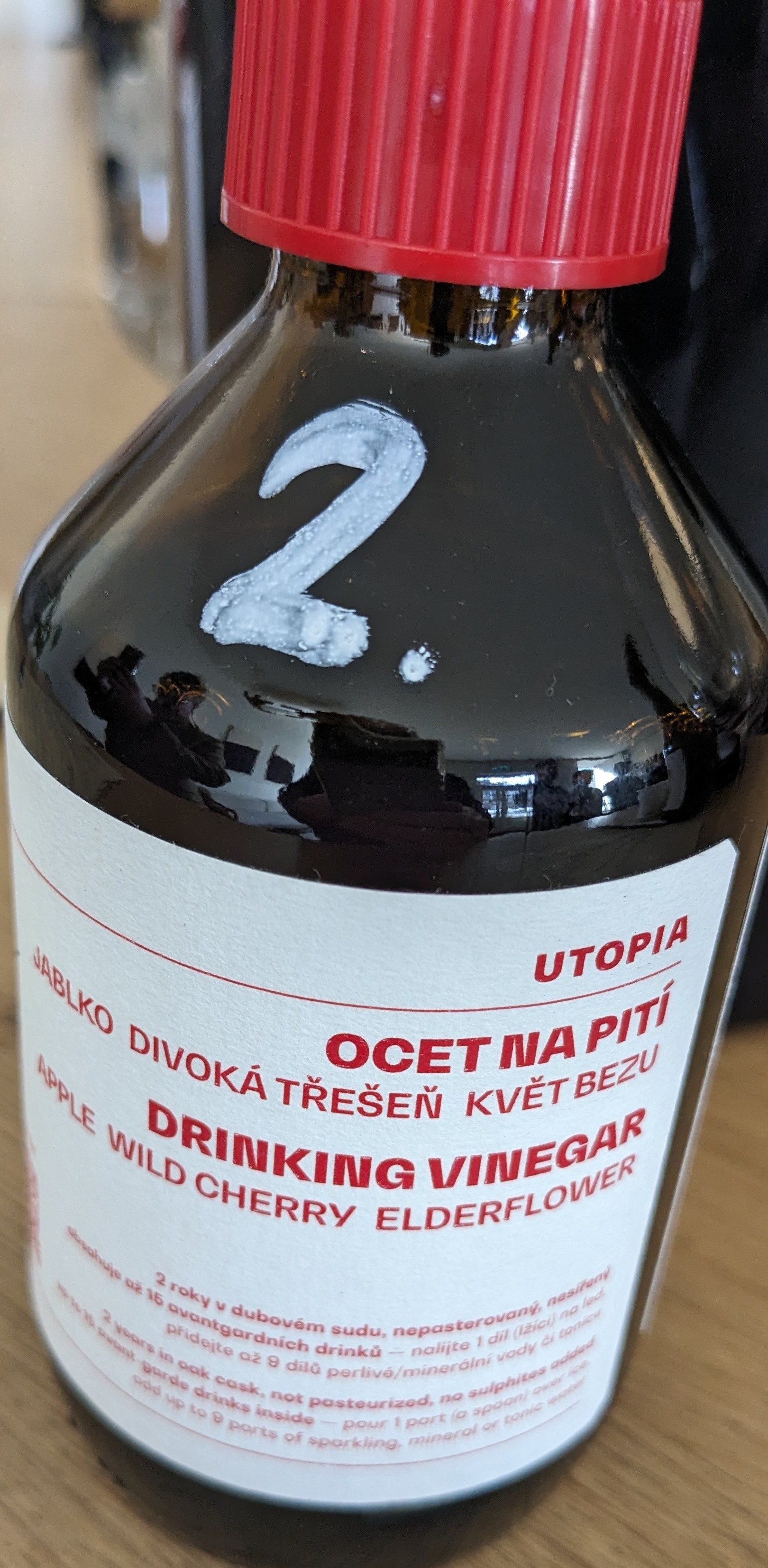
Let me start with the unusual, a drinking vinegar and a cider made from frozen apples, both new to me and both made in the Bohemian Highlands of Czechia by Utopia. The vinegar had some fruit, even with the trend for kimchi and pickles I doubt I’d drink it but it was very tasty for dressings etc. The cider was a revelation, the ice had removed water to leave more sweetness and there was a lovely, intense apple hit followed by a balancing streak of acidity, very nice.

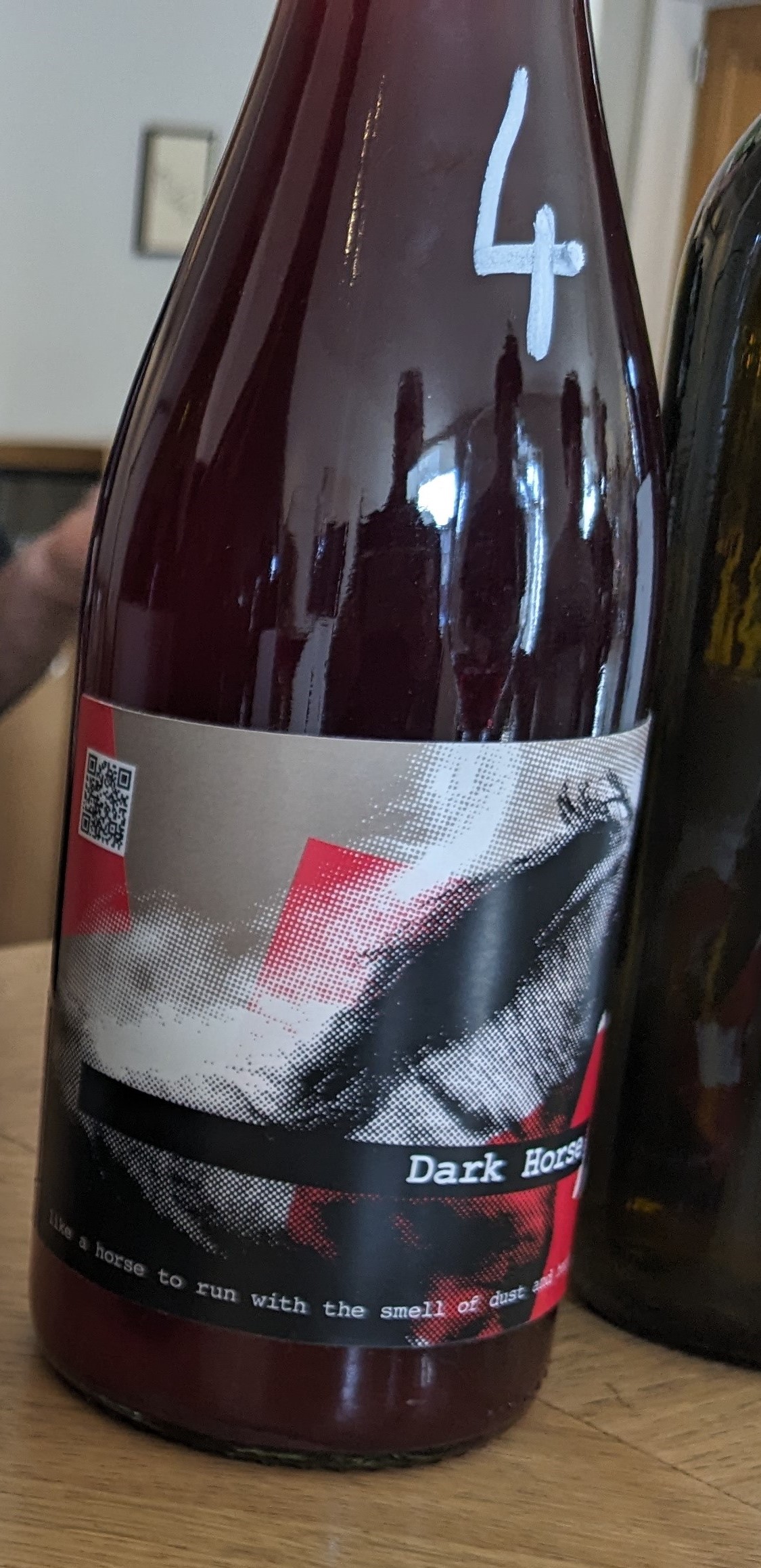
PetNats are starting to fall out of fashion at the moment but the two on show here were definitely proof that the style has a future. I enjoyed the Slovenian Izi 22 from Štekar but the star was undoubtedly Petr Koráb‘s Dark Horse Pet Nat 22 from South Moravia. Made from Traminer and Welschriesling kept on skins for a year and then blended with hybrid grape Hibernal and Blaufränkisch which gave it the bright, cherry red colour. It had bright aromas of red fruits and these carried into the flavour with a long, clean finish and a nice bitter twist on the finish. One of the best PetNats I can recall, a star wine.
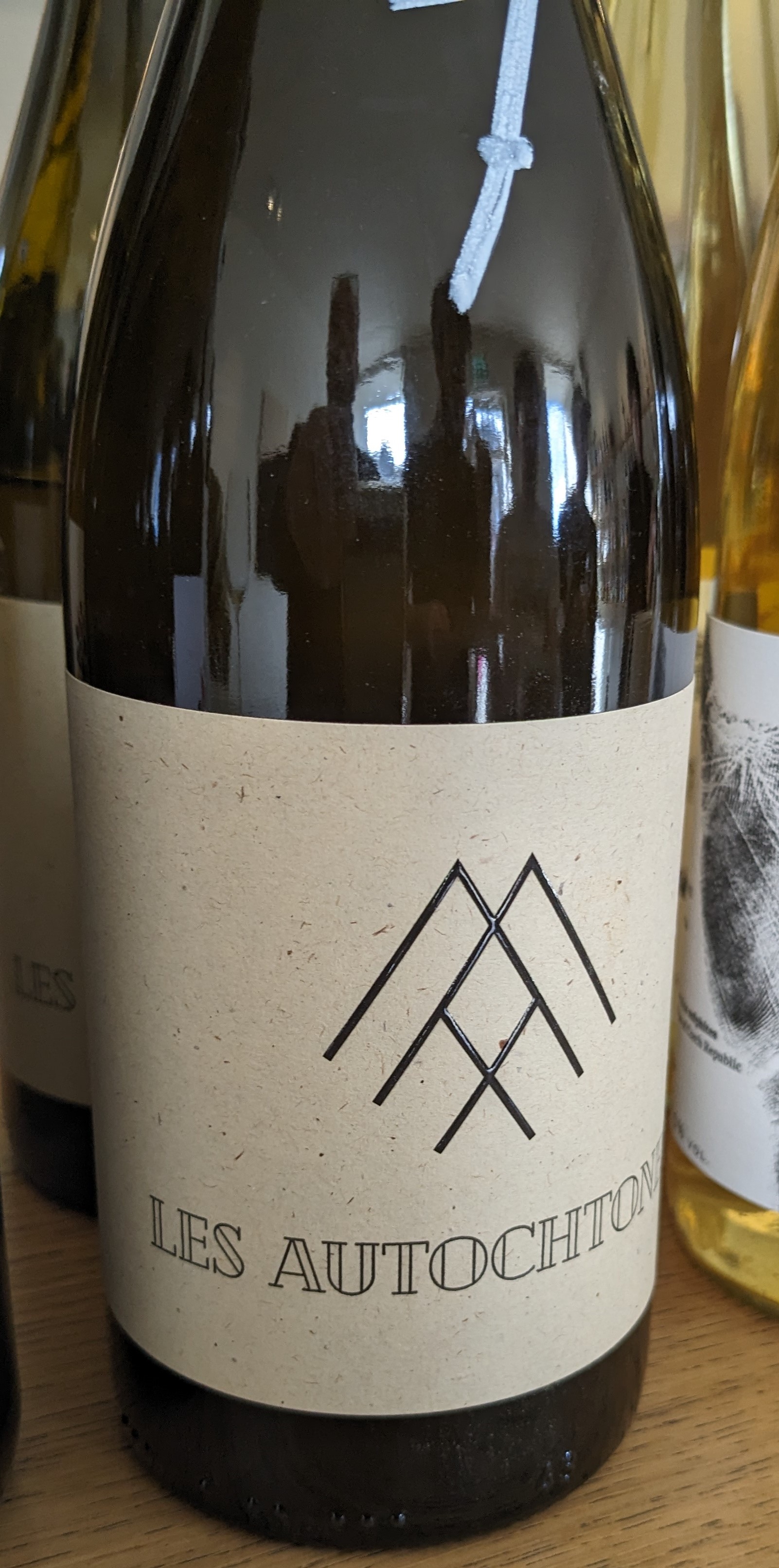
The whites were good, I liked the typicity of some of the wines such as the very good Silvaner from Max Sein, Les Autochtones 20, and Sauvignon Blanc 22 from Mira Nestarecová were both very good examples of those grapes but much more. The Silvaner is grown on limestone based on seashells and there was a freshness and purity of fruit along with a slight orange colour and texture from a short skin contact, best of both worlds. Mira proved she is an excellent winemaker in her own right, not just the wife of Milan Nestarec. Her Sauvignon Blanc was another with partial maceration but the varietal character was clear and refreshing.

The most interesting white for me was Dva Duby‘s Divide 19. Made from 30% Müller Thurgau with the rest from Frühroter Veltliner, a white grape with red/pink skins rather like Pinot Gris. This gave the wine a pinkish tinge and the wine had definite saline notes (influence of the volcanic soils?) and unusual white fruit flavours like bruised apples with some cherry. I wasn’t sure I loved it but it was unique. My favourite white wine was Zdeněk Vykoukal‘s Neuberger 21, like the Dva Duby from South Moravia. Neuberger is usually to be found in Austria and is noted for its susceptibility to botrytis because of its tight bunches. Indeed, this example had 30% botrytised grapes aged in acacia barrels for 12 months then steel for another 6 months after a full day on skins. Such daring winemaking paid off handsomely, the wine was clean with white fruits and then its golden colour was matched by a hint of honey sweetness and beeswax notes. It reminded me of a very good Chenin Blanc from the Loire but stands on its own. Lovely.

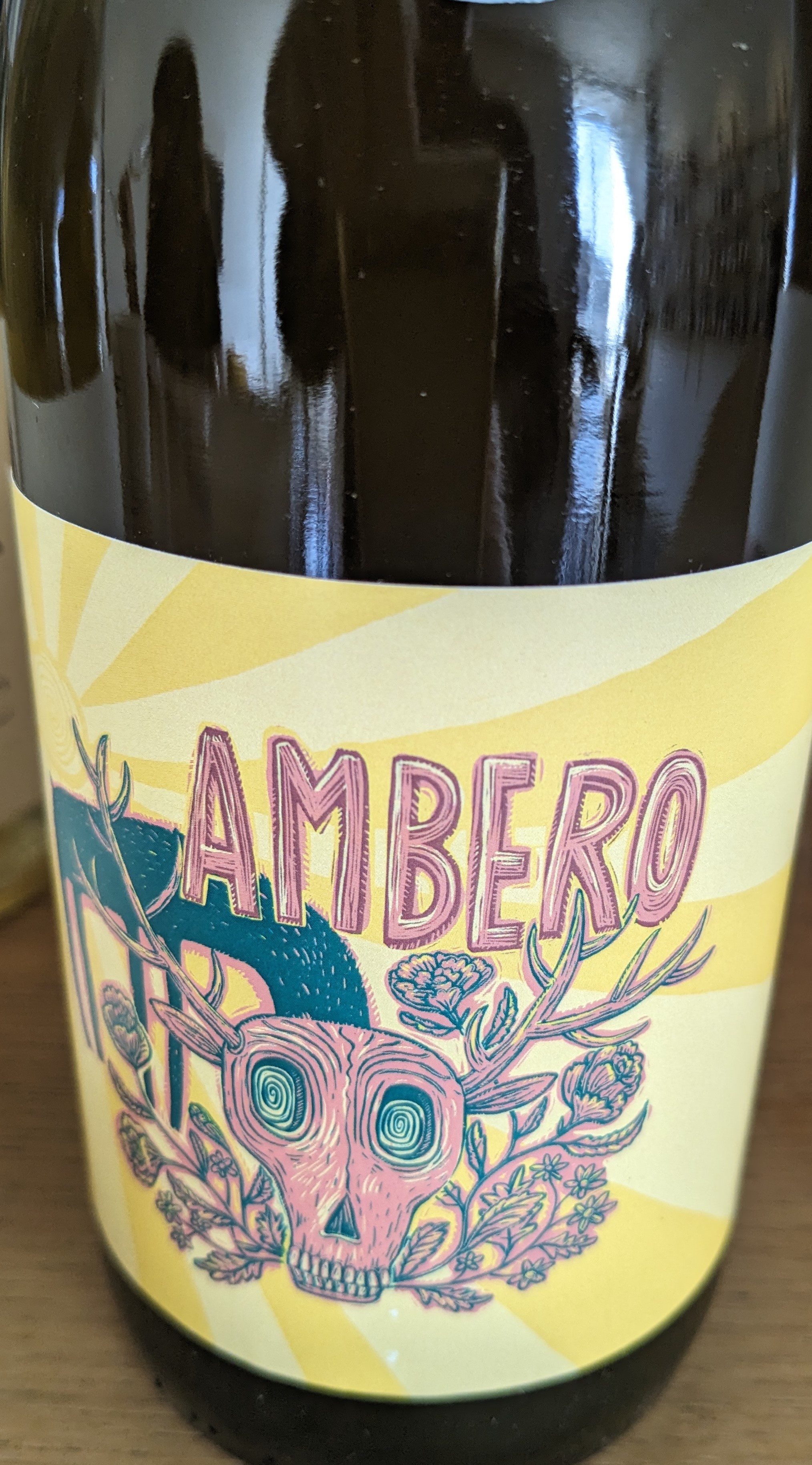
From the wines tasted it was clear that skin contact is a widespread practice in the region and skilfully done at that, adding good complexity to white wines. There were four orange / amber wines on show and my standout was again from Petr Koráb, Ambero 22 made from Welschriesling, Veltliner and Traminer aged in a ceramic vessel for a year and then blended with 30% Hibernal. The wine is deep amber colour and the skin contact added a grippy texture which boosted the lovely fresh citrus (David described it as clementine). The ceramic vessel means there is little oxygen contact and the wine stays vibrant and zesty.

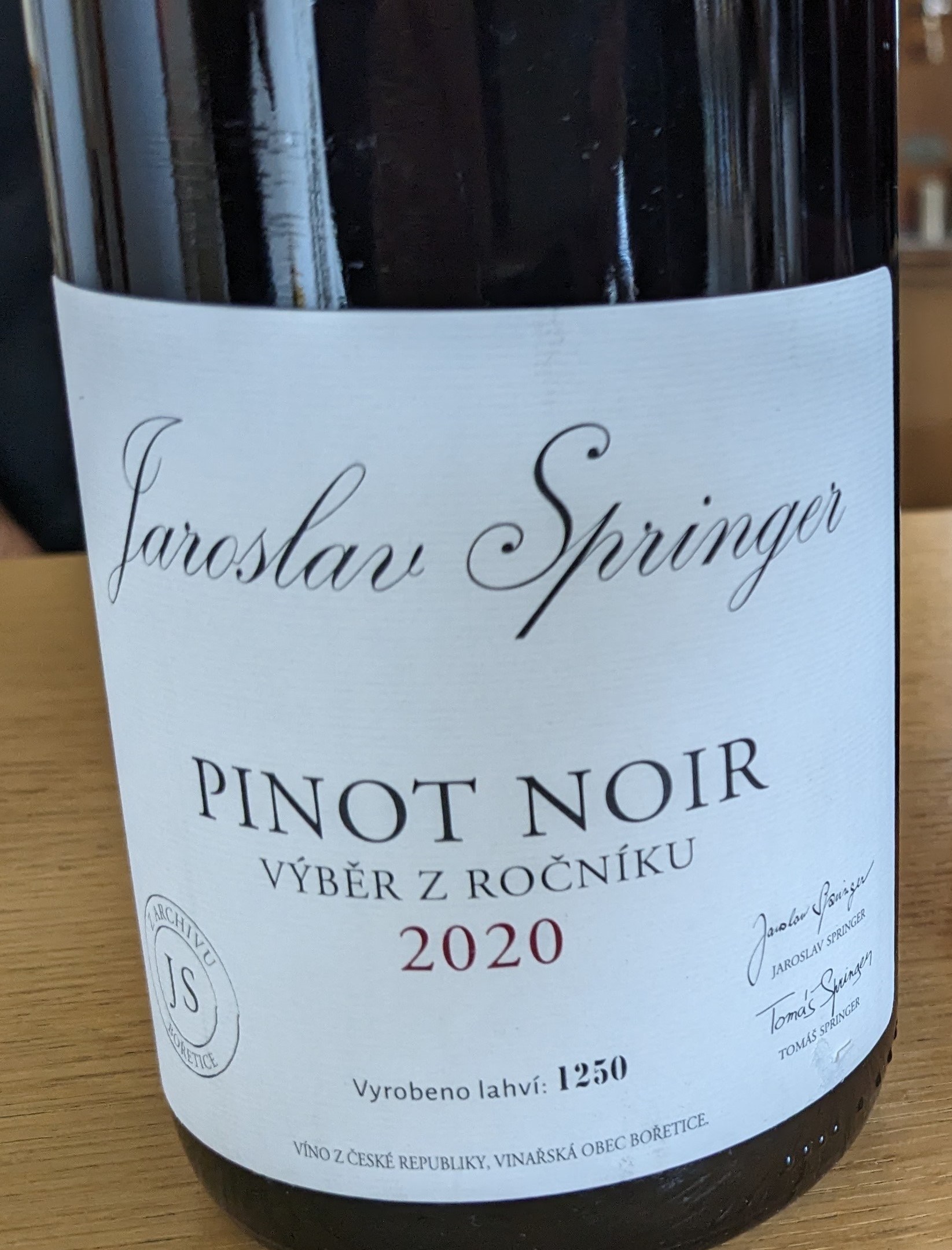
The best was still to come, the red wines. Pinot Noir showed up well with some pure examples notably from Jaroslav Springer and Mira Nestarecová again. As David notes Jiří stated that he thinks Springer is making the best Pinot Noir in the whole of central Europe not just Czechia. Pinot Noir Vintage Selection 20 had clear red fruit aromatics with strawberry flavours and good freshness, hard not to compare with very good Burgundy. Mira’s Pinot Noir was a bonus wine shown by Jiří, some carbonic maceration had extracted a bitter note but it was another very nice Pinot. Incidentally, her Cabernet Franc had green pepper and spice notes, another example of grape typicity.

Me photographing David
photographing Jiří holding Mira’s
Pinot Noir

My favourite wine of the tasting was Zdeněk Vykoukal‘s Cabernet Moravia 21. This grape is a cross between Cabernet Franc and Zweigelt, both grapes giving freshness and that was the hallmark here. The colour was pure ruby and there were plummy aromas with deep red fruits and a toffee like finish, the slightest note of sweetness. Grown on limestone the grapes are aged in oak for 10 months and then steel for 6 more. It is precise winemaking delivering a bottle which drew appreciative remarks and noises all round.

My main takeaways from this excellent tasting:

  • Interesting grapes – from classical interpretations of grapes such as Pinot Noir to hybrid and crossed breeding
  • Pruning – Mira Nestarecová’s very good wines originate from unpruned vines, an emerging practice and one to follow
  • Skin contact – commonly used, well practised and effective in adding complexity
  • Vykoukal – my favourite white and red wines were made by this producer, I need to order some!  
  • Moravia – David has been highlighting this region for a long time, he was absolutely right. These were top quality wines featuring exciting and experimental winemaking.

Bravo Basket press for your work in bringing them to the UK.


1 Comment

The Rule of Three

2. Vinateros

The second tasting in London which I attended was named Vinateros, a gathering of Spanish producers organised by a number of importers such as Caves De Pyrène, Modal Wines and Vine Trail. I have bought wines from all of those companies and can recommend them all. There were producers from all over Spain, producers who make wine with different philosophies and types of wine, from sparkling to fortified wines. The event at the Royal Horticultural Society’s Lindley Hall in Westminster attracted large crowds including noted wine writers such as Jamie Goode and Margaret Rand. I cannot claim to know Spanish wines that well but in recent years I have been able to taste a good number and mentioned in a previous post that it is one of the most exciting wine countries at present due to a new generation of producers willing to experiment, many looking to organic, biodynamic and natural methods. That is not to say that more conventional producers are not upping their game, there were some nice examples of such wines here.

I managed to get round 21 of the 93 producers, some tables were crowded and so I couldn’t get to producers such as Envinate for example. There were lots of very good wines, some interesting conversations and confirmation of my statement about Spain. I have selected a few of my favourite wines and apologise to those I have omitted.

I am going to start with my favourite producer on the day. There were probably better individual wines but for the range of wines there were none I enjoyed more than Entre Vinyes. Maria and Pep started their venture in 2010 in the Foix Natural Park in Catalonia. They found some 80 year old abandoned vines and have worked tirelessly to bring them back to life using organic practices. They are passionate about their project and the vitality shows through in the wines. Some of those wines are named Oniric which means dream, reflecting their vision for their work. I liked all of their wines for the freshness and flavour, from PetNat rosé to white and orange wines (named Brisat in local dialect). They use barrels, concrete eggs and stainless steel for raising their wines and even produce some PetNat in cans. Using local varieties such as Xarel-lo, Vermell and Paralleda as well as Muscat and others, the enthusiasm and story of Maria and Pep convinced me to buy some of their wines from Modal and it was a good decision.

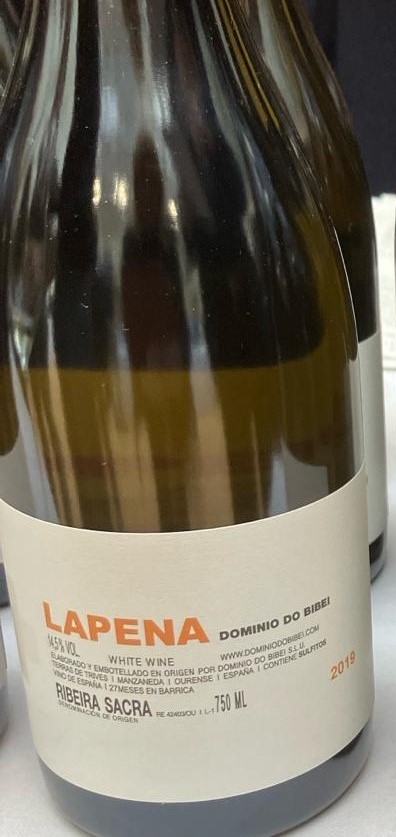
One of the most exciting wine regions of Spain in recent years has been along the Atlantic coast and Galicia. I tasted a number of wines from producers here and these were my favourites. Zarate‘s wines based on Albarino grapes were fresh, zippy and fruity, I liked them all though my favourite was the premium El Palomar 21, fermented in barrel and left on lees for a year which gave greater depth to the flavours. The Godello grape brought lovely fresh creaminess from high altitude vines in Dominio do Bibei‘s Lapena 19.

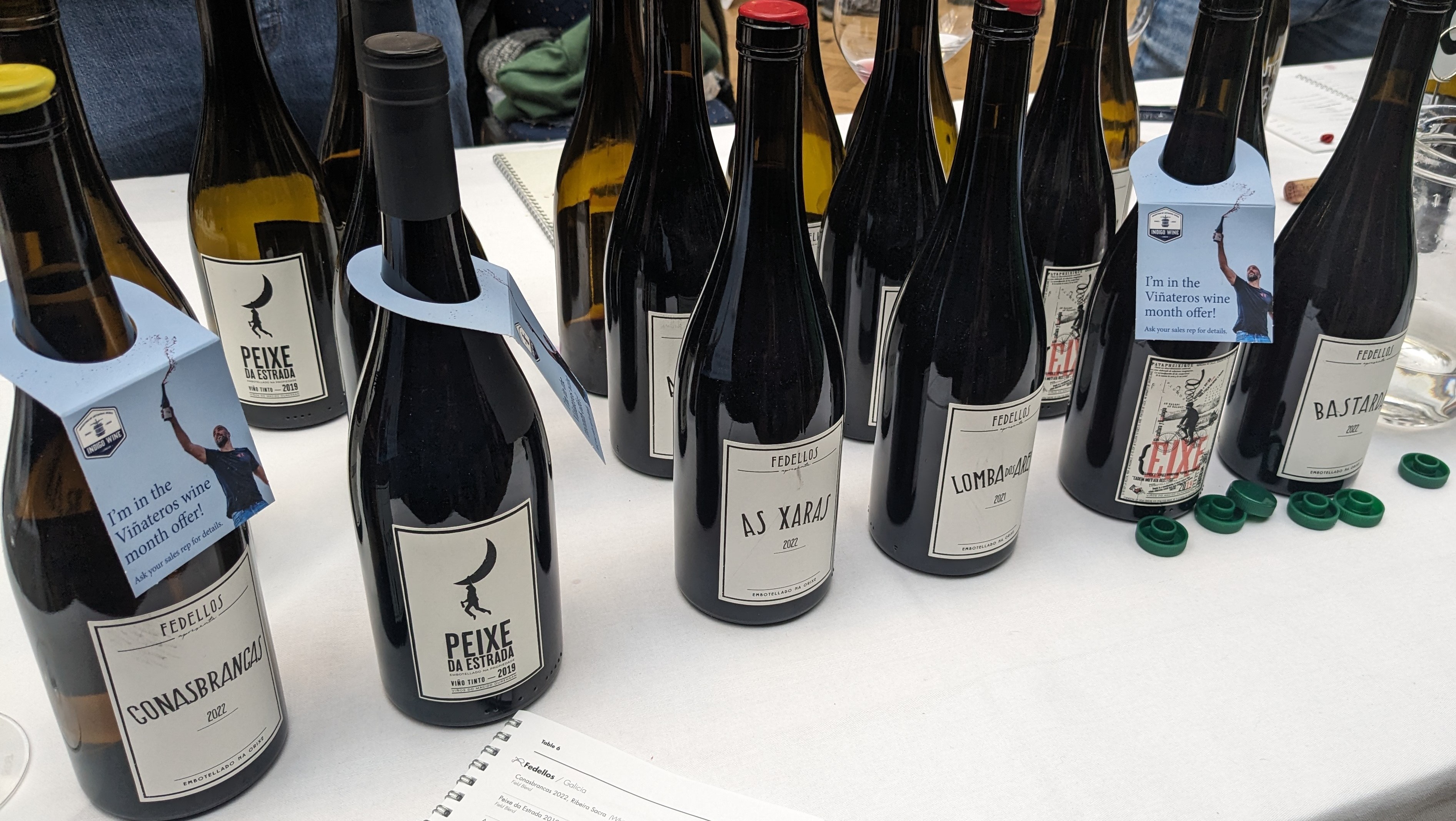
Of the Galician producers my favourite on the day was Fedellos in the Ribeira Sacra area north of Portugal. Conosbrancos 22 is a field blend of white grapes with lovely salinity. The reds were consistently drinkable, I enjoyed the field blend Lomba dos Ares 21 with a good balance of fruit and power and also Eixe 19 made from Merenzoo, Albarello and Negreda grapes (all new to me), the red fruits were full and singing.

I have previously enjoyed wines from Veronica Ortega and it was good to meet her and taste more of her vibrant wines from Bierzo in the north west of the Castilla y Leon region. I liked the red Mencia grape based wines for their cherry fruits such as the pale coloured Cobrana 21 which is blended with white grapes like Palomino and the spicy Roc 20. My favourite though was the white wine La Llorona 21 made with vibrant Godello grapes grown in sandy soils, full of white fruit flavours and saline character. A quick word too for Barco del Corneta in the same region with good concentration from their gobelet trained vines, such as the eponymous white Barco del Corneta 21 from Verdejo grapes.

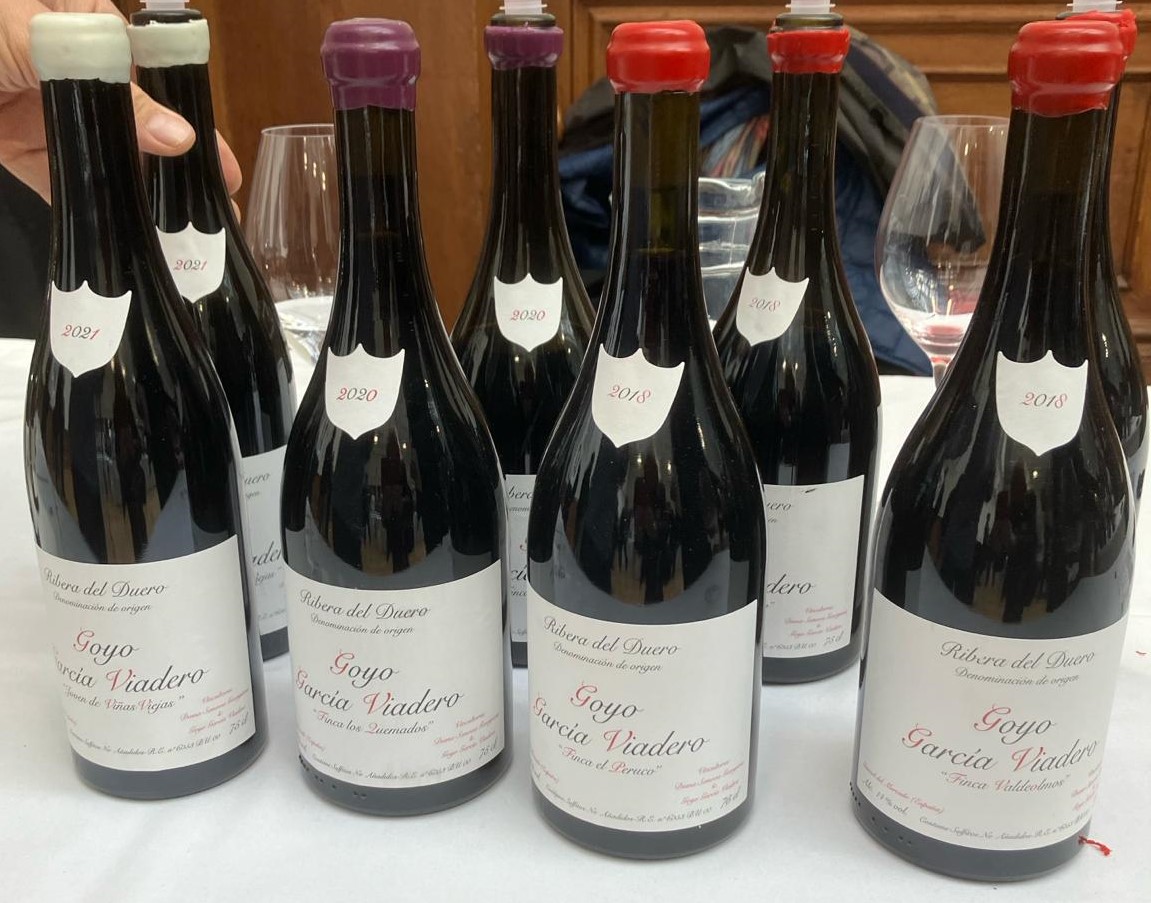
The Ribeira del Duero reds of Goyo Garcia were extremely impressive, made in white, sandy soils and with no added SO2. Deep, powerful, fruity, with extremely well judged balance, the Tinto Fino (Tempranillo) grapes are allowed to express themselves beautifully by very skilled winemaker Goyo Garcia Viadero. He works in vineyards with extreme temperatures which can vary enormously within one day and sells many of his grapes but his own wines should not be underestimated. I liked them all though the lighter Los Quemados 20 was very much to my taste.

Catalunya has been the region I have got to know best and as well as Entre Vinyes I was very taken by the Priorat wines of Clos I Terrasses and Nin-Ortiz. I most enjoyed the Laurel 21 of Clos I Terrasses with its upfront red fruits from Garnacha, Syrah and Cabernet Sauvignon and the Mas d’En Cocador Nit de Nin 19 of Nin-Ortiz with well blanced fruit and power from Carinena, Garnacha and Garnacha Peluda grapes (it is very expensive though). Priorat producer Terroir Al Limit also showed some good wines especially Pedra de Guix 21 a white wine made from Garnacha Blanca, Macabeo and Pedro Ximenez grapes all vinified separately but blended into a full, fruity sand fresh wine. Sadly I forgot to take a photo of another expensive wine.

Finally I enjoyed the sherry wines of Primitivo Collantes from the lesser known southern area of the sherry region. The family have been producing wines for 130 years and they were very refreshing and fine. I liked the Fossi Amontillado NV with characteristic nuttiness from Palomiino grapes which spend 5 years in the solera system and 8 years maturing. My other favourite was Moscatel NV made from Moscatel grapes matured for 2 years in steel, the wine was sweet but fresh and clean, very well made.

A busy, well organised event with lots of eye opening wines for me with my lack of knowledge of many Spanish wines. There were areas I still found difficult, Rioja and some of the bigger red wines for example. However, I found so many good wines and enjoyed the sheer variety of what was on offer. A week later I attended another tasting (part three of this series). When asked to recommend one producer a wine bar owner said Entre Vinyes, nice to hear confirmation of my choice from Vinateros.


Leave a comment

The Rule of Three

1. Dynamic Vines

The Rule of Three is a principle that suggests things that come in threes are inherently more satisfying and effective than other numbers of things. Well, in the last few weeks I have enjoyed three very good wine tasting events, time to share some thoughts and findings as well as recommendations and one very surprising outcome for me.

Tasting #1 was in Bermondsey, London and run by the excellent wine company Dynamic Vines, specialising in biodynamic and organic producers. I encountered Jean Christophe one of the Dynamic team at a tasting in Newcastle last August and it was good to meet up with him again. (Also very pleasing to hear that Soaked will be repeated this year).

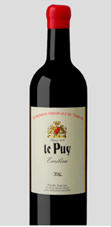
Unsurprisingly some of the wines I really enjoyed at Soaked were still amongst my favourites here; Cosse, Radikon, Béru and Le Puy. The Blaye wines of Matthieu Cosse are very good indeed and reasonably priced too, the white has beautiful aromatics and full flavours whilst the red is even better with full fruits lifting the Bordeaux backbone. Radikon‘s skin contact wines are, unfortunately, becoming very pricey but the level of consistency across the range is admirable and the entry wine Slatnik is fresh and complex whilst a 2009 example of Ribolla was delicious and shows the potential for ageing these excellent wines. The Chablis wines of Chateau de Béru are exemplary, clean, steely Burgundy Chardonnay with the characteristic minerality but fruit too. Again, like all Burgundy, the prices are climbing fast. I chose Le Puy‘s ‘Emilien’ as my wine of the year after Soaked, it’s still lovely. However, they were put in their place by the Merlot Barthélemy wines of 2020 and 2014, deep and full but £150+.

Another Bordeaux producer, Ormiale, showed some excellent wines. Made by hand (even de-stemming) and with very low yields all the wines were lovely including a red sparkling wine. My favourites were the Malbec ‘Mialbec 22’ fresh with deep plummy fruit and the outstanding Merlot/Cabernet Franc blend ‘Borto 19’ the name suggesting its port like flavours, full, fruity and powerful.

One of my favourite wine regions is Jurancon in the South West of France. I am heading there soon, very exciting. Two new (to me) estates were on show here and I thought the wines of both were excellent. Both of the 2021 dry wines of Domaine De Souche were lovely, the Petit Manseng and Gros Manseng grapes offering the freshness I like but with apple and pear fruit and hints of sweetness whilst remaining clean and dry. Clos Larrouyat wines showed nice citrussy fruit (especially ‘Météore 21), acidity as well as salinity and texture in the ‘Comète 21’. The moelleux ‘Phoenix’ was very good, the sweetness balanced by fresh acidity.

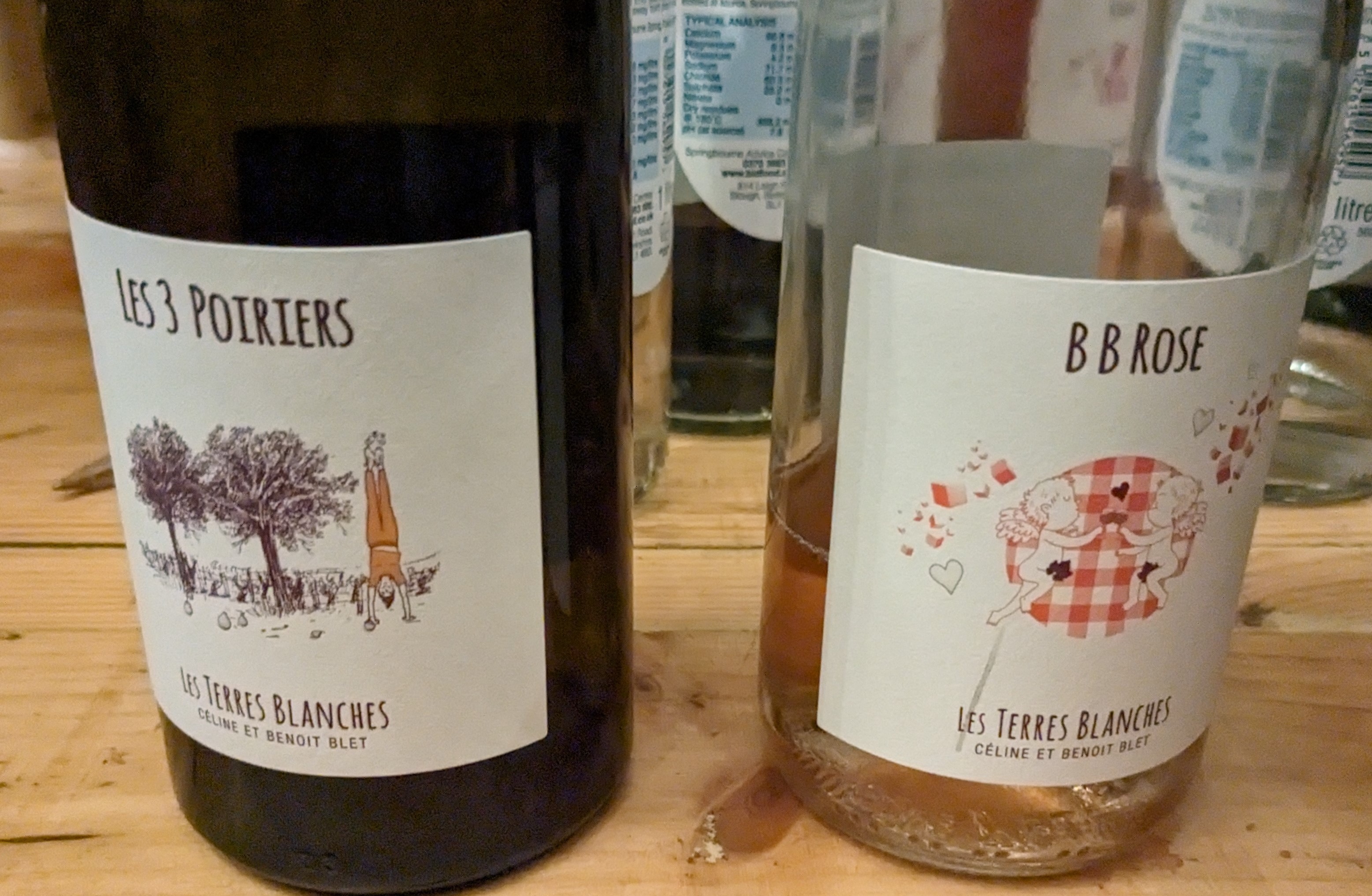
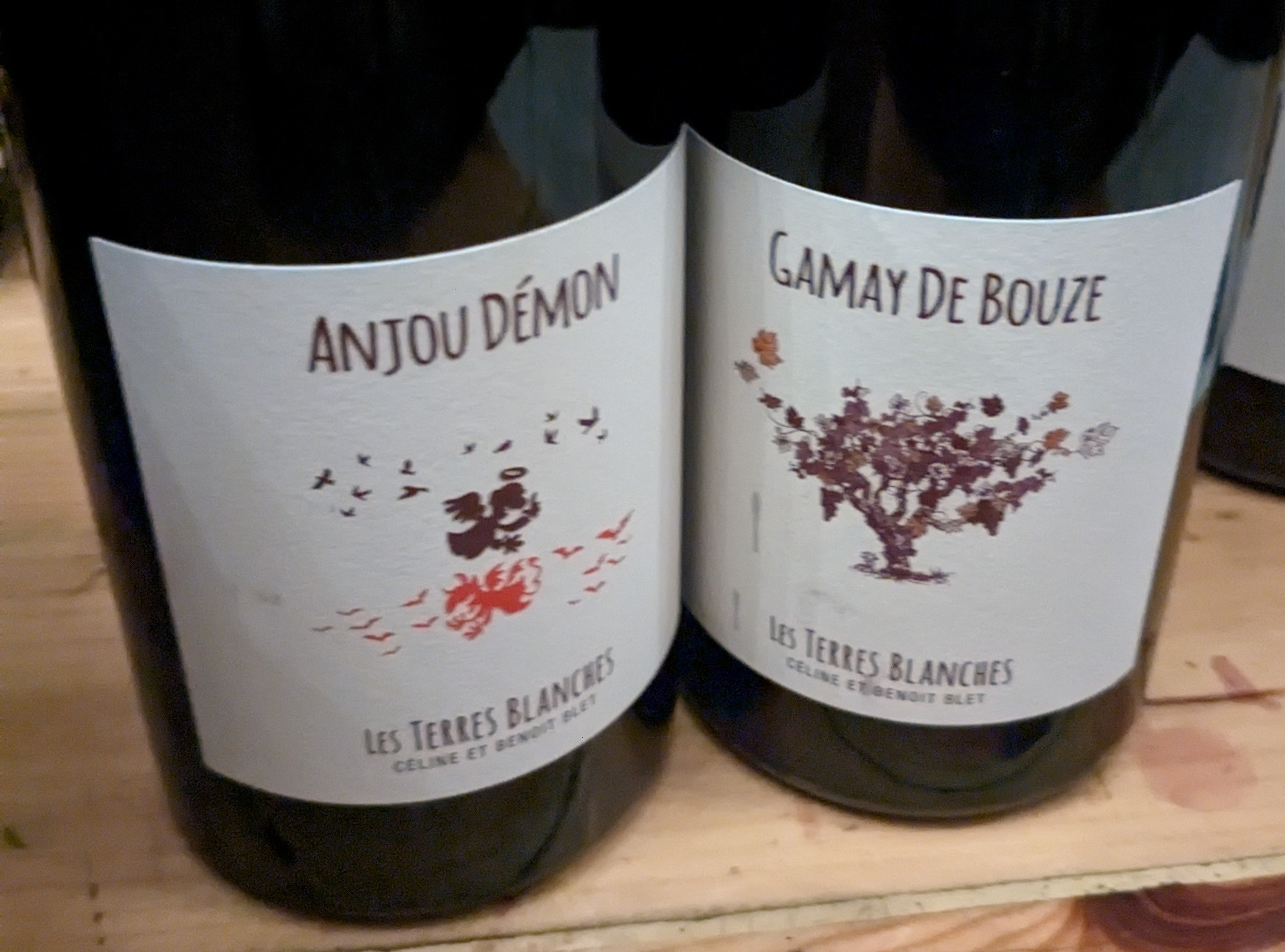
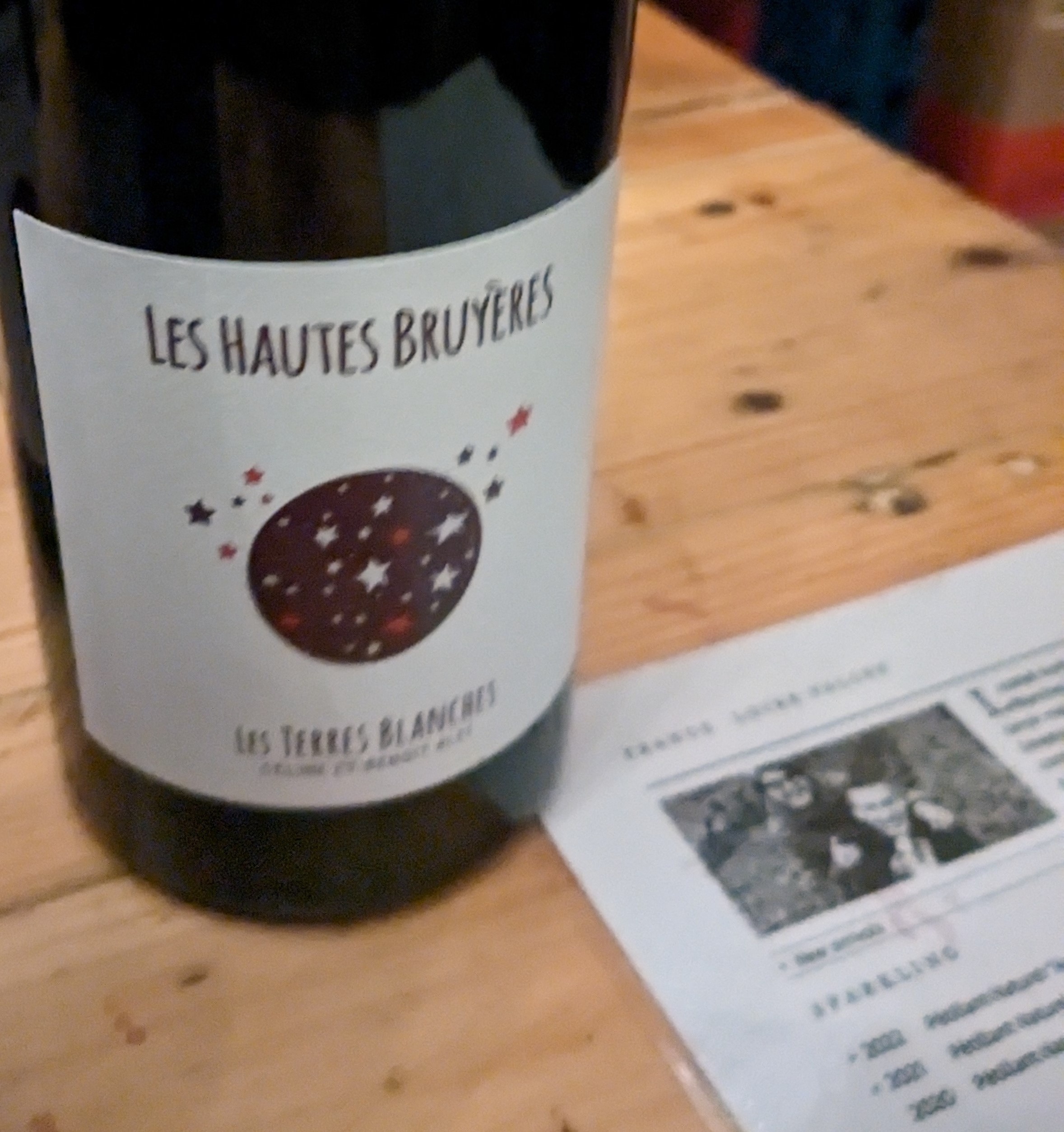
To the Loire (another region I am visiting soon). The Chenin Blanc of La Grange Tiphaine‘s Montlouis was very good but I particularly enjoyed the wines of Les Terres Blanches. The PetNat was persistent and very good, the Chenin Blanc ‘Les Trois Poiriers’ beautifully balanced between freshness, rich fruit and full of lingering apple and white fruit notes. The ‘Gamay de Bouze’ (a rare type of Gamay) had nice spice and crunchy red fruit. The two Cabernet Franc wines stunned me, I’ve not been a fan of the grape but the rich fruit and spice were lovely, ‘Les Hautes Bruyères’ 20 aged in barriques for 30 months was my wine of the day. How was that possible? Cabernet Franc, barriques – not me at all but….

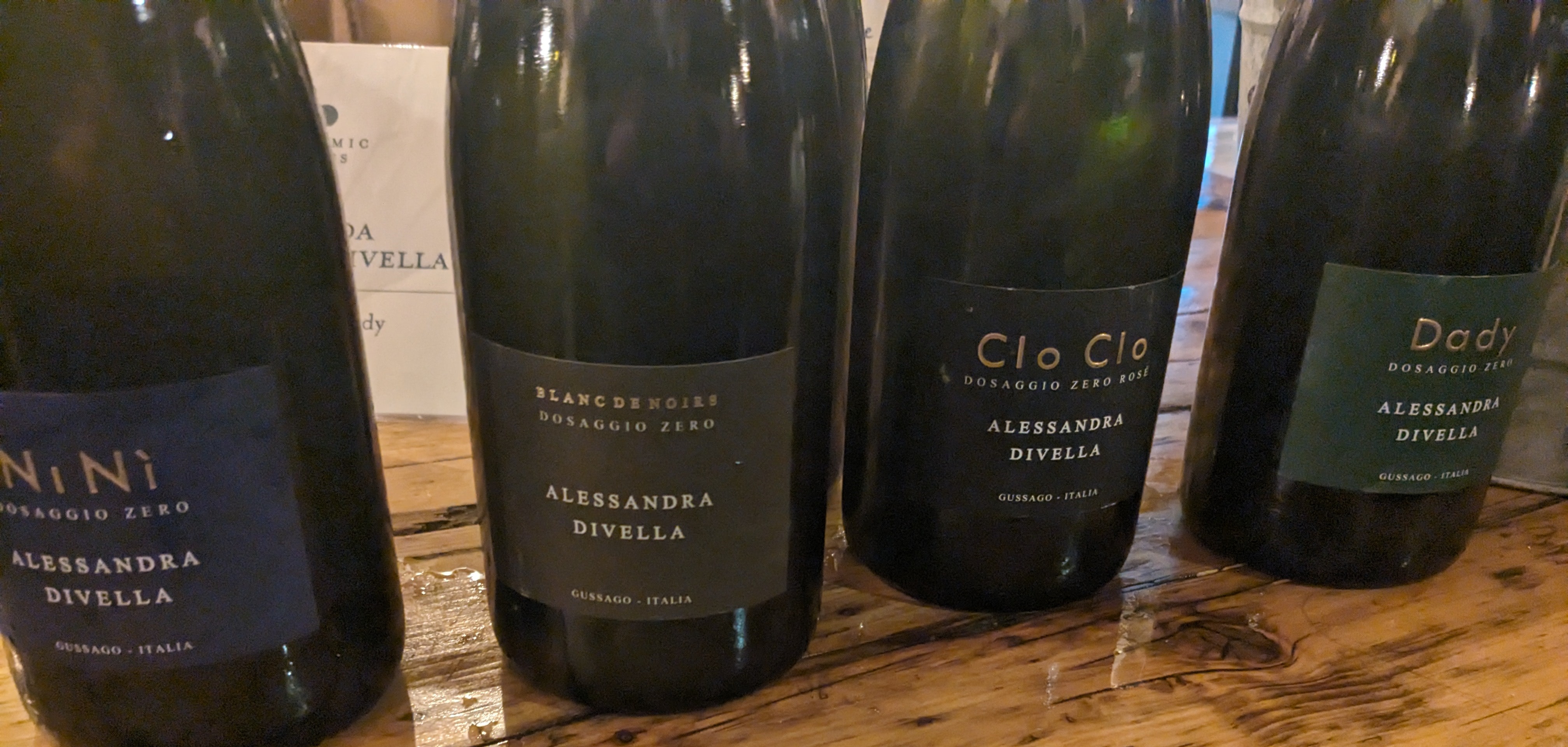
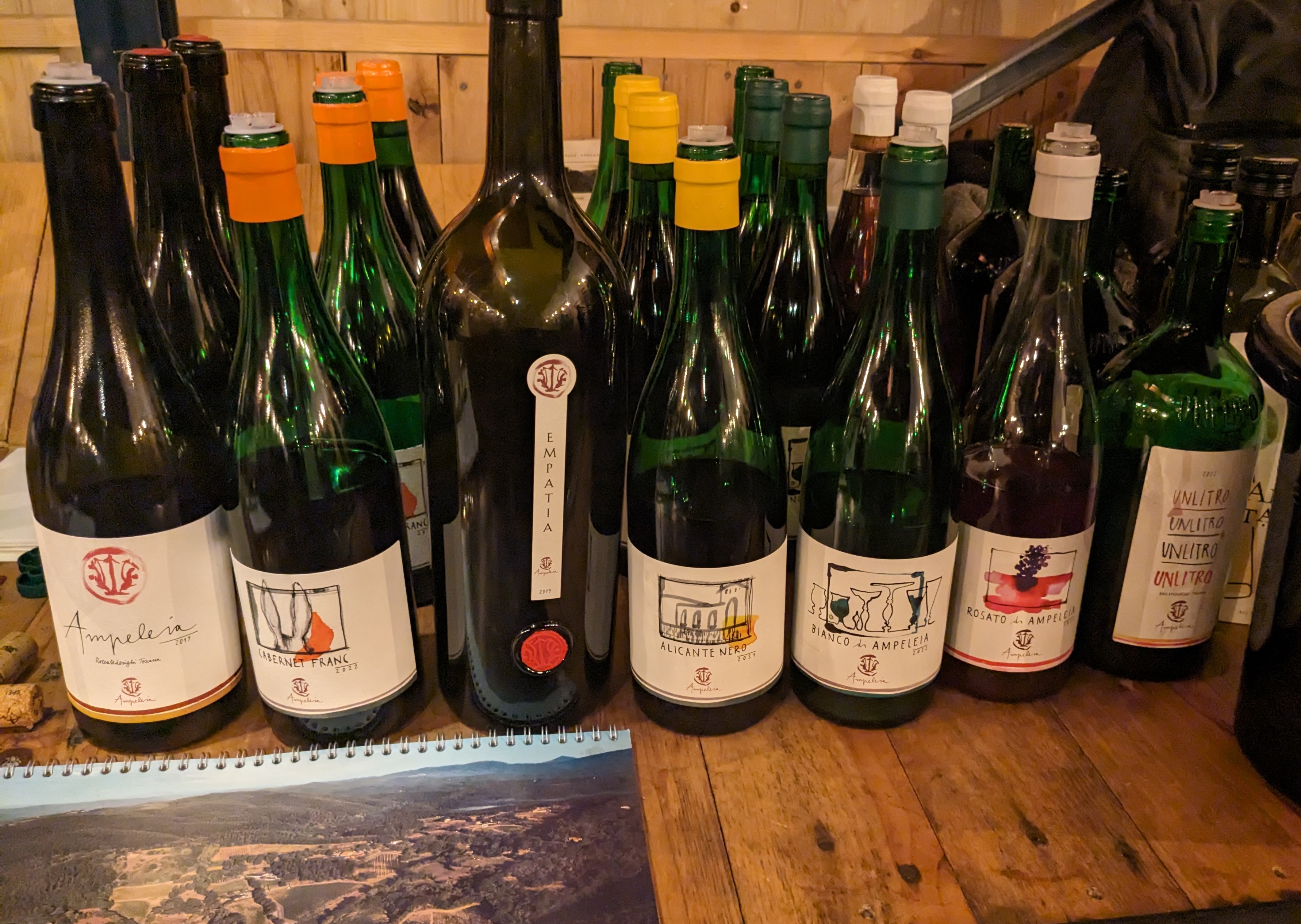
I had heard a lot about the Spumantes of AA Divella which are bringing Italian sparkling wines into the spotlight. Made in the champagne method and using Chardonnay and Pinot Noir they can easily stand comparison with the French region. Freshness, fruit and concentration abounded in all the wines the 2019 Blanc De Noirs in particular was aromatic and rich whilst fresh and clean – very well made. I also liked the wines of Tuscan estate Ampeleia as usual, best of all being the bottle of the same name, ‘Ampeleia 19’. Deep, rich fruits and freshness and made from….. Cabernet Franc. Again!

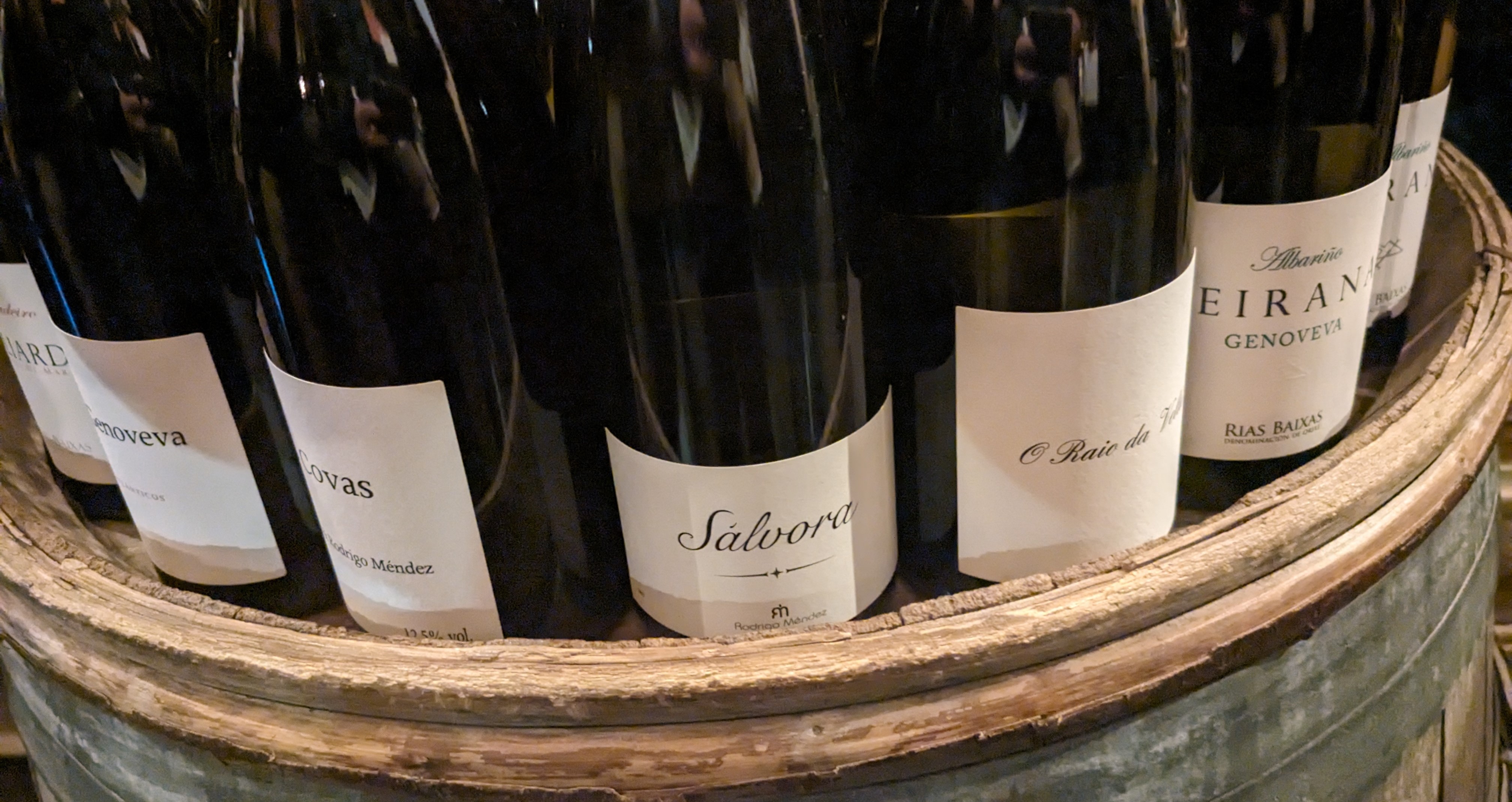
There were other Italian and Spanish wineries represented, unfortunately I couldn’t get round them all in time. However, I liked a lot the Albarino wines from both Forjas Del Salnes and Rodrigo Mendez, especially the Rias Baixas ‘Salvora 19’ of the latter made from 115 year old vines with incredible depth of both fruit and minerality – very intense yet pleasurable too. Finally, a Swiss producer La Maison Carrée, one of the few I have encountered. The ‘Auvernier Chasselas 22’ and ‘Auvernier Pinot Noir 21’ wines were very good, sadly the prices are high, rarity costs.

This was a gathering of some exceptional producers and some outstanding wines. I wish I had the time to explore other wineries and write about some of the other producers I did visit. However, these wines come with my full recommendation. Dynamic indeed.

Now, what is going on with this newfound appreciation of Cabernet Franc????


Leave a comment

February finds

Firstly, news from Puimisson. If you want to keep up with Jeff Coutelou then his Facebook and Instagram pages are the places to find posts and videos. He has certainly been busy planting. Trees, shrubs and flowers by the hundred in various sites, reinforcing his belief in biodiversity and breaking up the monotony of the monoculture of the area.

Meanwhile planting of new vines continues. The extension of the Syrah part of La Garrigue took place. The land has been fallow for a few years and will now add more to the production of La Vigne Haute in the best years (though these new vines will need many vintages to be properly mature). Meanwhile the new land in Peilhan with the animal reservoir, bat and bird sanctuaries in the background is being planted with Spanish white varieties such as Parellada, Malvasia de Sitges and more Muscat D’Alexandrie. This will be alongside the planting of Xarel-lo which will go into production in 2024. The Spanish influence is one of Jeff’s responses to climate chaos alongside the planting of trees seen above.

Meanwhile I have been living the high life with visits to the Lake District and London for wine events and great meals. My birthday meal at Miso in Newcastle was very good accompanied by a very drinkable, Serbian orange wine with an appropriate name.

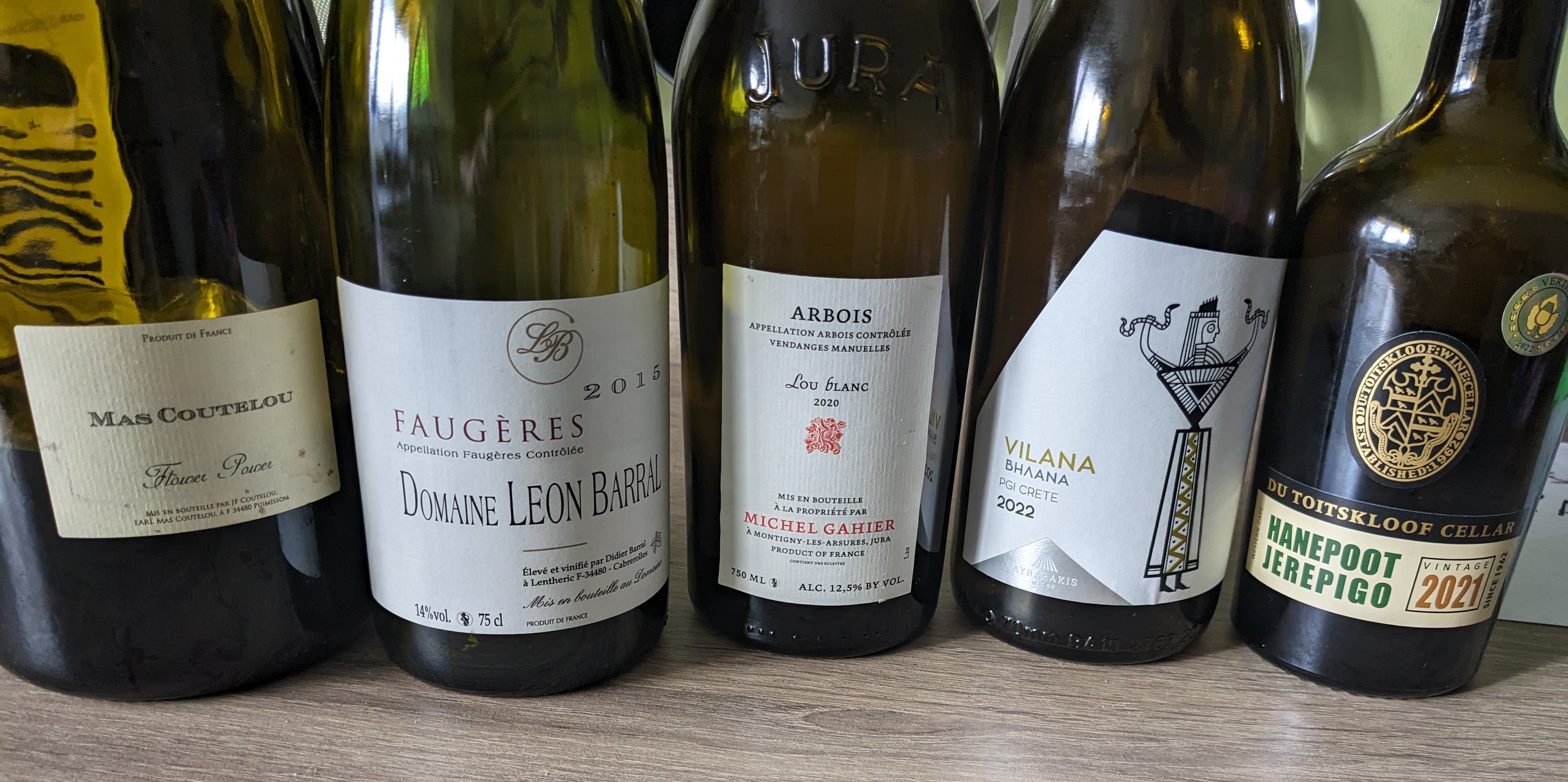
Over a few days with friends and family I shared some favourite wines including a youthful, vibrant 2021 Flower Power in magnum from Jeff as well as a prime 2015 Barral Faugères full of dark fruit and spice. The Gahier Lou Blanc 2020 was fresh, full and delightful made from Chardonnay in the ouillé style, ie topped up barrels. A word too for the delicious South African sweet Chenin which delivered lots of fruit and a cutting freshness to the richness.

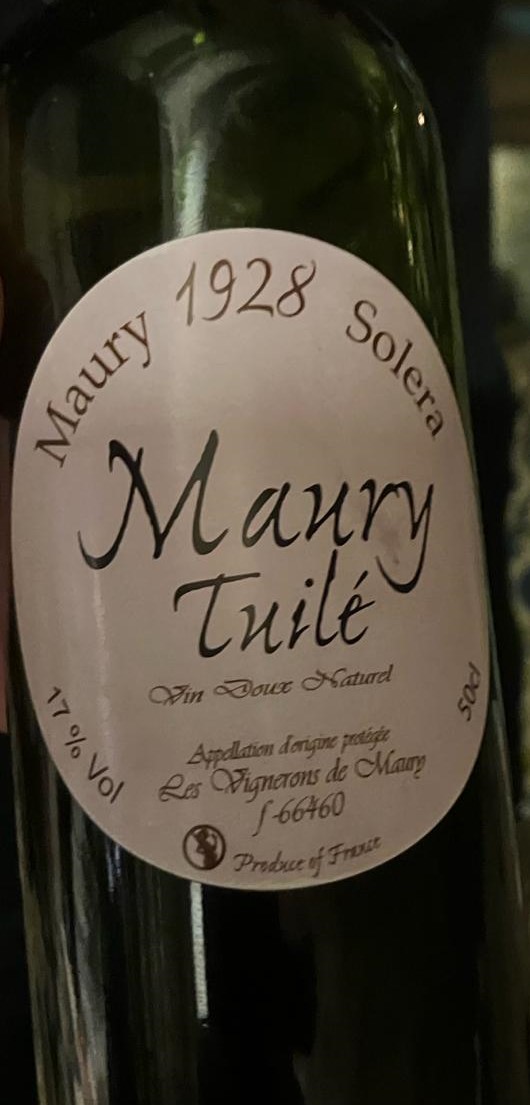
The meal at Askham Hall’s Michelin starred restaurant Allium included wine pairings and they were well chosen by a very good team. Highlights included a lovely Puligny Montrachet and Spätlese and a real treat with a 1928 Maury fortified wine made by Gauby.

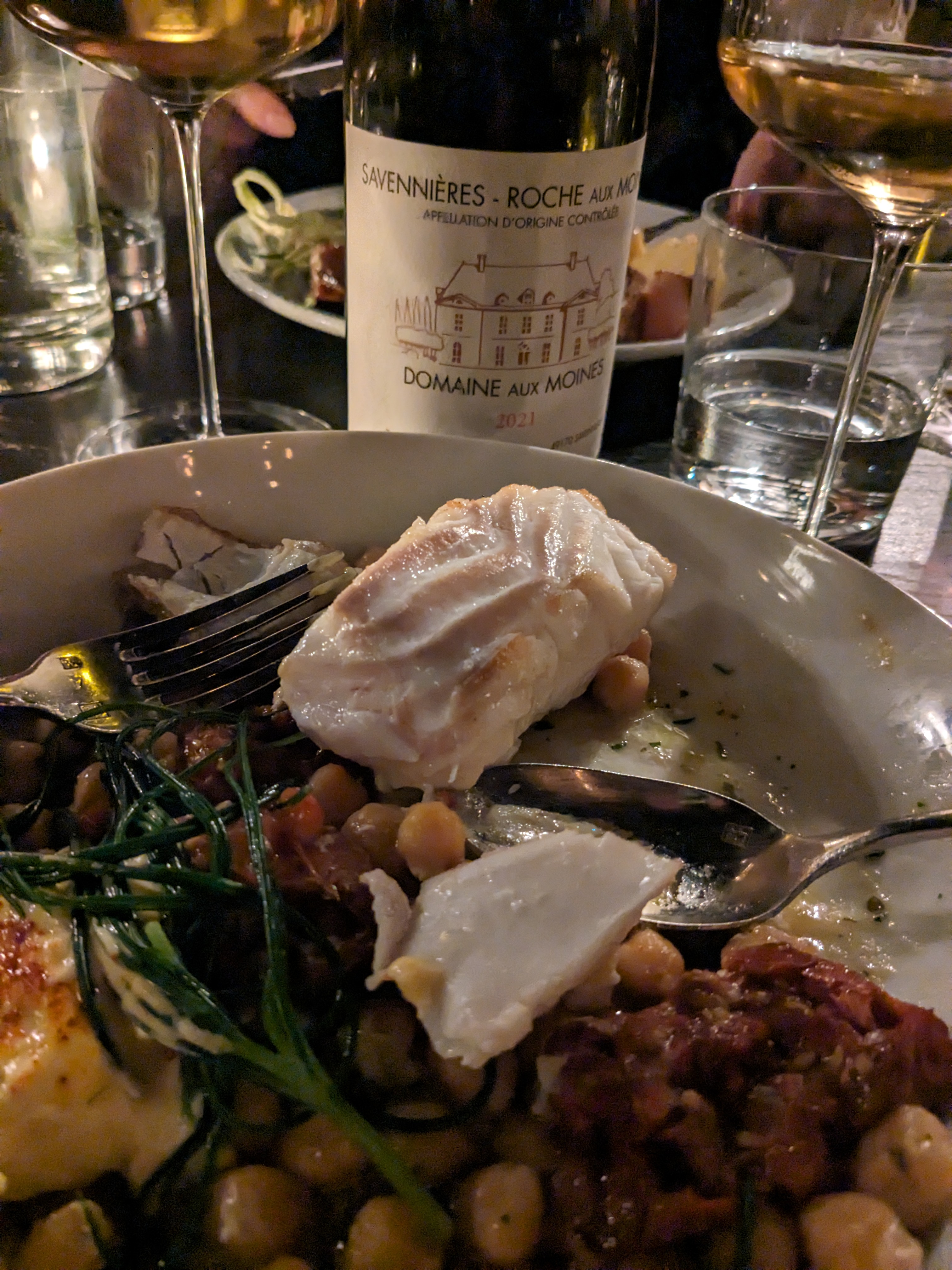
The London trip was to visit two very good tastings which I shall write about soon. However, it was also a great time to revisit Noble Rot restaurant. The cod dish I had was superb but the star was a wonderful Savennières La Roche Aux Moines 2021. It delivered rich fruit with a fresh acidity, beautifully balanced and a great wine with food though it would be great to drink at any time. It was expensive enough at £74 but the retail price is over £40, I wish other restaurants would price wines with less than 100% mark ups! This is certainly already a candidate for my wine of the year, superb.


Leave a comment

January jottings

Wishing all my readers a happy new year, health and good wines. January is always a bleak month here in the North East of England and we have had stormy weather though not wintry, so far. Therefore, like many others, it is a good time to plan for warmer weather; trips to the Languedoc and to Australia and New Zealand beckon in 2024. They should bring plenty of wine experiences.

In recent years I have seen in the new year with a bottle of Jeff Coutelou’s wine, and this year it was La Vigne Haute 2017, none better. It is in a good place though still has plenty of life ahead, no need to open any bottles if you have one still. I also enjoyed one of Jeff’s magnums of Le Vin Des Amis 2018, appropriately with friends, full of juicy red fruits but, again, in early maturity rather than at its peak.

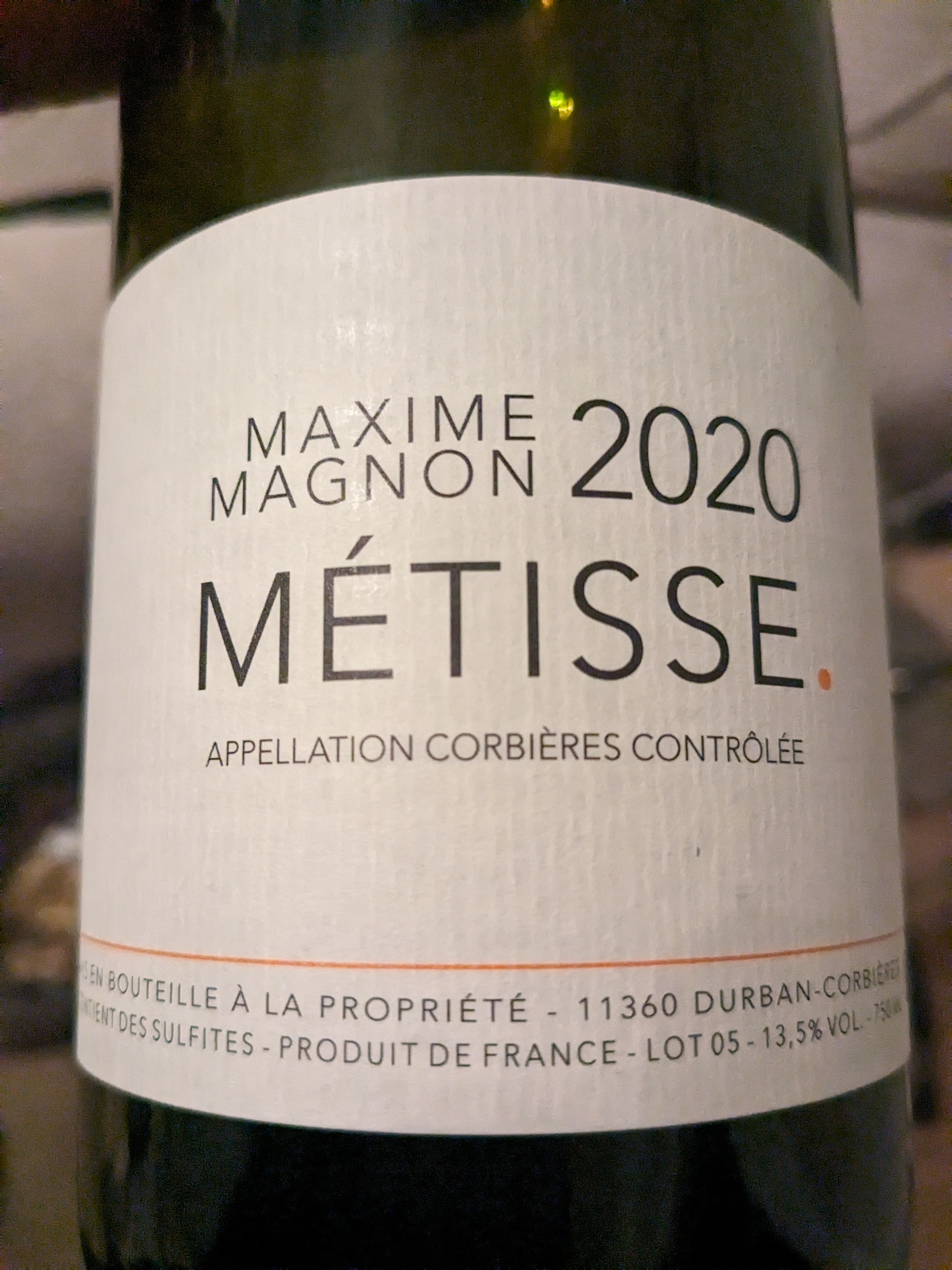
Other good bottles opened this month (no dry January in the March household!) include: a 2018 Belle Lurette from Domaine de Cébène in Faugères, yet another fine example of Brigitte Chevalier’s talents; a 2021 version of Becker Grauburgunder which was bone dry, citrusy but with yellow fruit and texture; Casa Pardet Roiget 2017 made from Cabernet Sauvignon and Trepat. Perhaps best of all was Maxime Magnon’s Métisse 2020. Métisse wines, blending red and white grapes, have become increasingly popular in recent years and I am a fan of the typically light red fruit and acidity which comes with the style. Maxime’s bottle combines Carignan, Cinsault and the Grenaches Noir and Blanc from his Corbières vineyards. The result was a deep rosé colour, overt fresh fruit and a clean, lingering finish.

In France it is tasting season with Montpellier events last weekend and the annual Loire events such as La Dive next weekend. I will be attending events in London in February, sadly missing out on the French events.

January is pruning month. This is a vital part of the year for the vines, cutting away the deadwood from last year whilst preparing the plant for this vintage and the next. I have been watching videos and reading about pruning as practices are changing. I recommend this article on Jancis Robinson’s website which is free to read. Youtube has a lot of videos, look out for Simonit & Sirch or Marceau Bourdarias. My friend Ines, who worked harvest last year with us, is doing a lot of research on the subject and it was fascinating listening to her talk about the subject last year. The new methods are looking to allow the free flow of sap through the vine and keep cuts and scars away from that flow. It is complicated but needs to be repeated for every vine, tens of thousands in Jeff’s case. He posted a video on his Facebook and Instagram pages of this year’s pruning.

Meanwhile January brings the newsletter from Jeff with its carte des voeux, his humorous poster reflecting wine and current events as well as a report on last year’s vintage and thoughts for the future. It’s fair to say that Jeff is anxious about climate change in this newsletter. “Let’s not bury our heads in the sand, if the climate continues to unravel like this then it will be increasingly difficult to continue winemaking.”

Why the despair? Jeff repeats what he told me last autumn. In the last decade there have been four years of drought, one of frost and one of mildew with severe heatwaves almost every year on top. As it is a ‘carte des voeux’ he wishes for a calmer decade ahead. However, he is pessimistic about that and describes how the new parcel of Peilhan, which has lain fallow for a few years now to attain organic certification, will be planted with Parellada, Malvasia de Sitges (both Catalan grapes) and Muscat d’Alexandrie which grows so well in this vineyard. This will complement the parcel of Xarel-lo in the vineyard which will reach early maturity in 2024 and make a small quantity of wine.

Jeff’s notes on 2023 rue the severe drought stretching from the previous autumn, through Spring (just 40mm of rain) and into a very hot period in summer which brought harvest forward. Harvest, as I reported on here, was straightforward since the dry conditions meant next to no disease. However, Jeff reports that the fermentations were difficult with some stopping altogether and one or two smaller tanks having to be abandoned. Nonetheless, this Spring will see releases of familiar named cuvées such Le Vin Des Amis, Ploutelou, Clairette, 7, Rue De La Pompe and TSCA. Couleurs Réunies will be revamped with older varieties and there’s a new cuvée, Macaboeuf (Macabeu raised in concrete egg, hence the pun). Other cuvées will follow on as they complete fermentation and reach maturity.

All we can do is join Jeff in wishing for a kinder climate and do all we can to help fight the chaos which we are seeing year in and year out. Let’s hope that 2024 be the start of a turnaround.


3 Comments

The case for 2023

It hasn’t been a good year in so many ways, losing my mother in particular and too many friends and former colleagues. The positives were a long break touring the eastern side of France and the vendanges with Jeff Coutelou, completing ten years of harvests. Throughout the year I enjoyed some very good wines and from those I have selected my case of the year.

The tour of eastern France began in Champagne, the Côte des Bar rather than the main Rheims / Epernay area. This has become quite a hotbed of new producers and organic farming and is much more diversified than the main region. It was interesting to see the infrastructure for protecting vines from frost, the financial rewards of champagne making it possible. If all the wines I tasted there the outstanding one was a familiar bottle, Montgueux from Jacques Lassaigne which has featured in previous selections of wines of the year. This is Jacques’ basic wine, based on Chardonnay and brings biscuity notes but a lemony freshness, exactly what I like in a top Champagne.

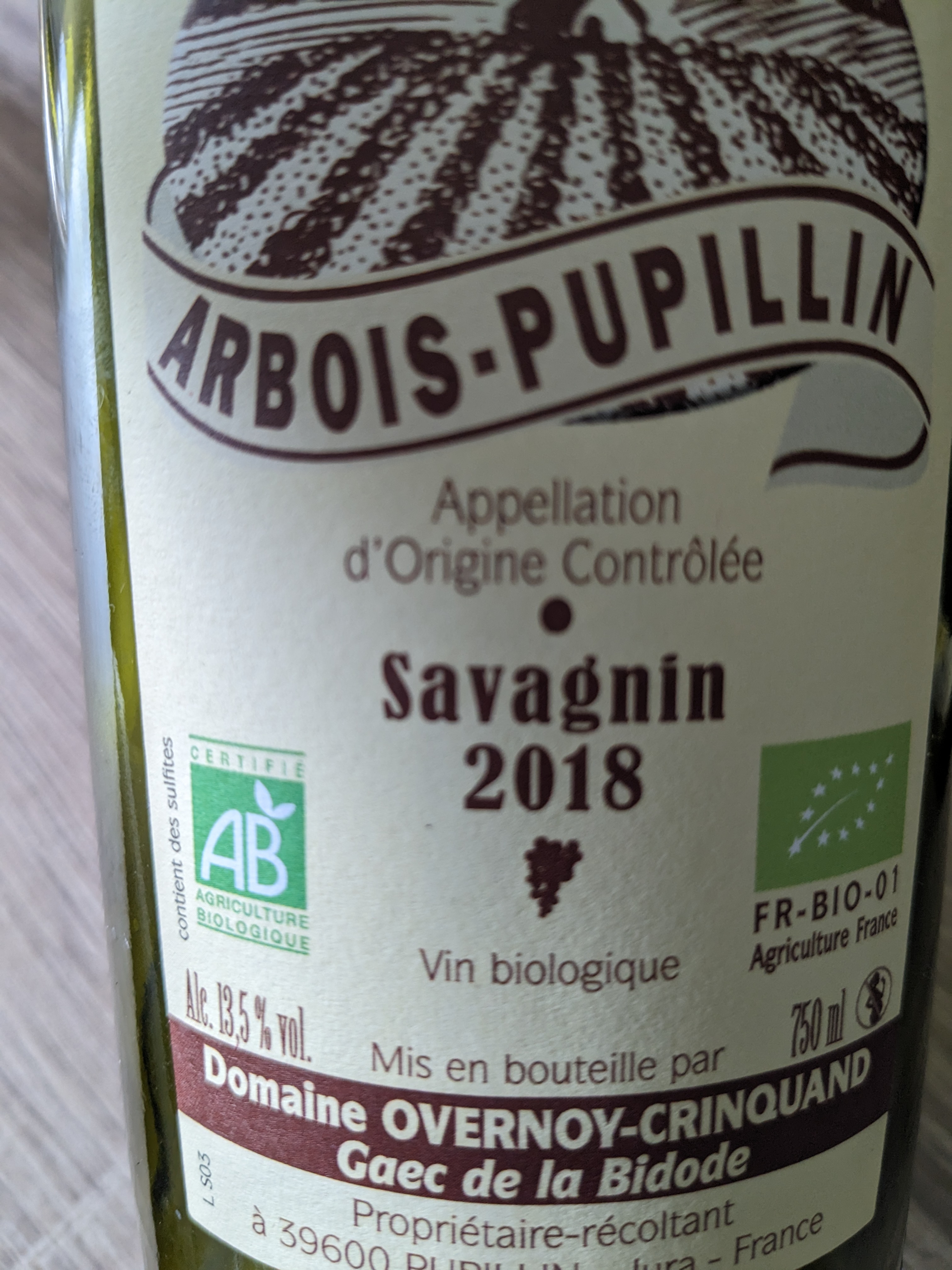
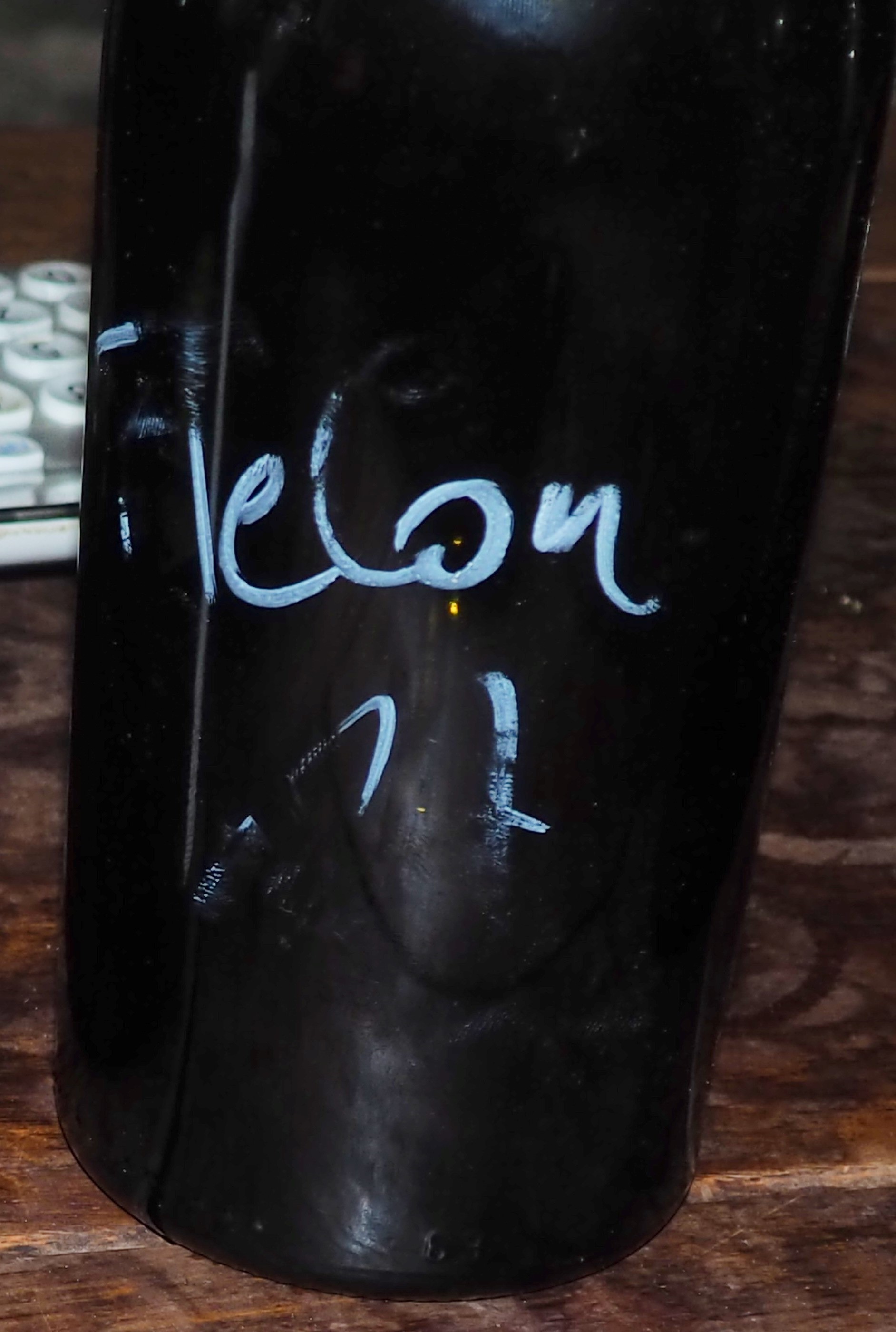
After Champagne came the beautiful Jura region, a lovely week with wine visits, including to the up and coming Thomas Jacquin, but tourist visits too. Thomas’ wines were excellent but not available in bottle so I have opted for two other wines from that time. Savagnin is probably my favourite grape in the Jura and the 2018 version from Overnoy-Crinquand was a lovely example of the region’s wines being slightly oxidised since it isn’t topped up in barrel. That sherry like note with spicy, peach like hints is exactly what I imagine when thinking of the Jura. Perhaps even better was the Melon from Michel Gahier though. The photo shows the 22 which was actually taken from barrel but my choice is the 2017. The Melon Queue Rouge grape is still subject to debate about whether it is simply Chardonnay or a cousin of it with its distinctive red stalks. The wine was dry and straight, nutty, spicy with white fruit flavours too – complex, lively and delicious.

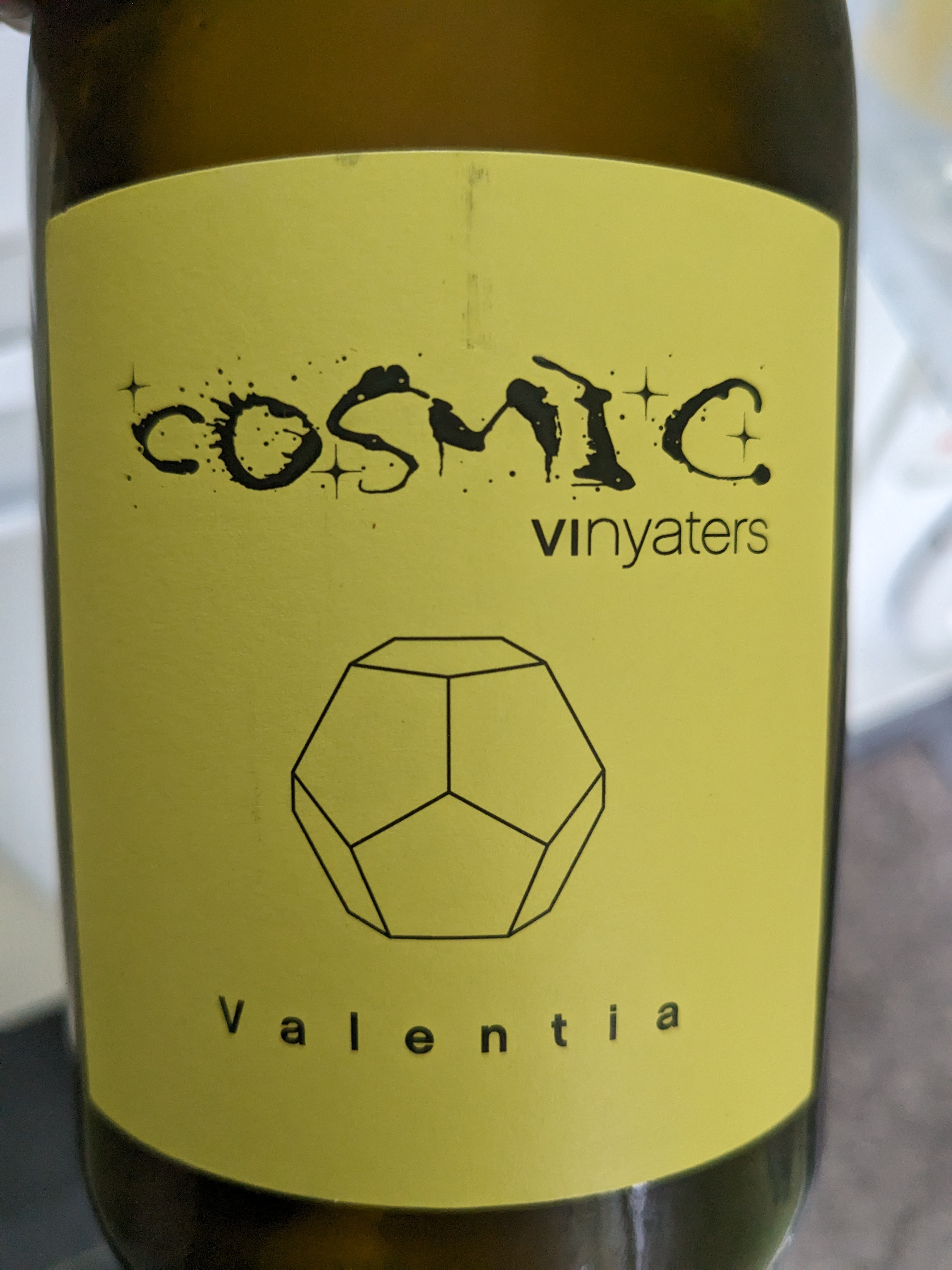
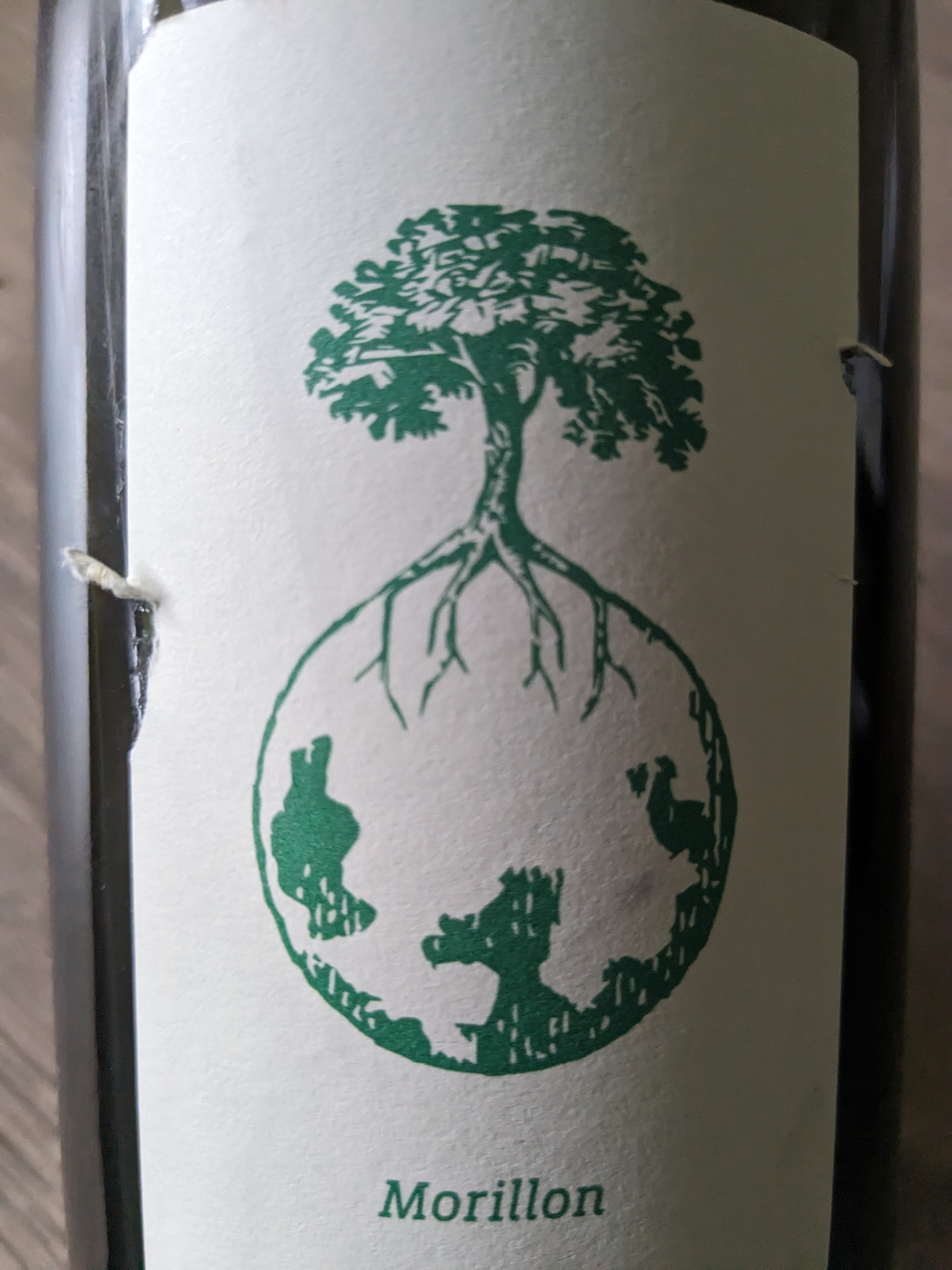
Two more white wines make my case plus a white from Jeff Coutelou, my obligatory Jeff wine. TSCC 21 is made from young vines of Terret Blanc, Servant, Clairette and Clairette Rose from the Segrairals vineyard. Only 400 bottles were made in 2021 from a small plantation, I do hope more will come along in future as I loved this wine with its freshness and white fruit profile, direct but full too. Jeff is making some excellent white wines these days, a match for the more celebrated reds. Cosmic Valentia 21 is made near Barcelona in the Emporda region with Carignan Blanc (Cariñena blanca) grapes on 60 year old vines. Freshness again, appley notes but also aromatic, very satisfying and long. I bought more on the strength of my first bottle, evidence of how I loved it. The final white was an older wine and, sadly, the only bottle I had of Weingut Werlitsch Morillon vom Opok 2015, Chardonnay from one of the best Austrian producers. I am lucky enough to have met Ewald Tscheppe a number of times and taste his wines, the high standards of farming and winemaking shining through every time. This Chardonnay (Morillon is a local name for it) was like a very good Burgundy with acidity cutting through the biscuity notes from oak age and a full, complex, lingering richness.

Regular readers will know of my partiality for orange wines. The Friuli region of NE Italy could be said to have led the resurgence of orange wine in recent years and one of the more famous producers is Radikon. It was the Slatnik 2016 which gave great pleasure this year. Deep amber in colour, resulting from the Chardonnay and Tocai Friulano grapes being left on skins for 12 days, the wine was dry, saline and had apricot and bitter orange notes, memorable and classy.

On to reds but another north Italian bottle, this time from the Dolomites. I have tasted Foradori wines at several tastings and I must admit I had never been overly convinced even though they garnered rave reviews from many respected judges with better palates than me. They specialise in the local Teroldego grape and it was one of their young vine wines which finally won me over this year, Foradori 2021. Lovely fresh, cherry and red fruit notes, good complexity and length, quintessential Italian red wine. The website is also very good. In my 2022 case I selected the first vintage of the Carignan of Thomas Angles, based in the St. Chinian region of the Languedoc. Thomas is a young producer who did harvest with Jeff in 2020, the one vintage I missed. The 2021 is aging very well indeed and I have to include it in my 2023 case too, it is joyful wine, fruit to the fore with a light touch of tannin and genuine complexity for a simple wine. Hugely promising.

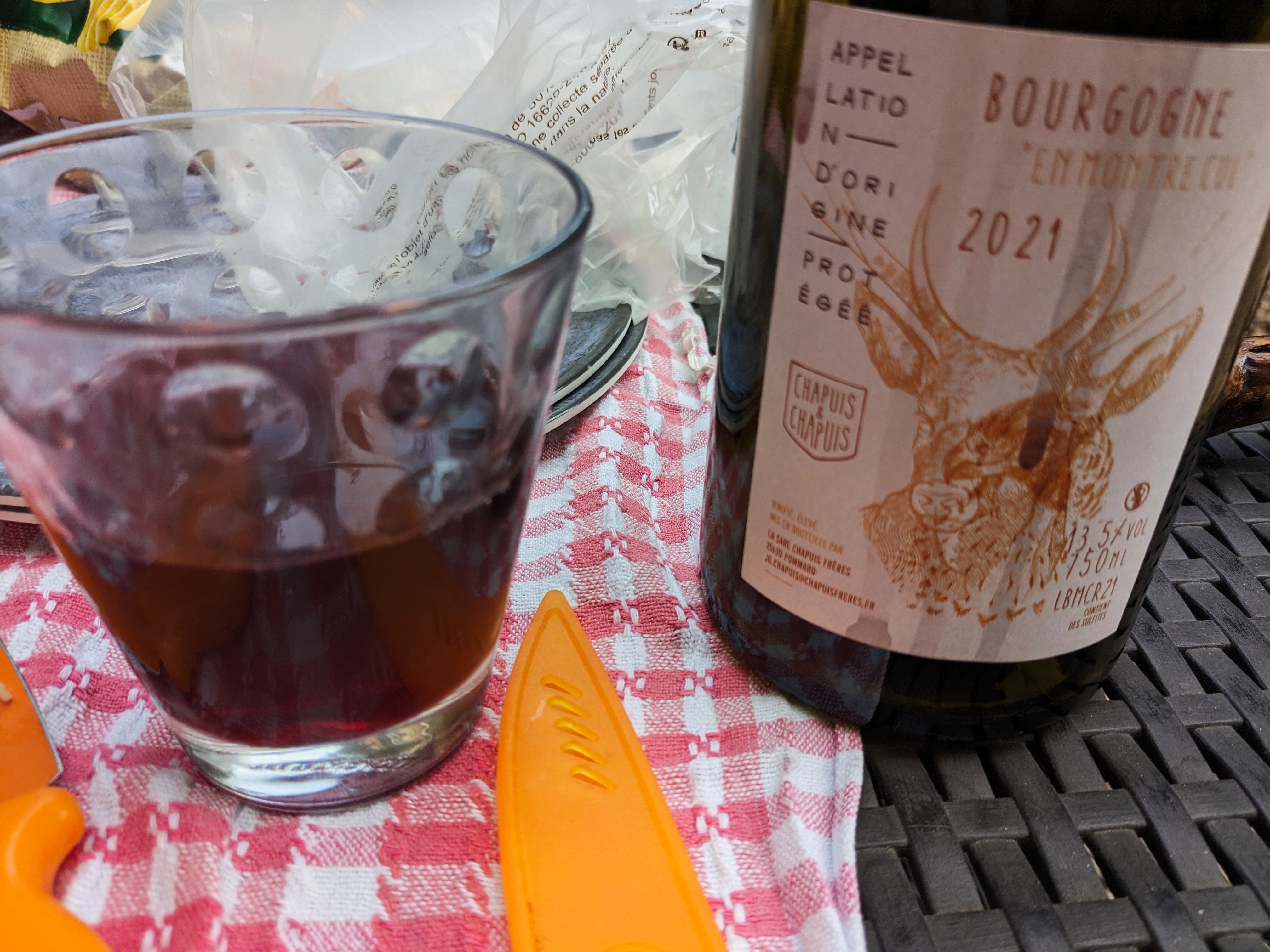
This year was also one where I rediscovered wines from classic regions. The tour of eastern France took us to Burgundy and I was fortunate to taste a range of wines, a 2014 Ladoix premier cru was memorable but two more humble bottles from natural producers make my list. Due thanks to my friend Aaron Ayscough for recommendations, it was good to catch up with him at a restaurant in Savigny les Beaune. Julian Altaber has worked with long standing natural producer Dominique Derain in St Aubin but has also started to produce his own wines under the Sextant name. I found a bottle of his Maranges 2020 in the Athenaeum in Beaune and it was excellent, classic red Burgundy with Pinot Noir at its best, fruity and light at first but with a serious depth of flavour lingering in the mouth. Lovely. Chapuis et Chapuis Bourgogne En Montre Cul 21 is an even more humble wine but showed exactly why Pinot is so great. The photo shows how this bottle was consumed at a picnic, no delusions of grandeur. Yet it is a wine I will long remember, delicious.

My final choice is also my favourite wine of 2023, a Merlot from Bordeaux. Not long ago I’d have laughed at such a thing, Bordeaux and Merlot were deeply unfashionable for natural wines. However, better farming, attention to modern winemaking and empathy with natural methods have come to the fore. At a tasting in Newcastle I tasted the superb Le Puy Emilien 2020. Merlot dominates with small amounts of the Cabernets Franc and Sauvignon and a little Carmenere. Plummy, red fruits dominate with great depth of flavour, ripe tannins and a refreshing line of acidity to bring balance. An example of great winemaking.

I’m hoping that 2024 will bring better news on a personal level but a repetition of great wines would be most welcome. Thanks again to all who read my blog, may I wish you all a very happy new year and good wine.


Leave a comment

Soaked, at last

Mea culpa.

Back in early August local restaurant Cook House in Newcastle held a wine tasting called ‘Soaked’ with the focus on natural wines from merchants across the country, As I dashed off to France for an early vendanges with Jeff Coutelou I overlooked the fact that I had not written about this very enjoyable event. Having long bemoaned the lack of wine events in general here in the North East, let alone natural wine events, this was a bad mistake on my part. Apologies to all who made Soaked a success.

Cook House is a very good, easily recommended restaurant and the range of merchants invited was exciting. I managed to taste through most of the vines on offer and I have added images of my notes for the favourite wines on the day. (Green – white wines; orange, pink and red speak for themselves)

Dynamic Wines

Sager & Wine

Otros Vinos

Modal Wines

Wright’s Wine

Les Caves De Pyrene

Vine Trail

Roland Wines

Sevslo

Thanks to everyone who contributed, it was a very good tasting with some different wines. There was a big range of Central and European wines which was exciting as, in my opinion, this is the most exciting area of the wine world at present. I would caution that quite a lot of these wines were very lean and lacked some fruit. Maybe it was that which persuaded me to choose a wine from a traditional region as my highlight of the event. Le Puy is a celebrated Bordeaux producer who have long eschewed synthetic chemicals in their vineyards and SO2 in their cellars. Cuvee Emilien 2020 is very much Merlot led with bits of the two Cabernets and Carmenere too. In other words, not my usual choice of grapes but this was full, fruit led and very long and complex with excellent structure. Exemplary wine making. I was also very fond of all the Roland Wines’ bottles that I have described.

From Le Puy website

Soaked was clearly a resounding success with large numbers attending, a very busy food area serving tasty choices and enthusiasm all around. Let’s hope we get Soaked again soon.


Leave a comment

Find wines

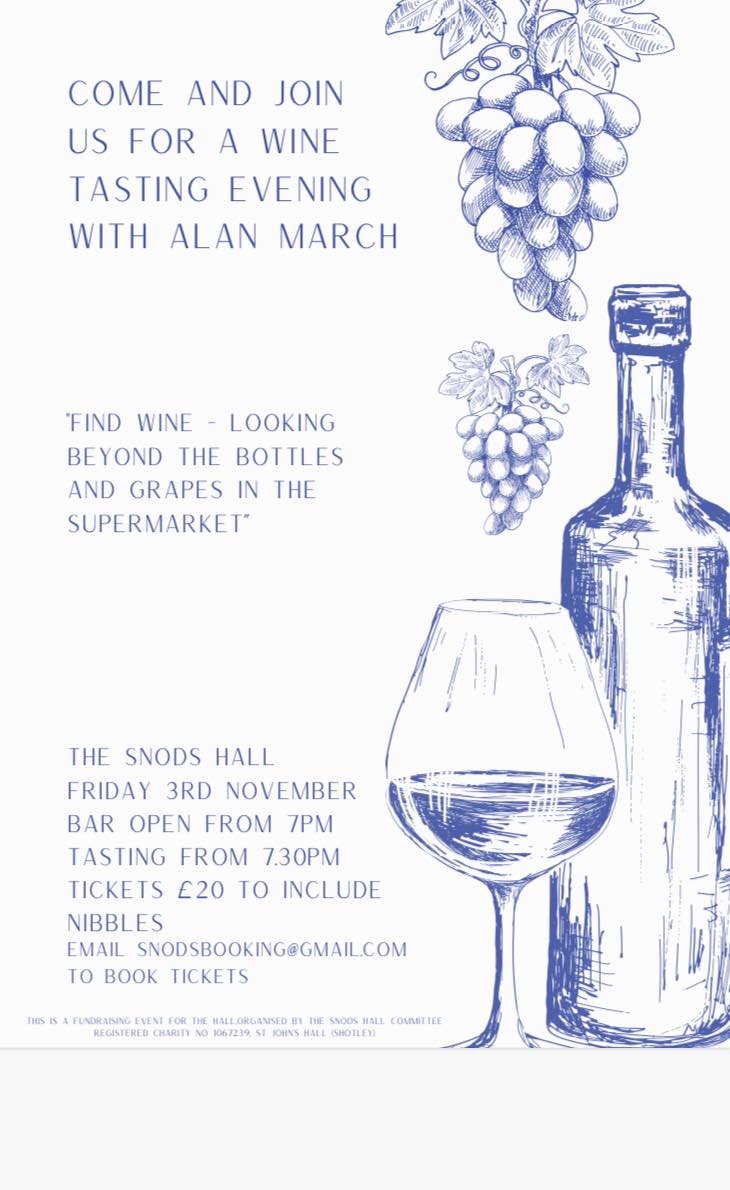
On Friday November 3rd I led a wine tasting at a local community centre to raise funds for the centre itself. I decided to focus on grape varieties, mainly because it is a topic that I find fascinating but also because I would like people to try different wines. In the UK 65% of the white wines which are purchased are from just three grape varieties, Pinot Grigio, Chardonnay and Sauvignon Blanc. There are 10,000 wine grape varieties in the world but 40% of wines come from just ten.

In recent years Marks and Spencer introduced a range called ‘Found’ highlighting more unusual varieties and I welcomed that step in this article. Waitrose followed suit with their ‘Loved and Found’ range and I focused this tasting with eight wines from these two ranges. All of the wines are priced at a maximum of £10, most were £8.99 and 25% discounts are currently available at Waitrose.

Why am I so passionate about promoting different grapes? Firstly because of diversity, the figures above show a narrow choice for consumers. Winemakers like to experiment, Jeff Coutelou for example has planted over 50 varieties in his vineyards and part of his motivation is simply his own curiosity as to how different grapes will grow in different terroir and what wines will be produced. He stripped out the Cabernet Sauvignon and Merlot and replaced them with the likes of Servant, Clairette Musquée and Terret Noir.

Widespread plantings of the same grape can encourage the spread of disease, variety makes that spread more difficult. Finally, climate chaos is clearly changing terroir, for example with earlier budding and subsequent frost risk, with drought conditions such as we experienced in the Languedoc this year leading to us completing harvest by September 1st, a date which was often the start of harvest in the past. As I pointed out Spanish origin grapes such as Macabeu and Grenache handled the heat and drought much better than French grapes like Clairette and Syrah. New plantings of the Catalan grape Xarel-lo show that winemakers such as Jeff are preparing for a more unsettled future in their vineyards.

I opted for eight grapes which together make up less than 0.8% of worldwide wine grape planting. They came from Spain, Portugal, France, Italy, Georgia, Germany and Hungary. My notes and research are shown below.

White wines

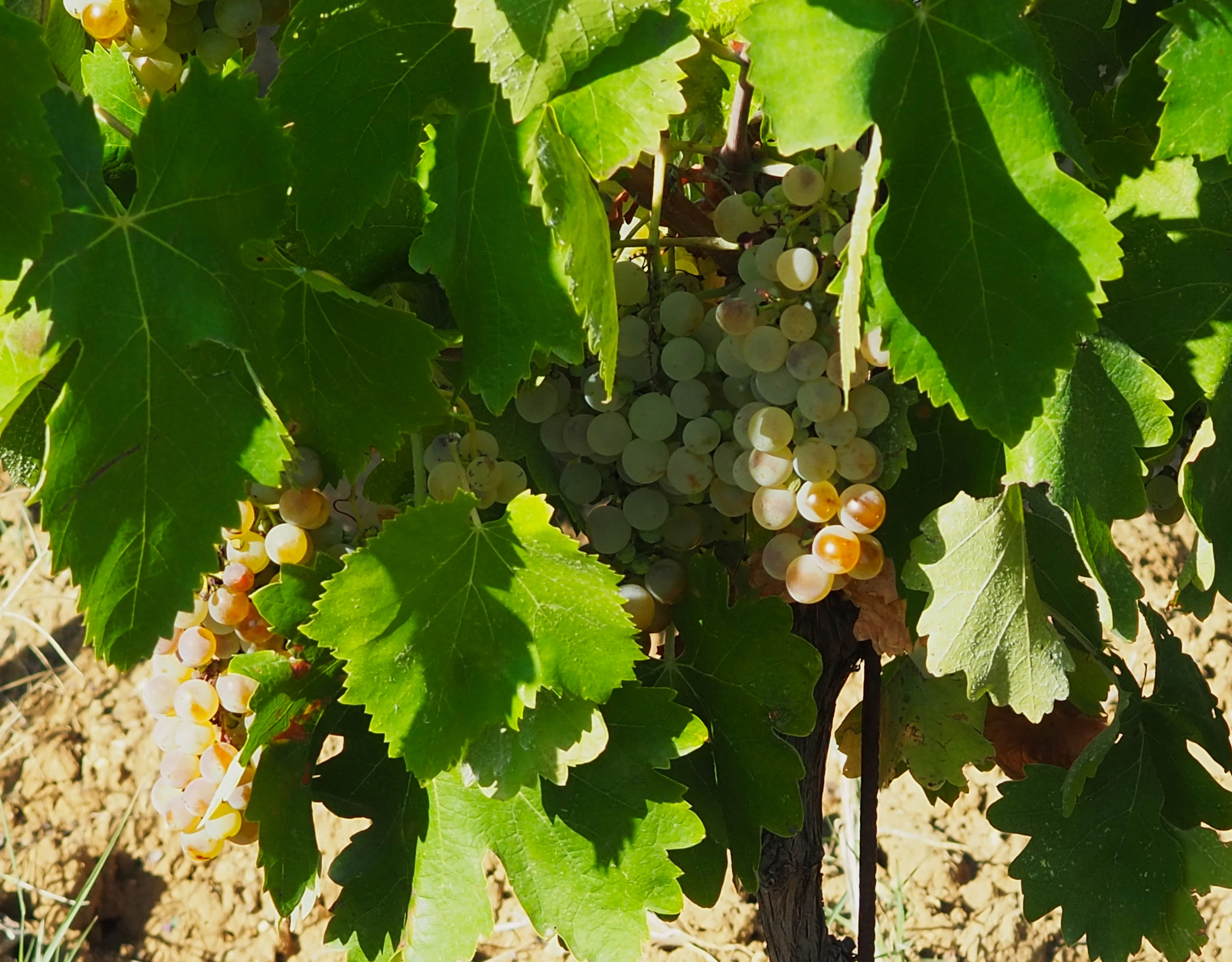
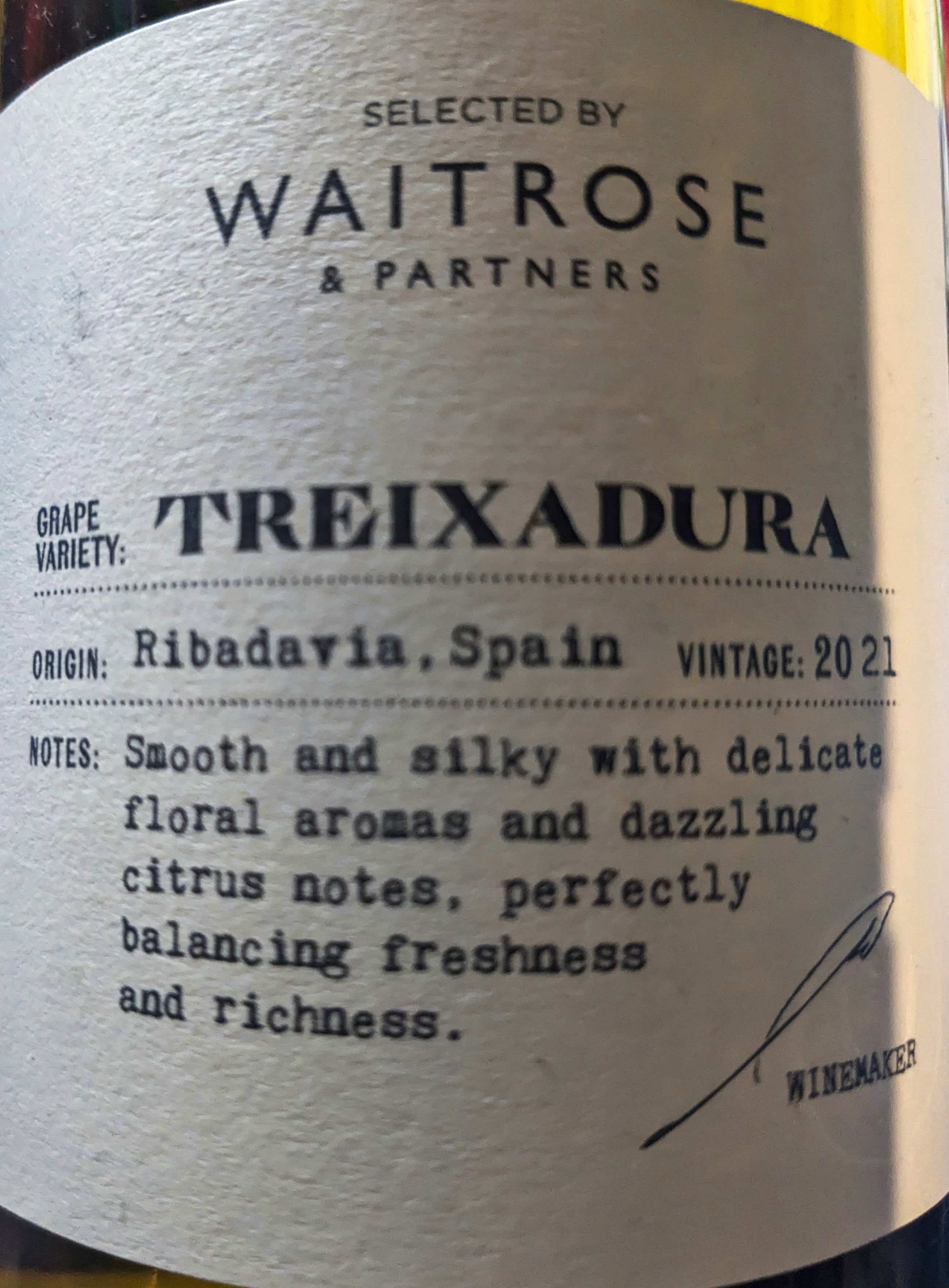
Treixadura – £8.99 Waitrose

Made in Galicia by Via Barrosa named after the Roman road from Galicia to Rome. The grape is also grown in the Vinho Verde region in northern Portugal.

Difficult to grow, buds late and ripens slowly so vulnerable to disease. Prefers valley slopes. Usually a blending grape as it adds body and freshness.

Loin D’Oeil  – £8.99 Waitrose

Known as Len de l’Elh in the local Gaillac slang. NE of Toulose a typical regional wine area with its own grapes, eg Mauzac, Braucol, Fer Servadou and Negrette. The name means far from the eye or bud because of the long pedoncle or stalks.

Buds early (frost risk) but ripens early which means it can be left on vine for longer and make sweet dessert wines. This wine is made by Jean Noel Barrau, a highly rated producer working for the Rabastens co-op.

Weissburgunder  – £9.50 M&S

The most widely planted grape of my selection, known as Pinot Blanc in France. Good example of climate chaos and improved winemaking helping to make a grape better.

Mutation of Pinot Noir, indeed there are often white grapes in the middle of PN vines, a cane can be wholly white. Prefers deep soils, buds early. Made in Pfalz, 2nd largest German viticultural region, bordering Alsace. 4% of its vines are PB. Made by a former M&S wine buyer, Gerd Stepp.

Furmint  – £8 M&S

Hungarian grape famed for Tokay wines from the region east of Budapest. This from a 500 year old winery Chateau Dereszla renovated by Champagne maker Piper Heideseck.

Name means wheat gold. Offspring of Gouais grape which also parented Gamay, Riesling and Chardonnay. Buds early, ripens late so rosk of frost and mildew but the late ripening and thick skins encourage sweetness, Tokay was the most famous sweet wine in 18th and 19th centuries. Thick skins mean less juice and more concentration. 8.6g/l of residual sugar so off dry

Red wines

Trincadeira  –  £8.99 Waitrose

Needs hot, dry conditions, this is from Alentejo in Portugal, east of Lisbon. Made by Joao Portugal Ramos.

Very thin skins make it a difficult grape as they will split easily and vulnerable to insects so rot is a danger. It is used in the Douro valley for making port too where known as Tinta Amarela, which means yellow grape! Pick too soon and herbaceous, too late and it is jammy so picking date is crucial. Another problem is the overproduction of foliage so costs a lot to keep trimming it back so it is being ripped out.

NB – no wine capsule saves half a ton of packaging

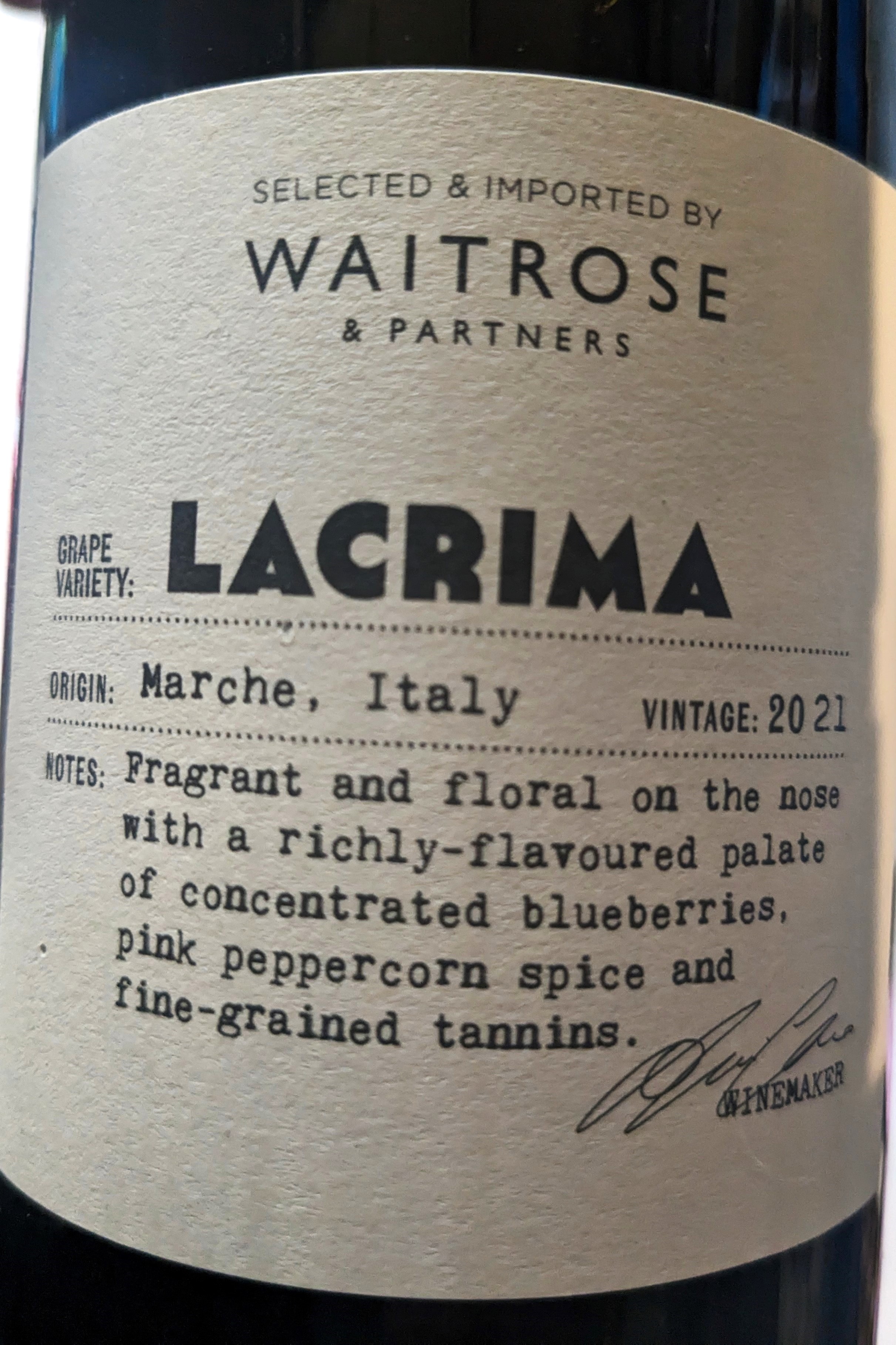
Lacrima  –  £8.99 Waitrose

Full name Lacrima di Morro d’Alba (the tears of the Moors from Alba). Why tears? Some say shape of bunches, others that the thin skins split easily so teardrops of juice emerge.

Dark skinned, gives colour. Only 6hectares left in 2003 but resurgence so now 250ha, almost exclusively in the eastern Italian Marche region. This one from organic producer in Ancona.

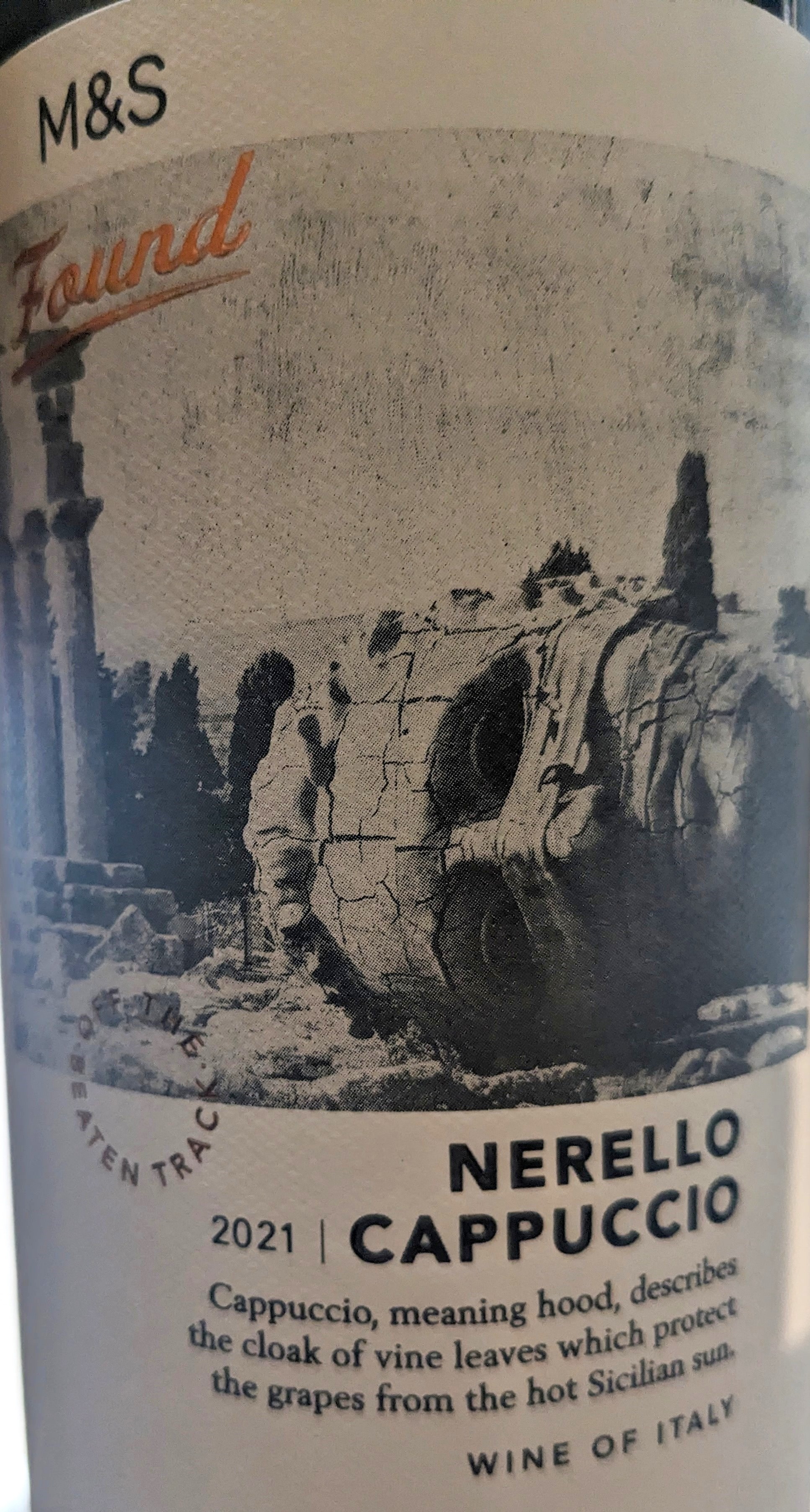
Nerello Cappucio  –  £7  M&S

Made from slopes of Mount Etna by famous company Settesoli and first pure version on sale in UK.

Nerello genetically linked to Sangiovese. Two forms Mascalese and Cappucio, usually blended. Cappucio is lighter of the two. Name means hooded as the grapes grow into the canopy and protected from direct sun. Lighter structure than Mascalese, sometimes made into rose. But dark skins add colour to blends even though soft tannins.

Saperavi  –  £10 M&S

Georgia – with Armenia one of the crucibles of winemaking. The other was the Levant and that’s the one now thought to have sent grapes to western Europe.

Name means ‘dye’ in Georgian and this is a rare teinturier grape, it produces red juice.

The key red grape from Georgia, others include Rkatsiteli. Georgia has 500 indigenous varieties. Made in Kakheti province east of Tbilisi. Matured in oak rather than qvevri unlike M&S orange wine. Buds early but this is a grape resistant to frost, mildew, oidium and even grapeworm. Hence being planted around world eg NE of USA.

Thick skins, dark colours, big tannins and high alcohol / acidity – it will age and soften. Reflects terroir so can be freshened up by growing at altitude but this one is from valley slopes so mid range.

On the night the Nerello Cappuccio didn’t show particularly well, the tannins felt rather harsh and it certainly wasn’t the light, juicy red that I expected. The Treixadura was very fresh and good for food, I liked the others and had made the Weissburgunder my favourite in the article I quoted from 2021. Most people in the hall liked the Furmint best, and least popular was the Loin D’Oeil which was my own favourite! Of the reds I love the Lacrima, it is deep with lovely fruit but the most popular seemed to be the Saperavi which was very good but needs more time or opening / decanting. It was encouraging to see the reaction to Saperavi and even more to hear people say they would be heading to these two supermarkets to explore the ranges for themselves. I wish I had been on commission!.

A very good evening which raised £1000 for the community centre itself. It was flattering to hear that it sold out without really going on sale and to be asked to go back again for a third tasting. Well done to everyone there, to these two supermarkets for seeking out interesting wines at keen prices. Let’s support those winemakers, proud of their local grapes and keen to diversify.