amarchinthevines

Learning about wine, vines and vignerons whilst living in the Languedoc


Leave a comment

Harvest 2019 – Mother Nature’s Son

En francais

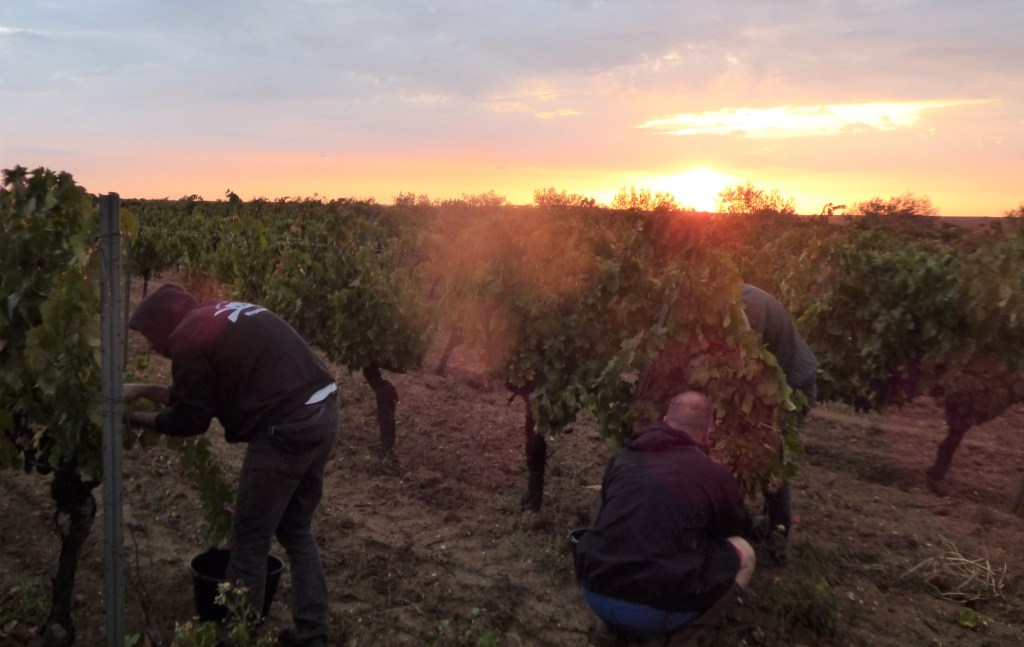
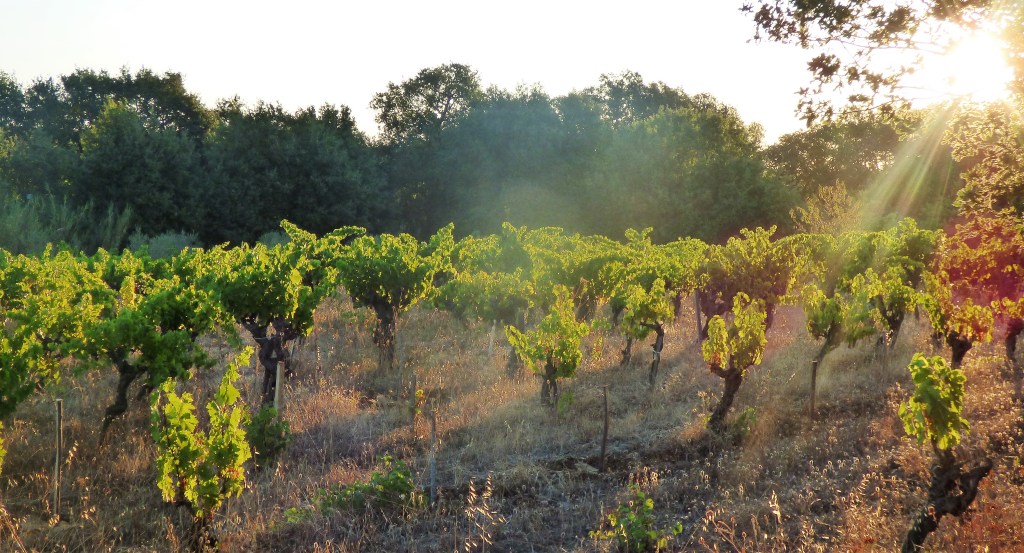
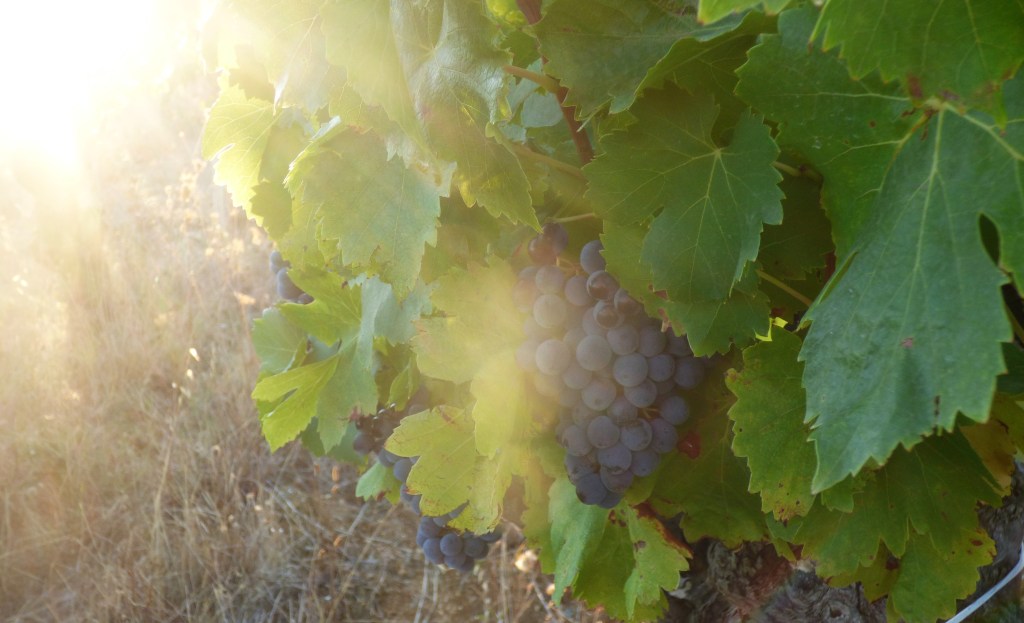
Sunrise over the Carignan

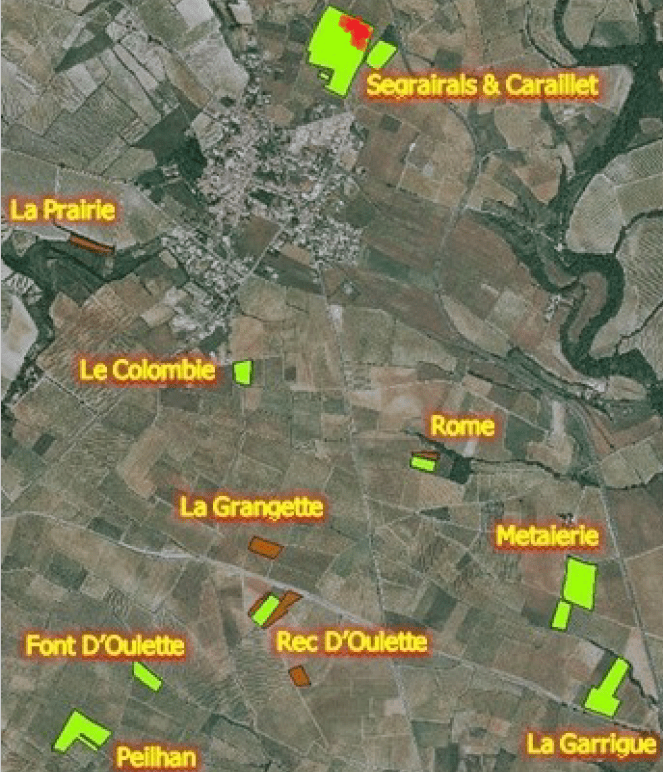
One of the flagship wines for the Coutelou range in recent years has been Flambadou, made from 100% Carignan Noir in the vineyard Rec D’Oulette (locally known as Chemin De Pailhès). Wine writer Jancis Robinson is amongst those who have praised Flambadou for its dark fruit flavours, subtle tannins and sheer pleasure as well as its ability to age well.

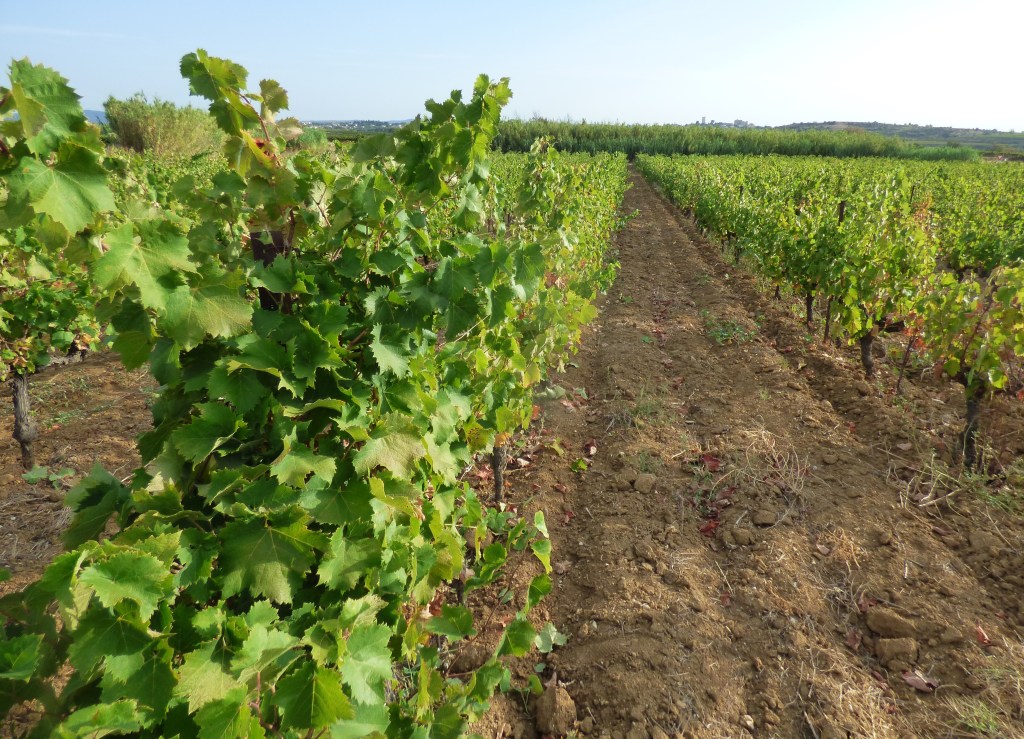
Therefore, it was something of a surprise that Carignan suffered so much this year, especially as a result of the intense heatwave of June 28th. This was the case for vines across the region and Carignan seemed to suffer more than most, a surprise as it is a native of Spain and the Mediterranean, and, therefore, accustomed to heat. Whole vines were grilled in some parts of the Languedoc.

Carignan after the heatwave

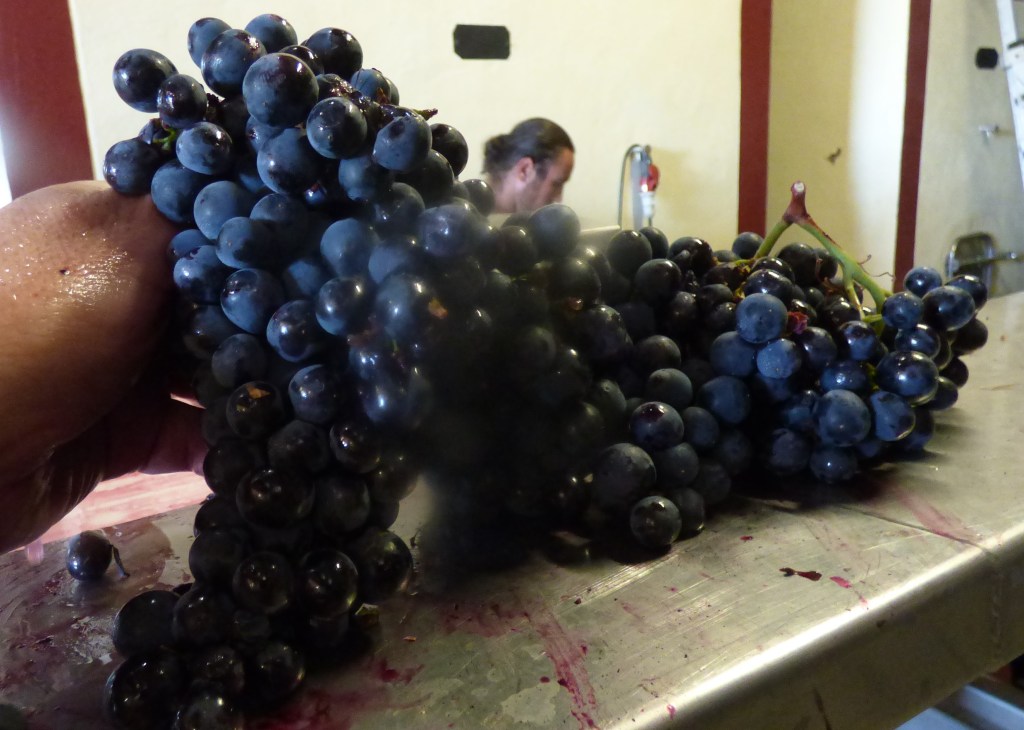
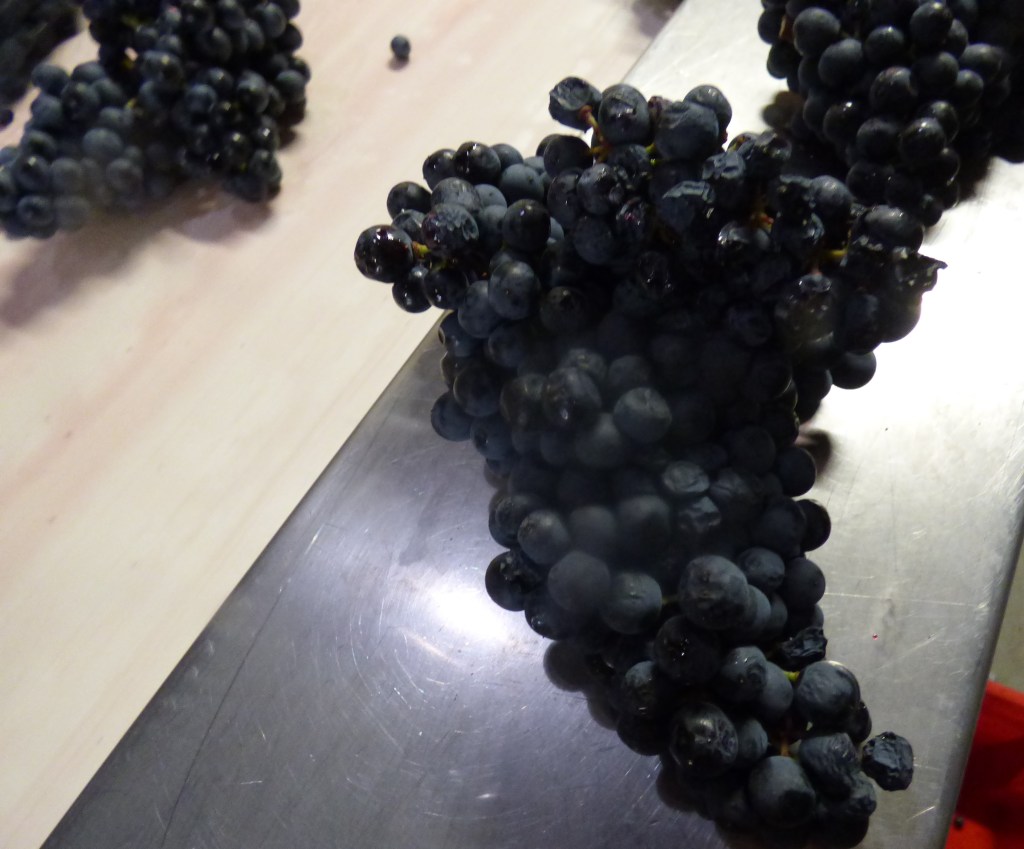
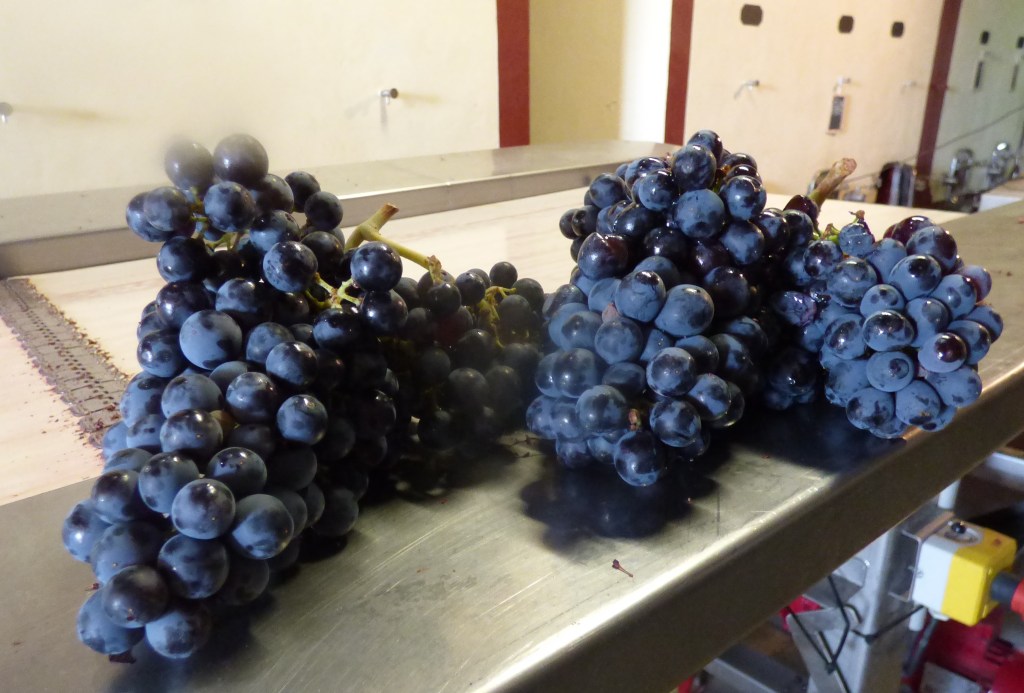
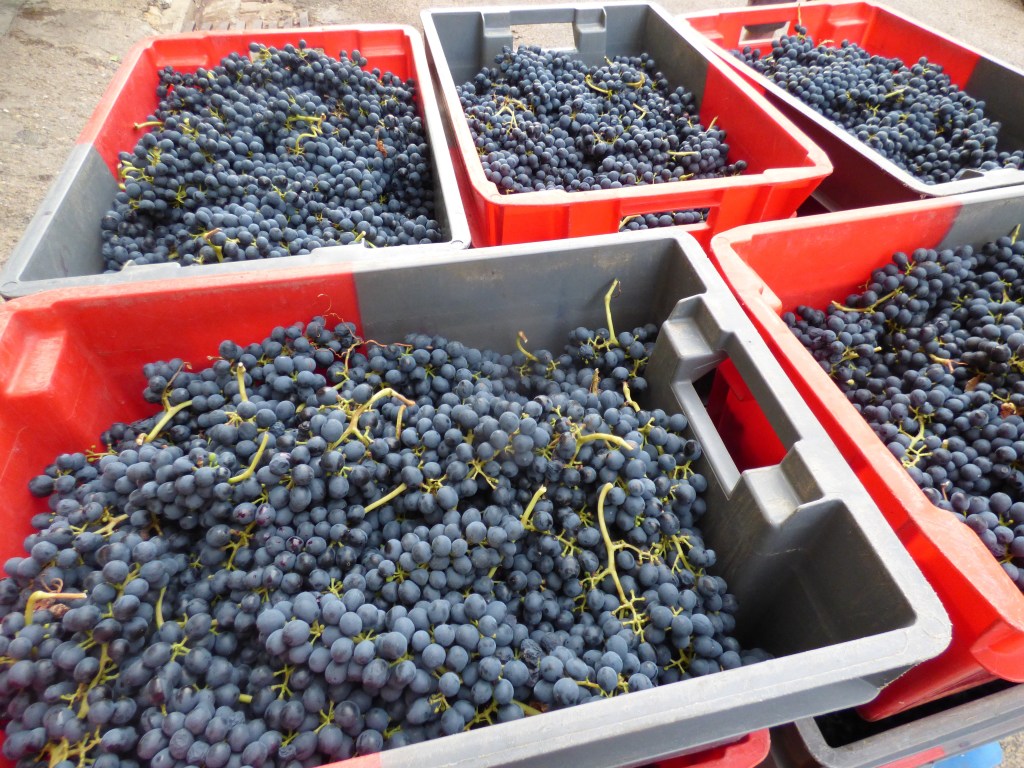
In the days following June 28th Jeff’s Carignan showed clear signs of stress, bunches were dried out especially towards the tip. It was almost like the bunch protected itself nearer to the vine itself but the extreme grapes were sacrificed. I have no scientific or botanical justification for that but that is the impression the bunches gave me. On Thursday September 19th (Day 16 of vendanges) it was time to harvest the Carignan.

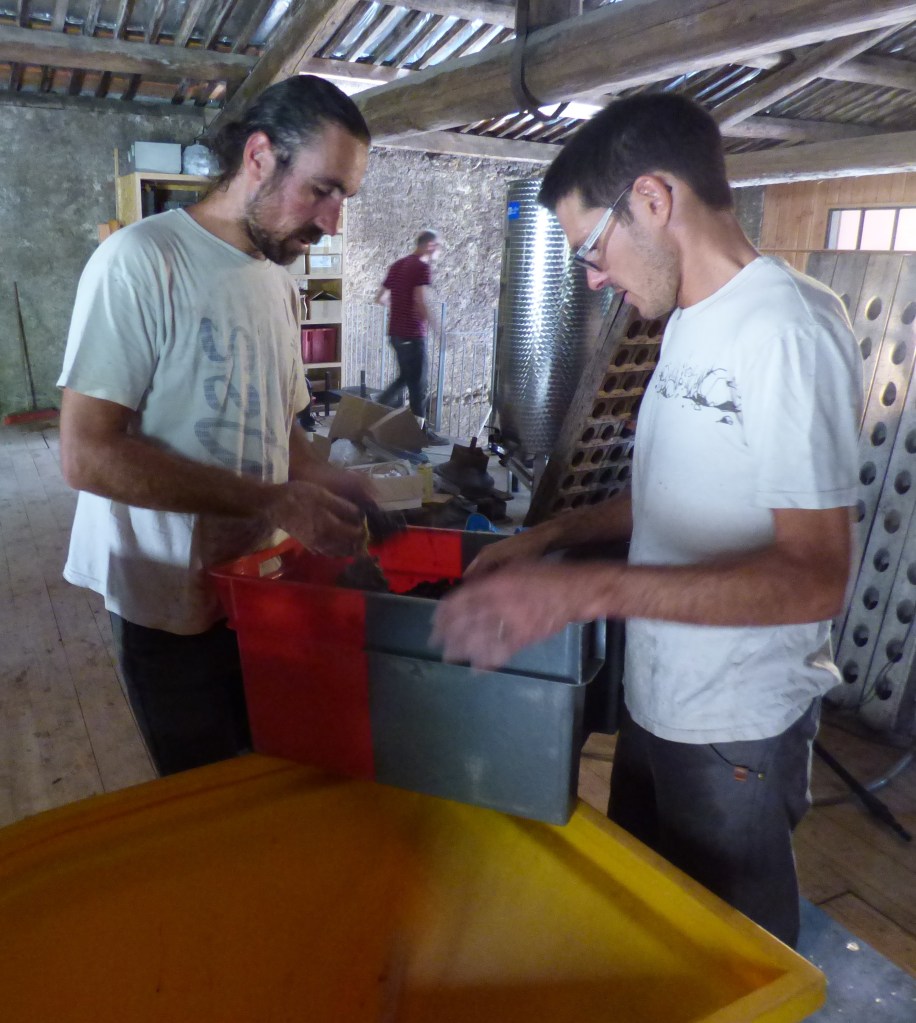
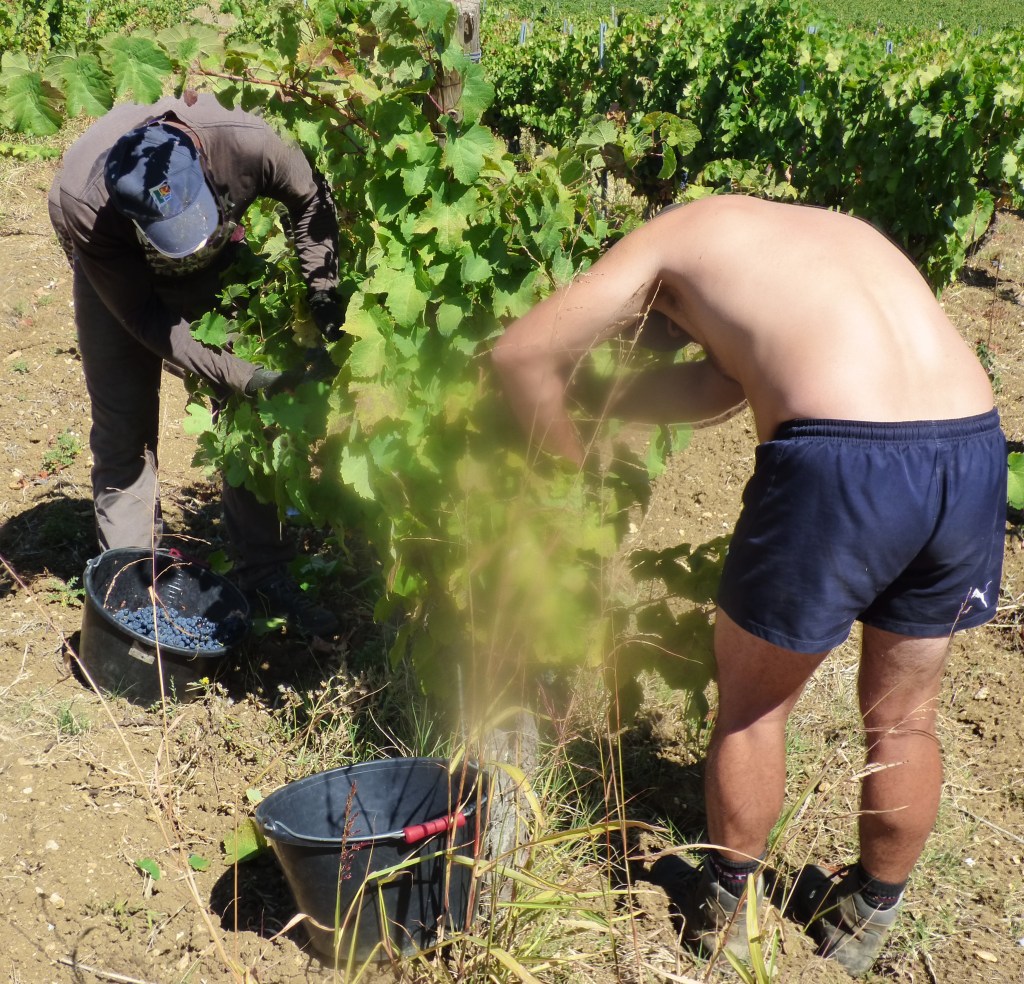
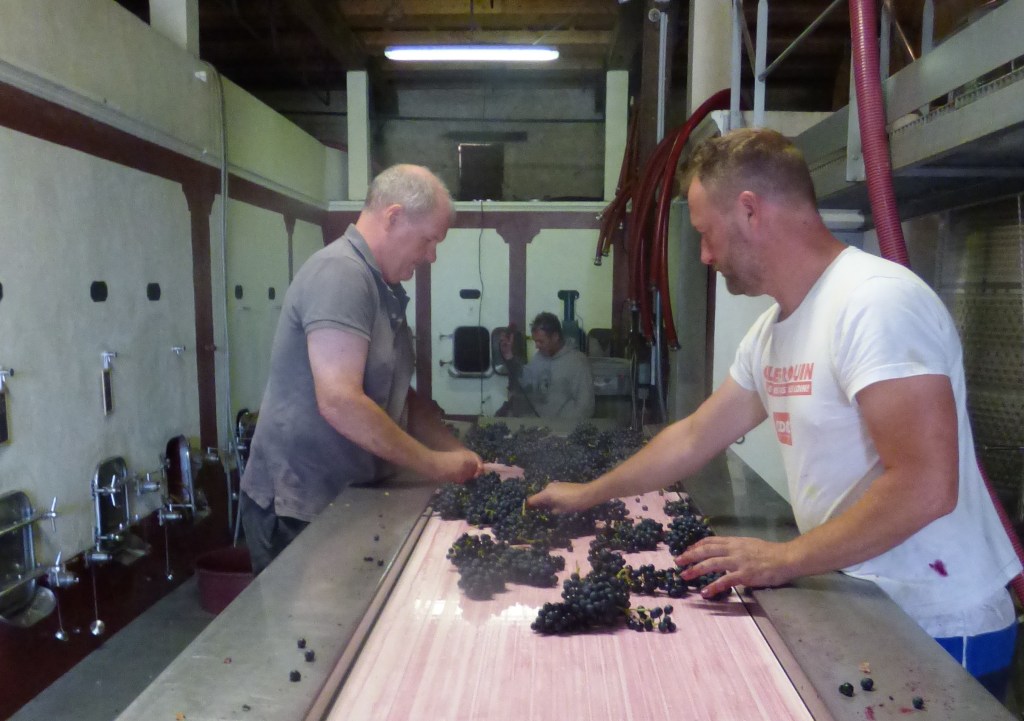
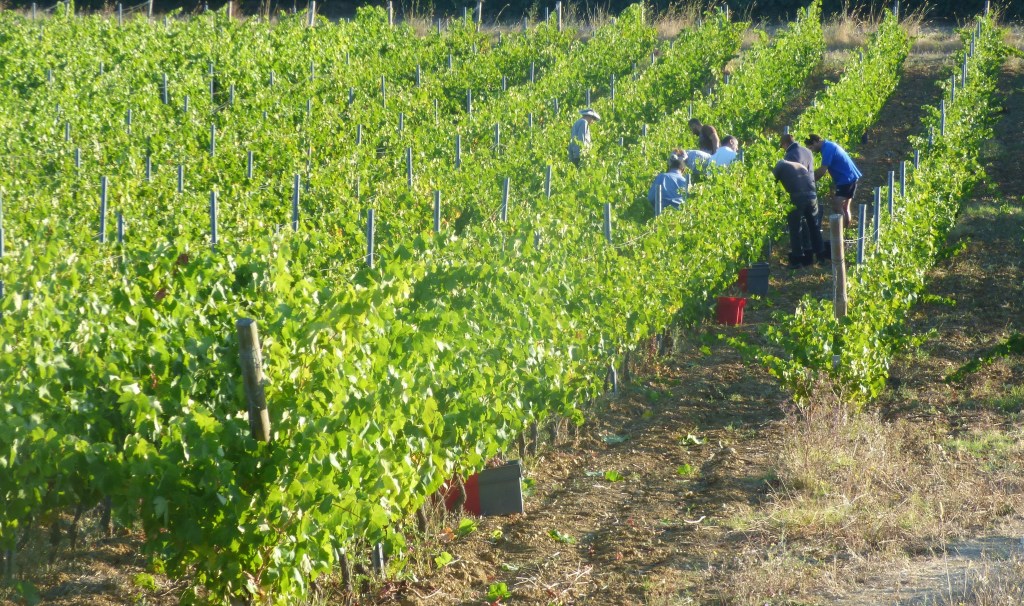
I helped to pick for two or three hours. The rain of the previous week had left the ground very muddy underfoot so it was hard going. Some rows of the parcel were better than others, careful selection and cutting out of the dried sections was required. After picking I went back to help sorting in the cellar whilst the picking continued.

The Carignan was to be made whole bunch, the first time Jeff had ever done so. Don’t get me wrong there was plenty of good fruit but it had certainly suffered and quantity was, of course, well down on average. More Carignan was added to the tank from Peilhan on Friday 20th, a parcel less affected by the heat than the main Carignan, baffling.

The other problem with the vintage had been coulure and millerandage. These are two sides of the same coin, damage caused to the bunches during the flowering stage by wind so that some of the grapes did not form. The combination of that and the damage of June 28th meant that some bunches were quite open to the elements.

Regular readers will know that leaves the bunches prone to disease but fortunately that was not a problem this year. On the other hand ver de la grappe did take advantage. The grapevine moth lands on the loose bunch, lays its eggs and when they hatch the little worm (ver) buries into the grapes to form its cocoon. The grape is spoiled and its juice runs on to surrounding grapes which can attract rot. Whilst picking I came across one moth sitting on a bunch.

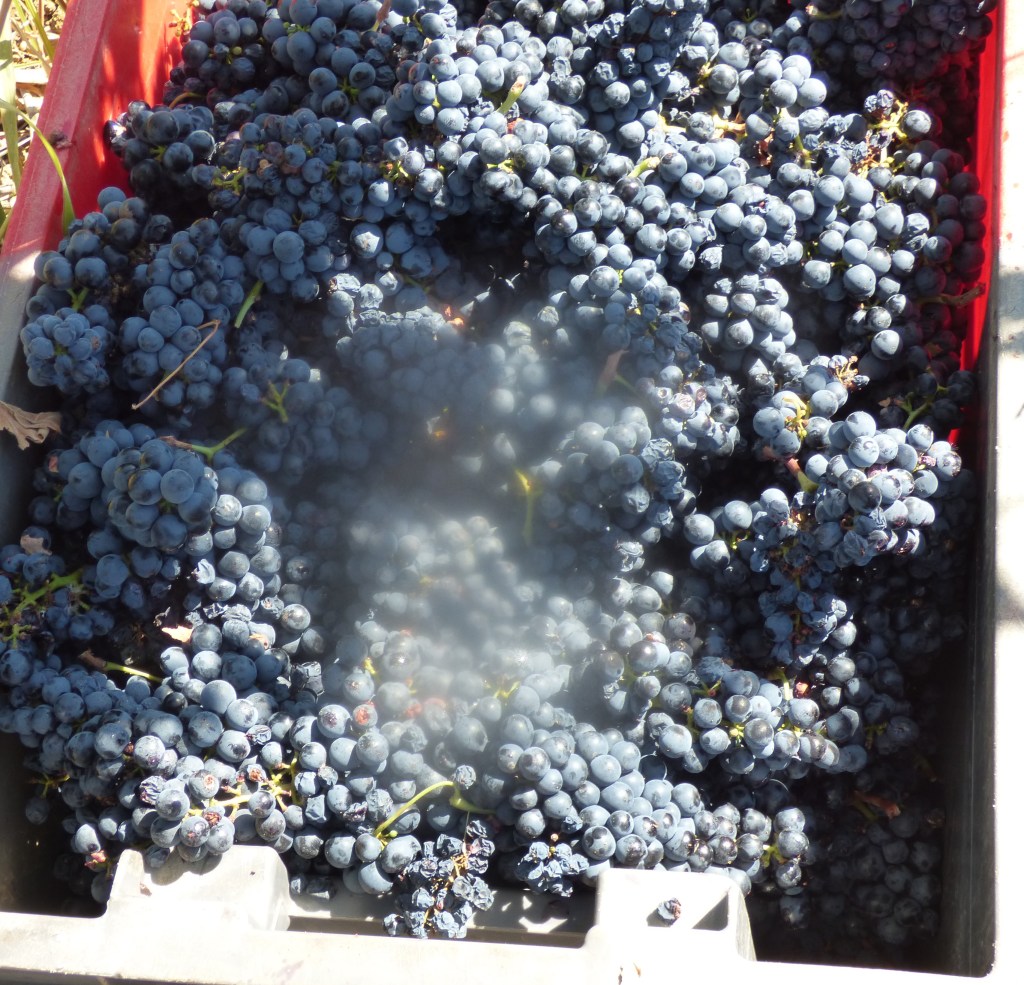
So, in many ways the Carignan was a reflection of the vintage – small quantity because of heat damage, coulure, millerandage and ver de la grappe. However, also a reflection in that much of the fruit was full flavoured, concentrated and delicious. On Monday 23rd we tasted some of the juice from the tank and it was delicious, I know I could be accused of bias but it is honestly true. Let’s not exaggerate the difficulties, the vast majority of the fruit is fine. The Carignan has most definitely been Mother Nature’s Son.

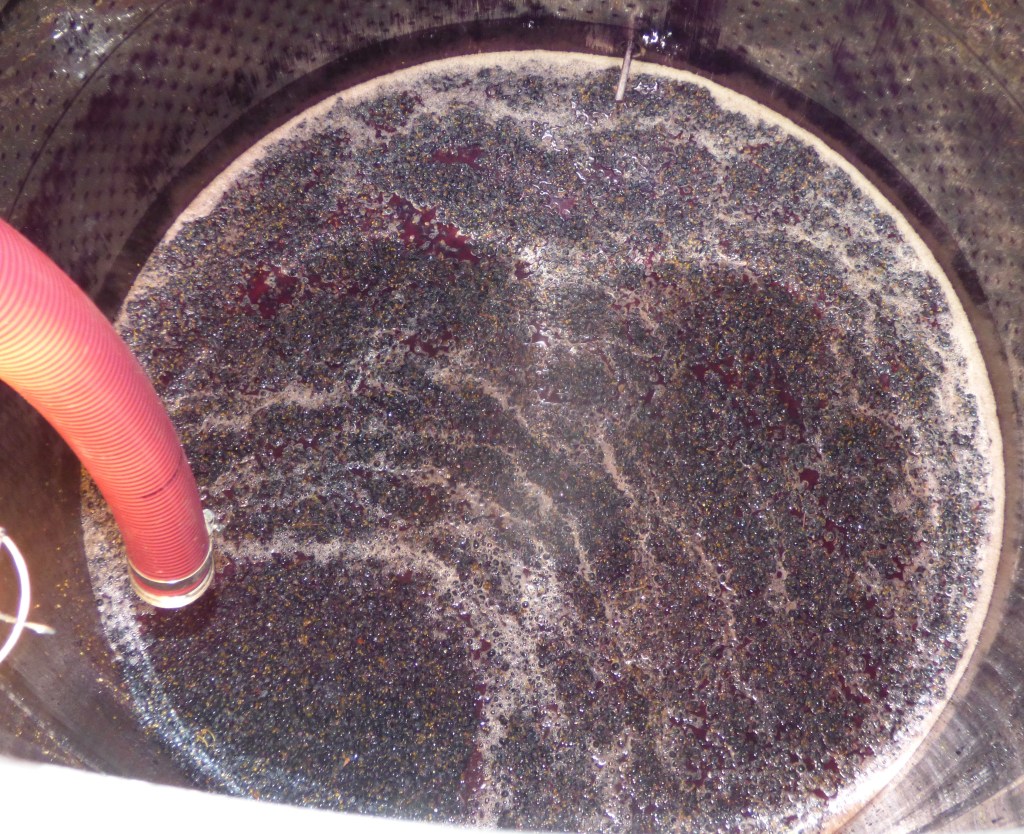
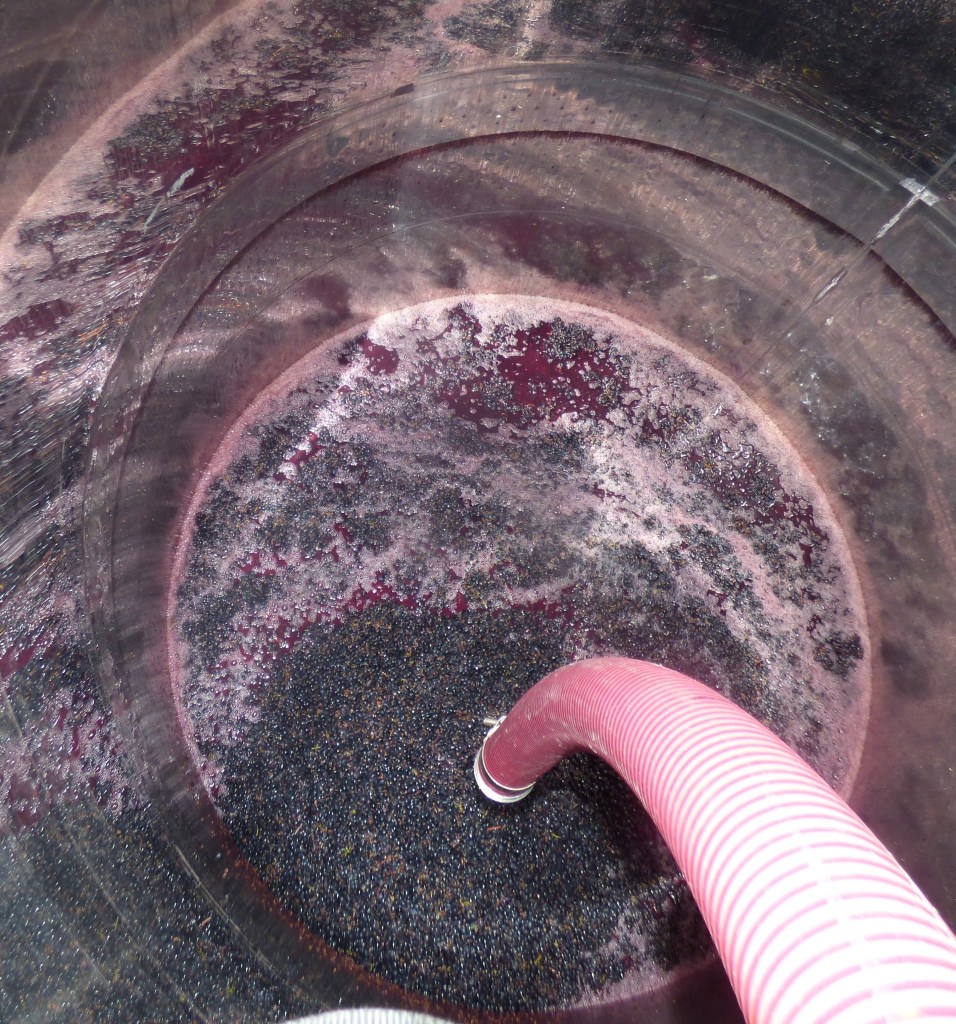
Carignan juice 4 days after picking

And that was it, picking for 2019 was finished. Much work remains in the cellar, for example pressing the reds which have been macerating on skins and pulp for up to two weeks. Jeff must also make the decisions about which wines will be blended with others to balance acidity, flavour and alcohol levels.

How the Carignan emerges will be my biggest point of interest for this vintage. What I am confident of is that Jeff Coutelou will make into something well worth drinking.

Days 16 & 17


2 Comments

Harvest 2019 – The Long And Winding Road

En francais

It’s getting complicated

Into week three of the harvest, tired bodies all round especially my own as the old man of the group. Nicks and cuts on the hands, aching back and joints, bruises and bumps but still loving it all. Jeff meanwhile is faced with his annual puzzle of which wines go where, what needs to be done for each one to get it to its best, what might be assembled with what. It is a 3D jigsaw puzzle in action.

Two remontages at once

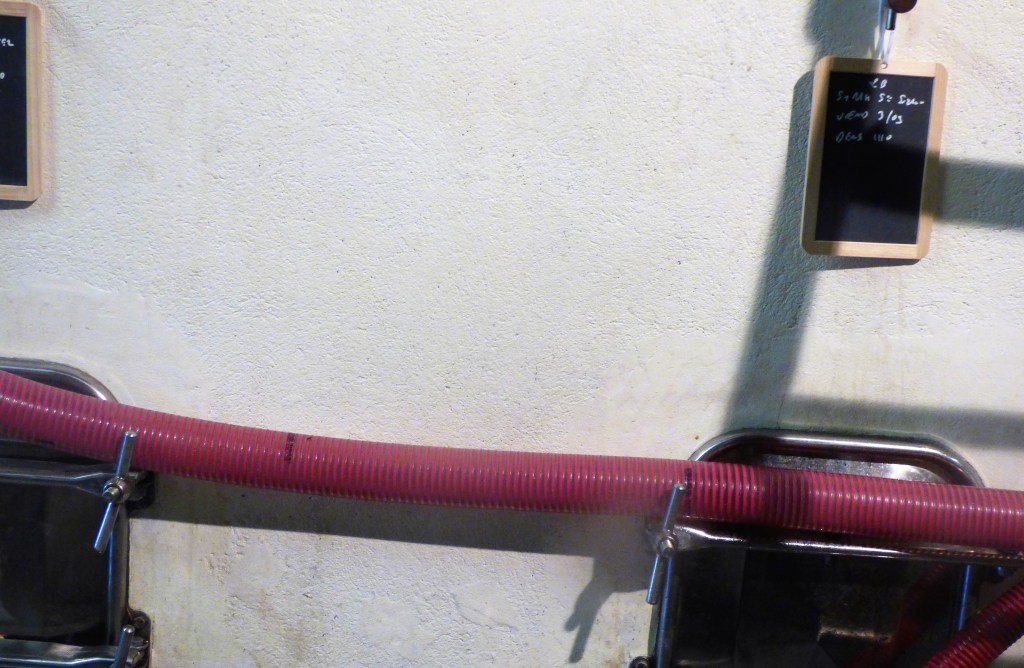
The little blackboards might remind us of what wine is in each tank, when it was picked, the story of its fermentation and transformation into wine from grape juice but Jeff needs to keep all this in his head (and spreadsheet) so we move the right wine from one tank to another, give one a remontage, another its pressing. He leads from the front, lifting and carrying heavy loads, driving, fixing creaking machinery. He must be very tired as well as stressed but he carries on regardless and we respond in turn.

Macabeu and Grenache Gris

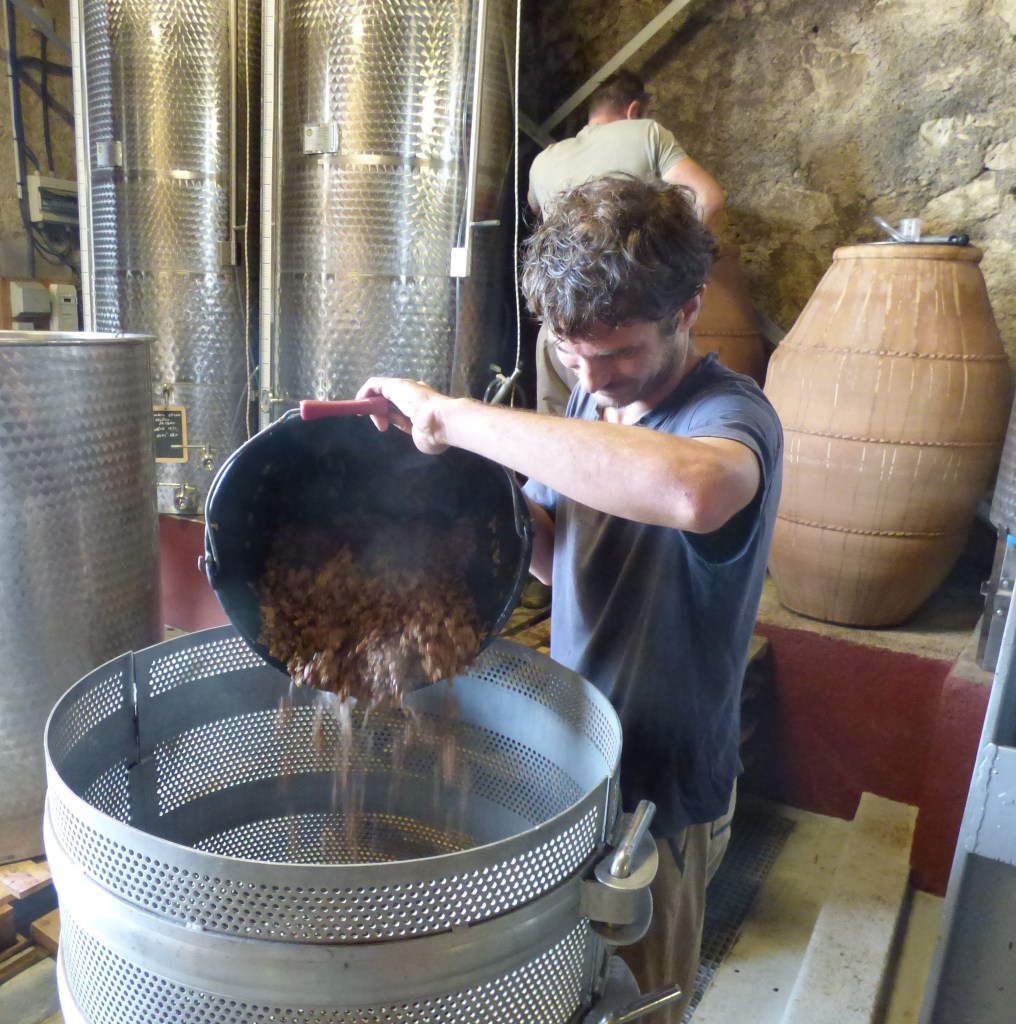
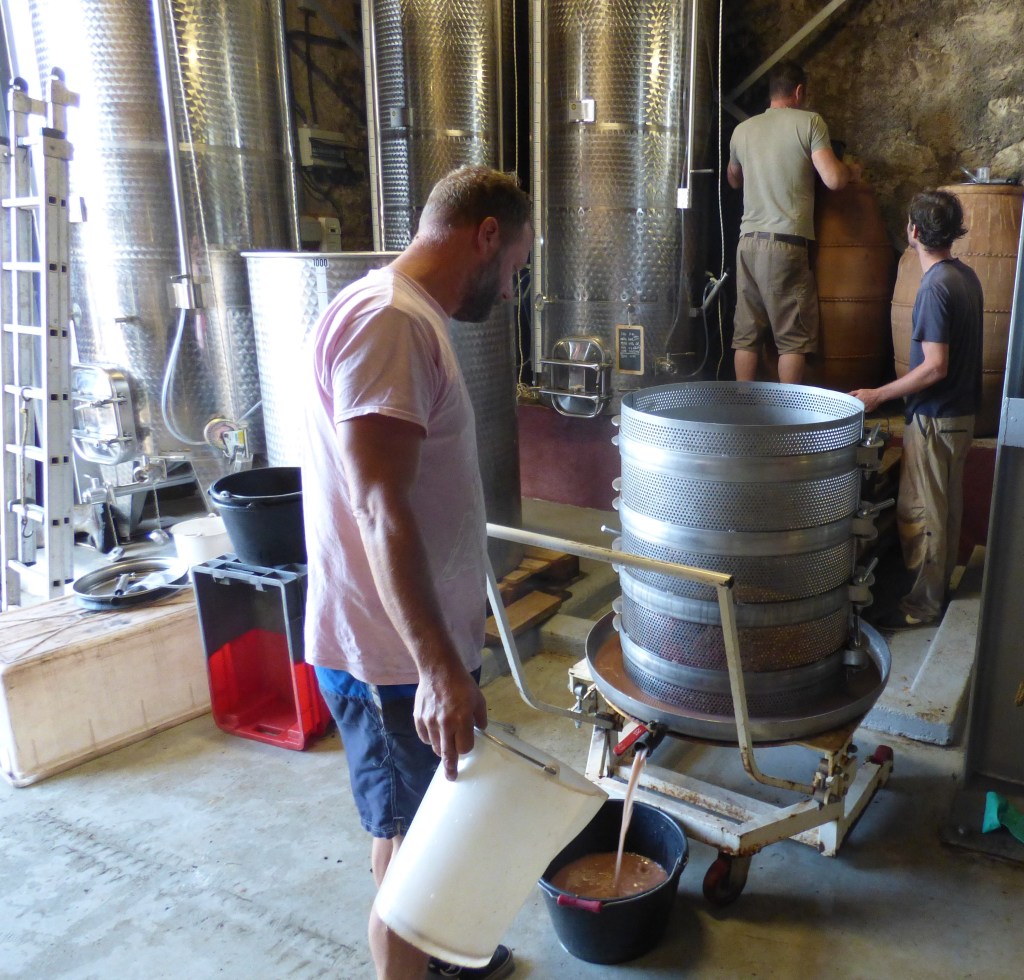
Monday 16th, Day 13. A small harvest of Grenache Gris and Macabeu from Peilhan, a wine for blending perhaps or a very small cuvee. Principally it was a cellar day, Tuesday another. Pressing the Rome grapes, punching down the future orange wine of Muscat d’Alexandrie, remontages and pigeages on all the tanks. Picking is the traditional image of vendanges but this cellar work is essential to nurture the juice, to supervise its progress into the 2019 vintage. Pressing the red fruit which has been on its skins and pulp also means that the marc which is leftover after the juice has been extracted can be taken away ready to be distilled. This is after all, Vins et Spiritueux Coutelou.

Wednesday 18th, Day 15 time to get back into the vineyard and pick the Mourvedre from Segrairals. Some of this had been picked on the Sunday by Jeff’s ‘Rugbymen’ friends to make their own cuvee and it was lovely fruit.

The slope of the vineyard means that lower parts can be a bit damp at times and the fruit not so good as the rest so careful picking and sorting ensued. The resulting juice was very good, reflecting the year’s story it is concentrated with quite high alcohol. I would predict that it will be blended though it has been a single grape cuvee in the past.

One welcome addition to the team this week was my friend Steeve from near Besancon in the Jura. He has visited many times and worked at Jeff’s last vendanges and to help with pruning in the winter. His enthusiasm and experience were very useful and helped to rejuvenate us all.

One last effort required, the Carignan remained to be picked. Its story this year is a summary of the vintage however, so I shall leave that until next time.

Day 13 Day 15


Leave a comment

Harvest 2019 – We Can Work It Out

En francais

Team work

If Day 10 saw the eight different grape varieties harvested Days 11 and 12 were a contrast. Friday September 13th was all about Grenache and Saturday was all about Cinsault. These two varieties together with Syrah make up the bulk of the Coutelou production, important for the various wines which emerge each year and for the economic well being of the domaine.

The Grenache was from La Garrigue, planted facing south towards the sun. It copes well with heat, Spanish on origin and grown all around the Mediterranean (known variously as Cannonau, Garnacha, Alicante amongst others). Traditionally this parcel gives good quality fruit which is blended with other wine to make Classe for example.

I was feeling under the weather on the Friday but a day sorting good bunches of tasty grapes helps to improve the day. There was plenty of it too, perhaps the recent rain had boosted the yield a little. A quick tour of the remaining unpicked vines to check maturity also boosted the spirits with some attractive Mourvedre in the pipeline.

Mourvedre

Saturday (I must have been feeling better as I took more photos) and the Cinsault of Segrairals. These grapes are used for the 5SO cuvée as well as being blended with other wines, eg for the rosé.

Cinsault grapes tend to be big and the bunches can suffer a little as a result. The large grapes leave gaps in the bunch which leaves it vulnerable to disease and insects getting in, especially ver de la grappe. This moth lays its eggs in the bunch and the grapes are pierced by the resulting larvae. This causes the juice to flow in the bunch and attract rot.

Ver de la grappe cocoon emerging from a Piquepoul Noir grape

Sorting in the vineyard and on the table in the cellar needs to be thorough. That said 2019 has happily been a year of little or no disease.

The day showed how different sections of the vineyard differed in the quality of grapes. There were parts which gave slightly under ripe fruit but others which provided big, black grapes which tasted great to eat. Since 2019 has been so hot and dry much of the wine this year is very concentrated and high in alcohol. The under ripe grapes in the Cinsault actually served a useful purpose in providing lower alcohol and adding more acidity. Nature sometimes finds its own solutions.

Nothing wrong with this Cinsault

Meanwhile in the cellar there is increasing amounts of work to do. More and more of the tanks are full and needing remontage, batonnage or pigeage. The team has to work well together, fortunately this year’s does just that.

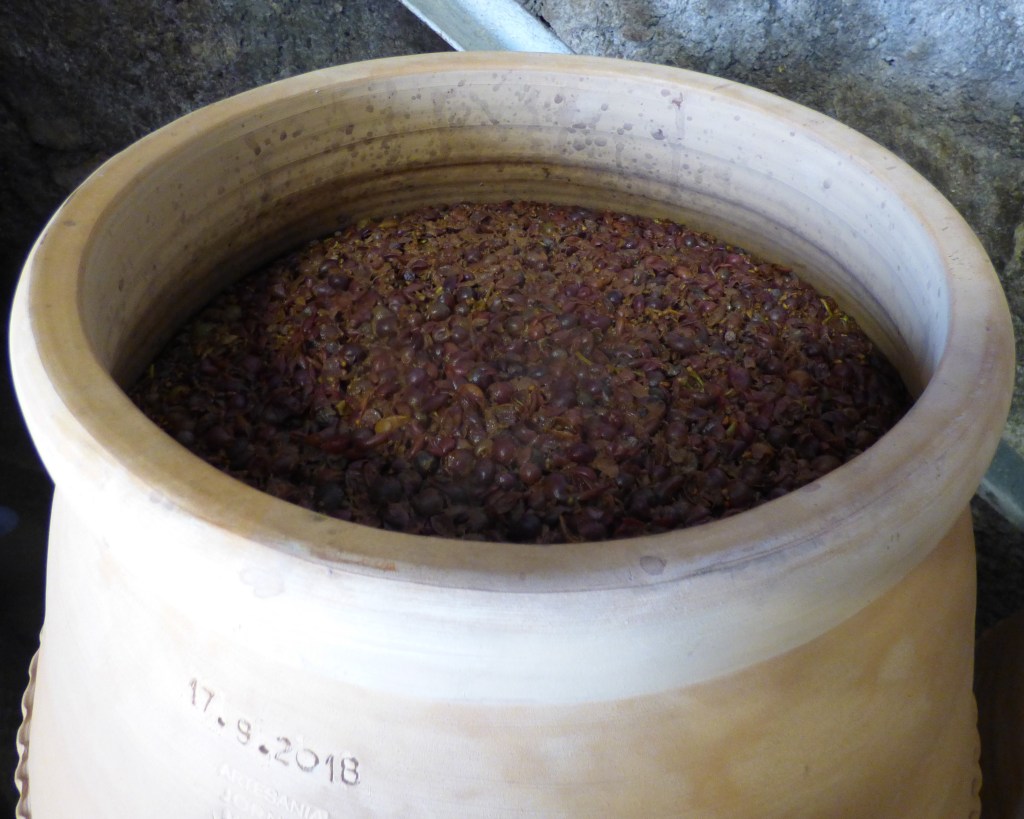
The amphorae, filled on Thursday also needed punching down to soak the skins. Fermentation has already started as you may see in this video.

With the Cinsault picked there are now just two main picks left to do in 2019, the Mourvedre and the Carignan. An intensive two weeks has gone by, much work still remains.

Days 11 and 12


Leave a comment

Harvest 2019 – Eight Grapes A Day

En francais

Carignan Blanc, Carignan Noir, Terret Blanc, Piquepoul Gris, Muscat d’Alexandrie, Macabeu, Castets, Morrastel.

These were the eight grape varieties picked on Thursday September 12th (Day 10 of vendanges). There are some unusual ones in there. Morrastel is a Spanish grape by origin (known as Graciano there). Part of the 2015 new plantation of Peilhan, it is already giving generous fruit in big bunches. Castets, from the South West of France, was very rare but has sprung to fame in 2019 as one of the new varieties which the Bordeaux AOC is allowing to be included in its wines. Jeff planted some in Peilhan long before this in 2011, its small, concentrated berries mark it out.

Tackling the Morrastel on a hot day Castets (right)

In Decanter magazine Andrew Jefford recently described winemaking as the litmus of climate change. I think that is an excellent way of describing the situation. When Carignan, a Mediterranean grape, is badly affected by the kind of heatwave we experienced this summer then there is something wrong. Castets, along with other varieties, has been added to the Bordeaux mix to help its vignerons adapt tot he new climate situation. Morrastel and other Spanish/Italian/Greek varieties might well be part of the answer for regions such as the Languedoc.

Jeff is well aware of the problem and it is one of the reasons he has experimented so much with different grapes in recent years, trying to add nuances of flavour, variety and the best way for his terroir to express itself being other reasons.

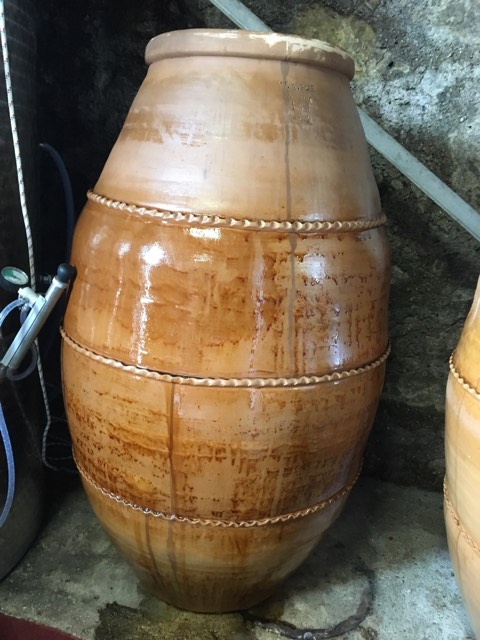
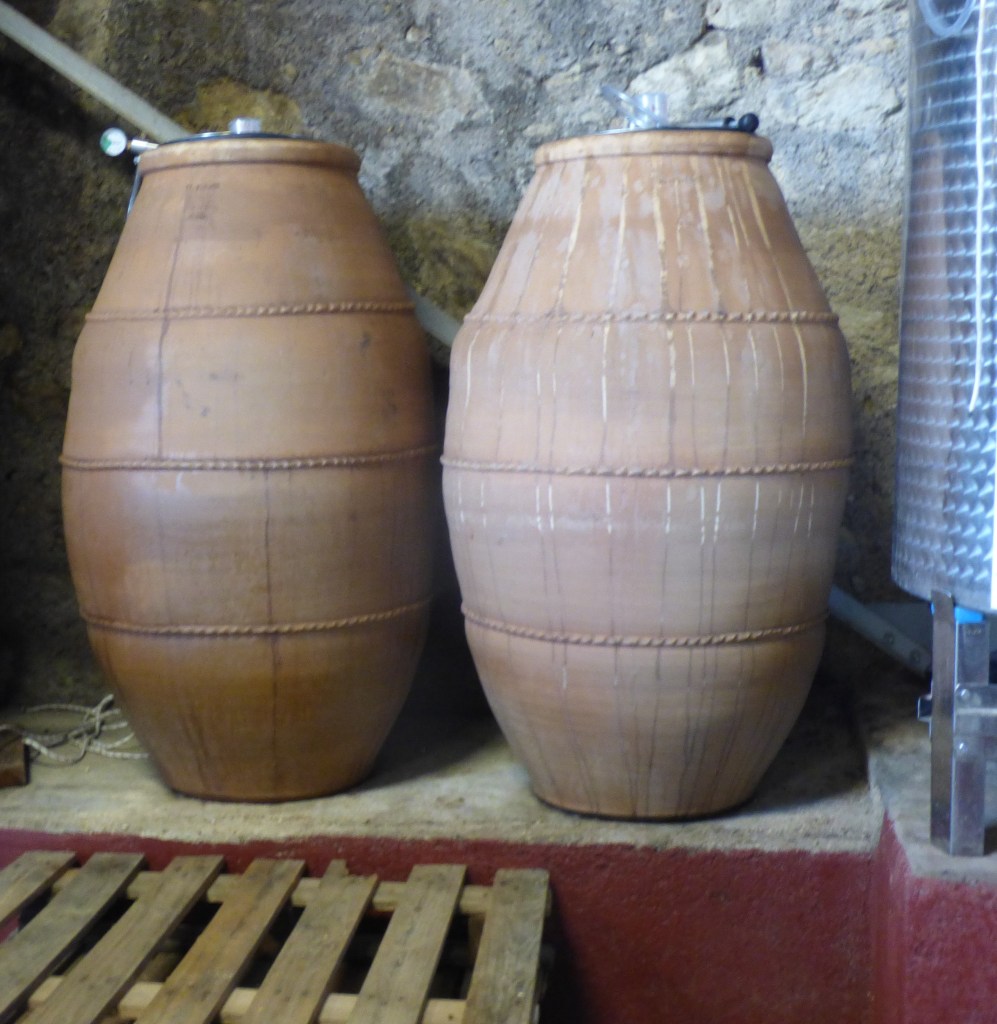
The Carignan Blanc went straight into the press, it will form its own cuvée or be assembled, we shall see how it turns out and how it might add to other white wines of the year. The Terret Blanc and Piquepoul Gris, both from the same 2015 plantation as the Morrastel, were added to the two new amphorae. This will be an interesting wine to follow as Jeff has previously used red grapes in the older amphorae. I think the white version could well be more interesting still.

The Muscat d’Alexandrie always produces big grapes, perfumed like most Muscats but this is picked before it becomes sweet. The grapes were destemmed and put into tank. They have been used to make the OW (orange wine) in recent years, I suspect this will follow that route.

Muscat d’Alexandrie being destemmed

The Macabeu is another Spanish grape (known as Macabeo or Viura there) but it has taken well in the Puimisson vineyards, often producing its own synonymous cuvee. It was pressed immediately and put into stainless steel like the Muscat. The Carignan from Peilhan was again destemmed and will be used for blending. The Carignan from Rec D’Oulette (the Flambadou grapes) meanwhile is likely to be the last of the harvesting this year.

A fascinating day with such variety of grapes and stories. A sobering one too in reflecting on the litmus situation.

Icare and Bulles (Alain’s dog) certainly found it hot

Day 10


Leave a comment

Harvest 2019 – Rain

En francais

Finally. Maybe a few weeks too late but we had around ten hours of rain on Tuesday to relieve the parched Languedoc. That said, it soon dried out again and much more rain will be needed for the well being of the region. However, for the vines it was a welcome relief and should revive some parched vines.

Jeff Coutelou told me that in Peilhan vineyard for example the grapes were pretty much skins and pulp, now there is some juice to balance them. We have had some lovely fruit through the vendanges but it is very concentrated and lacking juice. Whilst for Jeff’s bank balance the rain would have been more welcome a month ago to fill out all the grapes and provide more wine, this was better than nothing. I saw one southern Rhone producer say it was like 100€ notes falling from the sky. That may be true for Chateauneuf du Pape but not for Jeff who said maybe a few centimes coins would be nearer the mark.

Cinsault in the rain, some of these were picked Wednesday

Grenache being put whole bunch into tank

The day before the rain, Monday 9th (Day 8 of vendanges) was a picking of Grenache from Sainte Suzanne. It was put into tank in whole bunches to give a more fruit driven wine, a semi carbonic maceration.

Anthony collecting cases, star over the stable

No picking on the Tuesday or Wednesday morning , the photos show why with water standing on the grapes. Wednesday afternoon (Day 9) saw more Grenache and the first Cinsault of the year. This was destemmed as usual.

Cinsault (left) and Grenache

Meanwhile the break gave Jeff the opportunity to do more work on the wines in tank which have all begun their fermentations, the whites took a little longer in their temperature cooled tanks but have started too: Remontage, pouring or pumping wine over the top of the crust of grape skins and pulp; Batonnage, stirring the white wines in tank; Pigeage, pushing down the cap or crust into the wine for the same reason as remontage.

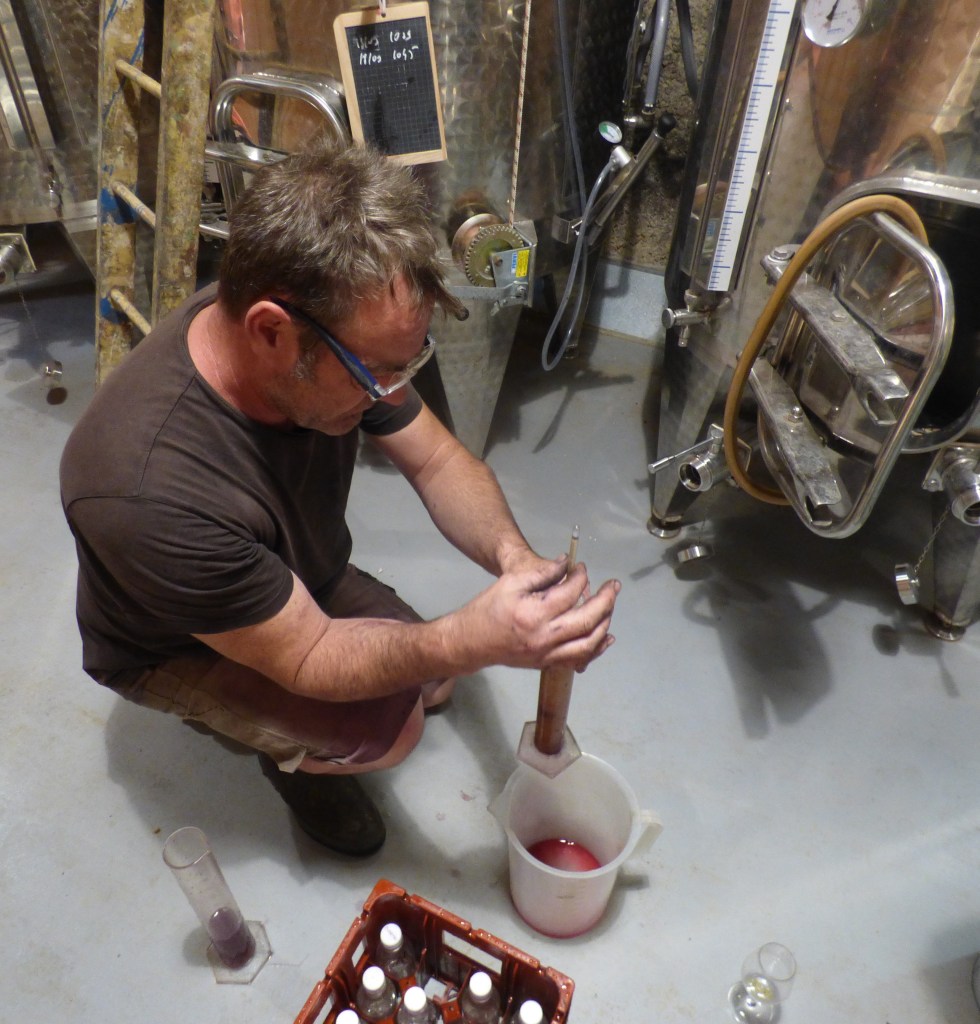
Meanwhile the figures on specific gravity for the wines continue to decline, indicating the fermentation process is going ahead successfully.

To give you some idea of how hard that crust can be and how much effort it takes to punch it down have a look at the video of Jeff treading on the cap of the Syrah from La Garrigue.


1 Comment

Harvest 2019 – Girl

En francais

One of the idiosyncrasies of the French language is the allocation of nouns as masculine or feminine. Tables are feminine, pencils masculine, word endings which are usually masculine have exceptions and vice versa. It’s a minefield for English speaking people.

Grape varieties are also given a gender, but the vast majority are masculine. Of the major grape varieties only one is feminine, la Syrah. My favourite wine of Jeff Coutelou is 100% Syrah, La Vigne Haute. The grapes come from La Garrigue vineyard on a slope facing north to avoid the hottest direct sunshine.

La Vigne Haute is only made in special years, in other vintages the grapes go into other cuvées. How the 2019 La Garrigue Syrah turns out is yet to be determined but they were harvested on Friday September 6th, Day 6 of the vendanges. The good news is that there was more of the wine than last year, when all the vineyards were hit by mildew. Tasting the juice the following day (pre fermentation) it has an amazing depth of red fruit but also a complexity which might be described as minerality. Of course, the wine will be very different after fermentation but this juice has something special about it.

The following day brought more Syrah into the cellar. This time from Segrairals, the largest of the Coutelou vineyards. Again the bunches came in firm and healthy. Syrah usually has small berries and, in this drought year, that is certainly the case. However the grapes are very healthy, no sign of rot or disease. The Segrairals juice had an overwhelming raspberry fruit flavour, not the more serious notes of La Garrigue but very good in its own right.

The Syrah of Segrairals, after destemming and juice in a glass whilst being sorted by Alain

As one of the five major red grapes of Languedoc Syrah is a crucial part of so many of its best wines. It is an expressive grape, try some of the great Syrahs from the Ardèche for example, to find a huge range of flavours and quality. It makes up around one third of the Coutelou production so the lovely fruit of those two days is a relief and also highly promising that, despite the drought, some great wines will emerge in 2019.
La Vigne Haute grapes and juice!

Day 6 Day 7


Leave a comment

Harvest 2019 – Getting Better

En francais

Rome, ready to harvest

Day 3 was all about grapes from one vineyard so Day 4, September 4th, was a contrast. Muscat from Peilhan, the remaining Syrah in Ste. Suzanne (Metaierie) plus a few rows of Grenache from there, a few rows of the Syrah of Segrairals were all picked.

The highlight for me, however, was picking Rome. This is my favourite vineyard, I think most readers will know that by now. The semi seclusion, surrounding trees, wildlife and collection of vines in gobelet (free standing) all make this one of my favourite places on Earth, just look at the photo under the heading.

The variety and nature of the vines make them more interesting to pick, they are individual with bunches spread around them rather than the more uniform growth in most vines trained on wires. This makes it slower work but the rewards of Rome make the work pleasurable. Jeff will blend these grapes with some of the others to make a cuvée as Rome, like most of the parcels, was producing rich, concentrated juice but small quantities due to the drought.

Tony Boris et Alain Alain, Boris Fabrice

Picking there did give me the opportunity to get to know better the 2019 team. Fabrice, a long-time friend of Jeff’s, I have got to know a little over the years but it is good to have more time with him. Alain, Tony, Boris are new friends. One of the benefits and joys of each vendange is getting to know new people. Most of these guys are spending their holidays as volunteers, they are all good company, work hard and are shaping into one of the best teams I have known in my six years here.

Jeff et Julien

Day 5 brought another interesting harvest. Riveyrenc is a traditional, but rare, grape variety in the Languedoc. Thierry Navarre in St. Chinian has done much to maintain its profile and deserves much credit for his very good wine. In March 2015 Jeff planted Riveyrenc Noir and Riveyrenc Gris along with other rare varieties such as Terret Noir and Blanc, Piquepoul Noir and Gris, Morastel. I was there that hot day and four years later these vines are producing really good grapes already.

March, 2015

We picked around 37 cases of Riveyrenc and, I’m happy to report, the grapes were much juicier than anything we had picked so far. It was a joy to see juice in the cases as we sorted them back at the cellar, up to now the cases have been very dry. The Terret Noir and Blanc were rather less generous in quantity but were added to boost the quantity. That these vines are producing such good fruit so young promises well for the future.

Riveyrenc Gris Terret Noir and Blanc

Syrah and Grenache (just a few rows of each) from La Garrigue were also picked in the morning. The afternoon brought the first Cinsault of the year, from Segrairals. Cinsault grapes are commonly big and juicy, the vintage means that is not totally the case this year but the idea was to bring in some low alcohol fruit to blend with other varieties, mission accomplished.

The boss patrols the Syrah of La Garrigue

I also helped Jeff carry out a débourbage of the white and rosé, that is separating the juice from the solids which remained to clarify the wine as it begins its fermentation. The colourful residue always looks interesting, but it has no place in a fresh wine.

Débourbage

Rome, juicy grapes, cellar work, rare varieties –  it’s getting better all the time.

Jour 4 Jour 5


Leave a comment

Harvest 2019 – Magical Mystery Tour

En francais

The magical mystery tour which is the vendanges is under way. That’s an invitation to read on for the next few weeks to follow the course of what happens in Puimisson with Jeff Coutelou and the gang. Satisfaction guaranteed, I hope.

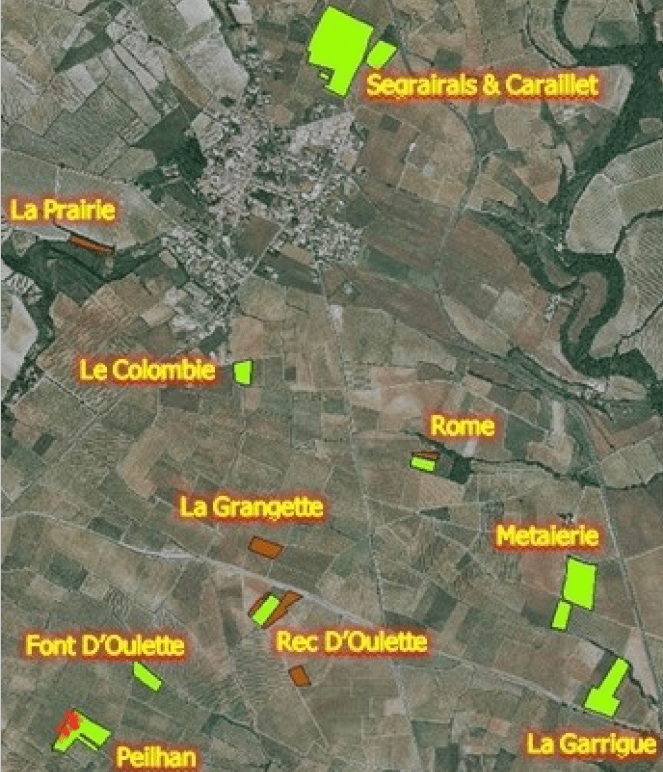
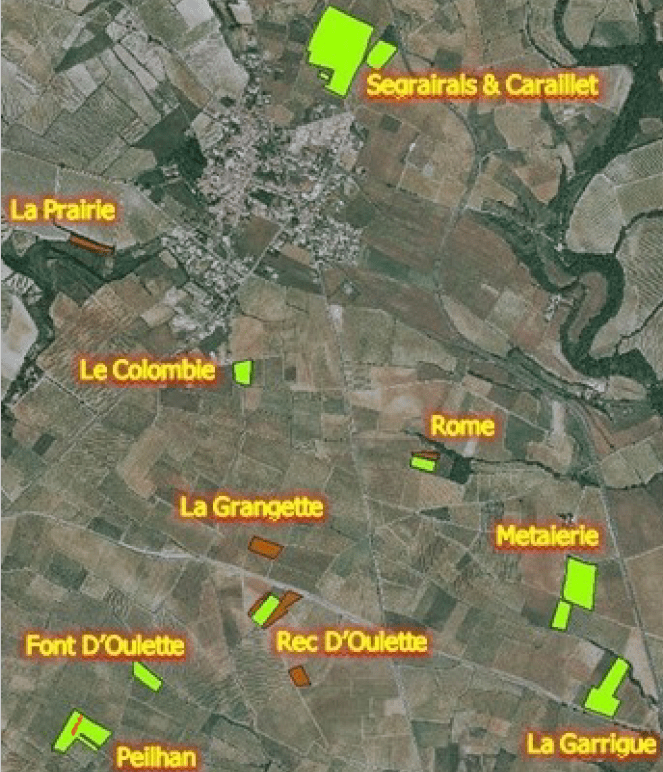
Red vineyards or squiggles indicate picking Day 1

Regular readers will be aware that nature has not been kind this year. What promised to be a great vintage in June with bountiful, beautiful fruit has been undermined by drought. It has not rained since then and so the bunches are still bountiful but they are made up of small grapes, quantities will be meagre. The ratio of juice to skins, pips and stalk is nowhere near the average meaning choices about winemaking have to be made, for example removing stalks rather than whole bunch to improve the ratio.

The 8 cases from Flower Power

We began on Friday August 30th with a morning pick to make a new cuvee. Flower Power vineyard (Font D’Oulette) was the starting point. This vineyard was planted with a rich variety of grapes, twenty or more – some rare. Clairette Musquée (originally the Hungarian Org Tokosi), Delizia Di Vaprio, Aramon Gris to name just three. Jeff has invested heavily in this parcel, for example bringing volcanic soils to add life, and the vines have looked healthier than previous years with more fruit. However, as a prime example of the ravaging effects of drought, despite more bunches on the vines, we harvested only eight cases, as opposed to seven last year.

Clairette Musquée and Aramon Gris, amongst the rare Flower Power grapes

To supplement the Flower Power, more Clairette Musquée from Peilhan and some Syrah from Segrairals at the other end of the village. The grapes were taken back to the cellar, and put into stainless steel tank with some dry ice to stop fermentation and allowing the juice to soak up some of the colour and flavours from the skins. (The wine was pressed three days later and will now ferment).

Syrah is sorted then put into the dry ice filled tank

Day two, Monday September 2nd began with the white grapes of La Garrigue; Sauvignon Blanc (low alcohol, bright acidity, very Sauvignon), Muscat d’Alexandrie, Viognier. Straight into the press, sent into stainless steel upstairs in the cellar, a fresh dry white wine in the making.

La Garrigue’s white grapes, Julien loading the press, brown pips show ripeness, the grapes are fleshy rather than juicy

Afterwards time for the Merlot of Le Colombié. Not the grape which Jeff favours particularly but year after year it produces good wine to be blended with others in cuvées such as Sauvé De La Citerne and Vin De Table.

Day 2

This year the grapes were very small, they were destemmed and into one of the original concrete tanks. I had been sorting it for 4 hours or so and the tank was less than half full, such is the paucity of juice. More was added but yields were well down.

Alain and Alan sorting Merlot, one of us has hair

The fruit is clean, dry and disease free so sorting is mainly about removal of leaves, snails and unformed grapes. The quality is excellent, the juice tastes delightful with plenty of fruit profile and acidity – just wish there was more of it. Jeff ‘joked’ feelingly that with the small tank of Merlot he might make 10 euros profit.

Beautiful Syrah from Ste. Suzanne

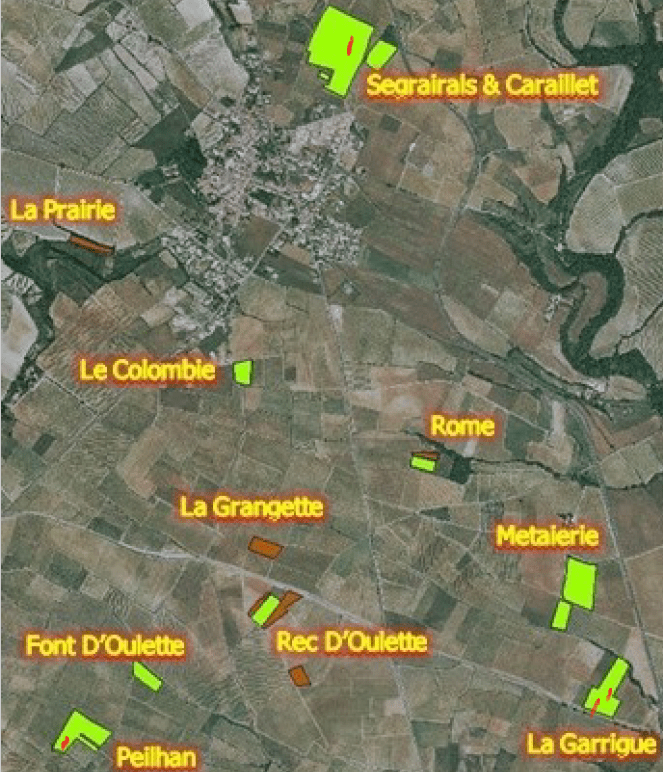
Day 3 and the Syrah of Sainte Suzanne (Metaierie on the map). This is the parcel which provides much of the fruit for the much loved Coutelou wine, Le Vin Des Amis. More of the same, very healthy fruit, concentrated and tasting sweet and ripe but… small berries.

Day 3

A losing argument with a boiling hot cup of tea put me out of action on Day 3 but I did manage to get some photos (of the grapes not my blisters you will be relieved to know).

There will be twists and turns ahead in the next few weeks, sadly there is no forecast of any rain to help us. Let us see where the mystery tour takes us.

Jeff checking alcohol levels or trying to find a big grape


2 Comments

Amicis

En francais

In 2015, to celebrate the 100th post of this blog, Jeff invited me to make my own wine. Together with friends and my wife Pat we picked in Rome vineyard some Muscat but mostly a mix of Grenache Noir, Grenache Gris and Grenache Blanc. I then pressed the grapes, supervised their fermentation and, finally, put the wine into three types of container, an old barrel, a newer barrel and a large glass bottle. The idea was to see how these containers would influence the maturity of the wine.

Last October the wine was ready to bottle after three years of ageing. And, on Friday 23rd August I labelled and sealed the bottles. We had opened a few in the intervenng period for visitors to the cellar to taste and there remains 68 bottles. The seal was wax which Jeff prefers. The bottles were labelled according to their élevage, V for verre (glass), B for barrique (the old barrel) and N for neuve (the newer barrel).

I decided to name the wine Amicis. As the wine is the produce from my favourite vineyard, Rome, I wanted a Latin name. In previous years Jeff had made a wine called Copains from Rome, the Latin equivalent is Amicis. It also has my initials as the first two letters and a C for hundred, the blog post which began this adventure.

What about the wine? Well, happily, I like it a lot, Jeff too (well at least he tells me he does!) Version V has fresh fruit sweetness, the glass container having allowed little ageing, capturing the post fermentation wine. It is noticeably different to the barrel aged wines, the grapey Muscat more evident.

B, the older barrel is the next in terms of freshness. The staves of the barrel have become sealed over the years after soaking up some of the many wines aged in it. My wine has had some exchange with the air and has developed more tertiary notes, not just the original fruit of the V wine.

N is the most influenced by age, a slightly darker colour, flavours which include not just the fruit but woody influence, slightly drier in the mouth. The newer barrel certainly allowed more oxygen exchange with the wine which is clearly different to the older barrel wine.

So, there it is. I must once again thank Jeff for this fantastic opportunity and for his generosity in allowing me to use his grapes, barrels and time. He is the best of men.

Thanks too to Martin, May, Pat, Céline and Delphine for their work in picking with me, and to Julien and Michel for their work in carrying out soutirage during the three years.

Now, who would like to try it?


Leave a comment

Almost there

En francais

Grenache Noir in Rome

Vendanges will begin on September 2nd, hopefully. A tour of the vineyards on August 19th brought me up to speed with their progress. Mostly it is good news with a little bit of not so good news, take your pick. Let’s start with the negatives which are outweighed by the positives I promise.

Look at how dry the vegetation is in the background and in the Carignan to the left

This has been another year of drought in the region. Sceptics of climate change, if they remain, need to meet up with life in southern France. From 45c temperatures to lack of rainfall agriculturalists such as vignerons have had to cope for the present and plan for the future. Bordeaux is permitting new grape varieties into their blends as these grapes will cope better with higher temperatures (incidentally Castets is one of those grapes, one which we know from Jeff Coutelou’s vines). Many producers here in the Languedoc are using irrigation, no longer frowned upon by authorities. Others, like Jeff refuse to do so believing that irrigation is not natural and disguises the true taste of a vintage and the terroir.

Small Syrah grapes in La Garrigue

The consequence for the vines this year is that whilst the berries are healthy they are smaller than usual, lacking in juice. Unless we get some rain before harvest quantities will be much reduced, the wine may be very concentrated. In such drought conditions vines even start to take back water from the berries so as to survive for the future. After several years of problems from frost, hail, mildew and drought it would have been a relief for many producers to have a bountiful yield, it looks unlikely.

Green berries in the Carignan, millerandage

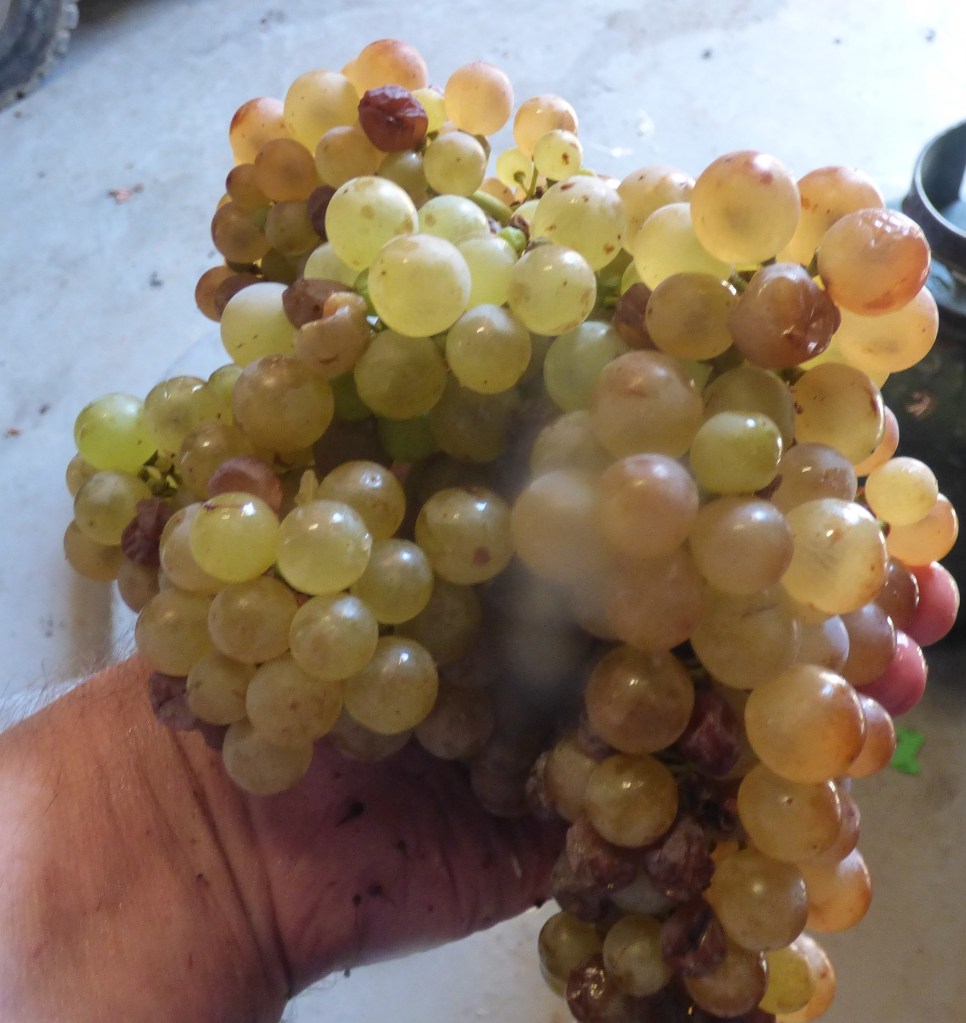
The other main negatives will also mean lower yields this year, millerandage and coulure. The photo above shows a lot of green berries in the Carignan bunches amongst the black grapes. This is the result of problems in Spring when a cooler, windy spell damaged the flowers and fruit set. This means some bunches don’t grow at all or have many berries missing, coulure. Sometimes the berries mature at different rates or not at all, millerandage. There will need to be careful sorting in the vineyard and cellar when harvest is under way.

Millerandage in Piquepoul Gris to the left, coulure in June on the right

However, there are plenty of positives, let’s not get too gloomy. The bunches are healthy and plentiful for one. From Grenache in La Garrigue to Cinsault in Rome I tasted some sweet and flavoursome grapes. They are still acidic and need time but the fruit flavour is developing well, the pips starting to turn brown, a sign of maturity.

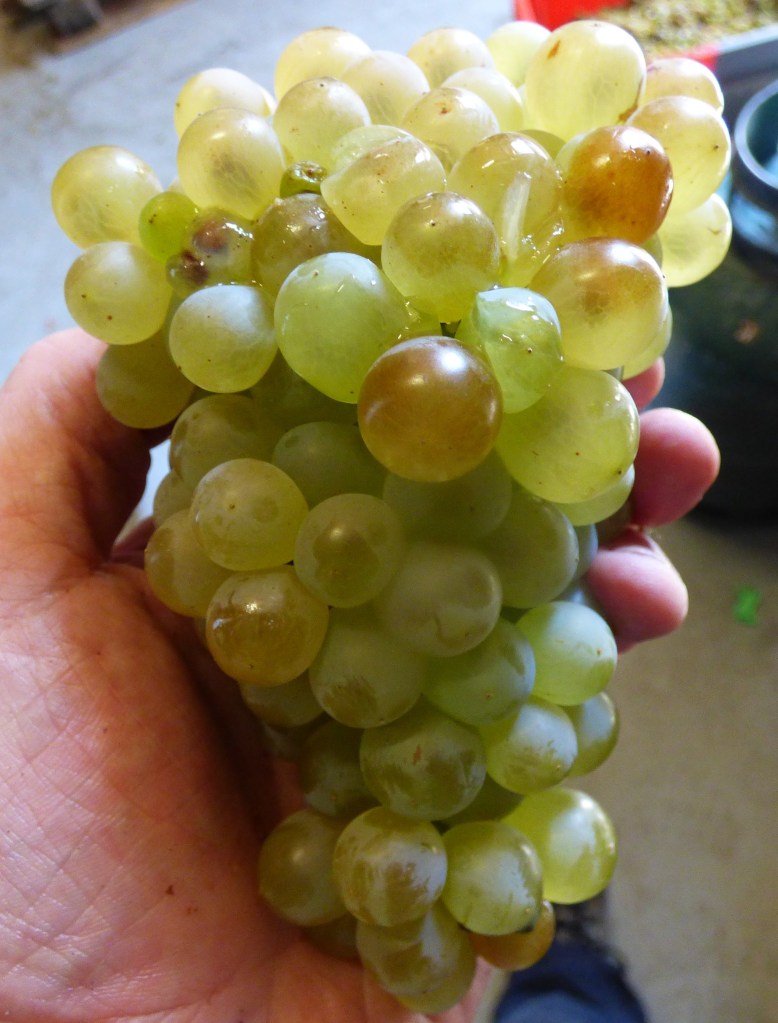
Seeing the many varieties of grapes in the Coutelou range was also rewarding, the Riveyrenc Noir, Piquepoul Gris, Muscat Noir in these photos (left to right) being just three of dozens. There’s even a Chasselas in Rome, the variety which is used as a benchmark for ripening. All other varieties are compared to Chasselas’ average ripening time, a clue as to when to pick.

Chasselas

Jeff has rested a few days during the local féria, a lovely party was held with some special bottles. Next up will be the cleaning of machinery and tanks, we are set fair.

PS – just after publishing this I saw a tweet from Louis Roederer in Champagne saying their harvest would be limited by … lack of rain and millerandage. Plus ca change…