amarchinthevines

Learning about wine, vines and vignerons whilst living in the Languedoc


2 Comments

Fin de Vendanges a Mas Coutelou, One Day Like This

Vendange under a perfect sky

Vendange under a perfect sky

As my favourite band Elbow sang in their biggest hit, one day like this a year would see me right!

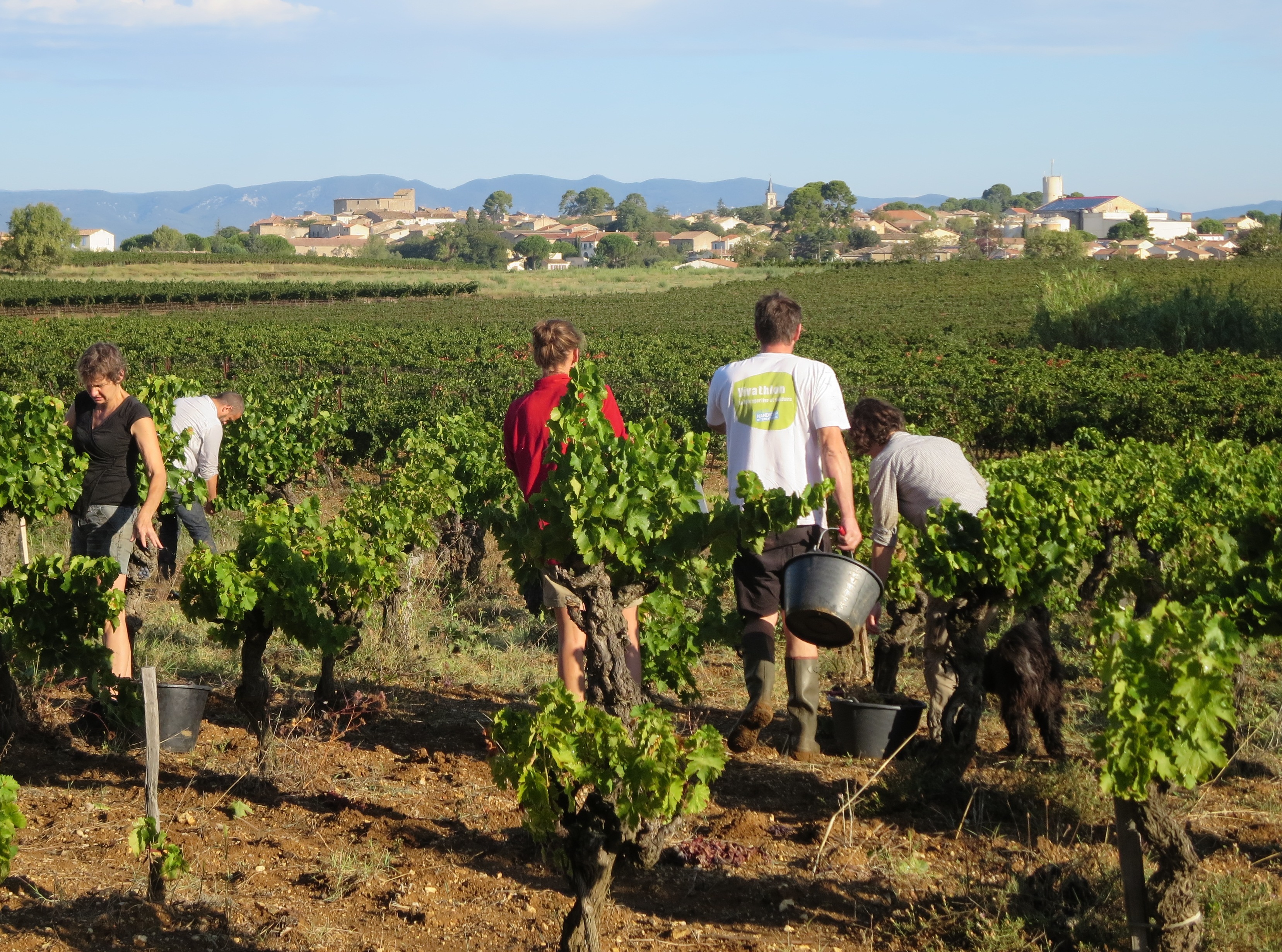
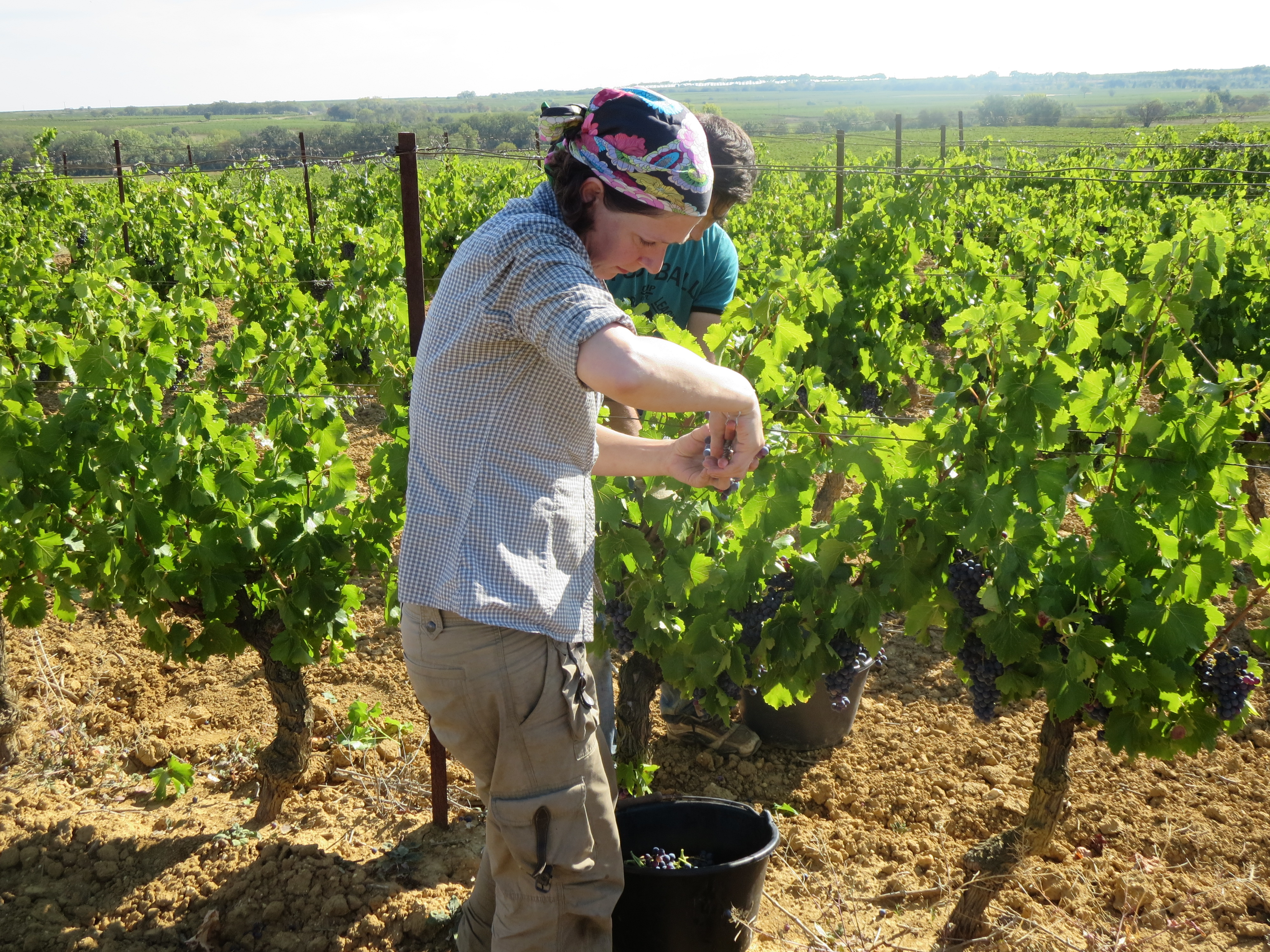
Saturday September 27th was the last day of vendanges chez Coutelou and, apparently, many other domaines in the region. After some iffy weather in the previous 10 days the sun had been out for the last 2 or 3 and today was no different. There was an autumnal, morning chill as Pat and I arrived in the vineyard to help collect the last of the Grenache Noir.
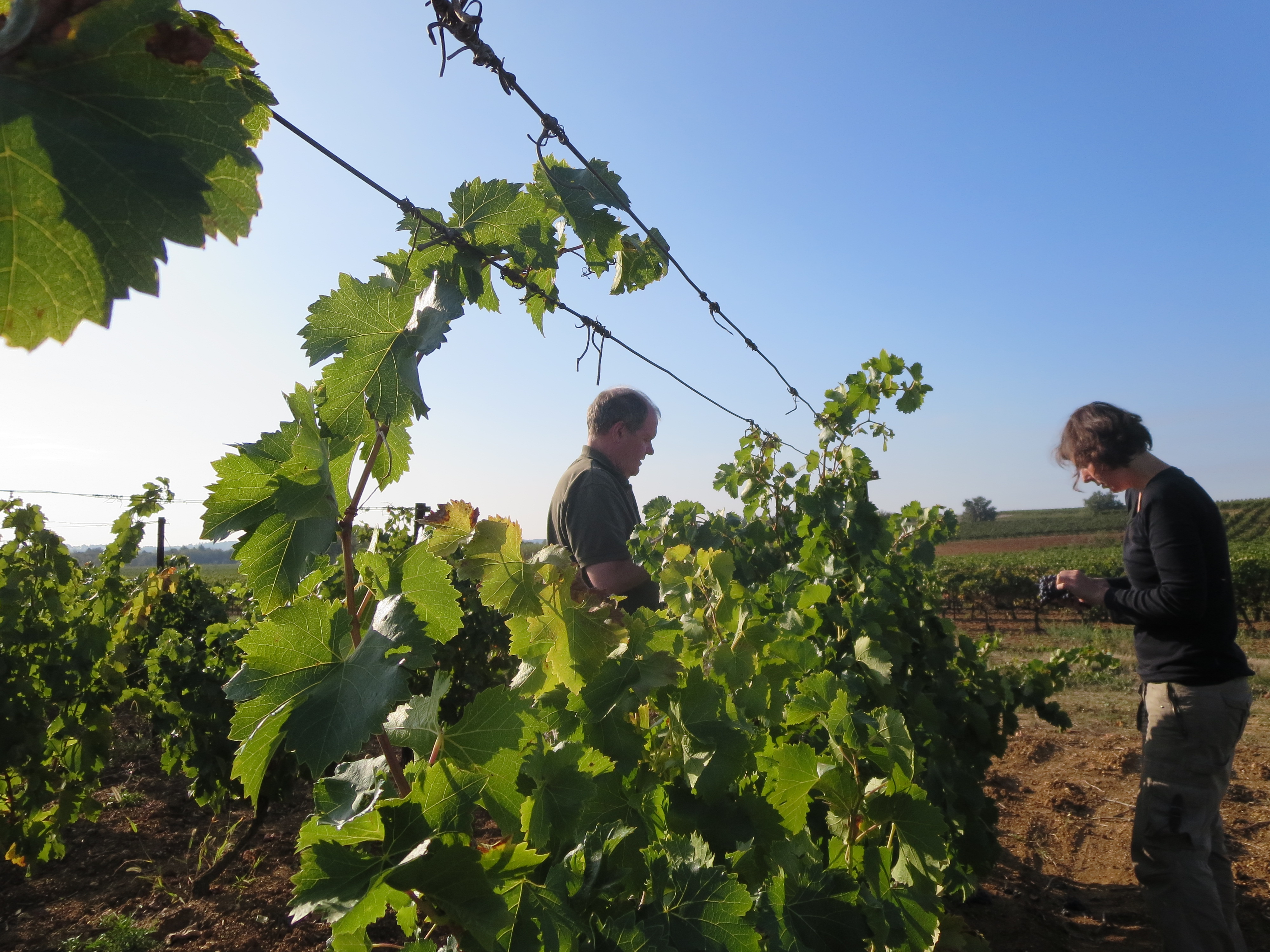
Grenache Noir

Grenache Noir


Pat picking


However, the sun soon became hot and the panama was soon donned to protect my head since hair no longer bothers to do so. The usual pickers had departed and Jeff called in his friends from the Béziers rugby club to help out. The ‘rugbymen’ proved to be hard working, fun and very welcoming towards novices such as ourselves even when I declared my lack of interest in their sport.

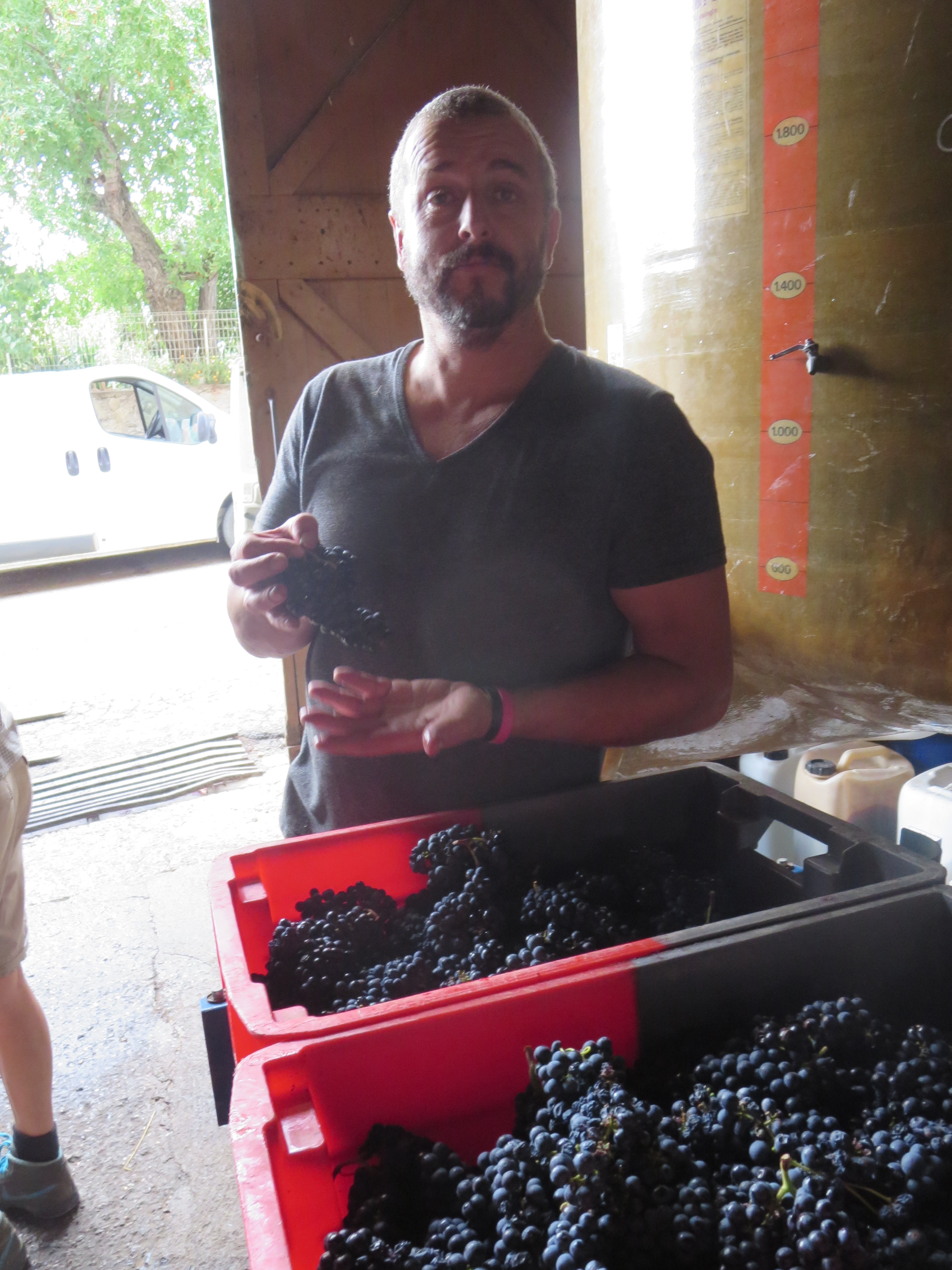
As ever harvesting grapes is only the first part of the job in the vineyard as it is the first step in the process of triage (sorting), any underripe, mildewy or poor quality grapes being cut out before being placed in buckets, then cases. The best way to check the health of a bunch that has been cut is to smell it. There should be the clean, fruity smell of grapes. If not, then search for the problem and eliminate it. Any grape left should be one that you would be happy to eat, and that we did too!
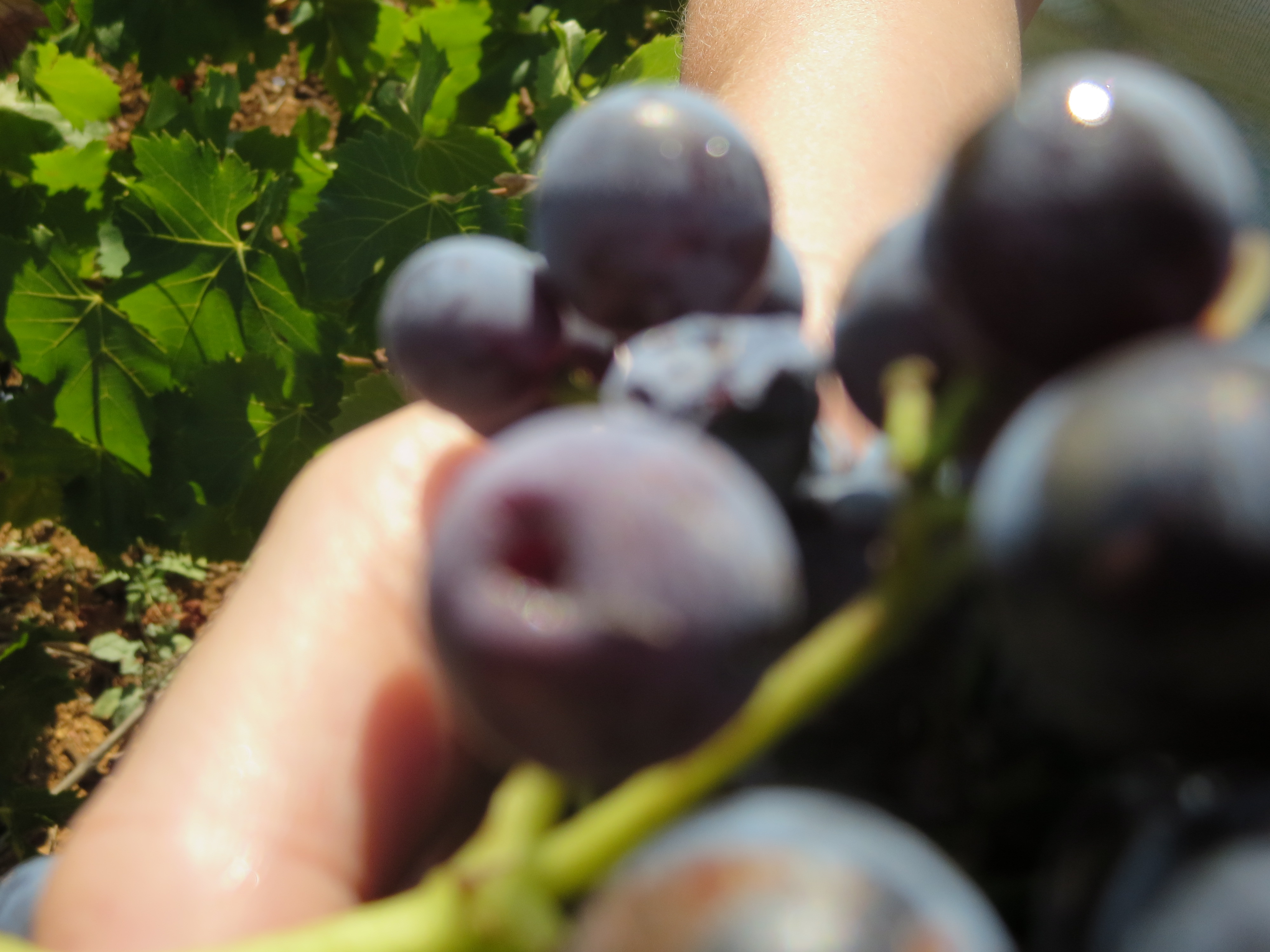
A grape with a hole created by a ver de la grappe (worm)

A grape with a hole created by a ver de la grappe (worm). The grape would soon be cut away
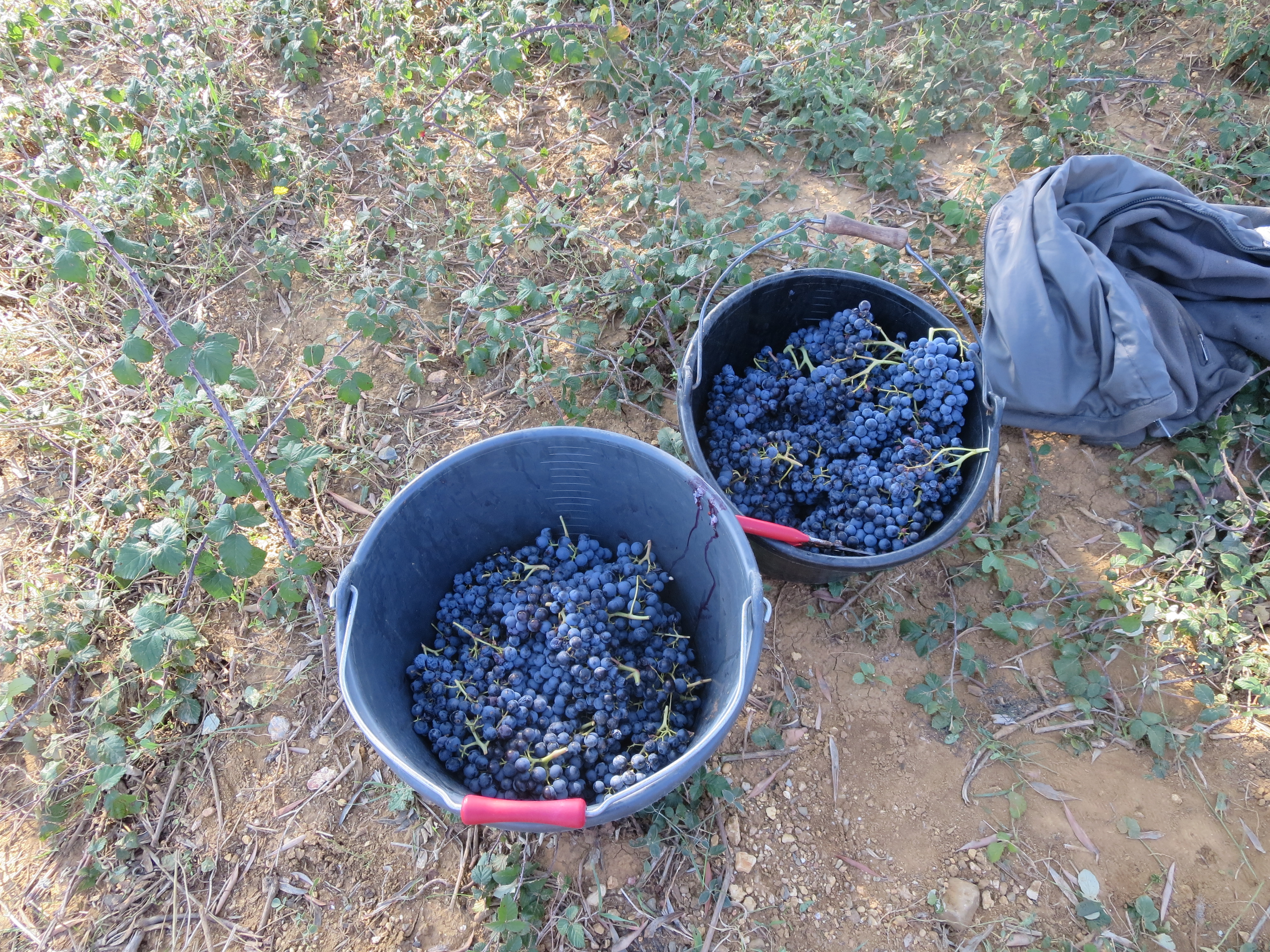
Healthy and delicious Grenache grapes


As the morning heated up it was time to casse croute. A drink of water I thought, wrong! Out came the picnic table, a collection of charcuterie (my pescatarian ways raising more rugbymen mirth!) and then some cheeses from La Fromagerie, a shop in Béziers. These were some of the best cheeses I have ever tasted, including a runny and perfect St Marcellin. Naturally, in every sense of the word, to accompany these treats were a couple of magnums of Vin Des Amis, the most appropriate of wines for today.
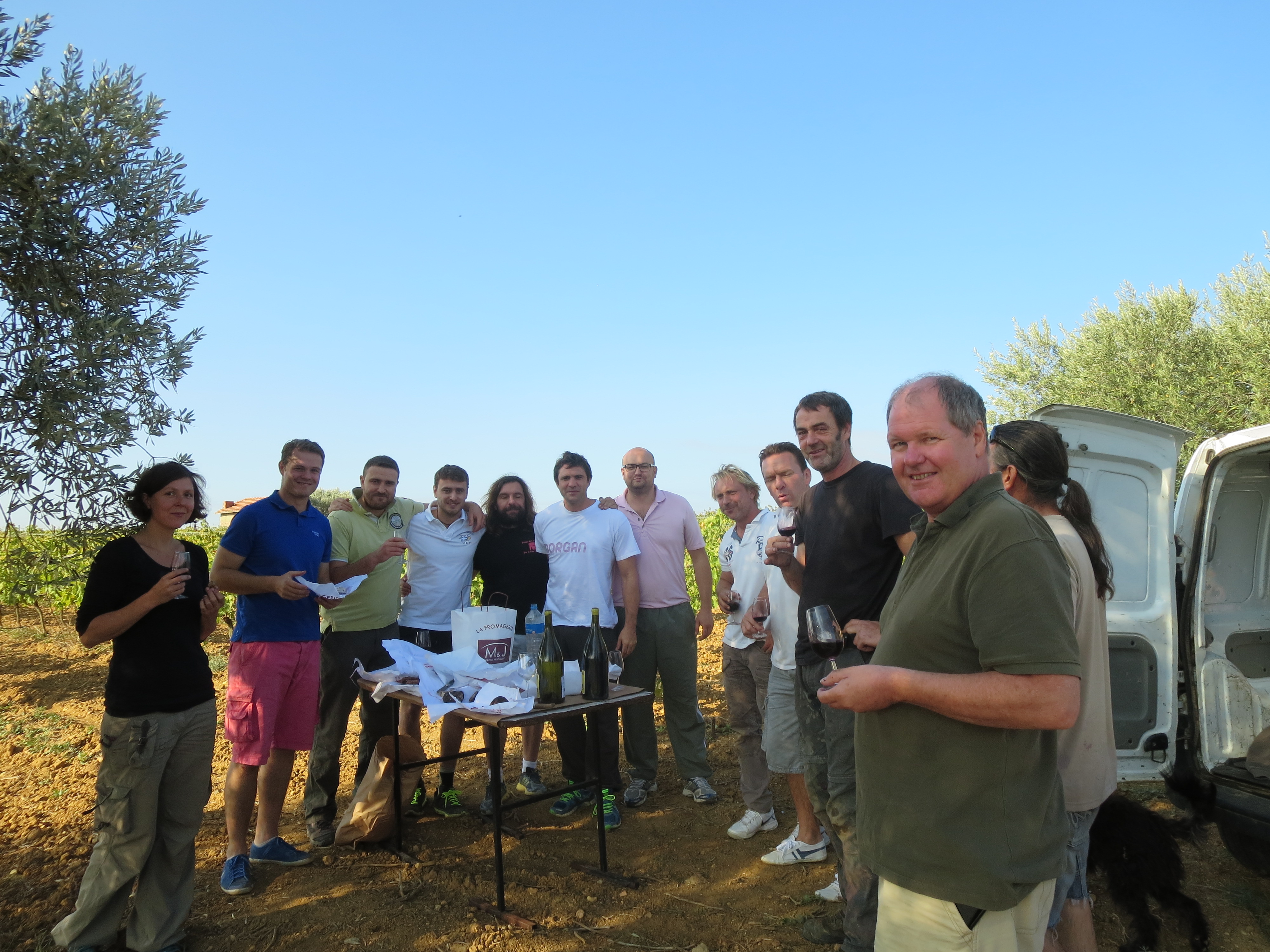
Tina, the 'rugbymen', Jeff, Michel and myself

Tina, the ‘rugbymen’, Jeff, Michel and myself
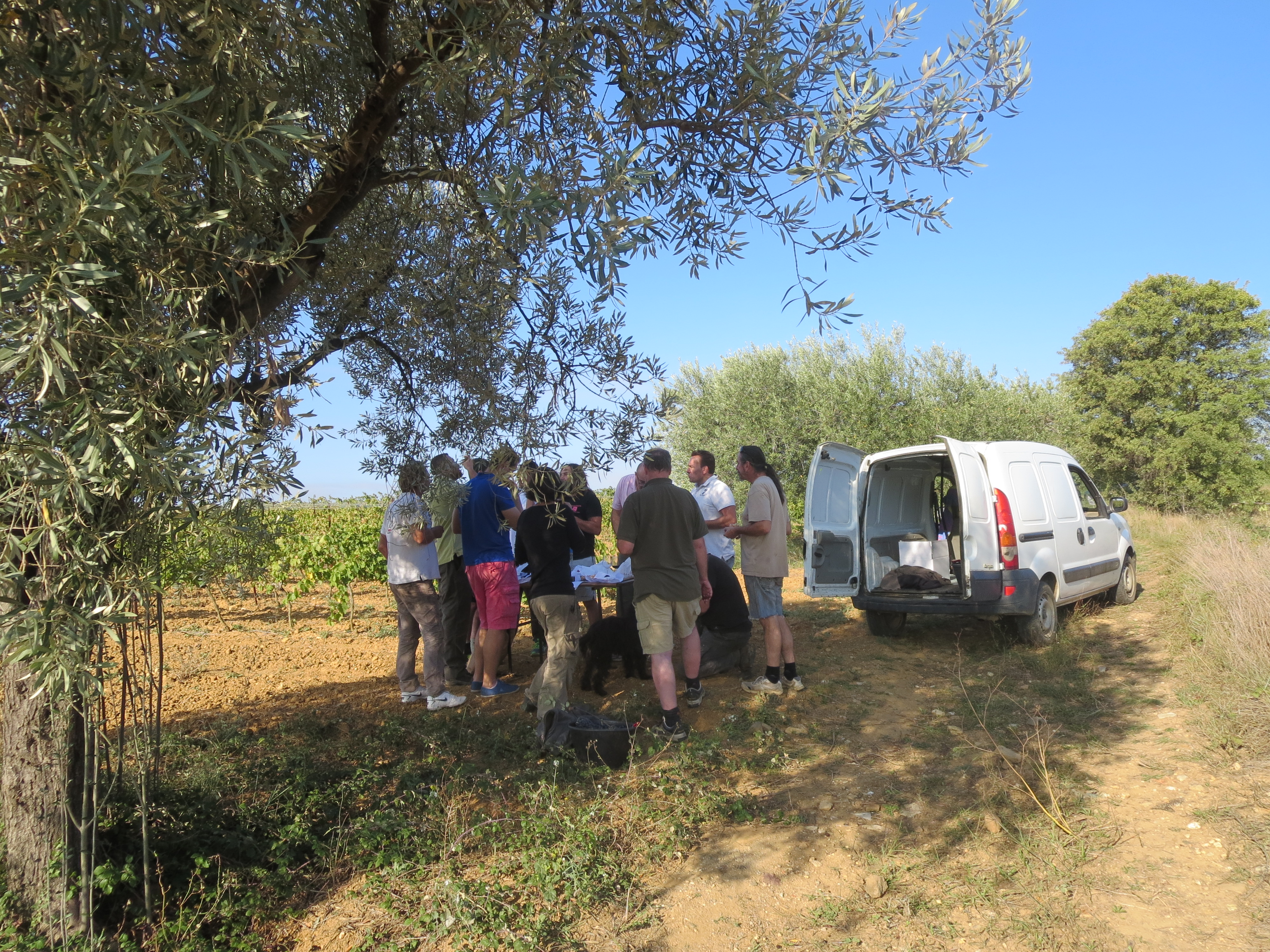
Welcome shade


Michel does the honours

Michel does the honours


Icare checks that everything is up to scratch

Icare checks that everything is up to scratch


12.30pm, grapes picked it was time to return to the cellars. The Grenache was put into tank to be fermented by carbonic maceration. This is where whole bunches of grapes are put in tank and the weight of the grapes gradually bursts the skins and starts fermenting the grapes at the bottom of the tank. Most of the grapes begin to ferment inside their skins. The result is usually more fruit and less tannin and adds a different layer of complexity when blended with other grapes fermented traditionally after being pressed

We came, we picked, we sorted

We came, we picked, we sorted

La force des rugbymen


Jeff shared some of the juice / wines from various tanks from the harvests of the last few weeks. These are, obviously, at different stages of development according to date of picking, speed of fermentation etc. There were  a multitude of flavours, richness and acidity and so much promise for another excellent vintage despite the dry spring and summer. Low in quantity but high in quality.
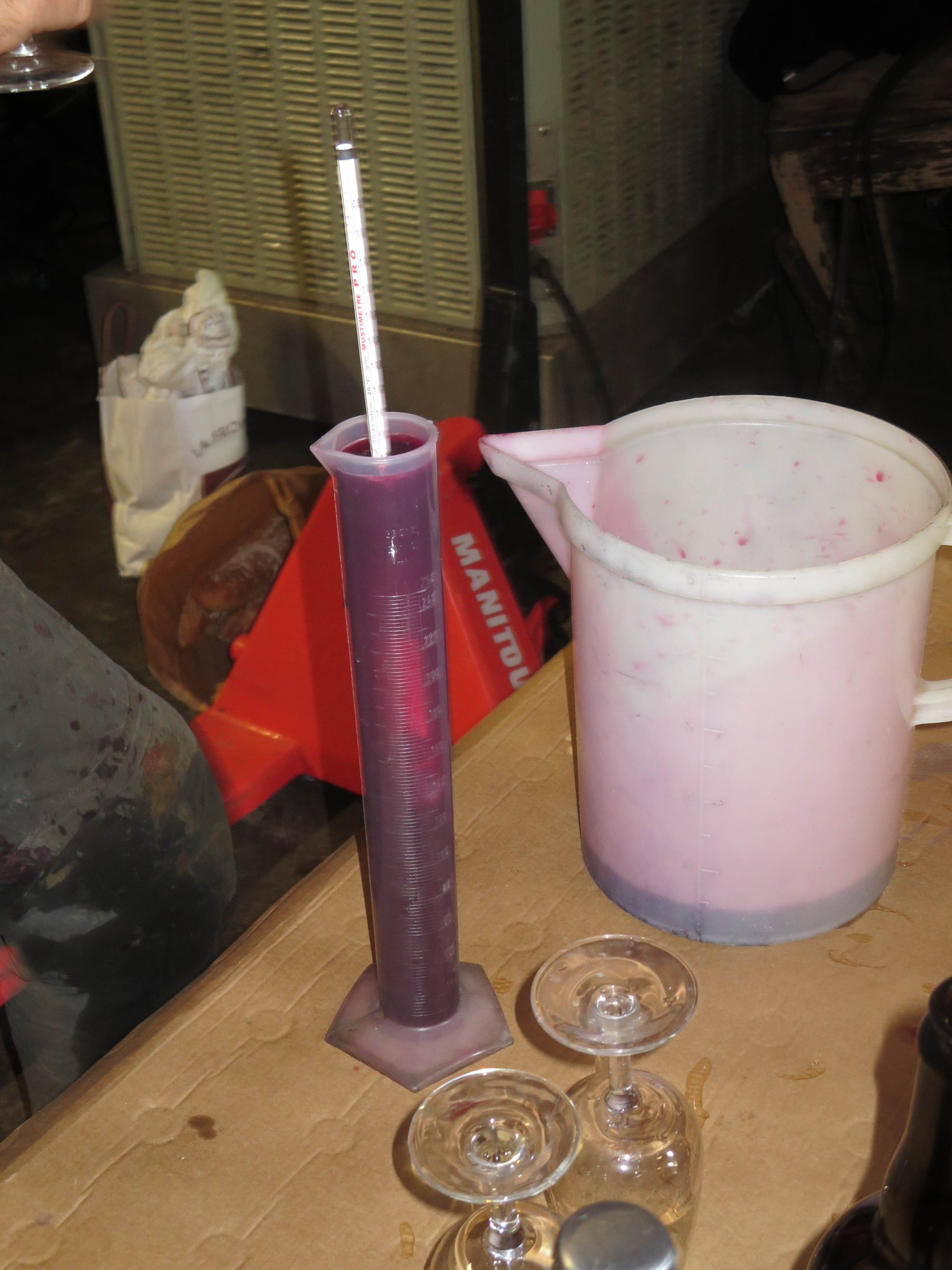
The Mourvedre being checked for density

The Mourvedre being checked for density, it was a delicious fruitbomb to taste

At work at the sorting table checking Mourvedre grapes which have a beautiful blood coloured juice

At work, the previous Tuesday, at the sorting table checking Mourvedre grapes which have a beautiful blood coloured juice


And that I thought was that. Wrong again! Back to Jeff’s house,

the celebrated 7, Rue De La Pompe (name of one of Jeff’s cuvées) and into the garden where, joined by families of the rugbymen, children and 17 adults sat down to a delicious meal of salads, a giant seafood pasta, more La Fromagerie cheeses, and several huge fruit tarts. Just fantastic, many thanks to the cooks, Michel for cooking the pasta through, and to Jeff for his generosity. Why so few pictures of the meal? Well I’d like to claim a technical hitch but it was probably more due to this…

Jeff and Balthazar

Jeff and Balthazar

I don’t think I have ever seen a Balthazar bottle actually filled with wine. This was Vin Des Amis 2013, all 12 litres of it. As the afternoon wore on it was amazing to taste how the wine developed and opened up allowing the Grenache fruit to really express itself. And, to make a comparison, a magnum of 2010 Vin Des Amis which was beautiful. Fresh yet complex and long lasting. Thus it was after 6pm when we finally stood up from the table. Pat had been very abstemious as we had to get back to Margon and then to the theatre in Pézenas. I admit to being a little merry.

It had been a fantastic day, one I shall always cherish and remember. I have always wanted to pick grapes and take part in a wine harvest. Dream fulfilled in the company of some terrific people who were welcoming, friendly and tolerant of the two English incomers. What a treat to spend the day in the company of French people at work and at play, even if the speed of their French became way too fast for me at times. Work to do there. And, work aplenty still to do in the year ahead – the wines have still to be made, bottling to do, pruning and taillage in the vineyards. I can’t wait!

I must say a huge thank you to Jeff whose patience, friendship and generosity are the stuff of legend. I posted recently about the story of the Chaud Doudou and its moral of sharing everything good. The gathering of friends and colleagues in his vineyard, cellars and garden was living proof that he carries on that tradition of chaud doudou. He wants to share his work and his passion for nature and the wines he creates. This he achieved magnificently today.

Surrounded and sharing

Surrounded and sharing


Error
This video doesn’t exist

The scenes of trees in the video show some bat houses erected for them to shelter, part of the diversity encouraged at Mas Coutelou. The music is, of course, Elbow. And, for those who can’t get enough of him, Icare makes an appearance!


2 Comments

Skull crusher

IMG_0251

Jeff (Jean Francois if you want to be formal) Coutelou is passionate about nature, about plants and trees as well as vines. He sees his job very much as making the best from nature whilst doing as much as possible to protect and enhance it. Mas Coutelou has been organic since 1987, long before it became fashionable. Jeff has now gone further and has been making natural wines for a number of years, the first small tests in 2003. Natural wines are wines which have minimal chemical or mechanical intervention. To prevent or combat diseases only natural products are allowed to be used. Equally, in the cellar minimal intervention is required for example in using, for example, only natural yeasts. The wine which results is the natural result and product of the grapes. There are bad natural wines for sure but winemakers such as Jeff pour huge efforts into their vineyards to make sure that the grapes are as healthy as nature allows and, in cellar, hygiene and close supervision ensure that quality prevails and top quality wine is produced. Moreover, in recent years he has gone further and has used no added sulphur. This is usually used by vignerons to fight the risk of oxidation and help preserve the wine. Many people don’t like sulphur in wines, some are sensitive to its effects. It is a risk not to add it but Jeff has been able to avoid it for the last few years.

My first visit to Mas Coutelou many years ago included a tour of the vineyards in Jeff’s van with my wife sat on a concrete block in the back and Héro, Jeff’s previous dog, keeping her company. As we travelled around and stopped to look at vines and grapes what shone out was Jeff’s passion for the land, the vines and the olive and fig trees which he has planted to ensure polyculture and a varied landscape.  At one point he stopped the van and pointed to two sets of vines. To the left was a neighbour’s vines, They looked beautiful; vivid brown soil with bright green vines in straight rows, all cut to the same shape and size, all neat and tidy. So beautiful that a film company was actually filming with them as a background. But Jeff asked us to look closer. There was no life in the vines or the soil, it was devoid of insects, butterflies, herbs, nothing. Next to these vines were Jeff’s. They looked, to my untrained eyes, much more messy – the vines weren’t regular, there was grass and herbs and flowers between the rows. But they were absolutely teeming with life, insects, butterflies and, as if on cue, partridges running through them. And it’s that life which emerges in the wines. As soon as I tasted them I was blown away by their vivacity. powerful fruit and flavour. These are not just in your face wines though. They have complexity and age very well. I have tasted some from 2001 which are still drinking well and show no sign of being tired. Jeff opened a Flambadou (100% Carignan) from 2007 at lunch last week which was still bright, lively but deep and with layers of flavour. I find it hard to not drink these wines young because they are so delicious young. Vin Des Amis I have usually drunk in the first few months after purchase. Yet a 2010 magnum tasted on Saturday was still full of that freshness but also with more complex flavours. A lesson for me that I must put some bottles away.

As part of his determination to look after his land and plants (of all kinds) Jeff is interested in preserving wine varieties. He is one of only two vignerons in the world to have a variety called Castets (Break your head, or skull crusher as I have liberally translated. In fact it is named after the man who developed and spread the variety). (The other is Chateau Simone in Palette neat Aix-en-Provence).

Jeff with some Casse Tete grapes

Jeff with some Casse Tete grapes

There are only a few rows of the grapes and not enough to vinify separately so they are being blended with Carignan. Can’t wait to taste the results.

Casse Tete being prepared for pressing by Michael, a fellow Liverpool fan and genuine Scouser

Castets being prepared for pressing by Michael, a fellow Liverpool fan and genuine top class Scouser

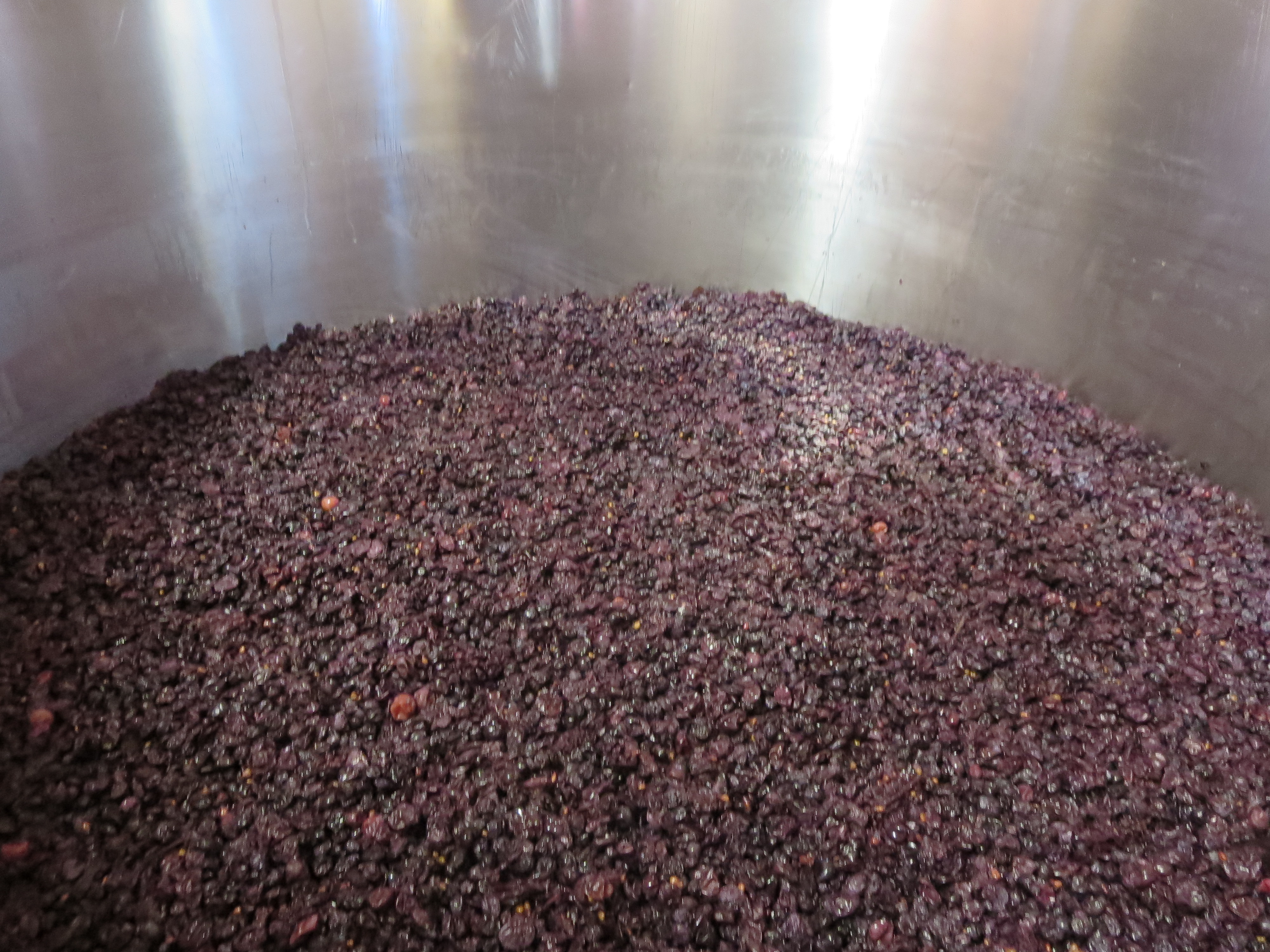
Casse tetes in tank, the skins, pips etc on top of the wine

Castets in tank, the skins, pips etc on top of the wine


The chapeau is really tough and so Tina has to really force it down into the juice (pigeage)

The chapeau is really tough and so Tina has to really force it down into the juice (pigeage)


My wife, Pat, clearly liked the Casse Tetes

My wife, Pat, clearly liked the Castets!!


2 Comments

Grapes, work and love

It has been a stormy week in the Languedoc and the weather has certainly disrupted the plans of vignerons in the region. Tragically five people were killed in a flood in Lamalou Les Bains and that event puts winemaking into perspective. However, the fortunes of wine growers and makers have also been hit by such extreme weather. Driving past Pézenas up the A75 on Thursday swathes of vineyards were under water on the low lying plains. The humidity also means that where grapes are left to pick there is a real risk of disease and even rot. I was talking to the excellent winemaker Emmanuel Pageot this morning as we visited Gabian for the jour patrimoine and he was explaining how complicated such problems have made the harvest. I was invited to join Emmanuel for a tasting soon and I will definitely report here on his latest wines. They are amongst my favourite wines of the region but I shall try to be objective.

In Margon Wednesday saw thunder and lightning and sheets of rain non stop through the day. Yet, in Puimisson, where Jeff lives and has his vineyards there was only a small rainfall, a reflection of the dry year there which has caused the smaller harvest. Normally Jeff would harvest 200-250 hectolitres from his 4 hectares of Syrah grapes, this year that production is down to 145 hectolitres. This means less wine, of course, and also a lot more thinking on his feet as smaller quantities mean that he has to decide which of his wines he uses the grapes for. Therefore it seems unlikely that there will a cuvée of 7, Rue De la Pompe this year as the grapes are needed for other cuvées. The quality of grapes is high though, for example the Syrah which is going into the Paf cuvée is concentrated and finer, partly due to a miserly production of only 25 hl per hectare.

(l-r) Vin Des Amis, & Rue De La Pompe, Paf

(l-r) Vin Des Amis, 7 Rue De La Pompe, Paf

Other grapes have been small in size and so because there is a lot of skin and pips compared to juice the wine needs to be blended with other fuller grapes. Jeff is also thinking of introducing new cuvées to use what he has. Cinsault, for example, has done well this year so offers new possibilities and there is also the possibility of producing a cuvée which Jeff’s father used to make. I will write more about that as the year develops and decisions are finalised.

As picking was on hold at some points due to the weather Tuesday lunch was more leisurely and Jeff had more time to relax and talk. He recounted a French fairy story The Chaud Doudou. Basically it is about sharing and how everyone feels better for having done so.

le-conte-chaud-et-doux-des-chaudoudoux

Jeff went on to share an Occitan proverb which translated means “What you give flourishes, what you keep to yourself perishes” and I think this sums up Jeff Coutelou’s wines, he shares his skills and his passion for the land and for nature. The title of this post are the words he uses to describe his winemaking philosophy; grapes, work and love. To produce such high quality wines he needs the best grapes, he works tirelessly and he instills endless love into the wines he produces. If you think that sounds far fetched then try some, he is telling the truth.


6 Comments

“Wine is the most healthful and most hygienic of beverages.” (Pasteur)

Louis Pasteur is one of my historical heroes. As well as showing the links between germs and disease (by investigating alcohol) he discovered how vaccines work (partly by working to prevent the vine disease phylloxera). The quote above is also very topical after working in Jeff’s cellar. Let me explain.

???????????????????????????????

The Mas Coutelou team (left to right) – Annie, Michael, Carole, Jeff and Tina (sadly Michel was not in this photo)

The year has been a trying one for Jeff. The very dry weather through spring and summer has caused a major drop in production, Jeff reckons most parcels are 30-50% down on quantity even if the quality is very good. That is a big burden to bear and must be a financial blow.

The team which Jeff assembled for the harvest were cheerful, helpful and hard working. Carole has been working periodically with Jeff for 8 years and her experience allied to his leadership meant that work was done according to his wishes but with plenty of smiles and respect. Michel who works for Jeff was also a steady and reassuring presence. Harvest took place this week in hot, sunny weather. The team in the vineyard picked mainly under the stewardship of Carole and the grapes were ferried back to the cellar within half an hour or so of being picked.

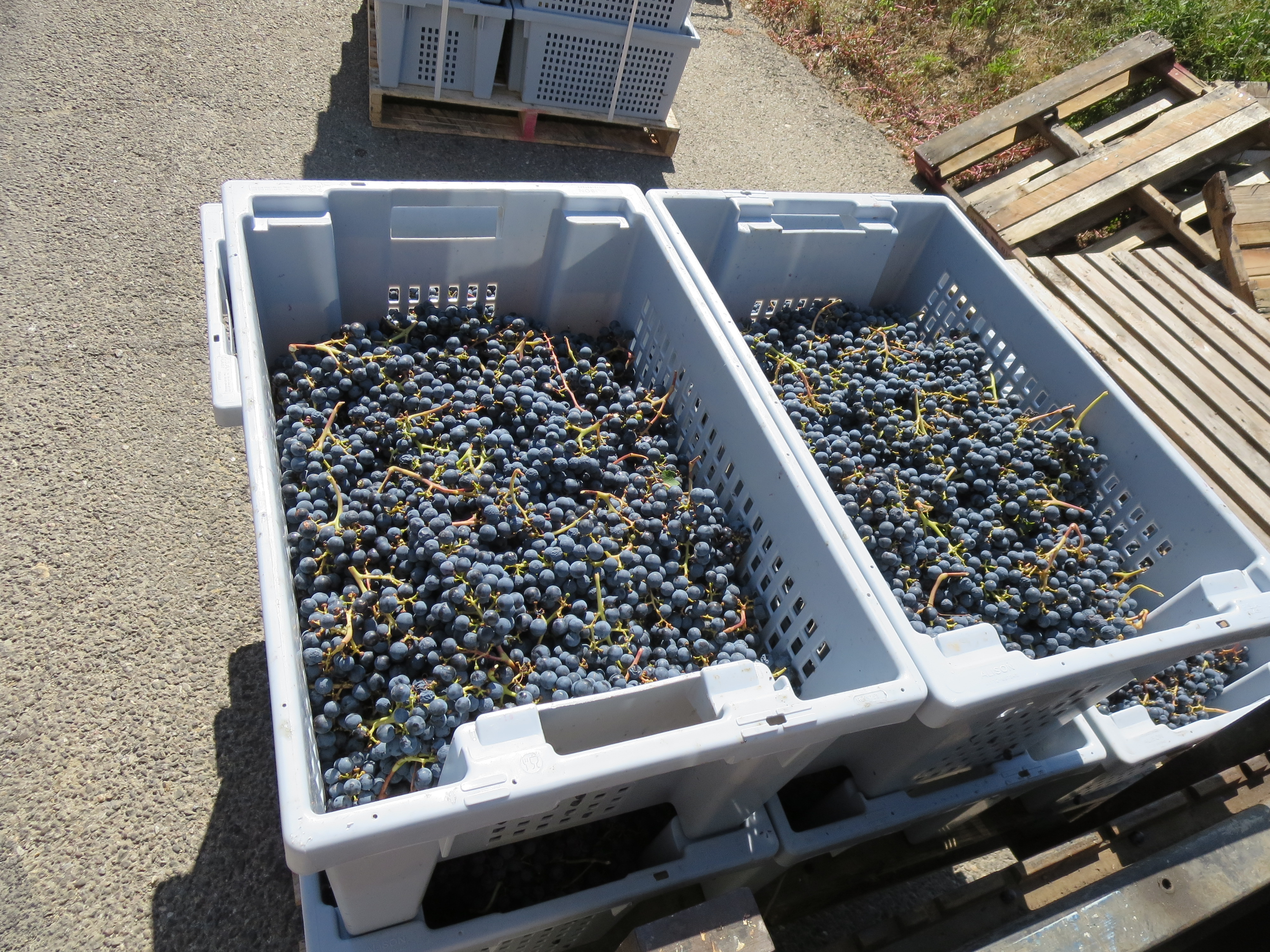
Cabernet Sauvignon grapes, freshly picked

Cabernet Sauvignon grapes, freshly picked

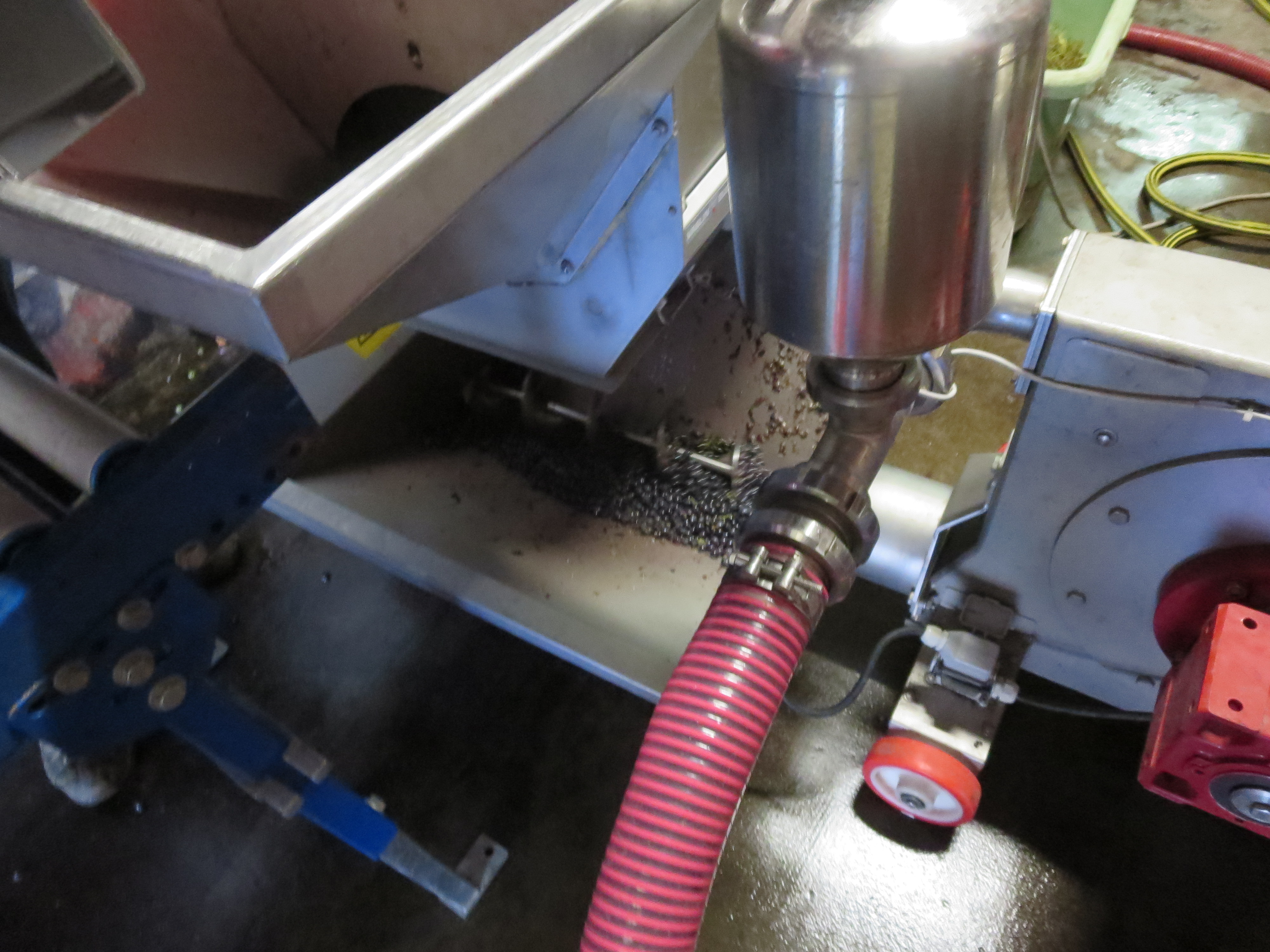
The ‘caisses’ of grapes are then placed on the sorting line. I worked on triage on Wednesday. The grapes are taken out of the caisse and inspected for any signs of disease, under ripeness or foreign bodies such as leaves or snails. Ripe grapes are placed in the égrappeur which destems the grapes.

IMG_0148

The destemmer at work

The grapes are then pumped into tank ready to await pressing and to allow the first stages of fermentation. The bunches which were taken out are then checked, and healthy grapes added to the tank. This is slow and careful work, after all Jeff wants only the best quality grapes to go into his wines. The grapes are given as light a pressing as possible.

IMG_0149

Healthy, ripe Grenache grapes being pumped to tank

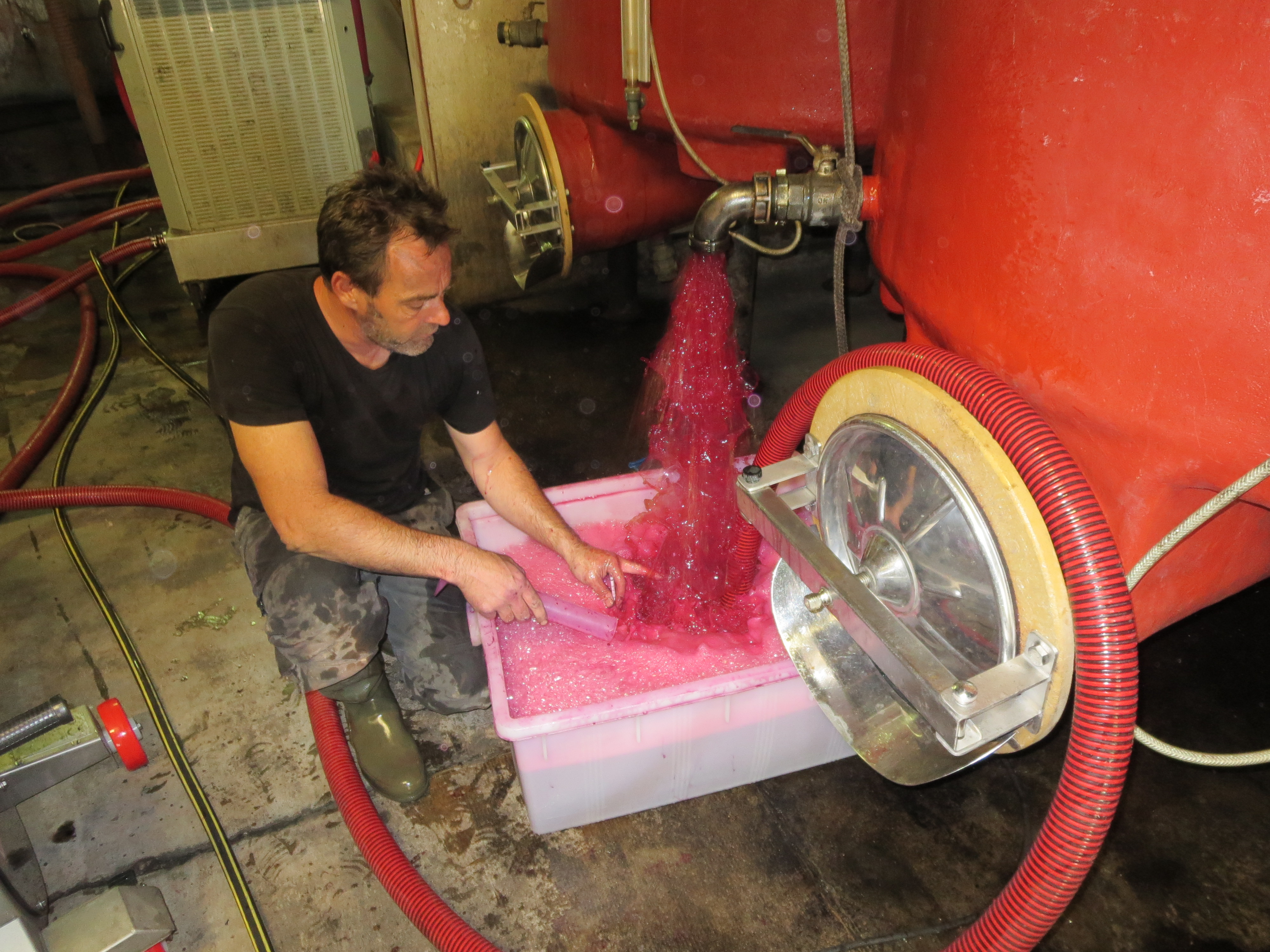
Jeff uses a range of containers for the wines, cement, stainless steel and wood. He is seeking neutral influence in the main as he wants the grapes to tell their own story rather than, for example, new wood. After the grapes have settled and begun to ferment they are pumped into another tank and some of the skins, pips etc are removed as they pass through very broad sieve like stainless steel. Jeff checks the wines at every stage to measure the stage which they are at, alcohol levels, sugar levels etc

Jeff testing the first stages

Jeff testing the first stages

After that initial pumping the wine is allowed to settle and the solids which are left in the wine begin to rise to the top of the tank as they are lighter than the grape juice. This produces a thick layer or ‘cap’ (chapeau in French). The skins in the cap though contain flavouring and colour for the wine and so it needs to be mixed with the juice. The cap has to be physically pushed down into the juice.

Error
This video doesn’t exist

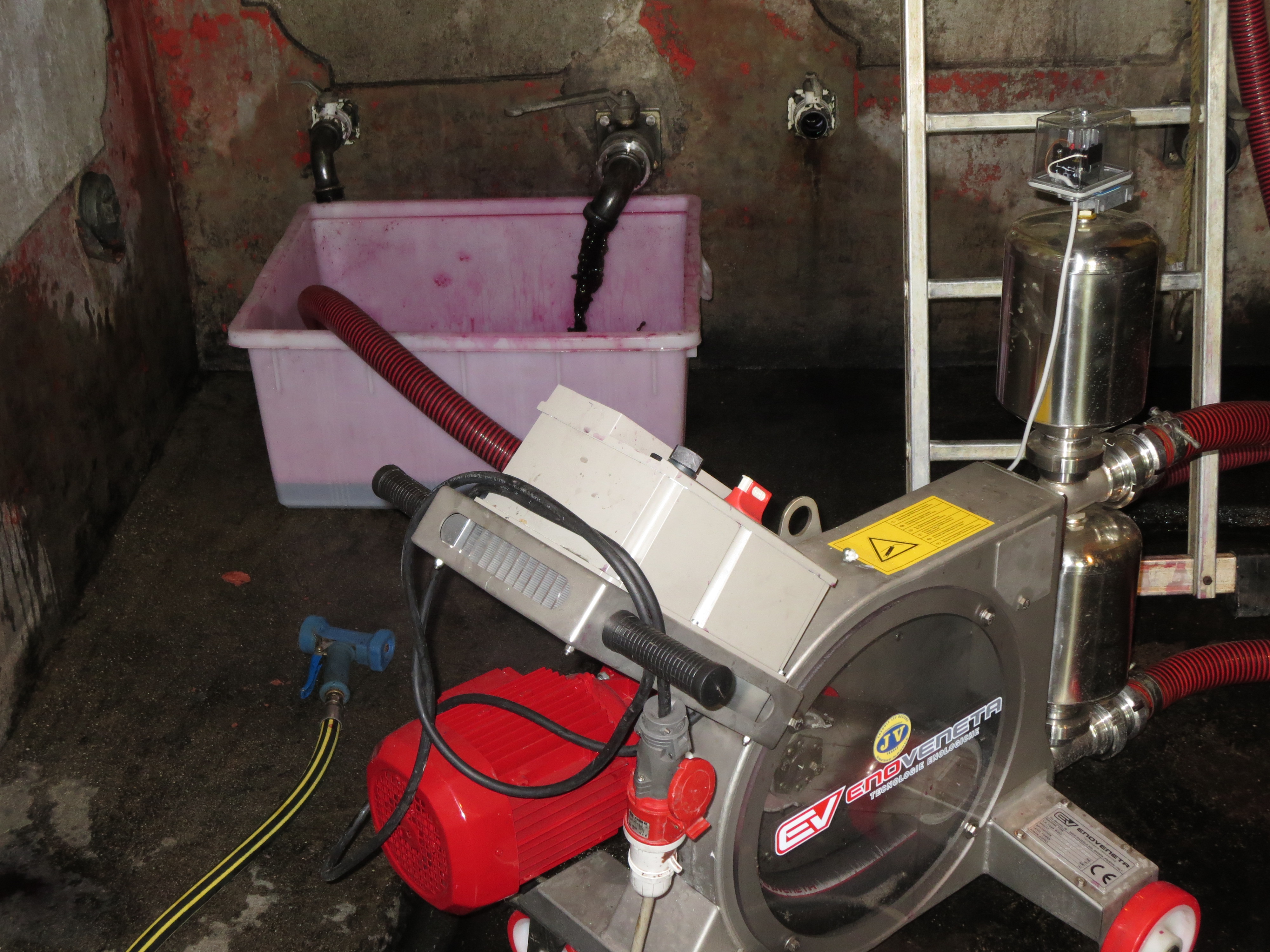
The wines are also ‘pumped over’ (remontage) every day. This means the red wine in the bottom of the tank is pumped over the top of the cap to moisten it and to extract the required amount of colour, flavour etc. This requires the working of an expensive but vital pump to caress the wine rather than force it. This pump works non stop all day (there are back ups!).

IMG_0119

The (very) expensive pump

As the harvest progresses more tanks are filled so more and more pumping over takes place. The cellar begins to resemble a plate of spaghetti as hoses run from one tank to another. Yet another machine also chills the wine slightly or heats it up if fermentation needs to be encouraged. This machine is in the top right of the photo underneath.

IMG_0123

How does Jeff keep all these sorted in his head?

All the while Jeff tastes the juice which is gently turning into wine and testing its progress using equipment such as a refractometer and other scientific equipment. A real mix of personal judgement and science mixing to best advantage.

IMG_0120

This continues until Jeff is happy that the wine is right. Several weeks of pumping, testing, tasting – an enormous task. There are so many pieces of information for him to keep in his head about the development of each cuve, an amazing effort which leaves him with a definite air of fatigue during the very enjoyable lunches and the post work drink.

So what of the Pasteur quotation? Well as I was working (oh yes I was) two things really struck me apart from the sheer physicality of lugging cases of grapes, hoses, pumps and various items of equipment.

Firstly, patience. Jeff waits patiently for the grapes to be just right before picking, he wants the best and is prepared to give nature the time it requires to deliver its best. In the cellar he nurtures each cuve and each drop of wine, each stage of the process takes place when the wine dictates to him. The temptation to rush or to do things because it suits the winemaker is resisted with determination and confidence. He knows because he produces great wines that if he waits he will produce more great wine.

Secondly, cleanliness.

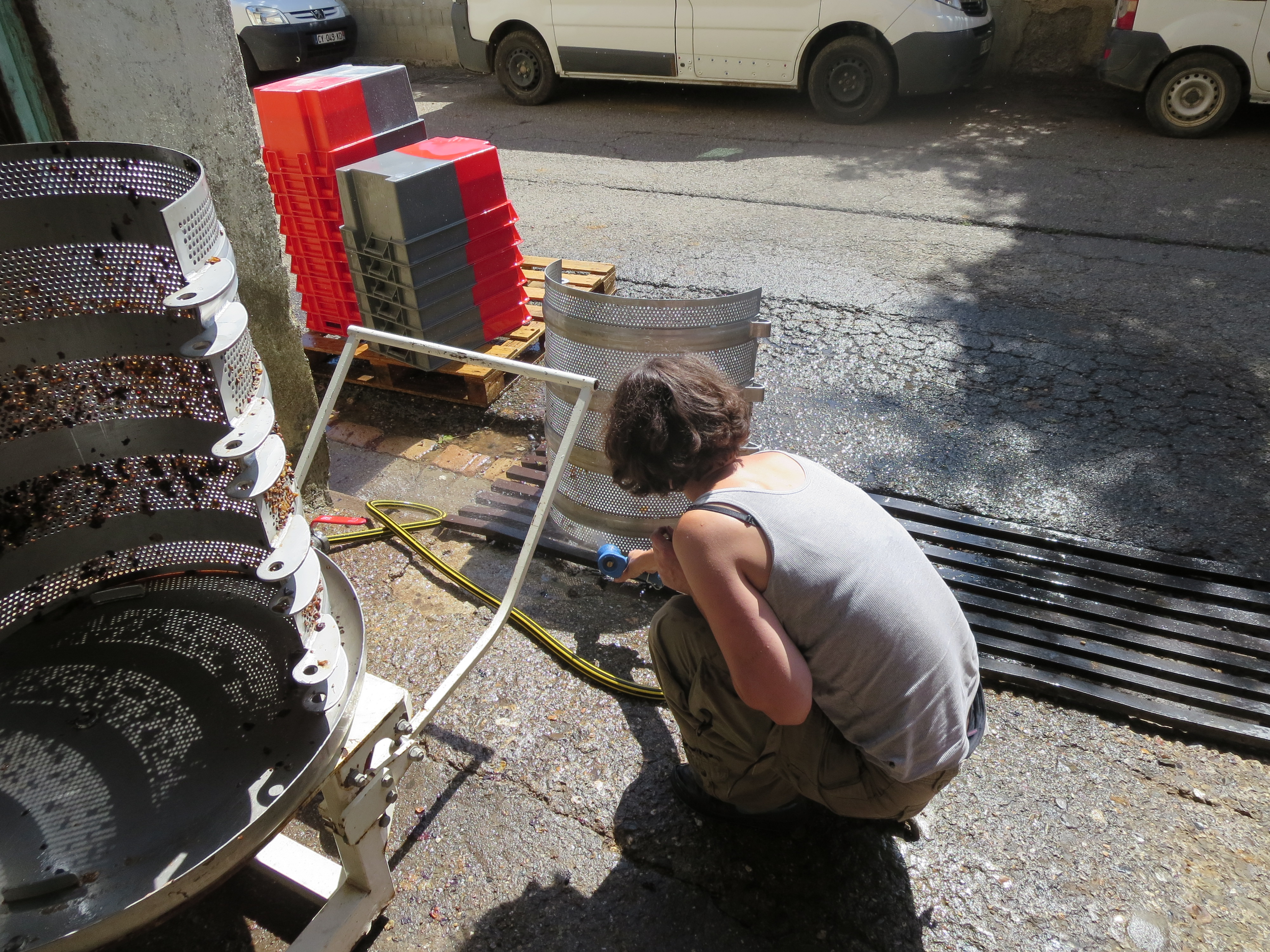
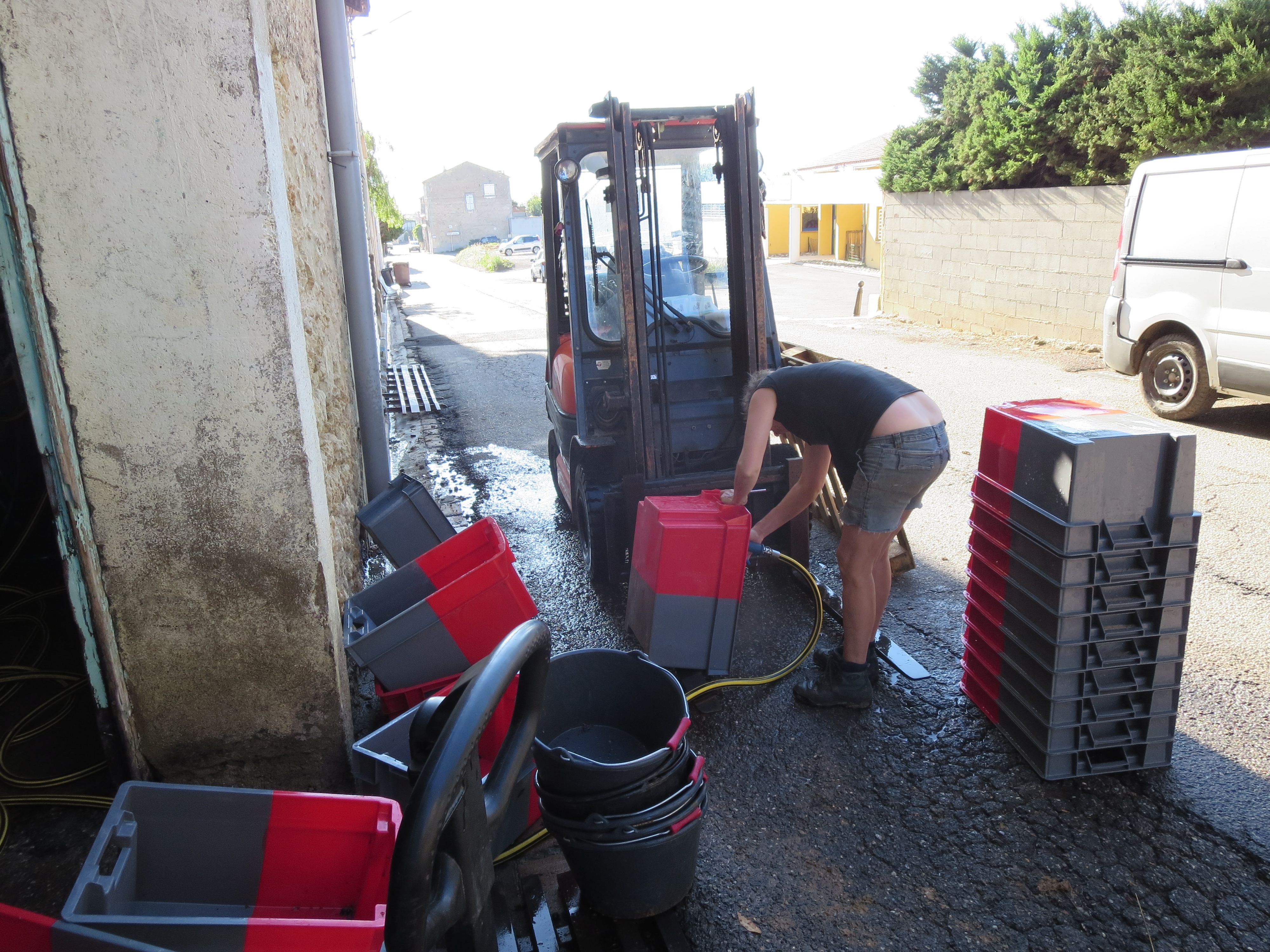
Jeff makes natural wines and for the last couple of years without the use of sulphur to stabilise the wine and help it to fight dangers such as oxidation. To do so everything has to be clean. At every step equipment is washed down and cleaned. Again and again and again. This is drilled into all of us. The risk of harmful bacteria is reduced by hyper vigilance and cleanliness. Jeff told me that for each litre of wine produced he estimates that he uses a litre of water for washing and cleaning. I can believe it and in fact it must be much more. Now before I upset other winemakers who clean rigorously and take every care with hygiene I am not claiming that Jeff is unique in this. I was just amazed at how much washing and cleaning takes place. Hence my Pasteur quotation.

IMG_0146

Cleaning

IMG_0138

More cleaning

IMG_0130

And, yes, more cleaning


My other job this week was pressing some grapes for some very special wines. More of that in the next post.

Happy in my work

Happy in my work


Leave a comment

Harvest

Be warned the next post means harvest is back!!   IMG_0150   IMG_0129

Vendange is in full swing across the region. If, like me, you thought winemaking is a glamorous and romantic calling then believe me it is also very, very hard work. I have spent two and a half days working in the cellars with my friend Jeff Coutelou (Mas Coutelou). They were great days, fascinating and enjoyable and, however hard the work, it was good to look at my surroundings and the blue skies and think that this is why I wanted to come to France and how different to being in a classroom or a meeting.

I intend to go through the winemaking process that I witnessed and I shall keep it simple as I am a novice, don’t understand the full science and most people looking at this would not want all the technical details I suspect. Please let me know if I am wrong.


2 Comments

Vendange

IMG_0090                      IMG_0091  IMG_0093                      

Error
This video doesn’t exist


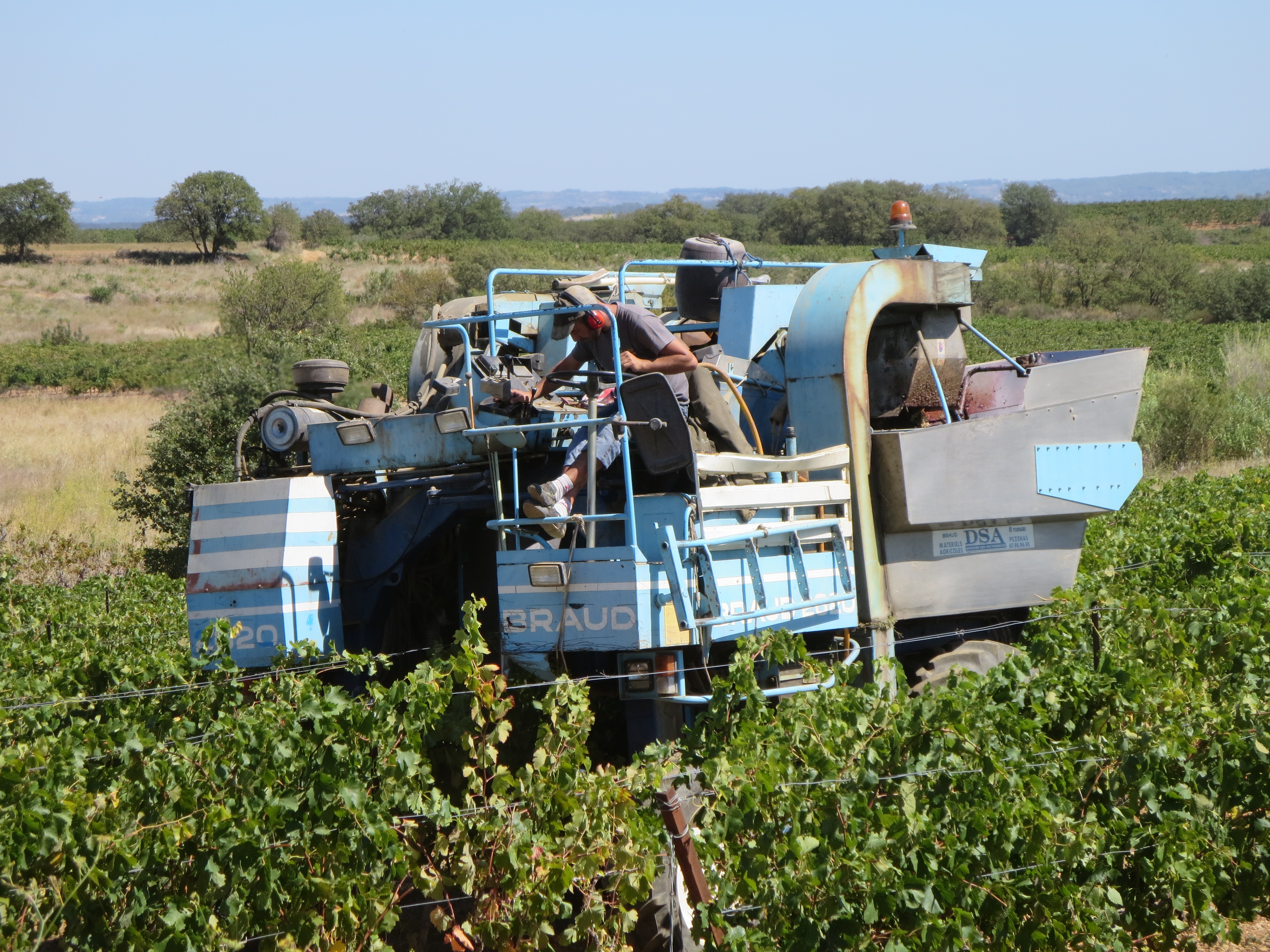
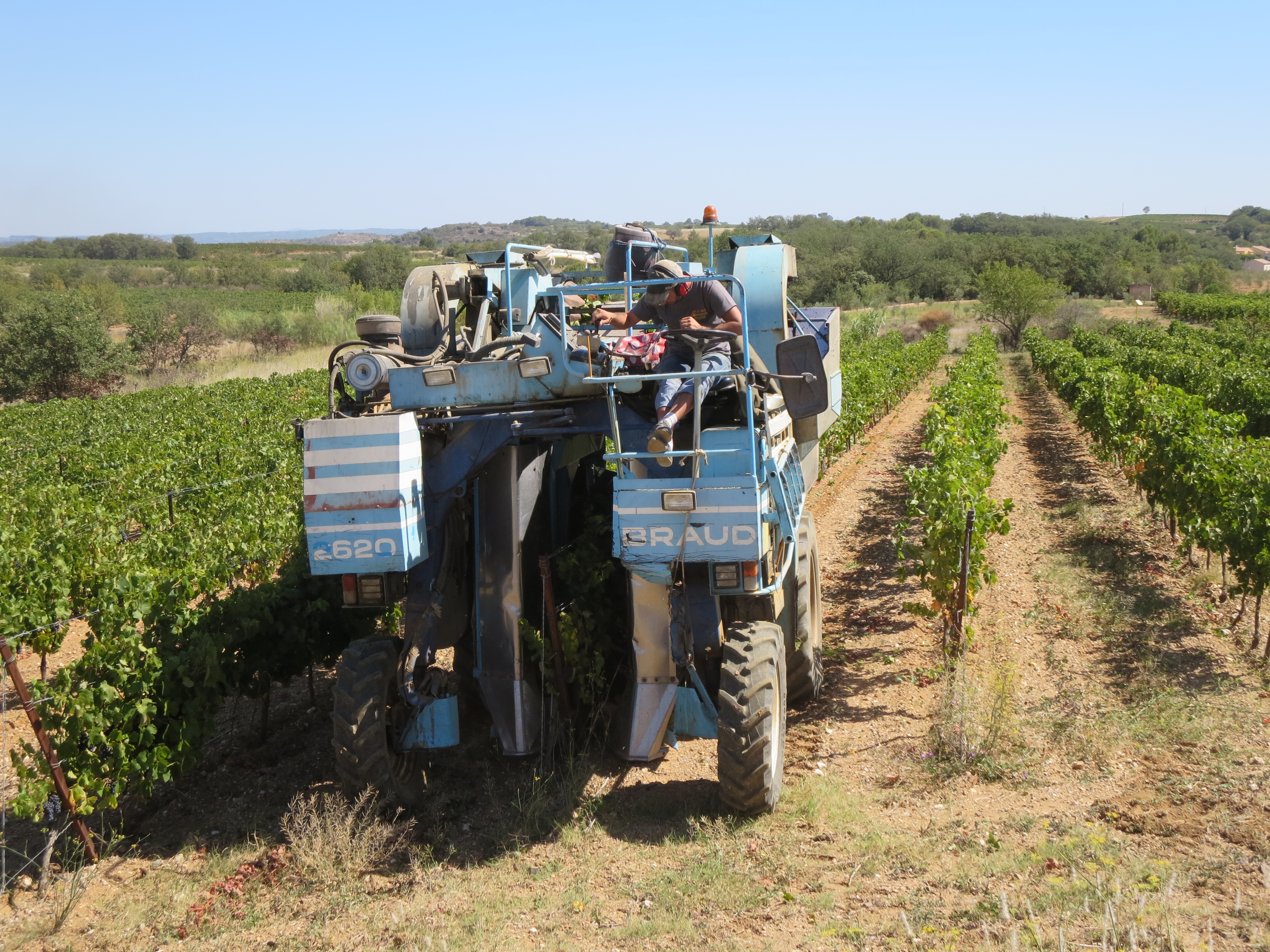
Yesterday, a rumbling noise grabbed my attention from a neighbouring field and looking into the distance I saw a harvesting machine working away. I walked up to get a closer look and had a chat with some of the men who were there whilst the machine continued its rumbling. I passed the initiation test by correctly identifying the grapes being harvested as Syrah (the trellis was the key clue) and they told me about the machine and how its harvest would go the local co-operative. The machine is huge yet turns in a tight circle at the end of a row, it shakes the vines as it passes over them and sucks up the grapes before being loaded into trailers to be taken away.


Now my instinct tells me that machines are not the right thing because of shaking vines and gobbling up rotten or under ripe grapes along with the good ones. Yet these vignerons were dedicated and want to create good wines and for some this is the only financially viable approach to harvesting. It is certainly not the romantic wine harvest that I imagine but it is effective.


Next week I shall find out for myself as I am going to be joining my friend Jeff Coutelou for a bit of picking by hand. Am I ready for this??


Meanwhile the machines rumble on.