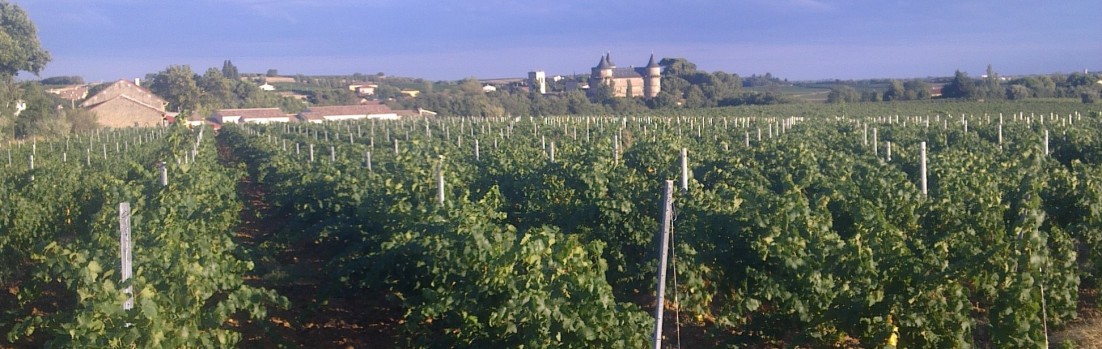
Louis Pasteur is one of my historical heroes. As well as showing the links between germs and disease (by investigating alcohol) he discovered how vaccines work (partly by working to prevent the vine disease phylloxera). The quote above is also very topical after working in Jeff’s cellar. Let me explain.
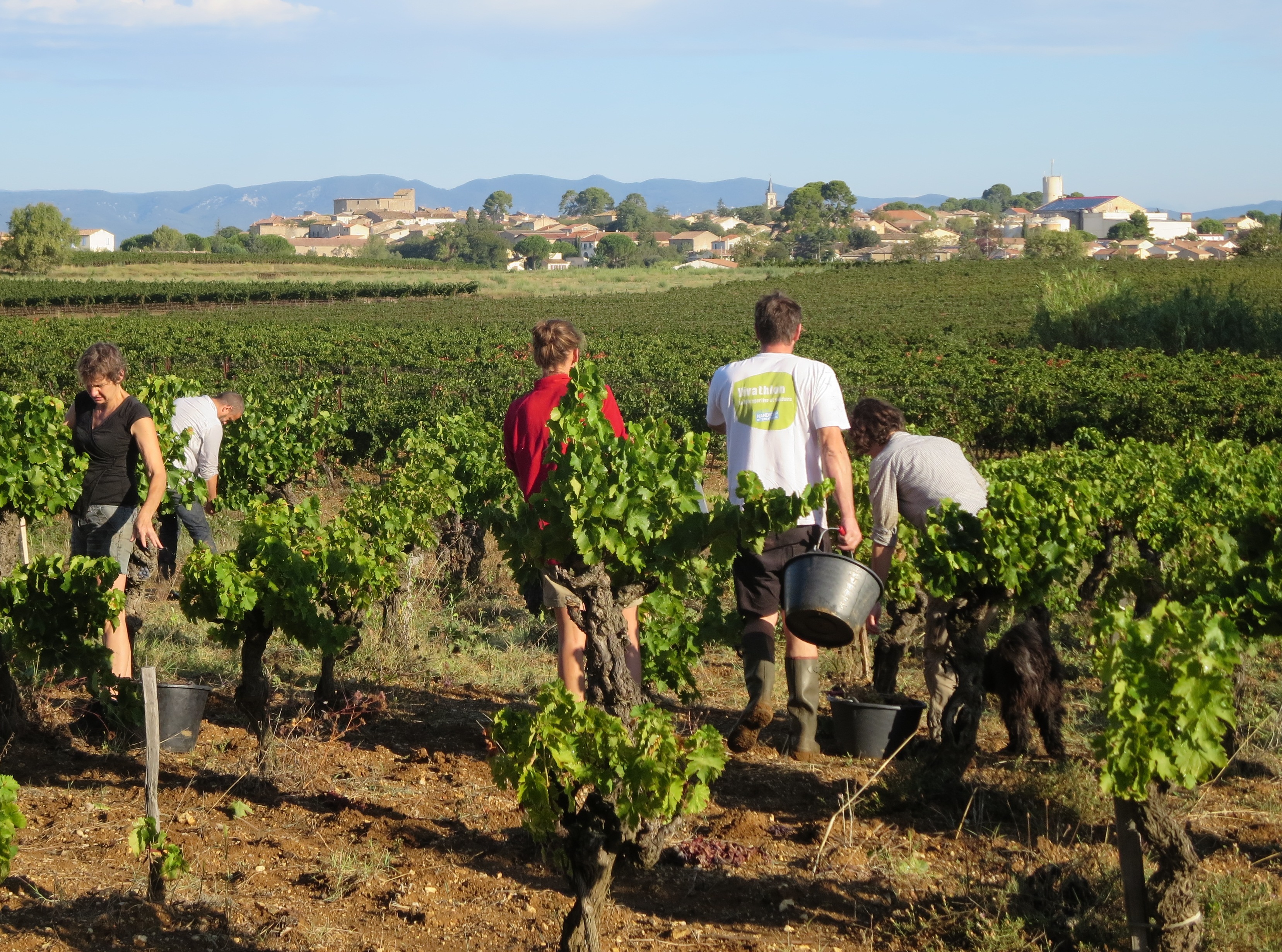
The Mas Coutelou team (left to right) – Annie, Michael, Carole, Jeff and Tina (sadly Michel was not in this photo)
The year has been a trying one for Jeff. The very dry weather through spring and summer has caused a major drop in production, Jeff reckons most parcels are 30-50% down on quantity even if the quality is very good. That is a big burden to bear and must be a financial blow.
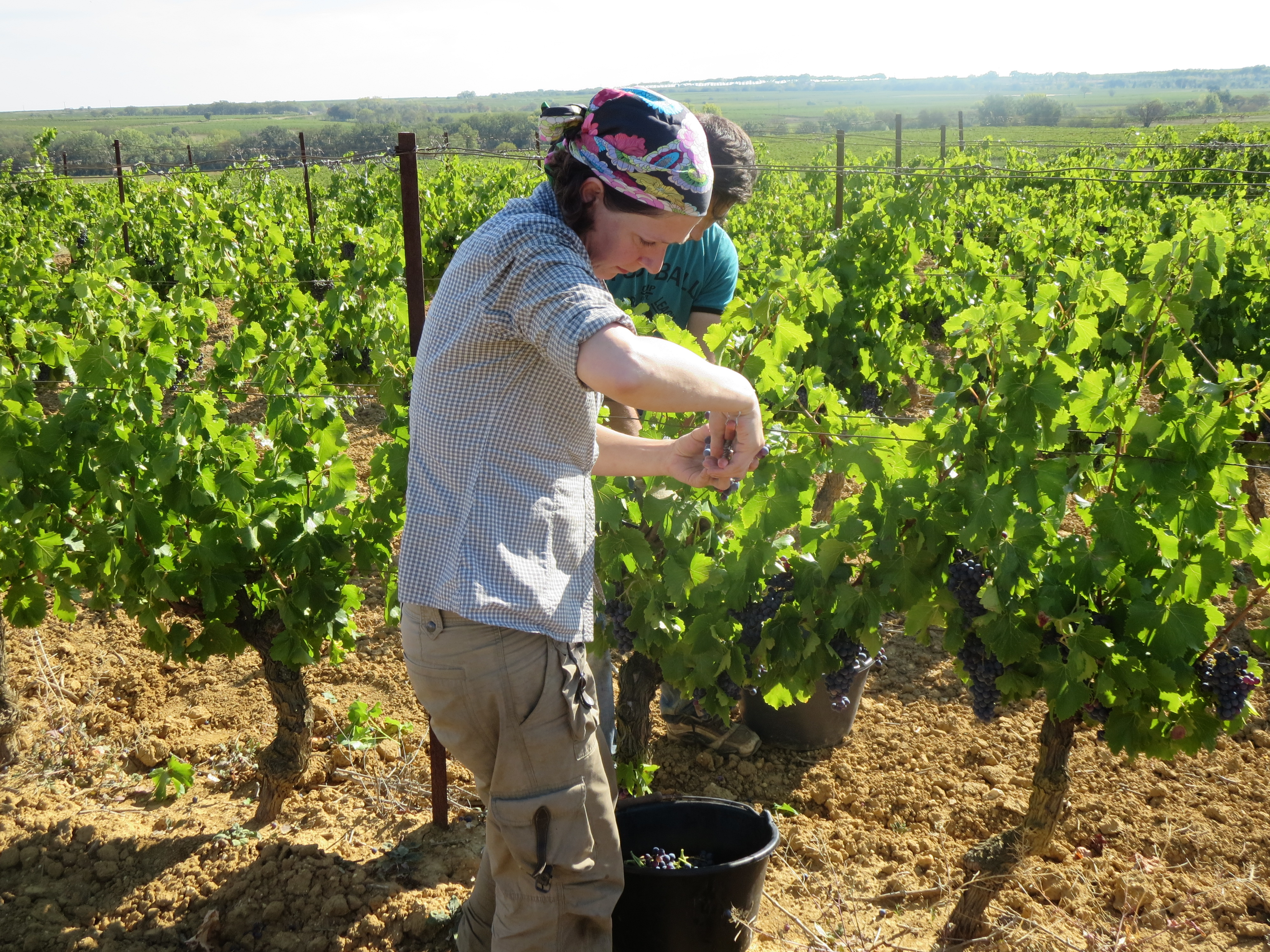
The team which Jeff assembled for the harvest were cheerful, helpful and hard working. Carole has been working periodically with Jeff for 8 years and her experience allied to his leadership meant that work was done according to his wishes but with plenty of smiles and respect. Michel who works for Jeff was also a steady and reassuring presence. Harvest took place this week in hot, sunny weather. The team in the vineyard picked mainly under the stewardship of Carole and the grapes were ferried back to the cellar within half an hour or so of being picked.
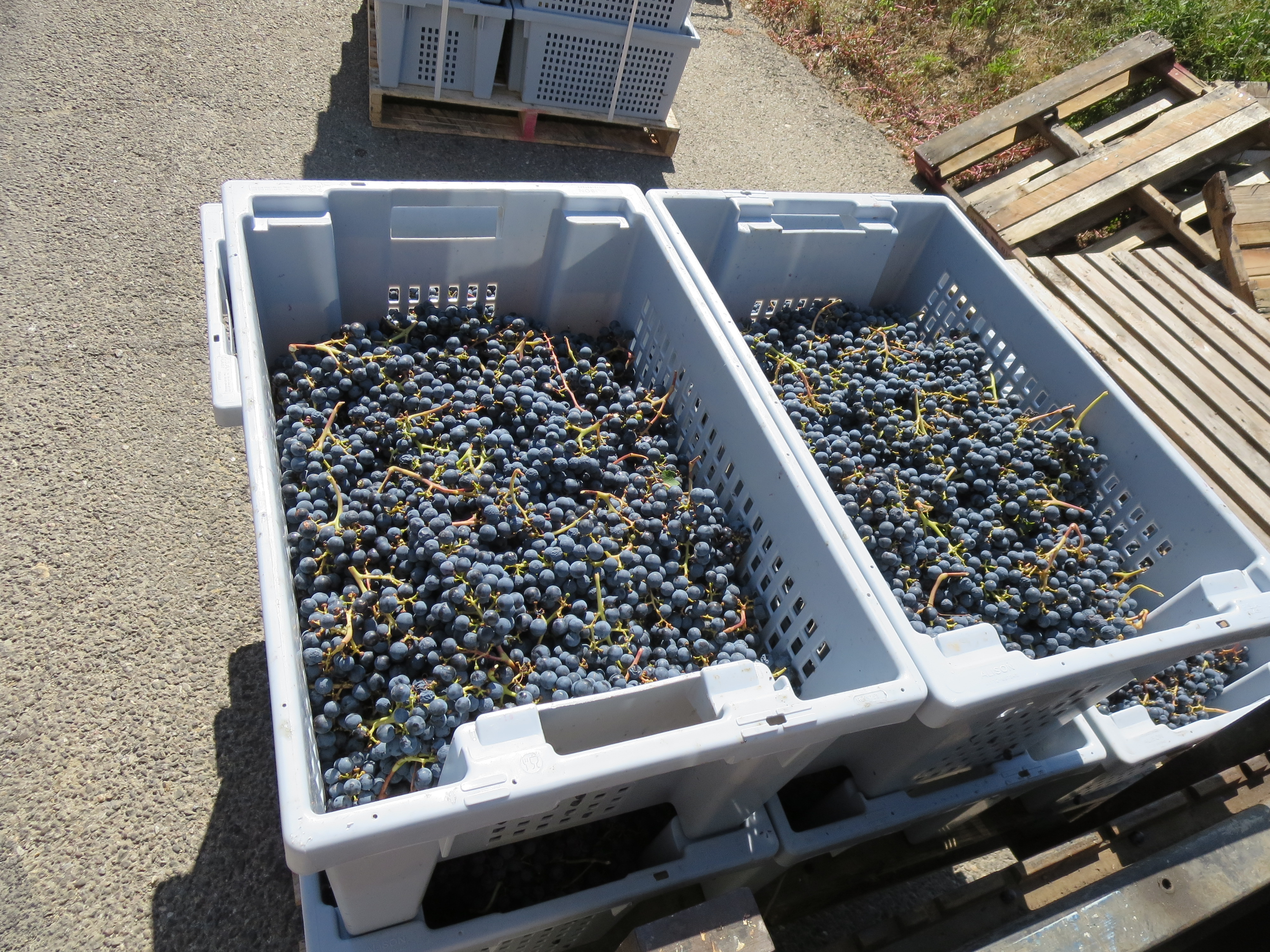
Cabernet Sauvignon grapes, freshly picked
The ‘caisses’ of grapes are then placed on the sorting line. I worked on triage on Wednesday. The grapes are taken out of the caisse and inspected for any signs of disease, under ripeness or foreign bodies such as leaves or snails. Ripe grapes are placed in the égrappeur which destems the grapes.

The destemmer at work
The grapes are then pumped into tank ready to await pressing and to allow the first stages of fermentation. The bunches which were taken out are then checked, and healthy grapes added to the tank. This is slow and careful work, after all Jeff wants only the best quality grapes to go into his wines. The grapes are given as light a pressing as possible.
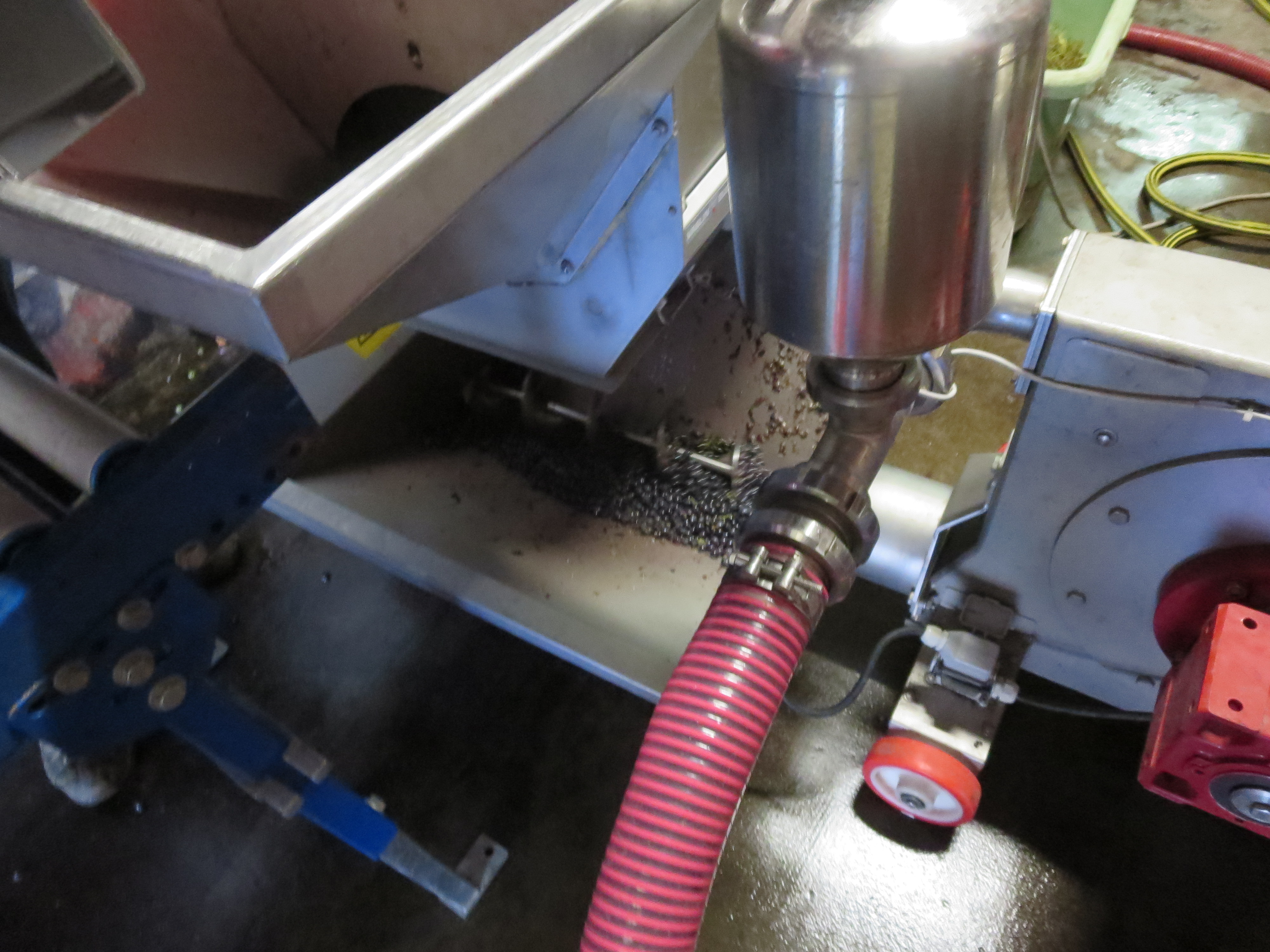
Healthy, ripe Grenache grapes being pumped to tank
Jeff uses a range of containers for the wines, cement, stainless steel and wood. He is seeking neutral influence in the main as he wants the grapes to tell their own story rather than, for example, new wood. After the grapes have settled and begun to ferment they are pumped into another tank and some of the skins, pips etc are removed as they pass through very broad sieve like stainless steel. Jeff checks the wines at every stage to measure the stage which they are at, alcohol levels, sugar levels etc
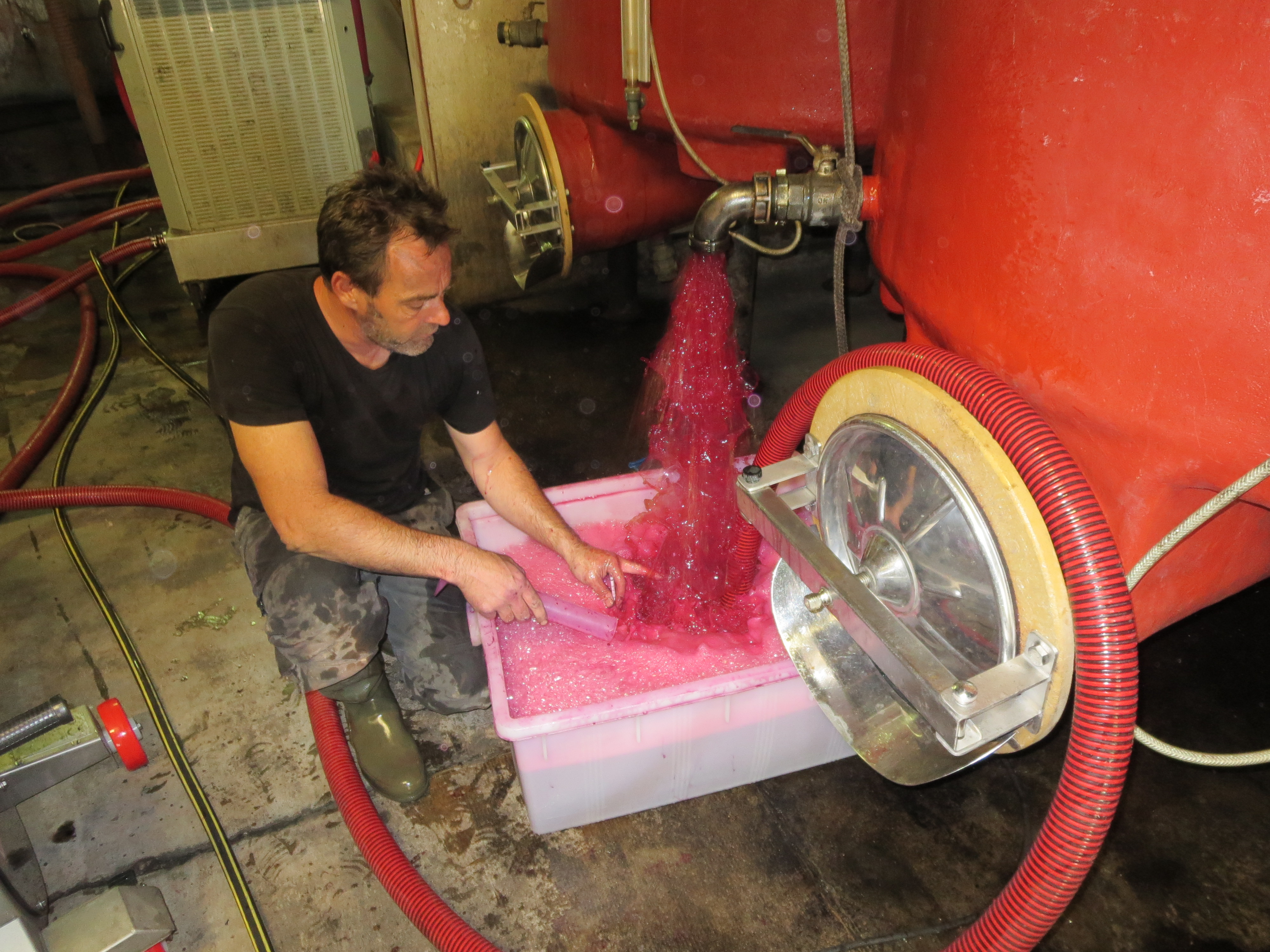
Jeff testing the first stages
After that initial pumping the wine is allowed to settle and the solids which are left in the wine begin to rise to the top of the tank as they are lighter than the grape juice. This produces a thick layer or ‘cap’ (chapeau in French). The skins in the cap though contain flavouring and colour for the wine and so it needs to be mixed with the juice. The cap has to be physically pushed down into the juice.
The wines are also ‘pumped over’ (remontage) every day. This means the red wine in the bottom of the tank is pumped over the top of the cap to moisten it and to extract the required amount of colour, flavour etc. This requires the working of an expensive but vital pump to caress the wine rather than force it. This pump works non stop all day (there are back ups!).
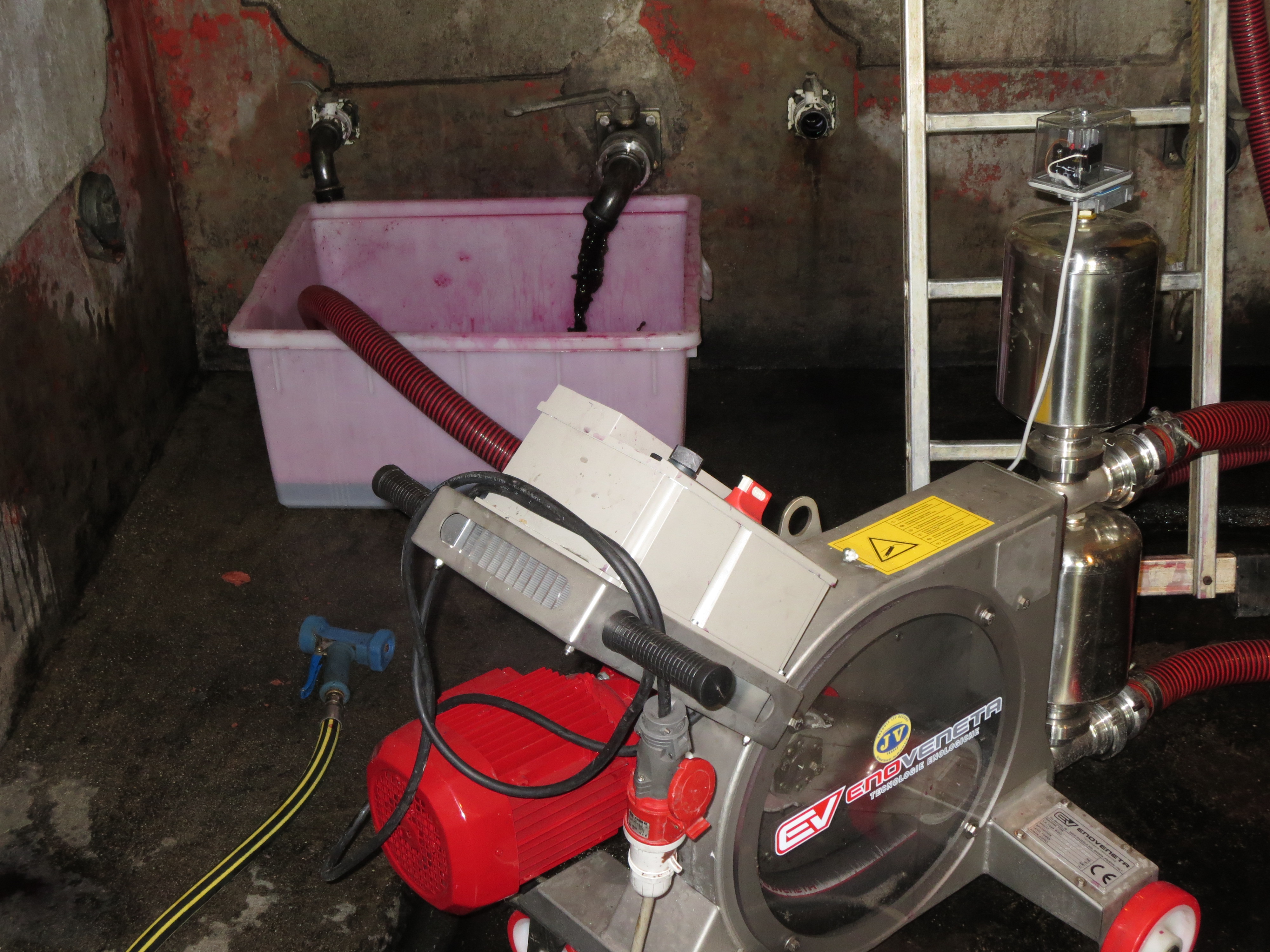
The (very) expensive pump
As the harvest progresses more tanks are filled so more and more pumping over takes place. The cellar begins to resemble a plate of spaghetti as hoses run from one tank to another. Yet another machine also chills the wine slightly or heats it up if fermentation needs to be encouraged. This machine is in the top right of the photo underneath.

How does Jeff keep all these sorted in his head?
All the while Jeff tastes the juice which is gently turning into wine and testing its progress using equipment such as a refractometer and other scientific equipment. A real mix of personal judgement and science mixing to best advantage.

This continues until Jeff is happy that the wine is right. Several weeks of pumping, testing, tasting – an enormous task. There are so many pieces of information for him to keep in his head about the development of each cuve, an amazing effort which leaves him with a definite air of fatigue during the very enjoyable lunches and the post work drink.
So what of the Pasteur quotation? Well as I was working (oh yes I was) two things really struck me apart from the sheer physicality of lugging cases of grapes, hoses, pumps and various items of equipment.
Firstly, patience. Jeff waits patiently for the grapes to be just right before picking, he wants the best and is prepared to give nature the time it requires to deliver its best. In the cellar he nurtures each cuve and each drop of wine, each stage of the process takes place when the wine dictates to him. The temptation to rush or to do things because it suits the winemaker is resisted with determination and confidence. He knows because he produces great wines that if he waits he will produce more great wine.
Secondly, cleanliness.
Jeff makes natural wines and for the last couple of years without the use of sulphur to stabilise the wine and help it to fight dangers such as oxidation. To do so everything has to be clean. At every step equipment is washed down and cleaned. Again and again and again. This is drilled into all of us. The risk of harmful bacteria is reduced by hyper vigilance and cleanliness. Jeff told me that for each litre of wine produced he estimates that he uses a litre of water for washing and cleaning. I can believe it and in fact it must be much more. Now before I upset other winemakers who clean rigorously and take every care with hygiene I am not claiming that Jeff is unique in this. I was just amazed at how much washing and cleaning takes place. Hence my Pasteur quotation.
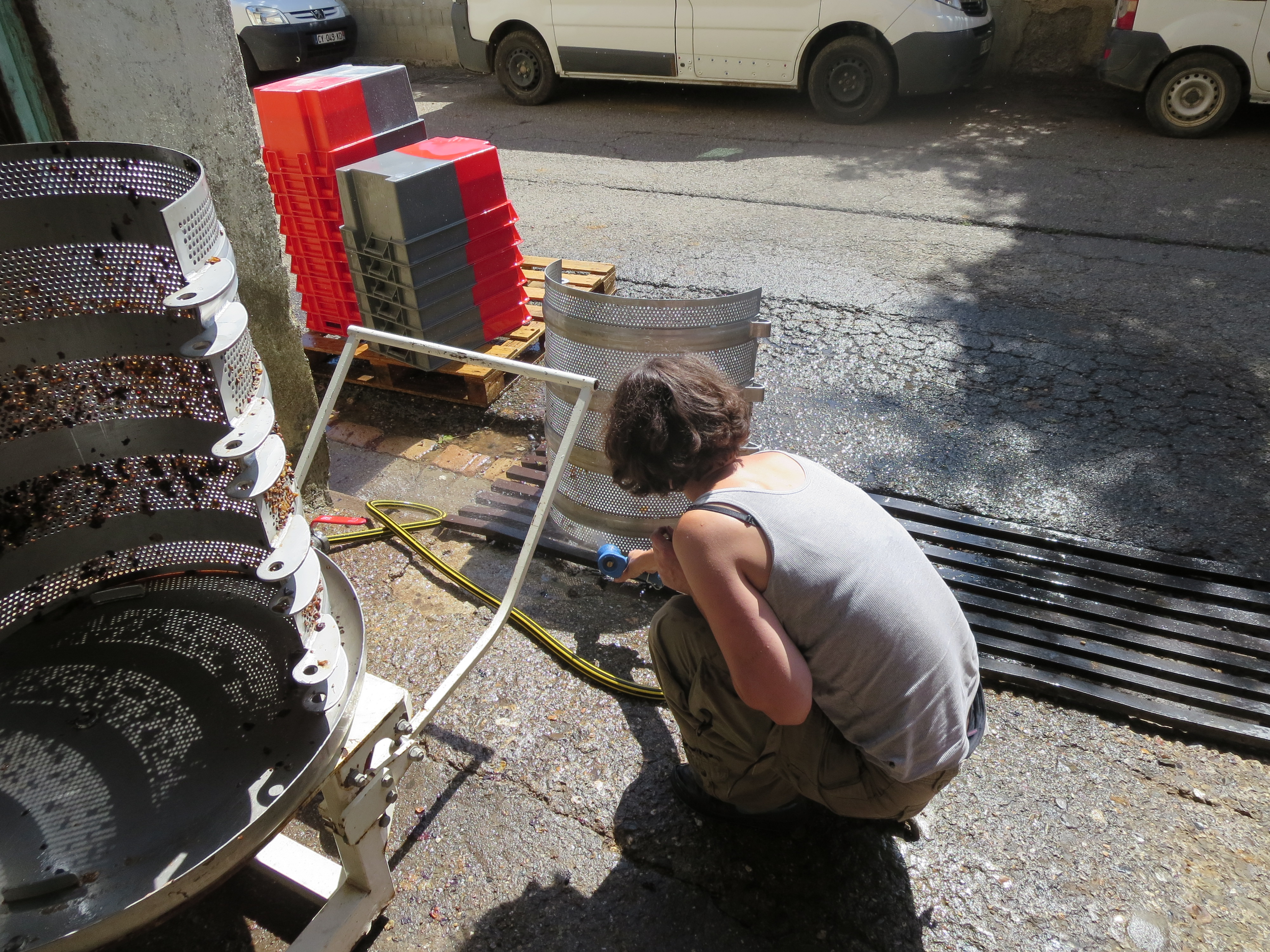
Cleaning
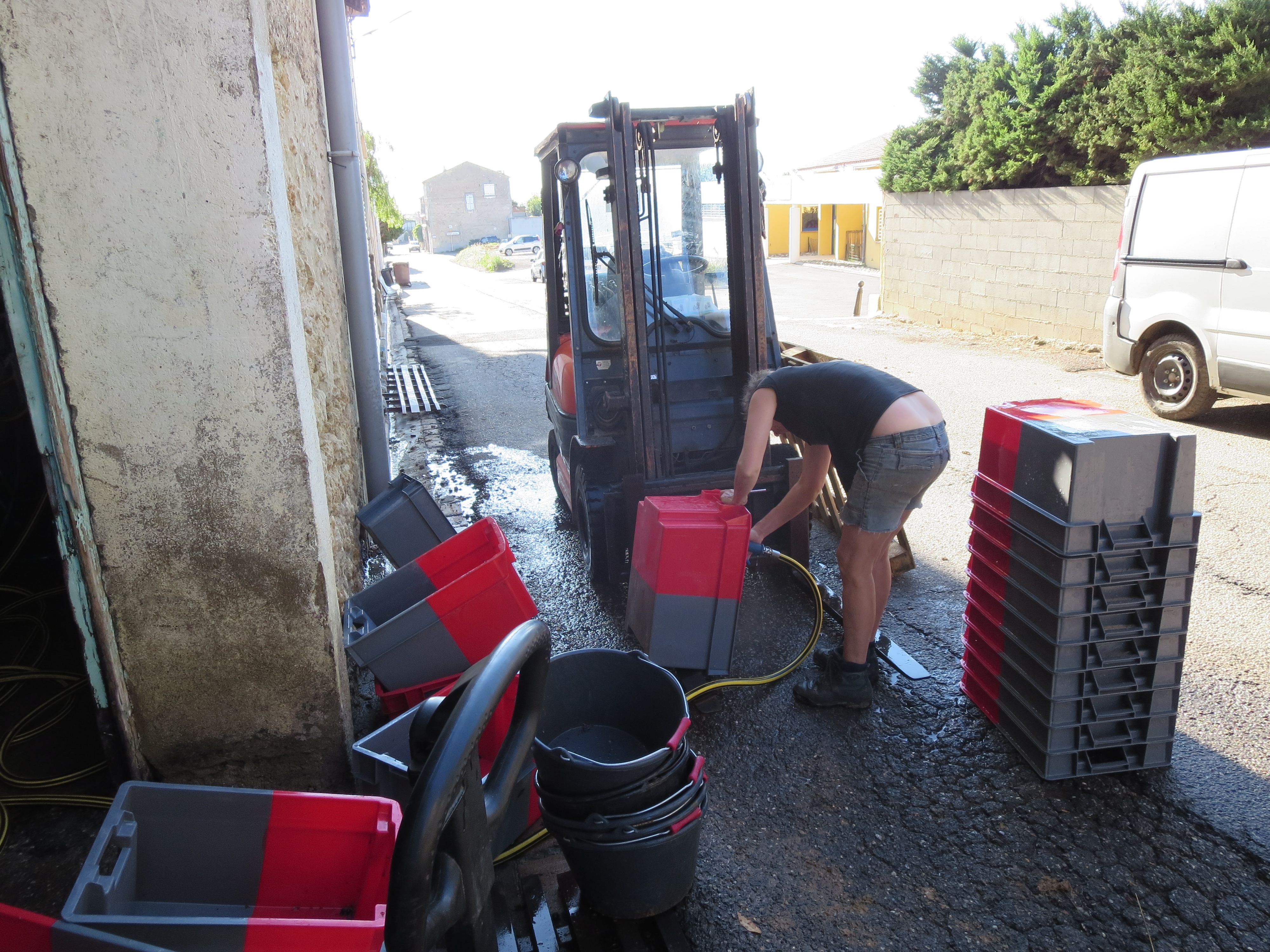
More cleaning

And, yes, more cleaning
My other job this week was pressing some grapes for some very special wines. More of that in the next post.

Happy in my work




 amarchinthevines