Article #499
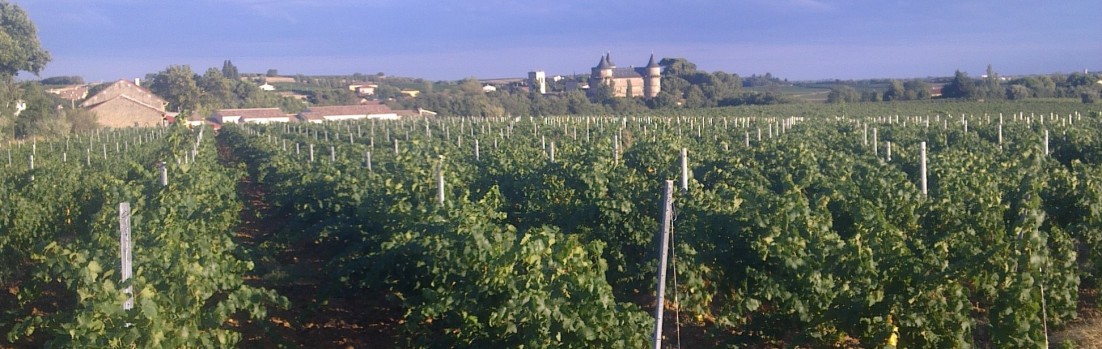
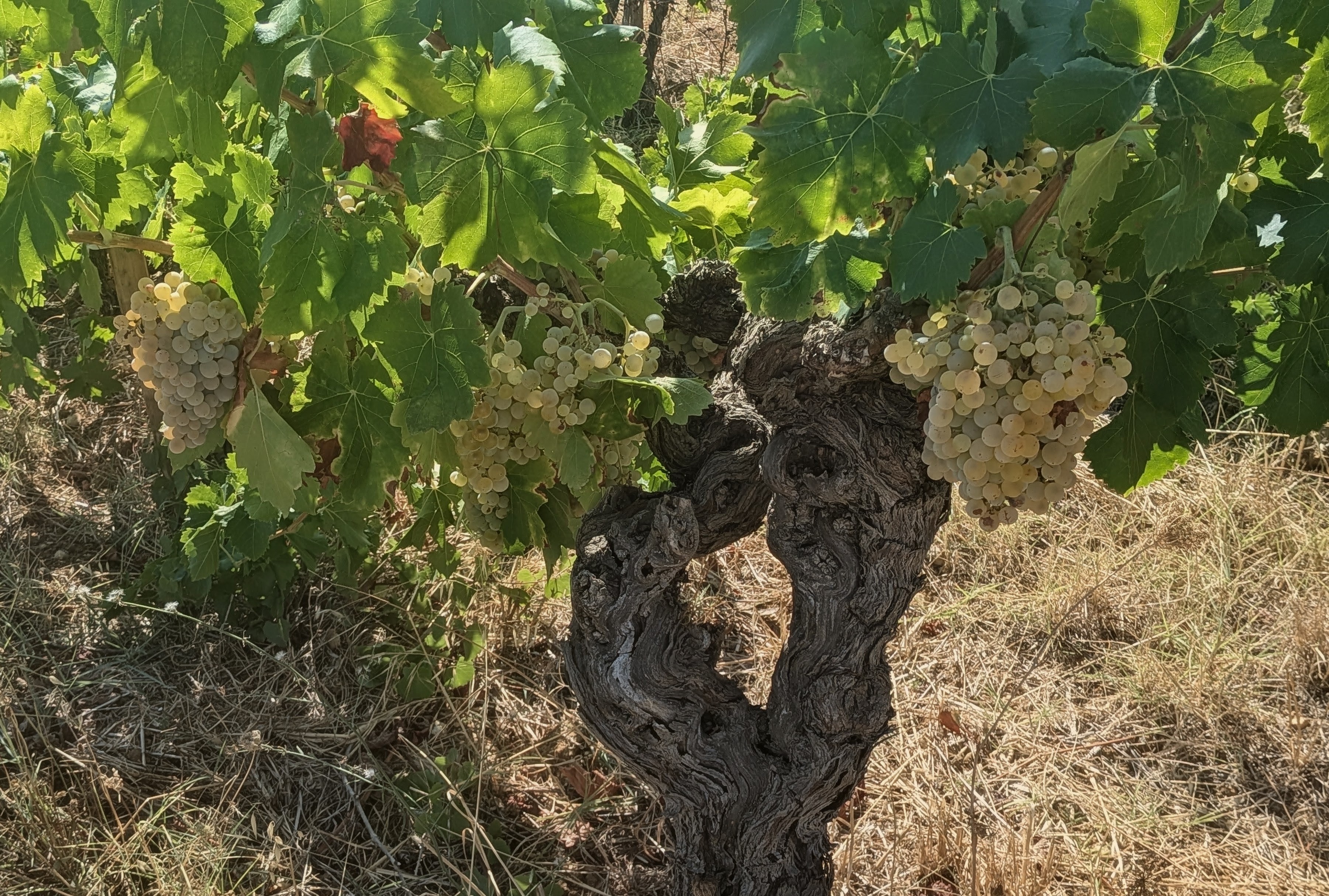
And so, just like that, the picking is done, vendanges over. Thursday 3rd brought another good mix of grape varieties and from different vineyards. It started with Macabeu, perhaps the most planted of the white grapes now along with Clairette. This was from the Sainte Suzanne extra vineyard given to those 2 varieties. The Clairette we picked on Monday. As I said then the Macabeu had suffered a bit after a wet winter did not allow pruning and treatments until May. It was headed straight to the direct press yet there will be good wine from it no doubt.
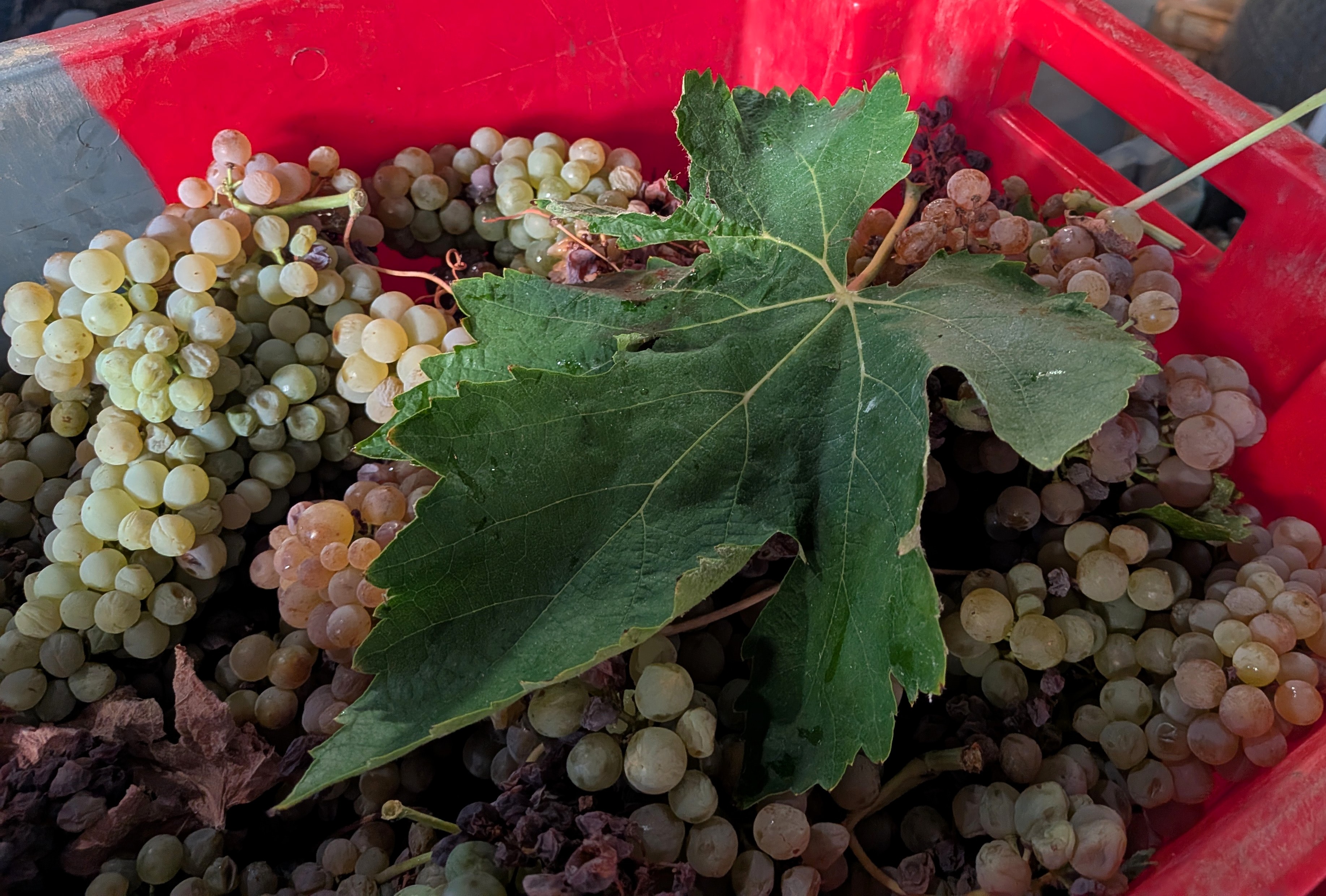
The pickers then moved a short distance to my favourite vineyard, Rome. Rome is planted with 40 year old Cinsault along with all three colours of Grenache and different types of Muscat. The Cinsault was excellent, the older vines producing smaller bunches and berries but with more flavour and concentration. The white grapes were mixed in, a complantation or field blend, a wine of place rather than grape variety.
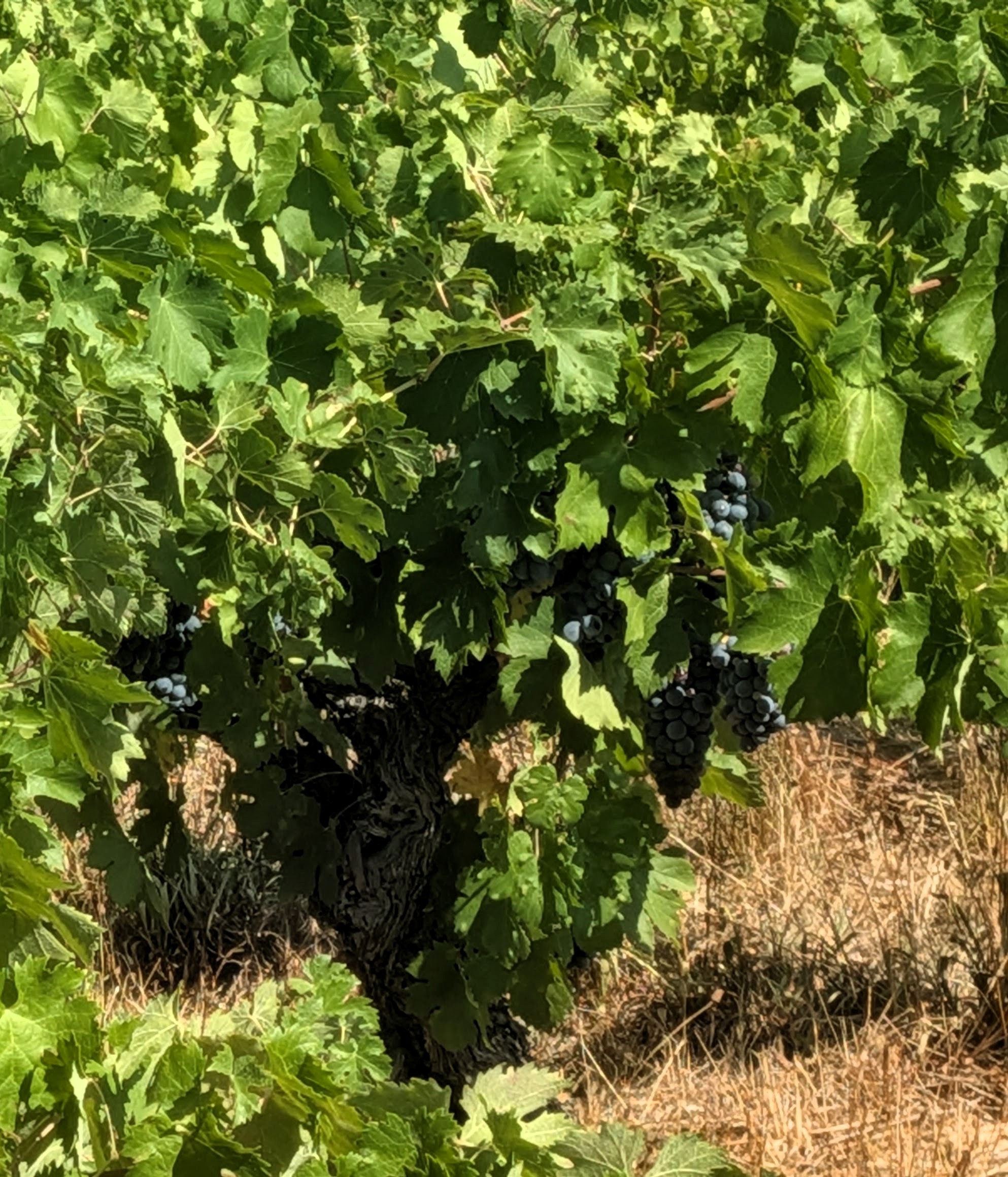
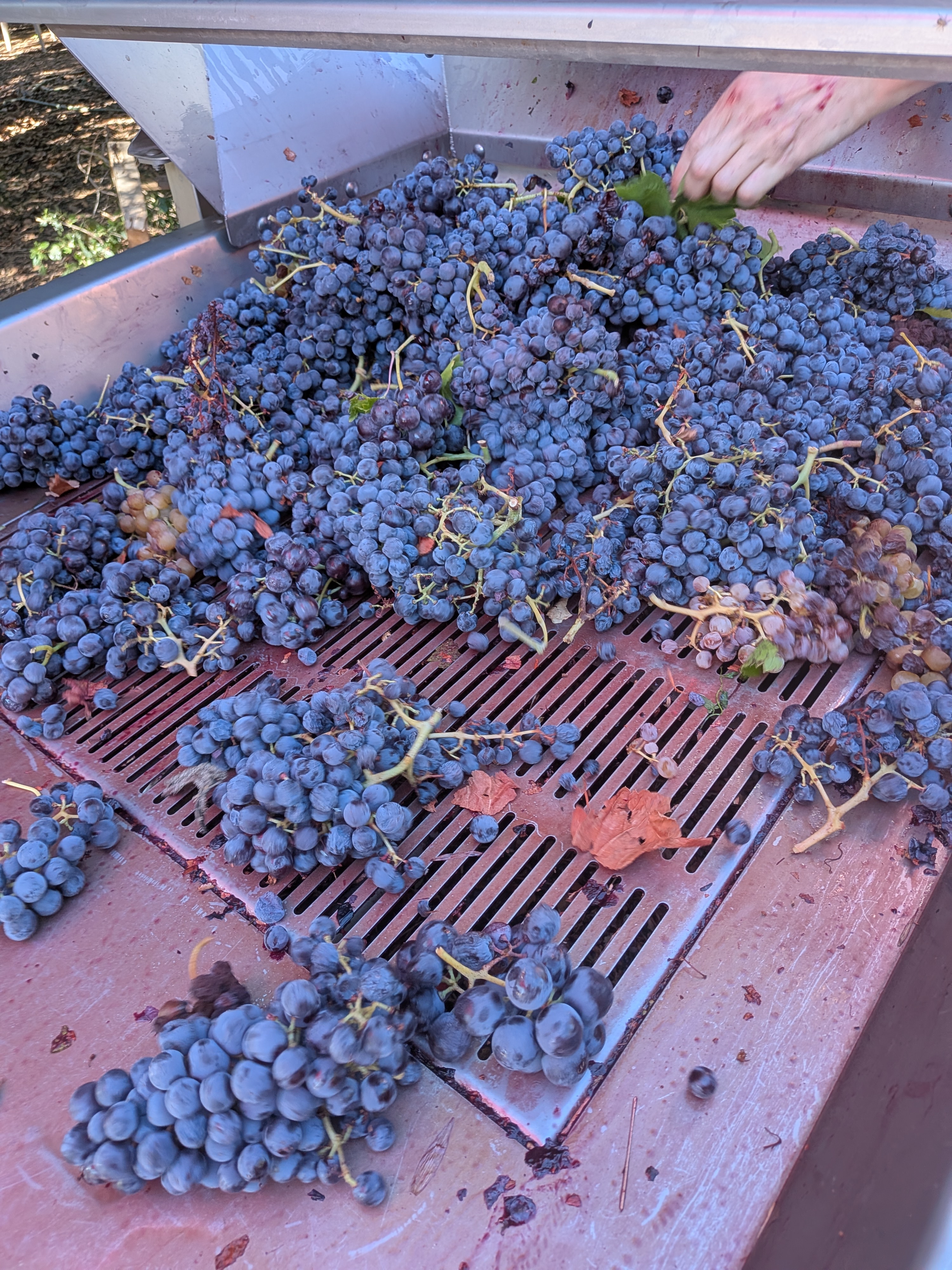
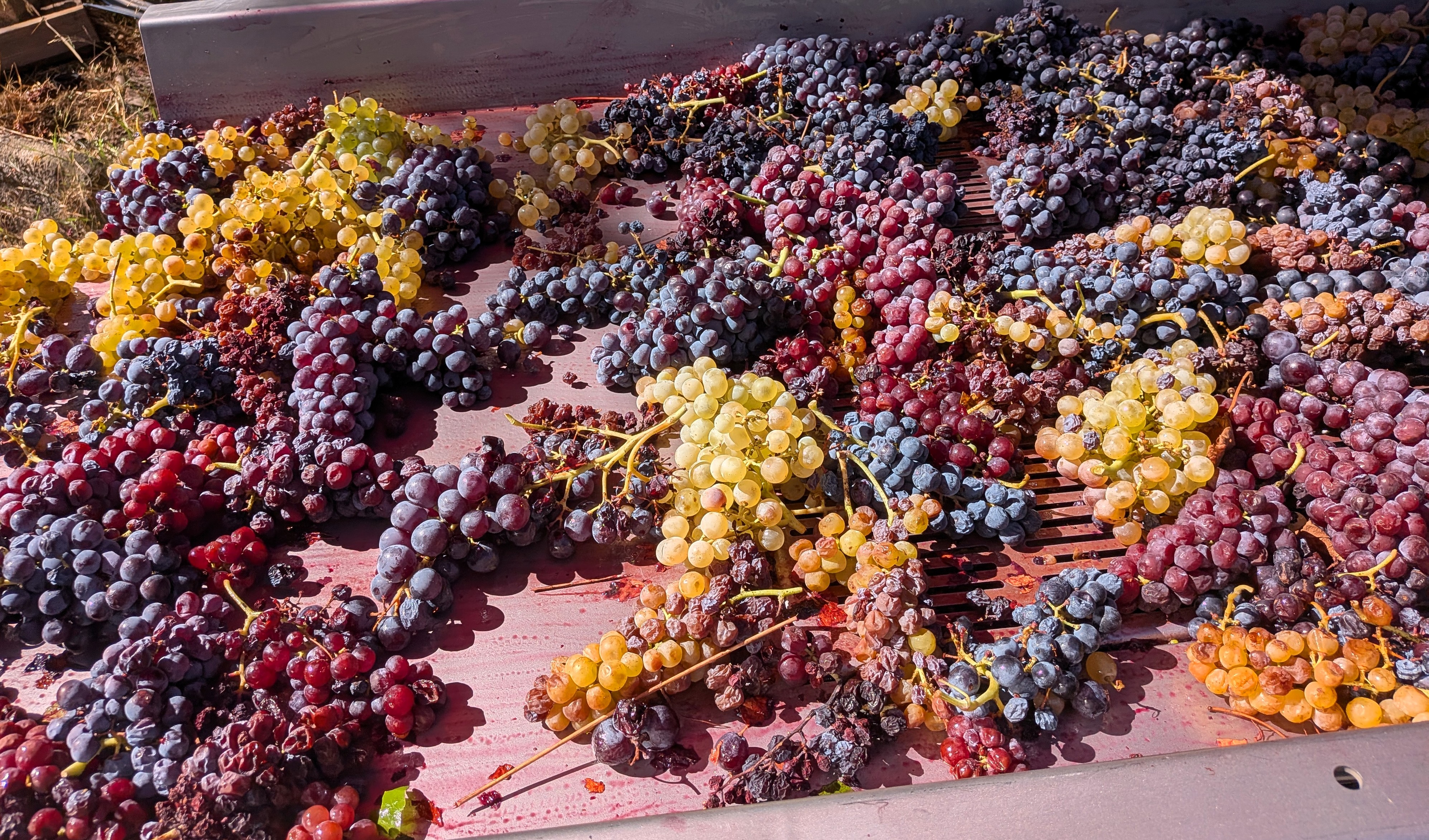
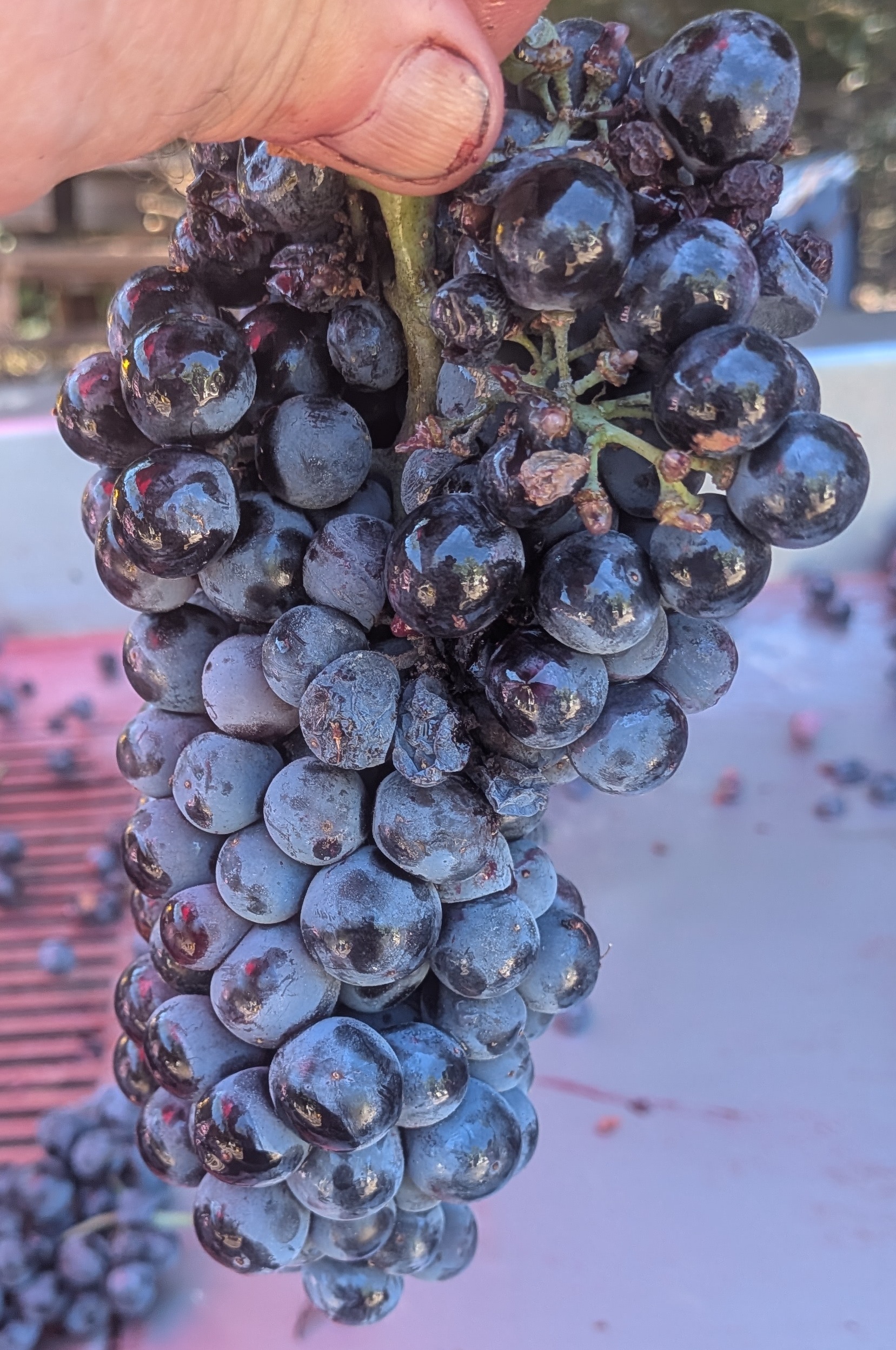
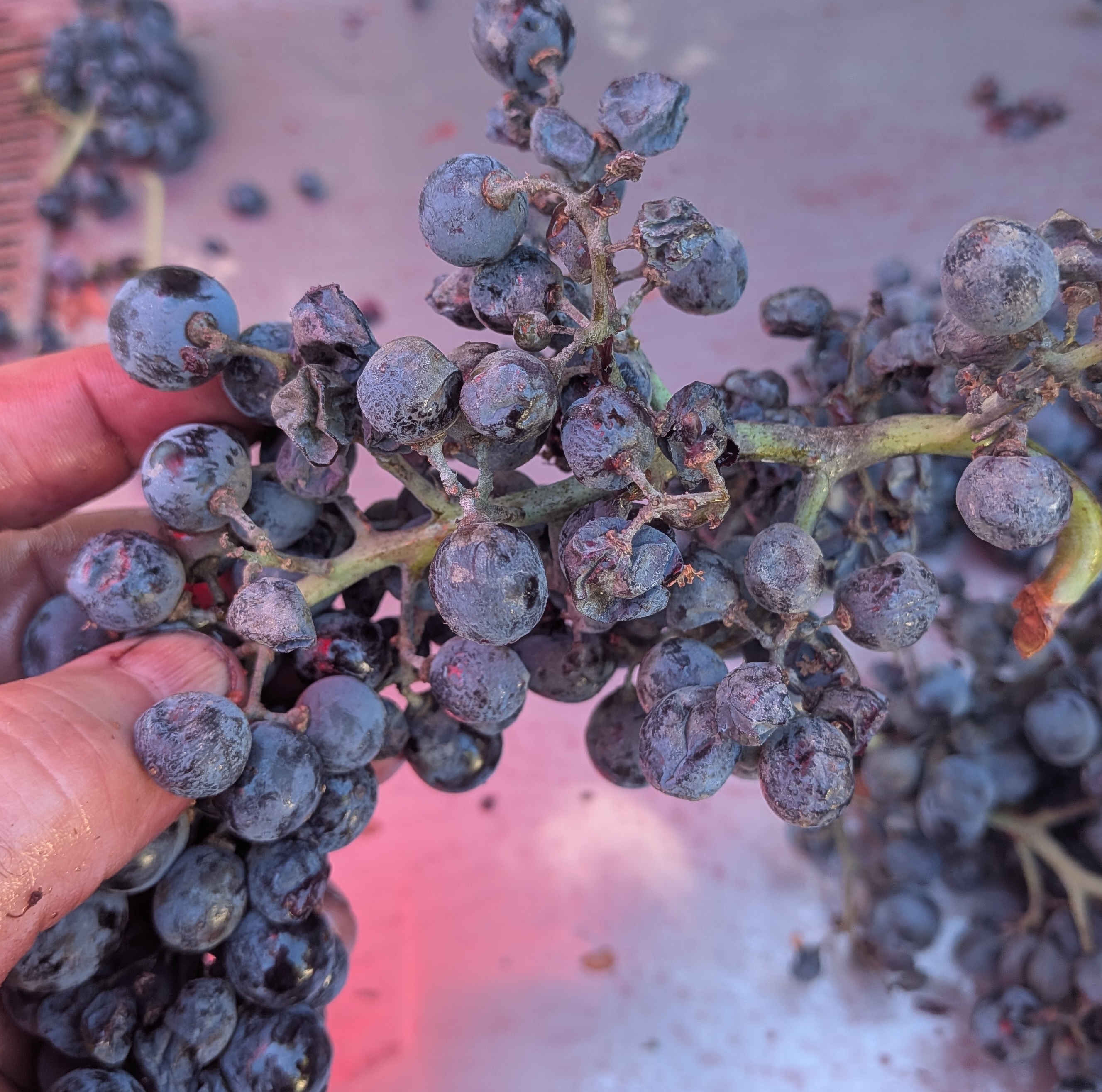
In the afternoon the pickers moved to Rec D’Oulette and the Carignan Noir. Last year this was, in my opinion, the best of the bunch so to speak, lovely fruit which came as a surprise to Jeff Coutelou who had been thinking of grubbing up the parcel. Unfortunately this year the Carignan showed that 2025 was not to be repeated. This used to be a success story, producing the excellent Flambadou wine which I love as it ages. In recent years though mildew in both forms has damaged the vineyard more than most and that is why Jeff may well now get rid of the vines. The grapes were small and there were a few bunches showing oidium (powdery mildew). This was the pick which had to be sorted most carefully through the vendanges.
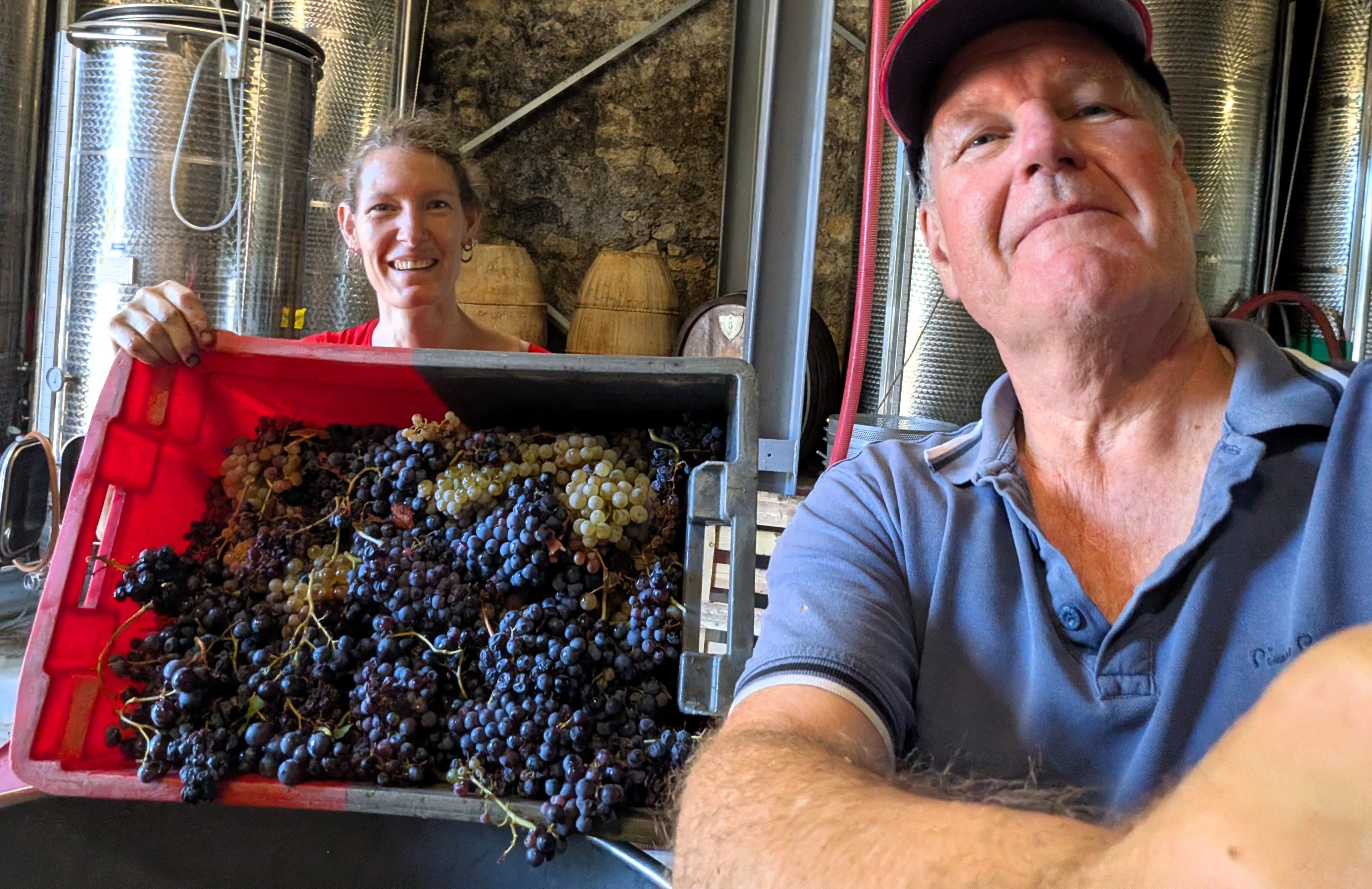
About a thousand vines remained, Muscat, Grenache Gris and various whites. However, the work was now based in the cellars. The grape juice is in tanks. The whites head to stainless steel, the reds to cement tanks and on to stainless steel. Fermentations follow and the wine is moved to be aged in various vessels, amphorae, concrete eggs, barrels or remaining in steel. Watching the yeasts at work is always fascinating, transforming grape juice into delicious wine.
So, Jeff, Flora, Gils will be hard at work with pigeages and soutirages, making sure the wine is getting full benefit from the skins and grape must. They will be moving wines from one tank to another, making sure that dead yeast cells and the leftover skins and stalks are left behind and removed. The glamorous work of picking is over, the hard work of vinification will be longer and harder in many ways.
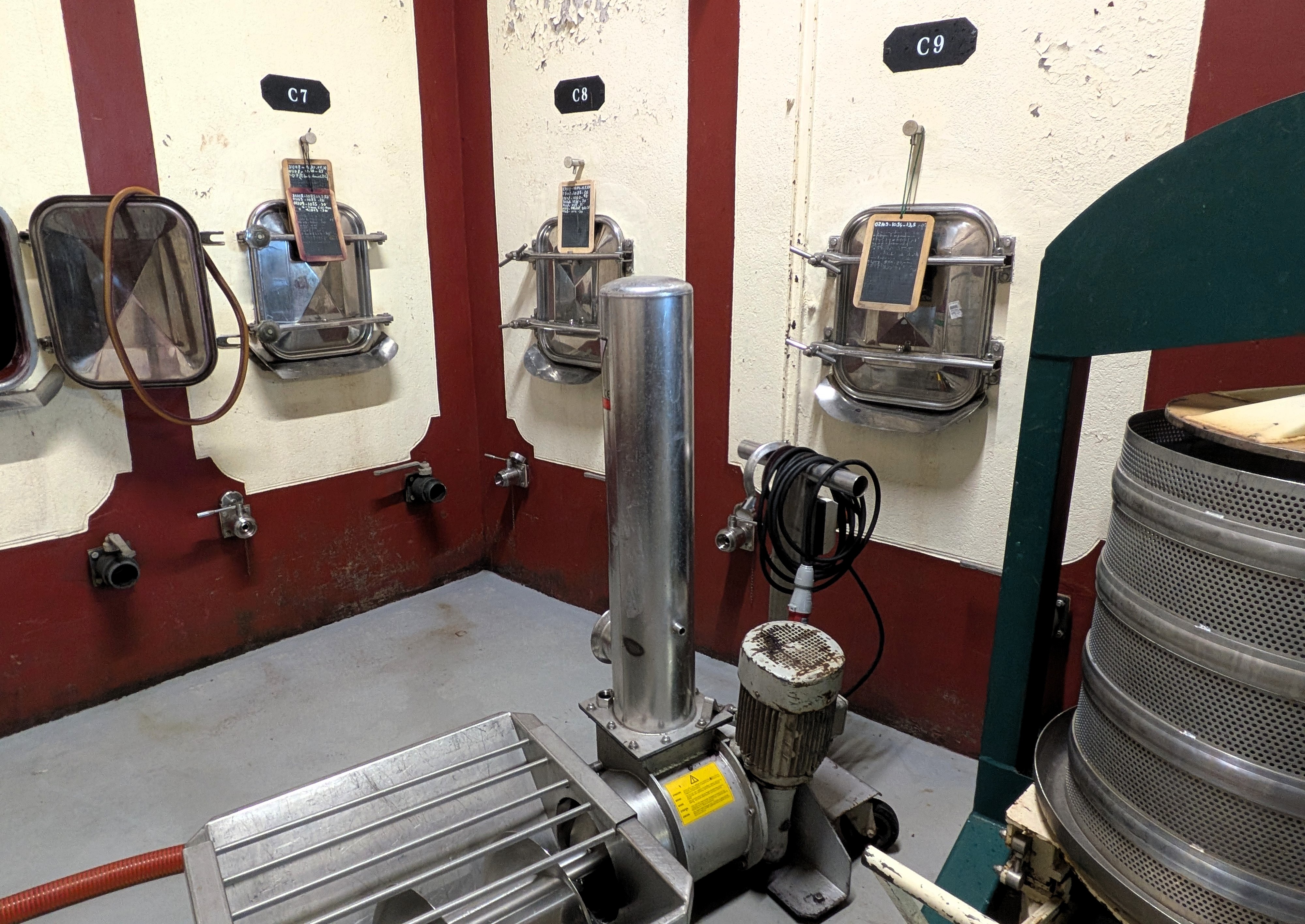
An empty concrete tank to the left whilst the chalk boards show the development of the wines and their fermentations in the others. To the right is a basket press for smaller quantity wines. In the foreground a marc pump, very forceful and noisy which shifts not just juice but the skins and stalks too.