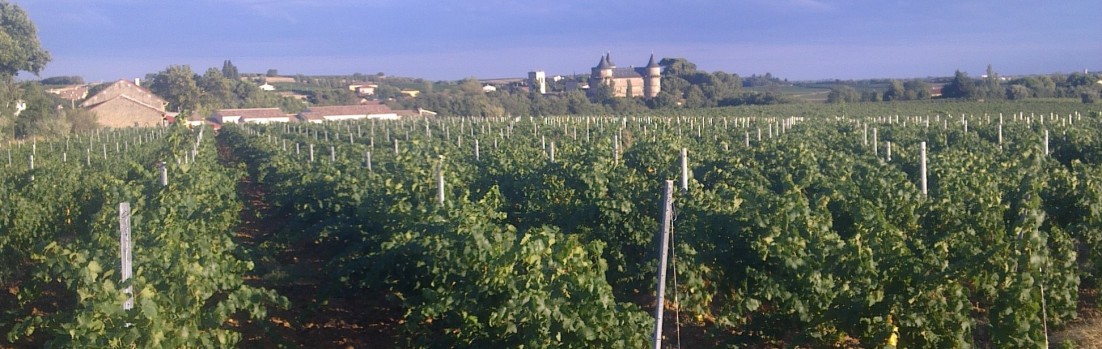
En francais ci-dessous
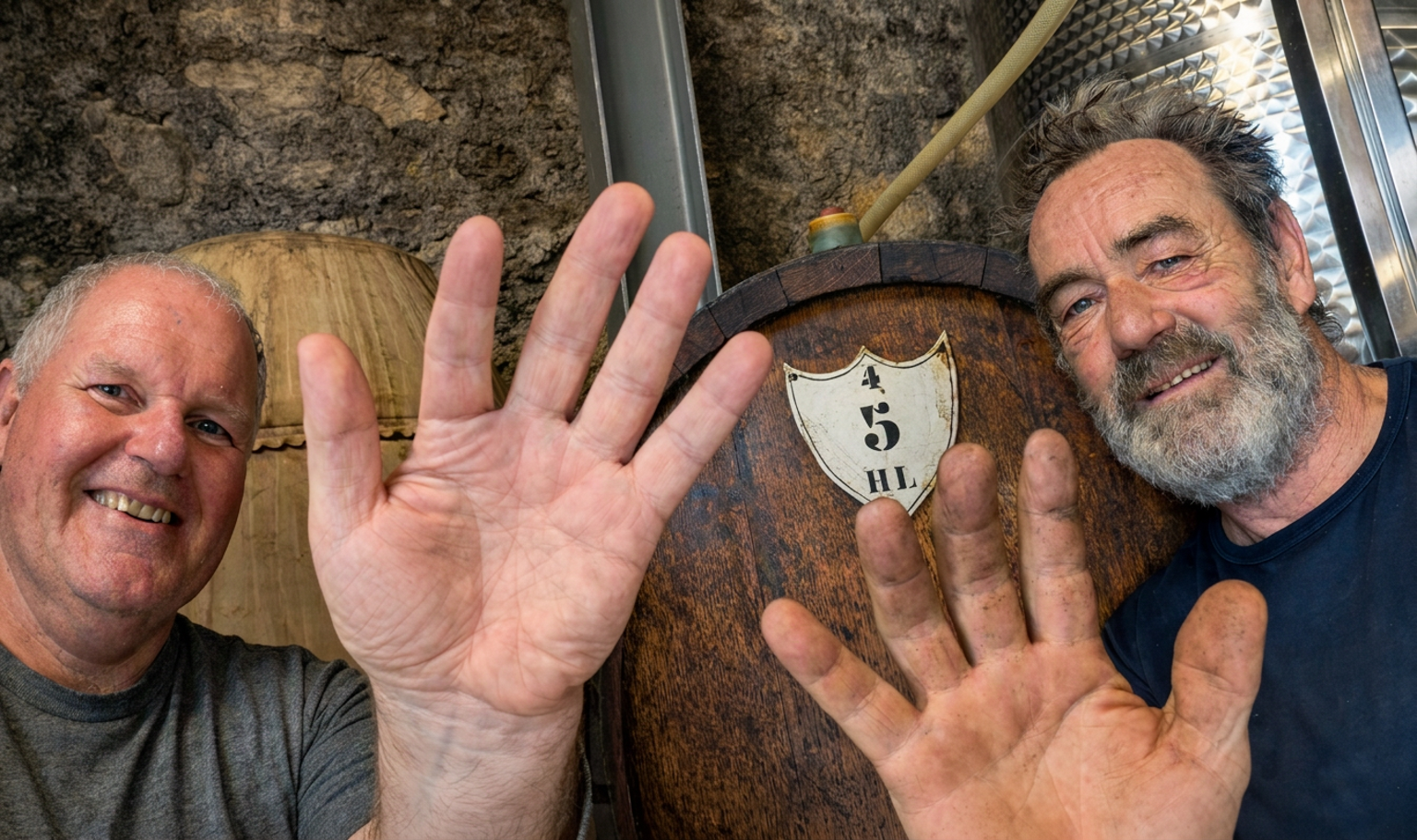
It is 15 years since I first visited Jeff Coutelou in Puimisson, 12 years since we moved to the area and I began to spend much of my time at the domaine. On August 19th 2014 I wrote the first, brief article for this blog. This article is the 500th, time to reflect, celebrate and look forward too.
When I told Jeff that the 500 was approaching he asked me to think about what we could do to celebrate it. I suggested an interview and, as vendanges began to wind down, he took me out to lunch and we carried out a fascinating chat. It contained so much information that I will report most of what he said in the 501st article!
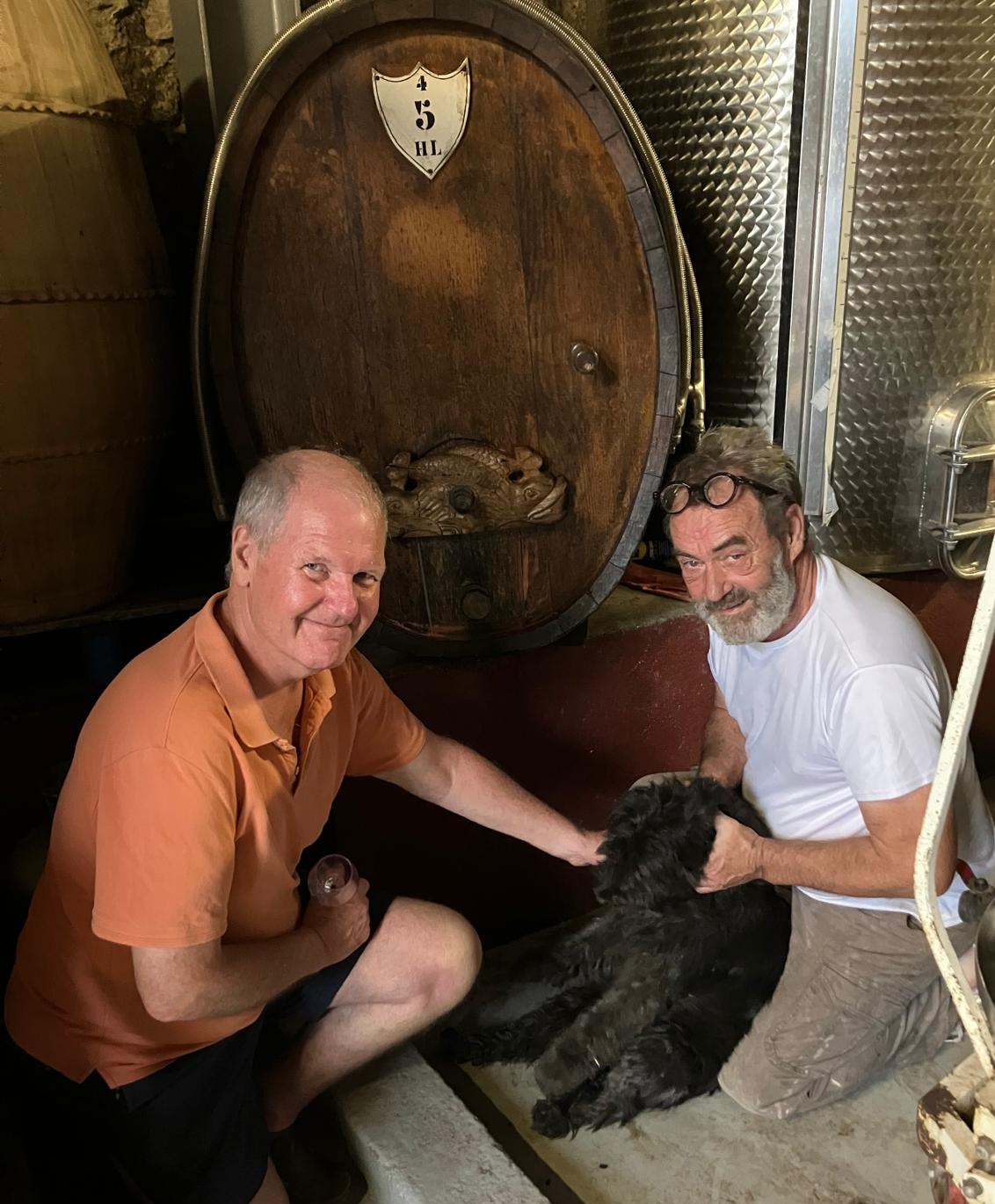
In the meantime Jeff had another idea. A few months ago he purchased a foudre, a big wooden container to age wine. Jeff became convinced by the potential of a foudre when he tasted wines made in them by the likes of Michel Gahier in the Jura and Tessa Laroche at Domaine Aux Moines in Savennières. Nothing unusual you might say but this one is over a hundred years old. It came from Alsace where a winemaker was selling up. His family had used the foudre all that time and so the wood carries the memory of so many wines and so much history. After the 1870-71 Franco – Prussian War Alsace was seized by Prussia to be part of the new country of Germany. The tonnellerie (barrel maker) did not want to be German so moved to Nancy but when Alsace returned to France following World War 1 the business returned to its origins. The foudre they produced remained in the region until its move to Puimisson when its story convinced Jeff to buy it.
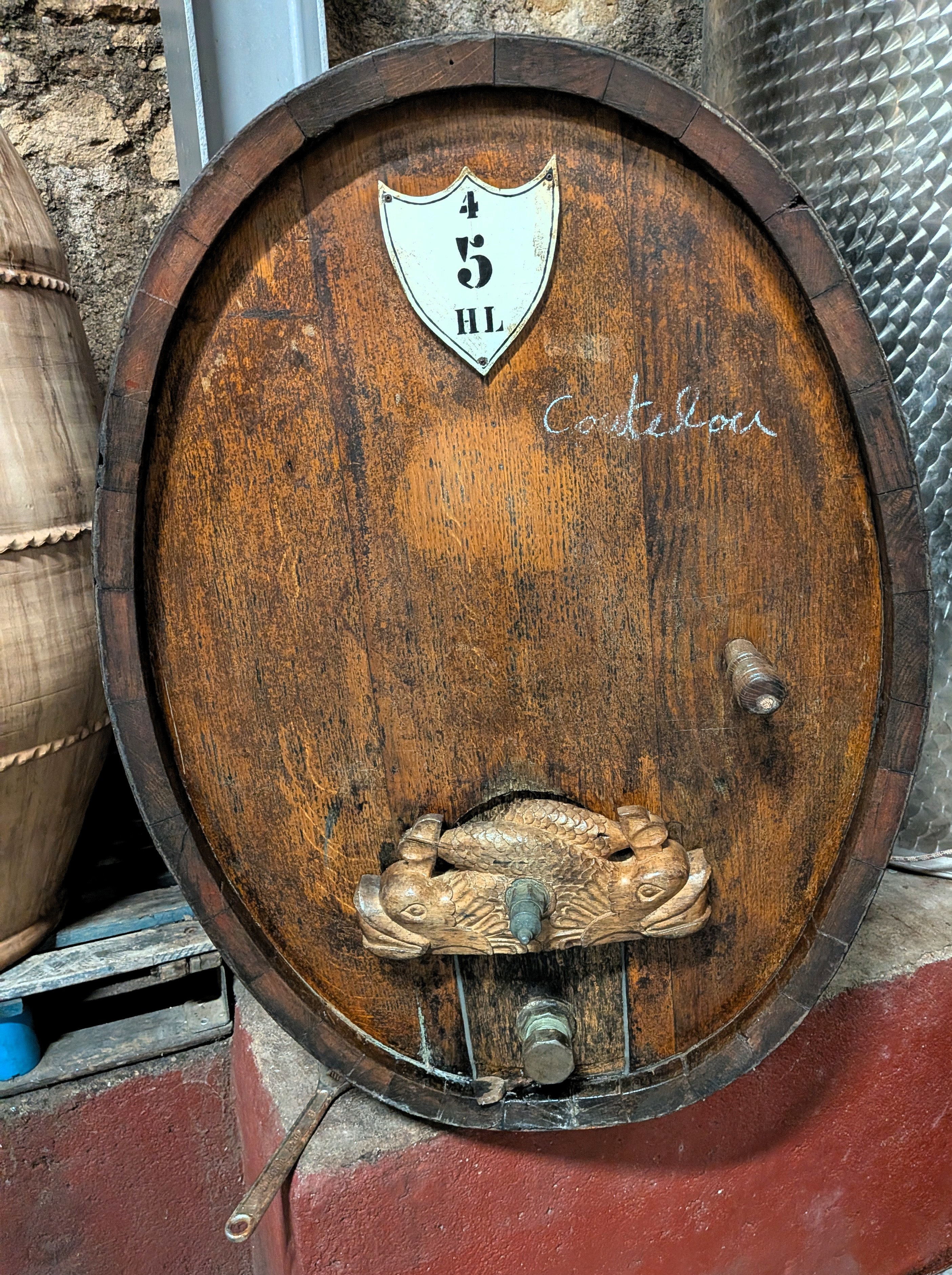
By coincidence this particular foudre holds 500 litres of wine, the perfect match for my landmark article. Its size means that the wine has lighter contact with the wood than the standard 250 litre barrel. He first tried it out on a 2024 Grenache Gris which had not finished its fermentation. Moved to the foudre the sugars finally relented.
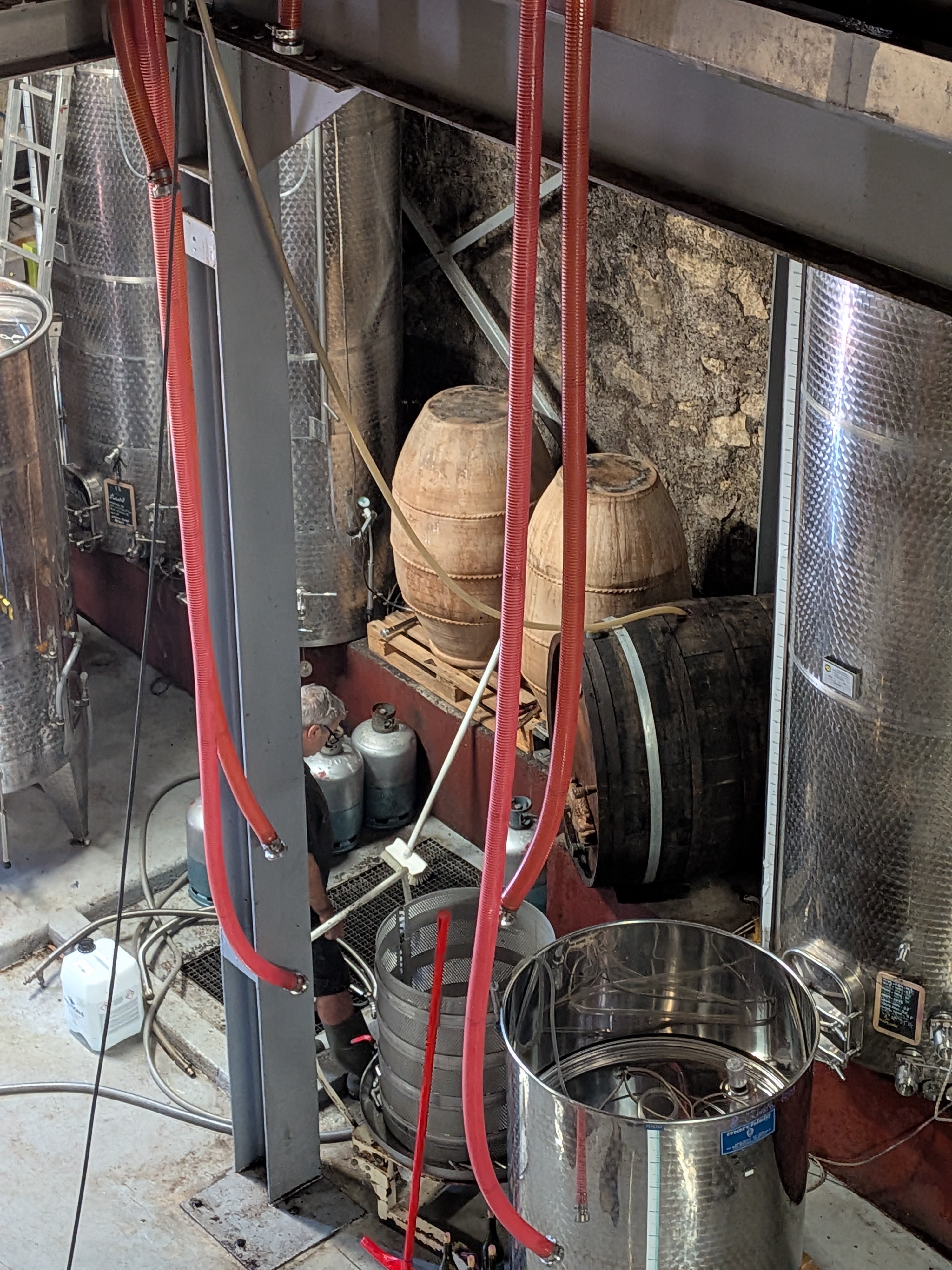
After some of the white wines completed fermentation in stainless steel tanks Jeff asked me to choose between two of them. The Aramon Gris, Carignan Blanc blend sounded more interesting than the Macabeu of Sainte Suzanne but on tasting them I, and everyone else, agreed that the Macabeu had the structure and body which would most benefit from wood ageing. So, using suction and a simple tube, Jeff filled the foudre with the Macabeu where it will be influenced not just by the old wood but by all that history of wines and times past.
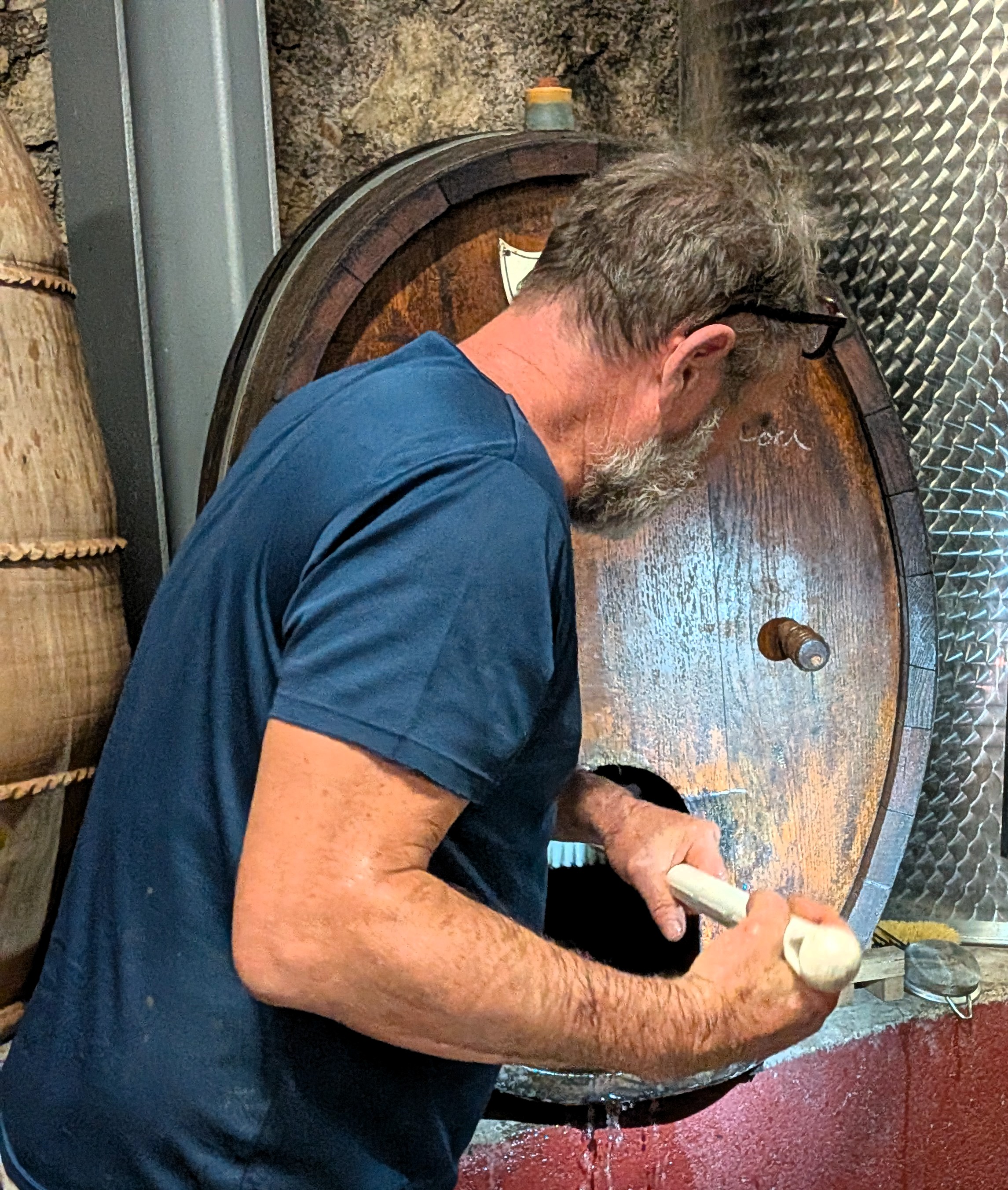
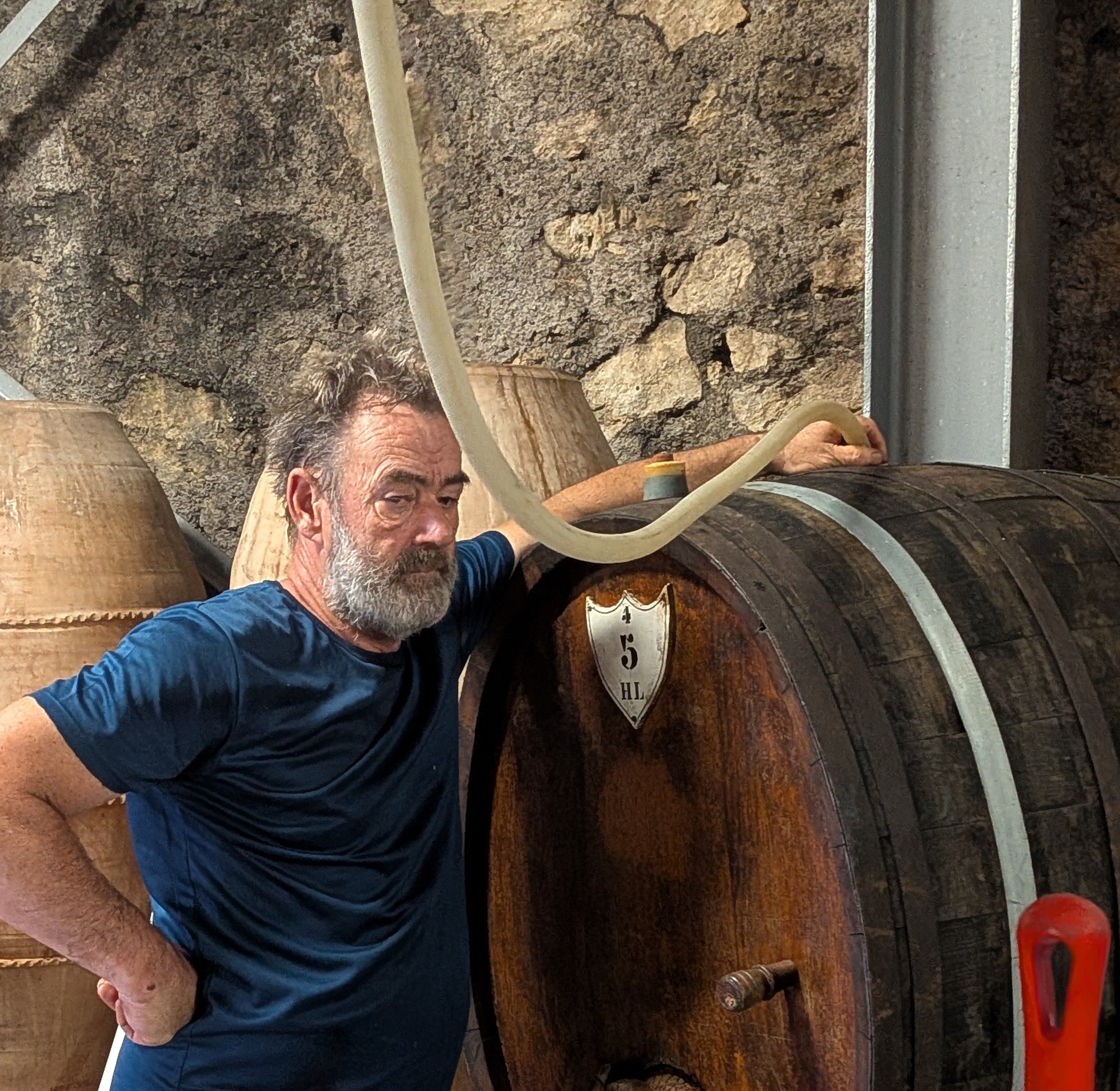
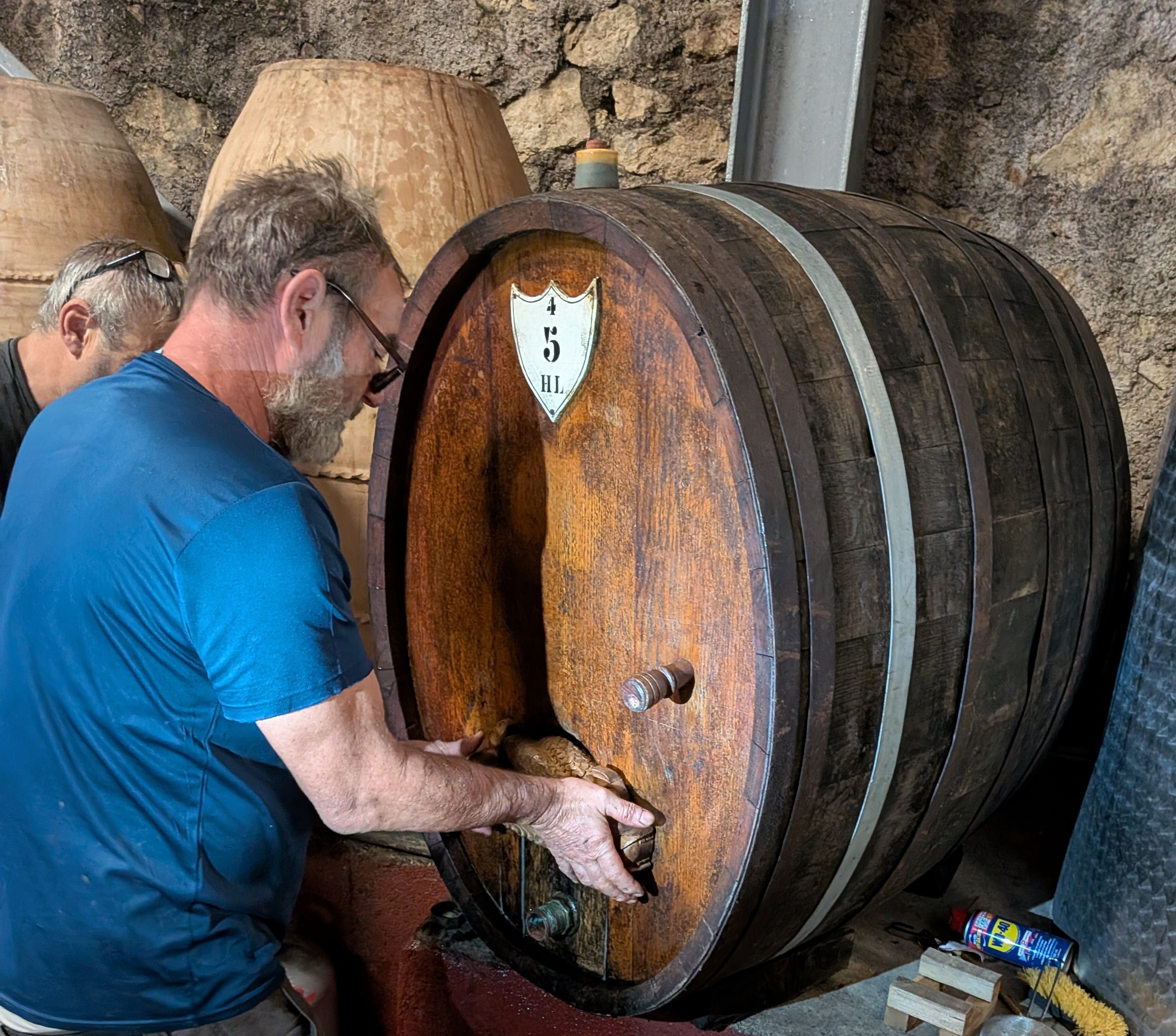
A young wine combining with old wood to create something new for the future, the analogies to my 500th article are obvious. Let’s hope that the final wine will join the canon of memorable Coutelou wines.
In our interview Jeff and I talked much about the great changes at the winery since I first visited, the vines themselves, the cellar and equipment. What has not changed are the principles behind the winemaking. When I sat at the harvest table with Jeff, his father Jean-Claude and everyone in 2014 he told me that three things make great wine; grapes, work and love. No matter what else has changed those three underpin everything at Mas Coutelou.
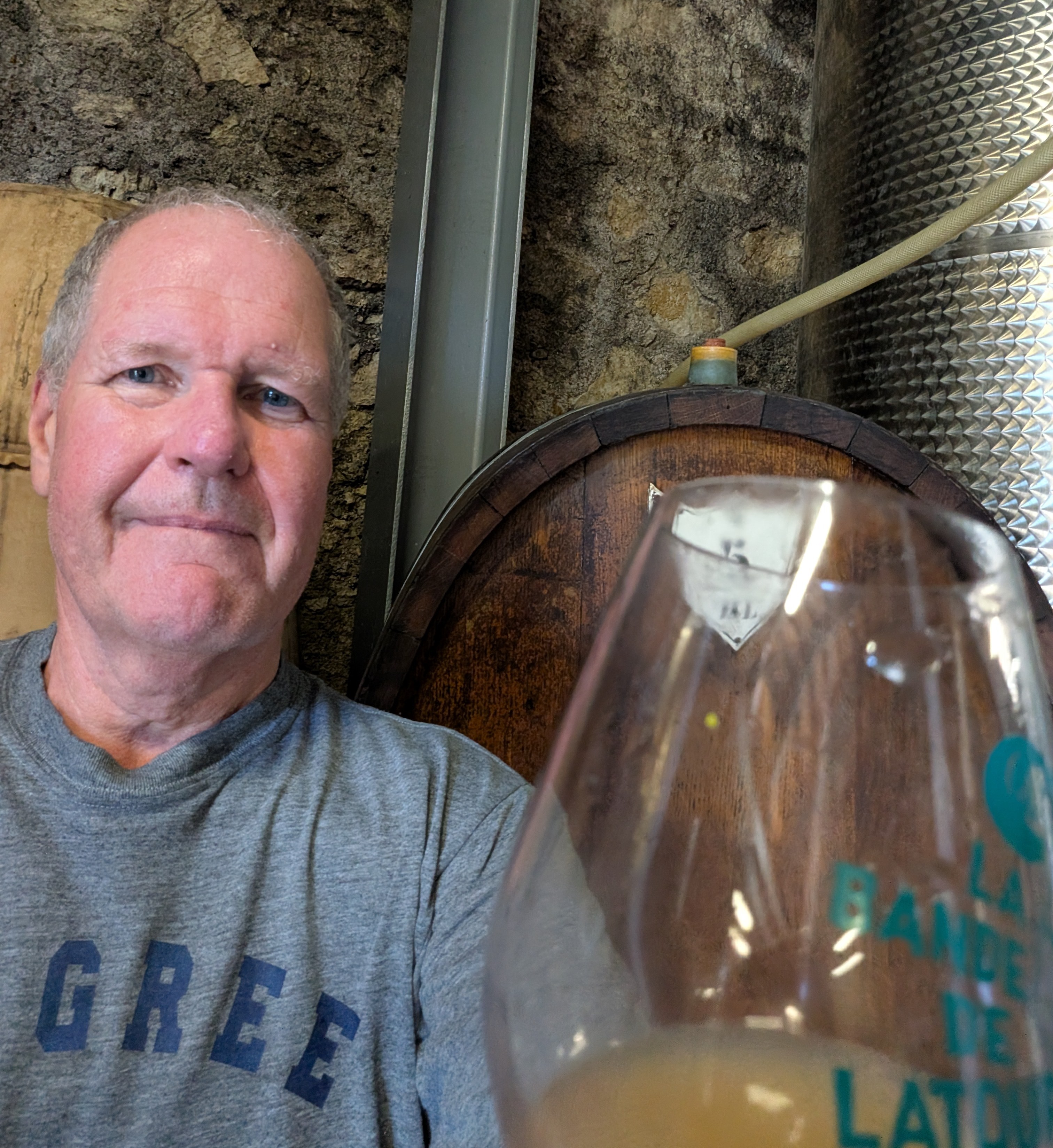
I have been so fortunate to be a tiny part of what has happened at the domaine and to record its story over these last years. Great wines and ever fascinating vineyards are important to that story but our friendship and those forged with so many people who have passed through are most important of all.
Thank you for reading, I hope that you will continue to do so. Our interview will, I am sure, reward you for reading #501 as Jeff touches on the story of Mas Coutelou, the changes of the last few years, the threat of climate change, old vines and much more.
En Francais
Cela fait 15 ans que j’ai rendu visite pour la première fois chez Jeff Coutelou à Puimisson, et 12 ans que nous nous sommes installés dans la région, époque à laquelle j’ai commencé à passer une grande partie de mon temps au domaine. Le 19 août 2014, j’ai rédigé le premier, petit article de ce blog. Voici le 500e article : l’occasion de faire le point, de célébrer l’événement et de se tourner vers l’avenir.
Lorsque j’ai annoncé à Jeff que nous approchions du cap des 500 articles, il m’a demandé de réfléchir à une façon de marquer le coup. J’ai suggéré une interview ; alors que les vendanges touchaient à leur fin, il m’a invité à déjeuner et nous avons partagé une conversation passionnante. Elle était si riche en informations que je rapporterai l’essentiel de ses propos dans le 501e article !
Entre-temps, Jeff a formé une autre idée. Il y a quelques mois, il a fait l’acquisition d’un foudre. Jeff est convaincu du potentiel de ce type de récipient après avoir goûté des vins élevés en foudre par des vignerons tels que Michel Gahier, dans le Jura, et Tessa Laroche, du Domaine Aux Moines à Savennières. Rien d’insolite, direz-vous, sauf que celui-ci est centenaire. Il provenait d’Alsace, où un vigneron cessait son activité. Sa famille l’avait utilisé pendant tout ce temps ; le bois porte donc en la mémoire de tant de vins et d’une longue histoire. Après la guerre franco-prussienne de 1870-1871, le tonnelier, refusant de devenir allemand, s’installa à Nancy ; toutefois, lorsque l’Alsace revint à la France après la Première Guerre mondiale, l’entreprise retrouva ses terres d’origine. Le foudre qu’ils avaient fabriqué reste dans la région jusqu’à son transfert à Puimisson, son histoire ayant fini par convaincre Jeff de l’acheter.
Par hasard, ce foudre a une capacité de 500 litres : une coïncidence qui se marie parfaite avec mon 500e article. Sa taille implique que le vin est moins en contact avec le bois que dans une barrique classique de 250 litres. Il a d’abord fait l’essai avec un Grenache Gris 2024 dont la fermentation n’était pas encore achevée. Une fois transféré dans le foudre, la fermentation terminée. Regardez la vidéo.
Une fois la fermentation de certains vins blancs soit terminée en cuves inox, Jeff m’a demandé de choisir entre deux d’entre eux. L’assemblage Aramon Gris et Carignan Blanc semblait plus intéressant que le Macabeu de Sainte Suzanne, mais après dégustation, nous sommes tous en accord que le Macabeu possédait la structure et le corps qui profiterait le mieux d’un élevage sous bois. Ainsi, à l’aide d’un simple tuyau et par aspiration, Jeff a rempli le foudre de Macabeu ; le vin y sera façonné non seulement par le vieux bois, mais aussi par toute l’histoire des vins et des époques passées.
Un vin jeune qui s’allie au vieux bois pour créer quelque chose de nouveau pour l’avenir : le parallèle avec mon 500e article est évident. Espérons que ce vin rejoindra le panthéon des cuvées mémorables de Coutelou.
Lors de notre entretien, Jeff et moi avons beaucoup discuté des grands changements survenus au domaine depuis ma première visite : les vignes elles-mêmes, la cave et le matériel. Ce qui n’a pas changé, ce sont les principes qui régissent la vinification. En 2014, alors que j’étais assis à la table des vendanges avec Jeff, son père Jean-Claude et toute l’équipe, il m’avait confié que trois éléments font un grand vin : le raisin, le travail et l’amour. Quels que soient les autres changements, ces trois piliers restent le fondement de tout ce qui se fait au Mas Coutelou.
J’ai eu la chance de prendre une modeste part à l’aventure du domaine et d’en relater l’histoire au fil des années. Si les grands vins et les vignobles toujours fascinants y jouent un rôle essentiel, notre amitié — ainsi que celles nouées avec tant de personnes de passage — reste ce qu’il y a de plus précieux.
Merci de m’avoir lu ; j’espère que vous continuerez à le faire. Notre entretien récompensera, j’en suis sûr, votre lecture de cet article n° 501 : Jeff y évoque l’histoire du Mas Coutelou, les évolutions de ces dernières années, la menace du changement climatique, les vieilles vignes et bien plus encore.


