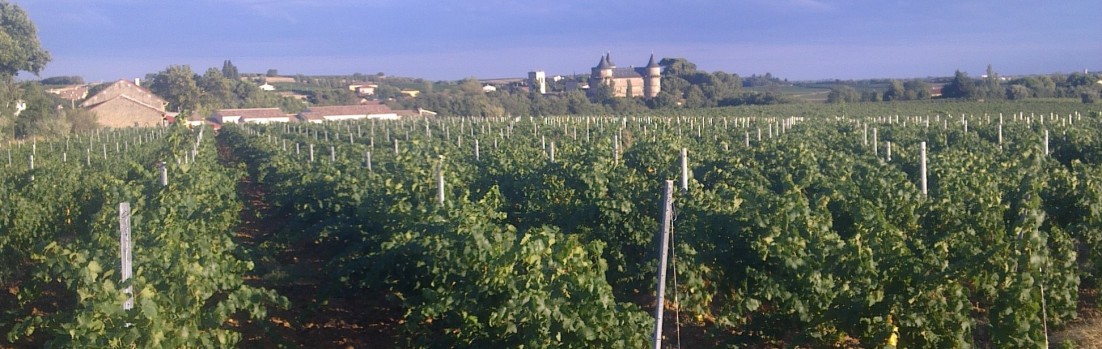
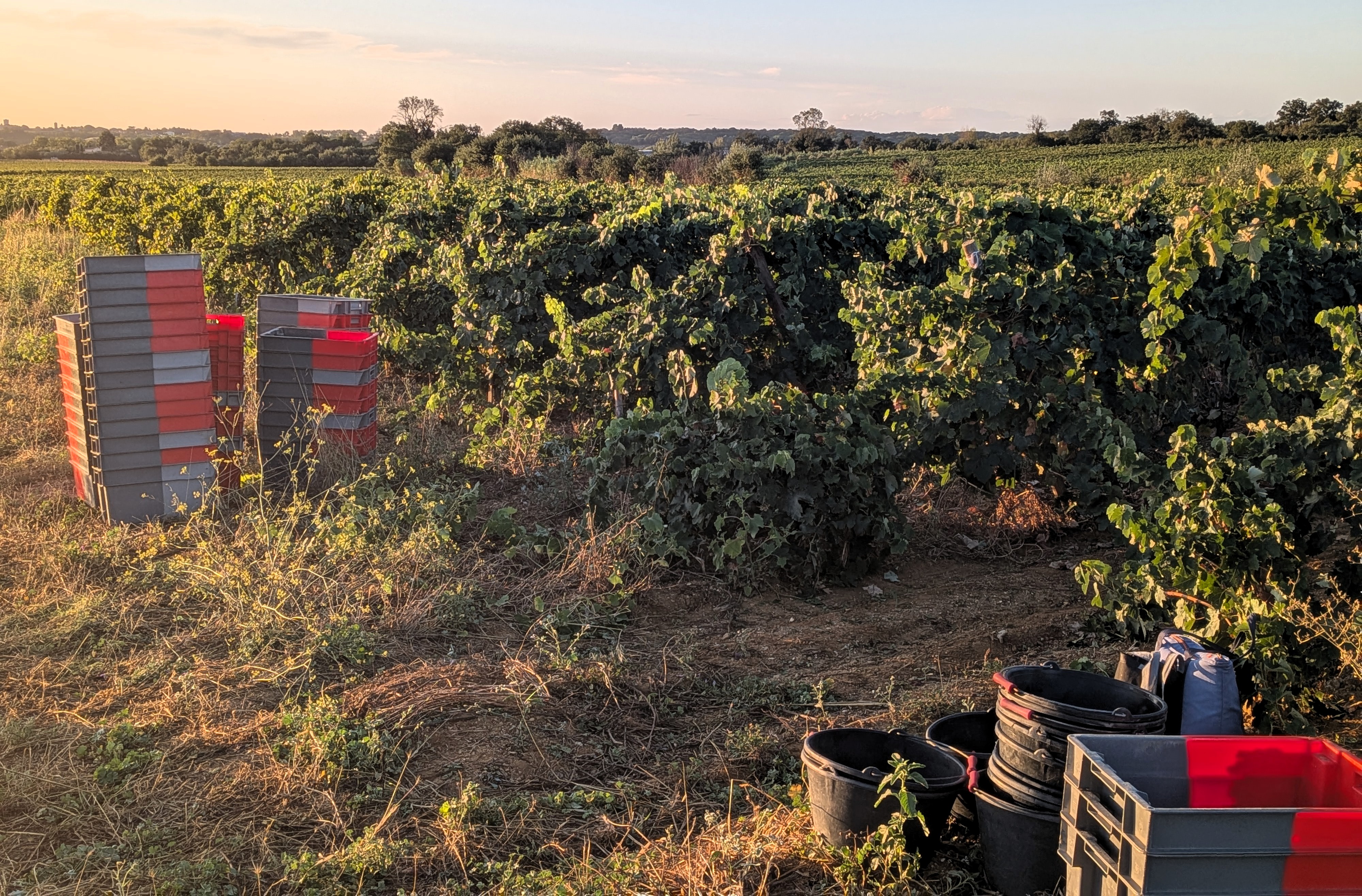
Time to get back to work. A thunderstorm overnight meant there was no picking on Monday September 1st and so I turned up on Tuesday ready for action. I popped over to Sainte Suzanne first as the newish parcel of whites, Maccabeu and Clairette were the focus for the day. On a clear morning with the sun not long risen it was fresh after the rain, a good time to be back. The vines showed ravages from mildew with the brown spots of the disease but the grapes were in good nick.

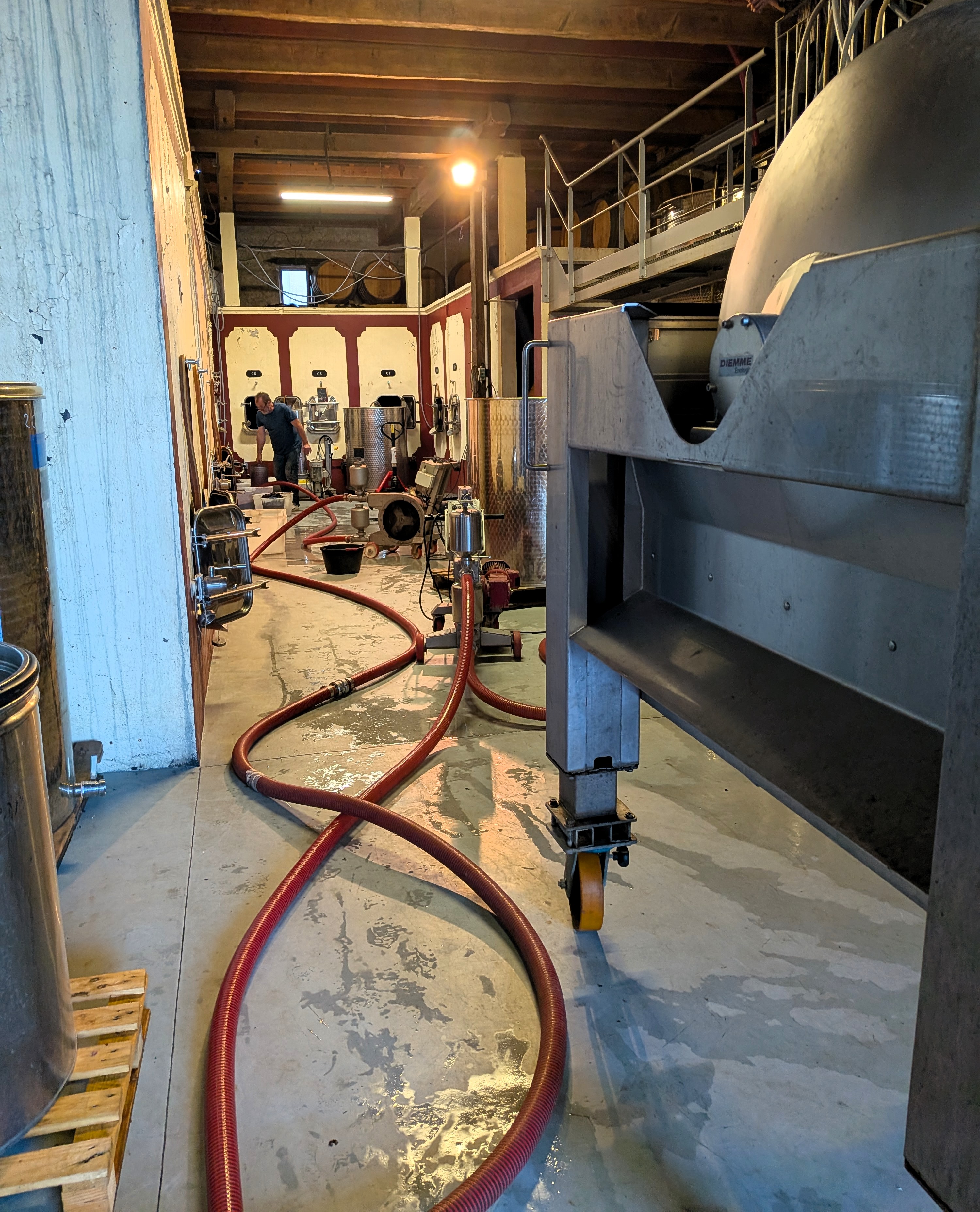
Into the cellar and the Maccabeu was beginning to arrive, pressed directly. Pièr, this year’s stagiaire, was the one loading the grapes into the press. He’s a bright, enthusiastic lad from the Anjou and has experience in the work, he is the son of Jean Christophe Garnier, so it’s a real help to Jeff to be able to leave him to do tasks along with Flora in the cellar.
From there upstairs into the courtyard of the house leading into the upper cellar where the sorting table has been positioned since 2020 when being outside was a healthy option for all. It works very well, there is more space for everyone there and in the cellar itself. Plus the fresh air and dappled sunshine make it a pleasant place to be. Alongside me on the table were Boris, who has been coming to help Jeff for many years now, Mari from the village and Jean-Jacques from nearby Bédarieux. These two have worked together before in wine, with Didier Barral for example. So we form an experienced team and they are good company as we chat over the course of the day.

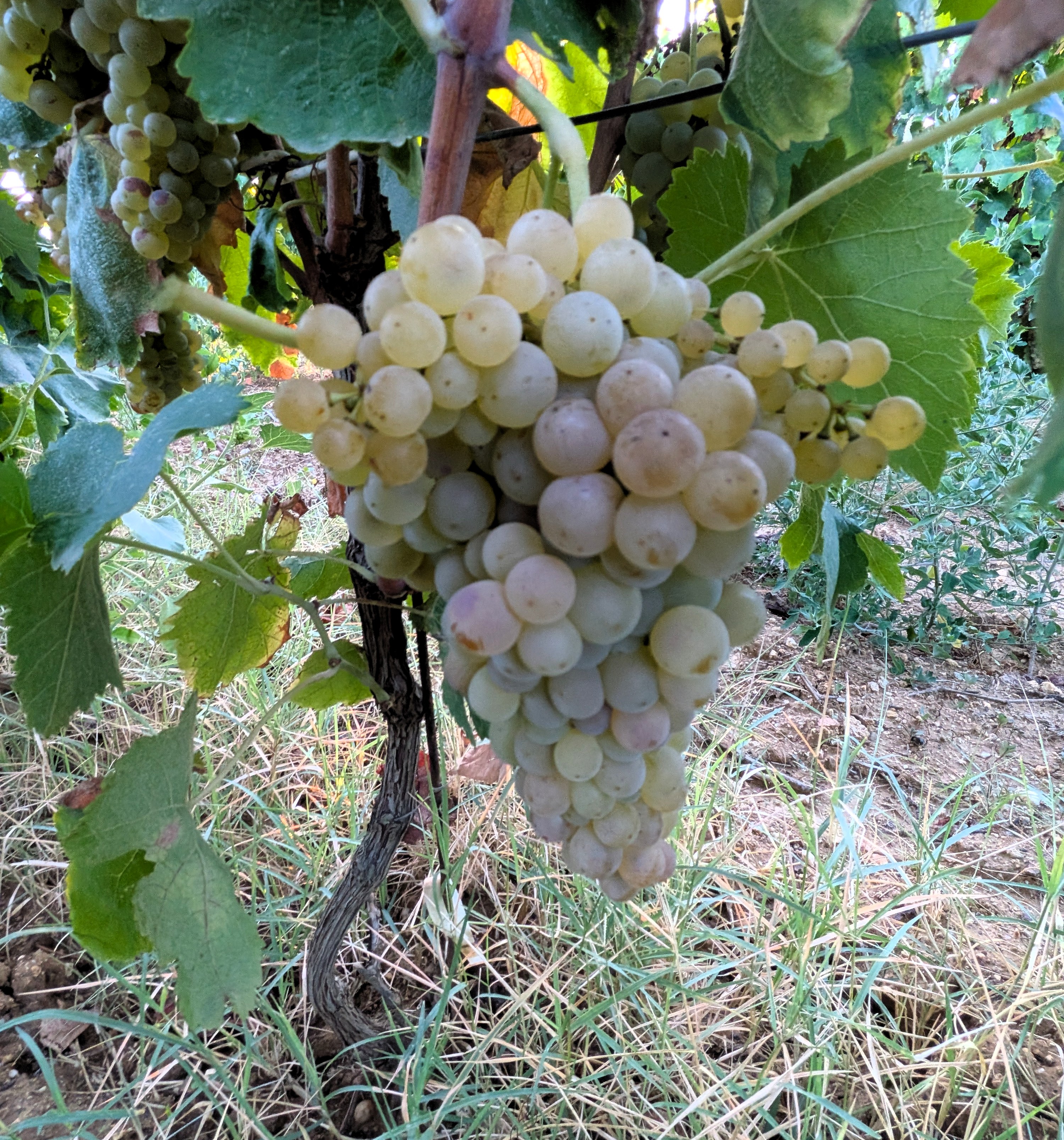
The Clairette was in good order other than a few dried stems from mildew and the morning passed swiftly. The Clairette from Segrairals also arrived including the attractive pink Clairette Rose which brightens the mix. These grapes have been making the eponymous cuvée for the last few years and it has become one of my favourite bottles from Jeff, the Clairette has a lovely freshness but a bitter note too to add a touch of grown up complexity. A year or two in bottle is recommended, at least to my taste.
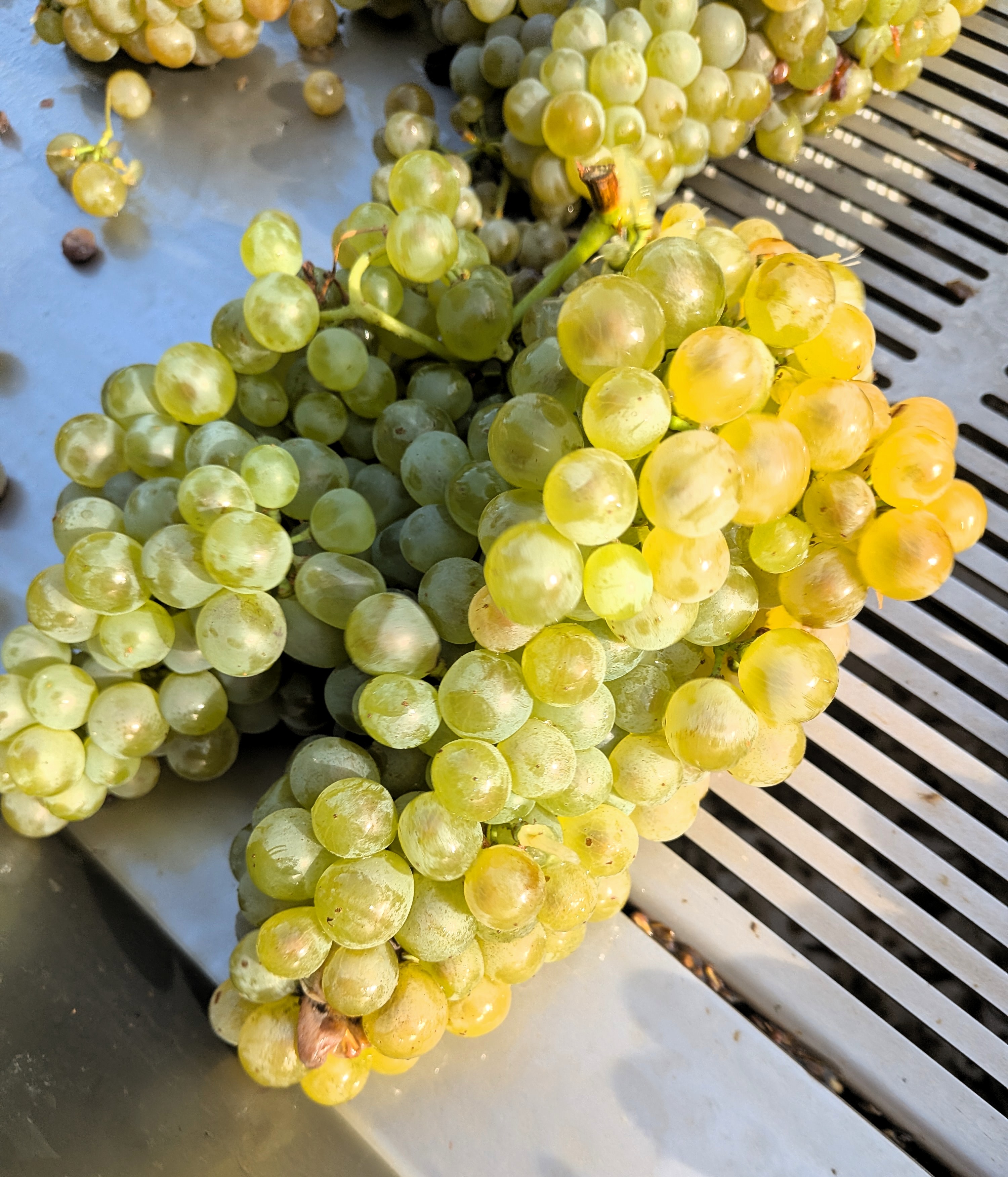

It was a hot day and my body was aching after my first day. I have chosen to just work some days this year, I am now officially a pensioner! Wednesday went ahead without me at the winery and Jeff told me that evening there’d been one calamity (not because I wasn’t there I hasten to add). One of the pumps had broken down and couldn’t be repaired for a few days therefore he was having to redraft plans. The day was given to the Cinsault from Segrairals, now one of the biggest crops of all and the source of fruit for cuvées 5SO and Vin Des Amis.
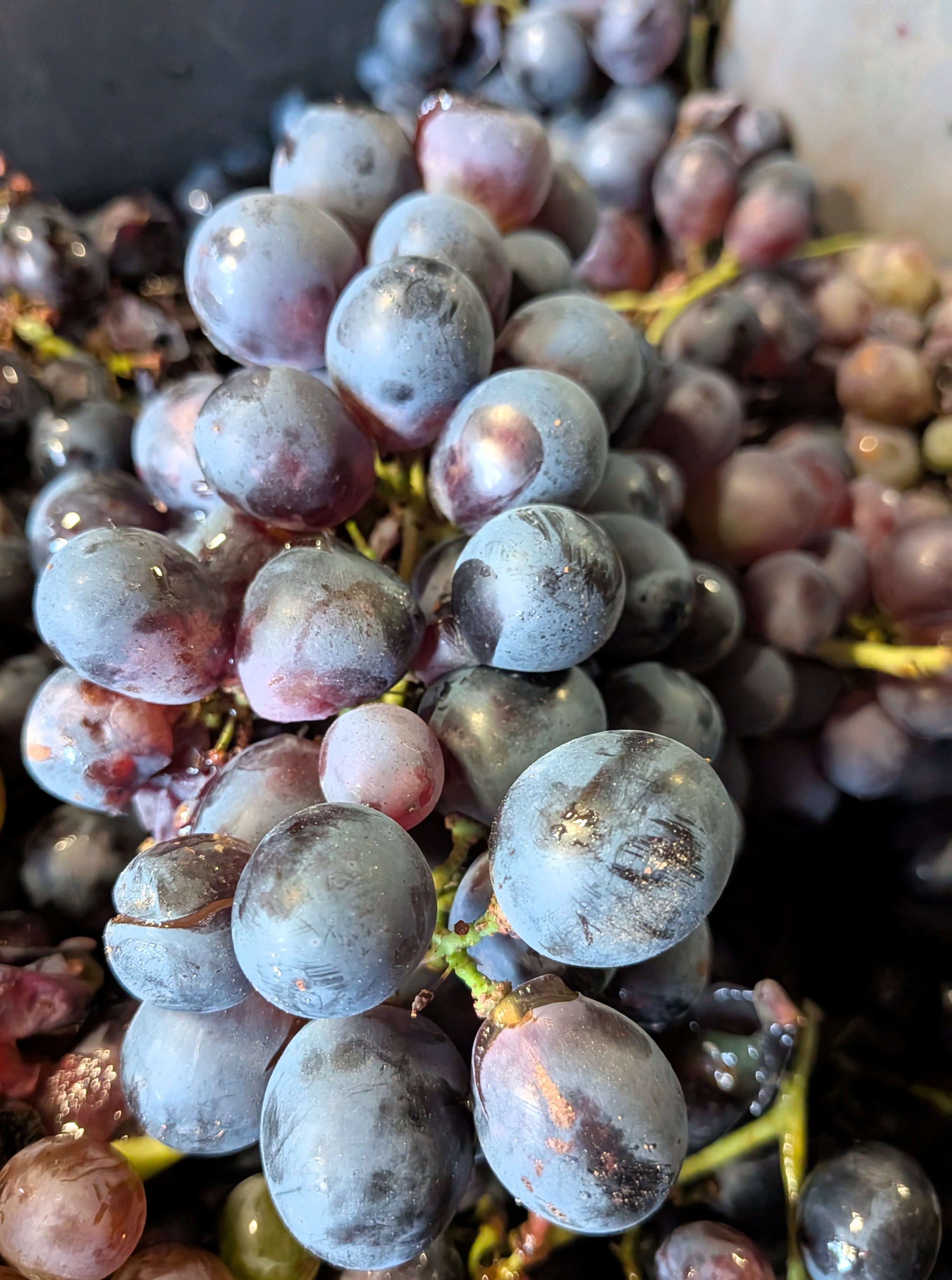

I returned on Thursday and again the early grapes were going directly into press. This was still the Cinsault but from a part of the vineyard which had suffered a little so the grapes were fragile and Jeff wanted to extract the juice without the skins. When that couple of rows had gone into the press the rest of the Cinsault was taken back to sorting table for fermentation on skins.
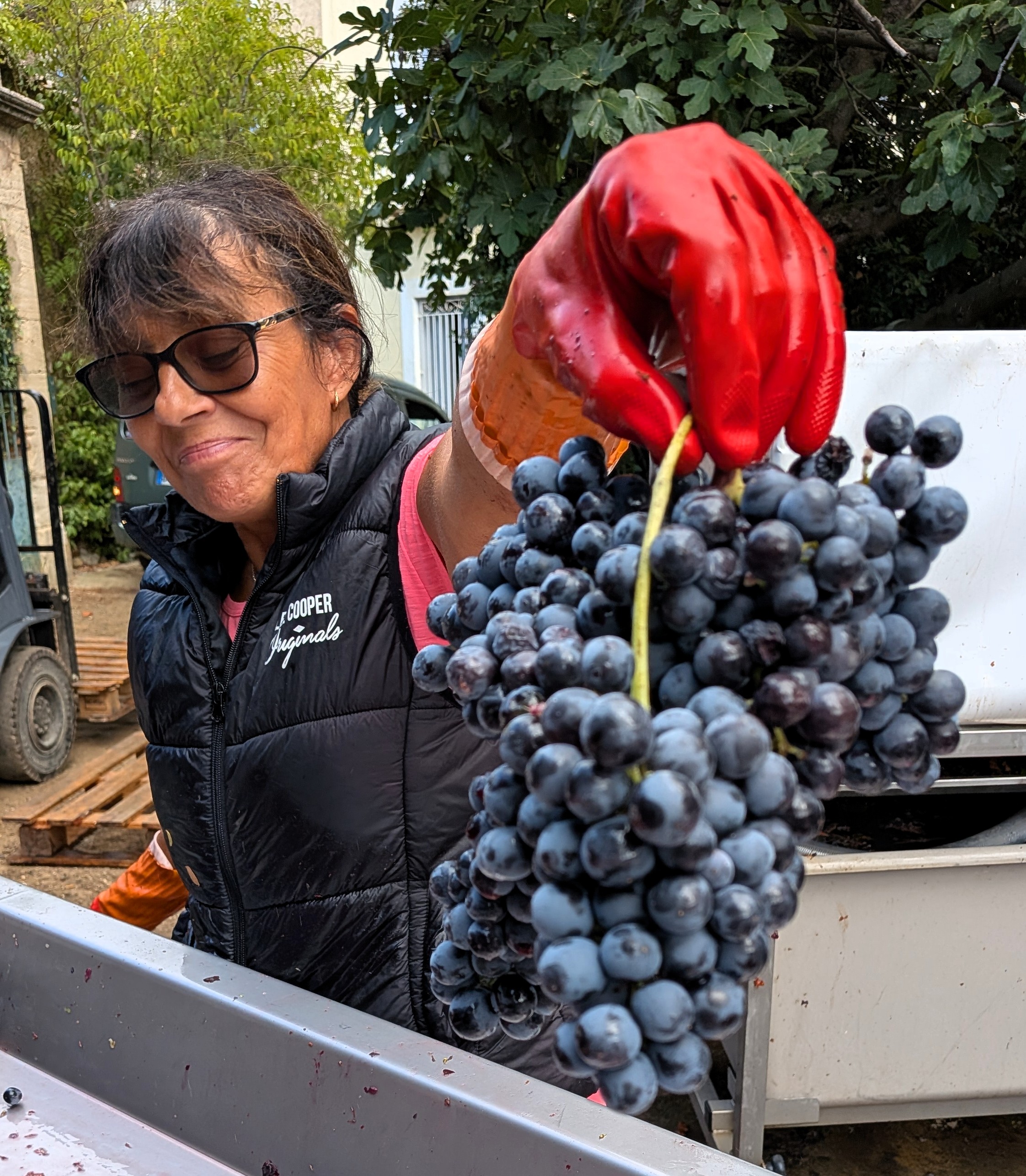
Cinsault is so generous, the big open leaves seem to hint at the friendly fruitiness of the juice, the typically big sized grapes almost bursting through the thin skins. It has to be picked at the right moment or it will cross over into over ripe and flabby. These bunches were good sized and healthy. Well the vast majority. Frustratingly some of the bigger, tighter packed bunches have to be checked carefully, breaking them open because ver de la grappe, the grape moth larva loves these bunches. The moth lays its eggs in the young bunch and the larva eat their way through the centre leaving a powdery black mess. Not what you want in your wine. Careful selection, in the vineyard and sorting table, is needed to ensure only good grapes go into the tank.

The afternoon brought a change of grape variety, Grenache from La Garrigue. I had noted the bunches when touring the vineyards last week and they arrived in good order. Hardly any ver de la grappe thankfully, the major issue was effects from mildew. The leaf marking is unsightly but not serious however, when the mildew affects the bunches it dries out the fruit causing buds not to develop into grapes and leaving gaps on the stalks or hard, dried grains.


Fortunately the vast majority of bunches were in very good condition and the tanks began to fill with Pièr keeping a close watch. After that, everyone’s full effort is given to cleaning the equipment thoroughly, none spared in ensuring that cleanliness rules so that we make wine in healthy, optimal conditions. This is essential for any winemaking but particularly when no chemical additions are made to the wine, the wine has to look after itself.
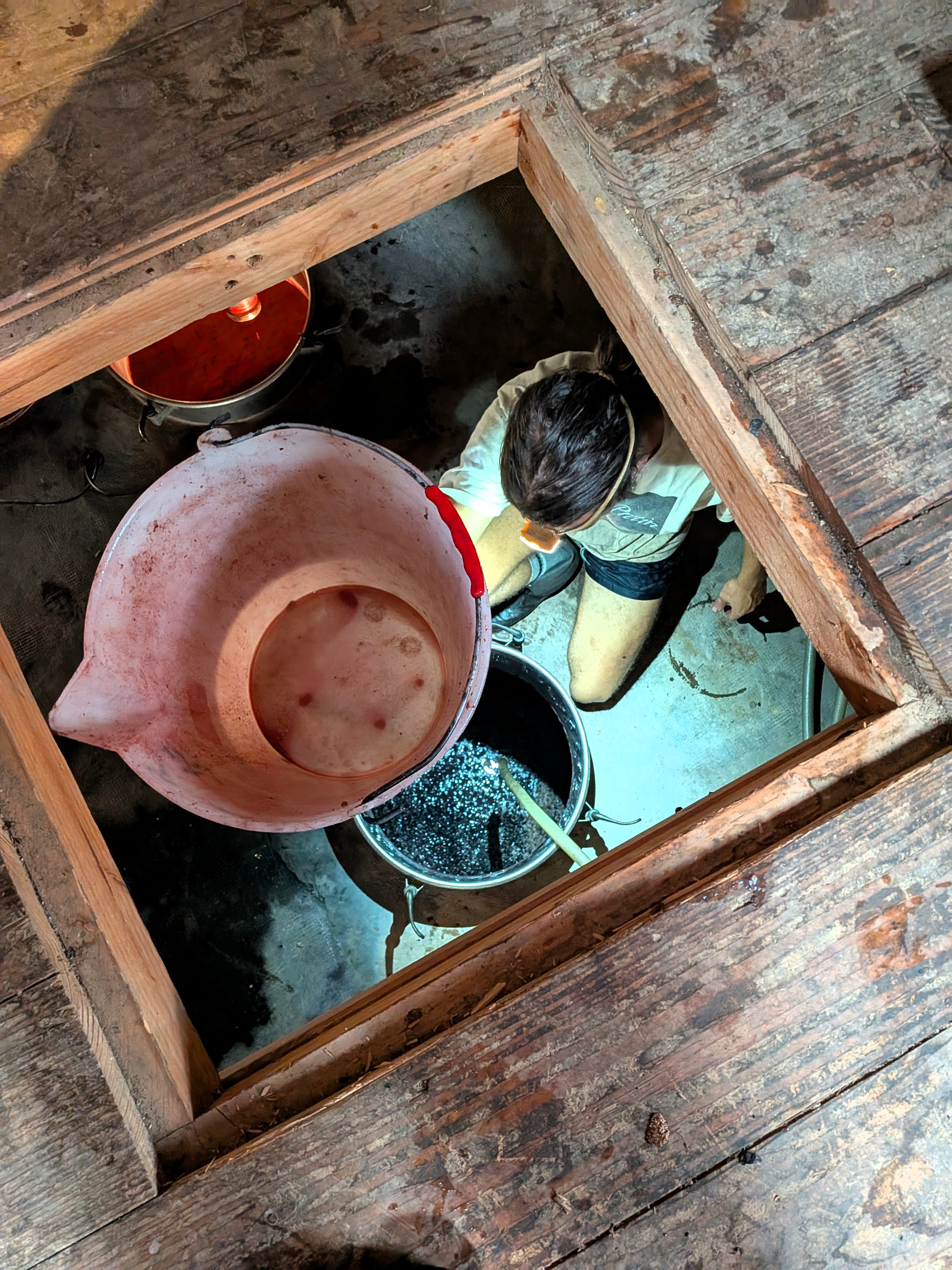

Two good days of work, encouraging signs from the grapes and the infant wines. It was a pleasure to be back even if I am not as involved as previous years. And all supervised by another old chap.


 amarchinthevines