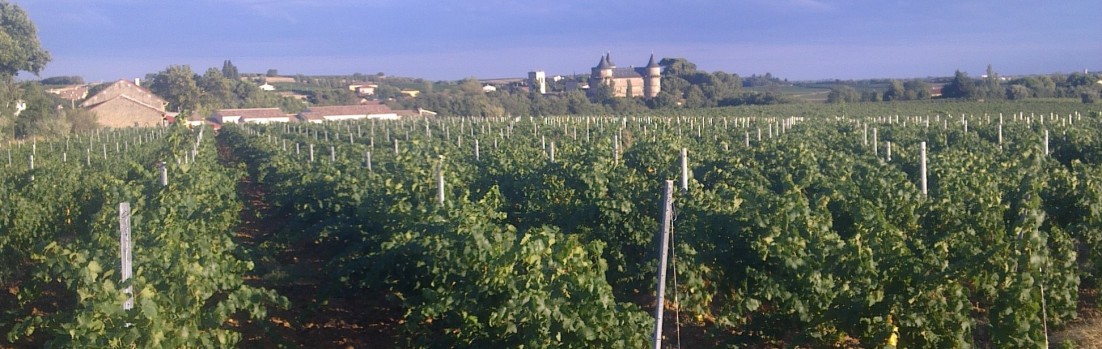
I have recorded on here before how Australian wines formed a big part of my introduction to wine. One of the regions which cropped up repeatedly in those days was Hunter Valley with producers such as Tyrrell’s and McGuigan amongst others. Unlike the Barossa with its big, oaky wines the Hunter was a little more restrained though still in thrall to the power of oak. As we embarked on another trip to Australia I thought it would be good to visit a region which I thought I knew.

How little I really did. Arriving in the valley the first question was, ‘where are the vines?’ I had lazily expected a valley like the Loire or Rhone with vines on the slopes of a narrow strip of land bordering the river. Well, the Hunter is huge and looks nothing much like a typical valley. There are hills but it is a flattish area with sporadic patches of vines planted, seemingly at random. There are around 160 wineries producing about 3% of Australian wine, based on a mix of five soils, from alluvial sands to limestone and basalt. The wineries are generally geared around tourism, proximity to Sydney bringing large numbers out especially on weekends. We were there midweek and most of the winery restaurants were closed but it was less crowded, plan for your preference. It is Spring here in Australia and the vines are just in flower, a lovely time to visit.


On arrival we went for a drive around armed with a fairly useless map but the wineries are all over and it was a question of which one to try. We settled on Tamburlaine, an organic winery with white wines made here in the Hunter and its reds up in the Orange area. A warm reception in the visitors’ centre from a knowledgeable and friendly woman who led us through the white wines in particular. The name Tamburlaine refers a Mongol warrior though it was named in honour of the first owner’s son and his battle with cerebral palsy. The wines were fresh, clean and characterful. I had forgotten how Semillon is such an important grape here yet all those years ago it was a regular purchase. We were kindly served a 2012 as well as a 2024, Semillon ages so well developing all sorts of complexity and a golden hue. Verdelho too was to feature on many of the visits of the next two days and became possibly my favourite grape of the visit.
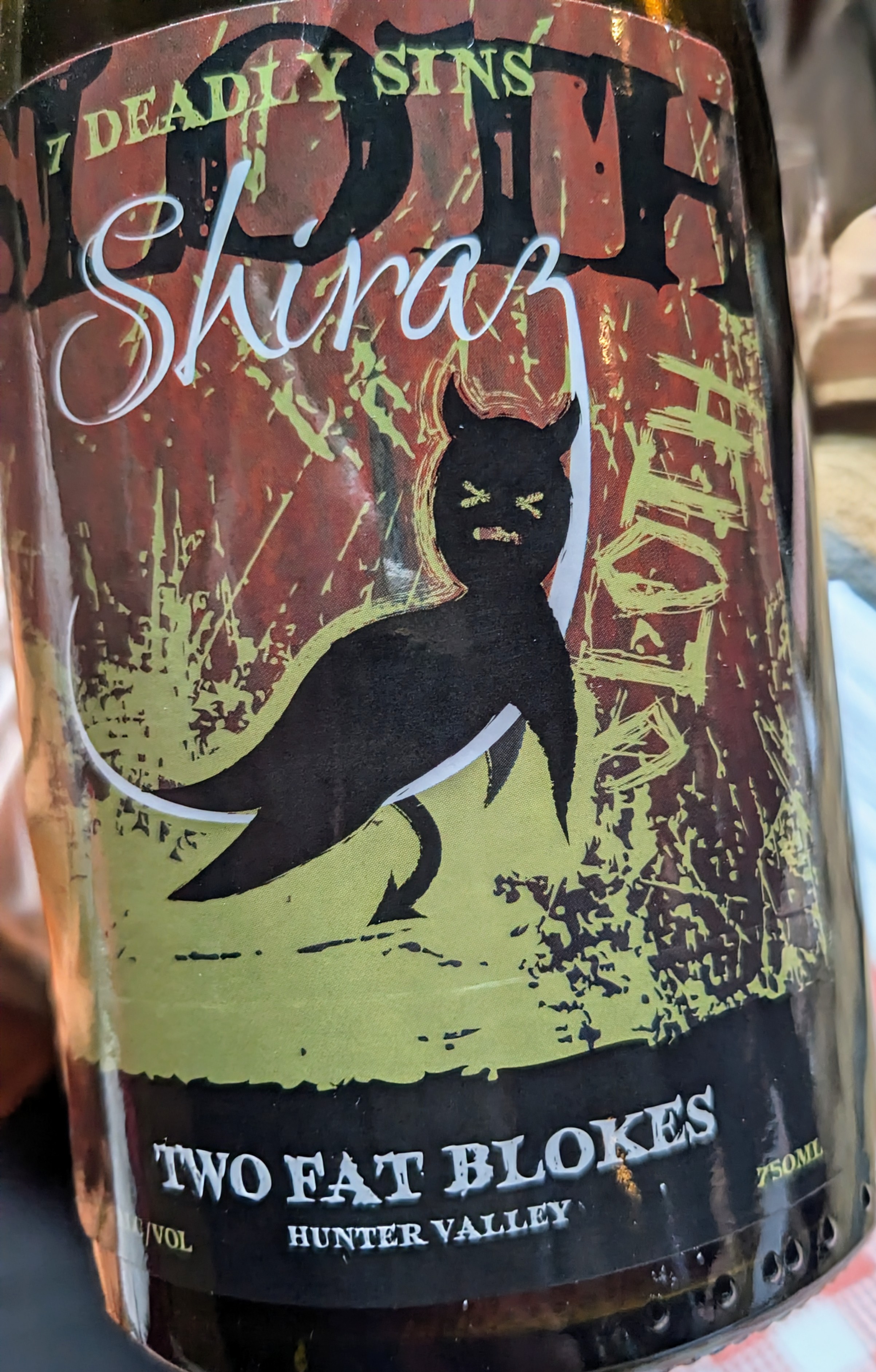

How to sample wines with a car? Well the answer was to book a tour, there were a number available though I opted for Two Fat Blokes and their half day experience and what a good decision. Three wineries with different approaches, a cheese and wine pairing and a very enthusiastic and helpful guide who drove our group of six. First up was the Two Fat Blokes themselves (sadly only one is still with us) whose wines are called after the seven deadly sins. Good, well made and honest wines matched with a range of seven excellent cheeses, particularly a sensational lime and black pepper labna. Note the patch of Shiraz out the front but the winery was an example of a methodology I had again seriously underestimated.
After so long with Jeff Coutelou and being in France I am used to producers making wines from their own grapes. Of course many French winemakers do négociant production too from bought in grapes but here it was the norm. That Shiraz patch produces around 400 bottles, nowhere near enough for a commercial venture. Every producer seems to buy in grapes often from great distances. If it comes from out of state then the grapes must be transported as must or juice as The Hunter has no phylloxera so no whole bunches can be brought in to lower any risk. (Not sure how that makes a difference but there we go).


Oakvale winery was next on the tour and another organic producer though only around 6% of Australian wine is made this way. I liked the wines here and it was interesting to compare the Semillons and Verdlhos from the three producers, the Verdelho here was richer but had a nice clean streak of acidity. The winemaker is James Becker who has his own winery with his wife but unfortunately they were closed for visits as it was probably the winery I most wanted to try. He is just starting to experiment with amphora and concrete egg at Oakvale. The Shiraz 22 was very good too, good weight and red fruits and persistent.
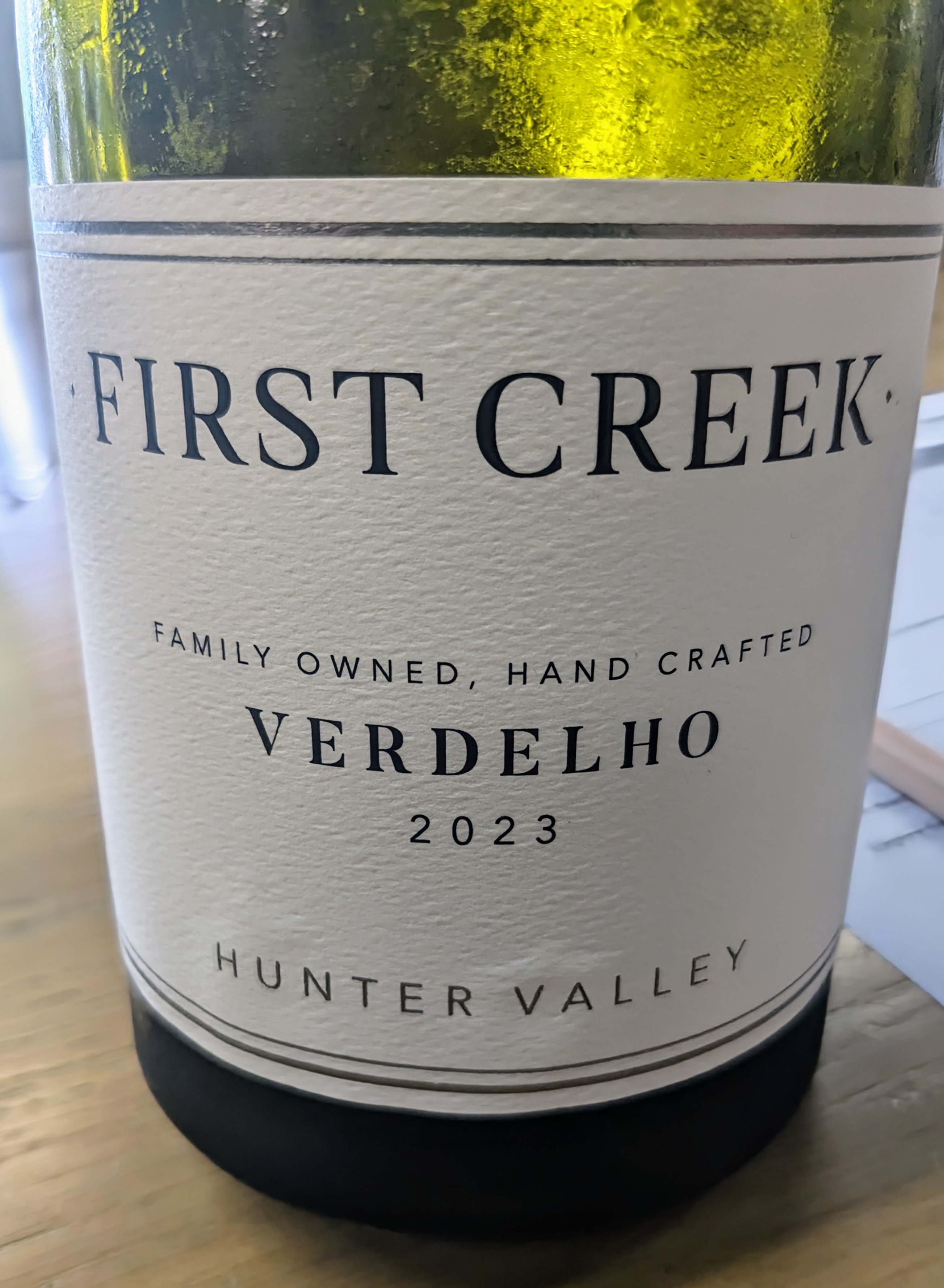

Finally we moved on to First Creek winery. I thought these were the best wines of the morning overall but especially an older Semillon (2015) which was kindly shared with us and revealed again how this variety really takes on another character with age, adding much more concentrated citrus notes. The Verdelho was very good. Chardonnays generally disappointed all morning, oak seems to be de rigueur and though its use was moderate and carefully judged the wines lacked real character often a little flabby. Here though First Creek aim for a more mineral, lean style and the wines benefited, clean and fresh with nice fruit.
The Cabernet Sauvignons were also a little underwhelming, lacking mid weight. The Shiraz wines were nice, often more akin to French Syrah, avoiding the big blousy style and aiming for more subtle fruit and balance.
After a suitable break we headed to one last winery and decided on Brokenwood, one which I know from purchases in the past. This was a serious visitor centre with tasting bays all around a large hall and several young people in charge.

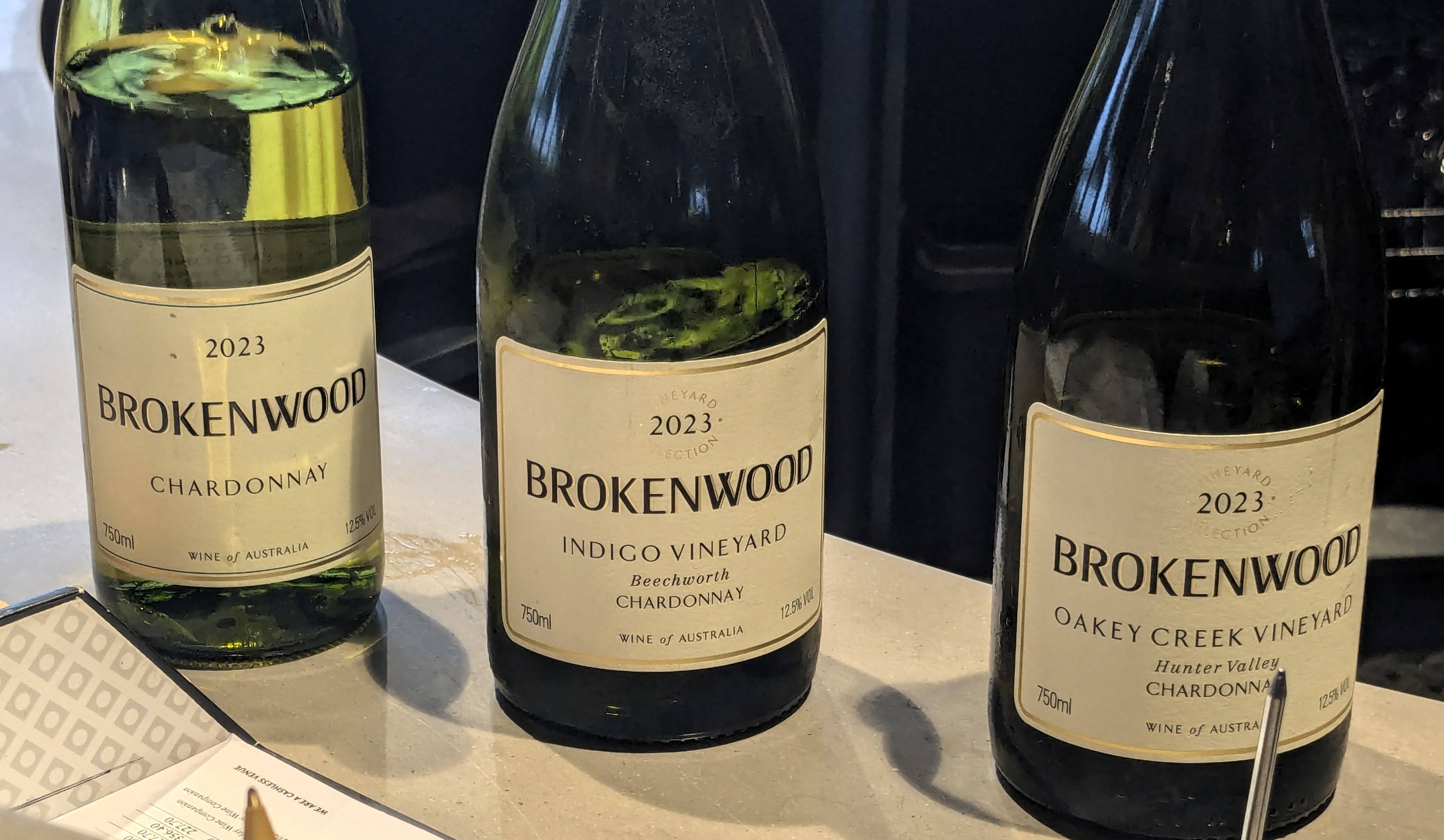

We struck lucky with James who poured us fourteen wines instead of the seven we should have had. I was on sip only duty being the driver but this was a very good tasting. Three Semillons, three Chardonnays, different Shiraz wines and others too. It was good to be able to compare the bottles and see the quality levels. Once again James explained that much of the fruit was bought in to make some of the bottles though Brokenwood has some extensive vineyards of its own including the Graveyard which provides one of Australia’s iconic wines according to expert James Halliday. Top of my class was the Tallawanta Shiraz 2019 with layers of flavour, red fruits, plums, fresh acidity too. Unfortunately, I have expensive taste, $150 a bottle! To be fair I liked the Oakey Creek vineyard whites more than the more expensive bottles. All of these were from local grapes, maybe home production wins out after all. The Cabernet was from Margaret River in Western Australia, a huge distance away!

A hugely enjoyable trip to The Hunter Valley, it more than matched any expectations while confounding them at the same time. If you were planning a visit think about weekends when there will be more open restaurants and wineries but it was much quieter midweek. I left wanting more, always a good sign.

 amarchinthevines