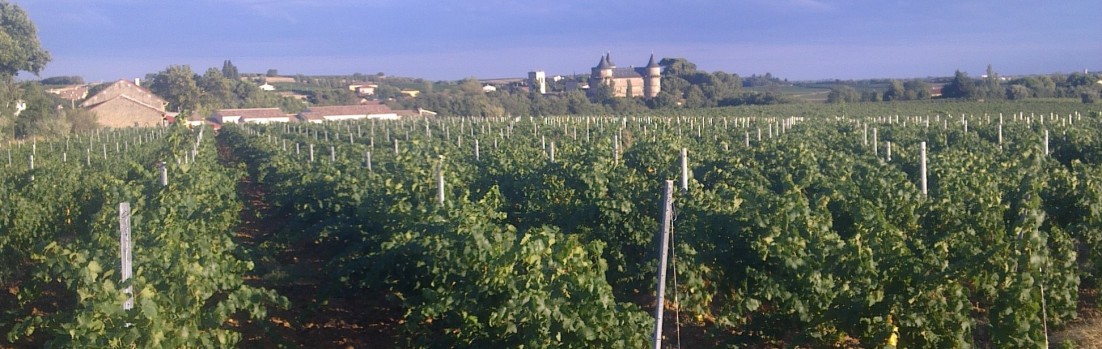
Wine should be about sharing. Pleasure, knowledge, thoughts, skill, friendship and passion to name but a few. Nearly all of my favourite wine moments have been shared with others, around a table, at a tasting, on special occasions. The name of Steeve Dejardin’s new wine venture is, therefore, well chosen and apposite. Not least because Steeve himself has always been one of the most generous people I have ever met. Back in 2015 he came to Jeff Coutelou’s cellar with a few bottles and cheeses from his native Jura and we enjoyed a great evening. We met a few times in similar circumstances at Jeff’s including a Saturday lunchtime where Jeff shared a few bottles of older wines including the legendary ‘Roberta’ and several vintages of La Vigne Haute.


Steeve decided a few years ago to change his lifestyle and become a winemaker. He came down to Jeff’s and spent over a year working alongside him, learning the ins and outs. He had already spent time with the excellent Michel Gahier in the Jura and after his time with Jeff returned to his home region to work at Domaine De La Loue amongst others. Eventually though he returned to the Languedoc and has started his venture in the Minervois.
The decision was taken to rent around 2.5ha of vines and part of a cellar in that region from Julien Audard and Laure Boussu who run Monts et Merveilles. They were making wines under that name and retain some vines but are starting to concentrate on brewing beer and their ecotourism business. The couple have been a great help to Steeve who is eternally grateful to them for the opportunity to fulfil his ambitions.
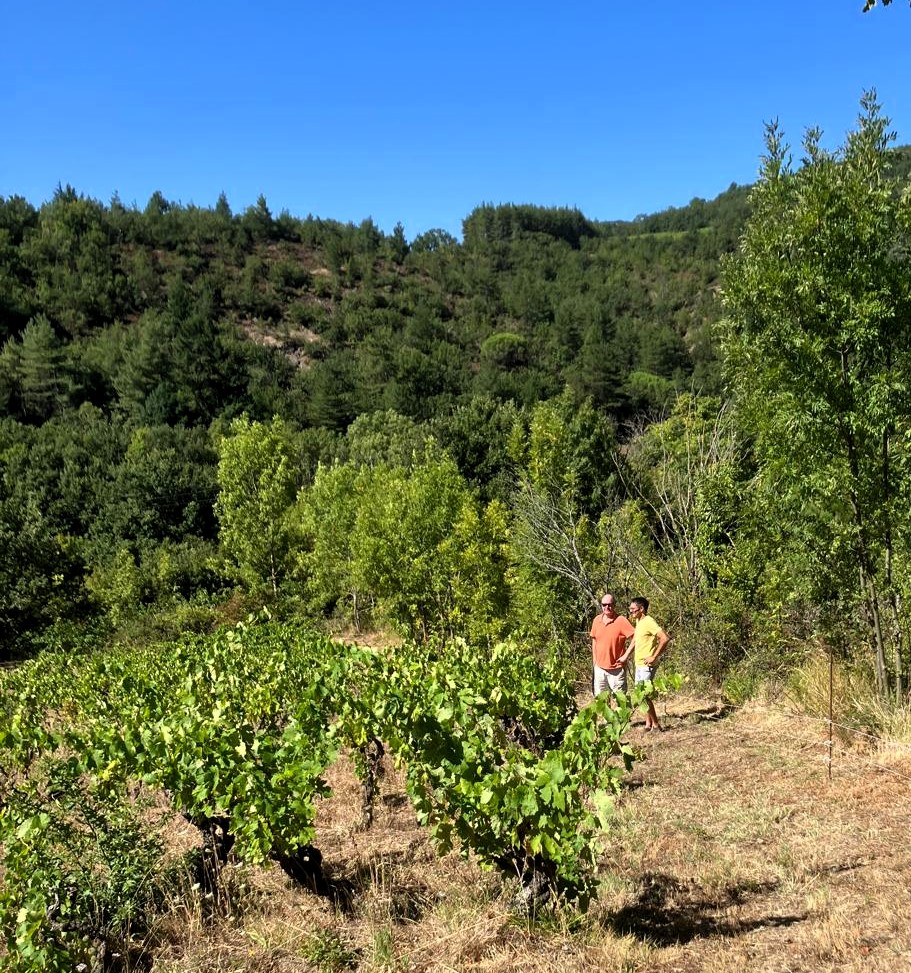

We visited on August 22nd reaching St Julien des Meulières in the Haut Minervois after a lovely drive through that area with its limestone scenery and beautifully clean air. In the plains we had passed early harvesting in the heavily herbicided vineyards, dust flying everywhere. The contrast up in the hills was marked, vineyards covered with plants of all kinds surrounded by forest. Unfortunately the bulk winemaking of the plains has given Minervois a moderate reputation, winemakers like Steeve face a challenge to change that image in order to sell their wines. And sell they should because, I’m happy to say in all honesty, that Steeve’s first wines are excellent. Yes I am biased towards my friend but I wouldn’t have written that sentence unless I meant it.
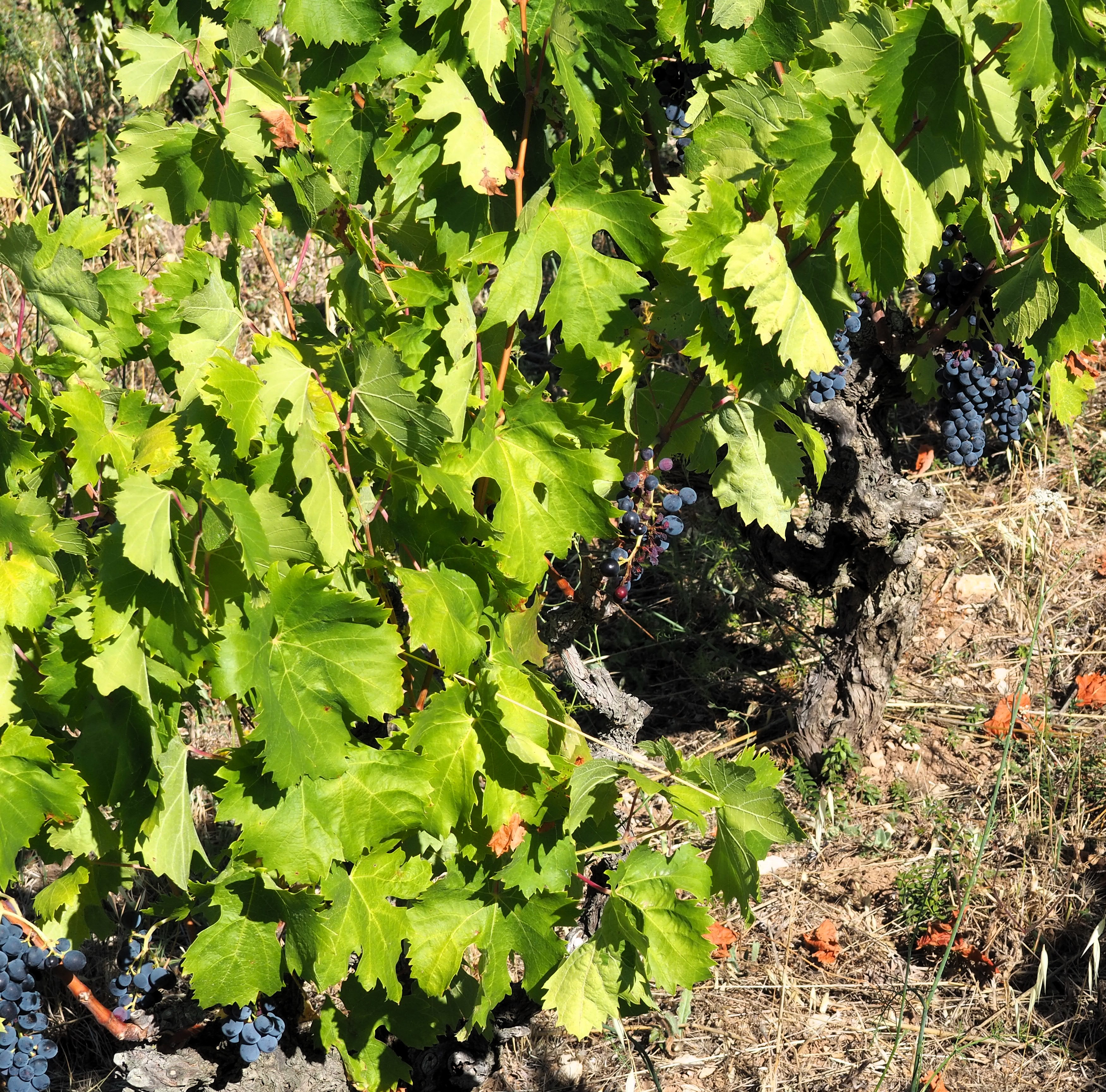

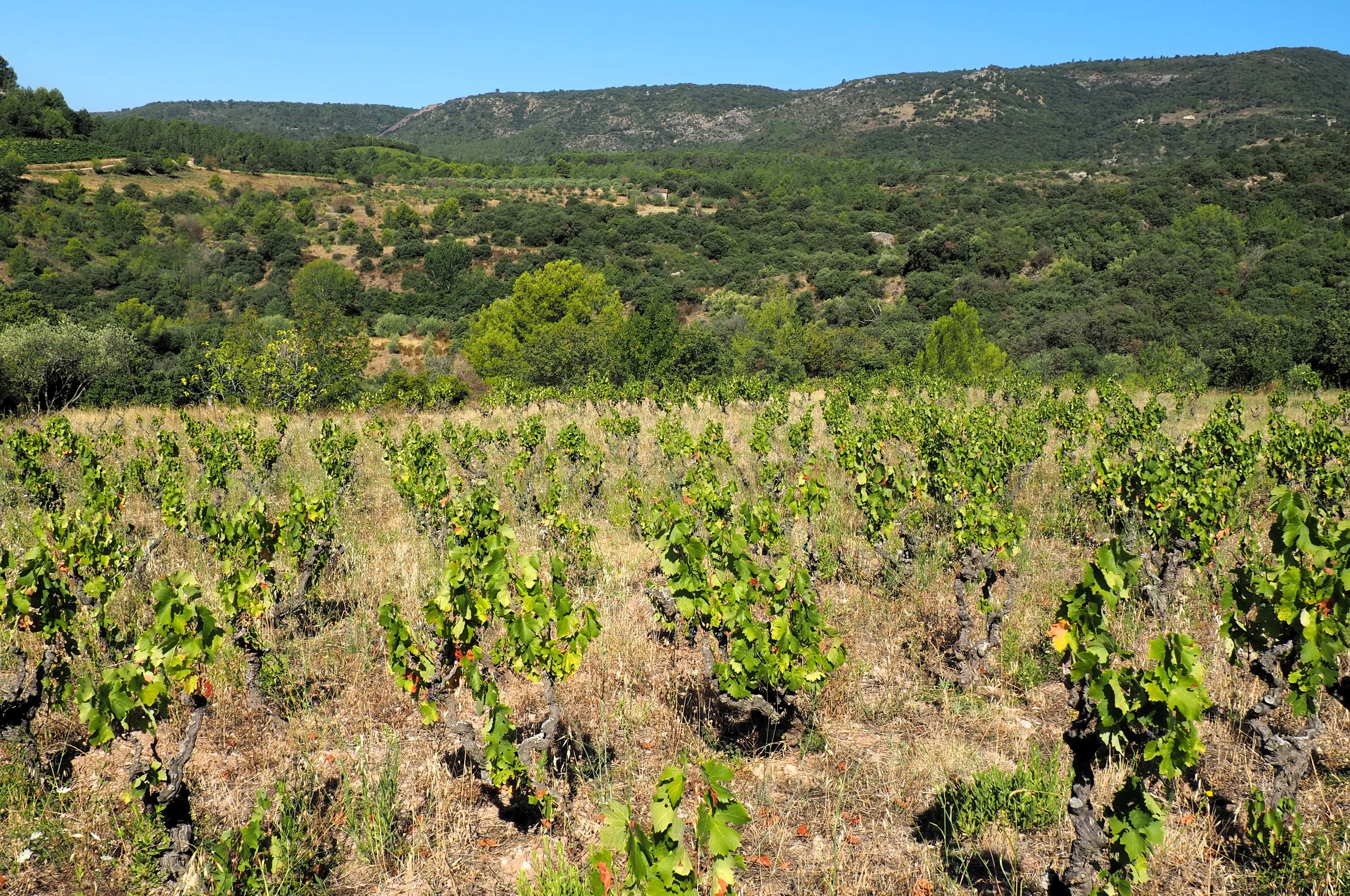
Carignan in Camplong
His two vineyards are a few miles apart and named after their nearby villages. We headed to Camplong first, around a hectare of vines divided mathematically and physically half and half between Carignan and Syrah. The Carignan vines are around 50-60 years old and in gobelet, free standing on a sloping hill. The top part of the vineyard is argilo-calcaire, limestone and clay, whilst the lower slope also has schist mixed in. That lower part has a few vines which have struggled and Steeve is working hard to improve the soils there using compost based on nettles. A fence separates the two parts with their different grapes, in the Syrah the vines are trained on wires.

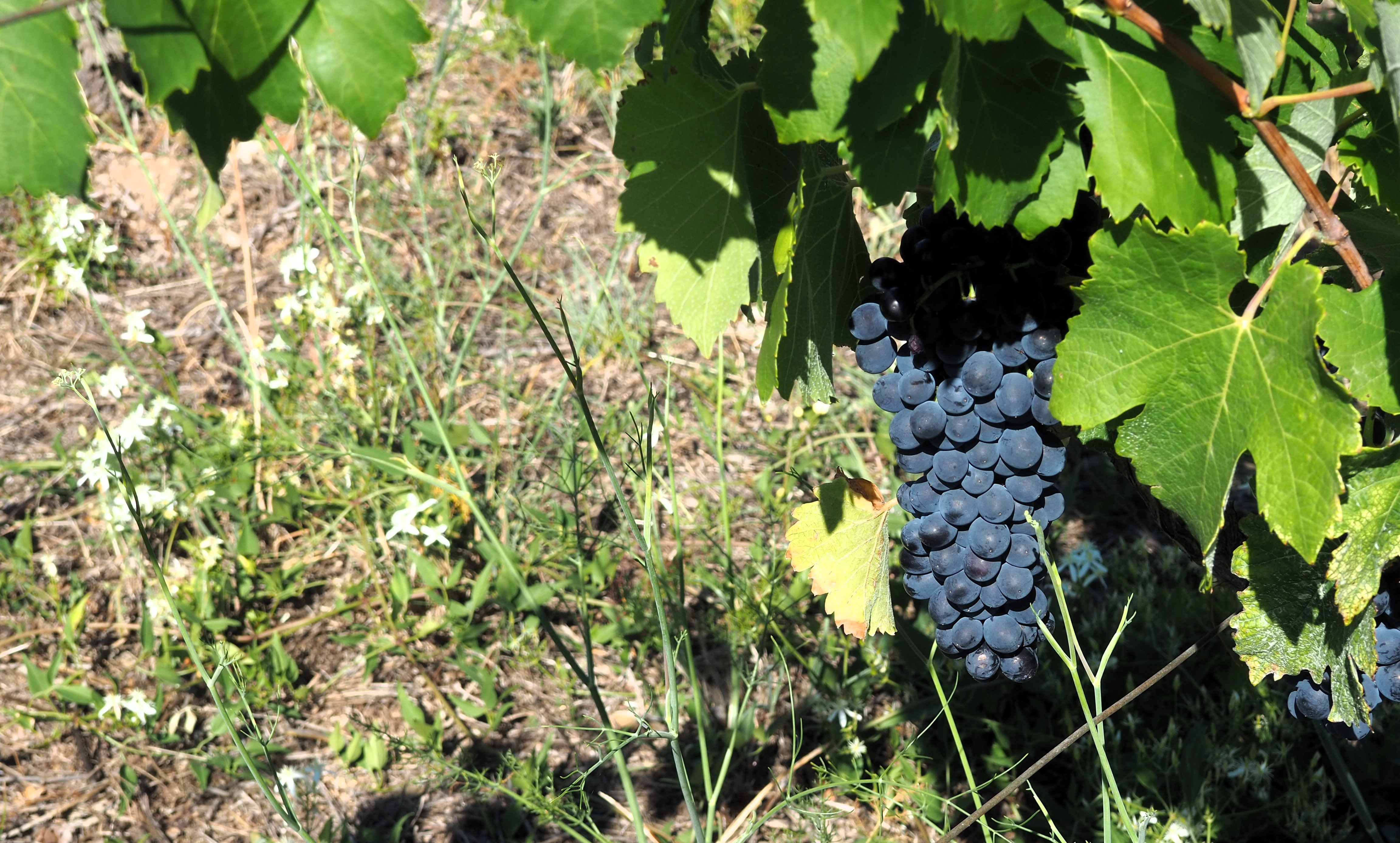

Syrah, Camplong
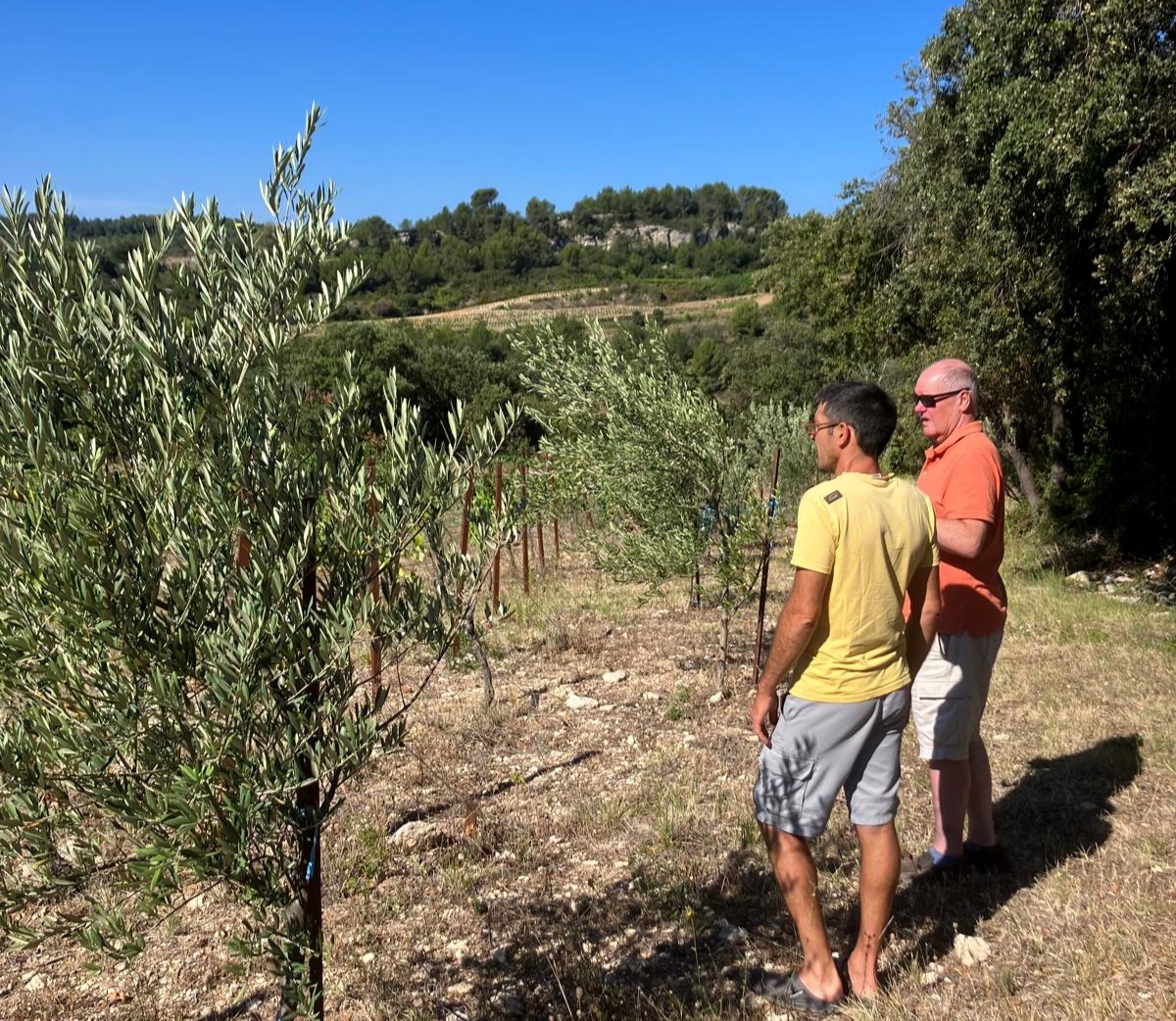
The other vineyard, Cassagnoles, is on the other side of Steeve’s home village and even higher in the hills. Just over a hectare of Carignan vines on a steep hillside greeted us. They are 60 years old and gobelet trained too. The vineyard is surrounded by a small electric fence because the forest has a lot of wild boar living in it. At Camplong there are no boar but badgers have been eating some of the bunches! Once again Steeve has found the lower parts of the parcel have needed more work to improve the soils, he’s used some manure but not too much and more nettle and organic composts. There are a few white grape vines such as Grenache Gris and Steeve is hoping to develop more white grapes.
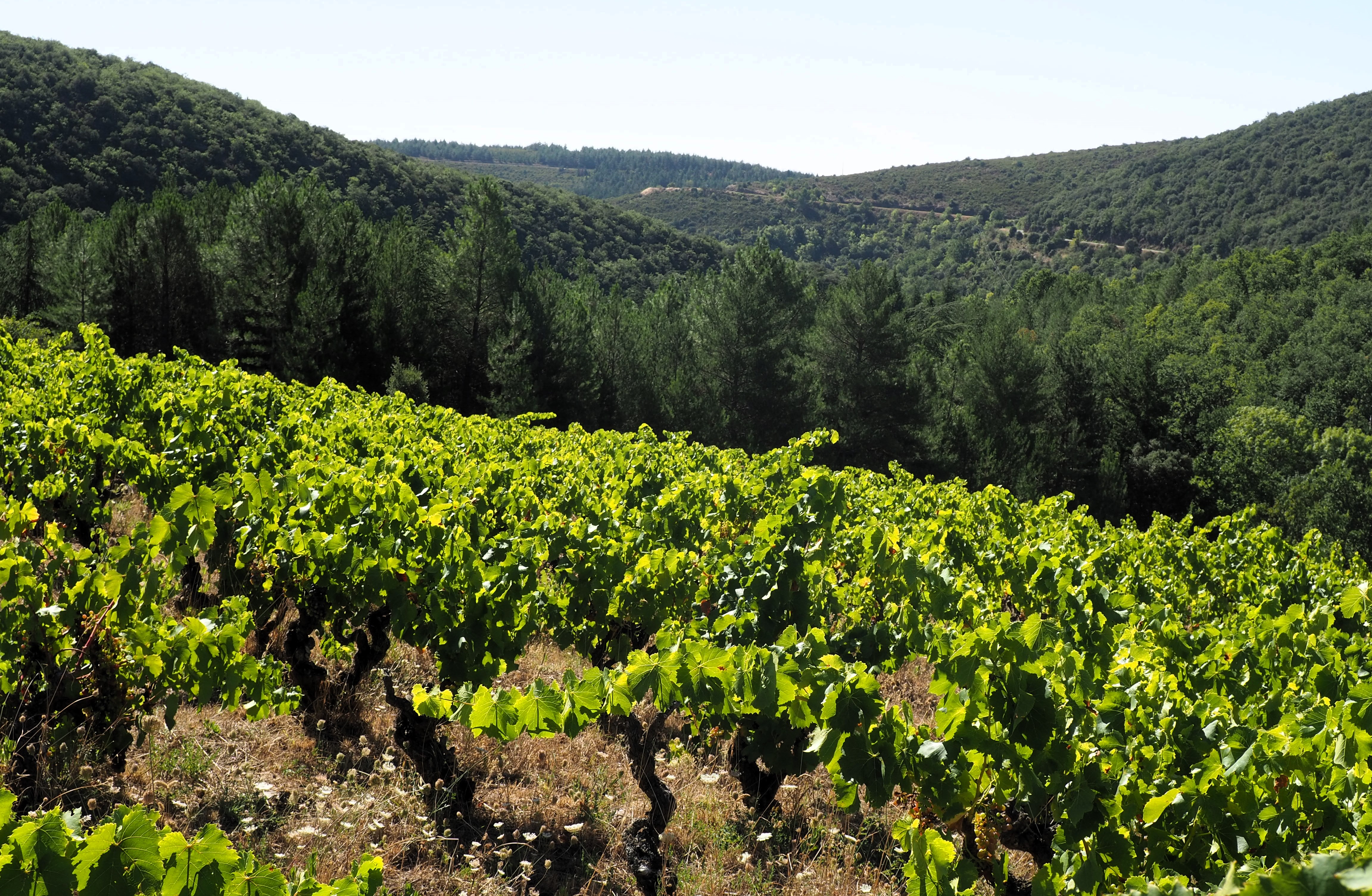

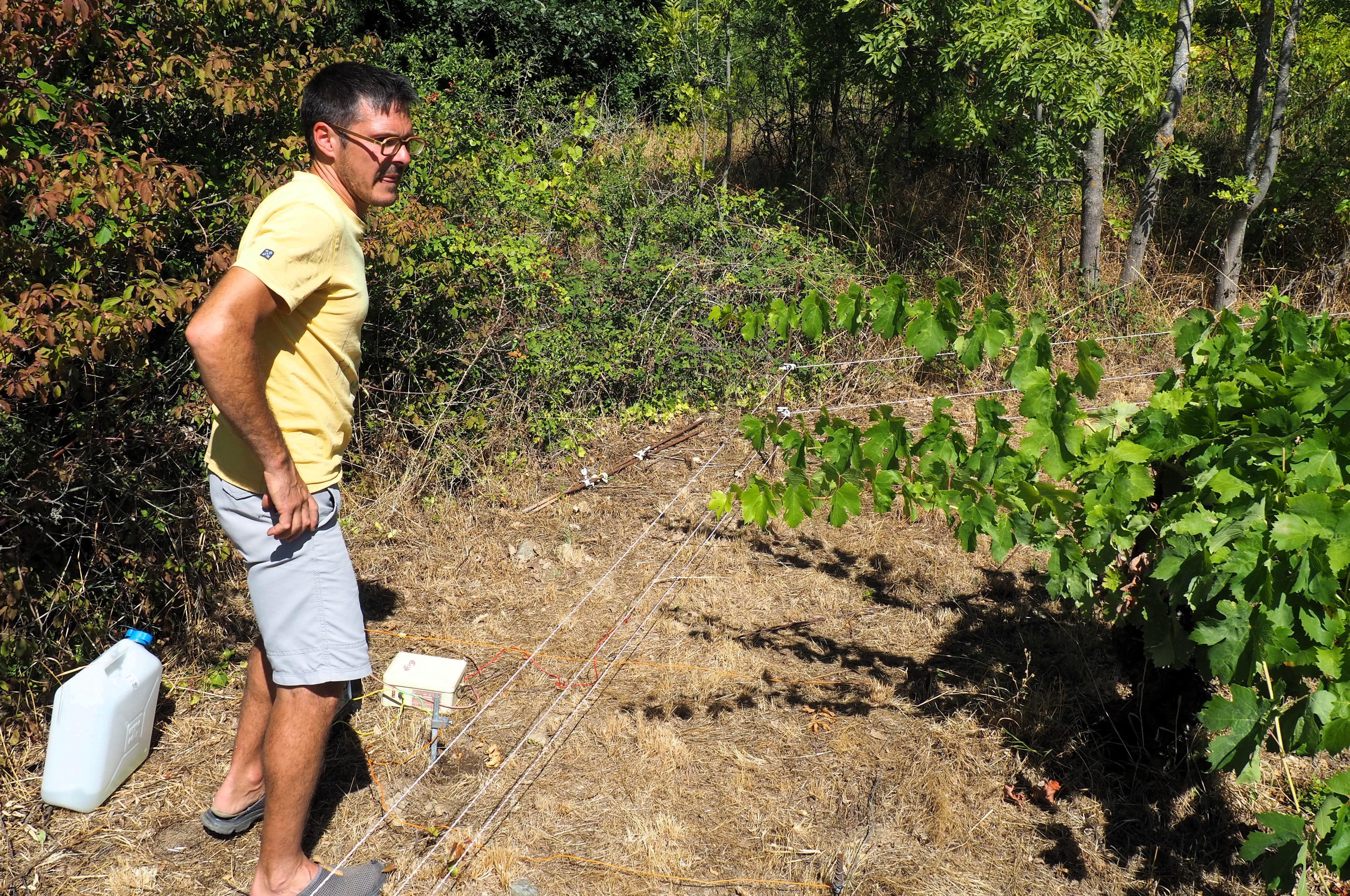
Carignan, Cassagnoles with steep slope and electric defence
Both vineyards were a joy to visit, surrounded by lovely oak trees and countryside and views to lift the soul whilst working there.
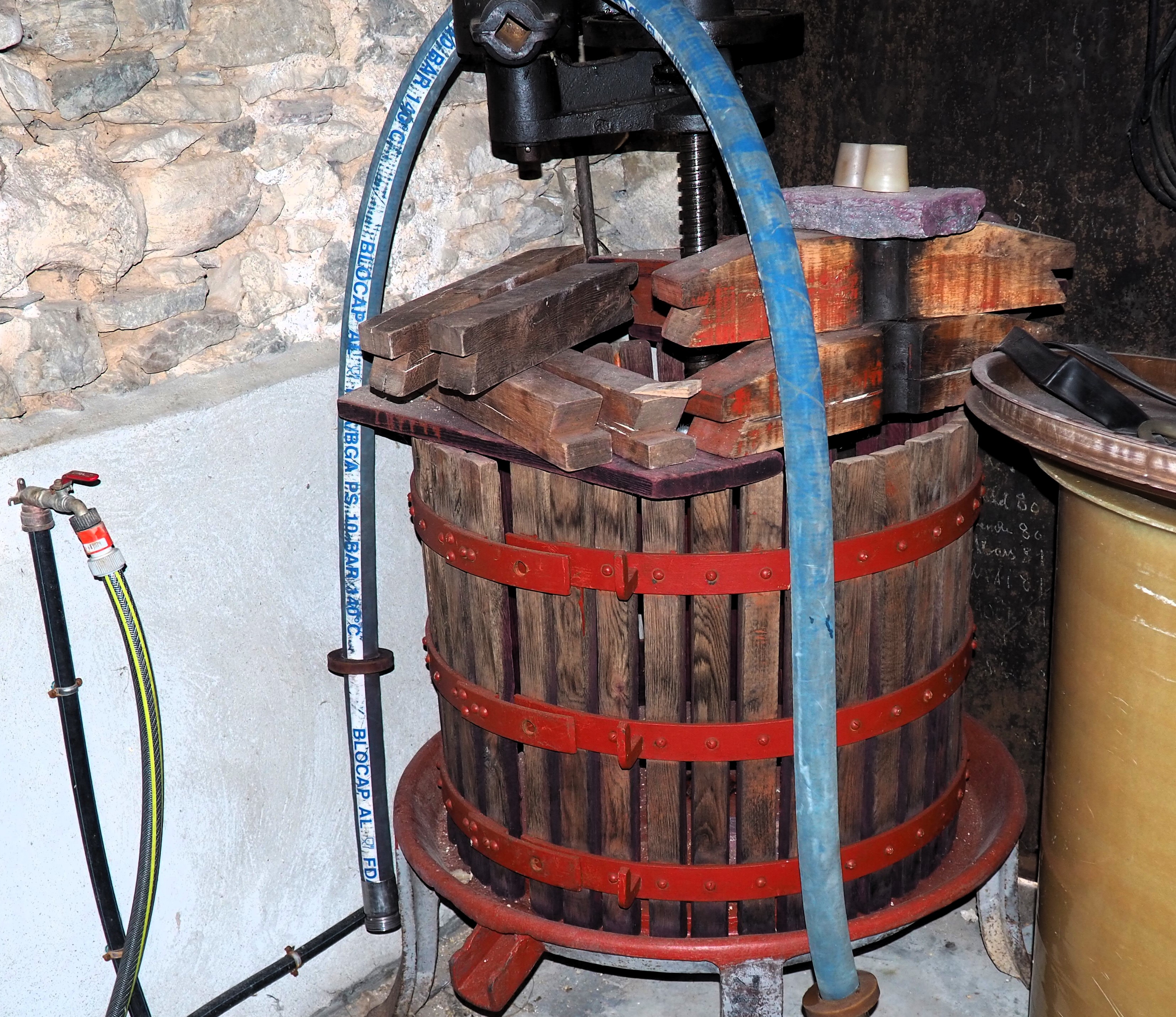
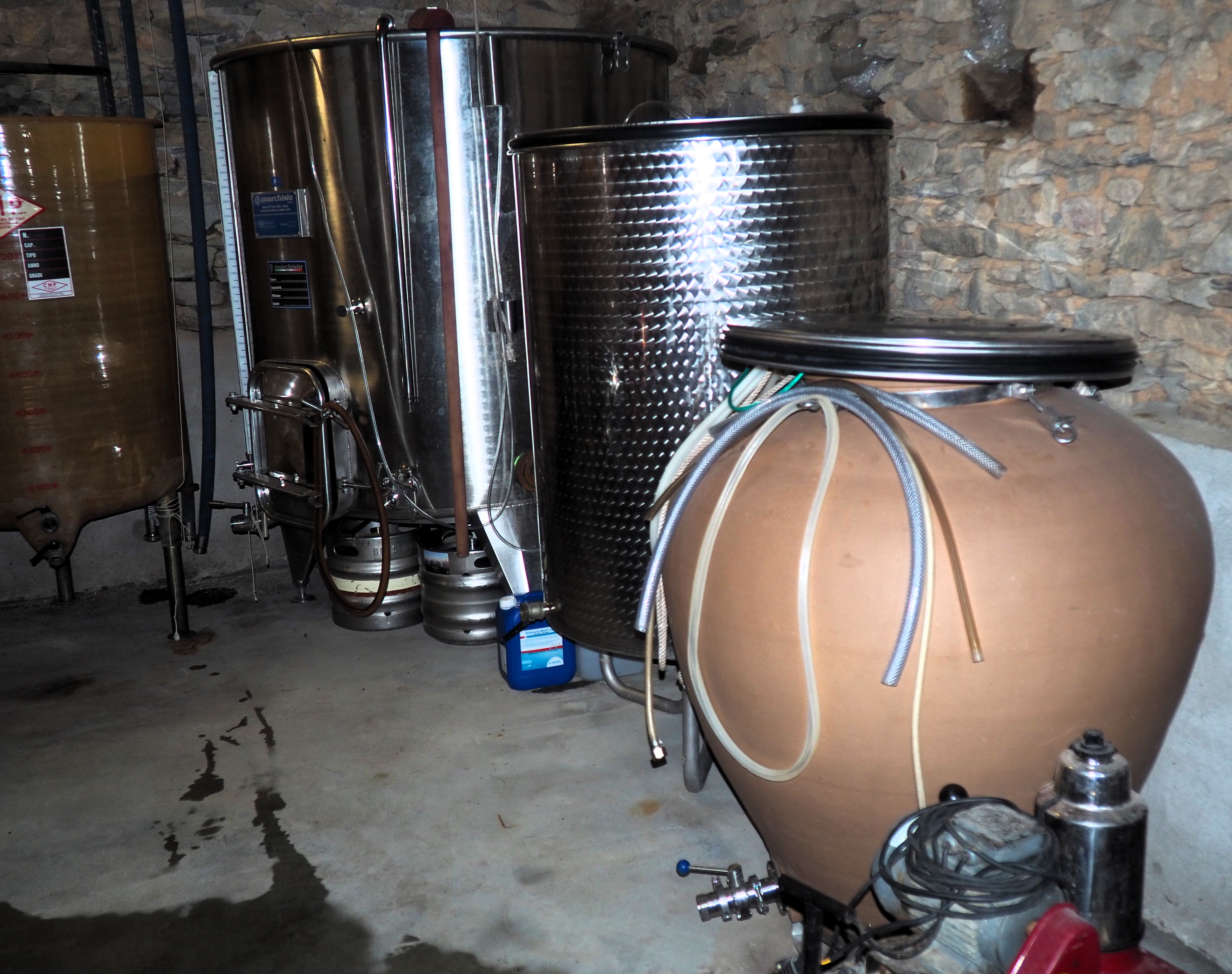

Winemaking is simple and natural, a small destemmer and basket press make up the equipment and the wines are fermented and aged in a variety of containers from stainless steel and fibre to a small concrete amphora shaped vessel. The Carignan from 2023 fermented easily and is bottles but the Syrah has stubbornly not completed fermentation with 25-30g of residual sugar remaining. One caviste, impressed by the Carignan, offered to buy all the Syrah even with its sugar but Steeve is confident it will complete, perhaps when the 2024 grapes are fermenting in other tanks. I have seen it happen before, where one tank seems to trigger others so, fingers crossed.

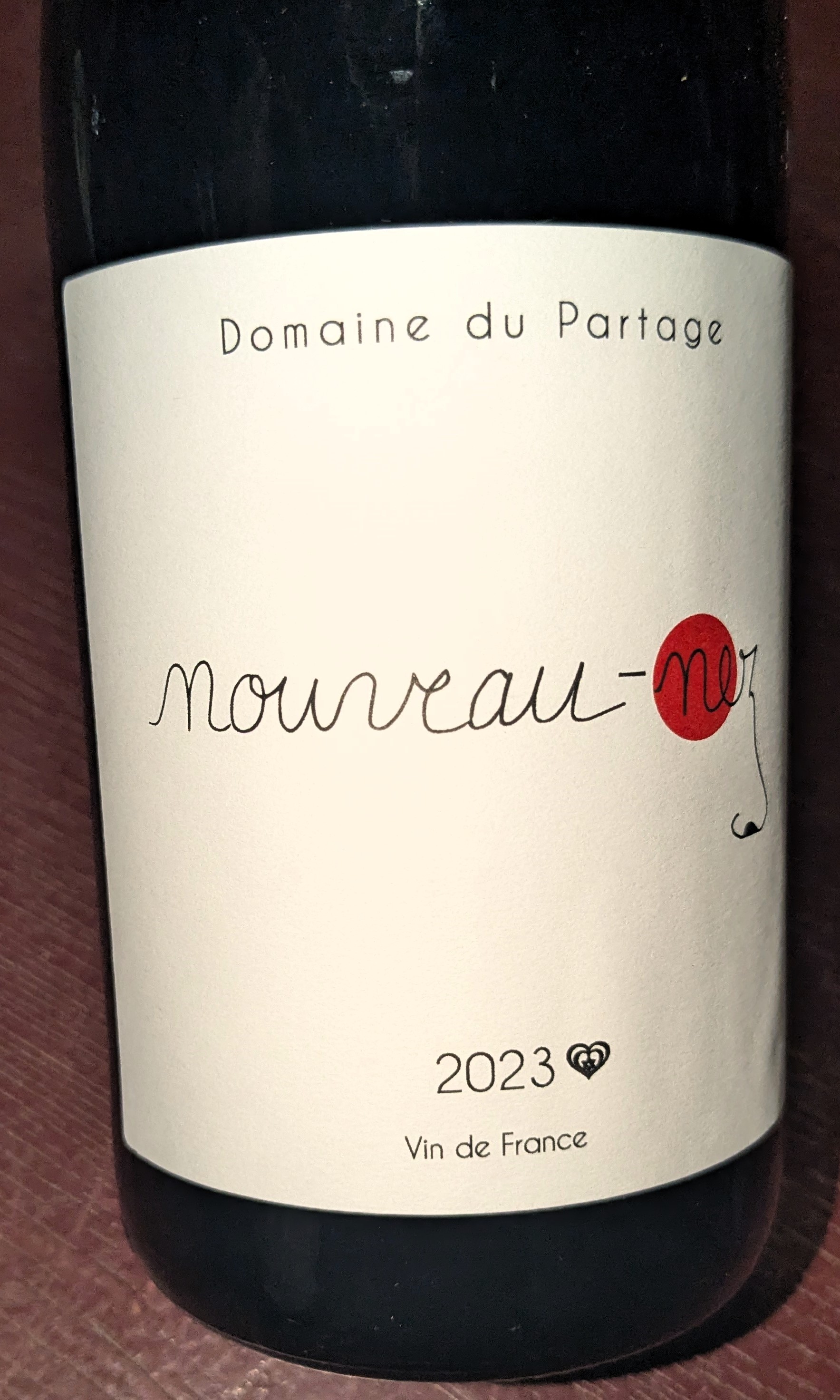
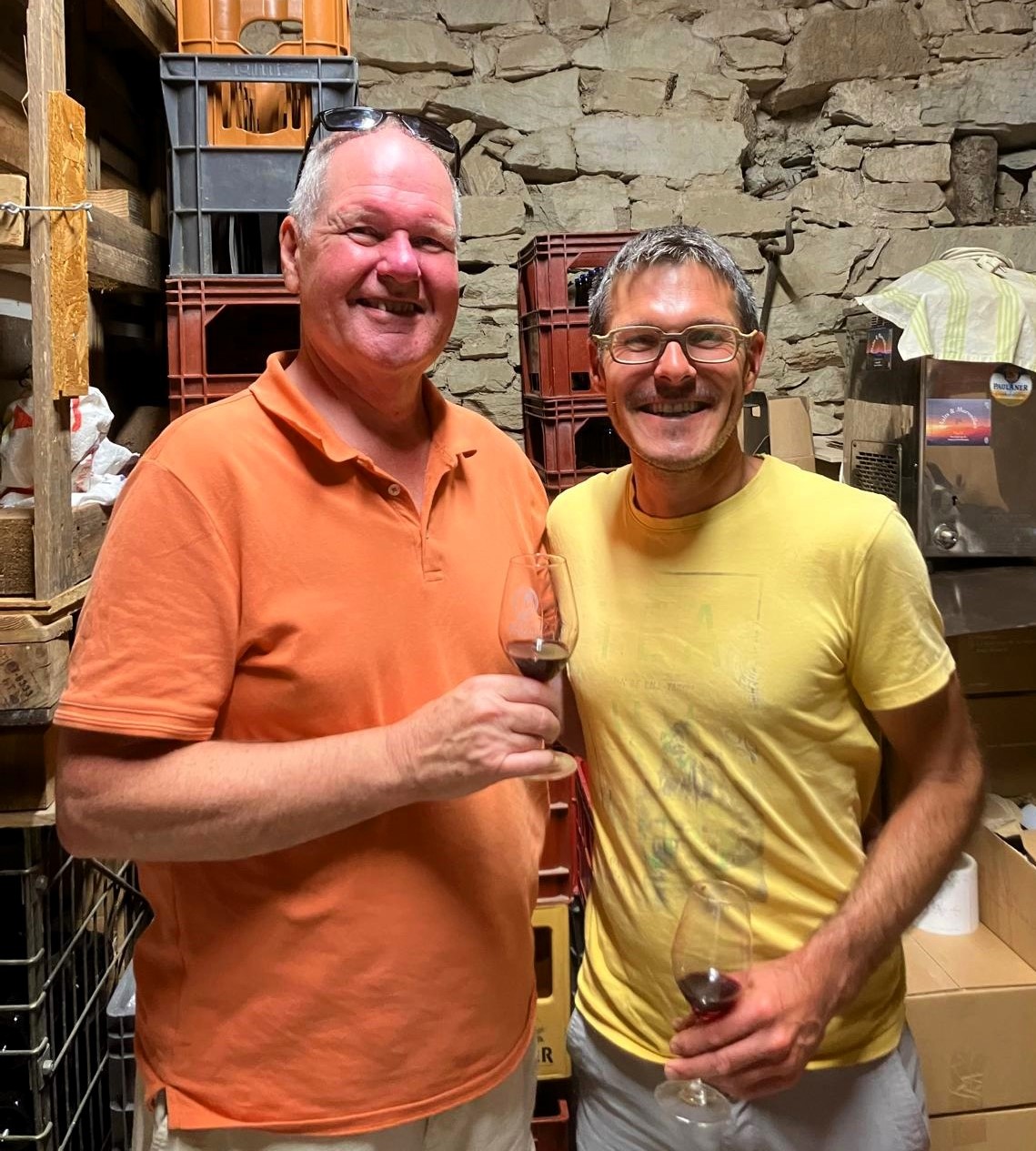
Steeve had generously been busy baking, a delicious tomato and goats’ cheese tart and blackberry clafoutis accompanied our wine tasting. His Carignan from Cassagnoles, bottled as Nouveau Nez, was excellent. Red and black fruit aromas and flavours abounded with real energy and freshness to the wine meaning that you were eager to try more. I kept the remainder of the bottle until the next day and it was still in prime form, suggesting that the wine would easily keep for a few years if you could resist its bright purple colour and fruitiness right now. For a first wine this was exceptional, it brought back memories of the first wines from L’Ostal Levant in Cahors at La remise salon in Arles in 2015. I know Steeve has a few bottles left but events such as ViniCircus have helped him to get his name out there to cavistes. I was delighted to hear that the excellent Picamandil in Puissalicon near to Jeff has some bottles.
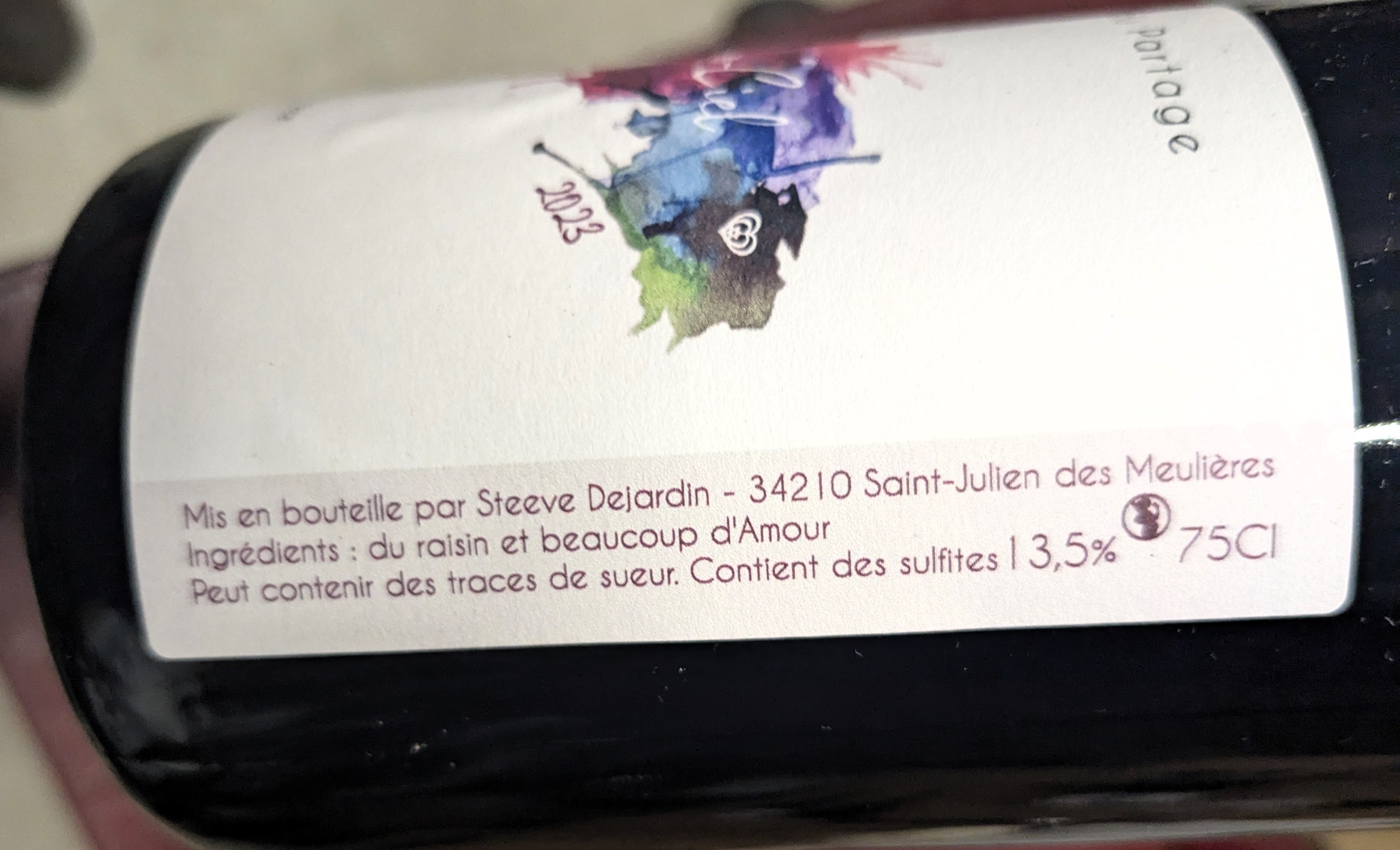
A nice touch of humour, ‘Might contain traces of sweat’
With the Syrah forcing a delay Steeve was happy to discover an organic producer in the area who was selling her Languedocian varieties to the local cave cooperative. He found the grapes in excellent condition, Aramon, Terret Noir and Gris to name just some. It reminded him of the Couleurs Réunies cuvée of Jeff with its vast array of local grapes and so, Steeve bought up the grapes to make a wine which he is calling Arc En Ciel. It was full of black and red fruit notes, upfront fruit but also some tannins for longer keeping. Very good indeed and those grapes deserved their own moment in the spotlight rather than being blended in with inferior grapes like the ones we saw in the plains.

Steeve had made a few bottles of Syrah given to him by Julien and Laure and he put it into bottles but also magnums to see how it developed. It too was very good, I promise. Very Syrah like, with upfront fruits but a nice backbone of tannin and acidity.
It was a real delight to visit Steeve, someone I admire so much and value as a friend, it was good to see that he and his son Martin are happy in their new environment making friends and contacts and becoming part of the community. The vineyards are lovely and Steeve will improve them with his care and passion for them. Meanwhile he has already shown his skills as a winemaker and when the new grapes are picked around the second week of September I am sure they will confirm that promise and Steeve will share more great wine with the world.

 amarchinthevines