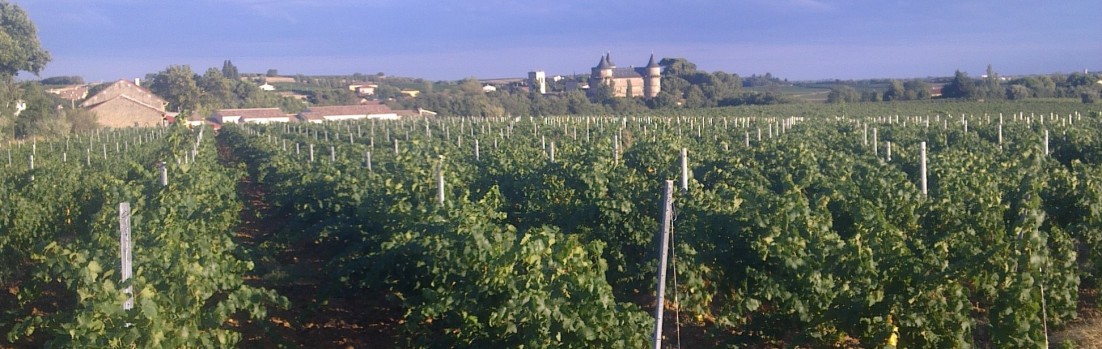
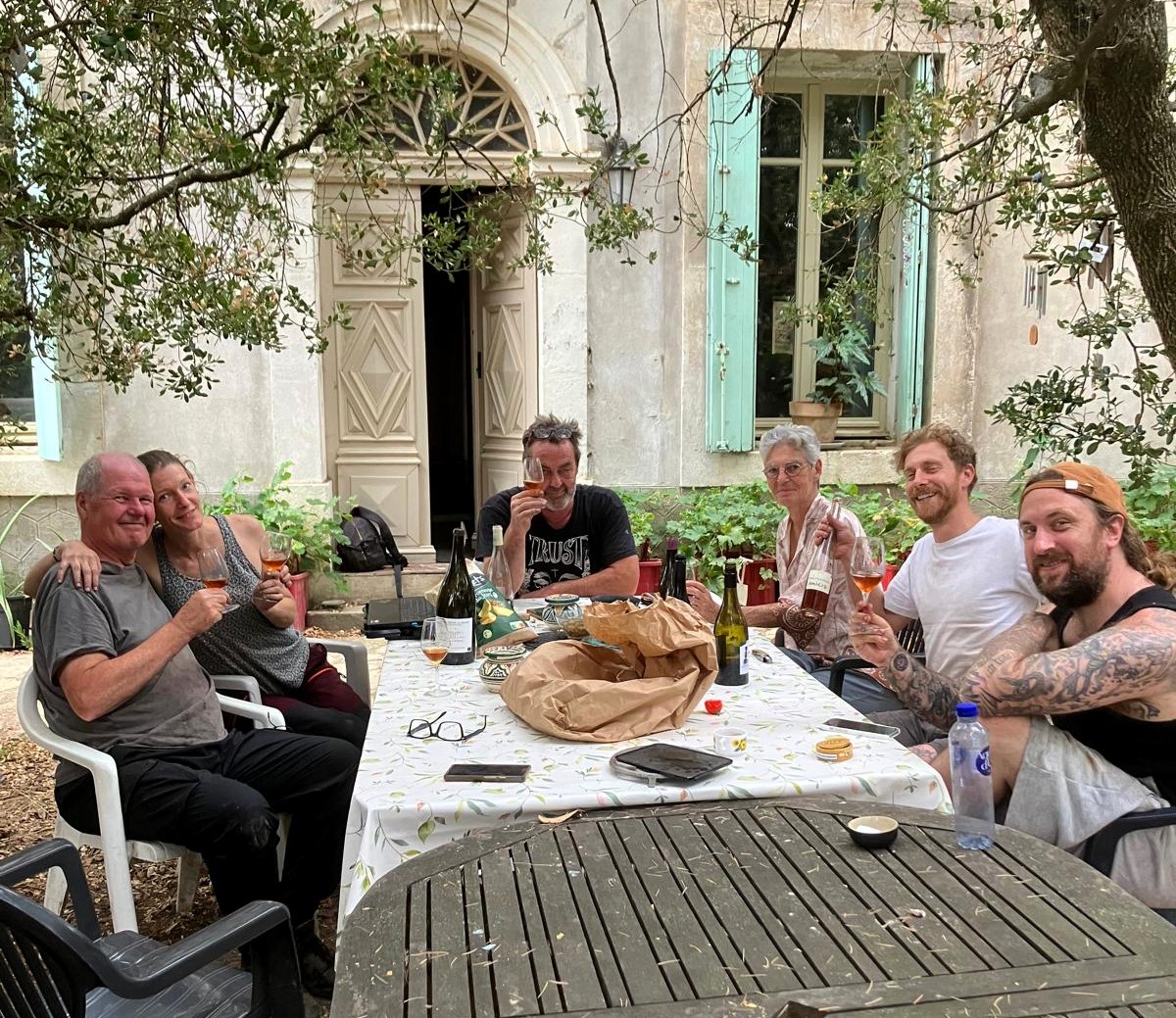
After a traditional Sunday of rest week two of harvest with Jeff Coutelou recommenced with a LOT of fruit. I had only two days left before I started the journey back to North East England but there are some busy days ahead, more later.
I wrote last time that by getting a strong base of wines in tank Jeff is in a handy position to finish this year’s harvest well with plenty of options. I did, however, mention that there would be challenges ahead and that was another reason to get those early Syrah and Grenache tanks full. There was a little bit of rain on Sunday and the forecast contained the threat of a lot more and even storms at the end of this week. That would bring a temporary halt to picking as you don’t want grapes with a lot of water on them which would dilute the wine flavours. It would also make it more difficult for vehicles to get in and out of the vineyards to bring back the grapes. Therefore, Jeff was pushing us to work even harder to try and get ahead of the weather, as much as can be done without compromising the quality of the grapes. No picking early and under ripe just to avoid the weather, for example.

Rain would also increase the threat of damage to the grapes from rot. Though much of the Syrah was very dry and healthy it lacked volume in some vineyards such as Peilhan. The Cinsault on Saturday afternoon was picked just in time from a parcel of Segrairals where it ripens earlier than other rows of vines. A day or two of rain would have quickly made it go over the top though.

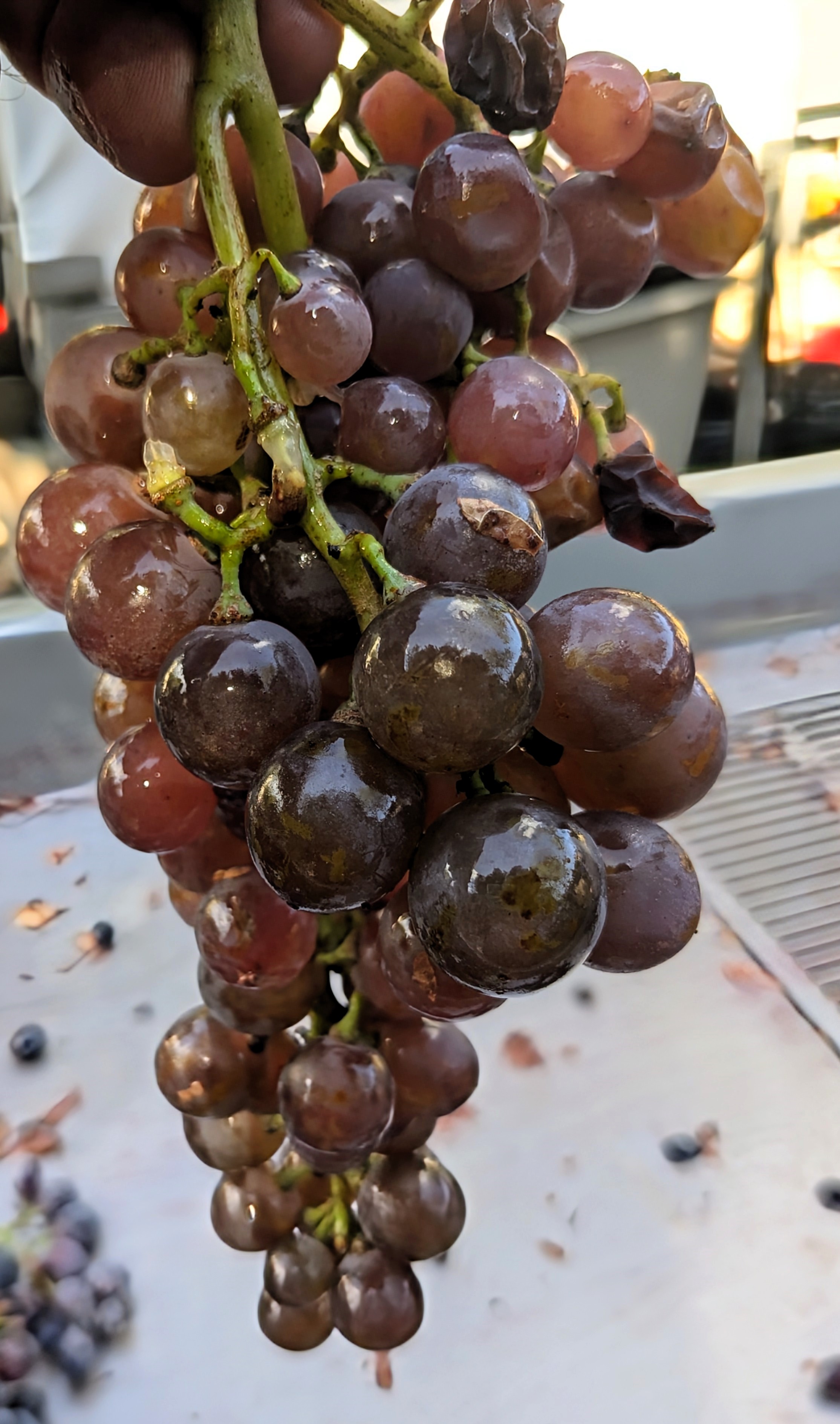
There has been some oidium (powdery mildew) in some parcels but nothing out of the ordinary. The main damage to some bunches has come from the perennial issue of ver de la grappe, grape worm. I have written about this many times before and it continues to be a problem with no real organic solution. Jeff has tried using tricholine, a white card containing the eggs of many tiny wasps which predate the grape worms. However, he seems resigned to them not having enough effect. The grape worms lay their eggs inside a bunch and they damage the bunches by piercing some grapes for food, the juice then runs on to other grapes in the bunch and this causes rot. Have a look at the bunch and the black powdery rot which results, up to the pickers and sorters to keep this out of the wine. Rain would simply compound that risk of rot.
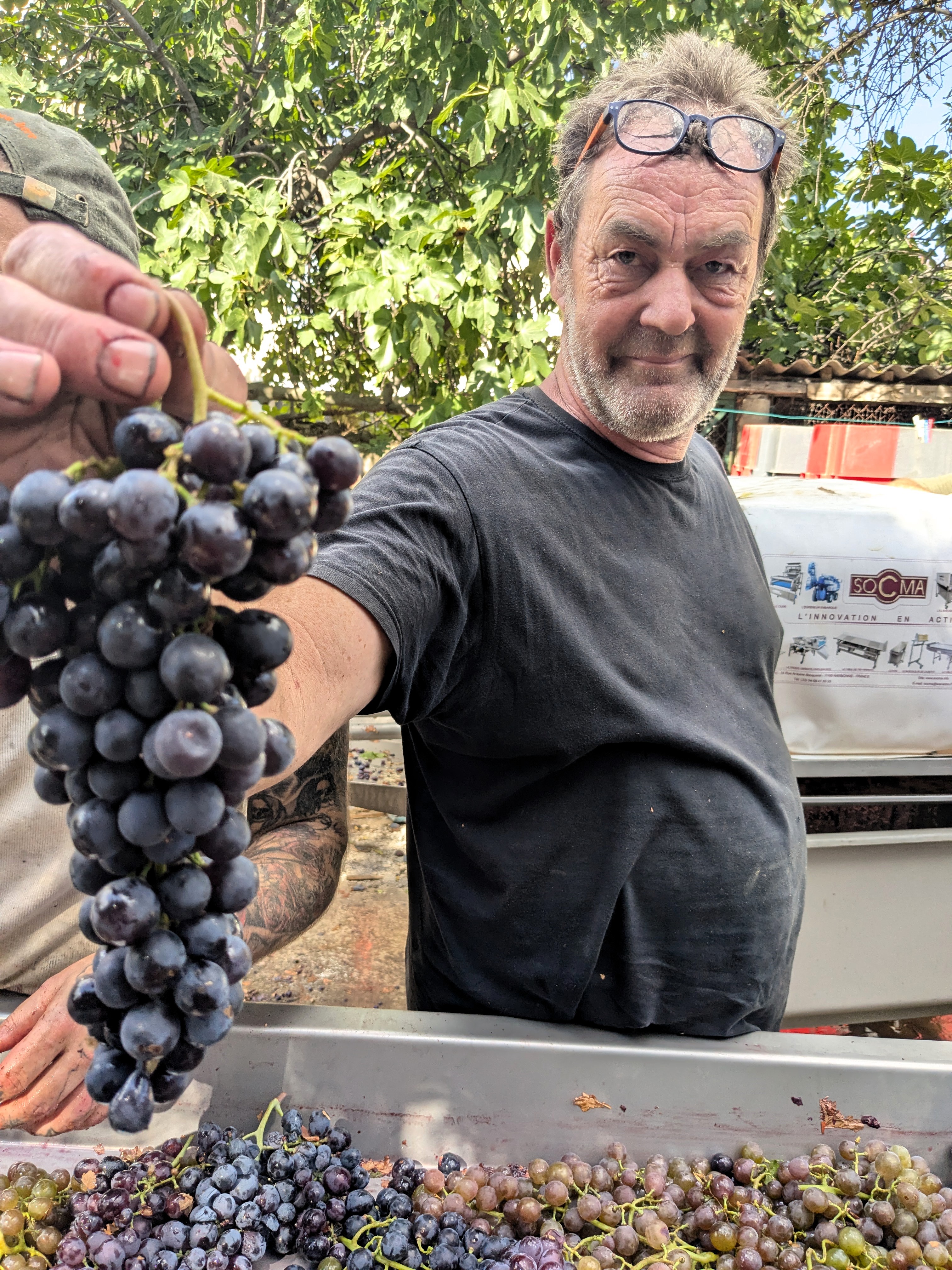
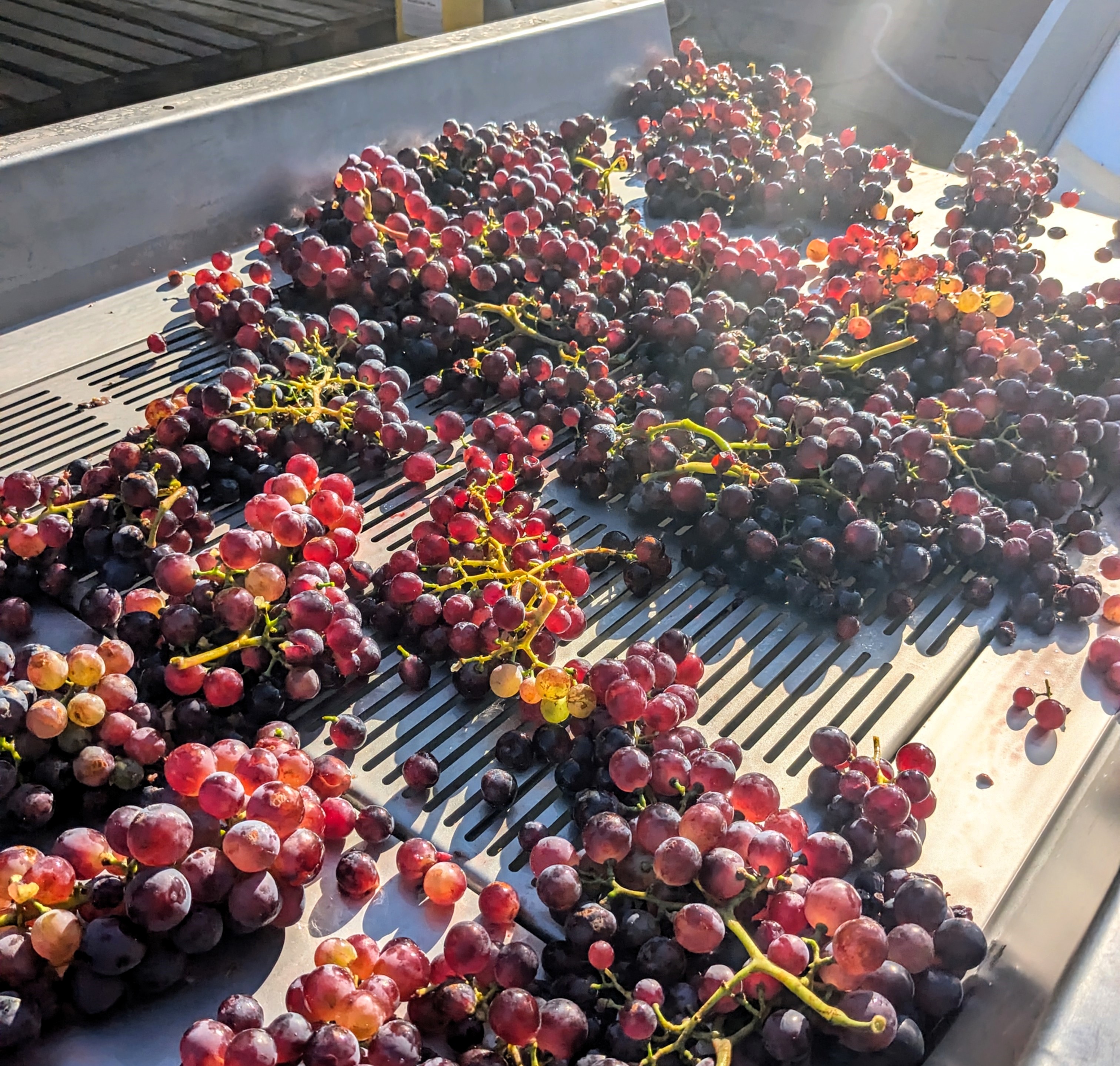
On Monday we brought in the grapes for one of Jeff’s most successful new cuvées in recent years, Ploutelou. This is mainly Aramon, the traditional Languedoc grape which is having a small scale revival in recent years. The Aramon, from Segrairals vineyard, provided probably the best quality grapes of my six days of work. Lovely big, conical bunches many a dark black, others shining like rubies. Mixed in were some Mauzac, Aramon Gris, Clairette and Cinsault grapes.
One interesting point to emerge was the grappillon. These are bunches of grapes which grow from secondary flowering, after frost damage or pruning. They don’t ripen fully as a consequence but harvest brings some in, most have been removed as they will use up the vines’ energy at the expense of the main bunches. They will add acidity to the wine rather than flavour and depth. The photograph below shows a grappillon on the left and a full bunch (grappe) alongside. We don’t want to add many though.

Tuesday brought around seven tonnes of fruit, it was full on. Mostly this was the big, juicy Cinsault grapes from Segrairals from the older plantings than the Cinsault mentioned earlier. Once again there was Mauzac and Aramon Gris from a few vines planted in the parcel. The tanks were filling fast, a contrast to the meagre Syrah yields. Clairette was also brought in from Segrairals and direct pressed, it was already showing the slight bitterness which means that the resulting wine stays fresh and dry even with low alcohol.


The other big challenge Jeff now faces is utilising the team to best effect. Those full tanks require care and attention too, for example remontages to keep fresh the cap of skins floating on the wine. Bart, with his experience of winemaking in Tasmania, is taking charge of those jobs, helped by Flora and others. The balance has to be right between picking and processing grapes too, Jeff doesn’t want grapes piled up waiting to be processed because too many are picking, but he equally doesn’t want the sorting team to be standing around waiting for grapes. People, climate, machinery, pests – no wonder Jeff gets stressed. Fortunately he has been in good humour, things have gone well so far. Hopefully, that will survive the challenges and he and the team can finish vendanges with style.


 amarchinthevines