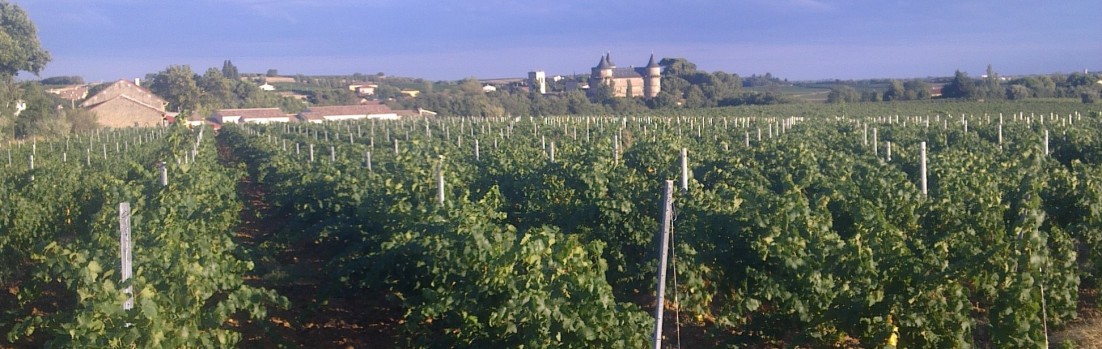
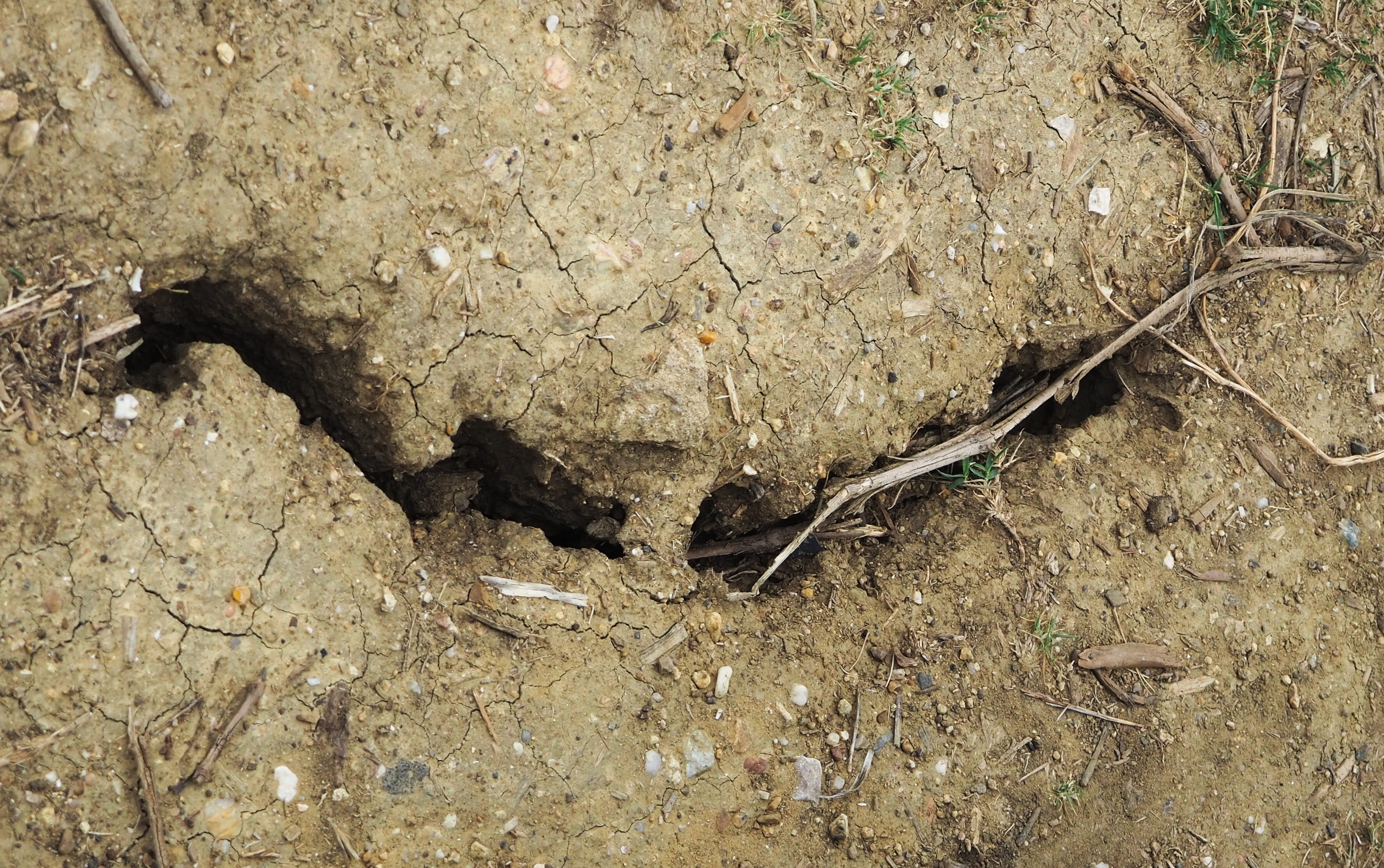
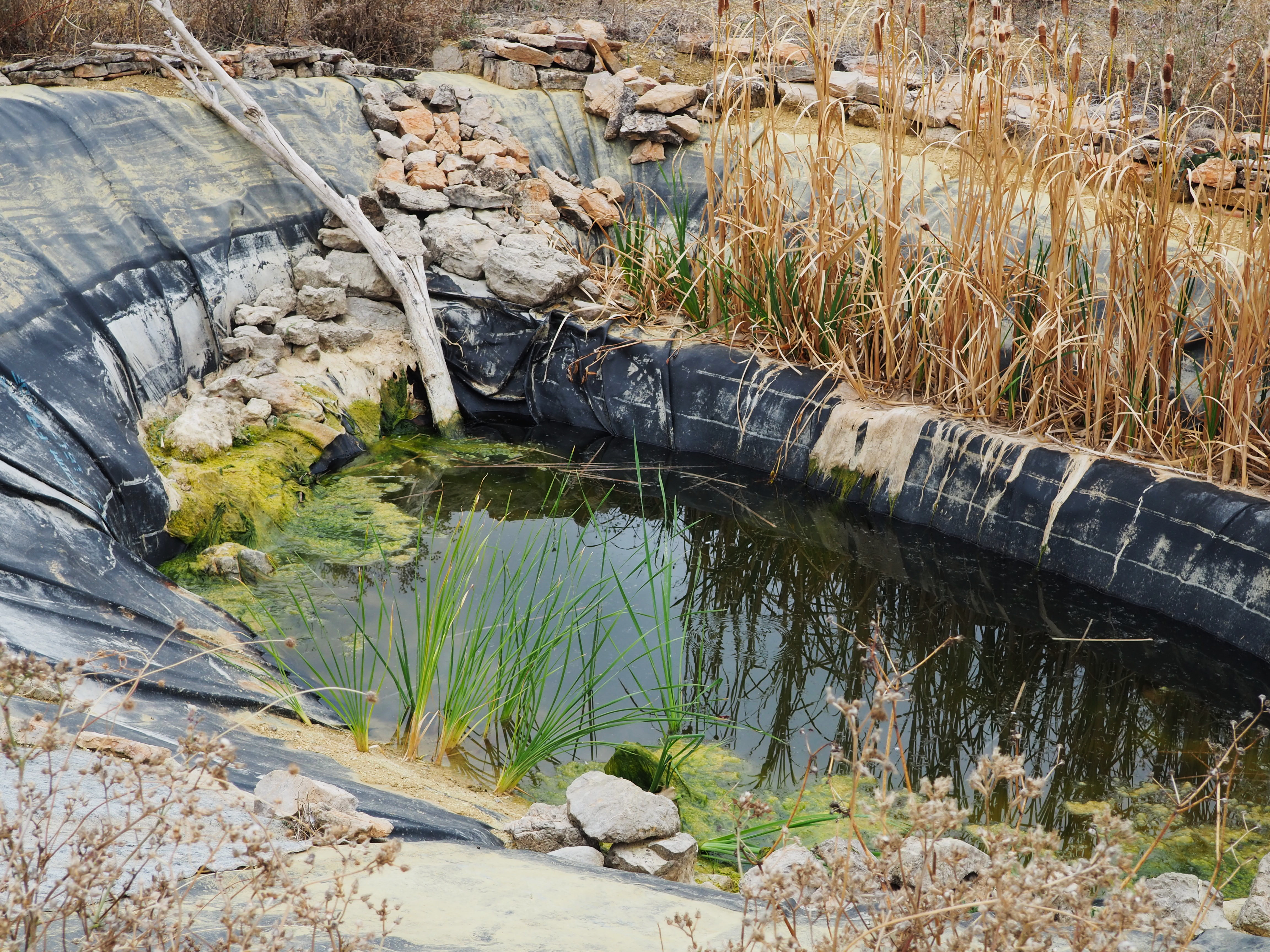
A visit to Peilhan on Tuesday was more evidence of just how dry that part of Puimisson vineyards has been. Cracks in the ground, vines looking tired from battling to produce fruit at risk to their own health. It must be a concern as to how they will respond next year, hopefully the early picking has offered remedial support. Most obviously there was an alarmingly low water level in the new reservoir, Jeff planted bullrushes at a height expected to be fine for them but they have dried out. Ironically, it rained for an hour in the afternoon but much, much more is required for a full recovery.
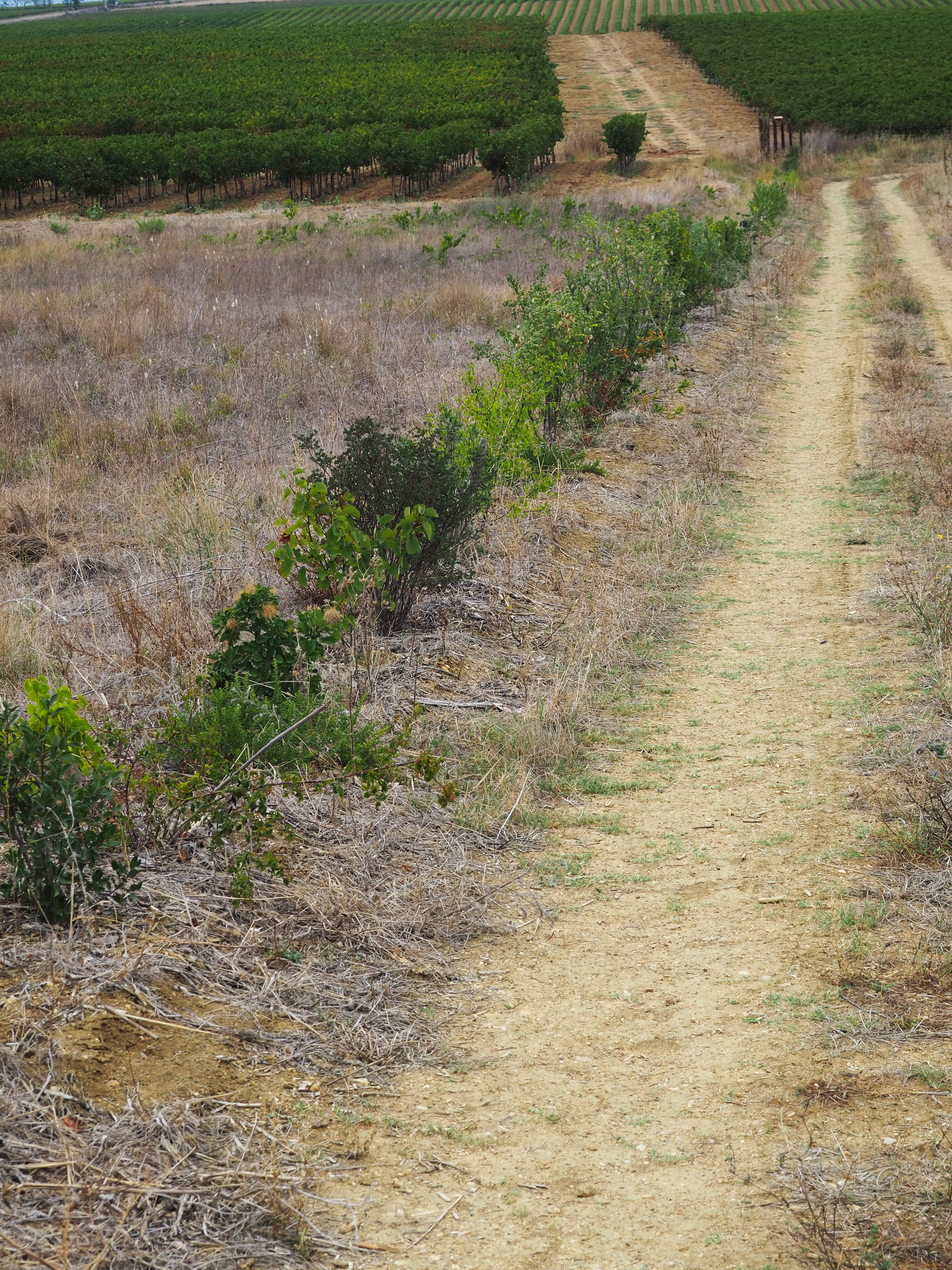

You can see the importance of water in this photo of the shrubs on the side of the new parcel. Jeff has watered these as I described here and they look green and healthy, especially in contrast to the parched vineyards. People often ask me why Jeff doesn’t irrigate the vines like most vignerons in the area. The main reason is principle, not wanting to interfere in nature and produce wines that are artificially boosted. However, have a look too at these photos of a neighbouring vineyard.
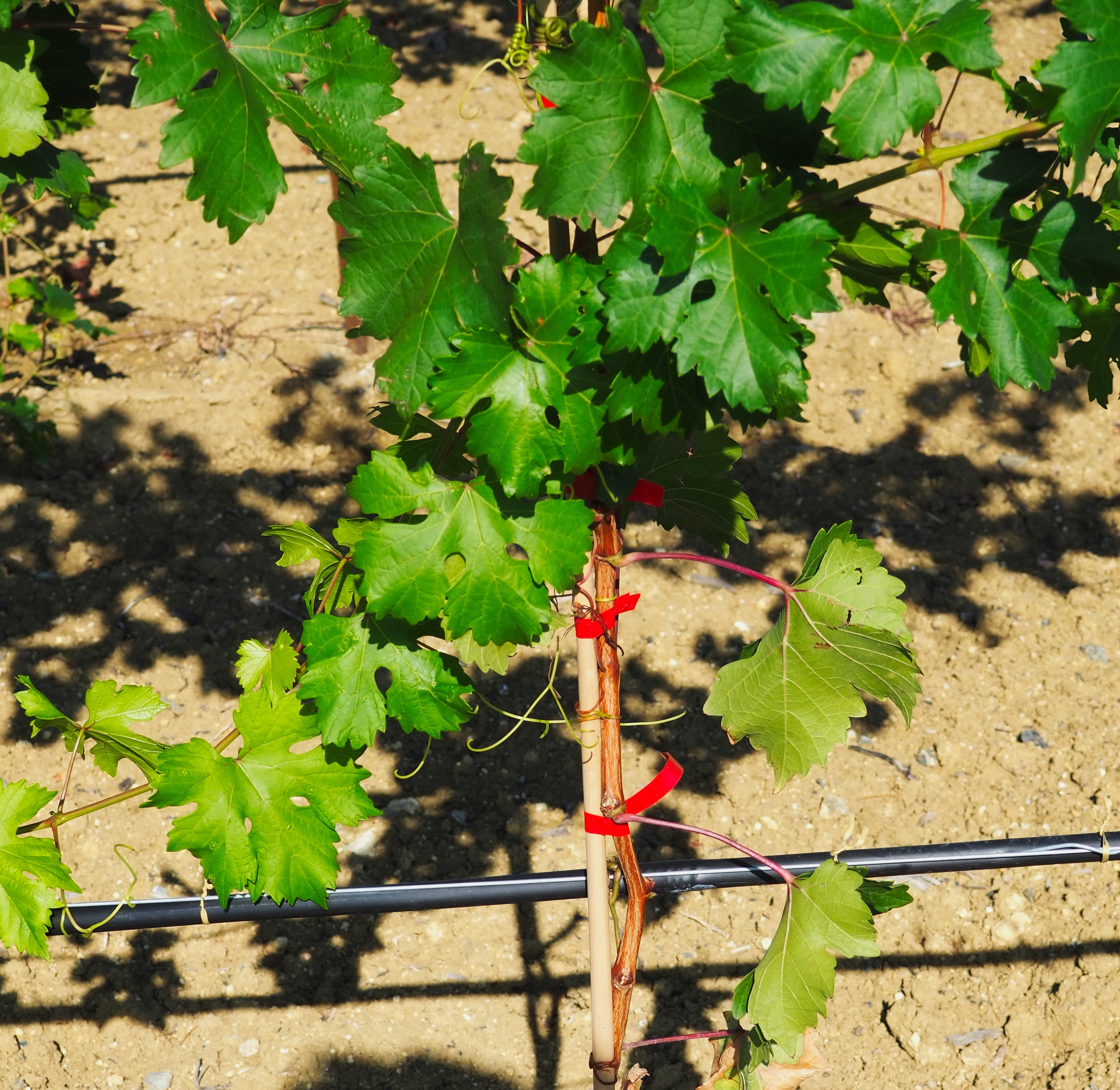
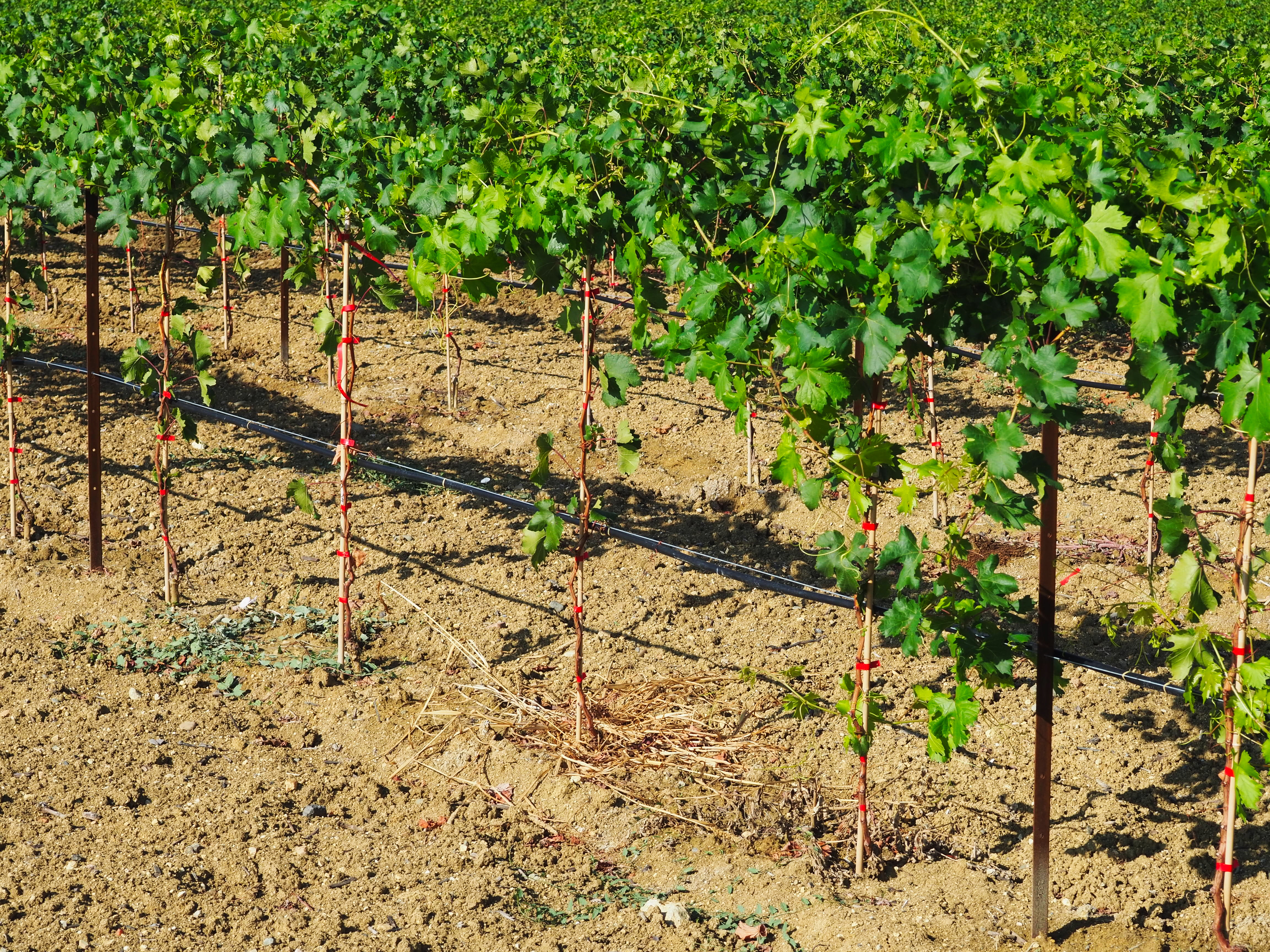

These vines were planted early this year, have been irrigated (note the rubber pipe) and are already 1.5m high and expected to produce usable grapes next year. However, look at the trunks, they are like matchsticks, lacking any real strength or longevity. I doubt they are there for the long term, how sustainable are such practices?
Midi Libre, the local newspaper, ran an article today (Sept. 15th) about a viticulteur in Fitou further west from the Herault in Occitanie. He stated bluntly that with rainfall of 150mm in 17 months his vineyards were officially a desert and they are dying in front of him. Jeff was telling me last night that four of the last ten years have seen such drought conditions now, though this is the worst. Another, 2021, was hit by frost. As da Vinci said we should be very aware of the importance of water for life.


Back in the cellar Jeff was carrying out the last of the main décuvages. This is where the grape juice / wine is run off from the tank leaving the solids behind, pips, skins and stalks. They have to be manually removed from the tank, backbreaking work, and re-pressed to produce more juice, vin de presse which will form around 8% of the final wine if put back with the free juice. The vin de presse is more deeply coloured and tannic so needs to be carefully managed, you wouldn’t want it to dominate the overall wine. Timing the décuvage is an art in itself, too soon and the wine would be very light in colour and flavour, too late and it would risk bacterial damage as well as developing quite strong alcohol notes.
A smaller tank of Macabeu and Clairette was also ready for décuvage. Jeff raised it by forklift and the wine ran off into another tank below, a variation on the modern gravity operated cellars! The wine has fermented nicely, smells and tastes really good and will now be given time to rest. Interestingly, the sludge in the bottom of the tank was also put into a container. It contains active, beneficial bacteria which have helped fermentation. If other white tanks become fermentation stuck, then this could be added to give it a jump start.

Things have settled down now, the big tanks are now wine tanks rather than simply full of grapes, fermentations are ticking along quite nicely, Jeff is more relaxed about them. The 2023 vintage will be unveiling its quality in coming days and weeks.
Hopefully, substantial rain will also arrive soon to ensure the future of winemaking in the area.

 amarchinthevines