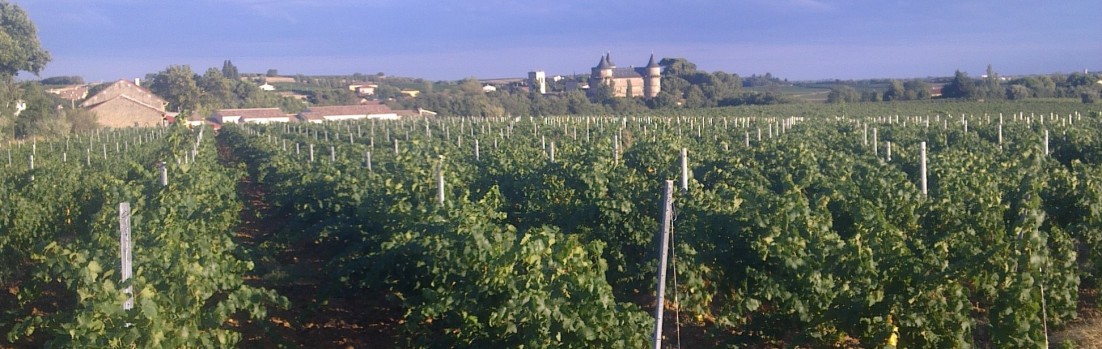
Friday and Saturday were full and busy days, the mechanical problems eased though we were still using the old sorting table. At the end of Thursday the pickers had moved across La Garrigue vineyard to pick the south facing Grenache. Most days the picking team is around 10-12 in size but there were 17 that day so Jeff wanted to use them to the maximum and gather as much as possible. Two hectares were picked that day, around 15-20% of the total vineyards, a lot of fruit. The Grenache was in fine form, good alcohol and acidity levels, probably to be used for blending.

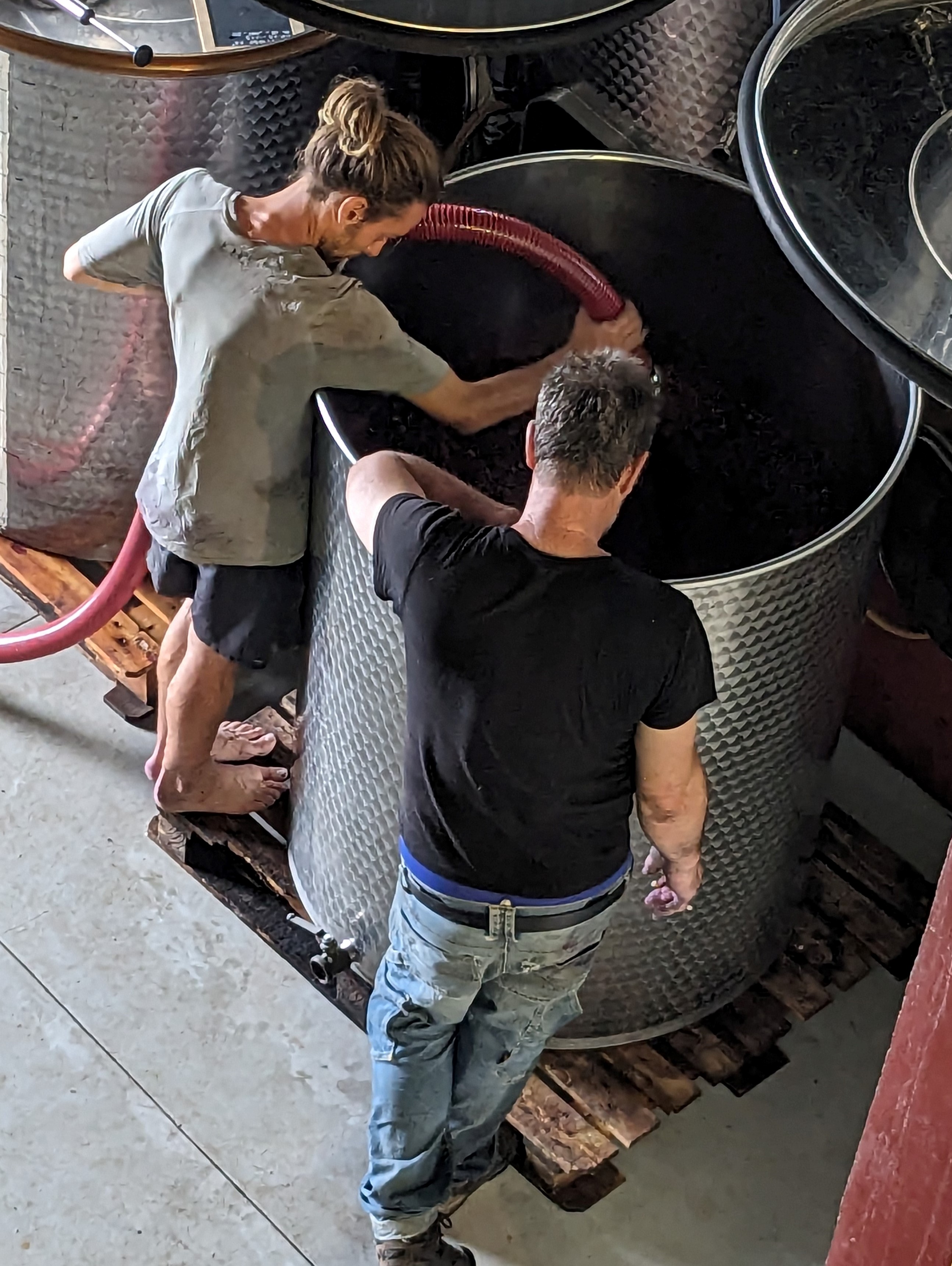
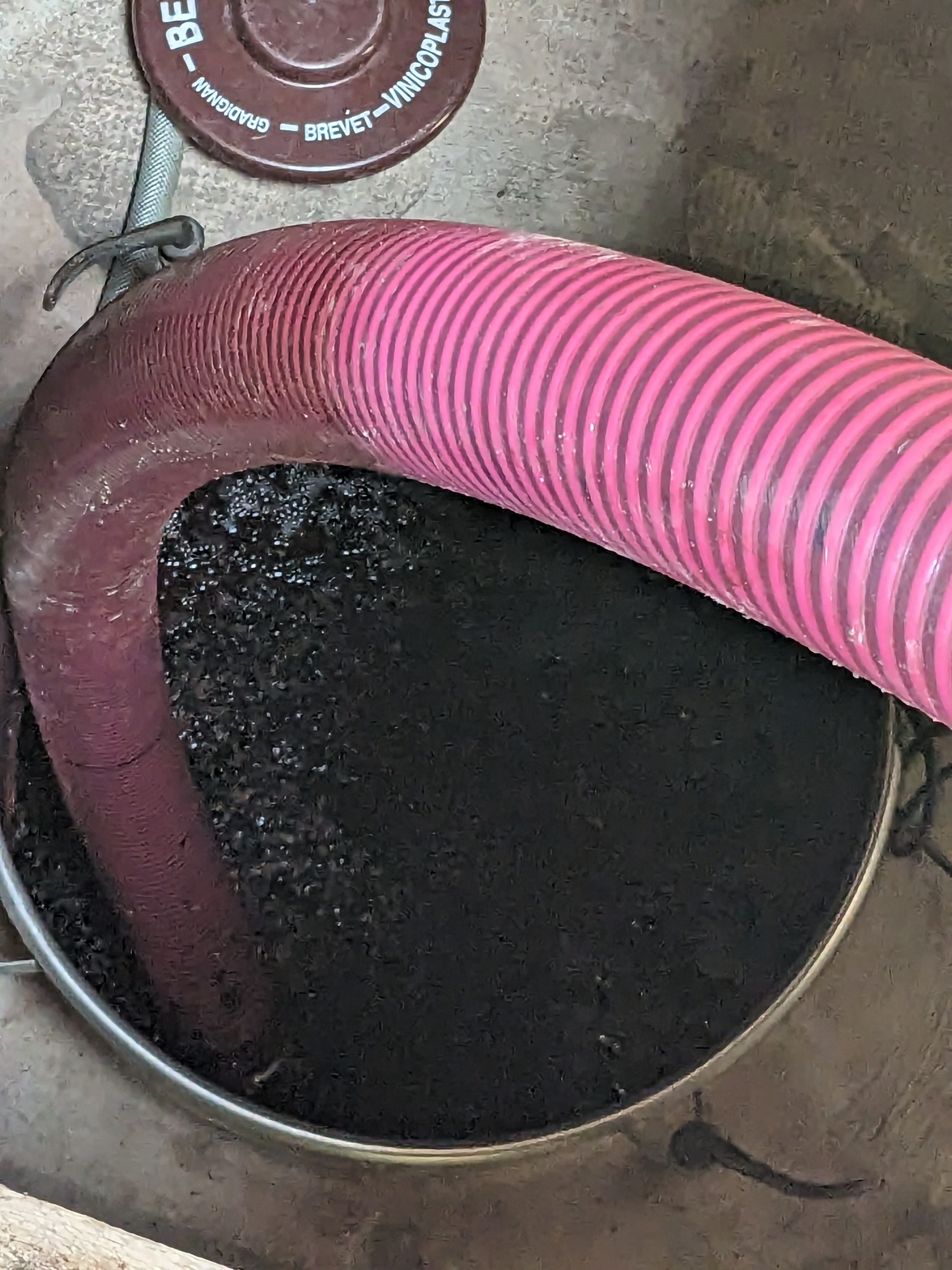
Friday and, following on from the last post, more Syrah. This time it was Syrah from Segrairals at the eastern side of the village which had benefited from rain on June 29th. Consequently, the grapes were fuller and, happily, disease free. Good quantities, good quality. There’s not much to add, it was a long day, still hot, not so stifling as previous days and we worked hard and steadily. It was good to be able to keep an eye on how full the tank was getting so that it didn’t overflow, another tank was needed.
Saturday was more interesting for those, like me, who are interested in different grape varieties. Segrairals was again the focus, another nine hours and more of picking and processing. It’s a large vineyard and has seen a major replanting in recent years. Out went the extensive Cabernet Sauvignon vines and in came varieties such as Mauzac, Clairette, Oeillade, Aramon and many others.

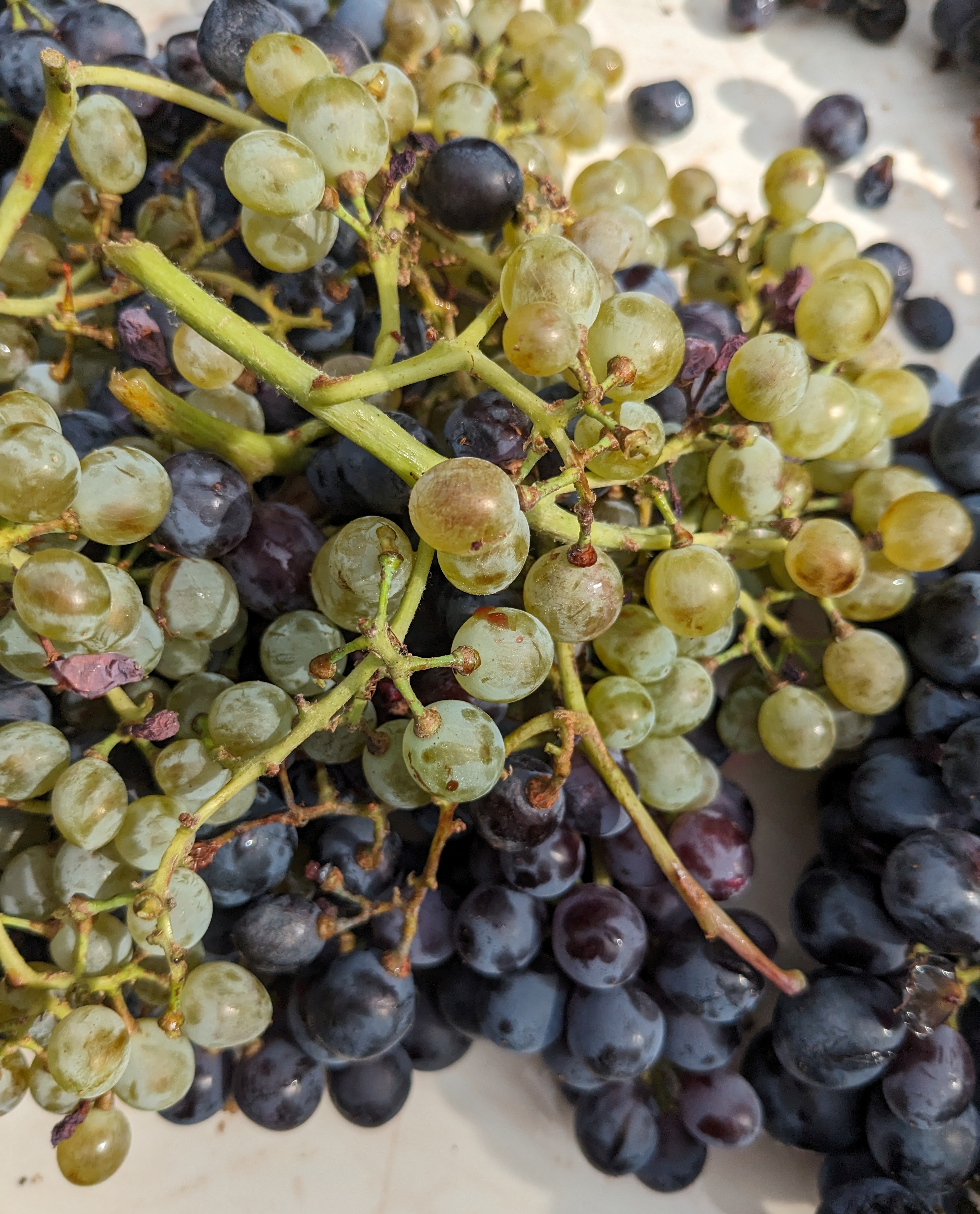
The largest area of the vineyard is Cinsault and it has to be picked at a Goldilocks moment, not too late, not too soon, not too ripe but just right. It can be healthy and very juicy one day and then mushy the next day. Its thin skins make it prone to rot and easy for the cryptoblabes / honeydew moths to access as the bunches and grapes are large with space for the moths to get into to lay eggs. Jeff had noticed that this new variety of grape worm which I wrote about earlier this year was starting to show. They become active when the grapes are ripe with good sugars, exactly the situation in the Cinsault.
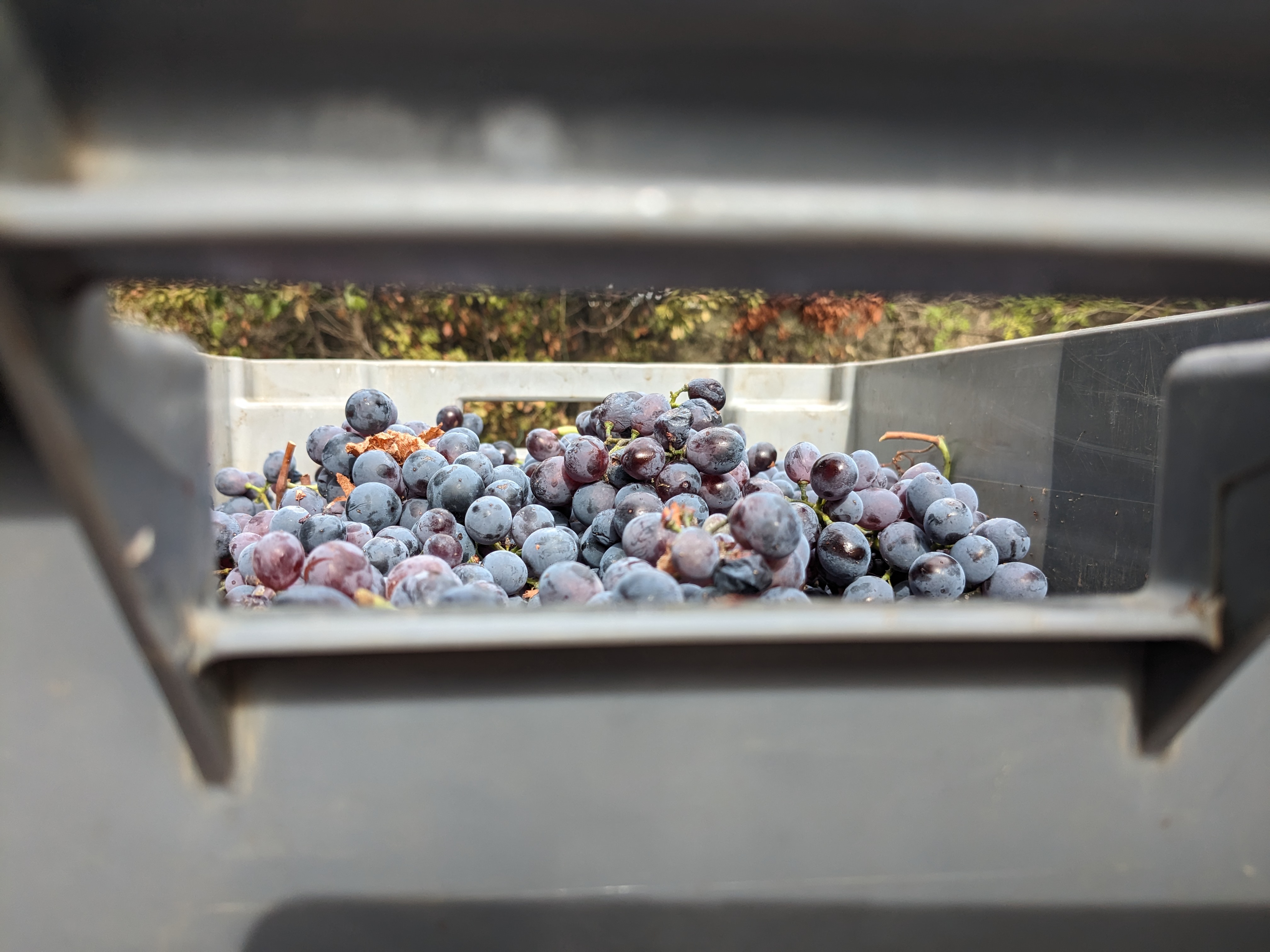
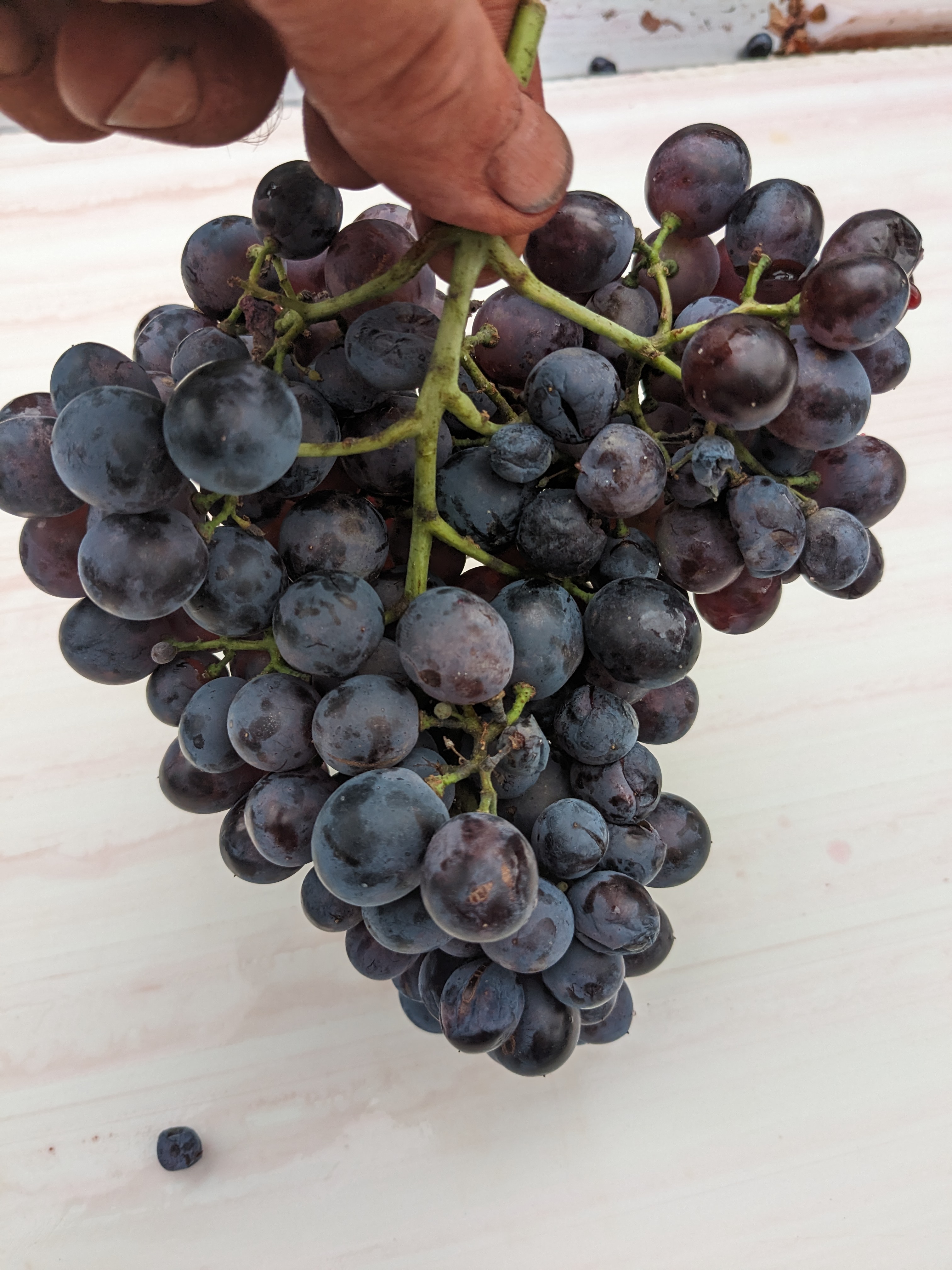
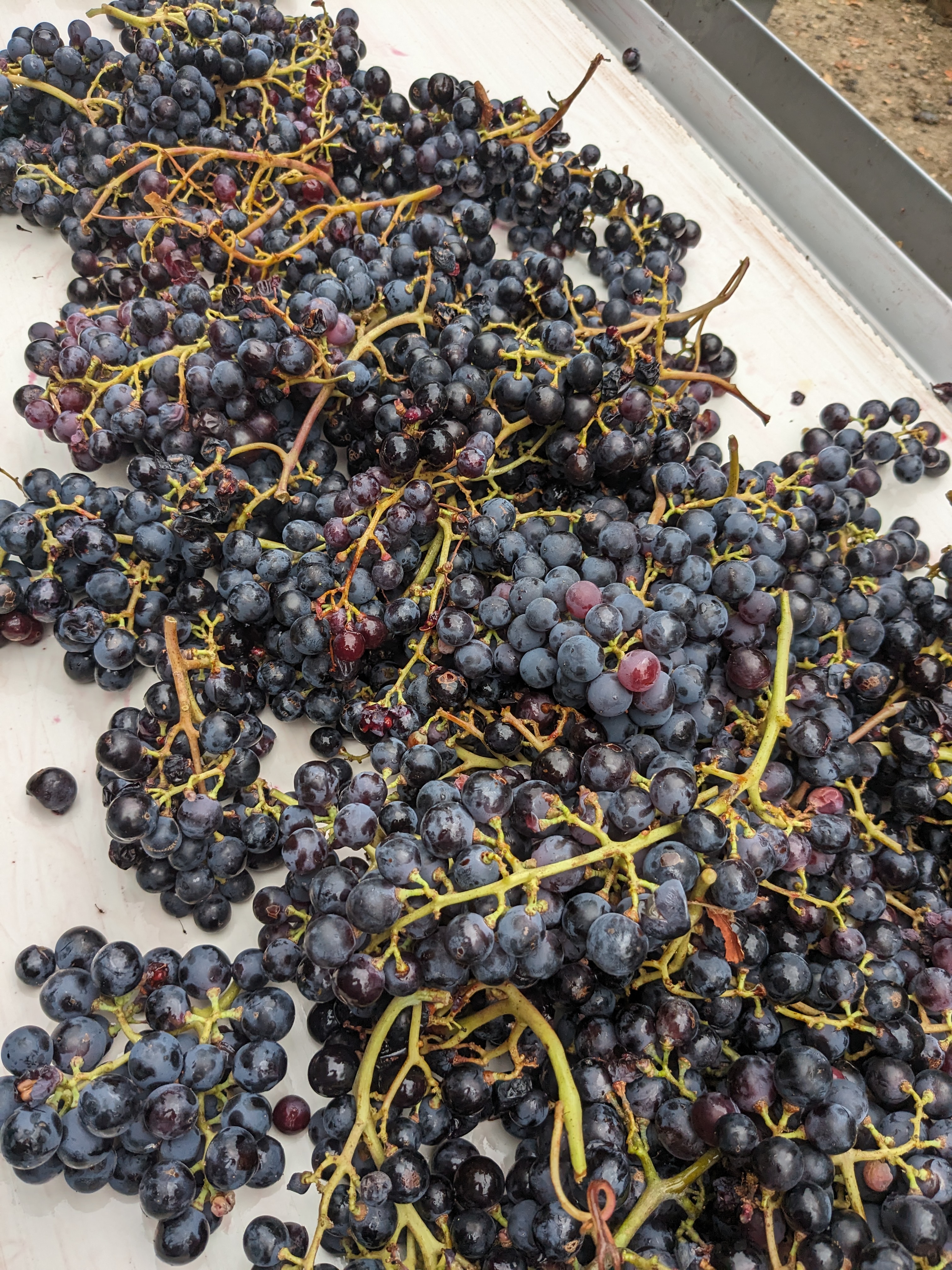
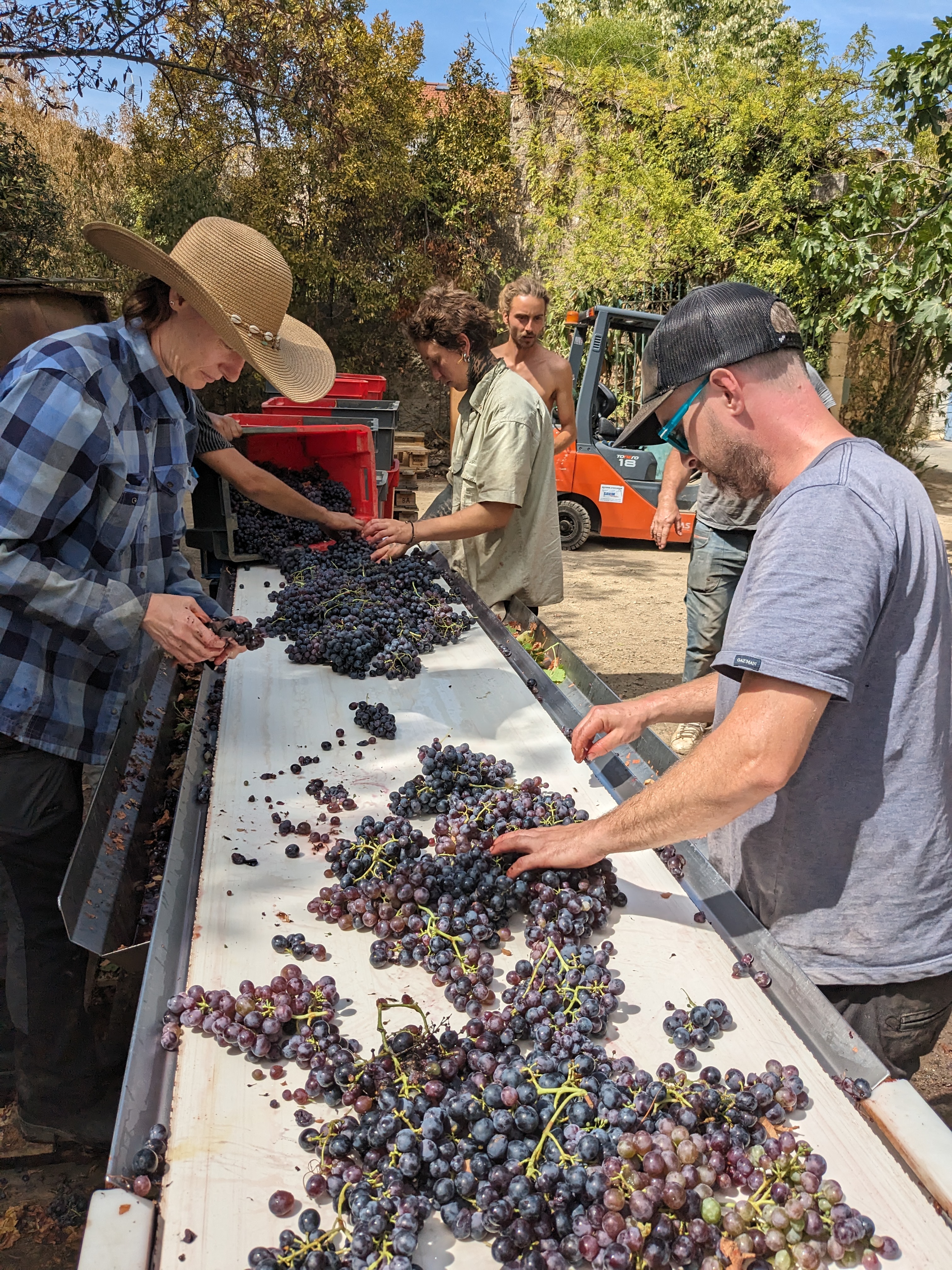
Fortunately, Jeff got the decision just right. Whilst there were some affected bunches, we were able to deal with them at the sorting table. The Cinsault was as good quality as I can recall and the size of the bunches and grapes meant that the cases came thick and fast to us from the vineyard. In addition there arrived Mauzac and Aramon Gris, both had to be scrutinised for small amounts of oidium – the first disease of the harvest but, happily, affecting just a tiny percentage of the grapes. Perhaps the most striking grapes though were the Aramon Noir, the stems a nice contrast to the very black grapes in very good health. Aramon, of course, was once widely planted in the region and used for producing huge quantities of low alcohol, cheap wine. The vast majority has been grubbed up but there has been a recent renaissance with producers such as Jeff aiming for low yields of fruity grapes. The blending of these grapes will make Ploutelou, the third vintage of this cuvée, the Coutelou homage to the Jura’s Ploussard, which itself has thin, dark skins producing a lightish, fruity wine. Ploutelou has been a big success and this year’s ought to be very good.

It was a good day, hard work, the team working well together. A new addition was Andrew form Australia. He works for James Madden in the Adelaide Hills at Scintilla Wines. James, of course, came to do harvest with Jeff in 2016 and, so, the link continues. He is an experienced worker and, after mostly getting over his jet lag, he was busy at the sorting table and then doing a remontage as the cellar work builds with increasing amounts of grapes to care for. We were certainly weary by 6pm on Saturday but happy that Jeff has plenty of promising wines ahead.


 amarchinthevines